News18 (India)
보수 성향
기타
From Pantry To Buffet: Indian Railways Is Serving Up A Big Upgrade
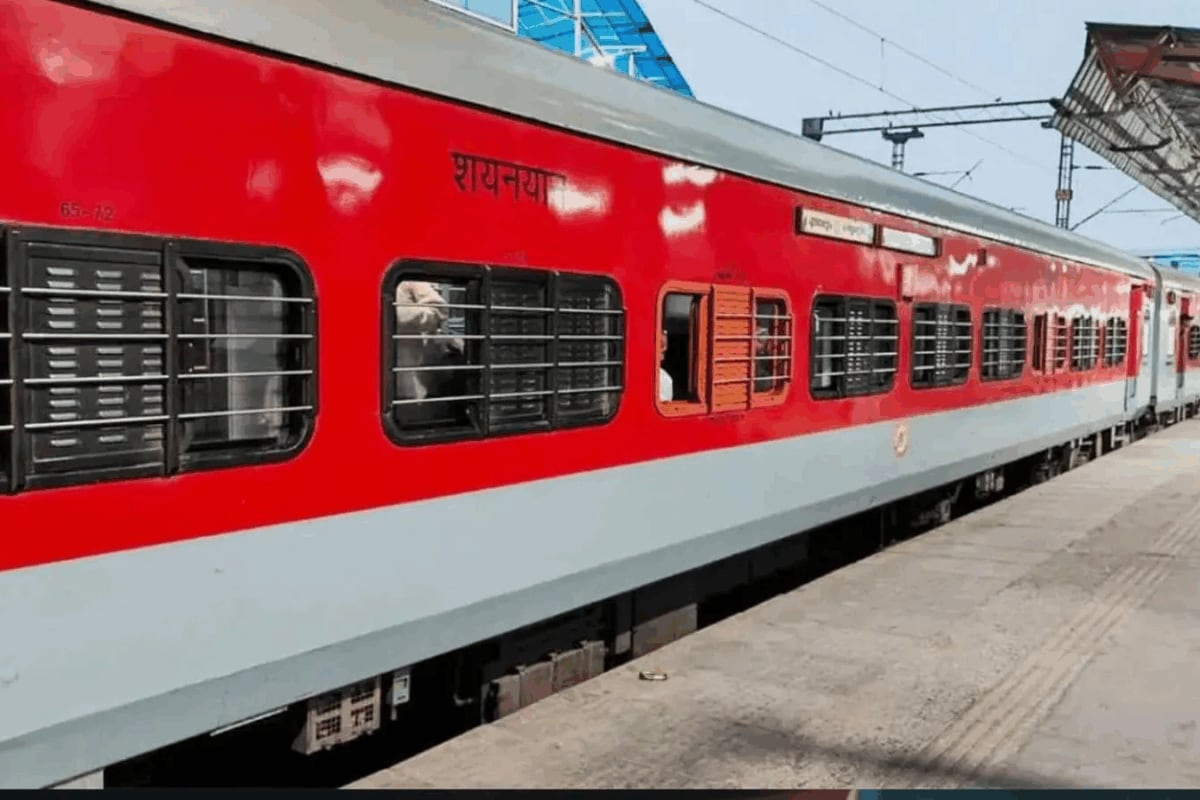
The Railway Board has cleared new LHB hot buffet coaches for 160 kmph operations, aiming to upgrade catering and passenger comfort
"RAILWAYS" · 총 45건
필터 보기현재 지수
49.5
0 = 부정 우세
50 = 중립
100 = 긍정 우세
최근 7일 기준 81,170건을 분석한 결과, 뉴스 심리지수는 49.5(균형)입니다. 긍정 10,032건(12.4%)·중립 58,501건(72.1%)·부정 12,637건(15.6%)이며, 중립 비중이 뚜렷하게 높습니다. 성향 지수는 종합 21.2(보수 경향)입니다.
The Railway Board has cleared new LHB hot buffet coaches for 160 kmph operations, aiming to upgrade catering and passenger comfort
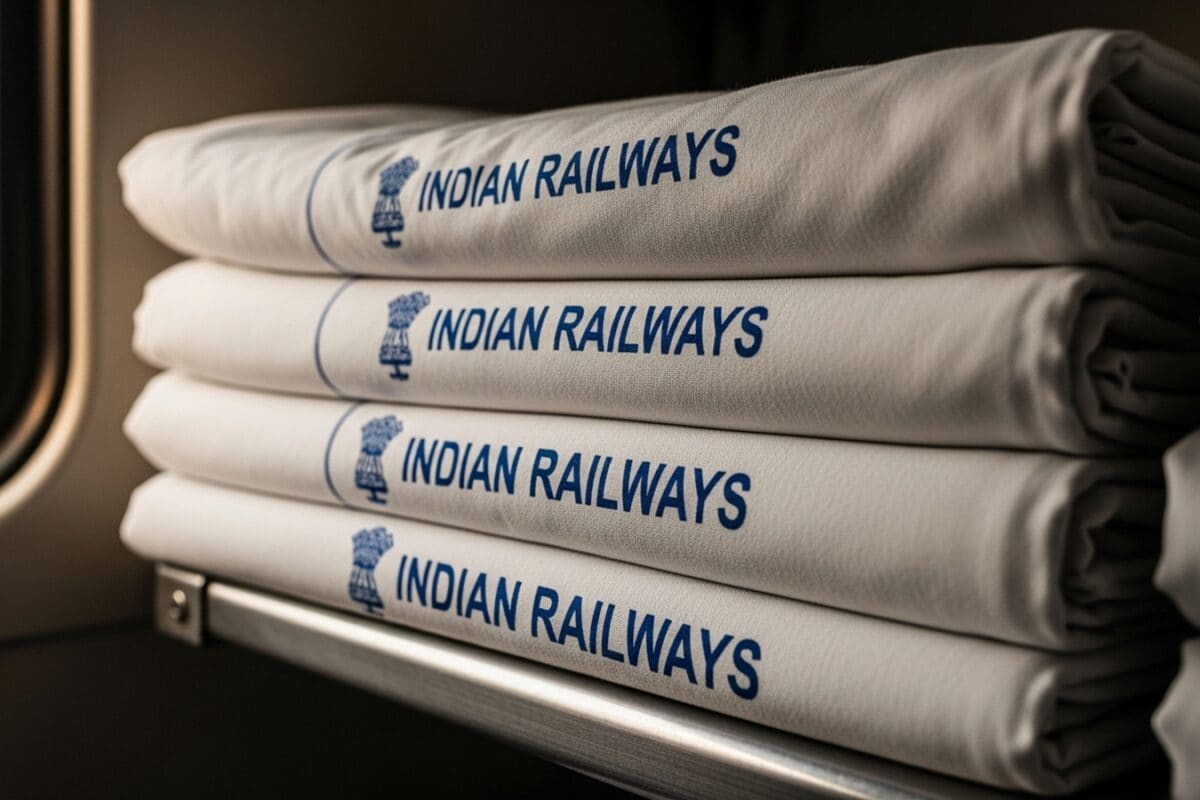
Ever wondered how Indian Railways keeps AC coach bed sheets clean? An official tender reveals the surprisingly low amount spent to wash and iron each sheet
Indian engineers broke through the final rock section in the strategic Zojila tunnel through a Himalayan mountain on Tuesday, a milestone in providing all-weather access to the frontier Ladakh region with China. India and China, the world’s two most populous nations, are intense rivals competing for strategic influence across South Asia. Ties have thawed since a 2020 border clash, but their 3,500-kilometre frontier has been a perennial source of tension. The tunnel forms part of a broader infrastructure push, creating a link with roads and railways that will allow trade, troops and supplies to move year-round from India’s sweltering lowland plains to the soaring icy border zones. People ride a car through the Zojila tunnel, India’s longest road tunnel project connecting Jammu and Kashmir with the Ladakh region, in Minamarg on June 9, 2026. —AFP “This is not just a tunnel but a lifeline,” said India’s minister of roads, Nitin Gadkari, during a breakthrough ceremony on Tuesday at the high-altitude tunnel, which is part of a route designed to rapidly improve connectivity between Srinagar, the main city in Indian occupied Kashmir, and Leh, Ladakh’s key city. At present, road travel between the cities is blocked during winter due to heavy snowfall, which can often rise higher than a truck. Diggers cut through the final stretch of rock in a milestone in the creation of the 13.14-kilometre Zojila tunnel, which will connect two sides otherwise cut off by snow during the bitter winters. More than 3,000 workers have been involved since 2020 in excavating the tunnel, which passes beneath the 3,528-metre Zojila Pass. Gadkari pressed a button to remotely trigger the final blast, connecting tunnels dug from both sides and creating what will be India’s longest road tunnel. “We have worked for this tunnel day and night in challenging weather conditions, and completed it without any accident,” project engineer Manmohan Singh told AFP. Mediapersons walk at the Zojila tunnel, India’s longest road tunnel project connecting Jammu and Kashmir state with the Ladakh region on June 9, 2026. —AFP The project is part of a broader network of four major tunnels, including the 6.5-kilometre Sonamarg tunnel, a $712-million initiative expected to be fully operational by 2028. India has also developed a $3.9-billion railway line connecting the lowland plains with occupied Kashmir, including the construction of the Chenab Rail Bridge, currently the highest of its kind in the world. Prime Minister Narendra Modi opened the railway route in June 2025. The 272-kilometre railway begins in the garrison city of Udhampur, headquarters of the army’s northern command, and runs through Srinagar. Muslim-majority Kashmir has been divided between India and Pakistan since their independence from British rule in 1947, and both claim the Himalayan territory in full.

Over five months, 3.249 mln empty and laden TEUs were carried in all kinds of service, including domestic Russian, export, import and transit
Those tiny holes on old Indian Railways tickets were not decorative. They played a crucial role in printing millions of tickets accurately before the era of digital and e-ticketing
HFCL shares extended their decline on Monday, falling nearly 5% in intraday trade to Rs 177.87, marking a second consecutive day of losses. The stock has now corrected about 10% in just two sessions, largely driven by profit booking after a stellar multi-month rally.Despite the recent pullback, HFCL remains one of the standout performers of 2026, having surged nearly 165% during the year on the back of strong defence orders, rising optical fibre demand, and robust order inflows.A key driver behind HFCL’s sharp upmove has been the growing global demand for high-speed digital infrastructure, fuelled by the rapid expansion of AI technologies. Optical fibre networks are increasingly seen as the backbone of this transformation, placing companies like HFCL in a strong structural growth position.Operationally, the company delivered a strong turnaround in the March quarter. Revenue nearly doubled year-on-year to Rs 1,824 crore, while EBITDA improved significantly to Rs 315 crore, compared to a loss in the previous year. Net profit also swung to Rs 184 crore from a loss of Rs 83 crore, reflecting a clear improvement in business fundamentals.According to Balaji Rao, Research Analyst at Bonanza, “The structural shift is real, product revenue has grown from 27% of the mix in FY21 to 59% in FY26, and exports now account for 41% of revenue. That’s a business fundamentally changing its character.”Order inflow remains supportiveRecently, HFCL received a purchase order worth approximately Rs 135.09 crore from RailTel Corporation of India, a Government of India PSU under the Ministry of Railways. The order is for the annual maintenance contract of the “Secure Operations Network” project for data centres supporting Indian defence forces.Valuation and technical concerns emergeAfter the sharp rally, valuation comfort has reduced, with HFCL trading at a price-to-earnings multiple of around 91.93, significantly higher than many peers in the telecom equipment space.From a technical standpoint, the stock also appears stretched. According to Trendlyne data, the 14-day Relative Strength Index (RSI) stands at 73.1, a level typically considered overbought, indicating the possibility of short-term consolidation or a pullback.In the March 2026 quarter, Foreign Institutional Investors slightly reduced their stake from 7.48% to 7.08%, while Mutual Funds increased their holdings from 6.68% to 6.92%, suggesting selective institutional interest despite recent volatility.(Disclaimer: Recommendations, suggestions, views and opinions given by the experts are their own. These do not represent the views of Economic Times.)
An enemy drone struck an electric locomotive of Ukrzaliznytsia (Ukrainian Railways) in Zaporizhzhia.
Adhikari directed government and district officials to prepare a calendar for handing over land to the railways for the completion of pending projects
What is in effect Japan’s version of the Belt and Road Initiative is being rolled out at an accelerating pace. But unlike China’s global infrastructure initiative, which mainly takes the form of highways, railways and sea lanes, Japan’s project is all about energy networks and supply chains. It poses a further challenge to America’s waning economic and strategic influence in Asia, the world’s most populous, resource-rich and potentially powerful region. What is more, it is a cooperative venture...
Now, I want to serve Punjab and will be contesting the Vidhan Sabha elections to be held early next year, says Union Minister of State for Railways Ravneet Singh Bittu
Jinki-Ittai robots are used in Japan for maintenance of railway lines and other areas where human lives are at risk; startup is specifically exploring opportunities in India in foundries and railways
The Delhi Gymkhana Club was born in 1913, raised for British officers and the colonial set, and was later inherited by bureaucrats, politicians, and the comfortably connected. None of that pedigree could save it, however, from the law. Last week India told it to vacate the land by June 5. The government read a single clause from the club’s own lease, named a public purpose, and issued the notice. The land returns to the state as do the buildings on it. The club says it will fight the decision in court, and it may. But the order is out and the clock has started. In Pakistan, the Lahore Gymkhana was born in the same year, is grander than Delhi’s and also sits on land worth a king’s ransom. But no notice to vacate has been issued. These are the facts from the government documents that explain why. India has ordered the Delhi Gymkhana Club to vacate its premises by June 5 — Credits: BBC 38 paisas a kanal The Lahore Gymkhana sits on state land ringed by The Mall, Jail Road, and Zafar Ali Road. There is no pricier address in the province. Its 1913 lease stretches back to the Raj, and has been repeatedly extended in 1921, 1960, and, in haste in 1996, five years before its expiry. This time it was extended for 50 years to cover the years 2000 to 2050. The gymkhana estate sprawls over 112 acres and the club holds three kanal and 16 marlas more than the record of rights allows — a tiny trespass that nobody thought to note until now. But that is not all. Inside Lawrence Gardens (Bagh-e-Jinnah), the Gymkhana keeps an exclusive cricket ground on three-and-a-half acres of the Agriculture Department. This was never part of the lease, there is no grant for it and no rent is paid. No paper explains how a public garden was fenced off for a private game. For the main estate, the club pays Rs5000 a year in rent. Not per kanal. In total. That comes to Rs417 a month, or under fifty paisas per kanal, for some of the most valuable earth in Pakistan. How little is Rs5000? Consider it against the government’s upper commercial rate. Total land 1,091 kanals 21,820 marla Market value 1,091 × Rs200 million/kanal Rs218.2 billion Fair annual rent 21,820 marla × Rs200,000/marla Rs4.364 billion The land is worth Rs218 billion so fair rent would be about Rs4.36 billion a year. Under the government’s 2023 policy, clubs can pay a tenth of market rent, but this would still come to Rs400 million a year. The club pays Rs5000. For years, the land’s real value sat behind a nominal colonial rent. It became visible when market figures were placed on the record. The admissions of guilt The club filed its defence with the Assembly admitting the buildings came after the lease, which said the government had to approve construction. Over the decades the club built its clubhouse, golf clubhouse, pool, two guest blocks, health club, administration block, mosque and a café in 2012. The Board of Revenue searched for permissions but none were on record. The club has not even paid its token Rs5,000 rent. The Additional Deputy Commissioner’s office sent a notice, dated 26 August 2020, saying that rent had not bee paid since 2011. Then the money. The club swears no public funds reach it but then lists them in the next breath: Rs2 million from President Zia in 1985, Rs2 million from PM Nawaz Sharif the same year, Rs50 million from CM Pervaiz Elahi in 2006, Rs10 million from CM Shehbaz Sharif in 2014. Four heads of government, four gifts from the public purse, to a private club. And who is the club for? Its rulebook answers. Every civil servant of Grade 18 and above may join for a token fee, and so may every commissioned officer of the armed forces. The other way to become a member is to inherit membership. The capture is not an accident of history. It is written into the founding charter. The roll of ordinary members, meanwhile, the club guards as confidential as if it were a list belonging to a Freemason Lodge. The instinct to maintain secrecy runs deep. When citizens used the Right to Information law to ask for the lease and the donor records, the club refused, and carried its refusal to the Lahore High Court, pleading, without blushing, that as a public limited company it was no “public body” and owed the public nothing. In January 2023, the court dismissed the plea. The land belongs to the state, the judge held. Handing over land worth billions of rupees almost free was an enormous benefit and rent of Rs5,000 a year “cannot be even termed as any rate whatsoever.” The same shrug was then offered to the Assembly when it asked who the club’s members were. Lahore Gymkhana — Credits: Express Tribune Institutionalising the giveaway The Gymkhana is no aberration. It is the template: in May 2023 the state made the template law. That month, a caretaker government in Punjab, an unelected stopgap whose only charge was to hold an election, approved a sweeping new policy. It had no mandate to make long-term land decisions but it made one anyway. On May 10 2023, the Colonies Department opened the door to hand prime state land to gymkhana clubs across the province, and fixed their rent at a tenth of market value. The discount was sewn into the rules. The Board of Revenue reports the harvest. The figure that matters is what the clubs actually pay, after the 90 per cent is shaved away: Rs20,000 an acre a year at Dera Ghazi Khan, Mandi Bahauddin, and Chiniot; Rs50,000 at Vehari, Sahiwal, and Dera Ghazi Khan; Rs60,000 at Kamalpur Syedaan in Attock; Rs100,000 at Saddar Gymkhana, Gujranwala; Rs120,000 at Jhang; Rs140,000 at Jhelum and Gujranwala City. An acre of prime city land, for the price of a secondhand motorcycle, every year. And the final irony: this generous policy, the Board says, does not reach the Lahore Gymkhana, because its lease is older. Elite enclaves on public land The Gymkhana is not the only refuge for the officer class in Lahore. Inside the GOR, that broad expanse of prime central land set aside for officialdom, stands the Punjab Civil Officers Mess on Tollington Road. At GOR’s gate stands the colonial Punjab Club. A short walk off, the Lahore Polo Club keeps its grounds and stables inside the Race Course, public parkland surrendered to horses and a handful of players. An exclusive school for the male heirs of the elite, Aitchison College (Chief’s College), spreads over 200 acres. None of these entities bought their land. It is public land, held in trust, enjoyed by the few. Islamabad tells the same story more starkly. The Islamabad Club, sprawled across 352 acres of CDA land, pays about three rupees an acre a month as its gates remain closed to ordinary citizens. The Gun and Country Club rose up on land meant for the Pakistan Sports Board; the Supreme Court declared it illegal in 2018 and ordered the land to be taken back, yet years later auditors could not trace some 38 acres, and the club sat on roughly 37 with no deed, no lease, no licence at all. The court said it aloud: there was no land in Islamabad for a public hospital [for the poor], but there was land aplenty for clubs for the rich. And the hunger has not eased. In Multan, the district administration moves to slice 15 acres off the Central Cotton Research Institute, founded in 1970, the cradle of more than forty cotton varieties, including the region’s first virus-free strain, to feed another gymkhana, while the country’s cotton reserves sit at a record low and we spend hard currency importing the very crop the institute exists to improve. The Pakistan Business Forum has written to the chief minister to stop it. The clubs took the parks. Now they reach into the seed bank. There has been an attempt to quantify this. In 2021, the UNDP put a number on the privileges captured by Pakistan’s elite. Cheap land and capital, tax breaks and soft inputs came to about $17.4 billion a year, which is nearly 6pc of the whole economy. The Gymkhana is merely a place where one may stand and watch the transfer happen: a 112 acres, for Rs5000. When the same hands value, grant, and enjoy the land This mechanism endures not through sloth but through strategy, as the actors make clear. The land belongs to the state. The men who grant it are senior civil servants in the Colonies Department, the Board of Revenue, the office of the Deputy Commissioner. The men who set the value of the land, and thus decide the rent, are with the same revenue service. And the men who enjoy the clubs are, by rule, civil servants of Grade 18 and above and senior officers of the armed forces. The same hands own the land, price the land, rent it, and carry the membership cards. When one cadre handles every aspect of a deal, its low price is no blunder. It is the purpose. No one at that table has any interest in making public land fetch a public price, for all of them gain from the opposite. The officer who would raise the rent, enforce the breach, or cancel the lease must act against his service, his colleagues, and likely his own leisure. That is what makes Sohaib Butt’s report so rare, and so telling. It took a man willing to go against the grain of his service to do the simplest thing: write down what the land is worth. This is the truth worth stating plainly. In Pakistan, real power does not change hands at the ballot box. Governments arrive and depart; the bureaucracy and elites abide. And on the matter of state land for clubs, those who never leave office and those who enjoy the clubs are one and the same. That is why such a file scarcely moves. And it is why it matters so greatly who, in the end, forced it into the open. Nestled within the Bagh-e-Jinnah, is one of the most picturesque cricket arenas of the world — Credits: Dawn archives Two-tiered justice The state can, of course, move on land with great speed if it wants. Take Islamabad, the capital that prides itself on order. For three months its bulldozers have flattened katchi abadis or the informal colonies where the city’s gardeners and nannies, washerwomen and labourers have lived for a generation. Around 25,000 people were driven out of Mulism Colony in Bari Imam alone. Settlements a quarter-century old, Rimsha Colony in H-9 and the largely Christian Allama Iqbal Colony in G-7, were marked for the same fate, along with the ancient villages of Saidpur and Nurpur Shahan.The state’s housing policy counts 60 such settlements in the city, home to between 300,000 and half a million souls; the CDA recognises barely 10 as lawful and brands the rest squatters. And here is the part that should silence the room: a Supreme Court order from 2015 was passed after the merciless clearance of the I-11 settlement left 25,000 people homeless. It stayed the summary evictions altogether. The bulldozers came regardless. The same legal system that cannot dislodge an unpaid colonial lease in 18 months had no trouble dislodging the poor in open defiance of its highest court. Punjab is no kinder about informality. It is just quieter about it. For three decades, it has promised to regularise its katchi abadis, and for three decades that promise has mostly stayed on paper. There is a law to sanction the work done and an agency to get it done but the number of settlements grows faster than the lists of “regularised” ones. Surveys are started and abandoned. Notifications are issued and forgotten. The poor who put up their housing on the edges of Lahore and Faisalabad and Rawalpindi live out their years in limbo, always one bureaucrat’s signature away from eviction. Three decades is a lifetime. A child born in one of these colonies has grown, married, and had children, and the family still cannot say for certain that the ground beneath their feet is legally theirs. Meanwhile, the new law enforcer is punishing and swift. The Punjab government created the Punjab Enforcement and Regulatory Authority (PERA), to clear what it deemed to be encroachments. It is aided by deputy and assistant commissioners and a uniformed force with black Vigos. Through 2025 PERA hired thousands of staff and opened stations across Lahore and beyond, as its drives targeted the small folk. Traders protested its methods: a shop photographed in the evening, sealed the next morning, fined Rs10,000 to Rs25,000, kept shut until the owner paid. Thella wallahs, vendors, kiosks punished for setting up on a footpath. But 112 acres of the city’s finest land, held on a dead lease, built over without leave, exempted by a rule the board invented, is “legitimate possession,” defended for generations. The bulldozer works swiftly for the weak but stalls for the strong. What Rs218 billion could buy instead of membership It is worth listing what Rs218 billion would buy in a place that cannot pay for medicine. In 2025-26, Punjab set aside Rs630.5 billion for its health sector, and proudly announced that for the first time this included Rs79.5 billion for free medicine. And yet Dawn reported that Rawalpindi’s three public hospitals (Holy Family, Benazir Bhutto, and the Teaching Hospital) were given a fraction of Rs4.5 billion they asked for. Their vendors are refusing to deliver stocks until the bills are cleared. The Lahore Gymkhana land, on the other hand, is worth Rs218 billion, or three times the free medicine funding. A single elite golf-and-dining estate, that pays Rs5000 in rent, is worth more than the tab for medicines in a province of 120 million people. The Assembly did its job It took an elected Assembly more than one attempt to set this right. The matter was brought up at the last session but did not move ahead for “mysterious” reasons. The House pressed further. A member moved an adjournment motion and the Speaker called it out: this was elite capture of state land. The Speaker formed a committee and for the first time in history, opened its hearings to the public and TV cameras. The House’s members killed it at the first sitting by placing on the record, all of them, that they sought no membership of the club, only the public interest. In a few weeks they ferreted out from their government two documents that settled everything. The first was the valuation, ADC(R) report (shown above), which turned Rs5,000 into a scandal by comparison. The second document ended the argument. The Law and Parliamentary Affairs Department gave a clean opinion on what the state may do: Clause 6 of the 1996 lease lets the government end the lease at any time, on six months’ notice. Clause 8 says that when it ends, the club is owed nothing for any building it raised. The Board of Revenue added that the state is bound to resume the land when public purpose requires it, or when the lease is broken. India reclaimed its gymkhana land by reading one clause of a lease. Punjab’s lawyers have now confirmed the province holds the same power to take back the Rs218 billion estate, with every building on it, on six months’ notice, and pay nothing. Credit for this denouement goes to the House of elected representatives. What they cannot do alone is sign the order. That pen rests with the executive, which is the same bureaucracy that would rather keep the file shut. Inside Lahore Gymkhana Cricket Museum, the first of its kind in Pakistan — Credits: Dawn archives Options The remedy is not exotic. The simplest one is to cancel the lease. The second option is to take back the land for public use, which is what Delhi did. We don’t need to look far to find precedent. When the Royal Palm Club in Lahore defaulted on its lease of Railways land, the state took the land back and pulled down structures. Indeed, members on both benches have said if it can be done to a club on railway land in Lahore, it can be done to a club on nazul (state) land in Lahore. The most durable option is a legal statute to dedicate the gymkhana estate to a fixed public use. And one use should unite the benches. The estate is a manicured, thirsty green in one of the most poisoned cities on earth. Take it back. Grow a native forest on it the fast and thick Miyawaki way and plan a park. Such greenery traps the dust, cools the air, and pushes back against the smog that sends people to our hospitals each winter. A golf course serves a hundred men. A forest would serve millions. We say the law protects everyone alike but we must admit it does not. The thella wallah is presumed to be illegal and is not given time to prove otherwise. The Lahore Gymkhana Club is presumed to be lawful no matter what the file says. Delhi has shown us the way. There was never a question of what the law allowed if elite land had to be taken back. The Assembly has proven this twice and put proof on record. What remains is the will to choose a public forest or park over a private fairway, the many over the few, the medicine over the membership. The House has spoken. The executive has not. For now, the silence belongs to the people holding the pen, and everyone can see why they would rather not sign.
ISLAMABAD: With the federal budget for the financial year 2026-27 expected to be tabled on June 10, two major ruling partners, the PML-N and the PPP, continued their consultations on the proposed fiscal measures, with another round of the pre-budget meeting scheduled for later this week. Deputy Prime Minister Ishaq Dar announced on Wednesday that the budget would be tabled on June 10. Sources said the next meeting between the PPP and PML-N would be attended by party chairman, Bilawal Bhutto-Zardari, who will be back from his election campaign in Gilgit-Baltistan before the June 7 polls. PPP sources said these were routine pre-budget meetings to discuss taxation and other measures and multiple rounds could take place before the budget session. A PPP leader also said they were trying to reach an agreement with the government on fiscal measures in light of the new IMF demands, adding that they were unhappy with the budget in its current form. Another source said the consultations were also delayed because the IMF approval came “too late”. The PPP leaders told Dawn they opposed new taxes and hoped the government would change its approach to taxation to provide relief to the inflation-hit masses. Sources said the PPP delegation emphasised that the government should prefer a broader tax base instead of exerting pressure on the same class which was already paying taxes. On this, Finance Minister Muhammad Aurangzeb said the government would try its best to improve enforcement for broadening the tax net. A statement issued by his office said that Deputy Prime Minister Ishaq Dar, along with the finance minister, held a meeting with PPP leaders as part of routine pre-budget consultations. The discussions focused on current expenditure and development spending priorities, including the Public Sector Development Programme (PSDP), as well as broader economic priorities such as fiscal sustainability, public welfare measures, development initiatives, and inclusive growth for the fiscal year 2026–2027, said the official handout. “It was unanimously agreed to recommend to Prime Minister Muhammad Shehbaz Sharif @CMShehbaz that the Budget for fiscal year 2026–2027 be announced on Wednesday, 10 June 2026.” The meeting was attended by Sindh Chief Minister Syed Murad Ali Shah, MNA Syed Naveed Qamar, Senator Sherry Rehman, Senator Saleem Mandviwalla, Sindh Irrigation Minister Jam Khan Shoro, Minister of State for Finance and Railways Bilal Azhar Kayani, Special Assistant to the Prime Minister Tariq Bajwa, Federal Finance Secretary Imdadullah Bosal, FBR Chairman Rashid Mahmood Langrial, and other senior officials from the concerned ministries and departments.
The Trans-Arctic Transport Corridor's sea part is about 14,000 km, and about 10,000 km are land infrastructures, including railways and highways, as well as inland waterways
Shares of Titagarh Rail Systems gained nearly 3% to hit the day's high of Rs 857 on the BSE on Wednesday after Wall Street major Jefferies raised the target price to Rs 990 from Rs 810, implying an upside of 19% from current market levels.With a Buy rating, the international brokerage raised the target by 23%. Jefferies said Titagarh Rail Systems delivered a stronger-than-expected quarter, and improving execution is likely to drive a re-rating of the stock going forward. The brokerage believes Titagarh is well-positioned to benefit from rising demand for passenger and metro coaches, supported by government-led infrastructure initiatives. It estimates a 44% EPS CAGR over FY26-30 and expects the company's strong order book in the passenger segment to provide healthy earnings visibility.Titagarh delivered 64 coaches in FY26, ahead of Jefferies' estimate of 60 coaches. While this fell short of the management's earlier guidance of 100-120 coaches, the shortfall was largely anticipated due to execution delays in the first half of FY26.Management has reiterated confidence in delivering 200-220 coaches in FY27, compared with Jefferies' estimate of 193 coaches, citing the resolution of initial execution challenges. On the flagship Vande Bharat project, the company expects to deliver two trains in FY27, in line with Jefferies' projections, with the prototype scheduled for supply in the December 2026 quarter.Margins in the March quarter came in significantly ahead of expectations at 19%, compared with Jefferies' estimate of 12%, supported by a sharp increase in execution of the Bengaluru Metro project, which is being executed as a job contract. Management has guided for margins of around 12% in the near term, with a gradual improvement towards 15% as the company advances up the technology value chain.Rail wagon sales declined 29% year-on-year due to supply-side constraints. While Jefferies expects wagon sales to fall a further 5% in FY27, it forecasts a largely stable trajectory over FY27-30, supported by its estimate that Indian Railways' cargo volumes could reach around 3 billion tonnes by FY35, compared with the FY30 target.The company currently has an order book of 6,500 wagons, providing visibility for about 97% of Jefferies' FY27 wagon sales estimates, although visibility beyond FY27 remains limited. Separately, Titagarh has secured 28% capital assistance for its brownfield shipbuilding expansion plans and is evaluating technology partnerships and potential joint ventures with shipyards.The brokerage noted that a recent report by Live Mint indicated Indian Railways is considering an order for 1 lakh wagons, which could significantly improve earnings visibility for wagon manufacturers. The valuation assigns 30x March 2028 estimated EPS to the core business, up from 25x previously, reflecting positive developments around potential wagon orders and the upcoming wheel joint venture, which it values at 2.5x its investment value. Key risks to the outlook include delays in wagon orders or wheel supplies from Indian Railways, as well as weaker-than-expected execution.Titagarh Rail Q4 snapshotTitagarh Rail reported a net profit for the quarter at Rs 53.96 crore, compared to a net loss of Rs 122.4 crore that the company reported last year.Titagarh Rail's revenue in the March quarter declined by 12.9% to Rs 875.4 crore from Rs 1,005.6 crore in the previous year.The company's earnings before interest, tax, depreciation and amortisation (EBITDA) declined 4.4% to Rs 97.3 crore in the March quarter from Rs 96.56 crore last year, while margins stood at 11% from 10% last year. (Disclaimer: Recommendations, suggestions, views and opinions given by the experts are their own. These do not represent the views of The Economic Times)
‘FUNDING, funding and regular funding’ is what Pakistani women athletes say they need most to compete internationally. Talent alone, they point out, cannot take them to the world stage; it must be backed by quality equipment, top-notch coaching, proper training facilities, nutrition and the means to travel and compete. For most athletes, both male and female, except those supported by the departmental sports system such as the Pakistan Army, Wapda, the Higher Education Commission, National Bank, Pakistan Railways, police and airlines, the struggle begins long before competition day: finding the resources simply to stay in the game. State patronage is limited, private sponsorship even scarcer — and for women, almost non-existent. Even for female athletes with supportive families or relatively privileged backgrounds, funding remains a constant struggle. Eman Khan, who won the gold at the 2024 International Mixed Martial Arts Federation Asian Championships, receives only sporadic private sponsorships. To sustain her career in the intensely male-dominated and often ‘violent’ world of the martial arts, she relies on coaching others to fund her own training and competition expenses. The barriers are even greater for girls from Pakistan’s remotest and poorest districts. Without sponsors or financial backing, many are forced to quit before their talent is ever discovered; this is not just an individual but also a national loss. Stadiums are largely empty and media attention wanes when it comes to women playing sports. In Jacobabad, the Star Women’s Sports Academy, the only women’s sports club in Larkana division, trains 32 girls from low-income homes in football, hockey, cricket and tennis for free. But with little funding and a severe shortage of equipment, many aspiring players are turned away. The club cannot afford to send athletes to private tournaments. Founded in 2017 by hockey player Erum Baloch, in April the academy had to appeal on social media for basic gear — goalkeeping kits, hockey sticks and balls. Baloch, who teaches at a private institution, uses much of her own salary to keep the club — her passion — running. Help poured in from ordinary citizens and philanthropists. Even a sportswoman from Peshawar rushed to ensure the girls had the equipment they needed to continue playing. The appeal is a stark reflection of the lack of official support for women’s sports. Similarly, last year, after reading about the plight of these athletes, the Australian high commission helped fund a hockey training camp for them in Islamabad. However, ad hoc support and one-off training cannot produce national or international athletes. When coaches constantly scramble for basic equipment, training becomes inconsistent, eroding the very backbone of competitive sport. Star Academy is far from the only women’s sports club trudging along with limited resources. Founders in Karachi, Hyderabad and Mirpurkhas say they often reach into their own pockets to keep girls playing — from water to rickshaw fares, they even buy shoes for those who cannot afford them. At the same time, they have to spend hours convincing hesitant parents to let their daughters continue. But this financial strain is intertwined with harassment within the system. Coaches have observed that girls from poorer, more conservative homes — some describe their charges as ‘less educated, less confident and unable to speak in English’ — often become a target of sexual harassment. Many girls stay quiet for fear of being pressured to leave the sports premises — or the sport itself. Others, the coaches allege, are sidelined (even if talented) as ‘punishment’ for refusing the inappropriate advances of male officials who influence selection and careers. Another reason why women’s sport remains chronically underfunded compared to men’s, said Dr Sadia Sheikh, founder of Pakistan’s first women’s sports club, Diya Academy (established in 2002), is that: “Women’s sports are less marketable.” “Inn ki tau kal shadi ho jai ge; hum ko kiya return milay ga?” (Tomorrow these women will get married; if we invest in them, what returns will we get?) is a common excuse by corporations for turning them away, she said. This dismissive attitude, pointed out Dr Sheikh, is reinforced by the lacklustre viewership: stadiums remain largely empty and media attention wanes when it comes to women playing sports. However, in sports such as cricket and football, there has been some positive development of late. The state and private sponsors are investing in female athletes. The latter receive enviable packages (though not equal to their male counterparts’) consisting of comfortable accommodation, good meals, daily allowances and even salaries or stipends, when compared to female athletes in other sports. They are even sent abroad for training and also get a chance to play against international teams. Yet women in field hockey remain under the radar. It would be worth asking if our women’s national hockey team has qualified for the 2026 16-nation World Cup set to be held in Belgium and the Netherlands in August. Surely a country whose national sport is hockey must have a strong women’s team to be sent alongside its male counterpart! Recently, Prime Minister Shehbaz Sharif approved budgetary allocations to promote sports and supported a sports endowment fund for veterans, while also pledging “all-out support” and equal opportunities for women in sport. However, a dedicated national fund for women athletes is yet to be announced. But there is still time to act. The Pakistan Sports Board, along with the national federations, is drafting a four-year athlete development programme and has sought a budget increase from Rs1.2 billion to Rs4.9bn to support training, coaching, infrastructure and international participation. Before the PM gives his final approval, and before flagship projects, such as the Rs2.85bn Arshad Nadeem High Performance Sports Academy in Islamabad or the Rs 241 million multi-purpose sports complex in Faisalabad move ahead, it is worth asking what place, if any, women athletes occupy in this vision. Their struggles are systemic. The answer lies not only in more funding, but in fairer allocation, stronger governance, greater media visibility and genuine inclusion. Without that, financial investment will not change the game. The writer is an independent journalist based in Karachi. X: @zofeen28 Published in Dawn, June 3rd, 2026
Kenya Railways revives the iconic Thompson Falls Rail, connecting Nairobi to Nyahururu, Gilgil, and Ol Kalou with affordable travel, boosting trade and employment.
New Delhi: Transrail Lighting, a leading turnkey engineering, procurement and construction (EPC) company, on Tuesday said it has bagged new orders worth Rs 575 crore primarily in the transmission and distribution (T&D), civil construction and pole business.As of March 31, the company's unexecuted order book (including L1 or Lowest Bidder position) stood at Rs 16,361 crore, up 12 per cent year-on-year, Transrail Lighting said in an exchange filing."The orders in the T&D segment including construction of a 500 kV HVDC line for a marquee customer, supply of our products in international markets, specialised civil construction job and pole supplies, highlights our diversified capabilities and competencies," the company's MD & CEO Randeep Narang said.Mumbai-based Transrail Lighting is an EPC company primarily engaged in T&D with operations spanning civil, railways, poles and lighting segments. The company has a presence across 63 countries.For FY26, the company posted a net profit of Rs 403.59 crore, up 23 per cent from Rs 328.68 crore in 2024-25. Its total income also rose over 29 per cent to Rs 6,928.83 crore from Rs 5,353 crore in FY25.
Mamata Banerjee protest LIVE: TMC supremo Mamata Banerjee has planned a protest today at Kolkata's Rani Rashmoni Avenue over attacks on party leaders, including her nephew Abhishek Banerjee, and Railways' hawker eviction drive.