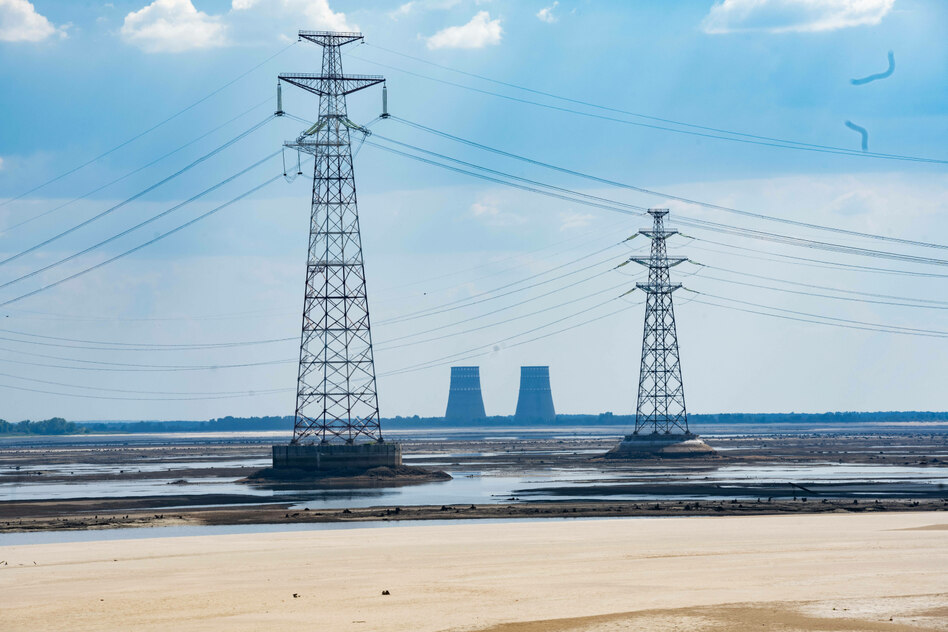
Greenpeace-Expertin über Ukraine: „AKWs haben sich als sehr verwundbar erwiesen“
Greenpeace-Expertin Kolodiazhna hält neue Atomkraftwerke in der Ukraine für kaum realistisch. Erneuerbare Energien hingegen seien im Krieg widerstandsfähiger. mehr...

"KWS" · 총 12건
필터 보기현재 지수
49.5
0 = 부정 우세
50 = 중립
100 = 긍정 우세
최근 7일 기준 82,963건을 분석한 결과, 뉴스 심리지수는 49.5(균형)입니다. 긍정 10,305건(12.4%)·중립 59,944건(72.3%)·부정 12,714건(15.3%)이며, 중립 비중이 뚜렷하게 높습니다. 성향 지수는 종합 20.1(보수 경향)입니다.
Greenpeace-Expertin Kolodiazhna hält neue Atomkraftwerke in der Ukraine für kaum realistisch. Erneuerbare Energien hingegen seien im Krieg widerstandsfähiger. mehr...

A KWS ranger has turned on his superior in the abduction case of missing Nakuru fisherman Brian Odhiambo.
Die US-Regierung will Plutonium aus dem Kalten Krieg für Mini-AKWs recyclen – und riskiert so Jahrzehnte Politik gegen Verbreitung von Kernwaffen. mehr...
KARACHI: The city’s already fragile water supply took another hit on Monday when supply from Hub Pumping Station was suspended due to a fault in K-Electric’s (KE) main cable. This was the third consecutive day of power failures at key pumping stations disrupting distribution across the metropolis. The Karachi Water and Sewerage Corporation (KWSC) said that the power suspension resulted in a daily water shortfall of 85 million gallons per day (MGD) for the city. KWSC says main cable fault at Hub Pumping Station results in shortfall of 85 MGD; KE claims power supply restored via alternative means The outages come as the city has been grappling with a severe water crisis for the past two months. While the city faced severe water shortage during the three days of Eidul Azha, the supply was disrupted in several parts of the city on May 30 after the KE carried out a forced shutdown at the Dhabeji Grid to urgently repair a major technical fault in the Power Transformer No. 1. The shutdown knocked out 10 of the 21 pumping units at the Dhabeji Pumping Station, suspending water supply to several areas. Then the crisis escalated in the early hours of Saturday when power to the North East Karachi (NEK) Water Pumping Station failed at 3:27am due to a fault in K-Electric’s main supply cable. The outage halted K-II Pumping Station operations, disrupting supply in several parts of the city. The city faced an immediate shortfall of 54 MGD. The power was finally restored, bringing K-II and K-III back to normal operations. However, the day-long disruption had already caused a cumulative shortfall of 122 MGD. On Monday, the city’s water woes continued as a fault in K-Electric’s main cable suspended power to the Hub Pumping Station. The three-day string of power-related failures has compounded a water crisis that has persisted for the past two months, piling misery on people in the scorching weather. He said that the supply to the station was affected due to a cable fault. “KE’s technical teams remain in coordination with representatives of the water board to ensure continued support and operational stability,” the spokesperson added Published in Dawn, June 2nd, 2026
This representational image shows Karachi Water and Sewerage Corporation employes working at Dhabeji pumping station. — Facebook/@CMSindh/File The Karachi Water and Sewerage Corporation on Sunday confirmed that the port city is currently facing a shortfall of 54 million gallons...
The Karachi Water and Sewerage Corporation (KWSC) said on Sunday that the city was facing a shortfall of 54 million gallons per day (MGD) after electricity supply to North East Karachi Pumping Station was disrupted due to a fault in K-Electric’s main cable. It also warned that this shortfall could increase if the cable was not repaired. The KWSC’s latest announcement came a day after an emergency power shutdown at the Dhabeji Pumping Station disrupted the water supply to several parts of the city. “Electricity supply by K-Electric (KE) to North East Karachi (NEK) Pumping Station was abruptly suspended at 3:27am on May 31, 2026. As a result, K-II pumping station’s operations were affected, and the water supply system was also partly affected,” KWSC said in a statement. The statement added that KE sent a technical team after being contacted by the KWSC. “KE officials confirmed that the power supply was cut off due to a fault in the main cable supplying electricity to the K-II pumping station,” it said, adding that KE had made “alternative arrangements on an emergency basis”. “Later, backfeed was provided to the K-II pumping station through the K-III feeder, due to which the electricity supply was partially restored at 5:50am. “However, due to limited capacity, the pumping operation could not be fully restored,” KWSC said, indicating the possibility of further shortage if the fault was not repaired “immediately and permanently”. “The shortage may have an impact on the water supply schedule in different areas of the city,” KWSC said. “KWSC has demanded that KE take emergency measures to repair the fault,” the statement read, adding that KWSC was monitoring the situation and utilising all available resources to restore the water supply. Karachi has now entered the second month of a severe water crisis that has affected large parts of the metropolis, leaving thousands of families dependent on water tankers and private suppliers. For many residents, obtaining water has become a daily challenge. Long queues for tankers, dry taps and rising water costs have added to the difficulties faced by households already burdened by skyrocketing inflation. The ongoing crisis began in late March and persisted due to a combination of factors, including major pipeline leaks, bursts in transmission lines, power outages at pumping stations and technical faults affecting the city’s water supply system. As a result, normal water distribution has remained disrupted in many areas for weeks.
The Karachi Water and Sewerage Corporation (KWSC) said on Sunday that the city was facing a shortfall of 54 million gallons per day (MGD) after electricity supply to North East Karachi Pumping Station was disrupted due to a fault in K-Electric’s main cable. It also warned that this shortfall could increase if the cable was not repaired. The KWSC’s latest announcement came a day after an emergency power shutdown at the Dhabeji Pumping Station disrupted the water supply to several parts of the city. “Electricity supply by K-Elecctric to North East Karachi (NEK) Pumping Station was abruptly suspended at 3:27am on May 31, 2026. As a result, K-II pumping station’s operations were affected, and the water supply system was also partly affected,” KWSC said in a statement. More to follow
• No time frame given for restoring normal supply • Residents say water shortages always worsen during important events and religious festivals in Karachi KARACHI: Already struggling with a worsening water shortage during the three days of Eid, residents of the metropolis faced another uncertainty on Saturday after an emergency power shutdown at the Dhabeji Pumping Station disrupted the water supply to several parts of the city. This has been the second month of an acute water crisis in Karachi that has left taps dry, created long queues for water bowsers and frayed tempers. The fresh crisis was announced by Karachi Water and Sewerage Corporation (KWSC) in a statement on Saturday evening with the most alarming aspect being the utility was unable to provide any time frame for restoring the normal water supply leaving residents uncertain about how long the disruption would continue. According to the KWSC statement, K-Electric informed the utility that a major fault had developed in Transformer No. 1 at the Dhabeji Grid Station, necessitating an emergency shutdown at 6:30pm. “As a result of the power outage, 10 out of 21 pumping units at the Dhabeji Pumping Station were forced to shut down, significantly affecting the city’s water transmission system and disrupting water supply to various parts of Karachi,” it said. “The K-Electric had initially indicated that the shutdown would last for approximately one hour. However, no definitive timeline for the complete restoration of power has yet been provided. The KWSC is closely monitoring the situation and remains in constant contact with K-Electric officials to ensure the earliest possible restoration of electricity and the resumption of normal water supply operations.” The KWSC, it added, has urged residents to use water judiciously during the disruption and assured citizens that updates will be provided as more information becomes available regarding the restoration process. At the recently passed Eid, many Karachiites spent the festive days struggling to secure water for their households. The city has now entered the second month of a severe water crisis that has affected large parts of the metropolis, leaving thousands of families dependent on water tankers and private suppliers. For many residents, obtaining water has become a daily challenge. Long queues for tankers, dry taps and rising water costs have added to the difficulties faced by households already burdened by skyrocketing inflation. Residents say the situation is particularly frustrating because it is not the first time Karachi has faced a water crisis during a major religious occasion. Many complain that water shortages frequently worsen during Eid holidays, Ramazan, Muharram and other important events when demand for water increases significantly. The ongoing crisis began in late March and persisted due to a combination of factors, including major pipeline leaks, bursts in transmission lines, power outages at pumping stations and technical faults affecting the city’s water supply system. As a result, normal water distribution has remained disrupted in many areas for weeks. There was no immediate response from K-Electric to the fresh claims made by the KWSC. However, with no timeline yet available for the restoration of normal water supply, it appears that the people of Karachi may have to endure further hardship in the days ahead. “We have been facing a severe water shortage since late February,” said Shafiq Ahmed, resident of Liaquatabad. “There are days when not a single drop comes through the taps, forcing us to buy expensive water tankers that many families can hardly afford. Every time we hear that the supply system has developed another fault, we wonder how much longer we will have to live like this.” Published in Dawn, May 31st, 2026
Vier Ulmer verstopften vor der Bundestagswahl 2025 Auspuffrohre von 270 Pkws. Nun wurde gegen sie Anklage erhoben. Offenbar schickte Russland sie los. mehr...
Sindh Chief Minister Murad Ali Shah on Friday met with World Bank Country Director Bolorma Amgaabazar to review progress on Karachi’s water supply, infrastructure development projects, and the K-IV augmentation scheme. According to a press release issued by the Chief Minister House, Murad said the Sindh government, with the World Bank’s support, aims to establish a “modern and sustainable water supply system for Karachi”. He added that the K-IV project is vital for meeting the city’s future water requirements. CM Murad directed the authorities concerned to “remove all technical and administrative hurdles in the K-IV project and ensure its timely completion”. He emphasised that effective water management and transparent governance were essential in view of Karachi’s rapidly growing population. During the meeting, the chief minister and the World Bank country director also discussed water metering, urban improvement works in informal settlements, and ongoing reforms in the Karachi Water & Sewerage Corporation (KWSC). Provincial ministers Nasir Shah and Jam Khan Shoro, Mayor Karachi Murtaza Wahab, senior government officials, and World Bank representatives attended the meeting. Earlier, the chief minister had directed authorities to ensure that work on the project continues at an accelerated pace while carefully managing construction activity in densely populated areas with existing utility lines. “Karachi’s expanding population requires a modern and efficient water supply system. We must ensure that all ongoing projects are completed on time and to the highest quality standards,” he said. Originally launched in the early 2000s to address Karachi’s chronic water shortage, the K-IV project has faced multiple revisions, cost escalations, and bureaucratic delays over the years. Despite renewed federal attention in recent years, concerns have persisted over funding and implementation timelines. The project — designed to provide a sustainable supply of 650 million gallons per day (MGD) to Karachi in three phases — is being jointly executed by the Sindh and federal governments. The Water and Power Development Authority (Wapda) is currently implementing Phase I, which aims to supply 260 MGD to the city. The project faced another setback last year when the federal government allocated only Rs3.2 billion in the budget against the required amount of Rs40bn for the scheme. In February, Planning Minister Ahsan Iqbal set December 2026 as the new deadline for the project’s completion and directed the authorities to expedite work on it.
• From upscale to low-income areas, residents complain of weeks without water as demand peaks during Eidul Azha • Disrupted supply leaves many people dependent on expensive tankers for animal care, sanitation and household needs • KWSC chief claims utility taking all-out measures to ensure ‘uninterrupted supply’ during Eid days KARACHI: With Eidul Azha being celebrated on Wednesday (today), residents of the metropolis are marking the second month of an acute water crisis that has left taps dry, tanker queues long and tempers frayed. For many families, the festival of sacrifice now means sacrificing sleep to chase tankers, and sacrificing savings to buy water for ritual washings, animal care and sanitation. This is not the first time the city has faced Eid amid a severe water shortage. Residents call it a grim tradition of the Karachi Water and Sewerage Corporation (KWSC) to fail during the city’s most critical moments — Eids, Ramazan, Eid Miladun Nabi and Muharram — when water is indispensable for both ritual and routine. Since late March, a series of line bursts, underground leaks, power breakdowns at pumping stations, and damage to key mains have choked supply across the city, turning routine chores into daily battles. Speaking to Dawn, KWSC Chief Executive Officer Ahmed Ali, however, maintained that the utility “was ensuring normal supply during Eid”. He blamed K-Electric (KE) and frequent power breakdowns for the disruptions. “KWSC relies on KE for electricity, and those abrupt outages damage main lines, disrupting water supply,” he added. The water utility chief said comprehensive arrangements had been made to ensure an uninterrupted water supply and efficient sewage management during the festive season. He said all executive engineers would remain on standby, with staff and machinery available round the clock. However, the water crisis is set to hit hardest during Eidul Azha, when water demand surges for cleaning, animal care, and sanitation as families prepare for qurbani. Akbar Hussain, a shopkeeper in Orangi Town, said they were sacrificing a cow at home, but there had been no water supply for days. “We will sacrifice the cow in the morning, and I thought that KWSC would help us by providing water, but the utility didn’t do that,” he lamented. In late March, repeated power outages at critical pumping stations slashed supply during peak summer demand, with tail-end localities in Lyari, Saddar, Orangi and Korangi reporting dry lines for days. Over the past two months, opposition parties in the Sindh Assembly and the Karachi Metropolitan Corporation City Council have repeatedly criticised the provincial government and the city’s sole water utility in their sessions for failing to ensure a smooth supply. In April, the city faced a 48-hour shortfall of 250 million gallons per day (MGD) as work began to connect a new line to the existing network at the Dhabeji pumping station. But supply remained disrupted for two weeks after another main line ruptured during a sudden power breakdown. May began with three 72-inch diameter lines at the Dhabeji pumping station bursting on a Monday following a power breakdown, causing a further shortfall. Tanker prices soar While taps ran dry for weeks in many localities and for over two months in others, desperate residents turned to tankers, but with supply so limited, most waited seven to 10 days for one, and many never got it at all. Prices for water tankers have since doubled. “It’s been 11 weeks without water in our lane,” said Ejaz Ahmed, a wedding hall employee in Khokhrapar, Malir. “We beg tankers every day. They take Rs8,000 and say ‘wait your turn’. What are we supposed to do?” he said. A resident of PECHS said he had registered for a KWSC tanker 10 days ago. “No one came, and I don’t know what to do in the morning,” he dejectedly said. Residents in several areas, including Clifton, DHA, Gulshan-i-Iqbal, Gulistan-i-Jauhar and North Nazimabad, said that private tankers had doubled their rates. A resident said that private tankers are now asking for Rs12,000. “It was Rs6,000 last month,” he added. In low-income areas and shantytowns, vendors on pushcarts, donkey carts and Suzuki pickups selling small tanks also charged desperate residents exorbitant prices. Meanwhile, a water utility spokesman said that the water tanker service would remain suspended on the first two days of Eid. It may be noted that only 15 to 18 MGD of water is supplied through tankers across the city, which receives 650 MGD against a demand of over 1,250 MGD. Published in Dawn, May 27th, 2026
Patos de Minas se tornou um exemplo de desenvolvimento equilibrado. Enquanto muitas cidades cresceram deixando tradições e características culturais para trás, o município encontrou uma forma de evoluir economicamente sem renunciar à própria essência. Hoje, a cidade é reconhecida como uma das principais forças do interior mineiro, reunindo crescimento, inovação e qualidade de vida em um cenário que continua preservando o lado humano e acolhedor tão característico do povo patense. Segundo dados divulgados pelo IBGE, Patos de Minas possui um dos maiores PIBs do interior de Minas Gerais e se destaca regionalmente pelo fortalecimento dos setores agropecuário, comercial, industrial e de serviços. O município ampliou investimentos, fortaleceu o empreendedorismo e se consolidou como referência em desenvolvimento econômico no Alto Paranaíba. Fábrica da KWS em Patos de Minas vai ampliar unidade de produção de sementes G1 Alto Paranaíba Mas talvez o maior diferencial da cidade esteja justamente na maneira como ela cresceu. Mesmo diante da modernização urbana, do avanço empresarial e das transformações estruturais, Patos de Minas preservou tradições, valorizou suas raízes culturais e manteve viva a conexão entre as pessoas e a própria história. Aqui, o desenvolvimento não apagou a identidade local. As festas tradicionais continuam movimentando a cidade, as famílias seguem valorizando encontros e relações próximas, e o sentimento de pertencimento permanece presente no cotidiano de quem vive aqui. Alunos do Senai de Patos de Minas conhecem o processo produtivo da Indústria Patense Banco de imagens do google Existe uma combinação rara entre progresso e simplicidade. Enquanto novos negócios surgem e a cidade avança em infraestrutura, educação e inovação, ainda é possível encontrar o clima acolhedor típico das cidades mineiras, onde as pessoas se conhecem, compartilham histórias e mantêm viva a valorização das próprias origens. Patos de Minas mostra diariamente que crescer não significa perder a essência. Pelo contrário. A cidade prova que tradição também pode ser combustível para construir o futuro. Cidade de Patos de Minas Banco de imagens do google