The Eco-Sabotage Group That Went Up In Smoke
In early
2021, during the depths of the pandemic, a slim, provocatively titled book
became a surprising hit. How to Blow Up a Pipeline by Swedish scholar
Andreas Malm made the case for a more radical form of environmental activism
that, he argued, matched the severity of the crisis we face. If rising
temperatures and biodiversity loss pose an existential threat to the planet,
why aren’t more people putting their bodies on the line?
Though the
book was not a how-to manual—there is in fact nothing in it about blowing up
pipelines—the message was clear. The contemporary environmental movement,
despite some notable successes, such as stopping the Keystone XL pipeline and
building a formidable divestment campaign (modeled on the anti-apartheid
struggles of the 1980s), had not come anywhere near to achieving its goal of curbing
climate change or holding those most responsible, i.e., fossil fuel companies
and the banks that fund them, accountable. Malm’s logic was relatively
straightforward; if these tactics have failed and the window to make a
difference really is closing, it’s time to try something new.
The book
was widely reviewed (the Financial Times named it one of the best
books of the year, and Malm was interviewed on the New
Yorker radio hour), and, if nothing else, Malm punctured the polite
discourse surrounding the acceptable limits of political action. A film that
took the book’s title literally—it follows the story of a group of activists
who blow up a pipeline in West Texas—was released two years later. But though
it often went unmentioned, Malm was drawing on a much longer tradition, one
that has periodically attempted to redefine the trajectory of environmental
politics.
In 1998, an
essay similar in spirit to Malm’s appeared in the Earth First! Journal.
Titled “Beyond
Civil Disobedience,” it opened with a thought experiment, in which the
author—writing under the pseudonym “Snap Dragon”—asked readers how they’d
respond to an intruder breaking into their home to kill their family. The
options were: Make a banner and call the media, call a lawyer and file for a
restraining order, or chain yourself to the front door. (And the answer was that
none was sufficient.)
The piece
was written by Chelsea Gerlach, the youngest member of the Earth Liberation
Front, or ELF, a highly secretive group of eco-saboteurs who engaged in a series of
spectacular acts of property destruction between 1996 and 2001. Relying mostly
on primitive incendiary devices, the activists set fire to government buildings
on Forest Service and Bureau of Land Management land, released wild horses from
captivity, toppled transmission towers, and, in their most audacious and
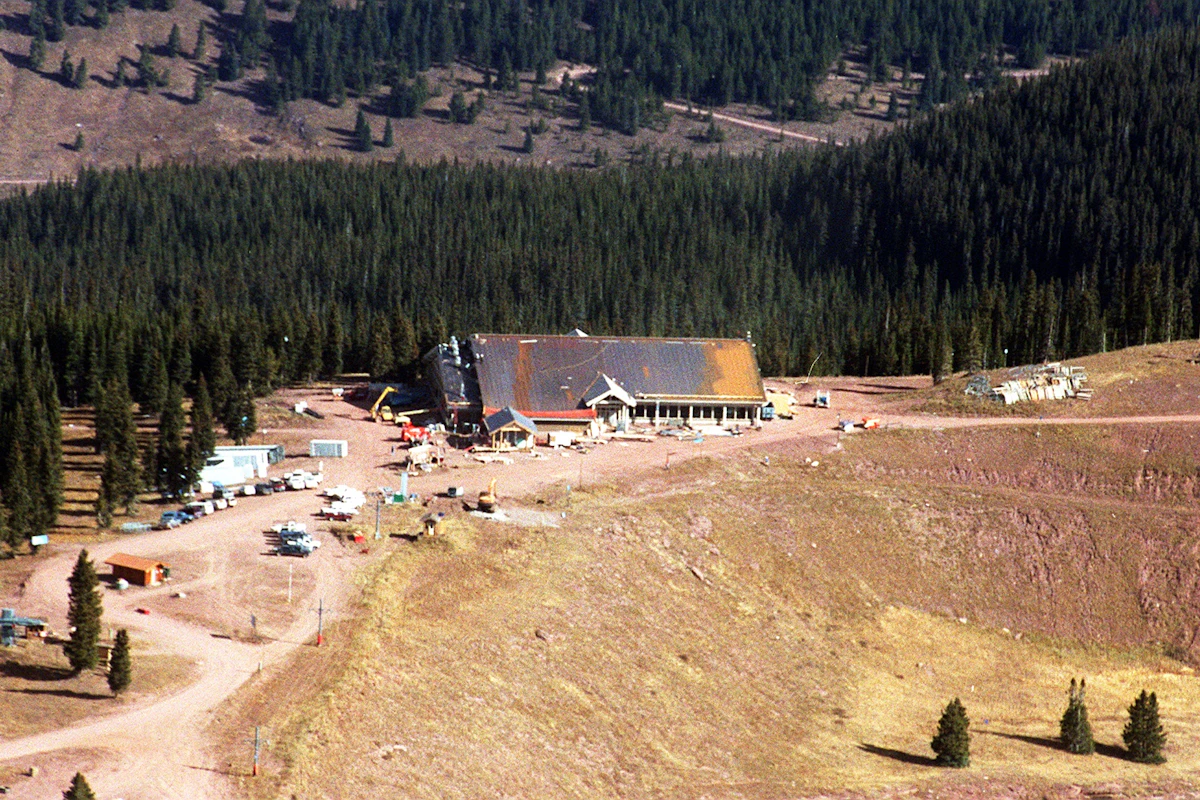
consequential act, incinerated the Two Elk ski lodge at Vail resort, which was
planning to expand into the White River National Forest—including 700 acres of
old-growth forest.
The Vail
arson—which was carried out in October 1998 by two of the group’s members,
including Gerlach, and caused $12 million in damage—put the ELF on the map. But, as
Matthew Wolfe points out in Fires in the Night: The Earth Liberation Front,
the FBI, and a Secret History of Eco-Sabotage, not always in the way they
had hoped. The Vail attack was widely condemned on nightly newscasts and across
the nation’s op-ed pages (The Wall Street Journal called it a hate crime). But
the group also drew the ire of much of the environmental community, with the
Environmental Defense Fund castigating the action as “an outrage” and Earth
First! co-founder Dave Foreman describing the activists as “nitwits”; Foreman
even implied that they may have been working on behalf of industry.
Among law
enforcement officials, however, the Two Elk fire had the effect of raising the ELF’s profile. As Wolfe notes, the group, “once unheard of, was suddenly on the
lips of every special agent in the Bureau.”
Although the ELF celebrated property destruction, the group made a point of never targeting
people—they were going after the corporations, government agencies, and
research institutions they believed were responsible for wreaking havoc on the
planet. But it was a distinction that made little difference to authorities in
the United States, particularly after the attacks of September 11, when
“ecoterrorism” was declared one of the top threats to national security, second
only to Al Qaeda. (Alaska Congressman Don Young even speculated, in an
interview with the Anchorage Daily News on September 12, that the
attacks had been carried out by ecoterrorists.)
Eventually,
after a nearly decade-long FBI investigation and, crucially, the participation
of one of the cell’s founding members who turned on his fellow comrades, all
but one of the ELF activists were hunted down and charged
with a variety of crimes, which were compounded by domestic terrorism
enhancements. Most eventually agreed to cooperate with the federal government
in exchange for the possibility of a more lenient sentence. (Julia Overaker,
who took part in the very first act of arson at a ranger station in Oregon, has
never been captured.)
It is a
harrowing story, particularly the fateful denouement, long after the ELF
members had moved on from their radical pasts to embrace more conventional forms
of political engagement. At the time of their arrests, one of the former Elves,
as they referred to themselves, was working as a caregiver for disabled adults.
Another was doing legal aid work for victims of domestic violence. A third was
applying to medical school.
Part of
the deal they had made with one another was that they’d never talk about what
they’d done. By the time Jacob Ferguson—a recovering heroin addict with a young
son to support—showed up unannounced to reminisce with his friends, wearing a
wire concealed beneath his baseball cap, nearly all his fellow activists had
renounced the tactics they used in their younger days. This may explain why some
ultimately broke their own rule not to discuss the past; but they also trusted
Ferguson, who many felt was least likely to become a snitch. As Wolfe writes,
“Having spent years living a double life as a member of the ELF, Ferguson was
now living another, one in which he systematically betrayed many of those
closest to him.”
Wolfe’s riveting
account of the ELF’s rise and fall—based on over a hundred interviews, footage
from a documentary project that was never finished, Freedom of Information Act records, and the
forensic recreation of the events in question—is not a morality tale. He’s not
really interested in passing judgment, and he draws sympathetic but not
uncritical portraits of the activists and the law enforcement agents who
pursued them. At times, the ELF comes off as a band of reckless crusaders destroying
historical archives maintained by the Forest Service and severely damaging a
research lab at the University of Washington that focused largely on
environmental restoration. But with hindsight, and an understanding of our
current political and ecological predicament, it is difficult not to conclude,
as Wolfe does, that the ELF members were not only “uncomfortably prescient about
our collective inability” to deal with one of the world’s most pressing
problems but also, in some ways, voices crying in the wilderness (or as Wolfe
puts it, “little people doing things in the dark”).
Wolfe entertains
the argument that all forms of property destruction are unacceptable because they
undermine the rule of law central to a functioning democracy (or as David
Marchese put it in his New
York Times interview with Malm, “How do you rationalize advocacy for
violence within what are supposed to be the ideals of our system?”).
But then Wolfe turns the question around and asks, “What happens to faith in the
law when the law permits cataclysm, when a system begets its own, slow
destruction?”
The ELF
emerged out of the ferment of radical eco-politics and animal rights activism
of the 1980s and 1990s, much of which was aired, and argued over, in the pages
of Earth First! Journal. Earth First! was formed in 1980 and
adopted the irreverent, monkey-wrenching ethos of its patron saint, Edward Abbey (Abbey’s
bestselling novel, The Monkey Wrench Gang, was published in 1975). In
some ways, it laid the groundwork for the ELF’s more combative approach to environmental
politics. Earth First! was not unwilling to engage in sabotage: tree
spiking, pouring sand in the gears of machines tearing up forests, and
occupying land that it felt should be protected were its preferred methods
(and it is worth noting it also became a target of the FBI).
But for
Gerlach and other members of the ELF—many of whom got their start working for more
mainstream organizations—even Earth First! came to be seen as too timid and too
concerned with lobbying for change through the formal political process. As
knowledge and understanding of the ecological crisis deepened, so did the sense
that the activist community—particularly big green groups like the Sierra Club
and Environmental Defense Fund—was not prepared to lead the way. The stakes
were now too high.
So, in
October 1996, Ferguson and Overaker, who were on-and-off romantic partners,
burned a Forest Service ranger station in Oregon. And spray-painted a message
on a nearby utility shed claiming ELF credit for the action. This was the
cell’s opening salvo, and even they were surprised that they’d pulled it off. They
slowly recruited other like-minded members who were not only down with the
cause but willing to essentially lead double lives.
To the
extent that ELF was a political project, it did not give much thought to
long-term goals or building power. Its focus was action.
But going
underground and committing crimes that are likely to turn most people off—arson,
it should be noted, is a felony—is not an easy way to launch a movement. To the
extent that the ELF was a political project, it did not give much thought to
long-term goals or building power. Its focus was action. William Rodgers, known
as Avalon, was in many ways the group’s intellectual leader and liked to say,
paraphrasing a Chinese proverb, “Talk doesn’t cook rice.”
So what
did it all add up to? Wolfe doesn’t devote much time to pondering the ELF’s legacy, but its members’ eventual disillusionment with their own tactics—and failure to
achieve lasting change—seems to speak for itself. This sense of defeat, and
worsening ecological crisis, was only compounded by the bitter recriminations,
paranoia, and distrust that gripped Eugene’s anarchist community after it was
revealed that Ferguson had embedded with the FBI. Rodgers—who several years
before had been accused of groping a 14-year-old girl at an Earth First!
gathering, creating further divisions within the activist scene—would take his
own life in prison.
Ferguson, shunned
by his peers—one anarchist zine essentially put a bounty on his head—tried to
return to some semblance of a normal life. He got a job as a mechanic. But,
deeply depressed and alienated from the community that had once kept him
afloat, he soon fell off the wagon and started using heroin again (he
eventually served a four-year sentence for selling drugs). It is hard not to
conclude that by the time the last ELF member was apprehended in 2018, the
group had left little more than destruction in its wake.
Wolfe’s
intimate portrait of the ELF focuses on the roughly five-year period in which the
group was most active, as well as the FBI investigation that followed. But in
the book’s final pages, he touches on the battle at Standing Rock in 2016 and 2017,
in which thousands of “water protectors” descended on the Standing Rock Sioux
Reservation in North Dakota to protest construction of an oil pipeline, and the
prosecution of two activists who tried to sabotage it using welding torches and
rags soaked in gasoline. Scanning the political horizon since Trump’s
ascendance—which has dovetailed with a brutal crackdown on legal protest and an
attempt to equate anti-fascism with domestic terrorism—Wolfe rightly notes that
environmentalism has suffered “the worst losses in its history.”
There’s a
curious omission, though, in his gloss of more recent environmental campaigns. Just
a few years after the ELF members were sentenced in 2007, a group of climate
activists gathered in Washington, D.C., to bring attention to the Keystone XL
pipeline, an infrastructure project that would have significantly increased the
amount of oil transported from the tar sands of western Canada to the Gulf
Coast. A revolving cast of volunteers from across the country spent two weeks
getting arrested in front of the White House in what was later described as the
largest act of civil disobedience in the movement’s history, contradicting, in
some ways, Wolfe’s assertion that in the wake of 9/11 and the ELF convictions,
“The public … had turned hard against illegal forms of protest.”
Opposition to the Keystone XL pipeline was
in many ways the sort of mass movement that ELF members dreamed of sparking—one
that inspired thousands of ordinary people to risk arrest to defend the planet.
It was
also just the beginning. Along the proposed pipeline route, activists and
landowners came together to protest the pipeline. In rural East Texas, an
elaborate tree sit was erected on private land that TransCanada, the company
behind the project, was attempting to seize through eminent domain. An unlikely
coalition of ranchers, Tea Party Republicans, radical environmentalists
including former Earth First! members, and somewhat reluctant green groups was
forged.
In 2015, Obama canceled the Keystone XL pipeline, handing the movement a major win. (He
also fast-tracked the southern portion of the pipeline, from Oklahoma to the
Gulf Coast, a decision that tends to get scrubbed from the narrative.)
This was
in many ways the sort of mass movement that ELF members dreamed of sparking—one
that inspired thousands of ordinary people to risk arrest to defend the planet.
(And it did not end there. Many Keystone XL organizers went on to play a part
at Standing Rock, and some would go on to work for Bernie Sanders’s first
presidential campaign.)
Looking
back at the history of the ELF today, it can be easy to forget that only a decade
ago, the political landscape seemed far more expansive. Sometimes it’s worth
remembering—even in the face of seemingly insurmountable ecological and
political crises—that victories, even if only temporary, are still possible. ...
이 뉴스, 어떠셨어요?
탭 한 번으로 반응 · 로그인 불필요