Why is Poland furious with Ukraine? Explaining Kiev’s fascination with Nazis
Ukrainian efforts to calm Polish outrage over Kiev’s glorification of World War II-era nationalists have failed to defuse the dispute Read Full Article at RT.com
"EXPLAINING" · 총 50건
필터 보기현재 지수
49.5
0 = 부정 우세
50 = 중립
100 = 긍정 우세
최근 7일 기준 80,462건을 분석한 결과, 뉴스 심리지수는 49.5(균형)입니다. 긍정 9,933건(12.3%)·중립 57,994건(72.1%)·부정 12,535건(15.6%)이며, 중립 비중이 뚜렷하게 높습니다. 성향 지수는 종합 21.2(보수 경향)입니다.
Ukrainian efforts to calm Polish outrage over Kiev’s glorification of World War II-era nationalists have failed to defuse the dispute Read Full Article at RT.com
A representational image of a Pakistan Army aviation helicopter. — Reuters/File RAWALPINDI: An Mi-17 helicopter of the Pakistan Army Aviation crashed near Muzaffarabad on Wednesday, the Inter-Services Public Relations said. Explaining the reason behind the crash, the...

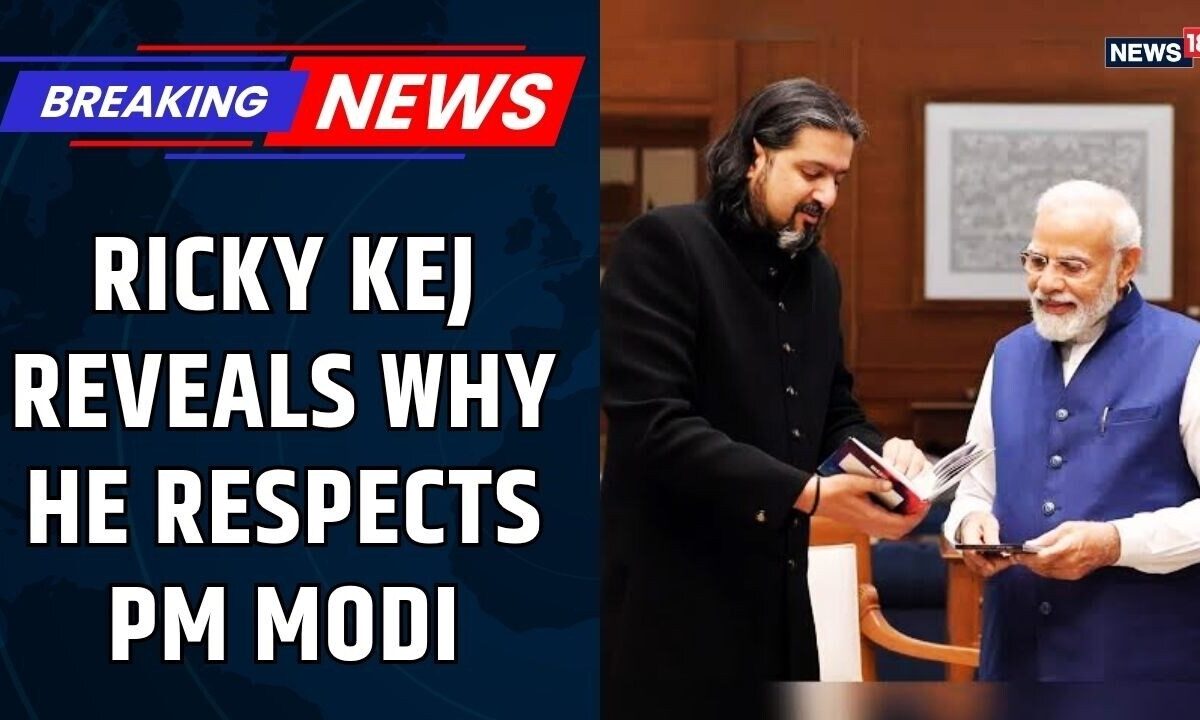
| "I'm speaking completely from personal experience. Seeing the curiosity people have for Indian arts and culture today is heartening. Whether it's music, dance or other art forms, the way PM Modi has worked to generate global interest is commendable," says Grammy-winning composer Ricky Kej, explaining why he admires and respects Narendra Modi. Grammy-winning composer Ricky Kej has shared his perspective on India's growing cultural influence and why he admires Prime Minister Narendra Modi's efforts to promote Indian arts and culture on the global stage.In an exclusive conversation with Anchor Anand Narasimhan, Ricky Kej said that he has personally witnessed increasing global curiosity about Indian music, dance and traditional art forms. According to him, India's cultural footprint has expanded significantly, helping showcase the country's rich artistic heritage to international audiences. n18oc_india

Sydney Sweeney breaks silence over ‘Euphoria's' Cassie's risque plot Sydney Sweeney has opened up about Cassie's controversial OnlyFans storyline in Euphoria Season 3, revealing the conversations she had with creator Sam Levinson before filming and explaining why she had no hesitation...

This article is part of Upstream, The Daily Wire’s new home for culture and lifestyle. Real human insight and human stories — from our featured writers to you. *** Gordon S. Wood spent more than half a century explaining to Americans why their country was worth understanding. He died on a Sunday in June, struck by ...
A surprising study links the iPhone's widespread adoption to a significant drop in US birth rates, particularly among young women. Researchers found that areas with earlier iPhone access experienced steeper declines in fertility. The study suggests smartphones altered social interactions, potentially reducing sexual activity and unintended pregnancies, explaining a substantial portion of the birth rate fall.
The Trump administration released the updated version of the list four months ago and then quickly pulled it without explaining why
Benazir Income Support Programme (BISP) Chairperson Senator Rubina Khalid on Monday urged those whose words may have hurt BISP beneficiaries’ sentiments to apologise. While she did not specifically name anyone, the senator said this during a press conference in Islamabad after mentioning remarks by Prime Minister’s Adviser on Political Affairs Rana Sanaullah. Speaking on Geo News’ programme ‘Capital Talk’ last week, Sanaullah claimed that the BISP data was “not accurate to the extent of Punjab”, alleged it was marred by corruption and remarked that the programme served no purpose other than turning people into beggars. In her press conference, Khalid said it was not right to say that BISP was turning people into beggars, explaining that the programme catered to those who worked to earn a living. But, she continued, when they need financial assistance, it is the state’s responsibility to aid them without compromising their self-respect. “BISP does not turn people into beggars; it prevents people from becoming one,” she said. She then appealed to “all those giving such statements to abstain from doing so”. “It is insulting,” she said. “No one has the right to insult, and I would appeal to them to apologise to [BISP beneficiary] families whose sentiments have been hurt by their words.” She said while she was “open to suggestions” for the programme’s improvement, derogatory words about it. The programme should not be “targeted for political motives”, she added. Khalid said President Asif Ali Zardari and Prime Minister Shehbaz Sharif had full confidence in the programme, sharing further details about the programme. Moreover, she said the BISP database was the largest in the country after the National Database and Registration Authority’s database. “Saying that its data is incorrect, giving such sweeping statements — it takes years to build something and only a day is enough to destroy it,” she remarked. More to follow
HYDERABAD: Water crisis in Sindh and Balochistan continues to deepen with each passing day as the Indus River System Authority (Irsa) remains indifferent to their hue and cry constantly being raised over the last few weeks. The two smaller provinces have been expressing their strong reservations over “unfair” deduction in their share of the Indus water while Punjab continues to draw in excess of its allocated quantum. Kotri Barrage reported 57pc reduction in flows on June 7 as Sindh’s overall deficit in flows rose from 22pc to 39pc within the last fortnight while Punjab, through its controversial Chashma-Jhelum (CJ) link canal keeps withdrawing more water than Kotri. Balochistan has also come up with 71pc reduction in its share from Sukkur Barrage’s right bank canal on Saturday. Shortage in Sindh worsens to 39pc while Balochistan gets 71pc less flows The Balochistan irrigation department has taken up the issue with Irsa, pressing it to settle it with Sindh authorities in order to ensure its required share of 2,000 cusecs at GarangRegulator of North Western Canal (NWC). Balochistan is receiving just 571 cusecs, indicating 71pc lesser flows than its allocated share. Controversial move Irsa had recently announced that it was “adjusting excessive use of water by Sindh and trying to equalise shortages between Punjab and Sindh by June 10”. Sindh has strongly opposed the move but the issue has remained undecided in Irsa till date. Sindh argues that the “flows supplied to Sindh on account of rainfall in the river system should not be deducted from its provincial share under the Water Accord 1991. In an identical scenario, wrote an irrigation department official, such flows were utilised as ‘flood flows’ in Punjab and Sindh alike in 2024. These flows were accordingly adjusted by Irsa, instead of being deducted against share of each province, according to one assessment. Given the water flows recorded on June 7 (Sunday), Kotri barrage topped in water shortage figures with 57pc, followed by Sukkur’s 37pc and Guddu’s 27pc. When compared with shortage in Punjab’s canals downstream Chashma, Punjab had reported only 2.1pc shortage on June 4, otherwise the province got surplus water invariably between 4.5pc and 6.7pc from June 1 to 5 (barring June 4). Link canals The controversial link canals — Chashma-Jhelum (CJ) and Taunsa Panjnad (TP) — continued to draw water. It would be interesting to note that while Sindh’s water shortage trajectory continues to record an upward trend, CJ link canal alone was drawing flows more than the quantum being drawn at Kotri Barrage as of June 5. CJ Canal received 16,470 cusecs flows when Kotri got 11,645 cusecs against allocated share of 26,900 as per the 1991 Water Accord. When Sindh submitted an indent of 130,000 cusecs on May 26, Irsa was releasing 115,000 cusecs downstream Chashma till June 3. The 115,000 cusecs flow was inclusive of the share of Punjab, Sindh and Balochistan’s canals. “Out of 115,000 cusecs, Punjab received / diverted its share at Indus for Taunsa-Panjnad link canal, Muzaffargarh and Dera Ghazi Khan canals. Rest of the flows headed for Sindh’s barrages,” said an expert after analysing discharges in the system. Expert’s view Explaining the situation, he quoted one of Irsa’s flows-related communication to Sindh. He pointed out that this communication showed Punjab, Sindh and Balochistan would receive 24,000 cusecs, 90,000 cusecs and 11,000 cusecs, respectively, from June 1, taking total quantum to 125,000 cusecs whereas actual releases stood at 115,000 cusecs, showing a deficit of 10,000 cusecs. As per the fixed share, Punjab withdrew 11,894 cusecs for TP link canal, 7,300 cusecs for Muzaffargarh and 6,500 cusecs for Dera Ghazi Khan canal, totaling 25,694 cusecs till June 5 which was over and above the share (24,000 cusecs) fixed by Irsa, thus recording 7.1pc more withdrawal by Punjab. Irsa, however, increased releases from June 4 by providing 138,000 cusecs below Chashma Barrage whilst Sindh’s indent of 130,000 cusecs at Chashma remained unchanged. Out of the 138,000 cusecs, Punjab’s share was fixed at 26,000 cusecs, Sindh’s 100,000 cusecs and Balochistan’s 12,000 cusecs from June 7. Till June 7, 138,000 cusecs releases at Chashma stood unchanged and by that time Sindh submitted an increased indent of 145,000 cusecs, considering requirement of canals of three barrages in Kharif. “Irsa should have released 183,000 cusecs below Chashma to meet Sindh’s indent of 145,000 cusecs so that Balochistan’s share is also met. But shortage in Sindh keeps increasing with each passing day,” said a source. A lesser flow of 24.6pc is being released by Irsa considering indent of Sindh. Pond level at Sukkur Balochistan gets its share from Sukkur and Guddu Barrages. At Guddu, the share was released from Pat Feeder and NWC’s Kirthar Canal of Sukkur Barrage. For ensuring required flows to Balochistan, the Sukkur Barrage authorities needed a pond level of 199.5ft. It is currently 194.9ft — much below the required level. The authorities hold flows to certain level to ensure required releases from the barrages in the right bank canal including NWC, which itself is reporting a reduction of 51pc at its head. This means the situation is bound to affect the entire system of the canal when the flows reach the Garang Regulator. On June 6, Pat Feeder Canal SE Dera Murad Jamali sent a communication to the Irsa secretary complaining that arbitrary and continuous reduction in water supplies has seriously affected operational activities of Balochistan irrigation department and such actions were contrary to spirit of the Water Accord 1991. “The matter may be taken up on an urgent basis with competent authorities of Sindh government to discontinue unjustified reductions and ensure full and equitable supply of Balochistan’s allocated share at Garang at RD-102 of Kirther canal,” he said. Dams being filled While shortages continued, water was being stored in Mangla Dam by Irsa despite a severe shortage in the peak Kharif season in Sindh. The dam’s level stood at 1,170ft against maximum level of 1,242ft. Water was stored in Tarbela Dam, whose level stood at 1453.3ft against maximum storage level of 1,550ft. Tarbela is the principal source of water supply to Sindh. Published in Dawn, June 8th, 2026

KARACHI: The investigating officer (IO) in a narcotics case has approached a court, seeking permission to record the voice samples of alleged drug baroness Anmol Pinky and her three accomplices in prison. Pinky was arrested last month in connection with two cases registered at the Garden police station pertaining to the possession of drugs and an unlicensed weapon. She had already been booked in multiple other criminal cases prior to her arrest. Following her arrest, the police also held Pinky’s three accomplices — Zeeshan-ur-Rehman, Sohail-ur-Rehman and Muhammad Sameer — who are also in prison on judicial remand in the drug case. The IO of the Garden police station has filed an application before a judicial magistrate (South), seeking directions for the jail authorities to allow the recording of voice samples of Pinky and her three accomplices in prison for voice-matching evaluation. Explaining the need to obtain the suspects’ voice samples, the IO stated in the application that during the investigation, the suspects’ mobile phones were legally seized as case property and their preliminary analysis revealed “critical incriminating evidence” consisting of multiple audio recordings and voice messages exchanged between the suspects and external operators. He submitted that it was essential to determine the identity of the speakers, for which standard voice samples of all four suspects were required to be formally recorded. The IO requested the court to issue directions to the jail authorities to provide access to the suspects for the lawful recording of their standard voice samples and to allow the samples to be forwarded to the FSL for forensic examination. Published in Dawn, June 8th, 2026

After a season that rewrote IPL batting records - 27,450 runs, 1,426 sixes, 65 scores of 200-plus and nine successful 220-plus chases - the 2026 final produced a modest aggregate of 316 runs. Was it an anomaly or part of a larger trend? The TOI Data Desk analysis of all 19 IPL finals reveals that the belief that finals are traditionally low-scoring is largely a myth. Yet recent seasons suggest title deciders may be gradually trending below the scoring pace set during the league stage.
Internet stars Jesse Ridgway, 33, and Ashley Ridgway, 31, announced they had made the 'difficult decision' to terminate their pregnancy two months after learning their unborn child had Down syndrome.
D.C. Board of Elections Chair Gary Thompson walks voters through ranked choice voting ahead of the June 16 primary, explaining how to rank candidates, where to vote, and what to expect on the ballot.
There could be five races again with no coalition formed, as we had before, and we might end up staying in election mode for quite some time.
Lesley Stahl, Bill Whitaker, and Jon Wertheim are staying at "60 Minutes" after the firing of Scott Pelley by Bari Weiss' CBS News.
Floridians will have the chance to approve or reject a proposed constitutional amendment changing property taxes in Florida, Rep. Jimmy Patronis (R-FL) said during an appearance on Breitbart News Daily, explaining what the proposed changes are and what it means for Sunshine State homeowners. The post Exclusive — Florida Rep. Jimmy Patronis Walks Through Potential Changes to Property Taxes in Florida appeared first on Breitbart.
The actor details how he decided to perform that way at the Friars Club event, for which he received immediate backlash, explaining that it's "not an excuse" and acknowledging, "your intentions do not matter. The impact you have on people is what matters."
ESPN may have some explaining to do.
For most investors, the focus is often on finding the right stock, entering at the right valuation, and identifying the next multibagger. Far fewer spend time understanding what may be the more difficult aspect of investing—knowing when to sell.Speaking at the ET Alpha Wealth Summit on Thursday on "The Art of the Exit," Rajiv Thakkar, CIO and Director at PPFAS Asset Management said that successful investing is not just about buying well but also about staying invested long enough for compounding to work. In fact, before discussing reasons to sell, he spent considerable time explaining why investors should avoid selling in the first place.According to Thakkar, one of the biggest mistakes investors make is selling because a stock has not moved for a few months.Also Read | ET Alpha Wealth Summit: Future alpha may emerge from neglected markets and asset classes, says Kalpen Parekh Investors often spend significant effort researching a company, understanding management quality, assessing industry prospects and evaluating valuations. Yet after purchasing the stock, many lose patience if prices remain stagnant for six months or a year.https://youtube.com/shorts/RiLj-X02NNE?feature=share"Investments are meant for wealth creation, not entertainment," he said, cautioning against treating investing like a source of excitement or constant action.Another common trigger for unnecessary selling is reacting to news flow. Markets are constantly bombarded with information—wars, elections, crude oil fluctuations, interest-rate decisions, capital flows and economic data. Investors who react to every headline often end up making poor decisions.To illustrate this, Thakkar recounted the story of an investor who received advance information about the severity of the Covid outbreak in early 2020. Acting on that information, the investor sold his technology stocks before the market crash. While the prediction turned out to be accurate, fear prevented him from re-entering the market, and he ultimately missed one of the strongest rallies in technology stocks.The lesson, according to Thakkar, is that even correct information does not necessarily translate into successful investment outcomes. Thakkar was particularly critical of the concept of "profit booking."Investors often feel compelled to sell simply because a stock has appreciated significantly. However, he argued that wealth is created by allowing successful investments to compound rather than by repeatedly locking in gains.Frequent buying and selling may benefit brokers, exchanges and tax authorities, but it often works against long-term investors. Hyperactivity in portfolios can destroy wealth by interrupting compounding and increasing costs.Similarly, investors should avoid selling because another stock appears more attractive. This "buyer's remorse" mindset frequently causes investors to abandon good businesses prematurely in pursuit of seemingly better opportunities."If you manage to find a genuinely good business with strong management, a large opportunity set and reasonable valuations, the best course of action is often to simply stay invested," he said.Thakkar emphasised that investors in taxable jurisdictions such as India should maintain low portfolio turnover whenever possible. Unlike institutional structures such as mutual funds or investors in tax-free jurisdictions, individual investors face taxes and transaction costs every time they trade. Excessive churn can significantly reduce long-term returns.For wealthy investors, family offices and HNIs, the ability to remain invested and minimise unnecessary transactions often becomes a major source of compounding advantage.Also Read | ET Alpha Wealth Summit: India could unlock a $5 trillion export opportunity through FTAs, says Saurabh Mukherjea While most reasons for selling are flawed, Thakkar identified several situations where exiting an investment becomes necessary. The most obvious reason is the need for capital. If an investor requires money for a business opportunity, acquisition or personal objective, selling investments may be entirely justified. More importantly, investors must be willing to acknowledge mistakes.If an investment thesis turns out to be wrong because of flawed analysis, poor due diligence or changing circumstances, the best course is often to exit quickly rather than averaging down endlessly.According to Thakkar, investors who recognise mistakes early frequently outperform those who identify good opportunities but refuse to sell losing positions. Capital trapped in poor investments cannot be deployed into better opportunities. Fraud, naturally, represents an immediate reason to exit.One of the more challenging selling decisions arises when industries face structural disruption. Questions such as whether newspapers can survive the internet, whether thermal power can coexist with renewable energy or whether traditional automobile manufacturers can adapt to electric vehicles rarely have straightforward answers.Thakkar suggested that investors should not react impulsively but should continuously evaluate incoming evidence. Investment decisions should be driven by facts rather than sentiment. If the underlying business continues to deteriorate because of technological or structural change, investors must eventually acknowledge reality and exit.At the same time, distinguishing genuine disruption from temporary noise remains critical. Exceptional businesses are not immune to becoming overvalued. Thakkar pointed to situations where valuations become so excessive that future growth is already fully reflected in stock prices. In such cases, taking profits, paying taxes and reallocating capital may be sensible.He also noted that investors may sell a reasonably valued investment if a significantly superior opportunity emerges elsewhere.During the question-and-answer session, investors raised concerns about stocks that stop performing despite sound fundamentals. Examples such as Maruti Suzuki, Bharti Airtel and even silver investments highlighted a common dilemma: should investors exit after years of gains and subsequent consolidation?Also Read | MF Tracker: Can ICICI Prudential Multicap Fund sustain its strong track record in a volatile market? Thakkar's response was that even excellent businesses can spend years moving sideways. Companies such as Hindustan Unilever, Infosys and Bharat Electronics have all gone through extended periods of stagnant share-price performance despite remaining fundamentally strong businesses.Investors should therefore distinguish between stock-price performance and business performance. As long as the underlying business continues to execute well, temporary market stagnation alone is not a sufficient reason to sell.For investors worried about selling too early, Thakkar recommended a phased approach. Instead of attempting to identify exact market tops, investors can gradually reduce exposure over time. For instance, if a stock appears significantly overvalued, an investor might sell a portion every month rather than exiting entirely in one transaction.This systematic approach helps manage the emotional difficulty of selling while reducing the risk of poor timing. Another important consideration is position sizing. Addressing a question about highly successful investments such as Nvidia, Thakkar noted that even outstanding businesses can become disproportionately large components of a portfolio.When a single stock grows from a small allocation into a dominant position, investors face a different risk—wealth preservation rather than wealth creation. His solution is gradual trimming. Investors can periodically reduce oversized positions to maintain comfortable portfolio weightings while still participating in future upside.This approach may not maximise returns, but it significantly reduces the risk of catastrophic losses and helps investors sleep better during periods of volatility.Thakkar concluded by stressing the importance of diversification and long-term investing. Most individuals create wealth through a single business, profession or sector. Their financial portfolios should therefore diversify away from that concentration rather than amplify it.Whether through mutual funds, retirement vehicles such as NPS, EPF and PPF, or diversified portfolios, investors should focus on owning inflation-protected assets for long periods. "The lower the churn in a portfolio, the greater the opportunity for compounding," he said.Ultimately, successful investing is not about perfectly timing every entry and exit. It is about avoiding unnecessary activity, admitting mistakes quickly, remaining patient with good businesses and ensuring that no single investment becomes large enough to threaten long-term financial stability.(Disclaimer: Recommendations, suggestions, views and opinions given by the experts are their own. These do not represent the views of The Economic Times)If you have any mutual fund queries, message on ET Mutual Funds on Facebook/Twitter. We will get it answered by our panel of experts. Do share your questions on ETMFqueries@timesinternet.in alongwith your age, risk profile, and Twitter handle.