The First Wrongful Death Suit Against Big Oil Is Not Going Their Way
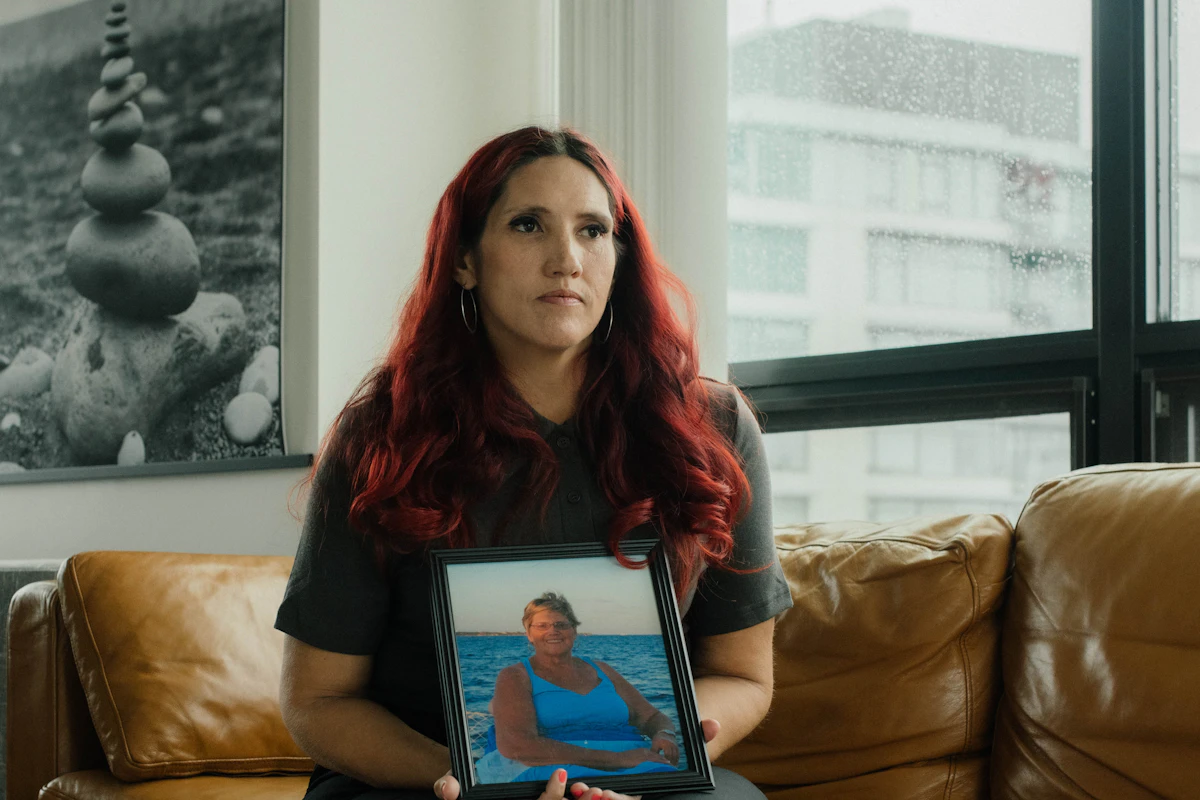
“The court should add this far-fetched claim to the growing list of meritless climate lawsuits the state and federal courts have already dismissed.” That’s how Chevron’s lawyer Theodore Boutrous responded last year when Misti Leon filed a first-of-its-kind lawsuit in Washington State against major oil and gas companies for the wrongful death of her mother, Julie Leon, who died during the record-breaking Pacific Northwest heat dome that killed over 1,400 people in 2021.
Last week, a Washington state court published its response to Big Oil’s effort to throw out Leon’s “far-fetched” claim. Boutrous was no doubt disappointed, for the court rejected the defendants’ motion to dismiss—meaning Misti Leon’s case to hold the fossil fuel industry accountable for her mother’s climate-induced death will now be proceeding toward discovery and trial.
This is a big deal. First, it’s striking how clearly the court ruled that Leon’s pathbreaking new theory of climate accountability is “not about regulating emissions,” as the defendants had argued. Leon’s lawsuit alleges that Big Oil companies should be liable for her mother’s death based on two state law causes of action: their failure to warn the public about the climate catastrophes they knew their fossil fuel products would cause, and their deceptive advertising—both climate denial and greenwashing—that have misled the public about these dangers for decades.
The defendants refused to accept those claims on their own terms. Big Oil’s primary arguments to dismiss Leon’s suit—the same arguments it is currently pushing at the Supreme Court against a more traditional climate case—are that her case is preempted by the Clean Air Act (and also, somehow, the Constitution) and that her claims would “usurp the power of the legislative and executive branches to set climate policy.”
The court’s response to these claims was unequivocal: Failure to warn and deceptive advertising are state law causes of action. They are adjudicated by courts all the time. And they have nothing to do with—and are therefore not preempted by—the Clean Air Act. “This case is about a single individual and an allegation that a single weather event contributed to her untimely passing,” the court wrote. “It is seeking damages for her death and nothing else”—pointedly, damages that are “not an attempt to regulate future emissions.” Such claims are not preempted because the Clean Air Act “does not address product liability or deceptive marketing.” And they are not non-justiciable political questions because they are “simple torts” that do not “implicate separation-of-powers concerns.” This ruling is a major boon to Leon’s new legal theory.
Naturally, surviving a motion to dismiss doesn’t mean a case will succeed—not by a long shot. But this ruling confirms that such a lawsuit is legally plausible. The court essentially asks if there would be a cognizable claim if it accepted the plaintiff’s factual allegations as true. If one has confidence in Leon’s allegations—regarding Big Oil’s climate deception, the role of this deception in furthering climate change, and the impact of climate change on heat waves like the Pacific Northwest heat dome—then there is every reason to believe that a judge’s gatekeeping regarding these legal questions is as big an obstacle to a suit like Leon’s as the willingness of a jury of regular people to respond to evidence of Big Oil’s deception by ruling in favor of a bereaved daughter like Misti Leon.
As such, this ruling could encourage other victims of climate disasters to file their own wrongful death suits against Big Oil—and it could give other plaintiffs’ attorneys confidence to take on these cases. That should make the fossil fuel industry very nervous. Julie Leon is far from the only victim of Big Oil’s climate misconduct. Dozens of people in New Jersey and Philadelphia were just killed in the Fourth of July heat wave, which climate scientists have already determined would have been “virtually impossible” but for climate change. Maricopa County, Arizona, experienced 430 heat-related deaths in 2025, and its death count this year is outpacing that figure “at a troubling rate.” Figures like these could be on track to explode in the near future. Already, some regions are experiencing orders of magnitude more carnage—a recent analysis found that extreme heat from climate change may have caused over 20,000 deaths in Europe last month alone.
The progression of Leon’s case could also help inspire a powerful and previously untapped category of legal actors to join the fight for climate accountability: prosecutors. Though criminal prosecution requires a higher burden of proof than civil litigation, the core legal argument being made by Misti Leon is similar to the one prosecutors would rely on to charge Big Oil companies with criminal offenses—like homicide, reckless endangerment, or risking catastrophe—in relation to the climate disasters that are, in some instances, killing more of their constituents than are being lost to traditional homicides.
It seems the fossil fuel industry is becoming concerned about this possibility. The latest draft legislation being put forward by the American Legislative Exchange Council to immunize oil and gas companies from liability for climate harms includes language creating a shield for all “criminal charges, indictments, or prosecutions based on or arising from” Big Oil’s climate-related misconduct.
Corporations like ExxonMobil, Chevron, Shell, and BP are desperately looking for get-out-of-jail-free cards like these because they know that claims like those of Misti Leon are not, in fact, “far-fetched” or “meritless,” as Boutrous bluffed. They know that people like Julie Leon should not be losing their lives. People like Misti should not be losing their mothers. These are not natural tragedies. They’re the result of the conduct of a small number of companies that knew their fossil fuels would cause, in their own words, “globally catastrophic” climate harms that would create “more violent weather” and cause “suffering and death due to thermal extremes.” Despite this knowledge, they spent years preventing the public from understanding the risks their products were creating, in order to protect their obscene profits.
These companies have blood on their hands. The volume of that blood is growing every year. Following this latest court decision, they are one step closer to being held accountable for their lethal conduct. And it’s all thanks to the courage of Misti Leon, a regular person going up against some of the most powerful corporations on the planet to win justice for her mother. For now, at least, she’s winning. ...
이 뉴스, 어떠셨어요?
탭 한 번으로 반응 · 로그인 불필요