"온실가스 감축 없이는 봄철 산불 더 늘어난다"…기상청 미래 전망
AI Summary
According to EU climate scientists, May 2024 was the world's second-hottest month on record, with global temperatures averaging 1.42°C above pre-industrial levels. The warming was driven by climate change and a developing El Niño event, with Europe experiencing an unusually early heatwave. Scientists warn that extreme weather phenomena are increasingly becoming the new norm globally.
Progressive: Progressive outlets emphasize climate change as the primary driver and frame record temperatures as evidence of extreme weather becoming the norm, with explicit attention to human responsibility.
Moderate: Centrist outlets report the record temperatures and regional impacts with reference to both climate change and natural factors like El Niño.
Conservative: Conservative outlets report the second-hottest May while noting that both climate change and a developing El Niño contributed to the warming.
온실가스 감축 노력 없이는 봄철 산불 발생 횟수가 증가할 수 있다는 기상청 전망이 나왔다.
특히 강원 영동과 경북 등 건조한 지역은 미래에 산불 위험이 더 커질 것으로 예상됐다.
기상청이 11일 발표한 '봄철 산불 가능성 현황'과 '2100년까지의 미래전망' 등에 따르면 지난 20년 동안 우리나라 산불의 70% 이상은 봄철에 집중됐다.
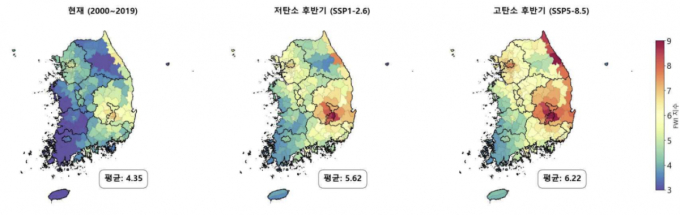
기상청은 △최고기온 △상대습도 △강수량 △풍속 등을 종합해 산불 발생과 확산 위험을 나타내는 '산불기상지수(FWI)'를 활용해 미래 변화를 분석했다.
분석 결과 온실가스 배출을 줄이는 저탄소 시나리오에서 2100년쯤 봄철 평균 산불기상지수(5.62)는 현재(4.35)보다 약 29% 증가하는 것으로 나타났다....