bne IntelliNews
중도 성향
기타
EU-regulated CI Ratings assigns BBB international rating to EDB with stable outlook
Highlights strong capital position, robust asset quality, comfortable liquidity profile and low refinancing risk.
_1781191847.jpg)
"STABLE" · 총 382건
필터 보기현재 지수
49.4
0 = 부정 우세
50 = 중립
100 = 긍정 우세
최근 7일 기준 88,617건을 분석한 결과, 뉴스 심리지수는 49.4(균형)입니다. 긍정 10,745건(12.1%)·중립 64,069건(72.3%)·부정 13,803건(15.6%)이며, 중립 비중이 뚜렷하게 높습니다. 성향 지수는 종합 21.1(보수 경향)입니다.
Highlights strong capital position, robust asset quality, comfortable liquidity profile and low refinancing risk.
The patient at Government Medical College Hospital, Kozhikode, is stable and on ventilator support
Real estate investors in the Netherlands have again called on the Dutch government to create a stable investment climate for...

Argentine experts will join identification efforts by using stable isotopes found in bodies and remains to understand which country or region they came from

Both the infected children, aged 6 and 8, are currently stable and receiving treatment, prompting officials to emphasise strict hygiene practices and the consumption of safe drinking water to prevent further spread of the infection.
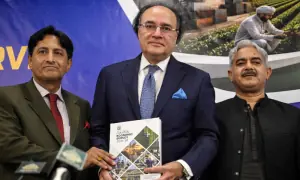
The government unveiled the Pakistan Economic Survey (PES) for FY2025-26 on Thursday, according to which GDP growth was recorded at 3.7pc in the outgoing fiscal year. This is higher than last year’s growth of 3.18pc but falls short of its target of 4.2pc. Addressing a press conference in Islamabad, Finance Minister Muhammad Aurangzeb presented the survey, which he said told a story of resilience and discipline shown during the previous year. He said the country began the outgoing fiscal year with uncertainty due to tariffs. “Then, by the end of July, we reached a point where we could be in a competitive position with respect to our exports, especially to the US,” he added. Then there were floods in August and September 2025, followed by a regional conflict in March this year. “These challenges tested Pakistan’s resilience,” he said, adding that the government was able to deal with them and remained on the path of moving from stabilisation to growth. GDP growth He said GDP growth in FY26 was recorded at 3.7 per cent, against a target of 4.2pc. However, the economic survey stated that the economy “accelerated its growth momentum in FY2026” compared to the previous year, when GDP growth was recorded at 3.18pc. “The improvement owes to effective macroeconomic management, better fiscal account, growth in large scale manufacturing (LSM) sector, resilience of the agriculture sector to floods of 2025, exchange rate stability and reforms under the IMF Extended Fund Facility (EFF) Programme,” it stated. For his part, Aurangzeb also pointed out that global growth had reduced to 3.1pc from 3.7pc due to the factors he elaborated on earlier in the press conference. The finance minister said that Pakistan had recorded GDP growth of 3.7pc, which was the highest in the past four years. The finance minister recalled that GDP growth in FY2023 was -0.2pc, 2.6pc in FY2024 and 3.2pc in FY2025. He said it was earlier estimated that GDP growth would exceed 4pc, but it did not happen due to the ongoing conflict in the Middle East. “But having said that, we have still reached a historically high size of the economy at Rs126.9 trillion,” he said. The minister said GDP per capita income had reached $1,901, which was $1,751. Agriculture Giving a sector-wise breakdown, he said growth in agriculture was recorded at 2.89pc, compared to 1.53pc in the last fiscal year. “This was despite floods,” he said, adding that the crop sub-sector showed positive growth. It was recorded at 1.44pc, the finance minister said. He added the livestock sector also “continues to go from strength to strength”. LSM Aurangzeb said 6.1pc growth was recorded in large-scale manufacturing (LSM) in FY26, which was the highest in the last four years. He elaborated that positive growth was seen in 16 of LSM’s 22 sub-sectors. “So it’s not one single sector that is leading or contributing to this 6.1pc turnaround in LSM. It is broadband [growth],” he said. He further said that prominent year-on-year growth was witnessed in this sector. “To give you some examples, there was a 10pc increase in the demand for cement, 17pc for fertiliser, 5pc for petroleum, 31pc for automobiles and 9pc for mobile phones.” According to the economic survey, overall, the manufacturing sector recorded a growth of 6.6pc on the back of “robust performance of large-scale manufacturing”. Services Noting that the services sector made up close to 58pc of Pakistan’s GDP, he said 4.09pc growth was recorded in this sector in the outgoing fiscal year. “This, too, is the highest in the last four years,” he said. Aurangzeb particularly mentioned communication and information services, which he said recorded a growth of 7.52pc. The growth in this sub-sector in FY26 was also the highest over the past four years. Moreover, he continued, this sub-sector held significance for the digital economy. Fiscal deficit The survey document stated that the fiscal deficit “narrowed significantly” to 0.7pc of GDP (Rs 856.4bn) from 2.6pc of GDP (Rs 2,970bn) in the corresponding period last year. Similarly, primary surplus also improved to 3.2pc from 3pc, the survey document said. Aurangzeb said during his press conference that tax revenues had increased by 10.1pc and markup payments saw a decrease of 23pc, which he said increased fiscal space. Inflation According to the economic survey, CPI inflation for the period between July-April FY2025-26 was recorded at 6.2pc, against 4.7pc during the same period last year. “Inflation measured by the sensitive price indicator (SPI) stood at 4.1pc as against 4.8pc during the same period last year … The inflation remained broadly stable during the first three quarters of FY 2026. However, the emergence of an external shock amid geopolitical tensions at the end of the third quarter has increased its vulnerability to renewed price pressures, warranting continued vigilance and timely policy response to preserve macroeconomic stability,” the survey document said. On this, Aurangzeb argued that inflation had been decreasing over the years. “We began with 28pc, and today we are at a point where the policy rate is 11.5pc,” he said. Current account surplus The survey document stated that on the external front, the current account recorded a marginal surplus of $72m during July-March FY 2026 compared to a surplus of $1.7bn in the same period last year. “Workers’ remittances remained a key source of external sector support, rising by 8.2pc to 30.3bn,” it said. In this regard, Aurangzeb said a debate had been ongoing regarding exports and remittances. But it was not an “and/or discussion. This is an and/and discussion”, he said. Acknowledging that there was a need to increase exports, he argued that remittances were also an important structural component of economies that were compared to Pakistan in this regard. “We can debate how much remittances should be contributing to the GDP and to what extent we should rely on them, but remittances are and would remain a very important component of our external balancing position as we move forward,” he said. Exports The finance minister said the decline in the country’s exports was led by the food sector. “In the food sector, our rice exports have declined by $1.1bn,” he said, adding that a decline of $403m was recorded in sugar exports. Overall, a decline of around $1.5bn was recorded in food exports, he said. On the other hand, he said, textile exports had increased. He also highlighted the increase in the export of sports goods, mentioning that the football that was to be used during the upcoming FIFA World Cup was manufactured in Pakistan. He said that from July-May FY2026, 18pc growth was recorded in the export of sports goods. The minister said the country’s IT exports had crossed $3.8bn, expressing hope that they would reach $4.5bn. In this connection, he said the freelancer export was now touching $900bn. He said the country’s foreign exchange reserves currently stood at $17.bn, hoping that they would reach $18bn by the end of June. “This will give us three months of export cover, which is an internationally recognised standard, and this should allow us to further upgrade over the course for the next year,” he said. According to the economic survey, foreign exchange reserves stood at $20.6bn as of April 17, including $ 15.1bn held by the State Bank of Pakistan, “reflecting strengthened external buffers”. Capital markets and corporate sector According to the economic survey, Pakistan’s capital markets, specifically the equity market, performed well compared to major global stock markets in FY2026. “The KSE-100 index demonstrated significant growth of 18.4pc during July-March FY2026. This increase can be attributed to strong corporate earnings, a decline in both the policy rate and inflation, the successful review of the IMF-EFF Programme, and subsequent tranche disbursements, all of which contributed to a stable macroeconomic environment that bolstered investor confidence,” the survey document stated. It said Pakistan Stock Exchange (PSX) market capitalisation recorded Rs15,237bn on June 30 2025 and closed at Rs16,534bn on March 31 2026, reflecting an increase of 8.5pc or Rs1,297.5bn in the period under review. During July-March FY 2025, a net inflow of Rs 226.69bn was recorded under the National Savings Schemes, the document said, adding that the Securities and Exchange Commission of Pakistan issued 53 certificates of Shariah-compliant securities to corporate Sukuk issuers under the Shariah Governance Regulations, 2023 during July-March FY2026, amounting to Rs229.6bn. In the sovereign Sukuk segment, total issuances worth Rs1.86 trillion were carried out and secondary market trading surpassed Rs1.38tr during this period, “reflecting robust market activity and investor participation”, the survey document stated. For his part, Aurangzeb said 39,000 new companies had been registered in FY26, taking the number of registered companies to Rs300, 000. On investment, he said it was often mentioned often mentioned that some companies had winded up their businesses in Pakistan. “But, it is also true that multinational companies in the fields of telecom, energy, IT, digital services and industrial sectors have either entered the Pakistani market or increased their investments or plans in Pakistan,” he added. Debt During July-March FY2026, out of the total external public debt stock of $92.2bn, multilateral loans remained the largest component at $42.5bn, while IMF debt stood at $9.9bn, according to the survey. Paris Club debt was recorded at $5.5bn while bilateral loans from non-Paris Club countries amounted to $19bn, it said, adding that “the external debt portfolio continued to be largely supported by long-term and concessional financing from multilateral and bilateral sources, helping limit refinancing risks and support debt sustainability”. External budgetary disbursements were recorded at $6.1bn, including $2.7bn from multilateral sources, $1.1bn from bilateral development partners, $2bn from Naya Pakistan Certificates and $0.2bn from commercial banks, the document said. It added that the government also received $1.2n under the IMF’s EFF during July–March FY 2026. According to the survey, total public debt was recorded at Rs83,285bn by the end of March this year, comprising Rs57,566bn in domestic debt and Rs25,720bn in external debt. “During the first nine months of FY 2026, public debt growth remained contained at 3.4pc, compared to 6.7pc during the same period last year, supported by a strong primary surplus, prudent borrowing strategy, and active debt management operations,” the document said. On this, Aurangzeb said the overall public debt-to-GDP ratio was 75pc in 2023, it decreased to 70.7pc in 2025 and further reduced to 68.5pc this year. “This means we are moving in the right direction,” he said. More to follow
Jess Turnbull "had so much to look forward to in her career and her life", the chief constable says.

Tienen un sistema de velcro que permite separar los contenedores para colocarlos en cualquier rincón de la cocina
KUALA LUMPUR, June 11 — Economy Minister Datuk Seri Akmal Nasrullah Mohd Nasir said the supply of medicines...
As a record 5,40,400 housing units are scheduled for completion across the top 7 cities in 2026, highest in the last decade, developers are facing a challenging execution phase amid growing uncertainty due to the Middle East war.According to Anarock, a prolonged geopolitical conflict will impact project economics through higher energy prices, increased logistics costs, and inflation in key construction materials such as steel, aluminium, copper, electrical equipment, and building systems. The consultant said that end-user-driven housing demand remains resilient, and project financing is also better than in previous cycles. However, extended disruptions to global trade routes, commodity markets, and supply chains put developers’ ability to deliver projects on schedule to the hardest test in decades.“Of the total scheduled deliveries, the western markets of MMR and Pune collectively account for 57% of homes due for completion this year,” said Prashant Thakur, Executive Director & Head - Research & Advisory, Anarock Group. In MMR, approximately 2,07,300 units are scheduled for delivery over the year, while Pune expects 1,00,300 units to be delivered in 2026. In the South, Bengaluru (69,000), Hyderabad(63,700) and Chennai (35,600) collectively have 1,68,300 units lined up for delivery this year. North India’s realty powerhouse NCR has just 39,000 units scheduled for completion. In the East, Kolkata has just 22,500 units scheduled for completion in 2026.“Historically, ambitious housing supply pipelines have often been vulnerable to external shocks like these,” Thakur said.For instance, during the pandemic year of 2020, 4.66 lakh homes were scheduled for completion across the top 7 cities. However, only about 2.14 lakh units, or 46% of the planned pipeline, were ultimately delivered as construction came to a halt due to lockdowns, labour migration, and supply-chain disruptions.The gap between scheduled and actual completions shows that even projects in advanced stages of construction can face delays when confronted with large-scale disruptions. The current situation is fundamentally different from the pandemic, as construction activity continues uninterrupted and labour availability remains stable.“Cities with the largest completion pipelines – specifically MMR, Pune and Bengaluru - are particularly sensitive to sustained input costs inflation, as developers must maintain delivery schedules and simultaneously manage margin pressures,” said Thakur. Anarock’s data indicates that between 2017 and 2025, nearly 30.5 lakh housing units have been delivered across India’s top 7 cities. The 5,40,400 units scheduled to be delivered this year make 2026 the highest delivery year in the past decade – provided that all deliveries happen on schedule.The sheer scale of homes slated for delivery this year reflects the strong launch and sales momentum witnessed after the pandemic. Residential projects launched between 2021 and 2023 are now entering their final stages of construction, creating an unprecedented completion pipeline across the country’s leading housing markets. This pipeline is now under real threat of derailment, due to the ongoing West Asia war. “While the industry in the last few years celebrated robust sales, rising prices, and rebooted buyer confidence, the spotlight now is shifting from sales to execution. 2026’s significance therefore extends beyond the sheer number of homes scheduled to be delivered. We are looking at a forced new evolutionary stage of India’s residential real estate market which will stretch Indian developers’ capabilities to an unprecedented extent,” said Thakur. With efficient execution, 2026 could well become a landmark year for housing completions - and further strengthen homebuyer confidence. While 2027 will be remembered for a lot more than just sales and launch numbers, 2026 becomes the referendum year for our residential real estate sector’s maturity.
First E20, then E85, now E100 and finally, flex fuel vehicles—India is undertaking an audacious experiment to build a new multi-billion-dollar green mobility ecosystem. But here’s the catch: it’s playing the long game, completely in reverse.In standard industrial transitions, the market responds organically to vehicle demand by slowly introducing fuel infrastructure over time; for example, the way the country’s first electric vehicles were rolled out.However, under a recent order from the Central government, the infrastructure for E100 is essentially arriving first.Also Read | Maruti Suzuki launches India's first flex-fuel car, bets on biofuels to boost energy securityDriven by a pressing need to secure national energy self-reliance and shield the domestic economy from volatile geopolitical crises—particularly the ongoing oil trade disruptions in West Asia—the Ministry of Petroleum and Natural Gas, alongside state-run oil marketing companies, has committed to laying down 5,000 dedicated E100 dispensing stations across the country over the next two years.“India imports a large quantity of crude oil every year, and biofuels like ethanol are an important pathway towards reducing this dependence while strengthening our rural economy. Flex-Fuel Vehicles can create a strong and sustainable demand for ethanol, benefiting our farmers, industry, and the environment together,” Union Road Transport Minister Nitin Gadkari said at an event in New Delhi last week.“Today, we are facing an energy crisis due to the war in West Asia, so it is necessary for us to become self-reliant in the energy sector,” he had said earlier.Also Read | India waives excise duty on petrol with higher ethanolHe also called for the phased-out conversion of existing BS6 vehicles into FFVs. “And lastly, if it is possible, whichever EURO6 emission car you have, you can convert it to flex engine through your service centre.”The physical distribution network is springing up before flex-fuel vehicles have even rolled off assembly lines, and there may be some questions.At the very heart of this systemic transformation sits the domestic sugar and distillation industry. Ethanol is fundamentally a high-purity alcohol. Just as traditional alcohol is created through fermentation, the bio-ethanol used to power cars is produced by capturing the natural chemistry of sugar and microscopic organisms.Deepak Ballani, the Director General of the Indian Sugar Mills Association (ISMA), views this massive transition not merely as a temporary patch for the automotive market, but as a structural overhaul of how India generates and consumes energy.According to Ballani, the entire premise of the debate around biofuels needs to change.He points out that looking at ethanol as a mere substitute for petrol misses the larger economic picture. “The premise assumes that ethanol is merely a substitute for petrol, whereas its value extends far beyond fuel price parity,” Ballani said.“Ethanol is a domestically produced renewable fuel that reduces India's dependence on imported crude oil, improves energy security, and creates a stable income stream for farmers and rural economies,” the ISMA chief added.Breaking the chicken-and-egg dilemmaFor decades, the global transition to alternative fuels has been plagued by a classic chicken-and-egg dilemma where automakers refuse to manufacture alternative fuel vehicles because there are no dispensing pumps, and fuel providers refuse to install pumps because there are no vehicles to buy the fuel.India has smashed this deadlock by moving the fuel supply mechanism ahead of the vehicle market.The country has already executed a rise under its Ethanol Blended Petrol Programme, lifting ethanol blending in standard petrol from a meagre 1.5% in 2014 to a ubiquitous 20% today.According to a PIB release this month, that 20% achievement alone has unlocked a staggering Rs 1.84 lakh crore in foreign exchange savings through the substitution of 302 lakh metric tonnes of imported crude oil.However, the leap from E20 to E100, which represents 100% pure ethanol, introduces some technical and structural complexities.Recognising that the infrastructure must act as the primary catalyst, Union Minister for Petroleum and Natural Gas, Hardeep Singh Puri, announced a hyper-accelerated rollout of 50 to 100 ethanol dispensing stations across the Delhi-NCR region and the Mumbai-Pune-Nagpur corridor.This regional pilot network is targeted to swell to 500 hundred stations by December 2026, culminating in a sprawling web of 5,000 across major cities by the end of 2027.Seeing the plan of physical pumps materialise, within days of E100 pump announcement, market leader Maruti Suzuki took the definitive first step.On June 4, the auto giant officially launched India’s first flex-fuel passenger car, the Wagon R Flex Fuel that is able to operate seamlessly on any blend of petrol and ethanol between E20 and E100."A new chapter in India's energy journey,” is what Hisashi Takeuchi, Managing Director & CEO of Maruti Suzuki India termed the event.However, the Maruti Suzuki head called for some team effort."Large-scale adoption of flex-fuel will take time and effort from all stakeholders. An entire ecosystem needs to be developed – from fuel availability to more model launches, from customer awareness to fuel and vehicle pricing. In the absence of an ecosystem, it is the responsibility of the market leader to take the first step and encourage others,” he said.Once it reaches mainstream adoption, Takeuchi stressed that "Flex-Fuel Vehicles have the potential to cut oil imports, carbon emissions, and local air pollution while enhancing domestic value addition and farmer incomes."Simultaneously, the two-wheeler segment has also entered the space as Hero MotoCorp recently debuted the country's first flex-fuel motorcycles, launching E85-ready variants of its legacy commuter mainstays, the Splendor Plus and the HF Deluxe.Navigating technical realitiesNow, India has a new category in four-wheelers as well as two-wheelers. But what’s new?To the uninitiated, running a vehicle on ethanol sounds like a simple software recalibration. To an automotive engineer, it can be a challenge.According to the International Energy Agency, ethanol possesses distinct mechanical traits that make it highly corrosive, hygroscopic and lower in energy density than standard fossil fuels.The agency reports that because ethanol naturally pulls water out of the air, standard automotive fuel systems left untreated would face internal corrosion, leading to rusted fuel tanks, clogged fuel lines, and disintegrated rubber seals.To bypass this, an auto engineering team has to overhaul the vehicle's internals.For example, the Wagon R Flex would likely feature a completely redesigned architecture including fortified, corrosion-resistant fuel lines, heavy-duty robust seals, completely overhauled fuel injectors, and an advanced, specially calibrated Engine Management System designed to adapt dynamically to the unique chemical properties of varying ethanol concentrations.Moreover, the IEA notes “Ethanol has a significantly lower energy density (Joule per liter), about two‐thirds of that of gasoline, so about 50 percent more fuel (by volume) is needed per kilometer, if a given engine is equally efficient on either fuel.”This means that a vehicle operating on pure E100 or high-blend E85 will require a greater volume of fuel to cover the same distance as a petrol car.However, amid these technical changes, public anxiety around transition readiness, the Society of Indian Automobile Manufacturers, in an August 2025 report, said that allegations suggesting specifically E20 affecting insurance and warranty of vehicles are “baseless.”In the same report, the industry body further addressed widespread consumer concerns about mileage loss and called it “misplaced”.“Real-world vehicle mileage depends far more on distinct everyday factors like driving habits, maintenance practices, the age of the vehicle, tyre conditions, and the usage of AC load,” it added.More recently, SIAM said that for E100 or E85 to make financial sense for average Indian consumers, the fuel must be priced at least 30% cheaper at the pump than conventional E20 petrol.On the heels of Maruti’s launch and the E100 pump announcement, the Central government on Wednesday rolled out another initiative that could help tackle this cost concern.India, the world's third-largest oil importer and consumer, abolished central excise duty on petrol blended with higher levels of ethanol.A Ministry of Finance notification extended central excise duty exemptions to petrol blended with 22%, 25%, 27%, and 30% ethanol. The nil excise duty rate will apply to all four blends, provided they conform to Bureau of Indian Standards specification IS 19850.On the other hand, pure E100 opens up structural efficiencies that standard blends cannot offer. Ballani highlights this supply chain advantage.“Hydrous E100 does not require blending with gasoline and can be supplied directly from distilleries to retail outlets, eliminating blending costs and simplifying the supply chain,” he said.How India diverges from brazilTo understand the scale of India's ambition, one must contrast it with the global gold standard of biofuels, which is Brazil.Brazil’s legendary flex-fuel ecosystem, which allows consumers in the country to alternate between different vehicles requiring pure gasoline and pure sugarcane ethanol, was built via a bottom-up approach spanning over five decades.Spurred by the global oil shocks of the 1970s, Brazil's government subsidised massive agricultural expansions, gradually integrated low blends, and allowed the auto industry decades to slowly mature its engine tech.Furthermore, Brazil relies on a massive, highly specific agricultural surplus of sugarcane grown in vast, rain-heavy, non-irrigated zones, making it uniquely isolated from food-versus-fuel debates.India’s model is radically different, marked by speed, agricultural diversity, and technological leapfrogging.While Brazil utilised a slow, evolutionary rollout over fifty years, India is executing a compressed, revolutionary strategy.
China and the EU have crossed the threshold beyond which population decline is mathematically irreversible. Once the median age of women passes 40, a country no longer has enough potential mothers to keep the population stable.

The plant will be the company's third in Fukui Prefecture and will help "to ensure a stable supply of rare-earth-related products and magnets," a spokesperson for the firm said.

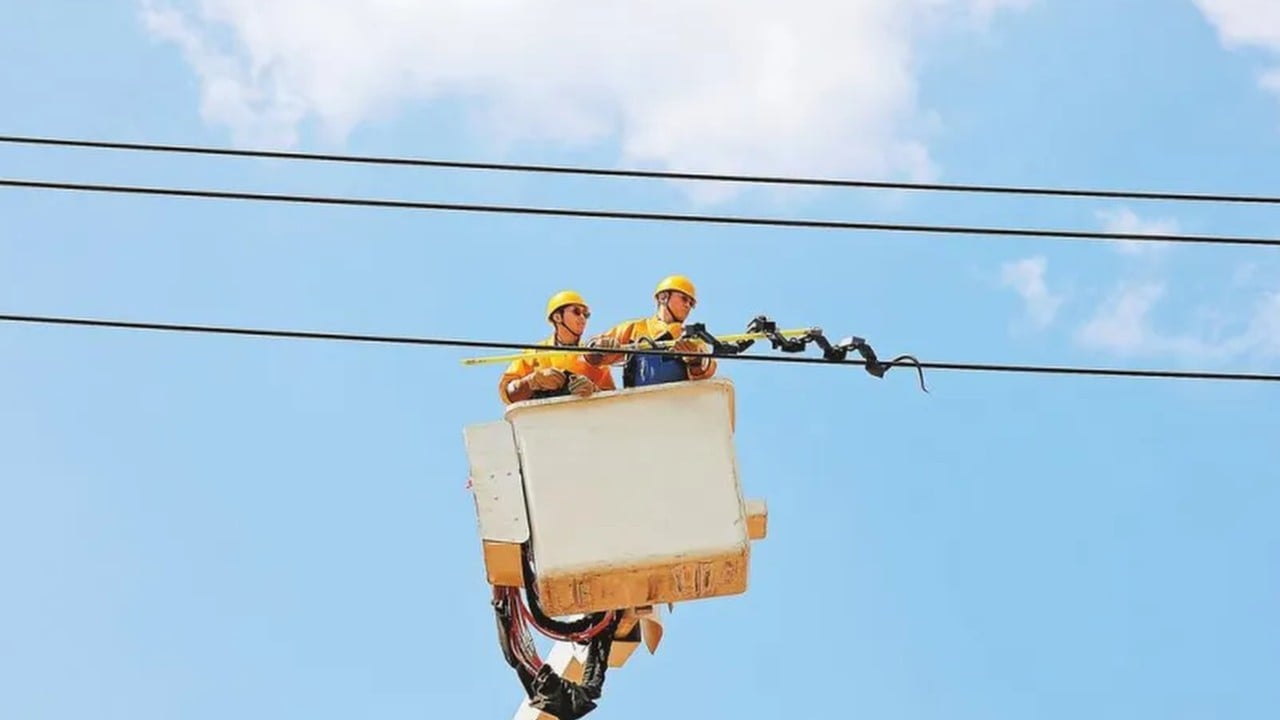
Robotic snakes have been deployed in southwestern China to inspect power lines and ensure a stable power supply during the country’s high-pressure national college entrance exam. The snakelike robots spiral around power lines in Kunming, the provincial capital of Yunnan, to detect hazards such as broken wires, worn components and abnormal temperatures. The device’s developer, the power supply bureau of Kunming’s Guandu district, said the robotic snake had checked more than 130km (81 miles) of...
South Korea and India should deepen economic cooperation in areas ranging from semiconductors and shipbuilding to clean energy and critical minerals, India's ambassador to Seoul said Wednesday, highlighting growing opportunities for Korean businesses in one of the world's fastest-growing economies. Indian Ambassador Gourangalal Das said India remains a "stable, steady and focused player" despite growing global uncertainties, including geopolitical conflicts, technological disruptions and demogra

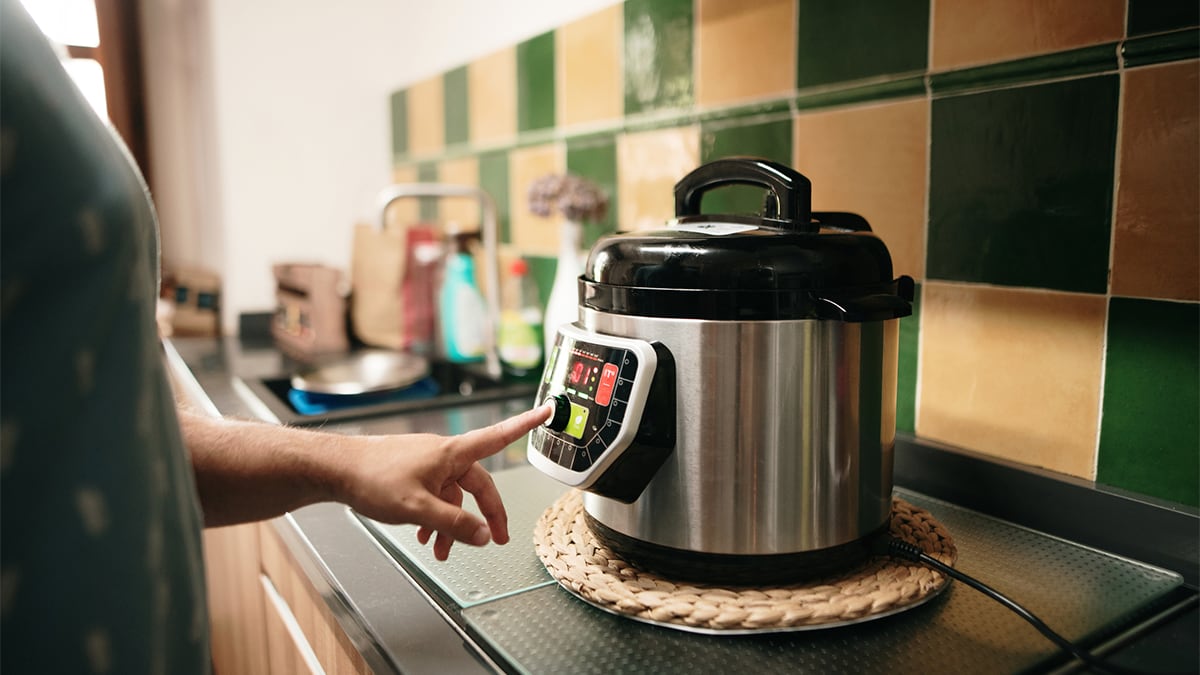
Tiene una capacidad de 3 litros y está diseñada para preparar desde guisos y arroces hasta yogures caseros o recetas al vapor gracias a sus 13 programas preestablecidos
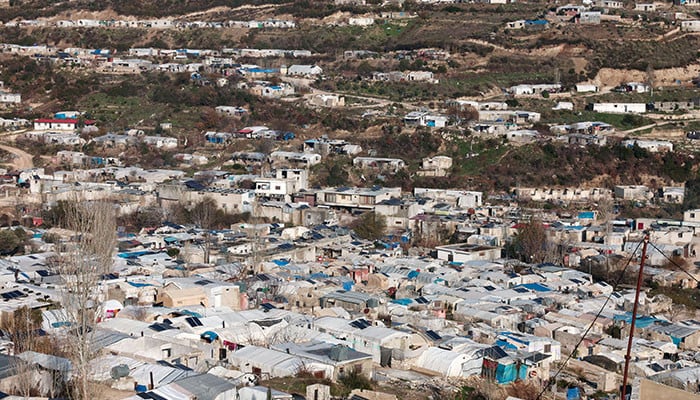
A drone view shows refugee tents in the country side of Idlib, Syria, January 3, 2026. — Reuters The number of forcibly displaced people dropped for the first time in a decade last year, as more opted to return home despite often unsafe and unstable conditions, the UN said...
The incident took place on Tuesday morning while Head Constable Rahul Kumar was on duty managing traffic at the busy Sarai Jullena red light intersection.

Two people managed to rescue the mother and son, who are now in stable condition