오픈뉴스백과

뉴스

The Economic Times · "INTEREST" · 총 76건

필터 보기
뉴스 심리 지수
균형
50
상세

현재 지수

50.0

0 = 부정 우세

50 = 중립

100 = 긍정 우세

극단 부정부정중립긍정극단 긍정

최근 7일 기준 802건을 분석한 결과, 뉴스 심리지수는 50.0(균형)입니다. 긍정 120건(15.0%)·중립 562건(70.1%)·부정 120건(15.0%)이며, 중립 비중이 뚜렷하게 높습니다. 성향 지수는 종합 100.0(강한 보수 경향)입니다.

긍정 120
중립 562
부정 120
강한 보수 경향
미디어 성향강한 보수 경향 · 100.0
진보 성향중도 성향보수 성향
L 0 · C 0 · R 802
독자 반응 성향표본 부족 · 0.0
진보 성향중도 성향보수 성향
표본 0건 (L 0 · C 0 · R 0)
종합 성향강한 보수 경향 · 100.0
진보 성향중도 성향보수 성향

타임라인 키워드

최근 24시간
20:001건
경제
100%
19:005건
기타
100%
18:004건
기타
75%
경제
25%
17:002건
사회
50%
기타
50%
16:002건
기타
50%
스포츠
50%
15:004건
기타
50%
경제
25%
정치
25%
14:003건
기타
33%
IT/기술
33%
산업/기업
33%
13:004건
정치
33%
경제
33%
산업/기업
33%
12:005건
정치
60%
기타
40%
11:002건
기타
50%
정치
50%
10:005건
기타
80%
산업/기업
20%
09:005건
기타
80%
경제
20%
08:005건
기타
60%
산업/기업
20%
스포츠
20%
06:006건
기타
83%
사회
17%
05:006건
기타
60%
산업/기업
20%
사회
20%
04:0010건
기타
33%
사회
33%
스포츠
33%
03:009건
기타
75%
IT/기술
13%
산업/기업
13%
02:006건
정치
60%
경제
20%
IT/기술
20%
01:007건
기타
67%
산업/기업
17%
경제
17%
00:004건
기타
50%
경제
25%
정치
25%
The Economic Times (India)
보수 성향
경제
긍정적

US stocks: Dow soars 900 pts, Nasdaq over 2% as Trump says Iran deal likely soon

Wall Street's major indexes ended sharply higher on Thursday, with stocks extending gains after U.S. President Donald Trump said he canceled planned strikes against Iran, and on the eve of the market debut of Elon Musk's SpaceX. Hours before the expected strikes, ‌Trump said ⁠on Truth Social ⁠that negotiations with Tehran had advanced to the highest levels of Iran's leadership and had been okayed by a broad coalition of regional powers. Oil prices dropped sharply, while stocks added to their rebound from the prior session's selloff. On Wednesday, major Wall Street indexes fell more than 1% and the S&P 500 Technology Index confirmed a correction. "Our technical indicators are looking relatively oversold here," said Robert Phipps, a director at Per Stirling Capital Management in Austin, Texas. "Just as ⁠we had ‌gone up too far, too fast, we came down too far, too fast."Also Read | US stocks: SpaceX to make historic listing on Nasdaq on Friday that could make Elon Musk a trillionaire According to preliminary data, the S&P 500 gained 126.86 points, or 1.75%, to ⁠end at 7,393.85 points, while the Nasdaq Composite gained 637.78 points, or 2.53%, to 25,801.47. The Dow Jones Industrial Average rose 928.72 points, or 1.84%, to 50,847.50. On Thursday, SpaceX priced the biggest-ever U.S. initial public offering at $135 per share, making Musk's rocket and spacecraft manufacturer one of the world's most valuable companies. The IPO raised a record $75 billion on the sale of 555.56 million shares. It valued the company at $1.77 trillion, a record for an initial offering. SpaceX shares are expected to begin trading on ‌Friday. The S&P 500 has pulled back since hitting a record closing high in early June. The Middle East conflict has stoked inflationary pressures. Still, Oracle shares plunged after the company projected capital spending plans ⁠for fiscal 2027 above Wall Street estimates. Feeding inflation worries, data showed U.S. producer prices increased more than expected in May, leading to the largest annual gain in over three years. Separately, the number of Americans filing claims for unemployment benefits increased marginally last week. The Federal Reserve is widely expected to hold interest rates steady at its policy meeting next week, with investors pricing in at least one 25 basis point rate hike by the end of the year.

The Economic Times (India)
보수 성향
사회

11,000 evacuated ahead of Odisha missile test

Balasore (Odisha) Jun 11Ahead of a scheduled missile test by the DRDO, the Balasore district administration on Thursday temporarily evacuated 11,442 residents from 11 hamlets located within a 3.5-km radius of Launch Pad-3 of the Integrated Test Range (ITR) at Chandipur in Odisha, officials said.While the administration did not disclose details of the missile or the nature of the test, residents were urged to cooperate in the interest of national security.The evacuated people have been accommodated at multipurpose cyclone centres at Bardhanpur, Bhimpur and Tundra villages, and at the Nidhipada Sevasram, a revenue official said."Food, drinking water and other essential services are being provided to the evacuees. They are also being given remuneration for the day," the official said.The residents had also been shifted from their homes on Wednesday and were allowed to return in the evening after the scheduled exercise."The evacuation has been carried out as a precautionary measure in consultation with DRDO," the official said.Fishermen operating along the coast of Balasore, Bhadrak and Kendrapara districts have also been advised not to venture into the sea during the day as a safety precaution, he added.

The Economic Times (India)
보수 성향
기타

FD rates up to 7.8%: Banks revise interest rates

The Economic Times (India)
보수 성향
기타

Delay in possession: 10.05% interest for homebuyers

The Economic Times (India)
보수 성향
경제
부정적

Good news for Indian mutual fund investors: SpaceX could join Nasdaq 100 after 15 trading days

Elon Musk-led SpaceX is set to debut on Nasdaq on June 12 after raising about $75 billion at a valuation of nearly $1.75 trillion, making it one of the largest public offerings in history. But the IPO may not be the only catalyst for the stock.According to Jefferies strategist Chris Wood, recent rule changes by Nasdaq could allow SpaceX to enter the Nasdaq-100 index after just 15 trading days, compared with the earlier requirement of a three-month waiting period.The change could create sharp demand for the stock, as passive funds that track the Nasdaq-100 would be required to buy SpaceX shares once it becomes part of the benchmark.In his latest GREED & fear note, Wood said Nasdaq has removed minimum free-float requirements for large IPOs and introduced a "fast index inclusion" framework. Under the new rules, mega-cap listings such as SpaceX can enter the Nasdaq-100 shortly after listing.What makes the situation unusual is that only about 4.2% of SpaceX shares will be freely tradable after the IPO. Despite this, the company will reportedly be treated as having a 12.7% free float for index-weight calculation purposes.Wood noted that such fast-tracking of a mega IPO into major indices is unprecedented in the US market and could force passive funds to accumulate the stock regardless of valuation concerns.The development is also relevant for Indian investors.The Nasdaq-100 includes some of the world’s largest technology companies, such as Apple, Microsoft, Nvidia, Amazon, Alphabet and Meta. If SpaceX joins the benchmark, Indian investors holding Nasdaq-100-linked mutual funds could gain indirect exposure to the aerospace and satellite communications giant.India currently has five mutual fund schemes tracking the Nasdaq-100 Total Return Index, including offerings from Axis Mutual Fund, ICICI Prudential Mutual Fund, Motilal Oswal Mutual Fund and Navi Mutual Fund.However, fresh investments into several overseas index funds remain restricted after fund houses approached regulatory overseas investment limits.SpaceX has already generated strong investor interest ahead of its listing. Reports suggest demand has exceeded the number of shares on offer, while the company is expected to rank among the 10 most valuable listed firms in the US from day one.For investors, the combination of a record IPO and potential early index inclusion means the stock could see a second wave of demand soon after listing, driven not by active investors but by passive funds mandated to replicate benchmark weights.

The Economic Times (India)
보수 성향
산업/기업
긍정적1

Explained: How SpaceX’s $75 billion IPO could create opportunity for Inox India shareholders

As the world gears up for Elon Musk's SpaceX IPO at a staggering $1.75 trillion valuation, a relatively lesser-known Indian company is emerging as an unlikely beneficiary thousands of miles away. INOX India, a global leader in cryogenic technology, has found itself in the spotlight as investors hunt for domestic companies with exposure to the rapidly expanding global space ecosystem.The excitement around SpaceX's public listing has already spilt over into INOX India's stock. Shares of the company have surged 25% over the past month and have gained in seven of the last eight trading sessions.The frenzy surrounding SpaceX's IPO, which reports suggest was oversubscribed nearly four times, has prompted investors to look beyond the headline-grabbing U.S. listing and identify potential beneficiaries closer home. For many, INOX India appears to fit that bill. But what exactly is the connection?Inox's aerospace pushDuring its Q4 earnings call, the company disclosed that it had secured a significant aerospace order from a leading U.S.-based private space company. The total order value is approximately Rs 200 crore. Management said it expects additional high-value orders in the first quarter of FY27."This order is a direct outcome of our proven execution capabilities and reinforces the growing confidence that global aerospace players have in INOX India's engineering expertise," the company said."Aerospace cryogenic systems are not short-term trends, but a long-term structural opportunity. We believe that INOX India is well-positioned to capitalise on these opportunities through its engineering expertise, diversified capabilities, and expanding global presence and footprint," the company added.Can Inox India shares rally more?According to Sunny Agrawal, Head of Research at SBI Securities, investor interest in INOX India has picked up significantly ahead of the SpaceX listing. Beyond aerospace, the company is also expanding into segments such as data centres, nitrogen supply and distillery kegs, providing additional growth levers."Management has guided for 15-20% growth per year, and after the recent rally, the stock is trading at a relatively rich valuation of about 56 times one-year forward earnings," Agrawal said. He believes investors may be better off waiting for a correction before making fresh purchases. "Investors may consider waiting for a correction before fresh entry, as some profit-taking and a cooling-off in the stock could follow once SpaceX gets listed," he added.SpaceX IPOThe much-anticipated SpaceX IPO is scheduled to be priced on June 11, with trading set to commence on the Nasdaq on June 12. The company is looking to raise $75 billion through the offering, which would value the business at approximately $1.75 trillion.Despite the enormous investor enthusiasm, SpaceX remains loss-making. For 2025, the company reported revenue of $18.67 billion and a net loss of $4.94 billion. Much of the bullishness around the stock is tied to its future opportunities across satellite broadband, launch services, defence contracts and AI-related businesses rather than its current earnings profile.Not everyone is convinced by the valuation, however. Morningstar said in a note published on Monday that the company appears "significantly overvalued" and suggested that investors may find more attractive entry opportunities after the stock begins trading.Inox India Q4 snapshotINOX India reported a strong performance for the fourth quarter of FY26, with revenue rising 24.2% year-on-year to Rs 475 crore. Adjusted EBITDA grew 13.4% to Rs 108 crore, while adjusted profit after tax (PAT) increased 9% to Rs 72 crore compared with the corresponding quarter last year.Exports continued to be a key growth driver, with export revenue standing at Rs 291 crore and contributing 61% of total quarterly revenue. During the quarter, the company secured order inflows worth Rs 504 crore, taking its total order backlog to Rs 1,514 crore.For FY26, INOX India delivered its highest-ever annual revenue of Rs 1,632 crore, up 21.2% year-on-year. Adjusted EBITDA rose 20.2% to Rs 388 crore, while adjusted PAT increased 19.3% to Rs 261 crore. Annual export revenue came in at Rs 971 crore, accounting for 59% of total revenue, reflecting sustained strength in international demand throughout the year.INOX India shares have risen 64% since the start of the year.(Disclaimer: Recommendations, suggestions, views and opinions given by the experts are their own. These do not represent the views of The Economic Times)

The Economic Times (India)
보수 성향
경제
부정적

Asia’s currency fight moves offshore as central banks push back

Asian central banks are increasingly facing currency pressures originating outside their borders. From South Korea to India and the Philippines, policymakers have ramped up efforts to curb offshore forex speculation as high oil prices, foreign fund exodus and a strong dollar pressure regional currencies.South Korea’s finance ministry said on Sunday it will step up oversight of offshore currency derivatives. The Philippines has asked banks to ensure non-deliverable forward contracts are limited to economic purposes, while India has tightened limits on banks’ net open position to $100 million.Indonesia, which unexpectedly raised interest rates on Tuesday, has said its central bank is active in currency markets “around the world, around the clock” to support the rupiah.The warnings underscore concerns among Asian policymakers that offshore trading is adding to pressure on currencies. The oil-price shock from the US-Iran conflict has worsened the problem, hitting the region’s energy-importing nations. Indonesia’s rupiah breached the closely watched 18,000-per-dollar level, the Korean won has fallen to its lowest since the global financial crisis, while the Indian rupee and Philippine peso have hit record lows.The efforts to curb offshore forex trading may help ease some pressure, but analysts doubt they can reverse the trend on their own.“It may have some impact, but ultimately for the measure to be successful there needs to be a shift in the fundamentals as well,” said Michael Wan, senior currency analyst at MUFG Bank Ltd. 131652986Non-deliverable forwards are cash-settled derivative contracts that allow investors to hedge or speculate on currencies outside local markets. They make up for about 4% of the global $10 trillion a day FX market, according to Deutsche Bank AG, though they can play an outsized role in Asia where restrictions on convertibility are common.That means activity driven out of global financial hubs such as Singapore, London and New York can sway local markets.Authorities across the region have tried to reduce this influence during periods of currency stress.India allowed local banks to participate in the NDF market in 2020 and has since tried to attract activity onshore to its finance hub at Gujarat International Finance Tec-City, or GIFT City. South Korea has opened its forex market to overseas investors and extended trading hours, while Thailand has allowed non-resident corporates to access onshore baht liquidity and hedge freely.“The reason the NDF market exists is due to restrictions in the onshore market,” said Khoon Goh, head of Asia research at Australia & New Zealand Banking Group. If those restrictions are eased and there is enough liquidity, the need for NDFs will gradually fade, as seen in the case of the Singapore dollar and Thai baht, he said.Short-Dollar BookYet, the war-induced crisis has left some central banks with little choice but to intervene in those very markets they’ve been warning against. That defense has contributed to the drop in foreign-exchange reserves in the region.The Reserve Bank of India has been particularly active, selling dollars primarily in shorter maturities, traders say. The central bank’s short dollar book, which includes offshore derivative positions, has likely surged to around $115 billion. Bank Indonesia has also sold dollars overseas to stabilize the currency.The interventions have helped reduce outsized spillovers from offshore to local markets. In India’s case, the central bank has often been seen intervening just before onshore open to ease pressure on the rupee.Some investors say currency weakness is the result of economic problems in individual countries rather than offshore trading.India is facing persistent capital outflows, with global funds pulling a record $30 billion from stocks this year, spurring recent efforts to attract overseas capital. In Indonesia, investors are growing wary of the economic outlook and fiscal trajectory under President Prabowo Subianto.The Philippines is facing a renewed inflation shock from high oil prices, while South Korea has seen over $78 billion of net foreign investment exit its stock market so far in 2026 despite a rally to record highs earlier this month fueled by retail craze for artificial-intelligence stocks.The steps central banks have taken, including intervening in offshore markets, are aimed at curbing sharper market moves, said Lavanya Venkateswaran, senior economist at Oversea-Chinese Banking Corp. “We still think that policy rate hikes are on the cards” for India, the Philippines and Indonesia, she said.

The Economic Times (India)
보수 성향
스포츠
긍정적

Zee Entertainment shares rise over 3% ahead of FIFA World Cup, Rs 2,300-crore fundraising plans

Shares of Zee Entertainment Enterprises Ltd (ZEEL) gained 3.3% to Rs 106.50 on the BSE on Thursday after the board approved plans to raise at least Rs 2,300 crore in one or more tranches to support strategic and business initiatives, as the media company seeks to bolster its balance sheet and invest in new growth opportunities.In a stock exchange filing on Wednesday, Zee said its board cleared the fundraising proposal at a meeting held on June 10. The company did not disclose the method through which the capital would be raised."The Board of Directors has approved the raising of capital by the Company of minimum Rs 2,300 crore in one or more phases/tranches to fund the strategic and business initiatives," Zee said, adding that the board would continue evaluating the various fundraising options available.The stock will also be in focus as the FIFA World Cup 2026 kicks off today with Mexico hosting South Africa. The company secured exclusive media rights for FIFA events in India until 2034, resolving uncertainty surrounding the broadcast of the 2026 FIFA World Cup in one of the world's largest football-viewing markets.The agreement gives Zee rights to air 39 FIFA tournaments over the next eight years, including the FIFA World Cups scheduled for 2026 and 2030. The financial terms of the deal were not disclosed.Alongside its core television business, Zee has been broadening its presence in emerging segments through investments in ventures such as micro-drama platform Bullet and visual effects studio PhantomFX. The company has also been building a dedicated sports broadcasting portfolio.The fundraising announcement follows a challenging March quarter. Zee reported a loss for the quarter ended March 2026 as profitability was impacted by higher operating costs and weaker advertising demand, with spending affected by geopolitical tensions in the Middle East.Zee Entertainment Enterprises reported a consolidated net loss of Rs 104 crore for the January-March quarter of FY26, compared to a net profit of Rs 188 crore in the year-ago period. The media & entertainment company's operating revenue declined 7% to Rs 2,025 crore in Q4 FY26 versus Rs 2,184 crore posted by the company in the corresponding quarter of the previous financial year.The Earnings Before Interest, Taxes, Depreciation and Amortisation (EBITDA) loss stood at Rs 269 crore versus Rs 285 crore in Q4 FY25 and Rs 240 crore in Q3 FY26. The adjusted EBITDA declined 51% YoY and 42% QoQ.Zee shares are up 13% in 2026 and down about 22% in the last 1 year. Sensex, Nifty today: Catch all the LIVE stock market action here (Disclaimer: Recommendations, suggestions, views and opinions given by the experts are their own. These do not represent the views of The Economic Times)

The Economic Times (India)
보수 성향
경제

Bond traders keep bets on Fed hike in 2026

Bond traders-maintained bets that the Federal Reserve will raise interest rates by the end of the year, even after a soft US core inflation reading eased pressure on Chairman Kevin Warsh to act sooner.Interest-rate swaps showed traders were still pricing in a rate hike by December after the report on Wednesday, while Treasury yields were little changed. The rate on two-year notes, which are more sensitive to near-term changes in monetary policy, was 4.11%, down from around 4.13% before the figures. The US dollar slipped.“The biggest takeaway is that it gives the Fed a tiny bit of breathing room,” said Dan Carter, senior portfolio manager at Fort Washington Investment Advisors. “Another hot month would have put a lot more pressure on them on rate hikes, but this is just soft enough to allow them to wait and see.” The core consumer price index, which excludes food and energy to show underlying inflation, increased 0.2% from April, compared to a 0.3% consensus forecast among economists polled by Bloomberg.Ahead of the report, traders in the options market linked to the Fed-sensitive Secured Overnight Financing Rate had been piling into positions targeting multiple rate hikes in the coming months. Some had even embraced wagers for a move as soon as September following Friday’s strong US employment report.Those moves capped a repricing in the bond market since late February, when the US-Israel attack on Iran sparked a surge in oil prices. That upended bets that the central bank under Warsh would be able to lower rates, as Trump has advocated.

The Economic Times (India)
보수 성향
경제
부정적

US market indexes fall over 1%, dragged by tech and Iran war worries

President Donald Trump said the U.S. would attack Iran again "very hard" following one of ‌the most significant ⁠exchanges ⁠of fire overnight since an April ceasefire in the Middle East war. An index of semiconductors was sharply lower, with Nvidia and Broadcom among the biggest drags on the S&P 500. Investors have been worried about stretched valuations in the sector. The Cboe Volatility Index advanced for a second day. Volatility has picked up in recent days. Investors were still taking some profits in the tech space, said Tom Hainlin, an investment strategist at U.S. Bank Wealth Management in Minneapolis. Also, investors are now "pricing in maybe a higher interest rate" after recent economic data and are ⁠also worried ‌about the war, he said. "Perhaps that conflict continues on into the mid to late summer," he said.Also Read | SpaceX IPO: $1.75 trillion valuation among 5 risks about world’s biggest stock market debut The Federal Reserve is widely expected to hold interest rates at its June policy meeting. ⁠Investors are pricing in at least one 25 basis point rate hike by the end of the year. According to preliminary data, the S&P 500 lost 119.00 points, or 1.61%, to end at 7,267.65 points, while the Nasdaq Composite lost 505.31 points, or 1.97%, to 25,169.50. The Dow Jones Industrial Average fell 952.04 points, or 1.87%, to 49,920.07. Friday's U.S. jobs report was stronger than expected. On Wednesday, U.S. consumer prices increased 4.2% in the 12 months through May, the largest gain since April 2023, data showed, as the Middle East conflict raised the price of gasoline and other energy ‌products. The pace of increase was, however, in line with forecasts, as per a Reuters poll of economists. Among other decliners, Super Micro Computer tumbled after it announced plans to raise $7 billion through a series of equity and equity-linked ⁠financing transactions to fund component purchases for its growing AI server demand. The rotation out of high-flying technology shares has helped other areas of the markets that have lagged this year, including healthcare, real estate and consumer staples. The much-hyped $1.75 trillion listing of SpaceX on Friday, targeting a record $75 billion raise, could also pressure U.S. stocks as concerns mount over excessive optimism in the tech sector. Among other movers, shares of trucking companies XPO , J.B. Hunt and Old Dominion also dipped after Amazon announced expansion of its less-than-truckload freight services in the U.S. Industrials led declines among sectors.

The Economic Times (India)
보수 성향
산업/기업
긍정적

Goldman Sachs buys CMR Green Technologies shares on listing day after strong debut

Shares of CMR Green Technologies attracted institutional interest on their market debut, with a Goldman Sachs-managed fund picking up shares worth nearly Rs 50 crore through a bulk deal on Wednesday. According to NSE bulk deal data, Goldman Sachs India Equity Portfolio purchased 19.41 lakh shares of CMR Green Technologies at an average price of Rs 256.64 per share. The transaction was valued at about Rs 49.82 crore.The purchase came on the same day the stock made a strong stock market debut, listing at a premium of around 43% over its issue price of Rs 192.CMR Green Technologies had launched a Rs 630.88 crore initial public offering, which was entirely an offer-for-sale (OFS) by existing shareholders. The issue received an overwhelming response from investors, getting subscribed 127.07 times overall.Institutional investors led the demand, with the qualified institutional buyer (QIB) portion subscribed 270.46 times, while the non-institutional investor (NII) category was booked 172.35 times. The retail portion attracted bids worth 27.08 times the shares on offer.The strong subscription and listing performance reflect investor optimism around the company's position in India's growing recycled metals and aluminium recycling industry.Brokerages had highlighted the company's market leadership and growth prospects ahead of the IPO. Arihant Capital noted that CMR Green's aluminium recycling capacity is more than four times that of its nearest domestic competitor and pointed to its estimated 42-45% market share in the automotive cast alloy segment.SBI Securities had also maintained a "Subscribe" rating, citing the company's installed capacity of 4.7 lakh tonnes per annum and opportunities arising from increasing demand for recycled metals and expansion into wrought aluminium products.Deven Choksey Research said the company is well placed to benefit from long-term themes such as electric vehicle adoption, rising aluminium usage in automobiles, decarbonisation initiatives and India's push towards a circular economy.However, analysts have advised caution after the sharp listing gains.Shivani Nyati, Head of Wealth at Swastika Investmart, said investors should remember that the IPO was entirely an OFS and did not bring fresh capital into the company. She said investors who received allotment could consider booking partial profits while retaining some exposure for the medium term, given the company's industry positioning. New investors, meanwhile, should wait for a correction or consolidation rather than chase the stock at elevated levels, she added.Founded in 2006, CMR Green Technologies is among India's largest non-ferrous metal recyclers. The company manufactures recycled aluminium alloys, zinc alloy ingots, aluminium billets and other recycled metal products used across automotive and industrial applications.For FY25, the company reported revenue of Rs 6,697 crore and net profit of Rs 155 crore. In the first nine months of FY26 ended December 2025, it posted revenue of Rs 6,291 crore and profit after tax of Rs 162.4 crore, indicating continued operational momentum.

The Economic Times (India)
보수 성향
산업/기업
긍정적

SpaceX wants regular investors to help its stock launch. Here's what to know before clicking 'buy'

When SpaceX makes its debut on the U.S. stock market, it wants smaller-pocketed, mom-and-pop investors to play a big role in what may be the biggest IPO ever.Elon Musk's rocket company, formally known as Space Exploration Technologies Corp., is steering some of its initial public offering of stock directly to what are called "retail" investors. These are people who buy stocks in a brokerage account on their phone, not pension funds or other big "institutional" investors routing orders to their professional trading desks.Here are some things to keep in mind as the IPO approaches:A chunk of SpaceX stock will go to regular investorsMost IPOs offer only 5% to 10% of the total offering to retail investors, according to Fidelity. In this case, though, it could be up to 30%. SpaceX expects retail investors to participate in its IPO through Charles Schwab, Fidelity, Robinhood, SoFi and E-Trade by Morgan Stanley.At Fidelity, investors with as little as $2,000 in their accounts could potentially snag SpaceX shares in the IPO. That's down from account minimums of $100,000 or even $500,000 that Fidelity has for other equity offerings.Demand from investors may be so high in this IPO that not everyone indicating interest will actually get a share.Trying for a short-term flip has risksGiven all the hype around SpaceX, temptation could be high to grab shares in the IPO and sell them quickly if a frenzy sends its price spiking. But brokerages have policies to block investors from future offerings if they dump shares bought in an IPO quickly, like within a couple weeks.Big swings in price may be possiblePotentially high interest from retail investors following the IPO is one reason SpaceX is warning that its stock price could be volatile. These investors aren't known for moving as meticulously as a pension fund, which is trying to build money for payments it must make years or decades in the future.It's retail investors, after all, who helped drive GameStop and other "meme stocks" to market-bending heights in 2021 that professional investors called irrational.IPOs can see a big first-day bounce, but that may not lastThe typical IPO has seen a 7% jump in its first day of trading, from 1980 through 2025, according to Jay Ritter, an IPO expert and a professor at the University of Florida's Warrington College of Business.But IPOs tend to lag similar-sized peers in the ensuing five years, not including their first day of trading. They do so by an average of 3.6% per year, according to Ritter.SpaceX has debt and has been losing moneyIt's very expensive to launch things out of the earth's atmosphere and to construct huge AI data centers, and SpaceX has built up $29.1 billion in debt, as of the end of March.The company also lost $4.9 billion last year and another $4.3 billion through the first three months of 2026. It acknowledges that it "may not achieve profitability in the future."Over the long term, a stock's price tends to track with how much profit the company is making.You don't have to buy SpaceX to own itYou could end up owning some of SpaceX even if you never intended to. Consider the many people who own shares of the popular QQQ exchange-traded fund, which tracks the Nasdaq 100 index and has roughly $460 billion in total assets.Historically, the Nasdaq 100 index would wait until each December to add new members in an annual reconstitution to make sure it includes the 100 largest non-financial companies on the Nasdaq. But Nasdaq recently made changes to allow some big companies to enter the Nasdaq 100 index after just 15 trading days.That means if SpaceX's IPO is as successful as expected, it could quickly join both the Nasdaq 100 and QQQ fund, all while QQQ holders do nothing on their own.The company behind the more popular S&P 500 index, though, is not making changes that would allow SpaceX faster entry.Any shares bought would take a back seat to Musk's in influenceIn its IPO, SpaceX is offering 555.6 million shares of its "Class A" stock. Each of these shares gives an investor one vote on matters that shareholders decide. That includes such weighty things as who is on the board of directors overseeing the CEO.This IPO is not offering what are called "Class B" shares, each of which give its holder 10 votes. Musk, meanwhile, owns so many of those shares that he by himself could control more than 82% of all the stock's voting power following the IPO.In filings with U.S. securities regulators, SpaceX acknowledges the potential for conflicts of interest between it and Musk, along with other companies he owns, such as Tesla.Some big investors really disagree with the ownership structureOfficials from pension funds for firefighters, teachers and other workers in California and New York sent a letter to SpaceX last month decrying some of the provisions in its IPO, including "super voting shares," mandatory arbitration of shareholder claims instead of the possibility of lawsuits and how much power Musk will hold over the company.They said they could become owners of SpaceX stock because they hold index funds, which automatically buy stocks after they get included in certain indexes.If Musk is able to control so much of the voting power on the board of directors, it would make him tremendously powerful atop SpaceX, "essentially making him unfireable without his own consent," the CEO of California Public Employees' Retirement System, the New York state comptroller and the New York City comptroller wrote in their letter."This level of insulation from accountability is virtually unheard of among any other large U.S. issuer whose governing documents foreclose accountability to public owners on these terms."Don't confuse SpaceX with other companies with similar namesSpaceX plans to trade under the ticker symbol "SPCX." That's very close to "SPCE," which is the symbol for Richard Branson's Virgin Galactic Holdings.

The Economic Times (India)
보수 성향
산업/기업
긍정적

FACT, Chambal Fertilisers shares up 4-5% as government eyes doubling fertiliser subsidy allocation

Fertiliser stocks witnessed strong buying interest on Wednesday, with shares of The Fertilisers and Chemicals Travancore (FACT) and Chambal Fertilisers & Chemicals surging up to 5% during the trading session. The rally followed reports that the Fertiliser Ministry has sought a significant increase in the subsidy budget for FY27.According to government sources cited by PTI and The Times of India, the Ministry has approached the Finance Ministry to double the fertiliser subsidy allocation to Rs 1.71 lakh crore, reflecting mounting concerns over escalating global fertiliser prices and rising import costs.The proposed hike comes amid disruptions linked to the ongoing West Asia conflict, which has pushed up international fertiliser prices and strained global supply chains. Officials have warned that if these challenges persist, India's fertiliser subsidy bill could exceed Rs 3 lakh crore during the current fiscal year.A prolonged disruption in shipping through the Strait of Hormuz, a critical trade route, could further inflate India's fertiliser import bill and complicate procurement efforts. At the same time, a shrinking global supply pool continues to exert upward pressure on prices.However, officials noted that the final subsidy requirement may ease somewhat as domestic fertiliser production continues to improve, helping offset part of the import burden.India currently provides substantial subsidies on key fertilisers to shield farmers from price volatility. Neem-coated urea is sold at Rs 242 per 45 kg bag, while di-ammonium phosphate (DAP) is priced at Rs 1,350 per 50 kg bag.The prospect of higher subsidy support and sustained demand optimism has put fertiliser stocks firmly in investors' focus, making the sector one of the standout performers in Wednesday's trade.Share price snapshotFertilisers and Chemicals Travancore (FACT): Shares of FACT surged 5% to Rs 920 during Wednesday's trade. The company currently has a market capitalisation of Rs 56,686 crore, while the stock's 52-week high stands at Rs 1,085.Chambal Fertilisers & Chemicals: The stock advanced 4% to Rs 473, drawing investor attention amid the sector-wide rally. The company commands a market capitalisation of Rs 18,220 crore, and its 52-week high stands at Rs 580.70.Technical indicatorsFACT: The stock's 14-day Relative Strength Index (RSI) is at 50.1. An RSI reading below 30 is generally considered oversold, while a reading above 70 indicates overbought conditions.Chambal Fertilisers & Chemicals: The stock's 14-day RSI stands at 49.2, suggesting neutral momentum. Typically, RSI levels below 30 signal oversold territory, whereas readings above 70 point to overbought conditions.(Disclaimer: Recommendations, suggestions, views and opinions given by the experts are their own. These do not represent the views of The Economic Times.)

The Economic Times (India)
보수 성향
정치
1

In Trump's crypto 'scrip', family always wins

It was January 2025, crypto fever was raging, and Donald Trump was preparing to return to the White House. So when Fatime Elrgdawy's friend told her about an online message from the United States president-elect hyping the launch of his own crypto coin-"GET YOUR $TRUMP NOW"-she thought: "Oh my God, this is brilliant."The 29-year-old software project engineer in California put $2,000 of her savings into the $TRUMP meme coin. All that remained, she thought, was to sit back and wait for the price to climb.Instead, the price plummeted. At the end of May, her $TRUMP holding was worth less than $120. Meanwhile, the Trump family pocketed hundreds of millions of dollars from the token sales after putting little to none of their own money into the project.Also read | Trump just got caught in a perfect storm. Can he survive it?Four bad bets for invetorsThe $TRUMP meme coin is one of four Trump family crypto projects that have turned into a financial jackpot for the Trumps and a very bad bet for buyers like Elrgdawy. Each of these ventures has followed the same playbook. The Trumps risked little up front. Trump family members-notably, the president's oldest sons, Eric Trump and Donald Trump Jr-hyped the venture. They raked in money as investors piled in. And those buyers lost big when, for various reasons, the prices of their Trump-related crypto assets later tanked.A Reuters examination shows that Trump's family has used this template to generate at least $2.3 billion in profit from investors since he retook the presidency. On the other side of that cash bonanza for America's first family: over a million investors whose net losses totaled $2.3 billion at the end of April, as per a Reuters analysis.The Reuters analysis was based on a review of blockchain records, corporate filings, online disclosures by Trump companies, and public remarks by the Trumps and their projects' executives, as well as interviews with executives. The findings were reviewed by over a dozen accounting and crypto experts, all of whom found Reuters' estimates and analysis to be reasonable.The four crypto projects include World Liberty Financial, the Trumps' flagship crypto venture. It has brought the family over $1.4 billion from sales of its governance tokens. The tokens, which give holders a vote on some governance matters, have crashed in value.Also read | India's first class action case goes to arbitrationMeme coinThe Trump brothers have also heralded two publicly listed firms, American Bitcoin and AI Financial Corp, known as ALT5 Sigma until April, as convenient ways to gain exposure to crypto tokens through their shares. The companies' stock prices have collapsed. And there's the $TRUMP token, its poor performance typical of meme coins, whose value reflects the popularity of internet trends or celebrities linked to them.White House spokesperson Anna Kelly, in a statement, replied to Reuters' findings: "All actions by President Trump and his administration are taken in the best interest of the American people." Eric Trump and Donald Trump Jr did not respond to requests for comment.All but three of the 27 individual investors interviewed for this article said they knew of Donald Trump's history of bankruptcies, unpaid contractors and failed ventures. Still, most said they believed that his position at the apex of American political power ensured lucrative returns on their investments.

The Economic Times (India)
보수 성향
경제

How India is trying to attract foreign capital

As the rupee came under pressure from rising crude oil prices, geopolitical tensions in the Middle East and sustained foreign portfolio investor (FPI) outflows, the government and the Reserve Bank of India rolled out a set of measures over Friday and Monday aimed at attracting foreign capital and strengthening India's external position.The RBI, while keeping the repo rate unchanged at 5.25% in its June monetary policy review, unveiled a package to boost dollar inflows. Simultaneously, the government followed up with a tax ordinance exempting foreign investors from taxes on investments in government securities. Together, the measures are designed to improve India's balance of payments, ease pressure on the rupee and make Indian debt markets more attractive to overseas investors.Also Read: India scrapping tax for foreign investors in govt bonds aimed at inclusion in Bloomberg index, govt official saysSo, why were policymakers worried?The West Asia conflict and its impact globally is no secret. The ripple effects are real. The rupee had come under pressure in recent weeks trading in the range of ₹95.20 to ₹95.80 against the US Dollar as crude oil prices surged following the escalation of the Iran-Israel conflict, raising concerns over India's import bill and current account deficit. However, a surprise sprang on Monday when India reported a current account surplus of $7.1 billion in the fourth quarter of FY26. The RBI's package1. Concessional forex swap facility for overseas borrowingsThe RBI introduced a special dollar-rupee swap facility at a concessional rate for public sector entities and banks raising funds overseas. The facility will remain available until September 30.Companies often borrow abroad but must hedge currency risk. Hedging can be expensive. By lowering that cost, the RBI is encouraging more overseas borrowing and, consequently, more dollar inflows into India.2. RBI to bear hedging costs on FCNR(B) depositsOn Monday, the RBI issued detailed guidelines for the FCNR(B) deposit scheme announced during the monetary policy.Also Read: Deposits under RBI's latest foreign currency non-resident bank scheme will carry one-year lock-inUnder the framework, banks can mobilise fresh FCNR(B) deposits with maturities of three to five years between June 8 and September 30 and swap the dollar inflows with the RBI. The swap window will remain available until October 16. The central bank will bear the entire hedging cost, effectively allowing banks to hedge these deposits at par. Banks can also offer leverage against such deposits.The RBI also exempted these deposits from Cash Reserve Ratio (CRR) and Statutory Liquidity Ratio (SLR) requirements, improving the economics of mobilising foreign currency deposits.To ensure stability of inflows, deposits raised under the scheme will carry a mandatory one-year lock-in period. Banks will not be allowed to cancel swaps undertaken with the RBI before maturity. The RBI further exempted swap positions arising from FCNR(B) deposits from net unhedged foreign exchange exposure calculations.This is the closest India has come since the 2013 FCNR(B) mobilisation scheme launched during the rupee crisis. By eliminating hedging costs, providing CRR and SLR relief, relaxing regulatory treatment and offering a dedicated swap window, the RBI is giving banks a strong incentive to attract dollar deposits from overseas Indians. Why analysts think this scheme could be bigger than 2013Brokerage Jefferies believes the latest package could attract $50-70 billion of foreign currency inflows, substantially higher than the inflows generated under the 2013 FCNR(B) scheme.The brokerage argues that the current framework is more attractive than the one introduced during the rupee crisis more than a decade ago. While banks had to bear hedging costs of around 3.5% under the 2013 scheme, the RBI is now absorbing the entire cost. The deposits are also exempt from CRR and SLR requirements, similar to the earlier programme.A key difference this time is the ability to use leverage. Jefferies noted that the RBI has permitted banks to provide standby letters of credit (SBLCs), potentially allowing depositors to amplify returns through leverage. According to the brokerage, this could significantly improve the attractiveness of FCNR(B) deposits for overseas investors.3. Expansion of the Fully Accessible Route (FAR)The RBI expanded the FAR framework to include all new 15-year, 30-year and 40-year government securities and removed concentration limits for foreign investors.Large global investors, including pension and sovereign funds, prefer long-dated bonds. The move widens the universe of Indian government securities available for unrestricted foreign investment.4. Easier access for non-resident investorsThe RBI broadened investment access for individuals residing outside India and eased certain norms governing non-resident participation in Indian markets.The measure aims to tap a larger pool of overseas capital, particularly from the Indian diaspora.The Government's follow-up Tax reliefAfter the RBI's measures, the government issued the Income-tax (Amendment) Ordinance, 2026.5. Capital gains tax exemption on government bondsThe ordinance exempted foreign institutional investors and the Bank for International Settlements from capital gains tax on investments in specified government securities. Earlier, long-term gains attracted a 12.5% tax.1316102436. Interest income tax exemptionThe government also removed taxes on interest income earned by eligible foreign investors from these government securities. Previously, interest income faced a 20% withholding tax.131610254

The Economic Times (India)
보수 성향
산업/기업
긍정적

RVNL shares jump 3% after securing Rs 221 crore Railway contract

Shares of Rail Vikas Nigam Limited (RVNL) surged as much as 3.18% on Tuesday, touching an intraday high of Rs 235.50 after the company announced a fresh order win worth Rs 221.33 crore from South East Central Railway.In a regulatory filing, RVNL announced that it has secured a Letter of Acceptance (LoA) for a signalling and infrastructure upgrade project in the Bilaspur Division of South East Central Railway.The project involves the replacement of conventional Panel Interlocking systems with advanced Electronic Interlocking technology across multiple stations, including BSPR, KLPG, ABKP, MZH, HRV, PRDL, KTMA, BJRI, KJZ, MDGR, CHRM, GTK, KLTR, PLAU, and KBS. The scope of work also includes installation of indoor and outdoor signalling equipment, construction of OFC huts, development and electrification of S&T service buildings, and associated cabling works in adjoining railway sections.The contract has been awarded by South East Central Railway, a domestic entity, under the Engineering, Procurement, and Construction (EPC) model. The project is scheduled to be executed within 730 days.The total contract value stands at Rs 221.33 crore. RVNL clarified that neither the promoter group nor any group companies have any interest in the awarding entity, and the contract does not fall under related-party transactions.The latest order win further strengthens RVNL's robust order book and reinforces its position as a key player in India's railway infrastructure modernization drive. Investors cheered the development, driving the stock higher during Tuesday's trading session.Share Price Trend, Valuation & Technical OutlookDespite Tuesday's rally, RVNL's stock has been under significant selling pressure in recent months. The railway PSU has corrected nearly 25% over the past month, while investors have seen the stock decline by around 47% over the last one year, highlighting the sharp erosion in market value from its peak levels.The company currently commands a market capitalization of ₹47,586 crore. RVNL's shares have witnessed considerable volatility over the past year, with the stock hitting a 52-week high of ₹442.80 and a 52-week low of ₹227.01.From a valuation perspective, the stock trades at a Price-to-Earnings (P/E) ratio of 54.4 and a Price-to-Book (P/B) ratio of 4.85, indicating that investors continue to assign a premium valuation despite the recent correction.Also read: Wipro's Rs 15,000-crore buyback opens June 11; entitlement ratio and key details announcedOn the technical front, indicators suggest the stock may be approaching a critical zone. The 14-day Relative Strength Index (RSI) stands at 19, well below the 20-mark that is typically considered deeply oversold territory. Such readings often signal that selling may have become excessive and could pave the way for a technical rebound if buying interest returns.However, caution remains warranted. RVNL continues to exhibit a weak trend structure, with the stock currently trading below all eight of its key Simple Moving Averages (SMAs), a sign that bears still maintain control over the broader price trend.(Disclaimer: Recommendations, suggestions, views and opinions given by the experts are their own. These do not represent the views of Economic Times)

RVNL shares jump 3% after securing Rs 221 crore Railway contract
The Economic Times (India)
보수 성향
정치
부정적

US, Israel can't hide their differences on Iran

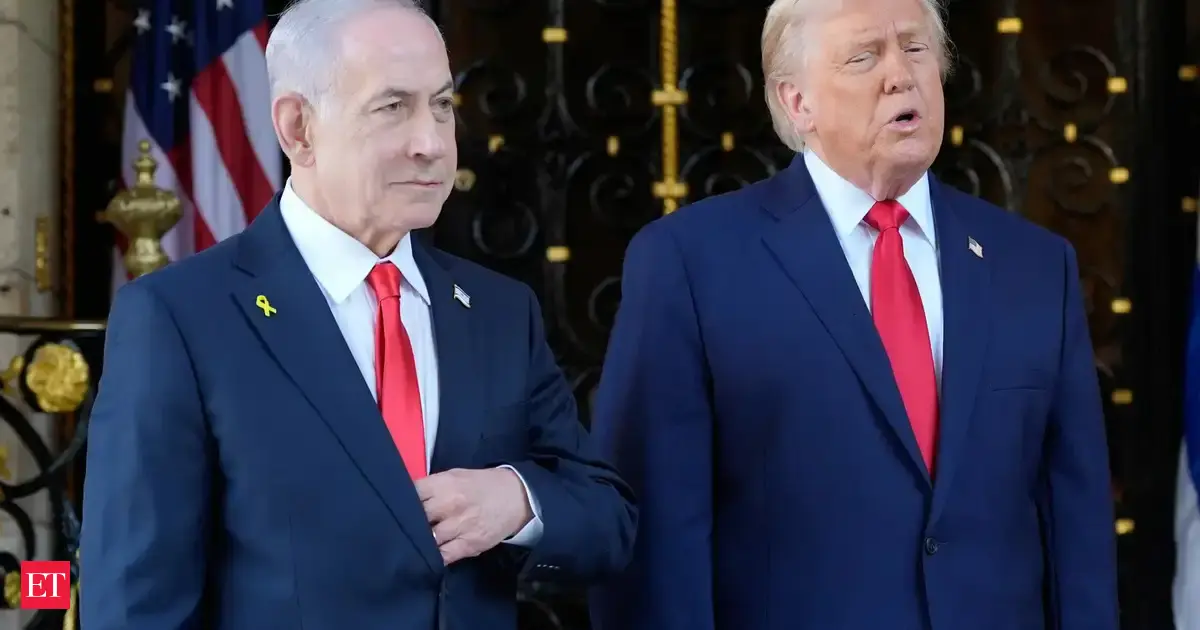
No wonder Donald Trump swore at his supposed friend and ally Benjamin Netanyahu last week. Within days of that June 1 phone call, Israel and Iran were back on track for the kind of military escalation that can no longer be explained away as a ceasefire breach, presenting a potentially fatal threat to the US president’s attempts to end the war.The cause of their dispute is, on the surface, simple. Israel says the April ceasefire between Tehran and Washington did not cover Lebanon, and that its troops would therefore go on fighting Hezbollah so long as the Shiite group posed a security threat to Israeli’s northern border communities. Iran says the deal did cover Lebanon, which is just another front in the same war — and of course it is.It’s precisely because it sees Hezbollah as a tool of Iran’s Islamic Revolutionary Guard Corps that Israel wanted the war in the first place. Israelis correctly blamed the IRGC for having orchestrated an entire proxy network of militias — from the Houthis in Yemen, to Hamas in Gaza, to Hezbollah in Lebanon — against the world’s only Jewish state. That Iranian strategy contributed directly to the atrocities of Oct. 7, 2023.Also Read: US Army Apache helicopter crashes near Strait of Hormuz, says reportOnly such an Iran-controlled or -inspired network can explain why Hezbollah opened a second front against the Israelis on Oct. 8 of that year, long before it could be described as a response to Israeli military excesses against Palestinian civilians in Gaza. Likewise that Hezbollah would join in the fight again when the US and Israel attacked Iran, in February. And it’s why the Houthis chose this weekend to lob a missile at Israel and announce they were closing the Bab al-Mandeb Strait to Israeli shipping.These last Houthi gestures were largely symbolic. Yet the collective message Tehran seeks to deliver is clear; it is that reports of the death of its so-called Axis of Resistance have been greatly exaggerated. The latest bout of escalation has notably been directed at Israel alone, serving to drive a wedge between it and the US, as it exposed the point at which their interests divide.Tehran on Monday appeared to want to draw a line under spiraling tit-for-tat air and missile strikes, saying it would refrain from further attacks — so long as Israel doesn’t bomb Hezbollah’s strongholds in Beirut. Netanyahu now faces a painful dilemma: Should he obey Trump by limiting his campaign against Hezbollah in the face of Iranian threats, thus granting them a level of impunity and deterrent power? Or should he ignore Trump and unleash the Israel Defense Forces on the Lebanese capital?Also Read: US carriers spent $6. 5B on fuel in April; global profit forecast is cut nearly in halfTehran’s new leaders understand this. No doubt they see it as a win-win for themselves. They know, too, that Hezbollah has recovered some of the military utility it had lost before the war after acquiring remote-controlled first-person view drones that the IDF seem ill-prepared to counter.This would present a genuine predicament to any Israeli government, because popular support for “finishing the job” in Lebanon is high. Netanyahu faces anger from across the political spectrum over his apparent submission of Israeli security interests to American ones.But this isn’t any Israeli government. Not every Israeli leader would have overseen a decades-long security policy that prioritized the suppression of the Palestinian Authority over Hamas, allowing the terrorist group to succeed beyond its wildest dreams on Oct. 7. Nor would every Israeli leader have refused to draw up a political strategy to accompany the use of force that followed in Gaza, the West Bank, and Lebanon — despite being coerced by Trump into recent talks with its central government.As the former Israeli Prime Minister Ehud Barak put it in an article for the liberal Haaretz newspaper on Monday, the story being sold to Israelis — that the IDF could eradicate Hezbollah once and for all if only its hands weren’t tied — is “a dangerous illusion.” The history of previous, painful failed incursions into Lebanon says as much.Nor would every Israeli leader have misled Trump into believing (against the advice of the US military and intelligence community) that assassinating Iran’s supreme leader would swiftly precipitate a collapse of the Islamic Republic as a whole. Nor might they have allowed their country to become quite as diplomatically isolated as it has.It is these strategic failures, amid undoubted military success, that have left Israel with few good options. Netanyahu can hope for a rapid collapse of the regime in Tehran to resolve his dilemma, but that’s unlikely. Alternatively, he can try to persuade the US to join in a long-term mow-the-lawn policy to keep Iran weak, amounting to a forever war. This, too, seems unlikely — or at least not in the interests of the US, its Gulf allies or the global economy.Failing one of these minor miracles, the risk of Israel being forced to accept a peace deal that leaves an enraged and emboldened Islamic Republic in place is real. No doubt Netanyahu, like Trump, believed in February that a short, victorious Iranian war might salvage his dimming political prospects, ahead of the Israeli elections due by October. That was a bad bet.

US, Israel can't hide their differences on Iran
The Economic Times (India)
보수 성향
정치
긍정적

US lawmakers cheer as court blocks $100K H-1B fee

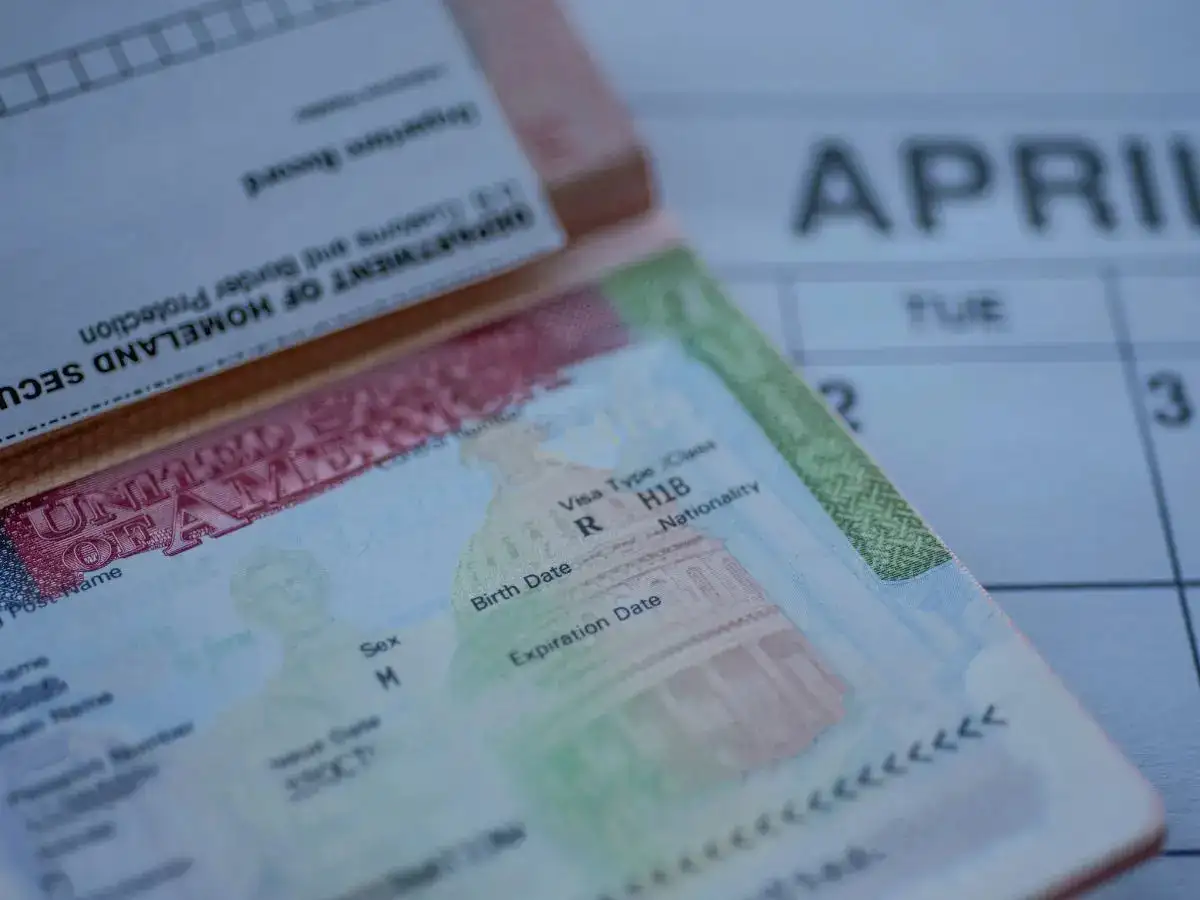
A chorus of US lawmakers from across the political spectrum has come out in support of a federal court order dismantling a proposed USD 100,000 H-1B visa application fee, even as the White House prepares to challenge the judicial setback in the appeals court. Breaking ranks with the executive branch, several Republican lawmakers backed the decision by shifting the spotlight away from the information technology sector, which heavily utilises this visa category, and focusing instead on how the massive financial penalty would cripple healthcare systems and educational institutions in remote regions. These conservative representatives pointed out that employers in rural areas depend heavily on international professionals to fill severe staffing voids. Stressing the severe local impact, Republican Senator Lisa Murkowski from Alaska emphasised that the issue transcended partisan politics in her state. She pointed out that the judicial intervention arrived at a pivotal juncture as academic institutions actively finalise their faculty rosters for the upcoming school term. Senator Murkowski stated, "Many school districts in rural and remote parts of the state rely on the H-1B visa programme to bring quality teachers to their communities." Unmoved by the legislative backlash, the White House strongly dug in its heels to defend the executive measure and signalled immediate plans to get the ruling overturned. White House spokesperson Taylor Rogers argued, "The H-1B programme has been abused for decades, and President Trump finally took action to fix it." Expressing absolute confidence in a legal reversal, Rogers added, "A federal judge in Washington already upheld a nearly identical order, and the administration is confident this order will be reversed on appeal." Conversely, the political opposition welcomed the court's intervention as necessary relief for critical public infrastructure. Democratic Congressman Don Beyer praised the judgment, warning that the steep executive fee would have slammed healthcare facilities already pushed to the brink by severe personnel deficits with unsustainable operational costs. Echoing this sentiment from across the aisle, Republican Congressman Mike Lawler also threw his weight behind the judicial freeze. He highlighted his own ongoing, cross-party legislative efforts to shield medical personnel from the financial burden. Congressman Lawler noted, "I have been working to exempt healthcare workers from this fee that only exacerbates the current staffing shortages in healthcare. That's why I introduced the bipartisan H-1Bs for Physicians and the Healthcare Workforce Act. While we continue to push this legislation through Congress, this ruling is welcome news." Further criticising the administration's economic logic, Congressman Sanford D. Bishop Jr. cautioned that the premium pricing would effectively slam the door on global talent, hurting domestic growth. Congressman Bishop argued, "The USD 100,000 fee for employers' H-1B applications would have discouraged the best and the brightest from coming to America and helping our economy grow and innovate." The legal architects behind the successful lawsuit also celebrated the verdict. Leading the state-level resistance, California Attorney General Rob Bonta remarked that the executive fiscal policy directly undermined the nation's capacity to import specialised professionals for sectors struggling with systemic labour deficits. Bonta stated, "This tax was an attack on America's ability to attract and retain the high-skilled talent that strengthens our economy and helps us meet critical workforce needs." Validating the multi-state legal push, New Jersey Attorney General Jennifer Davenport expressed an identical view, noting that the judiciary clearly agreed that the executive branch had completely overreached its mandate by attempting to levy the financial requirement on H-1B petitioners. However, the Republican consensus on the matter remained fractured. Voices from the conservative wing, like Arizona Congressman Eli Crane, explicitly denounced the ruling. Crane, who has been aggressively pushing for restrictive immigration overhauls, bypassed the judicial roadblock to call for a definitive legislative remedy. Congressman Crane stated, "Although an activist judge blocked President Trump's reforms to the H-1B program, Congress can fix it without judicial obstruction. Urge your representative to cosponsor the End H-1B Visa Abuse Act of 2026, which halts and significantly reforms this broken system." This highly publicised judicial verdict represents a major blow to the Trump administration's broader strategy aimed at restricting employment-driven immigration channels and creating steep hurdles for US employers trying to onboard international professionals. The development has triggered significant interest in India, given that the H-1B framework serves as a vital pipeline for the Indian workforce to access lucrative professional opportunities in the US. The non-immigrant work permit enables US corporations to recruit overseas experts with niche expertise across highly technical fields, including technology, engineering, healthcare, and finance. Because of India's robust talent pool in these specialised industries, Indian citizens systematically secure the lion's share of the total H-1B allocations distributed on an annual basis, making any disruption to the fee structure a critical economic talking point for New Delhi. Structurally, the H-1B visa has long solidified its status as an essential foundation for the American guest-worker immigration model. Under the statutory guidelines, the US government caps the yearly allocation at 65,000 standard permits, while reserving an extra 20,000 slots specifically for candidates who have earned advanced graduate degrees from US institutions. Data provided by immigration advocacy group FWD.us reveals the massive scale of this demographic, noting that approximately 730,000 H-1B visa holders reside across the US, living alongside an estimated 550,000 dependents, which includes their spouses and children.
US lawmakers cheer as court blocks $100K H-1B fee
The Economic Times (India)
보수 성향
사회
긍정적

Bharti Airtel, Vodafone Idea shares rise up to 4% as court scraps spectrum dues

Shares of Vodafone Idea and Bharti Airtel gained up to 4% on Tuesday after the Bombay High Court quashed the government's one-time spectrum charge (OTSC) demands, holding that all actions taken pursuant to the disputed demands would also stand annulled.Vodafone Idea shares jumped 4% to Rs 14.90, while Airtel share price gained over a percent to Rs 1,836 on the BSE. The ruling provides a combined relief of around Rs 20,000 crore to the two telecom operators. According to ET Now, Vodafone Idea has secured relief of Rs 11,000 crore, while Bharti Airtel has received relief of Rs 9,000 crore.A division bench comprising Justices Manish Pitale and Shreeram Shirsat set aside the demand notices issued by the Centre for recovery of OTSC. The court observed that the government had failed to demonstrate any legal authority empowering it to take such a decision or issue the resulting demand notices.The bench also directed that bank guarantees furnished by the telecom companies be returned. In addition, all demand notices and related orders concerning the one-time spectrum charge have been struck down. At the same time, the court clarified that the matter continues to remain pending before the Supreme Court.The bench noted that the government, while citing public interest, had acted beyond the scope of the contractual and licensing arrangements entered into with the telecom operators. It further observed that the Centre had not identified any source of power authorising the impugned decisions.The dispute traces its origins to a November 2012 Union Cabinet decision under which a one-time spectrum charge was to be levied on spectrum holdings exceeding 6.2 MHz from July 2008 onwards. Following that decision, demand notices were issued to Bharti Airtel and Vodafone Idea specifying the amounts payable towards OTSC.According to a PIB release, telecom operators holding spectrum up to 4.4 MHz (GSM) were exempted from any one-time charge. For spectrum holdings beyond 4.4 MHz (GSM), the government decided that a one-time charge would be imposed prospectively based on prices discovered in the 2012 spectrum auction.Airtel and Vodafone Idea challenged the decision before the Bombay High Court in January 2013, arguing that the government lacked the authority under the Telegraph Act to impose a one-time spectrum charge, particularly with retrospective effect. At the time, the court granted interim protection to the companies and directed that no coercive action be taken while the matter was being heard.In its judgment delivered on Monday, the High Court said the government could not claim that the spectrum's status as a scarce and finite natural resource entitled it to unilaterally depart from the terms of its contracts with telecom operators."The government obviously cannot claim statutory power to act as per its own whim, notwithstanding the terms of the contract/licence executed as per the power available under the Act," the High Court stated.Sensex, Nifty today: Catch all the LIVE stock market action here(Disclaimer: Recommendations, suggestions, views and opinions given by the experts are their own. These do not represent the views of The Economic Times)

The Economic Times (India)
보수 성향
경제
긍정적

Asian stocks rebound on Iran optimism, AI trade

Asian stocks rebounded from their biggest drop since March as tensions in the Middle East eased and a selloff in artificial intelligence shares abated.The Kospi Index, the world’s best-performing gauge this year on the back of AI trade, gained 4.4% and the Nikkei rose 0.9%. That sent the broader MSCI Asia Pacific Index higher by 0.9%, following three days of losses spurred by factors including bets for an interest-rate hike by the Federal Reserve.Advances in Asia came after Wall Street gauges recovered, with chipmakers such as Nvidia Corp. and Micron Technology Inc. climbing. Intel Corp. shares rose the most in a month after the Information reported that Alphabet Inc.’s Google will use it to make chips.Brent crude traded steady at around $94.40 per barrel. The commodity pared much of its advance in the previous session as Iran and Israel pledged to ease strikes that threatened the peace talks in the Middle East.131599215After a brief interruption to the rally that propelled stocks to record highs, investors returned to risk assets during the New York session, signaling confidence that the bull market remains intact. The recovery was aided by easing geopolitical concerns and renewed demand for AI shares after last week’s steep decline.“Markets rarely move in a straight line at the pace seen since the March lows,” according to Morgan Stanley’s Mike Wilson, who maintained his constructive outlook, supported by earnings and strong economic data. “A correction was inevitable and ultimately healthy if this bull market is going to extend into year-end.” Meanwhile, Iran and Israel agreed to ease strikes against each other after a flare-up in violence threatened to derail peace negotiations and led President Donald Trump to appeal for de-escalation.Attention remains focused on whether energy flows will resume meaningfully via the Strait of Hormuz. A trickle of commercial shipping returned to the waterway over the weekend, even as the risks prompted some vessels to travel with their digital transponders switched off.Oil prices and their impact on inflation are key factors traders are watching after Friday’s blowout payrolls report reinforced bets on a rate hike. The May consumer price index due Wednesday is expected to jump by 4.2% from a year earlier — the highest rate in more than three years. But the core CPI is seen cooling slightly on a monthly basis — potentially providing a welcome signal to Fed officials. Meantime, Citigroup Inc. strategists led by Scott Chronert raised their year-end target for the S&P 500 after a “big step up” in earnings expectations.“We do not expect investors to lose confidence in the AI outlook,” said Mark Haefele at UBS Global Wealth Management. “Although tech stocks have come under pressure in recent days amid concerns about whether expectations can be met, business fundamentals remain strong.”Not everyone was as bullish. Investors should exercise caution regarding US stocks as an increasing number of “bear market signposts” point to an approaching top, according to Bank of America Securities.There are “too many red flags,” strategists led by Savita Subramanian wrote in a note dated June 5. “Take profits,” they said.

1 / 4 (총 76건)다음