Jasmine Crockett says knife that killed Austin Metcalf wasn't a 'deadly weapon' due to its size
JASMINE CROCKETT on the Karmelo Anthony verdict: "Well, I would argue the size of [the knife] alone, you wouldn't even think it's a deadly weapon."
"WOULDN" · 총 103건
필터 보기현재 지수
49.4
0 = 부정 우세
50 = 중립
100 = 긍정 우세
최근 7일 기준 77,605건을 분석한 결과, 뉴스 심리지수는 49.4(균형)입니다. 긍정 9,402건(12.1%)·중립 56,086건(72.3%)·부정 12,117건(15.6%)이며, 중립 비중이 뚜렷하게 높습니다. 성향 지수는 종합 21.1(보수 경향)입니다.
JASMINE CROCKETT on the Karmelo Anthony verdict: "Well, I would argue the size of [the knife] alone, you wouldn't even think it's a deadly weapon."
The latest 'Toy Story' premiered in L.A. on Tuesday, as Tom Hanks, Tim Allen and Joan Cusack unveiled the new story of toys versus tech.
The changes would also leave disaster survivors with fewer avenues for relief and raise insurance premiums, the group warned

Genie Godula is pleased to welcome Ali Vaez, Iran Project Director at the International Crisis Group. As Iran and the US seek an end to the war, an agreement so far remains elusive. Vaez challenges Donald Trump's claims that a deal is imminent, arguing that Trump is trapped between "an unwinnable war and an unpresentable deal". Rather than addressing the fundamental disputes surrounding Iran's nuclear programme, sanctions, or regional rivalries, the deal would merely restore the status quo: "All this deal would do is to basically consolidate the ceasefire. It would not resolve anything."

• Budget delay exposes Centre-province fiscal deadlock • NFC shares may be frozen under budget pressure • Critics say Centre ignores revenues kept outside divisible pool • Experts blame fiscal crisis on low tax collection, debt, federal spending • Raza Rabbani warns of phased rollback of 18th Amendment, NFC Award WHEN Finance Minister Muhammad Aurangzeb rises to present his third budget, the usual questions will apply. Which sectors face fresh taxation? Will the salaried class get any relief? How much will the cost of living increase? Who will get tax benefits, and who will not? But this year, there is an additional dimension worth watching closely. Will the budget clip provincial finances? Will the Centre freeze provincial shares under the current National Finance Commission (NFC) arrangement and push fresh expenditure obligations onto provinces — over and above their existing requirement to produce a primary surplus? If it does, it would amount to a unilateral revision of the NFC arrangement through the back door of the budget. When parliament adopted the landmark 18th Amendment in 2010, it was meant to settle a long-running devolution dispute between the provinces and the Centre. The 7th NFC Award corrected decades of fiscal imbalance, giving smaller provinces — particularly Balochistan and Khyber Pakhtunkhwa — a larger stake in national revenues. It was a moment of rare political consensus. Fifteen years on, that settlement is being unravelled: not through a constitutional amendment or fresh consensus, but through pressure and demands that provinces simply hand the money back. The announcement of Budget 2026-27 has been postponed twice as the Shehbaz Sharif government, its coalition partners and provincial governments struggle to agree on the Centre’s demand for additional funds of more than Rs1.2 trillion for strategic needs. The National Economic Council meeting, last called for June 9, was postponed for the fourth time amid continuing negotiations over the federal demand to freeze provincial shares in the federal tax divisible pool. Former Pakistan chief economist Rashid Amjad called it a potential tragedy. “That [7th Award and 18th Amendment] is the best thing which has happened to Pakistan; it empowers provinces and strengthens the federation. They say they want to decentralise powers but they don’t want to give up power in the federal government,” he said. ‘Precarious situation’ Whatever is known about the contours of the federal government’s demand mostly comes from Muzzammil Aslam, finance adviser to the PTI government in KP, as the ruling PML-N and its principal coalition partner continue their discussions behind closed doors. Aslam says the Centre told provinces their financial shares under the NFC for the current year would not be increased next year, and that any amount above the current year’s share would have to be returned to the Centre. This demand comes over and above the Rs1.95 trillion cash surplus that provinces have already committed under the National Fiscal Pact pushed by the IMF. Aslam warned the move would push provincial budgets into deficit. “I have not seen such a precarious situation in the past 21 to 22 years that I have been following budgets,” he told journalists after a meeting with a federal team led by Planning Minister Ahsan Iqbal. He acknowledged that “the demand for the strategic purpose is not unjustified and is in the national interest, but Sindh and Punjab will have to show generosity.” He also noted that the matter was beyond the KP government’s powers and required consultation with jailed PTI leader Imran Khan before any decision could be taken. On the constitutional bar on reducing provincial NFC shares during a fiscal year, Aslam said there was no clear answer on the table — though the Centre perhaps intended to transfer funds to provinces and then seek their return, a workaround that raises serious questions of its own. As he put it, “everybody is standing on their toes” to find a solution, with no way forward yet in sight. Also worth watching will be the PPP: what concessions it is willing to give, if any, and in exchange for what. Many believe the party has little room to refuse in the current political dispensation, with the coalition watching each move closely. NFC rollback? Proponents of the current NFC arrangement argue that the Centre’s posture did not emerge overnight. For years, Islamabad has pushed the narrative that the 7th Award — which hands 57.5 per cent of revenues to provinces — is the primary driver of its fiscal distress, leaving it unable to service debt, fund defence or complete strategic projects. Critics say this narrative is built on selective accounting. By expanding non-shareable levies over the years, the federal government has quietly grown its own fiscal base while publicly lamenting its diminished share. “GST was replaced by a levy on petroleum products precisely so it wouldn’t go into the divisible pool. If it had remained GST, it would have had to be divided with the provinces,” said Ali Salman of the Policy Research Institute of Market Economy (PRIME). A former Punjab finance secretary was equally blunt: “The NFC Award did not create the fiscal crisis; it inherited one. Debt and FBR dysfunction had crept into this system decades before provinces received a rupee more. Massive currency devaluation in recent years worsened this crisis. None of that has anything to do with how the divisible pool is split.” Amjad identified the real squeeze. “When you are in an IMF programme, there are very strict macro-framework restrictions under which you work,” he said, adding that the government had compounded its difficulties by entering conflicts on multiple fronts simultaneously, driving federal expenses upward. “The only way you can square the circle is for provinces to take on more of the federal expenditures and run bigger surpluses.” Salman noted that while the federal government bears a disproportionate fiscal burden, the revenue failure is shared. The NFC Award had set a target of bringing the tax-to-GDP ratio to 15 per cent within five years — a target the Centre never achieved, and one provinces did little to support either. “The abysmally low tax-to-GDP ratio of around 10pc is the core of the problem,” said Amjad. “The federal government must curtail its expenditures if it can’t raise tax revenues.” Radical solutions? Veteran PPP leader Raza Rabbani, who played a key role in building consensus on the 18th Amendment, warned that the Centre’s moves amounted to a gradual undoing of the constitutional order established in 2010. “They are rolling back the amendment in phases, and simultaneously the NFC Award, instead of reducing their own expenditure,” he said. He pointed to devolved ministries still operating at the federal level as an obvious starting point, and called for cuts to civil bureaucracy perks. If the federal government was unwilling to take those steps, Rabbani proposed a more radical solution: hand over tax collection entirely to provinces, place federal expenditure before the Council of Common Interests, and have provinces contribute a proportionate share. “If they can’t put their own house in order, then they should stop tax collection altogether,” he said. Rabbani reserved his strongest words for what he described as unprecedented IMF interference. “Based on my experience in politics, the level of IMF dictation regarding the budget is unlike anything I have seen before. This degree of micro-management of budget targets by the IMF is unprecedented,” he said, adding that the new fiscal targets being imposed on provinces also originated with the fund. “If parliament is to simply rubber-stamp an IMF budget, that is a different matter altogether.” Whether provinces will ultimately cover the fiscal hole for Islamabad — and whether the Centre can build the consensus it needs — remain the central questions hanging over this budget season. Published in Dawn, June 10th, 2026
Analyst Syaza Shukri says PAS wouldn't want to be seen as causing instability, especially as the Perlis ruler has called for the current government to remain until the end of its term.

The Knicks wouldn’t be here without Jalen Brunson. But they just might be better with him off the court in this NBA Finals.

This cosy medical drama does exactly what it sets out to do – soothe viewers’ souls with a celebration of smalltown values and secret goodness. It’s TV where nothing will distress you Well, what in the cultural cringe is going on here? Of all the things I could possibly have imagined the US would take an interest in to the point of executing a straight-to-series commission, Doc Martin would not have been one of them. And yet here we are: Dominic Minghella’s creation, starring Martin Clunes as a crotchety GP in the fictional sleepy Cornish village Portwenn, which ran for 10 series on ITV between 2004 and 2022, has been tweaked for a new market and relabelled Best Medicine because it never really worked as a pun on Dr Martens anyway. Like 99% of puns, actually, but that’s probably a discussion for another time. Clunes is now Josh Charles. The character’s name is Dr Martin Best instead of Ellingham, otherwise the new title wouldn’t work, and he went to Harvard medical school instead of Imperial College London. But he is still cantankerous – by medical teatime drama standards, which is to say that he barely approaches normal human levels of irritability. And he is still a vascular surgeon who developed a fear of blood, had to abandon surgery and decided instead to inflict his lack of bedside manner on the good people of Port Wenn, now two words and in Maine, where he used to stay in the summer as a child. Best Medicine aired on Sky One and is on Now Continue reading...
Political row emerges over state’s failure to tackle sexual violence against children as people protest across France A lawyer for the family of an 11-year-old girl whose disappearance and murder sparked protests across France has called for more funding for the struggling justice system, amid a political row over the French state’s failure to tackle sexual violence against children. “Frankly, if the justice system had more resources, this tragedy and all the others wouldn’t have happened,” said the family’s lawyer, François Roujou de Boubée, on Tuesday. “The victim’s family and I trust in the justice system. So enough is enough.” Continue reading...
It wouldn’t have been this way a few years ago.

In a candid conversation with THR, Sheen and ‘aka Charlie Sheen’ director Andrew Renzi unpack the archival deep dive into fame, addiction, scandal and recovery.
What does it mean to push the boat out, and can peacocking be more than just a beautiful gesture? A friend’s mother once told me that for a couple of years in the 1980s – as the Conservatives were waging war on the miners and she spent late nights at Marxist-feminist reading groups – she wore an almost daily uniform of jeans and a white T-shirt. On her wedding day she broke with habit and put on a dress she had bought, at great expense to her, that was fun, sexy and, although she didn’t use this word, flamboyant. The next week at the school she taught in she saw a colleague wearing it. “Nice dress,” she said. “It’s OK for work,” her colleague replied, “but I wouldn’t wear it out.” I found myself recalling this anecdote as I read Jack Parlett’s memoir-cum-cultural history of our attempts to push the boat out. To make any effort is to risk embarrassment, to be seen either as ridiculous or hopelessly naive. One way to avoid those charges is to use playful or cynical irony. Parlett finds examples of this in Oscar Wilde and what the cultural critic Susan Sontag once described as camp, a worldview obsessed with artifice and performance. Although Flamboyance is not a polemic, it’s clear that its author sees something lacking in these efforts at self-fashioning. The book is couched as an alternative; Parlett presents flamboyance as a model for how to live a life that not only “burns with a resistant energy” but “puts politics back into the picture”. In practice, this means that he has little patience for the notion of art for art’s sake; he insists, for example, that there is no making sense of flamenco without understanding the history of fascism in Spain. Continue reading...
Umno president says the partnership was not 'rooted in sincerity'.

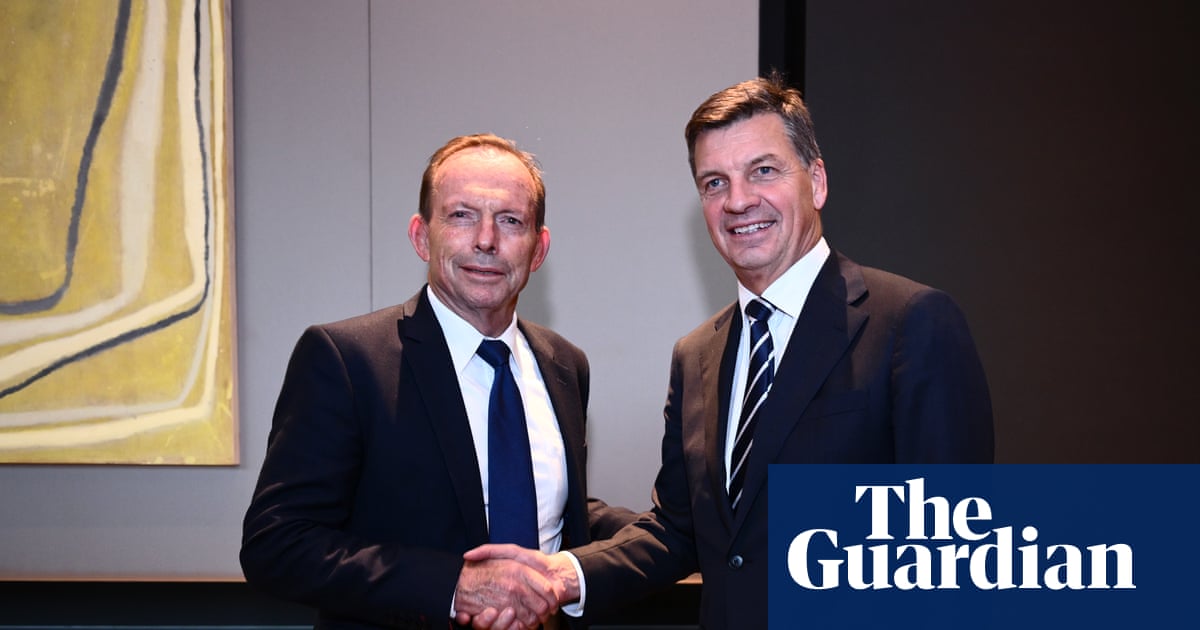
Liberals and Nationals grappling with surging support for Pauline Hanson’s party, which threatens to replace them as Australia’s main conservative party Follow our Australia news live blog for latest updates Get our breaking news email, free app or daily news podcast The new Liberal president, Tony Abbott, has backed preference deals with One Nation as he declared the party wouldn’t win the next election by being “slaves to focus groups” and just a “little less woke than Labor”. The opposition leader, Angus Taylor, all but confirmed he was open to such deals with Pauline Hanson, declaring the party was prepared to cooperate with “whoever we can to get rid of this rotten Labor government’”. Continue reading...

The new features ignore the argument that if parents wanted to spend more time on their kids, they wouldn't have supplied them with an iPad or iPhone in the first place.
An Auburn University student who died in Japan after going off on a solo hike away from his family enjoyed long strolls for “decompression” and wouldn’t have wanted to harm himself, a family friend said Monday
New York City was the backdrop of this year’s IEEE Honors Ceremony, held on 24 April. The event celebrates engineering pioneers who have developed technologies that have changed how people connect and learn about the world. This year’s celebrants included the engineers behind innovations such as text-to-donate technology, AI-powered diagnostic tools, and the graphics processing unit, among many others. Prior to the Honors Ceremony, IEEE hosted a forum on 23 April for a select group of early-career achievers to exchange ideas and experiences with laureates and awardees, speakers, and IEEE leaders. Attendees from around the world, working in a variety of technical areas, shared their journeys and explored the intersections of technologies, disciplines, and missions. The event culminated in Friday evening’s black tie Honors Ceremony, where IEEE celebrated medal laureates, including Jensen Huang, who received IEEE’s highest recognition, the IEEE Medal of Honor. Huang is a cofounder of Nvidia and its chief executive. “IEEE has always been a home to those who see the future before others see it,” Mary Ellen Randall, IEEE president and CEO, said in her welcome speech. Video highlights and photos from the event are available on the IEEE Awards website. Exploring mission-driven tech and AI in art Friday morning began with a conversation between Randall and Marian Croak, the recipient of this year’s IEEE Founders Medal. Croak was honored for “leadership in communication networks, including acceleration of digital equity, responsible artificial intelligence, and the promotion of diversity and inclusion.” Croak, who serves as vice president of engineering at Google, headquartered in Mountain View, Calif., pioneered Voice over Internet Protocol (VoIP) technologies. When a person speaks into a telephone, VoIP converts their voice into digital signals that are transmitted over the Internet rather than traditional phone lines. Her work enabled audio and video conferencing. She also developed text-to-donate technology to raise money for those affected by Hurricane Katrina, which devastated New Orleans in 2005. The technology enables customers to donate money to a charity via their mobile service provider, which then bills them. “Empathy has always been a driving force in the engineering that I’ve done,” she said. She shared advice on how to stay creative: “Get out of the office. Go to an art museum, exercise, or play with children.” Croak said her grandchildren inspire her. An inside look at microchips During Friday evening’s Honors Ceremony cocktail hour, attendees explored the history of microchips at the IEEE Global Museum’s Microchips That Shook the World exhibit. The Global Museum, an IEEE History and Heritage program, develops traveling and digital exhibits focused on the history of technology. The museum’s mission is to promote awareness of how technological progress unfolds over generations and how engineers and researchers build on past achievements to benefit humanity. Drawing from IEEE Spectrum’s Chip Hall of Fame, the Microchips That Shook the World exhibit conveys the roles integrated circuits play in fields such as signal processing, audio engineering, and telecommunications. Co-curators Stephen Cass, Spectrum’s special projects editor, and Daniel Mitchell, the IEEE senior historian, served as onsite docents for guests. The Commodore 64, one of the artifacts on display, brought up many treasured childhood memories for guests who used the home computer. The exhibit also featured a preview of IEEE’s immersive video project “Inside the Microchip,” which delves beneath the silicon surface of the Nvidia NV20 microchip thanks to forensic photography and sophisticated computer-generated renders. The video, which will be released later this year, aims to teach preuniversity students about the technology. Microchips that Shook the World is possible thanks to donations from semiconductor company ASML, the Bill and Dianne Mensch Foundation, and the IEEE Electron Devices and IEEE Electronics Packaging societies The daytime program also spotlighted AI’s use in the visual arts. Kathleen Kramer, the 2025 IEEE president, interviewed artist Refik Anadol, who is scheduled to open an AI art museum on 20 June in Los Angeles. Dataland’s exhibits are powered by an open-access model developed by Anadol’s studio. For the museum’s first exhibition, “Machine Dreams: Rainforest,” the model collected visual data about the natural world from the Smithsonian National Museum of Natural History, London’s Natural History Museum, and the Cornell Lab of Ornithology, with their permission. The information, including up to a half billion images, will form the basis for a variety of AI-produced art, Anadol said. Anadol said he was inspired to mix AI with art by the movie Blade Runner. He said he believes “machines can become collaborators,” as “data is a form of pigment.” Data also plays an important role in the work of artist and author Giorgia Lupi. The artist is a partner at design firm Pentagram. Lupi said she uses data to tell stories, including chronicling her struggles with a chronic illness. “Data is an abstraction of our reality,” she said. One of her recent projects, “A Data Love Letter to the Subway,” was shown last year in the Dey Street Passageway in New York City. The video was made using data from the Metropolitan Transportation Authority about each train line, including timetables, ridership, and people’s travel habits. Based on the information Lupi gathered, she documented how commuters traveling on different subway lines encountered one another without realizing it. By exploring data on this year’s IEEE award recipients, she collaborated with IEEE to create an animated video illustrating the shared pathways and collaborations among the honorees. It debuted at the Honors Ceremony. Honoring engineering giants The Honors Ceremony, held at Cipriani 42nd Street, recognized more than 20 laureates and innovators. More than 92 million selfies are taken worldwide every day, PhotoAiD estimates. A selfie wouldn’t be possible without Eric Fossum’s invention of the CMOS image sensor. Developed at NASA’s Jet Propulsion Laboratory, in Pasadena, Calif., the “camera on a chip” was intended for use in space, but it is now found in smartphones, medical devices, and vehicles. Fossum, an IEEE Life Fellow, received the IEEE Jun-ichi Nishizawa Medal, which recognizes outstanding contributions to materials and device science and technology. “Engineering is a pursuit of what must be possible. [IEEE is] the spirit, the conscience, of our profession.” —Jensen Huang, founder and CEO of Nvidia The medal, he said, “is at the top of the IEEE staircase of being recognized by your peers.” The IEEE Holonyak Medal for Semiconductor Optoelectronic Technologies went to Steven P. DenBaars, a professor of materials and electrical and computer engineering at the University of California, Santa Barbara. DenBaars was honored for his work in semiconductors, which laid the foundation for high-resolution LED and laser displays, modern solid-state lighting, and more. “This work has always been a team effort...I’m excited and curious about the role gallium nitride micro LEDs will play in optical communications,” he said in his acceptance speech. The ceremony ended with the Medal of Honor presentation to Huang, who received a standing ovation. He was recognized for his “leadership in the development of graphics processing units and their application to scientific computing and artificial intelligence.” The IEEE honorary member donated his cash prize to IEEE TryEngineering, which provides teachers with a library of lesson plans and offers educational summer camps. The Jen-Hsun and Lori Huang Foundation matched his gift, and the additional donation is destined to fund scholarships for new graduates. “Engineering is a pursuit of what must be possible. [IEEE is] the spirit, the conscience, of our profession,” Huang said.
When asked if their presence at Peter Phillips’ wedding to Harriet Sperling was a stamp of approval from the royals, Emily Nash said, "I wouldn't say that."
OpenAI's CFO, Sarah Friar, stressed that AI tool proficiency is now as crucial for finance professionals as spreadsheets were decades ago. She highlighted that companies are actively seeking employees skilled in AI, with demand for compute power outstripping supply. Friar also underscored the need for inclusive access to AI technologies as adoption grows.