China May wholesale prices hit near 4-year highs on Iran war, AI costs; consumer inflation misses
Price growth has been boosted by a surge in global commodity costs, as the Middle East conflict disrupted energy and raw material flows.
"WHOLESALE" · 총 37건
필터 보기현재 지수
49.5
0 = 부정 우세
50 = 중립
100 = 긍정 우세
최근 7일 기준 76,600건을 분석한 결과, 뉴스 심리지수는 49.5(균형)입니다. 긍정 9,340건(12.2%)·중립 55,380건(72.3%)·부정 11,880건(15.5%)이며, 중립 비중이 뚜렷하게 높습니다. 성향 지수는 종합 20.2(보수 경향)입니다.
Price growth has been boosted by a surge in global commodity costs, as the Middle East conflict disrupted energy and raw material flows.
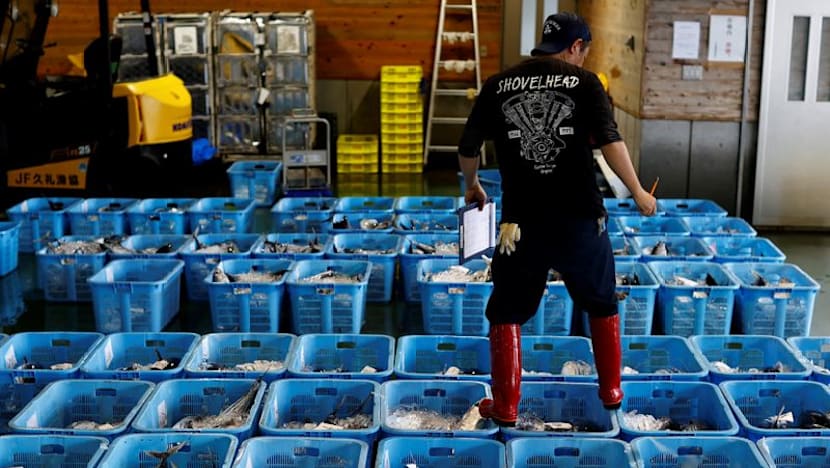
TOKYO (Kyodo) -- Japan's wholesale prices rose at their fastest pace in over three years in May, up 6.3 percent from a year earlier, the Bank of Japan
Amandeep Buaal, who worked for wholesaler The Fruit Hustle for nine years, said missing months of wages made it impossible to keep up with mortgage repayments.
The wholesale retailer reduced prices on wings, chocolate almonds, golf balls, and king-size sheets by as much as $10
The government will market its new “small trader scheme” as an effort to bring retailers into the tax net and generate Rs50 billion annually. A cursory look would, however, reveal that it is less a tax reform initiative and more a negotiated settlement with one of Pakistan’s most under-taxed yet politically influential constituencies. The scheme offers traders with annual sales of up to Rs200 million a simplified one per cent turnover tax on a voluntary basis. Participants will face minimal compliance requirements and will be exempt from audits, point-of-sale systems, digital invoicing and most forms of scrutiny. Existing non-filers can join under certain conditions. The government insists this is not a tax amnesty. But exempting traders from the very documentation tools — POS [point-of-sale] systems, digital invoicing — that the state claims to be expanding elsewhere makes that position hard to sustain. If the purpose is to integrate retailers into the documented economy, the scheme does the opposite. It risks entrenching the cash-based practices that have long kept retail trade outside the tax net. This follows a familiar pattern. Whenever governments attempt to broaden the tax base, trader resistance produces a compromise — a concessionary regime that falls short of genuine documentation. The Tajir Dost Scheme, introduced last year, largely failed; at one point, only a few dozen traders had reportedly joined. The new scheme is a variation of the same scheme, not a more effective alternative. The OICCI notes that the corporate sector, representing only 6pc of GDP, accounts for nearly 60-70pc of direct tax revenues, while retailers remain under taxed The scale of what is being forgone deserves emphasis. Pakistan’s retail sector is estimated to generate annual turnover in the range of Rs10 to Rs15 trillion, yet its contribution to direct tax revenues remains negligible. The Overseas Investors Chamber of Commerce & Industry’s (OICCI) tax proposal submissions to the government note that the corporate sector, representing only 6pc of GDP, accounts for nearly 60-70pc of direct tax revenues. That concentration is not a sign of corporate wealth; it is a sign of how narrow and distorted the tax base has become. The Rs50bn target attached to this scheme, even if met, would represent a fraction of what full compliance at standard rates could theoretically yield. Every scheme that keeps retailers outside the documented economy worsens that distortion. The contrast with salaried workers and corporations is too obvious. Formal-sector employees have taxes deducted automatically at source and face progressive rates that rise sharply with income. Corporations bear some of the highest effective tax rates in the region and must meet extensive reporting requirements. The OICCI has calculated that the effective burden on large corporates, once super tax, Workers Welfare Fund and Workers Profit Participation Fund contributions are included, reaches 45-46pc. For resident shareholders, the combined burden approaches 64pc, figures that place Pakistan among the most heavily taxed corporate jurisdictions in the region. A retailer turning over hundreds of millions of rupees, meanwhile, can now settle tax liabilities through a preferential regime while avoiding audits and documentation that other taxpayers cannot escape. This is not an equitable distribution of the tax burden; it is a distortion that the scheme deepens. That this sector continues to shoulder such rates while retailers negotiate preferential arrangements is the predictable result of repeatedly choosing accommodation over enforcement. The International Monetary Fund (IMF), whose conditions explicitly include broadening the tax base and reducing reliance on withholding taxes from a narrow set of documented taxpayers, has flagged the retail and wholesale sectors as critically under-taxed. Whether this scheme satisfies or contradicts its commitments with the fund is a question the government is unlikely to answer publicly, and one the IMF is unlikely to ignore when the next review comes around. The OICCI, representing the largest foreign investors operating in Pakistan, has explicitly called for all future tax exemptions and preferential treatments to pass through a transparent policy review mechanism under the proposed Tax Policy Office. The small trader scheme announced without any such review is precisely the kind of ad hoc concession that the body was designed to prevent. That the government bypassed this process, which it has itself committed to operationalising, raises questions about whether the Tax Policy Office will have any real authority or will simply be overridden whenever political costs become inconvenient. The political logic is straightforward. Traders are an important constituency for the ruling PML-N in urban Punjab. They are well-organised and capable of mobilising quickly. Mandatory documentation, digital invoicing and strict enforcement would carry real political costs. A voluntary, audit-free arrangement does not. The political costs of confronting traders are not hypothetical. When the government attempted to impose a minimum tax of Rs3,000 per shop in FY23, the then finance minister Miftah Ismail was publicly rebuked — not by the opposition, but by PML-N leader Maryam Nawaz Sharif. The message to traders, and to any future finance minister contemplating enforcement, was unambiguous. But that calculation has consequences: every concession granted to retailers increases pressure on sectors that are already fully documented and easy to tax. Revenue collection alone is not the benchmark for sound tax policy. Effective reform must broaden the tax base, improve documentation and distribute the burden more fairly. On those standards, the Fixed Tax Asaan Scheme fails. A credible alternative roadmap is not difficult to design. The tools and the blueprint are available. The OICCI, in its taxation proposals, has outlined one: a two-year programme to bring unregistered businesses into the tax net through digitisation, integration of existing databases and expansion of digital invoicing. That this framework has been formally submitted to the government and set aside in favour of a voluntary, audit-free scheme is telling. The OICCI has warned that the continued concentration of tax burden on the formal sector has already contributed to multinational companies scaling down operations or exiting Pakistan altogether. A tax policy that drives out documented, compliant investors while offering relief to undocumented ones does not just fail on fairness grounds; it actively undermines the investment base the country needs to grow its way out of fiscal stress. Published in Dawn, The Business and Finance Weekly, June 8th, 2026
THE federal budget is rightly bemoaned as a futile exercise. The space available for anything particularly creative — meaningfully redistributive or growth-enabling — is extremely limited. Instead, nearly every budget of the last decade and a half has been an exercise in managing the fiscal deficit under an IMF programme. Once that’s accounted for, the remaining scraps are distributed as largesse mostly between different arms of the state (and those close to those arms). Every sitting government can, with some merit, claim to be the inheritor of a particularly bad situation. That this extractive revenue appetite is dictated by long-standing issues not of its own creation. That ballooning debt has to be serviced and for that more revenue is an inescapable necessity. That the luxury of pursuing growth does not exist, especially when the IMF looms large. That the straitjacket imposed by entrenched economic dysfunction cannot be thrown off so easily. This would be an evadable charge if it’s a party’s first time in government. But if time spent as the face of the federal government lies in the double digits, perhaps some reflection and accountability are merited. Stretching back to the previous assembly, this will be the current dispensation’s fifth straight budget (under three different finance ministers). Surely that’s enough time to muster some creativity and some resolve to escape the so-called straitjacket. Yet all one can fear is a familiar accounting exercise that aims to extract a few more rupees from a narrow, weary economic base. All one can fear is a familiar accounting exercise that aims to extract a few more rupees from a narrow, weary economic base. Within this base, it’s worth remembering that the vast majority of people are already reeling from a fresh cost-of-living crisis triggered by the imperialist war on Iran. With pump prices still at least 40 per cent higher than their pre-war base, and with second-order effects of pricier oil impacting at least 25pc of household spending, any further increase in the tax burden will be nothing short of disastrous. On the income tax front, the salaried segment has already been recast as a pliant, low-effort source of nearly half a trillion rupees annually. Those below the threshold who can’t be milked through this mechanism are still paying through the sales tax and petroleum levy net. The latter two in particular remain regressive in their incidence and impact. At a time when inflationary pressures have rendered real income growth stagnant for almost a decade, the increased direct and indirect tax burden represents an additional constraint on consumption. One hears plenty of stories of households actively downgrading their lifestyles under mounting financial pressure. Small car owners switching down to motorbikes; children being pulled out of category A or B schools and being sent to smaller, lower-cost ones. Spending on leisure making way for just the basic essentials. To counter these anecdotes, some officials and government partisans often respond by pointing out pockets of high consumption in major urban centres. Look at all the jam-packed restaurants. Look at all the footfall in shopping malls. Look at all the new specialty coffee shops opening not just in Lahore, Karachi and Islamabad, but also apparently in Faisalabad and Gujranwala. All of this is meant to do two things — the first is to undercut the story of economic hardship that depressing anecdotes (and the actual consumption surveys) tell us. The second thing is to provide a comforting story of economic progress that somehow exists beyond the data. For this reason, the notion of the informal economy is often trotted out — Pakistan may be ‘officially’ poor, but unofficially it’s doing much better. There are two things wrong with this approach. The first is that it assumes that the informal economy somehow shows distributional patterns different from the formal economy. Yes, like in any developing country, there is a small segment of privileged high earners who can eat at restaurants and drink matcha. And yes, some of their income will be undocumented and derived from the informal sector. However, this segment is small in relative terms. Pakistan just happens to be a very populous country. The top 1pc would still constitute 2.5 million people; a number large enough to occupy tables and shops in a few commercial localities in the top three to four cities of the country. At the other end, the vast majority of those working in the informal sector are scrambling to meet basic subsistence requirements. There is no major accumulation taking place, no pockets being lined, and certainly not enough being made to contradict the poverty and hardship that recent survey accounts categorically reveal. The second problem is that if one takes the ‘hidden prosperity’ argument at face value, it raises a far more serious question about the government’s ability to tax its citizens fairly. If undocumented wealth and high-end consumption driven by the informal economy are to be cited as proof of economic progress, then there is no good reason why more effort should not be directed at bringing them into the tax net with a view to easing the burden on those already ensnared. On that front, somehow the government repeatedly throws its hands up in meek despair, sustaining unearned privileges of various elites and the tax avoidance and evasion of specific lobbies (such as large retailers and wholesalers). In my view, if the budget is nothing other than an exercise in managing revenue, then there are only two metrics worth evaluating it on: to what extent does the government intend to cut down on its own waste and stop diverting resources towards improving the quality of life of its officials at the expense of the larger population? And to what extent is it spreading the burden outside a small formal sector and the hapless working Pakistanis currently caught in an extractive withholding and indirect tax regime? The writer teaches politics and sociology at Lums. X: @umairjav Published in Dawn, June 8th, 2026
• Rs4.7tr federal, provincial development plans may be revised • Federal PSDP may rise above Rs1.3tr; provincial ADPs could be trimmed • Mega projects face major cost, time overruns ISLAMABAD: The National Economic Council (NEC) is set to meet on Monday (today) and may revise federal and provincial development plans worth Rs4.715 trillion for the next fiscal year amid conflicting fiscal needs of critical political and other institutional stakeholders. The NEC — the highest economic decision-making forum of the federation, led by the prime minister and comprising the four chief ministers and four federal ministers — has a four-point agenda for the meeting. The first item pertains to a review of the Annual Plan 2025-26, approval of the Annual Plan 2026-27 and a presentation on key socio-economic indicators of the provinces. This will be followed by a review of Public Sector Investment (PSI) 2025-26, the proposed PSI 2026-27 and confirmation of changes made in the PSDP 2025-26 through addendums, corrigendums and adjustments on the directives of the prime minister, including a cut of around Rs175bn. The meeting will also include presentations on provincial annual development plans by the four chief secretaries. Besides, the NEC will take up a progress report of the Central Development Working Party (CDWP) from April 1, 2025, to March 31, 2026, and schemes approved by the CDWP and the Executive Committee of the National Economic Council (Ecnec) during the same period. Projects face delays, overruns The Planning Commission will also present highlights of the monitoring and evaluation report of mega projects. According to the report, the PSDP 2025-26 portfolio comprised 801 projects, including 734 ongoing and 67 new initiatives being implemented by 40 ministries, divisions and state-owned enterprises. Out of 240 projects selected for monitoring during the current financial year, 170 had been monitored by March 2026, including specially assigned cases. Priority monitoring was accorded to mega projects, government special initiatives, donor-funded interventions and slow-moving schemes. The monitoring exercise revealed that delays in project completion were mainly caused by inadequate financing, weak project planning and preparation, delays in land acquisition and no-objection certificates, litigation, procurement bottlenecks, delayed release of provincial shares, weak project management capacity and changes in scope. “Analysis indicates that approximately 25 per cent of ongoing projects are facing cost overruns, while nearly 79pc are experiencing time overruns, placing additional burden on public finances and affecting development outcomes,” the report said. Senior government officials said the consolidated federal and provincial development programme for next year, approved by the Annual Plan Coordination Committee (APCC) last week, could see significant changes because of the Centre’s greater financial needs while protecting the primary budget surplus at 2pc of GDP, or more than Rs2.8tr, as committed to the IMF. However, the annual plan projections for next year cleared by the APCC are expected to remain mostly unchanged. Officials said the federal PSDP of Rs1.126tr cleared by the APCC may go beyond Rs1.3tr, while the size of provincial annual development plans could be lower than the Rs3.138tr indicated last week. They said the PSDP summary for next year contained the Rs1.126tr allocation with a request for enhancement by the NEC. They added that these changes would be finalised during the NEC meeting as political engagements continued with coalition partners to reach common ground. Officials said the Centre’s push for Rs1.7tr in additional fiscal space from the provinces, on top of a cash surplus of close to Rs2tr, or about 1.4pc of GDP, for next year had now been reduced by almost one-third to around Rs1tr. However, allocations for coalition partners’ schemes and ruling party parliamentarians are expected to remain largely unchanged at Rs87bn and Rs70bn, respectively, for next year. Slippages, targets The NEC will also be briefed on slippages in the economic growth target, mainly because of external factors, with next year’s GDP growth target set at 4pc and inflation projected at 8.2pc. The commodity-producing sectors are targeted to expand by 3.9pc next year, driven by 3.8pc growth in agriculture and 4.5pc growth in large-scale manufacturing. Agricultural growth is expected to be supported by recovery in important crops, projected at 3.6pc, cotton ginning at 2.5pc and livestock at 3.9pc. The industrial sector is targeted to grow by 4pc in 2026-27, mainly due to a revival in large-scale manufacturing, alongside growth momentum in mining and quarrying, construction and energy, including gas and water supply. The services sector is targeted to grow by 4.2pc, underpinned by stronger performance in wholesale and retail trade at 4.2pc, transport, storage and communications at 3.7pc, financial services at 4.5pc, and information and communication at 7.7pc. “These targets are contingent on effective macroeconomic management and stable external conditions,” the Planning Commission warned. It projected national savings for the next fiscal year at 14.3pc of GDP compared to 14.1pc in the current fiscal year. The investment rate is targeted to reach 15pc of GDP, against 14.4pc in the current fiscal year. Highlighting a risk, the Planning Commission said the external sector could face pressure as easing import controls and debt repayments were likely to widen the current account deficit next year. Published in Dawn, June 8th, 2026
As is tradition, the day of the budget announcement remains a non-event for many consumers, who know that the finance minister’s speech in the National Assembly will bring little in the way of relief, focusing instead on praising the government’s past measures and setting new budgetary and revenue targets under pressure from the International Monetary Fund (IMF). However, this year’s budget carries greater significance, as consumers are already struggling to make ends meet amid heightened geopolitical tensions in the Middle East. Higher freight and insurance charges imposed by shipping lines following the US–Israel and Iran conflict have pushed up the cost of production. Some manufacturers have tried to absorb this cost pressure, while others have simply passed the burden on to consumers. This has been partly cushioned by relative stability in the rupee–dollar parity; otherwise, the situation would have been far more alarming. Prospects for strong industrial growth remain constrained under the current IMF programme, as fiscal consolidation and revenue generation continue to be key priorities Consumers are curtailing petrol and diesel purchases due to unaffordable prices. Monthly petrol and diesel sales are not showing any growth despite rising bike and four-wheeler sales. During 11MFY26, petrol and diesel sales stood at seven million tonnes and 6.35m tonnes, showing a marginal year-on-year (YoY) rise of two per cent and 1pc, respectively. Cost pressures set to persist Senior Vice President, Federation of Pakistan Chamber of Commerce and Industry (FPCCI), Saquib Fayyaz Magoon, said that Prime Minister Shehbaz Sharif, during a recent meeting with the business community, indicated that the upcoming budget is expected to focus on export-led growth. However, ‘significant relief on essential commodities appears unlikely’. The government is targeting a revenue collection of around Rs15.2 trillion for FY27, suggesting the introduction of additional taxation measures to meet fiscal objectives. The continued phasing out of subsidies under the IMF programme could increase the cost of goods and services, adding further pressure on consumers, he said. “A reduction in the 18pc GST also seems difficult given the government’s commitment to achieving IMF revenue targets,” Magoon said, adding that while some sector-specific incentives may be announced, “broad-based relief on essential items and petroleum products appears limited despite changing market dynamics arising from the Middle East conflict.” SVP FPCCI said prospects for strong industrial growth remain constrained under the current IMF programme, as fiscal consolidation and revenue generation continue to be key priorities. CEO Top Line Securities Mohammad Sohail said “under the IMF programme, it looks difficult that the government can provide any major relief.” Increase in wages, lower tax rate on people earning less and more direct subsidies may help to some extent, he said, adding that “major relief can only come through diesel and petrol prices, which are affected by the Middle East war.” President Karachi Chamber of Commerce and Industry (KCCI), Rehan Hanif, while commenting on the possibility of relief for the salaried class in the upcoming Federal Budget, stated that meaningful and sustainable relief can only be achieved if the government shifts its entire focus towards broadening the tax base instead of further burdening the existing taxpayers, including the salaried class. The salaried class has become one of the most heavily taxed segments of society despite having no opportunity to conceal income, as taxes are deducted at source. He cautioned against any increase in the GST, warning that even a one-percentage-point increase could trigger a fresh wave of inflation, raise the cost of doing business, increase production costs, and further diminish the purchasing power of consumers, particularly low- and middle-income groups. President KCCI said, “the revenue required for providing relief to the common man can be generated through plugging leakages and eliminating tax distortions rather than imposing additional taxes.” The government can still provide meaningful relief to the public by rationalising indirect taxes, reducing unnecessary duties on essential commodities, curbing inefficiencies in the supply chain, and ensuring that any benefit arising from lower international commodity prices is promptly passed on to consumers, the KCCI chief said. Inflation can be effectively controlled through improved market oversight, reduction in transportation and energy costs, and by minimising the cascading impact of excessive taxation on the cost of goods, he said, urging the government to refrain from imposing additional petroleum levies or other indirect charges that unnecessarily inflate fuel costs. President Karachi Wholesalers Grocers Association (KWGA), Rauf Ibrahim, said the government is unlikely to provide any big relief to the consumers in the shape of GST reduction or other taxes on various commodities due to the IMF’s pressure to increase tax collection, while the economy is already under pressure due to stagnant exports and rising imports. Rising prices A general price survey before the previous and current federal budgets reveals a steep rise in wheat and flour varieties despite the arrival of Sindh and Punjab crops in March/April. As per data from the Sensitive Price Index ending June 4, 2026, versus June 4, 2025, a 10kg wheat bag is now available at Rs 1,095 versus Rs653, resulting in a price hike for various roti varieties by Rs2 to Rs10 per piece. Sindh Minister for Food Makhdoom Mehboob Uz Zaman, on June 2, 2026, took notice of the increase in bread and flour prices in different parts of Sindh and directed the Sindh Food Department and concerned district administrations to submit a detailed report on flour prices, wheat stock positions, supply chain issues, and any possible hoarding or profiteering in the market. He said Sindh has produced a bumper wheat crop this year, and there is no justification for creating panic in the market. Similarly, the prices of beef with bones and mutton have risen to Rs1,000–1,550 and Rs1,800–2,900 per kg, respectively, from Rs800–1,400 and Rs1,600–2,450 per kg, while exports of meat and meat preparations to the Middle East and other regions continue amid the ongoing conflict in the region. Published in Dawn, The Business and Finance Weekly, June 8th, 2026
Stock up smarter – wholesale prices, gas savings, and coupons that Costco won't touch
Construction led the way with a gain of 27,000 jobs last month, while the wholesale and retail trade sector lost 35,000 positions.
Takeaway pizza hasn't become cheaper despite lowered VAT on takeaways. That's according to a survey by Swedish Radio's local channel P4 Jönköping. VAT on foodstuffs and takeaways was cut in half from 12 to 6 percent on April 1st this year, with the aim of reducing prices for customers. Pizza restaurant owners say wholesale prices have gone up and if not for the VAT-cut, they would have had to raise their prices.
El Dorado blaze that burned 22,744 acres and claimed the life of a firefighter was ignited by an illegal device Sign up for the Breaking News US newsletter email Nearly six years after a couple’s gender-reveal stunt sparked a deadly wildfire in southern California, the companies that sold the pyrotechnic device have agreed to a multimillion-dollar settlement. The Hubbard, Ohio-based Wholesale Fireworks Corp and its subsidiary American Fireworks Wholesale LLC have agreed to pay more than $4m, the US attorney’s office in the central district of California announced on Tuesday. A third company, the Miami-based Pink or Blue Gender Team Inc, agreed to pay $50,000. Continue reading...
Wholesale Fireworks Corp. and American Fireworks Wholesale LLC will pay $4 million, while Pink or Blue Gender Team Inc. adds $500,000 for damages.
Wholesalers and restaurant-owners explain to Jason Allen how they're trying to absorb rising costs, rather than pass them on to customers.
ISLAMABAD: Having missed the growth target by half a percentage point, recording growth of 3.7pc this year, the government has set an economic growth target of 4pc and inflation at 8.2pc for the next fiscal year. The macroeconomic framework for FY2026-27 was cleared here on Monday at a meeting of the Annual Plan Coordination Committee (APCC) for formal approval by the National Economic Council (NEC) on June 3. The NEC — considered as the country’s highest national economic policy making body — is led by the prime minister and represented by all four provincial chief ministers besides as many federal ministers. The daylong APCC meeting is being presided over by Planning Minister Ahsan Iqbal and is being attended by provincial development ministers, along with senior federal and provincial bureaucrats. “For FY2026–27, Pakistan’s economy is targeted to grow by 4pc, signalling a continued growth trajectory,” the APCC working paper noted, while stating that GDP growth stood at 3.7pc in FY2025–26 against a target of 4.2pc. Growth rate for FY2024-25 had finally settled at 3.2pc. The commodity-producing sectors are targeted to expand by 3.9pc next year, driven by 3.8pc growth in agriculture and 4.5pc growth in large-scale manufacturing (LSM). Agricultural growth will be supported by a recovery in important crops (3.6pc) and cotton ginning (2.5pc), as well as robust performance in livestock (3.9pc). The industrial sector is targeted to grow by 4pc in FY2026-27 mainly due to a revival in LSM, alongside growth momentum in mining and quarrying, construction and energy (gas and water supply). The services sector is targeted to grow at 4.2pc, underpinned by stronger performance in wholesale and retail trade (4.2pc); transport, storage and communications (3.7pc); and financial services (4.5pc) as well as information and communication (7.7pc). “These targets are contingent on effective macroeconomic management and stable external conditions,” the planning commission warned as the macroeconomic framework moves to the NEC. Under the macroeconomic outlook for FY2026-27, national savings are targeted to grow by 14.3pc of GDP compared to 14.1pc in the current fiscal year (CFY), while investment is targeted to reach 15pc of GDP, against 14.4pc in CFY. The planning commission added that this reflects a narrowing savings-investment gap to be financed through modest external inflows. Public investment is targeted to remain at 3pc of GDP next fiscal year instead of 3pc in CFY, while private investment is targeted to rise to 10.3pc of GDP from 9.6pc in CFY. Inflation rate has been targeted at 8.2pc due to anticipated supportive fiscal consolidation and improved macroeconomic stability. Highlighting a risk, the planning commission said the external sector may face pressures as easing import controls and debt repayments are likely to widen the current account deficit next year. However, strong remittance inflows, export recovery and anticipated external financing are expected to help cushion these pressures and support external sustainability, it said. The APCC also targeted an increase in employment of two million in FY2026–27 through higher investment and improved economic growth. This is based on the premise that public investment crowds in private investment, thereby expanding employment opportunities across all sectors. The Planning Commission said ongoing federal and provincial employment generation programmes are further strengthening labour market participation, entrepreneurship, technical skills and job-matching mechanisms. These efforts are expected to create 1.1 million jobs in the services sector, 0.5 million in the industrial sector and 0.4 million in the agriculture sector in FY2026–27. “Thus, the increasing trend of employment creation is expected to support broad-based, inclusive, and employment-intensive economic growth,” it said. Referring to the current fiscal year, the Annual Plan document said Pakistan’s economy had demonstrated “notable stabilisation” in the first eight months, despite flash floods and the impact of the US-Iran war. During the first eight months of the fiscal year, average inflation remained contained. Large-scale manufacturing (LSM) showed a sustained recovery after two consecutive years of contraction, reflecting a broader stabilisation of the macroeconomic environment. Improved external sector conditions, supported by strong remittance inflows and rising services exports, strengthened the balance of payments, leading to higher foreign exchange reserves and greater exchange rate stability. Reinforced by these gains, investor confidence improved markedly, driving the stock market to record highs, the Planning Commission noted. However, external price shocks resurfaced inflationary pressures following the outbreak of the conflict in late February 2026, resulting in a sharp surge in global oil prices from approximately $72 per barrel (pre-conflict) to a peak of nearly $120 per barrel. Thus, average inflation during July–April FY2025-26 rose to 6.2pc, compared to 4.7pc in the same period of the previous fiscal year. More notably, monthly inflation rose to 10.9pc in April 2026 compared to 0.3pc in April 2025. Pakistan’s GDP growth in FY2025–26 rose to 3.7pc from 3.2pc in the previous fiscal year, reflecting broad-based improvements across agriculture, industry and services, although several targets were missed. Large-scale manufacturing (LSM) showed a notable turnaround, posting growth of 6.1pc in FY2025–26 compared to a contraction of 0.7pc in FY2024–25. On the external side, weakening exports and a recovery in import demand led to a widening of the trade deficit. However, robust remittance inflows and growing services exports helped contain pressures on the external account, supporting the balance of payments. The resulting improvement in foreign exchange reserves contributed to exchange rate stability, while continued fiscal discipline and prudent macroeconomic management reinforced overall economic stability.
The government must stop shifting the cost of weak revenue mobilisation onto households and the corporate sector and instead offer targeted tax relief to offset the burden imposed in recent years, including a reduction in the petroleum levy. While support for the most vulnerable remains necessary given high poverty levels, sustained job-creating growth is vital. It is unreasonable to tax a monthly income of Rs50,000, which falls below the amount required for a family’s subsistence. To make the tax regime more logical and equitable, the income tax threshold should be raised to Rs1.5 million per annum (Rs125,000 per month) from the current Rs600,000. The tax slabs and rates should then be recalibrated accordingly to preserve progressivity while providing meaningful relief to low-income earners. At the same time, there is little justification for imposing a super tax on the already compliant corporate sector while large segments of the economy — including many services, retail and wholesale trade, real estate, and farm landowners — continue to remain undertaxed or effectively enjoy a tax holiday. With inflation once again edging upward, the persistently high petroleum levy is adding to the cost pressures across the economy. The levy needs to be rationalised and gradually reduced to levels comparable with regional averages to provide much-needed relief to consumers and businesses alike. ‘Attempting to extract more taxes from an already stressed private sector is likely to generate frustration and resentment rather than meaningful additional revenues’ Measures to broaden the tax base by effectively bringing big property owners and traders into the federal tax net, while ensuring that provinces adequately tax agricultural income and other undertaxed service providers, could not only offset the revenue loss from providing relief to overburdened taxpayers but also generate substantial additional revenues. “A wider and more equitable tax base would improve compliance, reduce distortions, and strengthen fiscal sustainability without placing further pressure on already heavily taxed segments of society,” said a retired Federal Board of Revenue officer. Meanwhile, revenue targets should be set realistically, considering the near-stagnant state of the economy, where economic growth is barely keeping pace with population growth. Under these circumstances, greater emphasis should be placed on reducing wasteful administrative spending and rationalising the costs of an oversized and inefficient state apparatus. “Sizeable increase in tax revenues is rarely achieved in a low-growth environment,” observed a tax expert who requested anonymity. “Attempting to extract more taxes from an already stressed private sector is likely to generate frustration and resentment rather than meaningful additional revenues. It could further undermine business confidence, discourage investment, and deepen the economic slowdown at a time when the country can least afford it.” The government will need to use the budget to convince the public that it is not only cognisant of the mounting economic pressures on households and businesses but is also committed to addressing rising poverty and inequality, while facilitating the private sector for accelerating GDP growth. More importantly, it must demonstrate a credible strategy to lift growth to the levels capable of generating sufficient productive employment for the country’s expanding workforce and improving living standards on a sustained basis. The spending patterns witnessed during Eid, where a small segment of society reportedly spent millions on sacrificial animals, in a country where half the population remain below or near the poverty line, underscored the widening gap between the affluent and the struggling majority. Growing frustration among the youth over limited economic opportunities, coupled with widening income and wealth disparities, is increasingly viewed as a source of political and social risk not only for the government of the day but also for the country’s fragile democratic order and broader institutional framework. Some observers caution that unless the upcoming budget sends a clear signal that the government is committed to expanding opportunities, reducing barriers to upward social mobility, and addressing economic exclusion, public discontent could intensify. Failure to tackle these underlying grievances may further erode trust in institutions and increase the risk of social unrest. “We dread a Bangladesh-like situation if mounting economic grievances remain unaddressed. Our platforms are not merely advocating the interests of businesses; we are also urging the government to safeguard the economic rights of citizens and provide tax relief to the middle class,” remarked a leading Karachi-based business leader while explaining the budget proposals submitted to the government. The reference was to the 2024 turmoil in Bangladesh, widely referred to as the “July Uprising”, a massive, student-led movement that toppled Prime Minister Sheikh Hasina’s government. Many analysts view it as a reminder of how economic pressures, perceptions of nepotism and inequality, and limited opportunities can amplify public discontent and trigger wider political instability. Official estimates place Pakistan’s poverty rate at 28.9 per cent of the population. However, a recently released report by the Social Policy and Development Centre paints a bleak picture, suggesting poverty incidence at 43.5pc in 2024-25, with urban poverty rising at a faster rate. The report also points to a widening income gap. According to its findings, inequality increased by 12pc between 2018-19 and 2024-25, with deterioration more pronounced in urban centres. Members of Prime Minister Shehbaz Sharif’s economic team were approached for their views on the concerns raised in this report. While some chose not to comment ahead of the budget, the responses of others had not been received by the filing deadline. Published in Dawn, The Business and Finance Weekly, June 1st, 2026