The Hindu National
진보 성향
사회
부정적"THANI" · 총 48건
필터 보기현재 지수
49.4
0 = 부정 우세
50 = 중립
100 = 긍정 우세
최근 7일 기준 91,994건을 분석한 결과, 뉴스 심리지수는 49.4(균형)입니다. 긍정 11,096건(12.1%)·중립 66,541건(72.3%)·부정 14,357건(15.6%)이며, 중립 비중이 뚜렷하게 높습니다. 성향 지수는 종합 20.9(보수 경향)입니다.
UDON THANI — 11 June 2025, Police are searching for a foreign couple suspected of abandoning a newborn girl who was later found unresponsive beneath a tree in Udon Thani, after the pair were spotted at a coffee shop in Nong Khai and are believed to still be in the country. The infant, wrapped in […] The post Newborn found dead after foreign couple leaves her under tree in Udon Thani appeared first on Khaosod English.
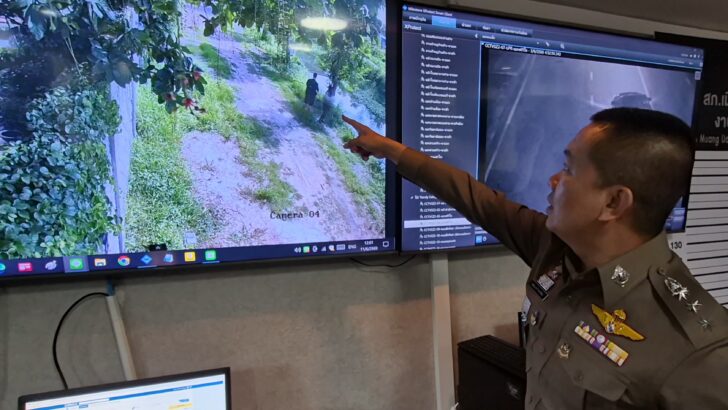
BANGKOK — 11 June 2026, A prominent Thai scientist said a mysterious powder believed to have contaminated noodle soup in northeastern Thailand was likely sodium nitrite, after hospitals treating affected patients were supplied with the antidote methylene blue. The incident occurred in Udon Thani province, where at least 14 people fell ill after eating noodles from […] The post Scientist Says Noodle Poisoning May Be Linked to Sodium Nitrite appeared first on Khaosod English.

The EPICS (Engineering Projects in Community Service) in IEEE program, administered by IEEE Educational Activities, has launched the Excellent EPICS in IEEE Contributor Awards. The recognitions honor the program’s outstanding students and faculty volunteers in Excellent Team Leader and Excellent Faculty Advisor categories. The awards recognize individuals whose leadership, mentorship, and commitment have meaningfully advanced the impact of EPICS projects. Candidates must demonstrate clear, measurable contributions that elevate both the student experience and the outcomes delivered to community partners. Reviewers also consider other awards, publications, presentations, and professional achievements that reinforce the nominee’s credibility and leadership. Recipients must demonstrate outstanding project management and documentation, strong mentoring and collaboration, and high-quality outcomes. Here are this year’s recipients. Team Leader Award Surattana Kakay is a computer engineering student at Rajamangala University of Technology Thanyaburi (RMUTT), located in IEEE Region 10 (Asia Pacific). Kakay, an IEEE student member, was honored for guiding her team in the design, development, and implementation of the Automatic Water Level Control System project, which aids rice farmers in Thailand. As the team leader, Kakay played a pivotal role in transforming the student initiative into an operational, community‑centered solution. Her inspiration was purpose-driven, she says. “My motivation was to apply engineering to real agricultural challenges, like water scarcity and climate change,” she says. “I wanted to bridge advanced technology with the tangible needs of local farmers.” She managed the project end to end—coordinating workflow, assigning tasks based on team members’ strengths, and ensuring each phase of development aligned with the technical road map she created. She served as the primary liaison between the student team, the Pathum Thani Rice Research Center, and farmers to make sure the system was practical and user‑friendly, and that it addressed community needs. “Watching students grow as they design solutions that improve lives has been both inspiring and deeply humbling.” —Elizabeth Vidal-Duarte Under her leadership, the team developed a low‑cost IoT‑based alternate wetting and drying (AWD) system that lets farmers remotely monitor and control water levels in rice paddies using smartphones. Kakay oversaw the integration of noncontact laser time‑of‑flight sensors to withstand harsh field conditions, and she championed the use of long-range technology connected to a free community Wi‑Fi network to eliminate Internet service fees. The results were transformative, Kakay says. “Our AWD system reduces water consumption by 63 percent and methane emissions by 7 percent annually,” she says. “Turning an academic assignment into a real‑world solution that delivers measurable, sustainable results has been incredibly meaningful.” Her achievements advanced sustainability for Thailand’s most water‑intensive crop while demonstrating the potential of accessible engineering solutions. Beyond technical innovation, Kakay cultivated a culture of learning, continuity, and empowerment within her team. She introduced a mentorship framework to support future student cohorts. She and her team produced academic papers, visual media, and presentations to communicate the project’s value to scientific audiences as well as the general public. “Surattana Kakay is a pivotal figure in turning innovation into reality and delivering tangible benefits to the community,” says IEEE Member Thanasin Bunnam, her faculty advisor and an assistant professor at RMUTT. Kakay’s leadership journey became a personal milestone, she says: “Leading this project transformed me from a student into a team leader. As a female engineer, it empowered me to advocate for women in engineering and show that gender is no barrier to technical excellence.” Through her guidance, the AWD project evolved from a classroom assignment into a solution that illustrates IEEE’s mission of advancing technology for humanity. Faculty Advisor Awards Navid Shaghaghi, a lecturer and researcher at Santa Clara University, in California, was recognized for his dedication to integrating service learning into engineering education and fostering student innovation that benefits underserved communities in IEEE Region 6 (Western USA). During his more than six years of engagement with EPICS in IEEE, Shaghaghi, an IEEE senior member, has demonstrated exceptional leadership in advancing sustainable, human‑centered engineering through the long‑running Hydration Automation (HA) project and the HiveSpy initiative. They are part of Santa Clara University’s Frugal Innovation Hub and EPIC Research Laboratory. Since 2019, Shaghaghi has served as principal investigator for the HA project, guiding its evolution from prototype to a robust, field‑tested irrigation automation system that supports small ranches and community farms in California. The HA project is a low‑cost system that helps reduce water waste by monitoring soil moisture and automating watering. By combining ultrasonic tank sensing, soil sensors, and ongoing technical support, the project improves efficiency, lowers operational costs, and promotes more sustainable urban agriculture. Under Shaghaghi’s guidance, more than 30 undergraduate and graduate students have gained hands-on experience in IoT development, field deployment, testing, and client collaboration. His commitment to frugal innovation and human‑centric design has resulted in solutions that are minimalist, affordable, sustainable, portable, and rugged—often challenging conventional approaches to agricultural technology. “Turning an academic assignment into a real‑world solution that delivers measurable, sustainable results has been incredibly meaningful.” —Surattana Kakay The HA project has produced new research publications and earned recognition, including a third-place finish by Shaghaghi’s graduate students at this year’s IEEE Rising Stars Project Showcase. During the annual event, students and young professionals present their technical innovations to industry leaders and peers. The HiveSpy project is a low‑cost, frame‑level IoT monitoring system that helps beekeepers automate labor‑intensive tasks and prevent hive swarming by tracking production yield in real time. By collecting frame‑weight data and generating optimized harvest schedules, the system reduces manual workload while improving the hive’s health and boosting honey output. Shaghaghi says his mentorship has been shaped by the realities of student turnover, a challenge he embraces with optimism and adaptability. “The transient nature of student teams is a challenge but one you must embrace, bear‑hug style,” he says. “By energizing your student community and welcoming new contributors, you’ll be amazed by the brilliant solutions they bring.” His philosophy has allowed him to cultivate a thriving pipeline of student innovators, he says, and he has strengthened his own professional practice as well. “I’ve been mentoring EPICS in IEEE students since 2019,” he says. “It has taught me resilience and how to operate on a tight budget while still delivering real‑world results.” Beyond the technical achievements, Shaghaghi’s work reflects a commitment to humanitarian technology and service learning. As the founder and director of the EPIC (Ethical, Pragmatic, and Intelligent Computer) lab, he has built a diverse, interdisciplinary community dedicated to innovation for the benefit of humanity. For him, he says, the EPICS in IEEE award carries profound meaning: “Receiving this award validates my deepest conviction in humanitarian technology research and strengthens my commitment to service‑learning education.” His students echo those sentiments. One team member said “Professor Shaghaghi is an engine of progress who keeps forging ahead.” Through his leadership, Shaghaghi has created an enduring model of mentorship, innovation, and community partnership that is helping to shape the next generation of socially responsible engineers. Elizabeth Vidal-Duarte is celebrated for her impactful mentorship and leadership in expanding EPICS in IEEE engagement across Peru and IEEE Region 9 (Latin America and Caribbean). Vidal-Duarte, a research professor at San Agustin National University Arequipa, in Peru, is a faculty advisor and technical mentor for two EPICS in IEEE projects. She encouraged students to apply to the EPICS program, helped them identify community needs, and supported them in crafting proposals grounded in service‑learning principles. Under her leadership, the students developed a functional soft robotic glove used at Clínica San Juan de Dios to help patients improve their fine-motor skills. The clinic’s therapists use the device to measure the range of motion of joints at the beginning and end of each patient’s therapy session to improve their assessments. Compared with traditional manual measurements using a goniometer, the glove significantly reduces evaluation time and enables digitally recorded data, improving clinical efficiency and decision-making. The second project is an emotion‑recognition system for people with visual impairment. The AI‑powered wearable helps recognize a person’s emotions through real‑time facial‑expression detection and haptic feedback. The project has resulted in the “Emotion-Aware Assistive System With Wearable Haptic Feedback for Visual Impairment” research paper, which is to be presented at the IEEE International Symposium on Computer-Based Medical Systems, to be held from 3 to 5 June in Limassol, Cyprus. Vidal-Duarte’s mentorship extends beyond the classroom. She visits rehabilitation centers and clinics to find people with visual impairments to ensure that the technologies she is helping to develop meet their needs. “EPICS in IEEE has moved me beyond teaching concepts to truly living engineering as a tool for human impact,” Vidal-Duarte says. “Watching students grow as they design solutions that improve lives has been both inspiring and deeply humbling.” Throughout the development of both projects, Vidal-Duarte provided sustained technical and organizational guidance, helping students define requirements, structure work plans, and overcome challenges in prototyping, testing, and validation. Reflecting on the broader impact of EPICS, she says the program has given her “more than methodologies and tools—it has given me perspective, purpose, and a global community that constantly challenges me to grow as a mentor and as a human being.” Her mentorship fostered not only technical excellence but also empathy, ethical awareness, and professional maturity among her students, she says. She guided them in preparing articles for submission to IEEE conferences, interdisciplinary collaboration, and hands-on fieldwork that bridged theory and real‑world constraints. “Her constant support, her belief in each student’s potential, and her commitment to developing leaders who make a difference define [her] as a faculty advisor,” says Valentina Chabilla, an EPICS in IEEE student team member. The EPICS recognition reflects her passion for teaching, her dedication to the community, and her impact on projects and students. Her commitment to accessible, sustainable innovation strengthened partnerships between the university and community groups, benefiting underserved populations. “Receiving this award is both an honor and a responsibility,” she says. “It reminds me of the real impact engineering can have on people’s lives and strengthens my commitment to guiding students in creating meaningful change.” Her leadership continues to inspire students to view engineering not just as a discipline but also as a powerful force for inclusion, dignity, and social impact. Advancing the mission The Excellent Contributor Award recipients exemplify the best of EPICS in IEEE. Through their leadership, they have strengthened the bridge between engineering education and community service, inspiring students to use their skills to create sustainable, real‑world impacts. As EPICS continues to expand its global reach, the contributions of Kakay, Shaghaghi, and Vidal-Duarte serve as powerful reminders of what is possible when educators, volunteers, and students work together to improve the lives of others through engineering.

Die WM ist die größte Bühne der Welt – auch für deutsche Nationalspieler. Während Nathaniel Browns Wechsel zum FC Bayern schon vor dem ersten Gruppenspiel vollzogen werden könnte, wollen andere das Turnier zu einem Karrieresprung nutzen.

PATHUM THANI — 10 June 2026, A joint research team from the National Science Museum (NSM), Thaksin University, and Prince of Songkla University have discovered a new insect species, “Rama IX Springtail,” at Rama IX Museum’s forest park, marking the latest addition to the world’s known biodiversity. On Wednesday, Acting NSM director, Suwarong Wongsiri, revealed […] The post New Springtail species discovered in Thailand’s Rama IX Forest appeared first on Khaosod English.

SURAT THANI — 10 June 2026, Thai authorities have arrested an Israeli national at Samui Airport on charges linked to an alleged nominee scheme used to acquire land on Koh Phangan through Thai proxy shareholders. Police have been targeting foreign investors accused of illegally operating businesses, displacing Thai workers or using Thai nationals as nominees to […] The post Israeli Suspect Arrested at Samui Airport for Land Nominee Case appeared first on Khaosod English.

UDON THANI – A suspicious white powder has been taken for analysis after the additive was found used at a noodle shop where fourteen customers have fallen ill.
UDON THANI — 9 June 2026, 13 people were hospitalised after eating noodle soup from a roadside restaurant in northeastern Thailand, where a mystery white powder collected from a rubbish pile was allegedly used in place of salt, authorities said. Police, forensic officers and public health officials inspected the noodle shop in Muang district, Udon […] The post 13 hospitalised after eating noodle soup made with mystery powder in Udon Thani appeared first on Khaosod English.

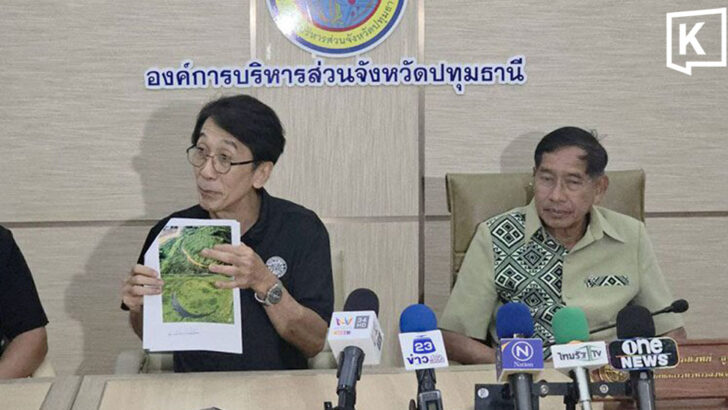
PATHUM THANI — 9 June 2026, The Pathum Thani Provincial Administrative Organization (PAO) is pushing forward plans to develop the “Eye of Thailand,” a circular floating island located in a wetland in Pathum Thani, into the province’s newest landmark. Discussions are underway with private landowners and experts to establish conservation guidelines and explore its potential […] The post Pathum Thani aims to transform the “Eye of Thailand” into a global landmark appeared first on Khaosod English.
PATHUM THANI – A meat processing factory that sells about 30 tonnes of branded products nationwide each month was shut down after failing to meet sanitary standards on Tuesday.
The event is described as a national gathering of worship, prayer and prophetic declarations aimed at ushering in “a new season” for Nigeria. The post Nathaniel Bassey, Dunsin Oyekan, Yinka Akinselori to headline RCCG Mega Music Festival 2.0 appeared first on Premium Times Nigeria.

UDON THANI — 8 June 2026, Man forgave best friend who tricked him into smuggling nearly one million methamphetamine pills, insisting he did not blame the other and recalling past help in hard times. Both broke down in tears and embraced each other before facing heavy charges. At 14:00 on Monday, at the Border Patrol […] The post Thai friends arrested with 796,000 meth pills in Udon Thani appeared first on Khaosod English.
Die linke Abwehrseite gilt als Problemposition der Nationalelf. Nun hat Bundestrainer Nagelsmann eine mutige Entscheidung getroffen. Nathaniel Brown soll die Stars der Gegner stoppen. Ein Routinier muss dafür weichen.
PATHUM THANI — 7 June 2026, A German man was found dead at his home in Pathum Thani province on Sunday morning, his body discovered with a plastic bag over his head connected to a nitrogen tank, in circumstances police are investigating. Frank Wolk, 59, was found by his wife sitting in a chair in […] The post German programmer found dead at Pathum Thani home with note appeared first on Khaosod English.
Can the search for a hotel room lead to a business idea? It did, for Alok Mishra.In 2014, during a trip with his wife, Mishra needed a hotel room for six hours as he did not want to drive late at night. But he was asked to pay for a full day and subjected to a series of intrusive questions despite being married—and was finally refused a room. “That got me thinking that there might be travellers like me who need rooms only for a few hours but have to pay for an entire day. Later, while working in the US, I came across pay-for-use concepts and felt that India needed a more flexible, customer-friendly model,” he says.That experience led to the launch of Bag2Bag in 2019, an online platform for booking hotels, service apartments, homestays and other accommodations, with a focus on hourly stays.The business started gaining momentum around 2021. Bag2Bag’s hourly-stay revenue has risen from roughly Rs 50 lakh in 2021 to Rs 5-6 crore today. The company has served more than 1 lakh customers, lists over 10,000 properties across India and offers hourly stays at 6,000-7,000 of them. The service is available in more than 50 cities, though Bengaluru and Mumbai remain its strongest markets.Also read | The safe keepers: Inside India's booming locker economy“People now understand that this is a practical solution rather than a niche service. One of our biggest achievements has been to help normalise the category. Earlier, hourly stays were often associated with couples seeking privacy,” he says. “We deliberately broadened the use case by allowing family bookings, including travellers with children. We wanted people to see hourly stays for what they really are— a convenient accommodation option.”HOUR OF NEED That convenience is growing as online hotel booking platforms that allow short stays are on the rise. Alongside Bag2Bag, there is Noida-based Brevistay, Bengaluruheadquartered MiStay, Mumbai’s Hourly Rooms and Qwiksta, all specialising in micro stays. Larger travel platforms like MakeMyTrip, Agoda and Goibibo have also introduced hourly booking options.Like Bag2Bag, Brevistay was born out of a travel inconvenience. In 2016, cofounders Prateek Singh, Aditya Naithani, Shubham Agarwal, Avnish Kumar and Nikhil Pathak arrived in Manali at 5 am only to find that hotels would not allow early check-ins without charging for an extra night. The friends went on to cofound the travel tech startup Brevistay, which raised Rs 3 crore in 2023 and today reports revenue of about Rs 18 crore. It has 15 lakh registered users, 4 lakh monthly active users and around 11,000 listed hotels, including brands such as Ginger, Ramada and Blue Motel.LONG JOURNEY Getting there, however, was not easy.Pathak, cofounder and chief technology officer of Brevistay, says, “The challenge in this segment is not customers but hotels. In 2016, many hoteliers would simply bang the phone on us. Some agreed in principle but didn’t want their properties listed publicly and preferred bookings to come through offline calls. It took us nearly two years before we started seeing meaningful traction and recurring bookings,” says Pathak.The same resistance greeted MiStay when it launched in 2016. Starting with a pilot in Delhi, MiStay has since expanded to more than 100 cities. Shwetha Sameernath, general manager, business and growth, MiStay, says, “When we launched, scepticism was high. Most hotels were uncomfortable with the model, concerned about guest quality and operational challenges. Over time, that changed as hotels began seeing it as a revenue opportunity.”MiStay tackled resistance through education and curation. The company worked to show hoteliers that short stays served a broad and legitimate market of business travellers, transit passengers and day-use guests. It also selectively onboarded premium hotel brands, helping build credibility for the category. “When hotels see actual customer segments across varied, legitimate use cases, it builds their confidence that the model won’t compromise their brand,” says Sameernath, adding that the concept is now largely normalised.Also read | Major change in buyer behaviour as e-scooters race deeper into BharatPathak says the customer has evolved as well. Brevistay continues to market actively to couples, but he argues that the category should no longer be viewed through that lens. “There’s nothing illegal happening. In fact, there’s no law that prevents consenting adults from booking a hotel room. The issue was perception, not legality. What eventually changed minds was revenue,” he says. “Once hotels realised they could sell the same room multiple times in a day and generate seven or eight bookings instead of one, the business case became impossible to ignore.”The use cases have expanded too. Back in 2017, couples accounted for nearly 90% of Brevistay’s bookings. Today, that figure is down to 50-60%. Business travellers, transit passengers, tourists looking to freshen up between journeys, students travelling for exams and people attending interviews or meetings have all emerged as important customer segments.Hotels, meanwhile, have had to adapt operationally. Mishra says the biggest challenge is that traditional hotel system was never designed for flexible check-ins and check-outs. Bag2Bag addressed this by developing its own software platform for partner hotels. “Once they realised they could monetise idle inventory and generate additional revenue from rooms that would otherwise remain empty, adoption became much easier,” he says.REVENUE CHECKS IN For Sameernath, the turning point was the entry of premium hotel brands. “Today, acceptance has grown across the ecosystem. Channel managers and property management systems are evolving to support slot-based bookings, and customers increasingly treat hourly booking as the natural way to reserve a room for less than a day,” she says.Also read | Indian tourists go viral for all wrong reasons. Here's how not to become the next horror storyMishra has observed another interesting shift. Reliability and brand trust are becoming increasingly important. “Whether it’s a three-star or a five-star property, even if a branded hotel costs 20-25% more, customers prefer it because they know what they’re getting,” he says. The economics are compelling for hotels too. Sameernath points out that average hotel occupancy in India is under 65%, while daytime occupancy can fall to as low as 30% as guests check out in the morning and new arrivals come in much later. Platforms like MiStay help hotels monetise those idle hours by attracting guests who would never have booked a full-day room. “For hotels near airports or railway stations, the upside is even greater. A room priced at Rs 8,000 for a full night could earn Rs 3,500-4,000 for a daytime slot and another Rs 6,000 for the night—generating `10,000-plus from the same room in a single day,” she says.CHANGING PERCEPTION MiStay today works with brands like IHG, Pride, Ramada, The Park, Radisson and Novotel IHG, while Brevistay is in discussions with Hyatt. Sameernath says that on the demand side, once customers experience flexible booking, they don’t go back. Their repeat rate reflects this, as 48% of MiStay’s monthly business comes from repeat guests “The pay-per-use model in hospitality is the same transformation that happened in transport. You no longer book a cab for a full day; you pay for the distance. Hotels are heading the same way,” she says.Pathak believes the next wave of growth will be driven by younger travellers. “They’re vocal about spending time with their partners and don’t carry the hesitation earlier generations did. In metros, the industry has largely moved beyond the old perceptions, and hourly stays are increasingly viewed as a convenience product rather than something unusual.”The customer, it seems, has reached the destination. The hospitality industry needs to arrive.ChallengesPersistent social stigmaTrust and safety concernsBranded hotels worried about perceptionComplexities in managing multiple check-ins and check-outsLack of awareness among travellersOpportunitiesRise in domestic travel and frequent short tripsGrowth of bleisure (business + leisure) travelYounger consumers demanding flexibilityTech platforms making discovery and booking seamlessHotels looking to monetise vacant rooms
UDON THANI — 6 June 2026, more than 10 people were injured in a multi-vehicle collision at a traffic-light intersection in Nong Han district during the early hours of Friday morning. At approximately 02:47, emergency responders from Nong Han Hospital 2 received reports of a crash involving at least three vehicles on Mittraphap Road (Udon […] The post Multi-vehicle collision leaves over 10 injured in Udon Thani appeared first on Khaosod English.
From Judge Nathaniel Gorton (D. Mass.) today in Larrabee v. Trump: J. Whitfield Larrabee …. alleges that since taking office,… The post Plaintiff Too Small to Challenge President Trump's Practice of Targeting Law Firms He Dislikes appeared first on Reason.com.
As Canada prepares to start euthanizing the mentally ill, most Canadians didn't even know that was a thing
Haunting the Black Air by Anthony Joseph; Selected Poems by Leontia Flynn; Sparrow on the Rooftop by Rachel Long; You Must Live: New Poetry from Palestine, edited by Jorie Graham; Melete by Jennifer Lee Tsai; Somebody Should Have Pressed Record by Galia Admoni Haunting the Black Air by Anthony Joseph (Bloomsbury, £12.99) Joseph’s follow-up to the TS Eliot prize-winning Sonnets for Albert sees his poetic approach become more radical. He pays homage to avant garde writers such as Will Alexander and Nathaniel Mackey, while exploring “Nostalgia, mostly grief, / a haunting sound – / the frequency of some / magnetic feeling.” That makes for challenging syntax on first reading the poems. Persist, and Joseph’s unabashed lyricism shines through, finding beauty on dancefloors, city streets and in Trinidadian landscapes: “the way music fills the room, how we embrace until / we become flare bright, light as the white refraction / of the sun upon the summit of hills.” Selected Poems by Leontia Flynn (Carcanet, £14.99) She was a Next Generation poet and Forward prize winner; it’s a shock to remember that Flynn has been publishing for more than 20 years, so fresh do her poems remain. This assembly is a glorious reintroduction to her mordant wit, imaginative image-making and unerring ability to puncture pretension. Letter to Friends from 2011 is a brilliant, Auden-esque dissection of the early 21st century, worth a library of political analyses: “daily threats brought to our Way of Life / by man-made imminent apocalypse / though neither really outweighs private grief”. There are pleasures on every page. Continue reading...