OpenAI mulls slashing prices as it competes with Anthropic for users: WSJ
OpenAI is reportedly mulling drastic price cuts to its AI models, as it looks to woo consumers from rival AI company Anthropic, the WSJ reported on Wednesday.
"SLASHING" · 총 25건
필터 보기현재 지수
49.4
0 = 부정 우세
50 = 중립
100 = 긍정 우세
최근 7일 기준 84,771건을 분석한 결과, 뉴스 심리지수는 49.4(균형)입니다. 긍정 10,417건(12.3%)·중립 61,125건(72.1%)·부정 13,229건(15.6%)이며, 중립 비중이 뚜렷하게 높습니다. 성향 지수는 종합 21.3(보수 경향)입니다.
OpenAI is reportedly mulling drastic price cuts to its AI models, as it looks to woo consumers from rival AI company Anthropic, the WSJ reported on Wednesday.
• Those earning between Rs230,000-Rs341,000 per month likely to get some relief; maximum tax rate expected to be lowered from 35pc to 30pc • Rs660bn to Rs700bn in fresh tax measures planned, including enforcement and new levies • Govt targets Rs15.3tr FBR revenue in FY2026-27 ISLAMABAD: Significant relief is planned for salaried individuals earning between Rs230,000 and Rs341,000 a month in the upcoming budget, but a large segment of those making between Rs100,000 and Rs183,000 per month may not see any change, official sources told Dawn. Facing limited fiscal space, the Shehbaz Sharif-led coalition government is set to unveil fresh tax measures worth Rs660 billion to Rs700bn in the 2026-27 budget. The fiscal policies align with commitments under an International Monetary Fund programme aimed at achieving an ambitious revenue collection target. In contrast to the broader revenue measures, the budget carries highly targeted good news for mid- and upper-level income earners. Individuals earning between Rs230,000 and Rs300,000 a month are expected to see a steep reduction in their tax burden, official sources involved in budget preparations told Dawn. A significant reduction is also planned for individuals earning between Rs266,000 and Rs341,000 a month, whose current slab carries a liability of Rs28,833 plus 30pc of income above Rs266,000. Additionally, the maximum salary tax rate is under consideration for a cut to around 30pc from the existing 35pc. However, no visible changes are expected for individuals drawing between Rs100,000 and Rs183,000 per month, a bracket where a large segment of the salaried class falls. The applicable tax for this group remains Rs500 plus 11pc of income above Rs100,001. The exemption threshold will remain unchanged at Rs600,000 annually, while those earning up to Rs1 million a year will continue to face a token 1pc tax, a rate described as purely for documentation purposes. The government has pledged to raise an ambitious Rs15.3 trillion in tax revenue through the Federal Board of Revenue in FY2026-27. The new target reflects a projection of an increase of Rs2.32tr, or 17.84 per cent over the collection of the outgoing fiscal year. The initial plan envisions Rs 660 billion in tax measures — Rs260bn through new tax measures and Rs 400 billion via enforcement. To achieve the proposed target, autonomous tax growth is projected at Rs1.65tr based on a GDP growth target of 4pc and an inflation rate of 8.2pc. With the current year’s revenue collection of Rs12.983tr and autonomous growth of Rs1.657tr, revenue collection will reach Rs15.3tr in FY27, including new tax or enforcement measures. Officials involved in the preparations noted that the new target is over-ambitious and unrealistic, but the government has no option to reduce it. “We are under IMF programme and have to agree with the target,” an official said, adding that the FBR will face significant challenges in meeting its collection goals. Finance ministry officials continue to present optimistic projections, seemingly hoping for a tax windfall without acknowledging economic headwinds and high inflation. With key industries contracting and consumer confidence fading, the feasibility of achieving the targets remains highly questionable. Moreover, revenue collection could face setbacks due to a lower-than-expected allocation for the federal Public Sector Development Programme, which includes fewer new projects and remains notably smaller than those of the Punjab and Sindh provinces. On the trade front, the government decided to slash the additional customs duty on 3,149 tariff lines and reduce regulatory duties to 20pc on more than 1,900 tariff lines. However, a major decision to reduce automobile sector tariffs is on hold due to pressure from local manufacturers. The Tariff Policy Board recommended slashing the maximum duty on automobiles to 75pc from the existing 150pc. Prime Minister Sharif has constituted a committee to examine the proposal. “This clearly shows the government’s intent to continue shielding the auto sector,” the official said, noting the move effectively delays the implementation of a five-year tariff reform plan. Published in Dawn, June 11th, 2026

Walmart's US division CEO said new AI and robots are speeding up truck unloading times from hours to minutes.
The video shows a man straddling another man lying in a street and slashing him several times in the head and neck with a knife, in what some claimed was an attempted beheading
Normalizing mental illness-related violence lets public leaders avoid accountability.
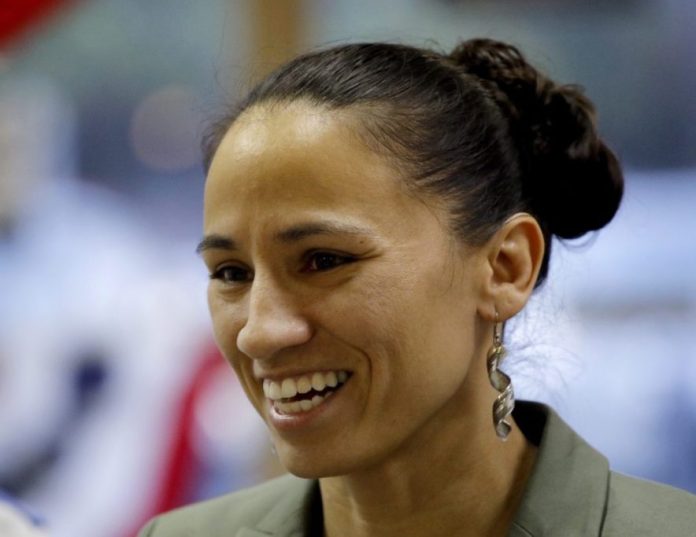
Rep. Sharice Davids (D-KS) vowed to fight to protect and strengthen Americans’ Social Security benefits on X. “Social Security is a promise that we made,” Davids said. “And yet, the current administration is actively putting it at risk by slashing services and rummaging through your personal data.” According to the United States Committee on Finance, […]

Among the cases cited by prosecutors is a high-profile animal cruelty prosecution that attracted widespread attention in 2025.
The homeless madman who allegedly slashed five people with double-edge knife in Penn Station had carried out an eerily similar attack in New Jersey four years before – viciously stabbing a man in the neck.
The wholesale retailer reduced prices on wings, chocolate almonds, golf balls, and king-size sheets by as much as $10
Amazon engineers have voiced concerns over the company's massive AI infrastructure investments alongside significant layoffs. Speaking at a Seattle City Council hearing, they highlighted the irony of building data centers to power AI that replaces human jobs. This led to a yearlong ban on new data center construction in Seattle, allowing time for new regulations.
A group of Amazon employees spoke out against unfettered AI infrastructure expansion at a Seattle Land Use and Sustainability Committee hearing this week.
The 17-year-old will serve a minimum of 17 years for killing John McNab, 22, in an unprovoked attack in Leith last year.
The seven young men, aged 18 to 28, along with five others still at large, are jointly charged with killing 22-year-old R Arun Kumar in the early hours of May 21.
THEY all look the same and for good reason. Every budget over the past 10 years (and more) is pretty much the same with minor differences usually in the gimmickry being advanced in the name of a ‘revenue plan’. And it will be no different this time round when the budget for FY27 is announced. There is a simple reason for this. A little more than a decade and a half ago Pakistan finally abandoned its last attempt to try and get serious tax reform through. Since then, successive governments have been rolling out various gimmicks, from amnesty schemes to ‘point of sale machines’ to do something that cannot be done with gimmicks. They are trying to document the growing services sector of the economy with these gimmicks, which is like trying to measure the ocean with a teacup. Consider a little perspective first. Since the 1980s, the single fastest-growing sector of the economy has been services. It was slightly less than half of Pakistan’s GDP back in those days. Today, it is touching 60 per cent while the shares of industry and agriculture have shrunk. But today, services contributes less than 40pc of total revenues while the share of manufacturing can be as high as 55pc. This is an important crux of the problem. The fastest-growing sector in Pakistan’s economy has made a diminutive contribution to its revenue effort. And there are a number of reasons why. First, successive governments have failed to undertake the kind of tax reforms necessary to keep abreast of the changes sweeping the economy where the services sector is a motor force for growth. For now, the bulk of the revenues contributed by this sector comes from banking and telecom — the low-hanging fruit. Quite possibly, this is the one budget of the past decade or more which will be defined almost entirely by its revenue effort. Documenting the transactions taking place in this sector is the first step to reaching them. And for decades there was one big idea on how to do that. It was called ‘value-added tax’, or VAT, and countries around the world implemented it with varying measures of success to help document their economies during periods of change, and help distribute the burden of the tax effort more widely. In some shape or form, the VAT was always on the agenda as a crucial structural reform measure of every IMF programme that Pakistan signed between 1988 and 2008, and there were many. The tax itself was passed into law in 1992, updated in 1996, but never really applied in value-added mode across the board. In 2008, it was supposed to be updated and modernised but the government of the time failed to ensure passage of the legislation so spectacularly that the IMF simply dropped it from all future reform agendas. Since then, it has been abandoned. In abandoning it, however, a new question arose. If you are not going to use the VAT to document your economy, how exactly are you going to do it? The question was an important one because Pakistan’s economy was growing in directions that its tax machinery struggled to capture. And successive governments gave their own answers to this question. This was the decade of gimmicks. We had amnesty schemes, proliferating withholding taxes, new taxes on banking transactions of non-filers, attempts to document the economy by triangulating multiple databases, reliance on data from point of sale machines and even one brief and doomed attempt to manually document the retail sector by serving tens of thousands of notices to them. Of course, all of these failed because, as already stated, they amounted to attempts to measure the amount of water in the ocean using a teacup. Pakistan’s tax-to-GDP ratio stagnated in the single digits and intensified political struggles around the shrinking resource envelope of the state. We saw more gimmicks on the revenue side, like deemed incomes. We saw a ‘hard state’ approach to withdraw all exemptions or rebates offered to schoolteachers and university professors. They leaned harder on fuel taxes than any government in any period in the past. And they printed more money than any other government in any comparable decade in the past. All to help make ends meet at the centre. Taken together, all these gimmicks made for an unseemly display of desperation. The growing resort to gimmickry was the state thrashing around within the shrinking confines of its resource envelope when it could not generate resources in quantities sufficient to keep pace with its expenditure growth. And they squeezed out a decade for themselves like this. This was the overriding context within which all budgets in these years were made. And now the context is wrapping itself around them like the cloak of Nessus that once worn began to tighten around the wearer until its grip became inescapable and fatal. This is what sets the stage for the forthcoming budget. Watch what rabbit they’ll pull out of their hat this time round to call a ‘revenue plan’ for the next fiscal year. They have to give relief to salaried people, and industry is near breaking point. They can’t lean more heavily on fuel or electricity taxes or deem more taxes into being out of foreign assets of the rich. Keep an eye on the revenue plan they announce as well as the target for incremental revenues they have to pursue. They are chasing incremental revenues of up to 0.6pc of GDP, half of which will come from the federal government through slashing exemptions and their FBR transformation plan, including production monitoring and audits. This was their Achilles heel this year. Now their constraints are tighter still for next year, and options even more limited. Quite possibly, this is the one budget of the past decade or more which will be defined almost entirely by its revenue effort. If there is no attempt to break out of the constraints, then we’ll know we are all headed for the embrace of Nessus. The writer is a business and economy journalist. khurram.husain@gmail.com X: @khurramhusain Published in Dawn, June 4th, 2026
The cuts, led by new president Jill Hazelbaker, affect recruitment and HR staff but represent less than 1% of Uber's 34,000 employees
A prolonged disruption to the Strait of Hormuz could drag global growth down to 1.8% in 2027, the OECD warned
The burger chain now expects full-year net income of $45–$55 million, down from a prior target of $50–$60 million
Conservation groups warn slashing Darwin Initiative will put species and habitats in jeopardy, and set back efforts to halt decline in nature One of the UK’s longest-standing funds for global nature protection is being drastically cut back, the Guardian has learned. At least 89 countries will lose eligibility for funding for biodiversity projects under the Darwin Initiative, in a round of cuts that conservationists warned would put species and habitats in jeopardy, and set back global efforts to halt the precipitous decline in nature. Continue reading...
Old Navy comparable sales grew just 1% in the first quarter, well below the 3% analysts had expected
The girl was taken to hospital on Sunday night after slashing her wrists and throat while allegedly under the influence of a ‘mushroom-flavoured’ vape.