Antara News (Indonesia)
기타
기타
Danantara safeguards assets via risk splits, distancing from 1MDB
Danantara Indonesia's framework is explicitly engineered to avoid a repeat of Malaysia's infamous 1MDB ...

"SAFEGUARDS" · 총 74건
필터 보기현재 지수
49.4
0 = 부정 우세
50 = 중립
100 = 긍정 우세
최근 7일 기준 91,994건을 분석한 결과, 뉴스 심리지수는 49.4(균형)입니다. 긍정 11,096건(12.1%)·중립 66,541건(72.3%)·부정 14,357건(15.6%)이며, 중립 비중이 뚜렷하게 높습니다. 성향 지수는 종합 20.9(보수 경향)입니다.
Danantara Indonesia's framework is explicitly engineered to avoid a repeat of Malaysia's infamous 1MDB ...
Privacy watchdog finds xAI's Grok lacks safeguards for sexualised deepfake image sharing, amid growing global scrutiny.
The federal government is proposing a social media ban for users under 16 in hopes of getting tech companies to make their platforms safer. Heritage Minister Marc Miller announced Wednesday that social media companies will eventually have to block Canadian users under 16 from accessing their platform unless they follow unspecified safeguards. The Canadian Press […]
Legislation does not contain clear, precise rules to guarantee all rights - Medina
Indonesian Communication and Digital Affairs Minister Meutya Hafid has called on the tech industry to balance rapid ...

"We're changing Fable 5's safeguards for frontier LLM development to make them visible," an Anthropic spokesperson said.
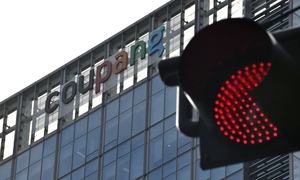
South Korea’s privacy watchdog has imposed a record 624.68 billion won ($409 million) fine on Coupang over a massive data breach and unauthorized tracking of users’ online activity. The Personal Information Protection Commission said Thursday the penalty was approved at a plenary meeting the previous day after it found that the e-commerce giant had failed to maintain basic safeguards for customer data, citing poor management of authentication signing keys and weak access controls. The penalty is
New Delhi: A pilot who had been roped in as a consultant to assist the investigation into the Ahmedabad aircraft crash has stepped away from the inquiry following disagreements over the probe process, people close to him told ET.R S Sandhu, a veteran pilot brought in as a subject matter expert by the investigating panel, is no longer part of the team after recusing himself over differences, they said.Also read: Vijay Rupani's daughter accuses Air India of pressuring crash victims' families to waive legal rightsWhile he has not submitted a resignation letter, they said Sandhu has not attended any meetings since January and does not intend to participate in future proceedings.The Press Information Bureau (PIB) and GVG Yugandhar, director general of the Aircraft Accident Investigation Bureau (AAIB)-which is leading the probe into the Boeing 787 crash on June 12 last year that killed 260 people - did not respond to queries on the matter despite repeated reminders.Sandhu declined to comment.A senior government official, however, disputed the suggestion, saying subject matter experts are not required to be part of the entire probe process and are called in as and when required. "When the investigator-in-charge feels it necessary, he will seek inputs from the expert. Sandhu's inputs were recorded," he said.Subject matter experts are not part of the main panel but provide inputs in their areas of expertise. As part of the inquiry process, the AAIB had roped in experienced pilots, engineers, aviation medicine specialists, psychologists and flight recorder specialists.Also read: Air India denies pressuring AI-171 victims' families to sign compensation waiver, says no deadline to accept settlementSandhu was brought in to consult the flight operations group because of his experience operating the Boeing 787. The flight operations group is responsible for collecting facts and examining the actions of the pilots.The alleged differences underscore the complexity of the investigation into one of the deadliest aviation crashes. While a preliminary report published last year did not explicitly say so, it indicated the crash may have been the result of human action.It said that seconds after take-off, the fuel control switches on both engines briefly moved from 'run' to 'cut off', severing fuel supply and causing a loss of power.These switches control fuel flow to the engines. On modern aircraft such as the Boeing 787, they are fitted with safeguards, including a metal lock and a surrounding guard, to prevent accidental shut-off.However, the findings have drawn severe criticism from unions and advocacy groups representing pilots in India. The Federation of Indian Pilots, which counts 5,000 pilots among its members, and the father of the crashed flight's captain have petitioned the Supreme Court for a court-led investigation. Sandhu, incidentally, has been closely associated with pilot unions during his time at Air India.The AAIB is unlikely to publish a final report within a year of the accident but will release an interim report on June 12.
A man raises his phone as police move into a crowd. The video is shaky, loud, immediate. Within minutes, it is online. Within hours, it is everywhere. This is how accountability works now. Something happens, someone records it, and that footage can show what really happened, sometimes contradicting official accounts. It can empower citizens and create consequences for officials. But the footage’s life cycle does not end there. In recent months, civil liberties groups have warned that adding facial recognition to consumer smart glasses could turn everyday recording into something more troubling: real-time facial identification. It reflects a broader shift already underway, where images and videos captured for one purpose can later be searched, matched, and used for another. An ouroboros is an ancient Egyptian symbol, a snake or dragon eating its own tail. As I began to see patterns in my broader research on surveillance corporatism and governance lag, I began using the term “surveillance ouroboros” to describe this recursive pattern of observations intended to hold power accountable becoming new input for the same surveillance infrastructure. Facial recognition changes accountability During the George Floyd protests in 2020, people filmed police in real time. Phones were pointed at officers, not at each other. The goal was simple: to show what the state was doing. That footage spread quickly and became part of a much larger pool of public data. At the same time, reporting from outlets including The New York Times and BuzzFeed News showed that law enforcement agencies were using facial recognition tools, including systems built by Clearview AI. Those systems were built from billions of images scraped from across the internet, including publicly available photos and videos. The basic approach is now routine: People record the state, or anything else—as in the January 6 attack on the U.S. Capitol—and the state compiles that footage and data into a searchable environment, which may later be used to identify some of the same people who made the footage. Facial-recognition systems used by law enforcement are increasingly outpacing the legal safeguards. A 2024 Government Accountability Office review found that federal law enforcement agencies continued to expand their use of facial-recognition systems for criminal investigations despite ongoing concerns around training, privacy protections, civil-liberties safeguards, and oversight. Earlier GAO findings showed that agencies had conducted roughly 60,000 facial-recognition searches before formal training requirements were put in place for personnel using the systems. The American Civil Liberties Union and other groups have warned that these tools could be used to identify people from images shared online, including protest-related footage. Concerns about facial recognition led some U.S. states and cities, including San Francisco and Boston, to restrict or ban government use of the technology, while federal agencies have continued to face scrutiny over how such systems are tested, deployed, and audited. A 2024 analysis published in Internet Policy Review warned that facial-recognition systems used by law enforcement are increasingly outpacing the legal safeguards meant to govern them, creating growing tensions around data protection, oversight, and proportional use. The spy network that built itself Surveillance used to require infrastructure. Cameras had to be installed and data had to be collected deliberately. That is no longer the case. People carry cameras everywhere. They record constantly and upload in real time. Events are documented from multiple angles without planning or coordination. The cumulative result is a continuous stream of usable data: faces, locations, timestamps, and interactions. The Internet of Things also waits all around us, gathering information and releasing it when people least expect it, as Andrew Guthrie Ferguson describes in a recent excerpt of his book Your Data Will Be Used Against You. RELATED: “Sensorveillance” Turns Ordinary Life Into Evidence Similar dynamics are emerging globally. A recent analysis in the International Journal of Law and Information Technology examined how facial-recognition systems in China and Japan are expanding faster than the legal frameworks governing them. Reporting by The Guardian described the limited legal protections around the rapid deployment of AI-assisted surveillance infrastructure across parts of Africa. There used to be a clear distinction between surveillance and accountability. Surveillance meant the powerful watching the people; authorities tended not to share their imagery except under duress or a court order and usually after a long delay. Accountability meant the people watching the powerful, and often publishing imagery immediately to head off or counteract official mischief. That distinction no longer holds. The same footage can serve both roles. A recording meant to expose misconduct can later be used to identify someone else entirely. Surveillance ouroboros is not a future risk. It is already here. This dynamic persists because people still need to record. In many places, it is one of the only tools available when formal accountability breaks down. When oversight institutions weaken or fail, public documentation becomes a substitute. In that environment, people turn to visibility. But that visibility comes with a cost. The more people that document, the more data that exists. The more data that exists, the easier it is to search, match, and store. Every video feeds the ouroboros. People are not feeding the system because they trust it. They are feeding it because the alternative is silence. Most of the people in these videos are not the focus. They are in the background, passing by or standing nearby. But that distinction does not matter once the footage enters a system. Today’s facial recognition can identify even a face that passed through the corner of a frame. Someone who did nothing can still become part of a dataset without ever knowing it. As recognition systems improve, older footage becomes more useful, and invasive. No single decision created this outcome. It emerged gradually through more cameras, better recognition, larger datasets, and easier integration. Each step made sense on its own. Together, they changed what recording means. Public recording is still necessary. Without it, many forms of abuse would remain hidden. But recording is no longer just exposure. It is also contribution. If you published imagery or video last year, you may already have contributed to a system you have never seen, but the ouroboros has. Surveillance ouroboros is not a future risk. It is already here. Every time someone presses publish, they are doing two things at once. They are exposing power, and they are helping build the system that the powerful will later use to track the less powerful.

China's military is sounding the alarm on 'AI sycophancy,' warning that artificial intelligence systems might favor user biases over facts, posing significant risks to military operations. The PLA emphasizes the need for safeguards to prevent tactical errors and erosion of human judgment, advocating for rigorous testing and oversight of AI in decision-making.

The Financial Stability Board 'strongly' encourages boards to consider implementing safeguards to mitigate risks from AI, including from 'agentic' AI — or those systems capable of planning, reasoning, and executing tasks with limited human oversight
Anthropic has released Claude Fable 5, a public version of its most powerful AI model, two months after restricting an equivalent system over cybersecurity fears.
_0_1781080275.jpg)
Anthropic has released Claude Fable 5, a public version of its most powerful AI model, two months after restricting an equivalent system over cybersecurity fears.
_0_1781080278.jpg)
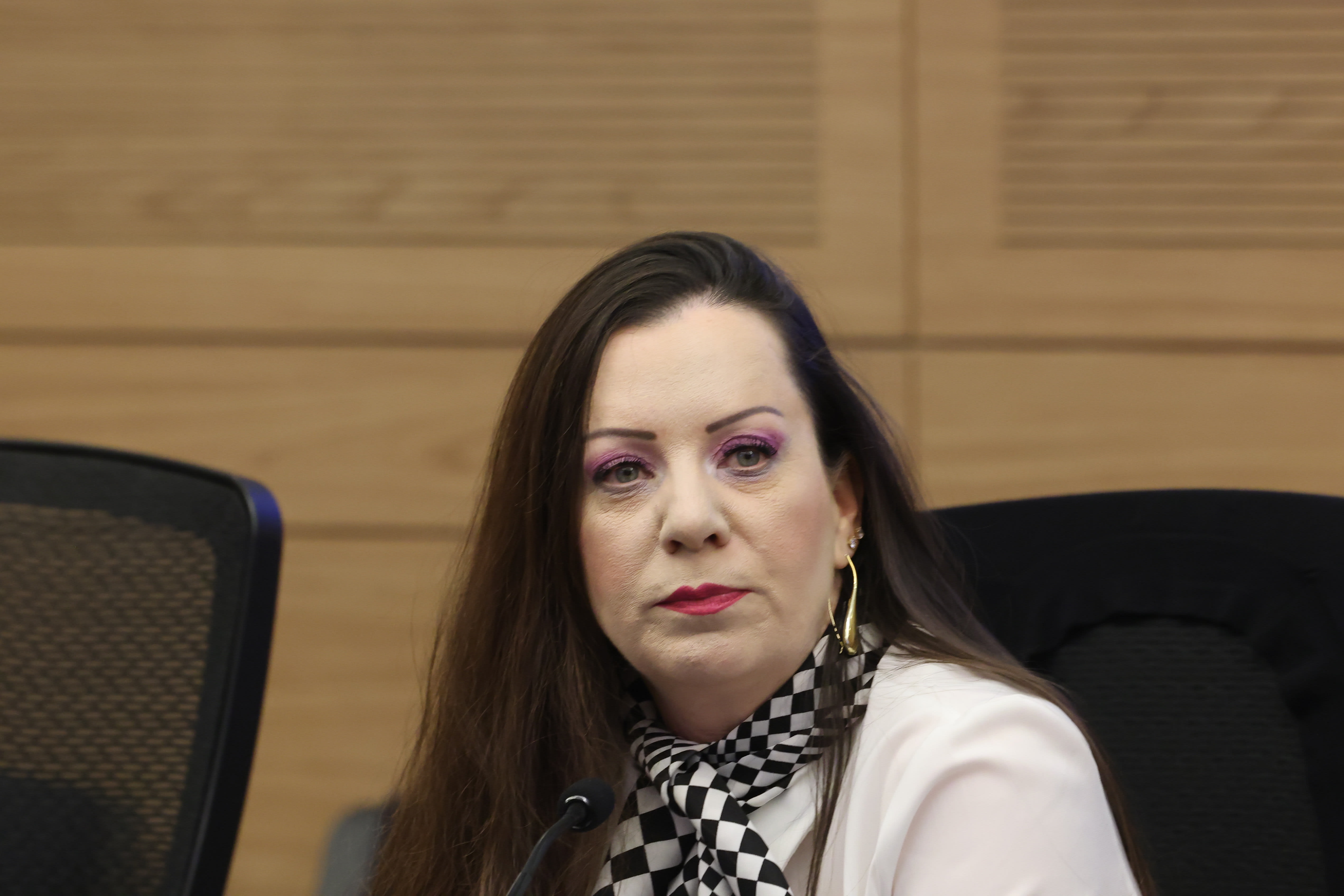
The Gotliv debate underscores a simple truth for Israeli democracy: immunity safeguards debate, but it cannot eliminate legal responsibility.
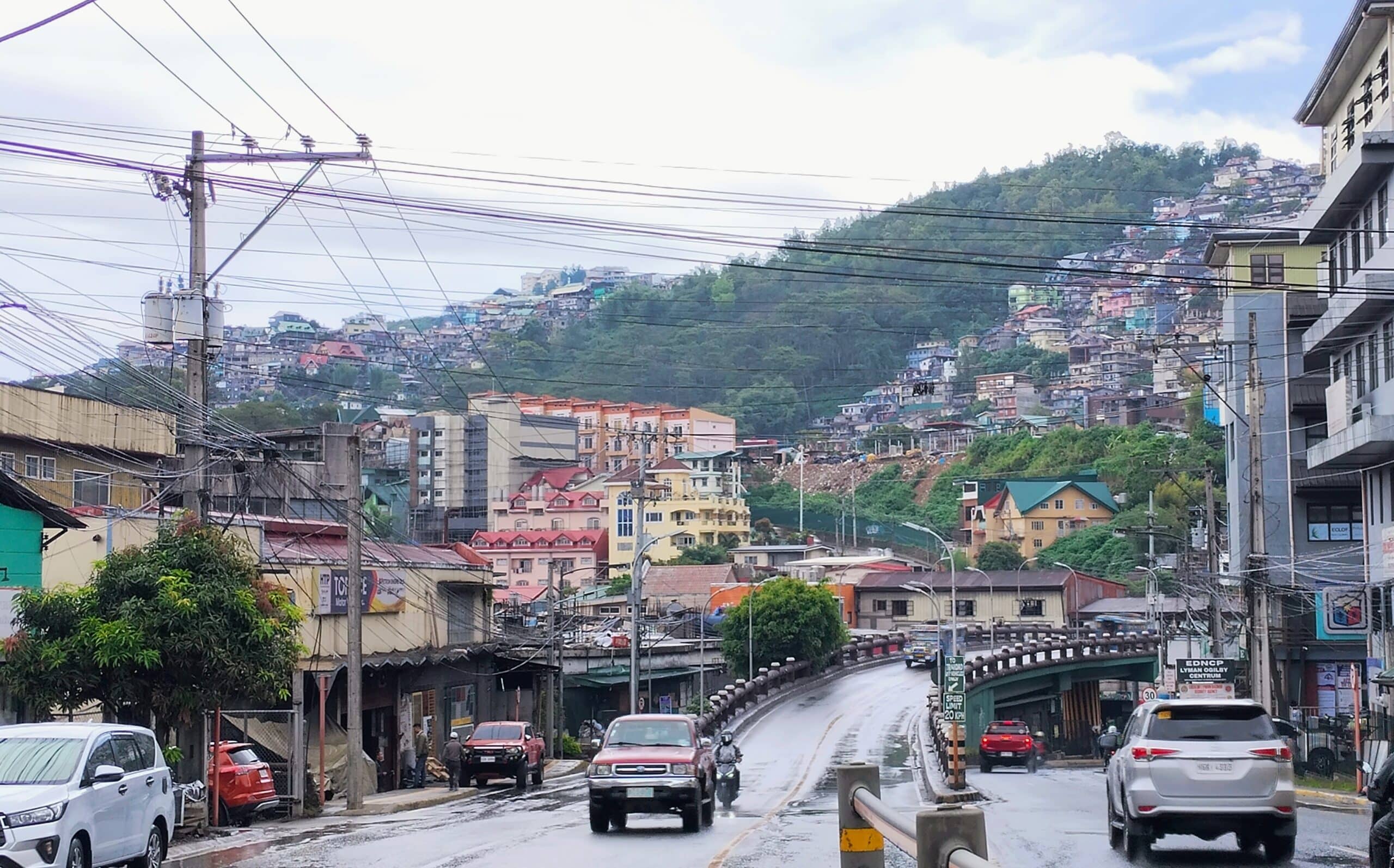
BAGUIO CITY, Philippines — The city council on Monday night granted conditional approval to a controversial road project that will cut through a critical watershed, but only after imposing a series of safeguards and requiring barangay officials to assume responsibility for any future encroachment into the protected forest area. The P23.9-million, 218-meter bypass road will
The broad safeguards built into Anthropic's Claude Fable 5, a Mythos-class AI model, blocks some mundane requests on cybersecurity and biology.
Threats targeting lawmakers rocketed after Meta rolled back key content moderation policies.
Anthropic offers an unrestricted Claude Mythos 5 alongside Fable 5, the first from its Mythos class, its most advanced AI lineup.

Anthropic is rolling out a public version of its Mythos AI model, but with guard rails barring its use in risky areas such as cybersecurity, after a preview earlier this year sent shock waves globally with its ability to find software flaws. The new Claude Fable 5 is the most powerful model Anthropic has ever made for wider use, the start-up said on Tuesday, touting its performance in software engineering and analytics. Anthropic has so far limited its access to a group of about 200...
As the Senate moves closer to approving state police, 30 civil society groups warn that devolving policing powers without strong accountability safeguards could deepen abuses and weaken public trust. The post State Police: 30 CSOs demand strong accountability safeguards ahead of possible Senate approval appeared first on Premium Times Nigeria.
