Malay Mail
보수 성향
IT/기술
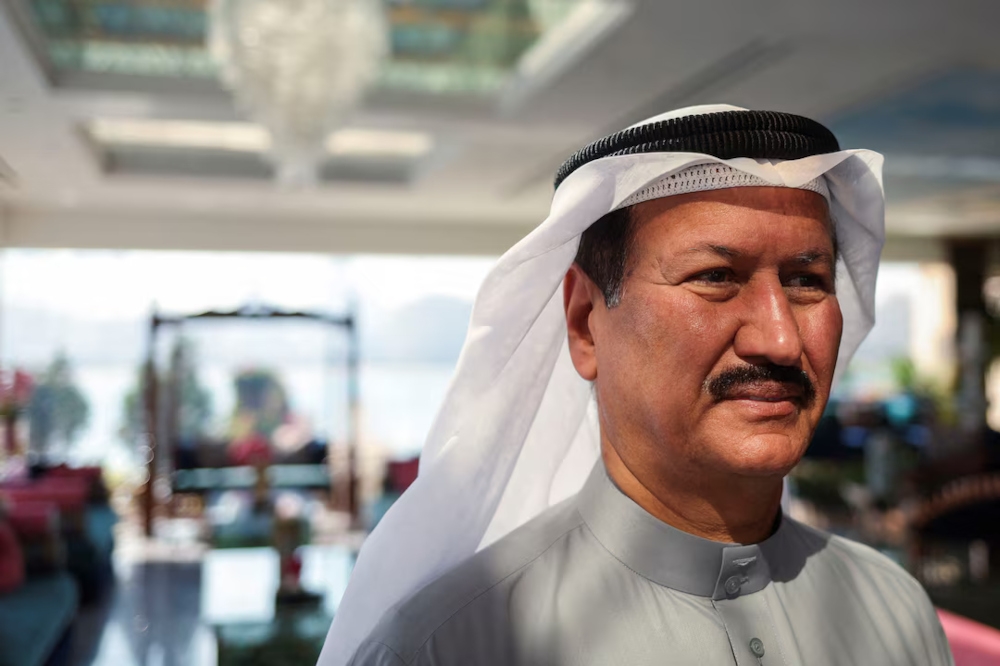
‘Donald of Dubai’ bets billions on data centres to chase AI crown
DUBAI, June 10 — A UAE real estate magnate close to Donald Trump is pumping billions of dollars into data centres,...
"PUMPING" · 총 29건
필터 보기현재 지수
49.5
0 = 부정 우세
50 = 중립
100 = 긍정 우세
최근 7일 기준 88,330건을 분석한 결과, 뉴스 심리지수는 49.5(균형)입니다. 긍정 10,803건(12.2%)·중립 63,833건(72.3%)·부정 13,694건(15.5%)이며, 중립 비중이 뚜렷하게 높습니다. 성향 지수는 종합 20.7(보수 경향)입니다.
DUBAI, June 10 — A UAE real estate magnate close to Donald Trump is pumping billions of dollars into data centres,...
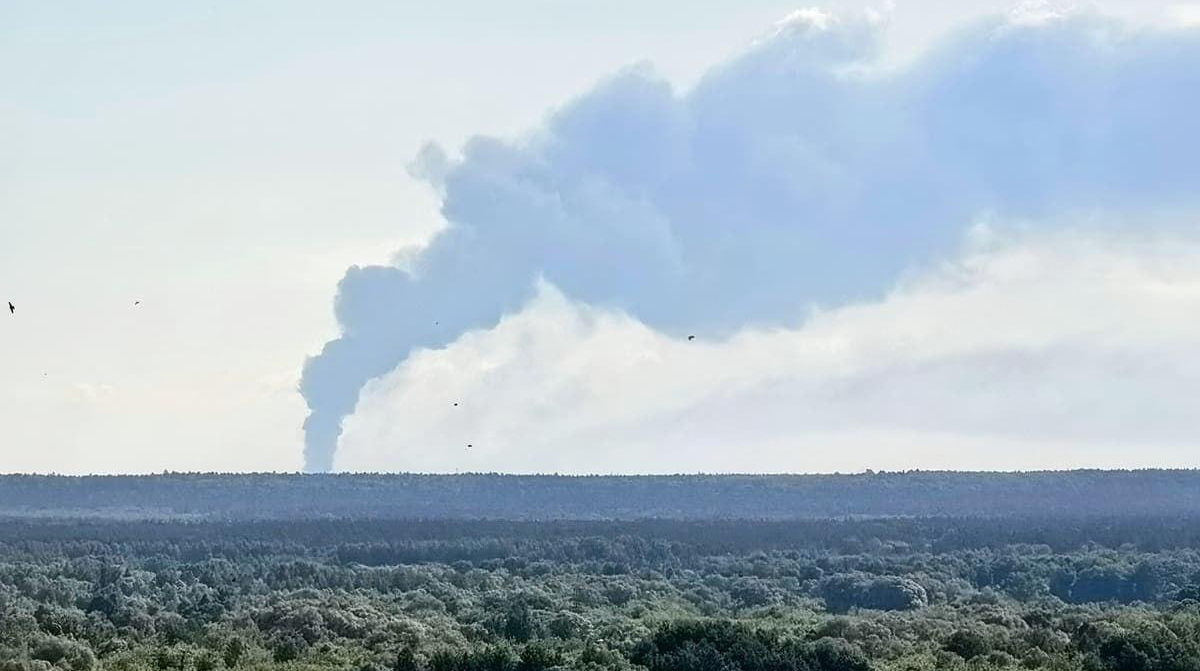
Special forces of the Alpha unit of the Security Service of Ukraine have struck the Vtorovo and Lobkovo oil pumping stations in Russia's Vladimir Oblast, located approximately 700 kilometres from Ukraine.
LONDON (Reuters) -- OPEC+ agreed Sunday a fourth increase in its oil output targets in as many months, even though the US war with Iran is still preventing several of the group's members from pumping more. The war has cut oil flows via the Strait of Hormuz, creating the world's biggest-ever supply crisis as key OPEC+ members including Saudi Arabia have been unable to supply customers in full since the end of February. The crisis for OPEC+ deepened when the United Arab Emirates left the Organiza
Opec+ agreed on Sunday on a fourth increase in its oil output targets in as many months, even though the US war with Iran is still preventing several of the group’s members from pumping more. The war has cut oil flows via the Strait of Hormuz, creating the world’s biggest-ever supply crisis as key Opec+ members, including Saudi Arabia, have been unable to supply customers in full since the end of February. The crisis for Opec+ deepened when the United Arab Emirates left the Organisation of the Petroleum Exporting Countries (Opec) after almost 60 years. Seven core members of Opec+, which groups Opec and allied producers including Russia, have increased their output quotas from April to June by almost 600,000 barrels per day. Impact of production target increase In reality, the group’s production has collapsed due to export cuts by Gulf members, averaging 33.19 million barrels per day in April compared with 42.77m in February, according to Opec figures. On Sunday, the seven members decided to increase targets by 188,000 bpd from July, Opec said in a statement. This is the same as the June hike, which was adjusted down from monthly increases of 206,000 bpd in May and April to take into account the UAE exit. “An Opec+ production increase means very little while the Strait of Hormuz remains closed,” said Jorge Leon, an analyst at Rystad and a former Opec official. When the Strait of Hormuz reopens, the market could move very quickly from fear of shortage to fear of surplus.” On Friday, oil prices fell to around $93 a barrel as traders gained confidence that renewed conflict between the US and Iran was growing less likely. Prices were close to $72 before the war began. Open+ almost done with unwinding 2023 output cut The seven countries are increasing production as part of the gradual unwinding of a 1.65m bpd production cut that the group, which at the time included UAE, agreed in 2023. From July, the seven have about 567,000 bpd of the original cut to return to the market, taking into account the UAE exit from May 1, according to Reuters calculations. That would mean the rest of the cut will be unwound by the end of September should Opec+ stick to monthly hikes of about 188,000 bpd for August and September. The seven of 21 Opec+ members who met on Sunday are Saudi Arabia, Iraq, Kuwait, Algeria, Kazakhstan, Russia and Oman. In recent years, only the seven plus the UAE — when it was a member — have been involved in the group’s output policy decisions. In a separate meeting on Sunday of all Opec+ members, the ministers made no change to group-wide output policy that is in place until the end of 2026, Opec+ said in another statement. Opec+ is carrying out a review of its members’ oil production capacity to be used as a reference for 2027 production baselines, from which quotas are set. The group on Sunday affirmed the importance of completing the assessment, the statement said.
At the start of 2026, oil traders were preparing for a glut. Supply growth was expected to outpace demand growth. OPEC+ was gradually returning barrels to the market. U.S. production remained near record highs. Economic growth was slowing, while electrification and efficiency gains were expected to temper consumption growth. The consensus view was simple: the world was heading into a period of excess supply. Six months later, that narrative never came true. Not because the world suddenly ran out of oil. In fact, many major producers are pumping…
Far away from Indian mainland, the government is pumping billions of dollars into a controversial development project.
KARACHI: The city’s already fragile water supply took another hit on Monday when supply from Hub Pumping Station was suspended due to a fault in K-Electric’s (KE) main cable. This was the third consecutive day of power failures at key pumping stations disrupting distribution across the metropolis. The Karachi Water and Sewerage Corporation (KWSC) said that the power suspension resulted in a daily water shortfall of 85 million gallons per day (MGD) for the city. KWSC says main cable fault at Hub Pumping Station results in shortfall of 85 MGD; KE claims power supply restored via alternative means The outages come as the city has been grappling with a severe water crisis for the past two months. While the city faced severe water shortage during the three days of Eidul Azha, the supply was disrupted in several parts of the city on May 30 after the KE carried out a forced shutdown at the Dhabeji Grid to urgently repair a major technical fault in the Power Transformer No. 1. The shutdown knocked out 10 of the 21 pumping units at the Dhabeji Pumping Station, suspending water supply to several areas. Then the crisis escalated in the early hours of Saturday when power to the North East Karachi (NEK) Water Pumping Station failed at 3:27am due to a fault in K-Electric’s main supply cable. The outage halted K-II Pumping Station operations, disrupting supply in several parts of the city. The city faced an immediate shortfall of 54 MGD. The power was finally restored, bringing K-II and K-III back to normal operations. However, the day-long disruption had already caused a cumulative shortfall of 122 MGD. On Monday, the city’s water woes continued as a fault in K-Electric’s main cable suspended power to the Hub Pumping Station. The three-day string of power-related failures has compounded a water crisis that has persisted for the past two months, piling misery on people in the scorching weather. He said that the supply to the station was affected due to a cable fault. “KE’s technical teams remain in coordination with representatives of the water board to ensure continued support and operational stability,” the spokesperson added Published in Dawn, June 2nd, 2026
On Sunday evening, the Instagram account of the chief master sergeant of the Space Force began pumping out pro-Iran propaganda in an apparent security breach at the Pentagon. The social media account of Space Force Chief Master Sergeant John F. Bentivegna, which has just over 1,000 followers, typically posts updates for the branch’s enlisted rank-and-file. […]
Doctors said the medical record lacked details regarding the health of his heart, including how much blood it’s pumping, according to a report
Kyiv said today that it had hit the Lazarevo station in Kirov, a region situated almost 500 miles north-east of Moscow.
Ukrainian drones struck targets across several Russian regions overnight from Saturday, including an oil pumping station, a refinery and a fuel depot, Russian and Ukrainian authorities said Sunday. Kyiv however denied Moscow's claims that a Ukrainian drone struck the Zaporizhzhia nuclear plant in Russian-occupied Ukraine.
This representational image shows Karachi Water and Sewerage Corporation employes working at Dhabeji pumping station. — Facebook/@CMSindh/File The Karachi Water and Sewerage Corporation on Sunday confirmed that the port city is currently facing a shortfall of 54 million gallons...
The Karachi Water and Sewerage Corporation (KWSC) said on Sunday that the city was facing a shortfall of 54 million gallons per day (MGD) after electricity supply to North East Karachi Pumping Station was disrupted due to a fault in K-Electric’s main cable. It also warned that this shortfall could increase if the cable was not repaired. The KWSC’s latest announcement came a day after an emergency power shutdown at the Dhabeji Pumping Station disrupted the water supply to several parts of the city. “Electricity supply by K-Electric (KE) to North East Karachi (NEK) Pumping Station was abruptly suspended at 3:27am on May 31, 2026. As a result, K-II pumping station’s operations were affected, and the water supply system was also partly affected,” KWSC said in a statement. The statement added that KE sent a technical team after being contacted by the KWSC. “KE officials confirmed that the power supply was cut off due to a fault in the main cable supplying electricity to the K-II pumping station,” it said, adding that KE had made “alternative arrangements on an emergency basis”. “Later, backfeed was provided to the K-II pumping station through the K-III feeder, due to which the electricity supply was partially restored at 5:50am. “However, due to limited capacity, the pumping operation could not be fully restored,” KWSC said, indicating the possibility of further shortage if the fault was not repaired “immediately and permanently”. “The shortage may have an impact on the water supply schedule in different areas of the city,” KWSC said. “KWSC has demanded that KE take emergency measures to repair the fault,” the statement read, adding that KWSC was monitoring the situation and utilising all available resources to restore the water supply. Karachi has now entered the second month of a severe water crisis that has affected large parts of the metropolis, leaving thousands of families dependent on water tankers and private suppliers. For many residents, obtaining water has become a daily challenge. Long queues for tankers, dry taps and rising water costs have added to the difficulties faced by households already burdened by skyrocketing inflation. The ongoing crisis began in late March and persisted due to a combination of factors, including major pipeline leaks, bursts in transmission lines, power outages at pumping stations and technical faults affecting the city’s water supply system. As a result, normal water distribution has remained disrupted in many areas for weeks.
Ukrainian drones struck an oil depot in southern Russia and a pumping station hundreds of kilometres from the front, Kyiv said, with Russian officials confirming strikes in the areas.
The Karachi Water and Sewerage Corporation (KWSC) said on Sunday that the city was facing a shortfall of 54 million gallons per day (MGD) after electricity supply to North East Karachi Pumping Station was disrupted due to a fault in K-Electric’s main cable. It also warned that this shortfall could increase if the cable was not repaired. The KWSC’s latest announcement came a day after an emergency power shutdown at the Dhabeji Pumping Station disrupted the water supply to several parts of the city. “Electricity supply by K-Elecctric to North East Karachi (NEK) Pumping Station was abruptly suspended at 3:27am on May 31, 2026. As a result, K-II pumping station’s operations were affected, and the water supply system was also partly affected,” KWSC said in a statement. More to follow
• No time frame given for restoring normal supply • Residents say water shortages always worsen during important events and religious festivals in Karachi KARACHI: Already struggling with a worsening water shortage during the three days of Eid, residents of the metropolis faced another uncertainty on Saturday after an emergency power shutdown at the Dhabeji Pumping Station disrupted the water supply to several parts of the city. This has been the second month of an acute water crisis in Karachi that has left taps dry, created long queues for water bowsers and frayed tempers. The fresh crisis was announced by Karachi Water and Sewerage Corporation (KWSC) in a statement on Saturday evening with the most alarming aspect being the utility was unable to provide any time frame for restoring the normal water supply leaving residents uncertain about how long the disruption would continue. According to the KWSC statement, K-Electric informed the utility that a major fault had developed in Transformer No. 1 at the Dhabeji Grid Station, necessitating an emergency shutdown at 6:30pm. “As a result of the power outage, 10 out of 21 pumping units at the Dhabeji Pumping Station were forced to shut down, significantly affecting the city’s water transmission system and disrupting water supply to various parts of Karachi,” it said. “The K-Electric had initially indicated that the shutdown would last for approximately one hour. However, no definitive timeline for the complete restoration of power has yet been provided. The KWSC is closely monitoring the situation and remains in constant contact with K-Electric officials to ensure the earliest possible restoration of electricity and the resumption of normal water supply operations.” The KWSC, it added, has urged residents to use water judiciously during the disruption and assured citizens that updates will be provided as more information becomes available regarding the restoration process. At the recently passed Eid, many Karachiites spent the festive days struggling to secure water for their households. The city has now entered the second month of a severe water crisis that has affected large parts of the metropolis, leaving thousands of families dependent on water tankers and private suppliers. For many residents, obtaining water has become a daily challenge. Long queues for tankers, dry taps and rising water costs have added to the difficulties faced by households already burdened by skyrocketing inflation. Residents say the situation is particularly frustrating because it is not the first time Karachi has faced a water crisis during a major religious occasion. Many complain that water shortages frequently worsen during Eid holidays, Ramazan, Muharram and other important events when demand for water increases significantly. The ongoing crisis began in late March and persisted due to a combination of factors, including major pipeline leaks, bursts in transmission lines, power outages at pumping stations and technical faults affecting the city’s water supply system. As a result, normal water distribution has remained disrupted in many areas for weeks. There was no immediate response from K-Electric to the fresh claims made by the KWSC. However, with no timeline yet available for the restoration of normal water supply, it appears that the people of Karachi may have to endure further hardship in the days ahead. “We have been facing a severe water shortage since late February,” said Shafiq Ahmed, resident of Liaquatabad. “There are days when not a single drop comes through the taps, forcing us to buy expensive water tankers that many families can hardly afford. Every time we hear that the supply system has developed another fault, we wonder how much longer we will have to live like this.” Published in Dawn, May 31st, 2026
Labour minister Steve Reed triumphantly announced a year ago that 81 probes had been launched into serious and significant pollution incidents.
The Amaravati Development Corporation chairperson issued instructions to engineering officials after reviewing the situation at the pumping station
In this week’s newsletter: Yes, it’s technically still spring, but with garage already pumping out and the 00s legends making a comeback, it’s time to celebrate the often-overlooked women who defined the genre • Don’t get The Guide delivered to your inbox? Sign up here Hello everyone. I’m Coco Khan, covering for Gwilym this week, and I’m officially calling it. Summer is here. No, I’m not a meteorologist or an astronomer – rather, I rely on a measure I’ve developed over many summers: the UKG Index. The more UK garage you hear – through passing car windows, pumping out of festivals, or floating on the breeze from a nearby barbecue – the more likely the mercury is climbing. And this year the sound of summer has arrived early, and with some exciting news: a Mis-Teeq reunion. Continue reading...
Specialists from the SSU's Alpha Special Operations Center targeted the strategic Yaroslavl-3 oil pumping station, which has its own storage tank facility, in Russia's Yaroslavl region, as well as the gas terminal at the port of Temryuk in Krasnodar Krai.