Three Indians missing after U.S. attack on ship off Oman
The External Affairs Ministry said, “Our Embassy in Oman is closely monitoring the situation and proactively coordinating with the Omani authorities in the ongoing Search and Rescue operation”

"PROACTIVE" · 총 45건
필터 보기현재 지수
49.5
0 = 부정 우세
50 = 중립
100 = 긍정 우세
최근 7일 기준 90,566건을 분석한 결과, 뉴스 심리지수는 49.5(균형)입니다. 긍정 11,035건(12.2%)·중립 65,484건(72.3%)·부정 14,047건(15.5%)이며, 중립 비중이 뚜렷하게 높습니다. 성향 지수는 종합 20.6(보수 경향)입니다.
The External Affairs Ministry said, “Our Embassy in Oman is closely monitoring the situation and proactively coordinating with the Omani authorities in the ongoing Search and Rescue operation”

Chief Executive John Lee on Wednesday said Hong Kong's upcoming new five-year plan would inject "vitality" into the city's future development. The remarks came as he announced on Tuesday that the city would launch a two-month public consultation on the strategic blueprint from Monday. Speaking at a forum centring on the national 15th Five-Year Plan as well as the SAR's development, Lee noted the SAR government was pressing ahead at full steam to formulate the city's first-ever five-year plan. Hong Kong, he added, would also proactively align with the national 15th Five-Year Plan to better integrate into the country's overall development, noting the country's high-quality growth would offer the "best opportunities" for the SAR. "Hong Kong's own five-year plan will help the city build a more dynamic and competitive development pattern where its advantages and positions will be further enhanced, and the Northern Metropolis would rise rapidly," he told participants. "Meanwhile, the 'AI Plus' and 'Finance Plus' strategies would together drive the city to contribute more on building the Belt and Road Initiative and the Greater Bay Area, and play a greater role in the country's opening up. "Hong Kong will benefit greatly from all these and its citizens will share the development dividends and move towards a better life," he added. Separately, Lee noted the city's economy had shown "strong" growth momentum in the first quarter of year, with gross domestic product rising 5.9 percent year on year. He added that the high-level delegation he led to visit Kazakhstan and Uzbekistan last week had yielded "fruitful results", and that the SAR would continue to play its role as a "super connector" and "super value-adder" to attract global funds and talent. The chief executive called on all patriots to seize on the "historical opportunities" during the country's 15th Five-Year Plan period, and contribute to the city's own five-year blueprint. The event was jointly organised by the Friends of Hong Kong Association and the China Overseas Friendship Association, and it was also held to mark the 29th anniversary of the establishment of the Hong Kong SAR. Edited by Tony Sabine
The Tory leader says the public sector duty to consider minorities encourages division but legal experts warn abolishing it will fuel discrimination For more than two decades, an important part of Britain’s equality laws ensured public institutions had to think about the impact the decisions they make could have on different groups within society. Introduced in the wake of the Stephen Lawrence inquiry, the public sector equality duty required public bodies – such as local councils, police forces and hospitals – to think proactively about equality law. Now this once uncontroversial public duty is a new battleground in Britain’s culture wars. Continue reading...
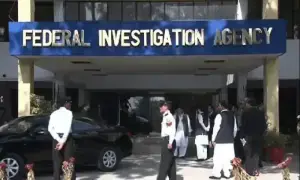
LAHORE: The Federal Investigation Agency (FIA) has established Financial Action Task Force (FATF) desks across all its wings and zones by expanding the existing FATF secretariat at the Anti-Money Laundering Directorate, as part of the country’s upcoming evaluation by the global anti-money laundering watchdog next year. The move is intended to improve the effective implementation of international standards with regard to investigations into money laundering, terrorism financing and predicate offences. “This significant step will also improve the quality of investigations and prosecutions, data maintenance, timely generation of international cooperation requests, prompt inter-agency coordination and effective feedback mechanisms,” a senior FIA official told Dawn on Tuesday. According to the official, FIA Director General Dr Usman Anwar has instructed all zones and specialised wings to set up FATF desks within seven days, to ensure full compliance with international standards and avoid any deficiencies during the country’s assessment, expected in the last quarter of 2027. The FIA chief has also directed that each desk be headed by an officer of at least Assistant Director rank. Pakistan was put on the enhanced monitoring list (grey list) in August 2018 by FATF. After demonstrating significant improvement against a 27-point action plan regarding technical compliance and effectiveness, it was removed from the grey list in October 2022. The country’s exit from the grey list helped improve its standing with international financial watchdogs and investor confidence. It also supported broader economic engagements, including negotiations with the International Monetary Fund (IMF). “Domestically, it also improved the effectiveness of regulations, law enforcement and capacity of regulators and law enforcement agencies (LEAs) in CFT and money laundering,” the official said. The official said in 2021, the FATF secretariat was established at the Anti-Money Laundering Directorate of FIA headquarters to implement FATF standards effectively and to remove major shortcomings highlighted in the 27-point action plan. “With the passage of time and owing to an increase in volume and emerging trends in investigations of predicate offences, anti-money laundering and countering financing of terrorism (CFT), it was inevitable to expand the existing framework,” he said. The newly established desks include seven units — the Financial Intelligence Unit (FIU), the Investigation Monitoring Unit (IMU), the International Cooperation Unit (ICU), the Inter-Agency Coordination Unit (IACU), the Risk Assessment Unit (RAU), the Seizure and Confiscation Unit (SCU) and the Forensics and Virtual Assets Unit (FVAU). Each zonal desk will be reporting to a desk at the concerned wing of the FIA headquarters. The FIU plays a particularly important role as it receives financial intelligence from the FMU, disseminates it to concerned zones for investigation, and provides feedback to the FMU. The ICU facilitates the sending and receiving of international cooperation requests through formal and informal channels for assistance from foreign jurisdictions in cases involving money laundering, terrorism financing and predicate offences. Assistance includes the collection of evidence, seizure and confiscation of foreign proceeds, and the arrest of absconding accused persons. The IMU monitors the effectiveness and quality of ongoing investigations by providing guidance to investigators and prosecutors, while the IACU ensures prompt assistance to investigators by providing information and evidence from other LEAs, regulators and authorities such as NADRA, the Directorate General of Immigration and Passports, excise departments, the Pakistan Telecommunication Authority (PTA) and the Federal Board of Revenue (FBR) (Income Tax). The RAU is mandated to conduct periodic risk assessments of various sectors, geographical regions and offences under its domain. This exercise will ultimately feed into Pakistan’s National Risk Assessment, according to the official. The SCU will ensure seizure and confiscation during money laundering and terrorism financing investigations, while also maintaining a database of seizures and confiscations carried out by the FIA. Meanwhile, the FVAU has been established as a proactive approach to meet the needs of investigations, including digital equipment, the use of cyberspace in the commission of conventional crimes, and virtual assets as a channel for the movement of illegal proceeds and as a placement, layering and integration platform. “Each zone will also maintain an official digital wallet for the safe custody of seizure and confiscation of virtual assets,” the official said. He added that since Pakistan’s removal from the grey list, key institutions — including designated LEAs, the FIA, the National Accountability Bureau (NAB), the Anti-Narcotics Force (ANF), Counter Terrorism Departments (CTDs), the National Cyber Crimes Investigation Agency (NCCIA), FBR Customs and FBR Inland Revenue, regulators of the financial sector, and Designated Non-Financial Businesses and Professions (DNFBPs) — had continued efforts to ensure compliance with FATF standards on an ongoing basis. He further said the authorities had sustained measures against cross-border cash smuggling, improved Know Your Customer (KYC) and Customer Due Diligence (CDD) processes for financial transactions, and tightened oversight of DNFBPs such as real estate agents, dealers in precious metals and stones, accountants and lawyers. During the period of grey-listing, Pakistan also showed significant progress in the counter-terror financing regime by taking action against proscribed individuals and organisations and their associated networks, seizing properties, freezing bank accounts, and prosecuting individuals involved in terror-financing activities. “The National Counter-Terrorism Authority (Nacta), CTDs, the FIA, provincial home departments, district intelligence committees, police, intelligence agencies and other authorities played a pivotal role through synergised efforts in removing major shortcomings and developing a sustainable and effective countering and monitoring regime for the financing of terrorism,” another official said. He added that the expansion of FATF desks and specialised units reflected FIA’s continued efforts to maintain compliance ahead of the next mutual evaluation and avoid any risk of renewed scrutiny by the global watchdog.
The ASEAN Future Forum (AFF) demonstrates Vietnam's growing role and standing in promoting a more synergized and proactively connected ASEAN, said Professor Vu Minh Khuong of the Lee Kuan Yew School of Public Policy in Singapore.

KARACHI: Recognising the growing threat of narcotics consumption in the city’s educational institutions, the city’s South Zone police have prepared an anti-drug policy in collaboration with the heads of 22 universities and schools. Speaking to Dawn on Monday, South Deputy Inspector General of Police (DIG) Syed Asad Raza said: “Recognising the need for a coordinated, proactive and sustainable response, the police have adopted this comprehensive anti-drug policy to safeguard students from substance abuse and foster a safe, healthy and drug-free educational environment.” He added that the policy was founded on the principles of “prevention, early intervention, parental engagement, rehabilitation, institutional accountability and lawful enforcement”. “It aims to establish and maintain drug-free educational institutions, protect students from exposure to narcotics and other harmful substances, and promote awareness of the physical, psychological, social and legal consequences of substance abuse,” the South DIG said. He maintained that strengthening collaboration among educational institutions, parents, healthcare professionals and law enforcement agencies was key to achieving the policy’s objectives. “Besides facilitating the early identification, intervention, counselling and rehabilitation of students requiring assistance, the policy also aims to prevent the infiltration of drug supplies, peddlers and criminal elements into educational environments, and foster a culture of responsible citizenship, healthy lifestyles and positive personal development,” the senior police officer said. The senior police official added that under the policy, anti-drug committees would be formed in educational institutions, comprising institutional heads, teachers, parents and law enforcers. DIG Asad elaborated that educational institutions would also organise regular seminars and awareness campaigns highlighting the dangers of drug abuse. “It has also been proposed that parents or legal guardians shall execute a drug prevention consent and responsibility declaration at the time of admission or readmission, authorising the educational institution to conduct reasonable and lawful drug-screening programmes,” he said. “Educational institutions shall cooperate with law enforcement agencies to identify and report individuals or groups attempting to target students for drug-related activities.” Furthermore, he observed that the policy represented a collective commitment by educational institutions, parents, students and law enforcement authorities to preserve the sanctity of learning environments and nurture a generation that is healthy, disciplined, productive and resilient. He said the South district police had already established a “Campus Security and Substance Abuse Watch”, including female police officers, to strengthen surveillance and preventive intervention around educational institutions. “Out of 158 private schools in the South district, 20 are under surveillance, while eight of the district’s 22 private colleges are under surveillance,” the South DIG said, adding: “Four of the nine private universities in the district are also under surveillance.” DIG Asad said all senior superintendents of police had been directed to submit fortnightly progress reports highlighting enforcement actions, awareness initiatives, inspections conducted, cases registered and challenges encountered during the crackdown on narcotics. “The objective is not merely the enforcement of the law but the protection of future generations, the preservation of public health and the strengthening of societal values,” he said. Last year in October, the Campus Security and Substance Abuse Watch Force comprising 50 police personnel was established to curb the menace of drugs in educational institutions within the jurisdiction of the South Zone of Karachi police.
Secretary for Commerce and Economic Development Algernon Yau described the recent visit to Central Asia by a delegation led by the SAR chief executive as a great success, saying it has led to significant collaboration opportunities with the two countries. During the visit to Uzbekistan and Kazakhstan, the 70-strong delegation reached 96 cooperation agreements and memoranda of understanding (MoUs) involving more than US$1.65 billion in total. Speaking on an RTHK radio programme on Monday, Yau, who was in the delegation, said the two countries are actively seeking economic diversification. "They are very proactive and hope to explore opportunities for collaboration with the SAR government, particularly in finance, trade, infrastructure, innovation and technology, green development and tourism," he said. "They are developing very well in many aspects. There are plenty of cooperation opportunities with us." Yau said the volume of SAR trade with Central Asia is currently not very large as the city's focus used to be more on Europe, the United States and Asean. But its trade with Central Asia is on the rise, he said, noting that total merchandise trade stood at HK$2.53 billion last year – a rise of 27 percent compared with 2020. Yau said the two countries and Hong Kong have launched discussions on a comprehensive avoidance of double taxation agreement and agreed to push ahead with discussions on an investment promotion and protection agreement. The move will step up investors' confidence and further strengthen trade ties between Hong Kong and the two countries, he said. With the city poised to initiate direct flights to Almaty in Kazakhstan next year, Yau said he believes they would make business travel much more convenient. Wingco Lo, president of the Chinese Manufacturers' Association of Hong Kong, who was also part of the delegation, said markets in Central Asia were not just interested in traditional trading opportunities in Hong Kong. They placed more emphasis on the SAR's role as an international financial centre and a platform of professional services. The association signed two MoUs during the visit, Lo added, and would arrange a trip to Central Asia again this year to allow members to find out which sectors and industries they need to gain a deeper understanding of and discuss collaboration details. Edited by Tony Sabine
LAST week, Russian President Vladimir Putin talked on several geopolitical issues in St Petersburg, which also define Moscow’s approach to China, India and Pakistan. The most interesting statement he made was that he does not believe Pakistan was under the control of China; he said that Pakistan is a large country that has multifaceted ties with different states. Perhaps he was trying to justify Moscow’s recent defence-related talks, which the Taliban regime’s defence minister, Mullah Yaqoob, used as a counter-response to the Pakistani air strikes inside Afghanistan. Putin’s message between the lines was that, as Pakistan has multifaceted ties with China, the US, and even Russia, Moscow takes the same approach in engaging with nations. After all, Russia is the only country in the world that has recognised the Taliban regime. There is little doubt that Pakistan has found its geopolitical strength through cultivating a multi-vector approach and hardly portrays itself as a passive client in its relations with the US or any other power. But every policy has two sides, and nothing comes without a cost. Maintaining a strategic equilibrium requires winning and maintaining trust at a certain level with divergent partners. For instance, Pakistan-China relations, which Putin mentioned, have entered a new domain. Formally, this became evident on the occasion of the 75th anniversary of bilateral relations between the two countries, when Pakistan’s civilian and military leadership visited Beijing and signed several MoUs. This speaks volumes: Sino-Pak relations have entered a critical new strategic phase, with these ties deepening. China is increasingly seeking to keep Pakistan firmly within its sphere of influence, shifting away from purely economic projects like CPEC towards enhanced defence and security cooperation. CPEC, which was once central to their bilateral relations, has become a lower priority, even in the context of counterterrorism cooperation. Ultimately, while China reaffirmed its commitment to provide a robust security shield, Pakistan remains responsible for its own internal economic stability and administrative reforms. While China offers significant guarantees of Pakistan’s national sovereignty, this transition creates a complex dilemma for Pakistan as it attempts to balance its ties with Western powers such as the US. Unlike Russia, China is playing more smartly to project itself as a major global power and to engage nations of the Global South through several initiatives, such as the Global Development Initiative, Global Security Initiative, Global Civilisation Initiative and Global Governance Initiative. While engaging nations in such initiatives, it develops bilateral frameworks of cooperation that bind countries into its broader political partnership. There should be no harm in this, but through such initiatives, China is challenging the existing Western political and security order without provoking direct confrontation. Pakistan has recently signed all the MoUs under these initiatives, which Beijing depicts as Pakistan agreeing to remain within its sphere of influence. This is the tricky part. A nation that maintains multifaceted relationships hardly follows such ideologically driven political initiatives. Putin finds Pakistan another window through which to engage and send messages to Washington. Russia also maintains multifaceted ties and is seeking to maintain equilibrium with China, India and Pakistan. However, what is common to China and Russia is the challenge posed by the US. As long as the US remains engaged in West Asia, both China and Russia benefit, as this increases their economic and political strength, while weakening US interests. Most importantly, President Donald Trump’s attention may not turn to Afghanistan, especially the Bagram base, which he has his eyes on. In this context, Pakistan is perceived as a US partner, but Beijing has its apprehensions. If Russia-Taliban cooperation deepens, the US might need to rethink Afghanistan’s status, including sanctions on Taliban assets and its counterterrorism strategy. However, one view is that Washington now has limited leverage, and that maintaining good ties with Pakistan remains its main avenue for influencing Afghan affairs. If not Cuba, or even after Cuba, Trump would certainly create an uproar around the Bagram base, and Russia is talking about a defence deal with the Taliban, even if initially it is related only to repairing old equipment under the May 27, 2026, agreement on “military-technical cooperation” signed between Russia and the Taliban. However, any defence deal with the Taliban will be viewed suspiciously, as a stronger Taliban could mean more terrorism in Pakistan. Though Russia is also concerned about terrorist networks in Afghanistan, it may prefer the broader strategic advantage. Paradoxically, Pakistan has gradually become important to Moscow for another reason — its proactive role in the ongoing mediation between Iran and the US. Putin finds Pakistan another window through which to engage and send messages to Washington. Russia has improved ties with Pakistan without endangering its core relationship with India. Yet, in recent years, Russia has cautiously courted Pakistan. Pakistan views Russia from a longer geopolitical perspective and knows that until Russia’s strategic and defence partnership with India weakens sufficiently, or India’s defence and strategic alliance with the US increases to a level that forces Moscow to review its India policy, Pakistan can afford to wait and see how this equilibrium is maintained. The perception is accurate that Pakistan is not fully under China’s control, and Beijing also wants to keep Pakistan within its sphere of influence. However, their strategic partnership will outlast economic collaborations, during which both sides will continue to pursue divergent policies. Pakistan will remain relevant to the US and Europe while maintaining close ties with West Asia, and China will continue to view these relations with suspicion. But, in the end, their strategic and geopolitical partnership will remain constant. Russia does not enjoy such privilege in India’s case. The writer is a security analyst. Published in Dawn, June 7th, 2026
It also awarded ₹10,000 compensation to the applicant and ordered proactive disclosure of records, including NGO payments, sterilisation and vaccination data.
THE Gilgit-Baltistan Assembly will be elected today by the people of that region. Yet again, themes like the region’s provincial status, the rights of its people, and ownership of its indigenous resources have headlined the run-up to the election. Each party has made many promises to the people, and they will vote today to decide whom to trust. It is hoped that the turnout will be healthy, that the electoral process will not be hindered, and that the public’s mandate will be honoured. There are good reasons to be wary. There have been too many similarities between the events of recent weeks and what transpired in the run-up to Pakistan’s 2024 general election. One party’s candidates have again been expected to run without a single identifiable symbol, and its leadership has repeatedly complained of significant difficulties during poll campaigning. Other political parties, especially those in power in Islamabad, seem to have faced no such restriction. Much ink has been spilt over the need to respect the political process and to allow it to unfold organically. It can only be hoped that the announced results will reflect the will of the people. It is important that whichever party ultimately forms the government puts the needs of the people of GB above everything else. It has been a long-running complaint that, regardless of which federal party wins the election, the GB government seems more entangled with Islamabad than in addressing the concerns of its constituents. Considering the many promises made on the campaign trail in this regard, there will also be some expectation among the people of the region that their new government will press the question of the region’s constitutional status. This is a complicated matter, with implications that go well beyond simple governance and administration. The different aspects of this question must be reviewed and debated at length, not just in the Gilgit-Baltistan Assembly but also in both Houses of the Pakistani parliament. However, now that the people of GB have been promised this by several prominent leaders, it should not be deferred until the next election cycle. The region faces a unique set of challenges and constraints that must be addressed proactively. The people have the opportunity today to chart a course forward at the ballot box. It is hoped that they will make good use of it. Published in Dawn, June 7th, 2026
In the past, not many people knew anything about the Department of State Services (DSS) formerly known as the State Security Service (SSS). The few who knew something about the organization merely called it, government spy or the Secret Police because it reportedly operated in secrecy, wearing hoods and silencing anti-establishment critics. Indeed, its personnel […] The post DSS has become Nigeria’s most proactive agency, by Tonnie Iredia appeared first on Vanguard News.
Russia proactively cooperated in this sphere with foreign companies earlier, primarily with the US partners, the president said
MANILA, Philippines — The government must prepare for the possible impact of an El Niño phenomenon instead of dismissing it, as several sectors like agriculture and food may be at high risk, House of Representatives Speaker Faustino “Bojie” Dy III said on Friday. Dy in a statement, said that a proactive El Niño response is needed to
The company's head of countries said OpenAI takes its responsibilities "very seriously" and proactively suggests ways governments can track AI safety
India head coach Gautam Gambhir supports the ICC's new rule allowing a pink ball under floodlights to combat bad light in Test matches. He believes this proactive measure will help ensure matches reach a conclusion, especially in crucial World Test Championship scenarios, preventing teams from being denied results due to weather.
Russia should not count on sanctions relief, presidential aide Maxim Oreshkin said at the St. Petersburg Economic Forum, adding that the country needs to shift from a defensive posture toward a proactive one.
Chief executive of Gazprom Neft Alexander Dyukov confirmed that proactive talks between Gazprom and Hungarian company MOL continue
This sponsored article is brought to you by Black & Veatch. The biggest challenge facing utilities today isn’t what it seems. It’s not demand, even as load growth accelerates. It’s not extreme weather, even as “major events” become routine. It’s not cybersecurity, even as connections expand across the grid. The real challenge is this: Distribution systems were designed for a different reality. Long gone are the days of predictable demand, one-way power flow and isolated disruptions. At Black & Veatch, we see that leading utilities are no longer debating whether to modernize. They’re deciding how quickly they can do it, and how to do it at scale. Across grid modernization programs globally, three truths consistently emerge. They define what it takes to prepare the distribution system for what’s next: 1. Outage response is not a resilience strategy Resilience is being redefined in real time. A strategy centered on mobilizing crews and restoring service as quickly as possible is reactive, and increasingly insufficient. Resilience has to shift upstream into integrated system design. That starts with hardening. Stronger poles, undergrounding and structural upgrades all have a role, particularly in high-risk corridors. We’re also seeing meaningful gains from how the network is configured and how quickly it can respond without waiting on manual intervention. This is where distribution automation programs can change outcomes. Strategically placed reclosers, automated switches and fault indicators help contain disruptions before they spread. When combined with feeder reconfiguration and updated protection strategies, distribution automation investments allow utilities to set more aggressive recovery targets and achieve measurable reductions in outage duration and customer impact. 2. Future-readiness depends on DERs at scale Forecasting is less and less reliable. Only 19 percent of utilities report strong confidence in their ability to predict future load growth, according to the Black & Veatch 2025 Electric Report. Distributed Energy Resources (DERs) like solar, storage, EVs and behind-the-meter generation are exciting solutions; but they fundamentally change how the system operates. Power is no longer just delivered. It’s injected, stored and redirected in ways the system was never designed to manage. At scale, these challenges show up quickly — particularly on feeders where distributed generation is approaching or exceeding hosting capacity. Protection coordination becomes more difficult when fault current comes from multiple directions. Voltage becomes less predictable as generation fluctuates throughout the day. And planning models must now account for highly variable, location-specific behavior. Distribution modernization is fundamentally changing how the system is designed and operated so it can absorb disruption, manage bi-directional flows and respond in real time. Adapting to bi-directional power flow requires more than incremental updates. Leading utilities are responding by building flexibility into the system, moving beyond static assumptions toward dynamic hosting capacity and interconnection studies, planning that incorporates DER, EV adoption and localized load growth, and infrastructure aligned with the communications and control needed to manage it. 3. The edge must be intelligent, visible and secure As system stress and complexity increase, utilities need far greater visibility and control over the network. Historically, utilities relied on customer calls, Supervisory Control and Data Acquisition (SCADA) at the substation level and field crews to understand what was happening on the system. That model doesn’t hold up. You can’t effectively manage a system you can’t see. Plus, the most critical events are increasingly happening beyond the substation — on feeders, laterals, and at the edge where DER and customer behavior are interacting with the grid. Grid-edge technologies have become essential. Sensors, Advanced Metering Infrastructure (AMI) and automated switching provide the raw data and control needed to move from reactive to proactive operations. In more advanced deployments, utilities are creating centralized control environments that allow operators to see and manage the distribution system in near real time. That capability is enabled by: Advanced communications networks to form the backbone of real-time grid visibility Distribution Management System (DMS) and Outage Management System (OMS) to enable faster, more coordinated system response Analytics, AI and machine learning to improve situational awareness, anticipate system conditions, and support operational decision-making The same connectivity enabling this real-time visibility and control also introduces new vulnerabilities, blurring the line between physical and cyber risk, yet many utilities manage them separately. Only 22 percent have unified teams in place, even as threats continue to rise, including a 50 percent increase in substation attacks and growing exposure to malware and ransomware, according to the Black & Veatch 2025 Electric Report. Cybersecurity and resilient network design must be embedded into the architecture from the outset—not layered on after the fact. See what bolder vision looks like Distribution modernization is fundamentally changing how the system is designed and operated so it can absorb disruption, manage bi-directional flows and respond in real time. To learn about a successful program, check out Georgia Power’s recent grid modernization program. Black & Veatch partnered with the utility on large-scale infrastructure upgrades. The results? Outages are down 76 percent, restoration times have improved by more than 80 percent and communities across Georgia are powered by a grid built to meet the future head-on. When the state faced the most destructive storm in the company’s history, Hurricane Helene, Georgia Power deployed a rapid response team that utilized its “smart grid” and restored power to more than 1 million customers within days. A grid built to meet the future head-on—that’s the result of bolder vision.
Governor Ademola Adeleke of Osun has urged residents to disregard false alarms about alleged school kidnappings in parts of the state, describing the reports as fake news. In a statement issued on Tuesday in Osogbo by his spokesperson, Malam Olawale Rasheed, the governor assured citizens that the government had taken proactive measures to secure schools […] The post Adeleke dismisses school kidnapping rumours in Osun appeared first on Vanguard News.
As conflict mounts over AI data center expansion, one West Texas project is taking a proactive approach to solving key issues before they erupt.