Quartz
중도 성향
기타
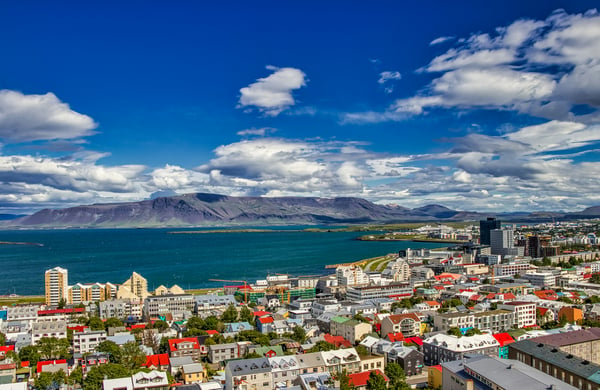
The best things to do in Iceland, according to Travel+ Leisure
From hiking Iceland's newest volcano to soaking in a geothermal cave on the Ring Road, the essential Iceland experiences
"LEISURE" · 총 40건
필터 보기현재 지수
49.4
0 = 부정 우세
50 = 중립
100 = 긍정 우세
최근 7일 기준 84,771건을 분석한 결과, 뉴스 심리지수는 49.4(균형)입니다. 긍정 10,417건(12.3%)·중립 61,125건(72.1%)·부정 13,229건(15.6%)이며, 중립 비중이 뚜렷하게 높습니다. 성향 지수는 종합 21.3(보수 경향)입니다.
From hiking Iceland's newest volcano to soaking in a geothermal cave on the Ring Road, the essential Iceland experiences
The Leisure and Cultural Services Department (LCSD) on Thursday announced a new measure designed to combat touting through the unauthorised transfer of bookings for leisure and sports facilities. Starting July 7, SmartPLAY users who log into the My SmartPLAY mobile app via iAM Smart will receive priority access to book facilities available within seven days, with their booking window opening at 7am each day. Users who choose not to use iAM Smart will still be able to make bookings through the mobile app, the official SmartPLAY website, smart self-service stations or service counters at leisure venues – but not until 7.15am each day. The 15-minute window between 7am and 7.15am is described by the LCSD as the peak booking interval for ordinary users but also the period most active for touters, who often use computer programmes or automated tools to secure bookings. By restricting access during that window to users authenticated through iAM Smart, the department hopes to more effectively prevent such activities. The new measure leverages the authentication function of iAM Smart to strengthen the identity verification process for facility hirers. To implement the new measure, the LCSD said it would temporarily suspend services for the My SmartPLAY mobile app and the official SmartPLAY website from 10.30am to 1.30pm on June 22 to conduct a system upgrade. Edited by Tony Sabine
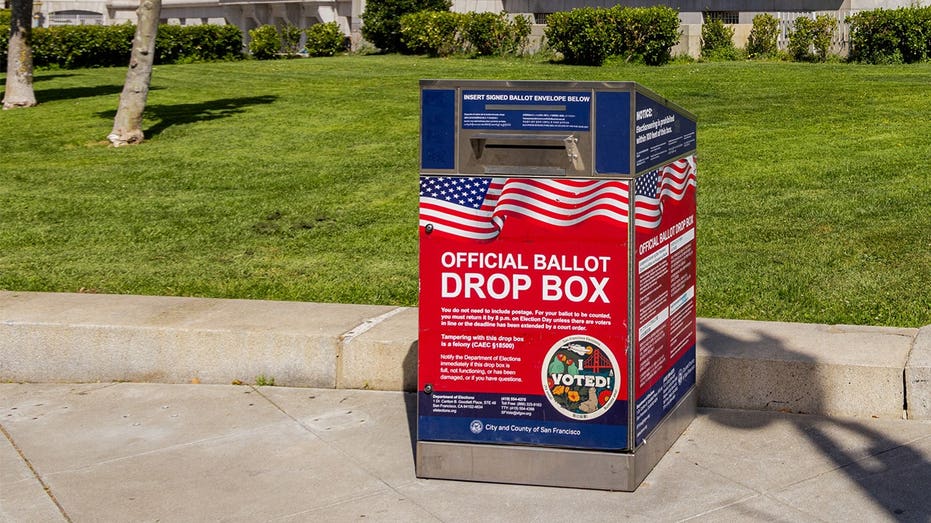
The New York Times editorial board ripped California Democrats for defending "indefensible" slow ballot counting, calling for national deadlines on Election Day.
Secretary for Transport and Logistics Mable Chan on Wednesday said more vehicle inspection centres will be established in Guangdong to ensure all cars which are set to arrive in Hong Kong via a soon-to-be-expanded scheme are roadworthy. Starting July 25, the Southbound Travel Scheme that allows Guangdong residents to drive to the SAR for leisure purposes will include nine cities, up from four at the moment. Up to 200 vehicles will be allowed entry to Hong Kong's urban areas each day, double the existing quota. Authorities are aiming to further expand the scheme to 21 Guangdong cities by the first quarter of 2027. Following a visit to the brand new Terminal 2 (T2) at Hong Kong International Airport, Chan said the city is ready to receive more visitors wishing to drive here. "We have been observing for a period of time the situation at the port, as well as car parks and vehicle charging facilities. We believe we have sufficient capacity," she said. She also pledged to strengthen promotion and education on the scheme. As for the initial operation of T2, the transport chief confirmed that HK Express -- the last of the 15 airlines named as the initial occupants of the new terminal -- has relocated its check-in services there by Wednesday. All supporting facilities are in place and ready, she added, while some passengers she had talked to spoke about their positive and smooth check-in experience at T2. Edited by Raymond Yeung
The Hong Kong government has announced a series of special offers and freebies covering transport, culture, retail and dining as part of the celebrations to mark the 29th anniversary of the Handover. During Hong Kong Special Administrative Region Establishment Day on July 1, residents can enjoy free rides on all trams, whilst the MTR will […]

Leisurely and surf-ready silhouettes you'll want to show off, long after summer has come to a close
Social change made leisure gardens accessible to all – not just kings and aristocrats – at the same time as ‘the great horticultural movement’.
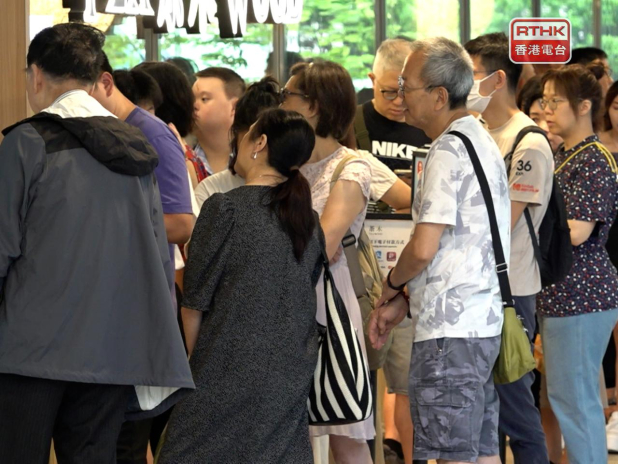
Celebratory events across 18 districts such as flag-raising ceremonies, marching performances, and carnivals, as well as freebies and discounts will help mark the 29th anniversary of the establishment of the Hong Kong SAR. In announcing the celebration plans on Tuesday, Chief Executive John Lee said perks would be offered across five aspects, with more than 1,000 restaurants and about 100 shopping malls, along with different other facilities participating in the gala. "I am deeply grateful for the enthusiastic response from all sectors of society in providing a variety of activities and special offers for our citizens," he said. "I also encourage more businesses and organisations to join in, so that we can all celebrate this occasion which marks the 29th anniversary of Hong Kong's return to the motherland," he added. In terms of public transport, the MTR Corporation will hand out 71,000 electronic tickets on July 1 to allow commuters to take one free trip. The Airport Express will be free to children aged between three and 11, while students and those aged 60 or above will enjoy half-price rides. The tram will be free in the first three days of next month, along with several ferry routes being at no cost on July 1. People will enjoy free access to various indoor and outdoor facilities under the Leisure and Cultural Services Department, the Wetland Park, and permanent exhibitions at the Space Museum and Science Museum on the day. A number of exhibitions, including those at M+ and the Palace Museum, will offer free entry. Tickets to Ngongping 360, Peak Tram, and Ocean Park will be available at a discounted price. Gifts and special offers will be rolled out at participating restaurants, stores, malls, as well as four wet markets under the Food and Environmental Hygiene Department, the airport, science park, and cyberport. To promote green living, residents can also enjoy double points when they recycle at GREEN@COMMUNITY locations on July 1. Edited by Tony Sabine
From the Acropolis and Delphi's oracle ruins to a Cycladic island with empty volcanic beaches, Greece's most beautiful destinations
CLP said electricity supply for about 1,000 customers at Tsuen Wan Centre have been affected due to malfunctioned equipment. The power firm said electricians were working to fix the issue. Acting Tsuen Wan District Officer Alex Cheung said a care home for people with disabilities has also been affected, though backup power supply has been provided. A resident surnamed Lui said power supply in her unit had been disrupted since noon. “It was just past 11am. With just a ‘pop’ sound, the power went out. I didn’t come downstairs, but when I opened the door, it was all black, then I realised something had malfunctioned,” she said. Another woman surnamed Wong, who lived on the sixth floor in one of the buildings, said her family would temporarily stay at her sister’s place in Kowloon Bay. “I haven’t seen a power cut in such a long time. I feel a bit troubled having to grab my belongings and go elsewhere. Our family has elderly members, so we had to walk down the stairs slowly,” she said. Cheung said four temporary shelters and the Tsuen King Circuit Sports Centre have been opened for affected residents. He noted the sports centre was only a temporary option. “Because Tsuen King Circuit Sports Centre is a Leisure and Cultural Services Department facility, some members of the public may use the facilities there on Tuesday. Therefore, it will only be open until 9am on Tuesday. Residents will need to use other shelters at other times," he said. Edited by Edmond Fong
Hong Kong will expand a travel scheme that allows mainland Chinese motorists to enter the city for leisure, opening it to drivers from five more Greater Bay Area cities and doubling the daily quota for urban trips. Authorities said on Monday that the Southbound Travel Scheme for Guangdong Vehicles would be extended to all nine mainland cities under the Greater Bay Area scheme, up from the current four, while the daily quota for urban trips would be doubled to 200 from July 25 from 100 at...
THE federal budget is rightly bemoaned as a futile exercise. The space available for anything particularly creative — meaningfully redistributive or growth-enabling — is extremely limited. Instead, nearly every budget of the last decade and a half has been an exercise in managing the fiscal deficit under an IMF programme. Once that’s accounted for, the remaining scraps are distributed as largesse mostly between different arms of the state (and those close to those arms). Every sitting government can, with some merit, claim to be the inheritor of a particularly bad situation. That this extractive revenue appetite is dictated by long-standing issues not of its own creation. That ballooning debt has to be serviced and for that more revenue is an inescapable necessity. That the luxury of pursuing growth does not exist, especially when the IMF looms large. That the straitjacket imposed by entrenched economic dysfunction cannot be thrown off so easily. This would be an evadable charge if it’s a party’s first time in government. But if time spent as the face of the federal government lies in the double digits, perhaps some reflection and accountability are merited. Stretching back to the previous assembly, this will be the current dispensation’s fifth straight budget (under three different finance ministers). Surely that’s enough time to muster some creativity and some resolve to escape the so-called straitjacket. Yet all one can fear is a familiar accounting exercise that aims to extract a few more rupees from a narrow, weary economic base. All one can fear is a familiar accounting exercise that aims to extract a few more rupees from a narrow, weary economic base. Within this base, it’s worth remembering that the vast majority of people are already reeling from a fresh cost-of-living crisis triggered by the imperialist war on Iran. With pump prices still at least 40 per cent higher than their pre-war base, and with second-order effects of pricier oil impacting at least 25pc of household spending, any further increase in the tax burden will be nothing short of disastrous. On the income tax front, the salaried segment has already been recast as a pliant, low-effort source of nearly half a trillion rupees annually. Those below the threshold who can’t be milked through this mechanism are still paying through the sales tax and petroleum levy net. The latter two in particular remain regressive in their incidence and impact. At a time when inflationary pressures have rendered real income growth stagnant for almost a decade, the increased direct and indirect tax burden represents an additional constraint on consumption. One hears plenty of stories of households actively downgrading their lifestyles under mounting financial pressure. Small car owners switching down to motorbikes; children being pulled out of category A or B schools and being sent to smaller, lower-cost ones. Spending on leisure making way for just the basic essentials. To counter these anecdotes, some officials and government partisans often respond by pointing out pockets of high consumption in major urban centres. Look at all the jam-packed restaurants. Look at all the footfall in shopping malls. Look at all the new specialty coffee shops opening not just in Lahore, Karachi and Islamabad, but also apparently in Faisalabad and Gujranwala. All of this is meant to do two things — the first is to undercut the story of economic hardship that depressing anecdotes (and the actual consumption surveys) tell us. The second thing is to provide a comforting story of economic progress that somehow exists beyond the data. For this reason, the notion of the informal economy is often trotted out — Pakistan may be ‘officially’ poor, but unofficially it’s doing much better. There are two things wrong with this approach. The first is that it assumes that the informal economy somehow shows distributional patterns different from the formal economy. Yes, like in any developing country, there is a small segment of privileged high earners who can eat at restaurants and drink matcha. And yes, some of their income will be undocumented and derived from the informal sector. However, this segment is small in relative terms. Pakistan just happens to be a very populous country. The top 1pc would still constitute 2.5 million people; a number large enough to occupy tables and shops in a few commercial localities in the top three to four cities of the country. At the other end, the vast majority of those working in the informal sector are scrambling to meet basic subsistence requirements. There is no major accumulation taking place, no pockets being lined, and certainly not enough being made to contradict the poverty and hardship that recent survey accounts categorically reveal. The second problem is that if one takes the ‘hidden prosperity’ argument at face value, it raises a far more serious question about the government’s ability to tax its citizens fairly. If undocumented wealth and high-end consumption driven by the informal economy are to be cited as proof of economic progress, then there is no good reason why more effort should not be directed at bringing them into the tax net with a view to easing the burden on those already ensnared. On that front, somehow the government repeatedly throws its hands up in meek despair, sustaining unearned privileges of various elites and the tax avoidance and evasion of specific lobbies (such as large retailers and wholesalers). In my view, if the budget is nothing other than an exercise in managing revenue, then there are only two metrics worth evaluating it on: to what extent does the government intend to cut down on its own waste and stop diverting resources towards improving the quality of life of its officials at the expense of the larger population? And to what extent is it spreading the burden outside a small formal sector and the hapless working Pakistanis currently caught in an extractive withholding and indirect tax regime? The writer teaches politics and sociology at Lums. X: @umairjav Published in Dawn, June 8th, 2026
From tiny Golden Gai bars built around a single obsession to sake breweries that turn three ingredients into an afternoon
Roman & Erica charge their clients $150,000 to plan all aspects of their leisure and social lives and be available for requests 24/7.
Can the search for a hotel room lead to a business idea? It did, for Alok Mishra.In 2014, during a trip with his wife, Mishra needed a hotel room for six hours as he did not want to drive late at night. But he was asked to pay for a full day and subjected to a series of intrusive questions despite being married—and was finally refused a room. “That got me thinking that there might be travellers like me who need rooms only for a few hours but have to pay for an entire day. Later, while working in the US, I came across pay-for-use concepts and felt that India needed a more flexible, customer-friendly model,” he says.That experience led to the launch of Bag2Bag in 2019, an online platform for booking hotels, service apartments, homestays and other accommodations, with a focus on hourly stays.The business started gaining momentum around 2021. Bag2Bag’s hourly-stay revenue has risen from roughly Rs 50 lakh in 2021 to Rs 5-6 crore today. The company has served more than 1 lakh customers, lists over 10,000 properties across India and offers hourly stays at 6,000-7,000 of them. The service is available in more than 50 cities, though Bengaluru and Mumbai remain its strongest markets.Also read | The safe keepers: Inside India's booming locker economy“People now understand that this is a practical solution rather than a niche service. One of our biggest achievements has been to help normalise the category. Earlier, hourly stays were often associated with couples seeking privacy,” he says. “We deliberately broadened the use case by allowing family bookings, including travellers with children. We wanted people to see hourly stays for what they really are— a convenient accommodation option.”HOUR OF NEED That convenience is growing as online hotel booking platforms that allow short stays are on the rise. Alongside Bag2Bag, there is Noida-based Brevistay, Bengaluruheadquartered MiStay, Mumbai’s Hourly Rooms and Qwiksta, all specialising in micro stays. Larger travel platforms like MakeMyTrip, Agoda and Goibibo have also introduced hourly booking options.Like Bag2Bag, Brevistay was born out of a travel inconvenience. In 2016, cofounders Prateek Singh, Aditya Naithani, Shubham Agarwal, Avnish Kumar and Nikhil Pathak arrived in Manali at 5 am only to find that hotels would not allow early check-ins without charging for an extra night. The friends went on to cofound the travel tech startup Brevistay, which raised Rs 3 crore in 2023 and today reports revenue of about Rs 18 crore. It has 15 lakh registered users, 4 lakh monthly active users and around 11,000 listed hotels, including brands such as Ginger, Ramada and Blue Motel.LONG JOURNEY Getting there, however, was not easy.Pathak, cofounder and chief technology officer of Brevistay, says, “The challenge in this segment is not customers but hotels. In 2016, many hoteliers would simply bang the phone on us. Some agreed in principle but didn’t want their properties listed publicly and preferred bookings to come through offline calls. It took us nearly two years before we started seeing meaningful traction and recurring bookings,” says Pathak.The same resistance greeted MiStay when it launched in 2016. Starting with a pilot in Delhi, MiStay has since expanded to more than 100 cities. Shwetha Sameernath, general manager, business and growth, MiStay, says, “When we launched, scepticism was high. Most hotels were uncomfortable with the model, concerned about guest quality and operational challenges. Over time, that changed as hotels began seeing it as a revenue opportunity.”MiStay tackled resistance through education and curation. The company worked to show hoteliers that short stays served a broad and legitimate market of business travellers, transit passengers and day-use guests. It also selectively onboarded premium hotel brands, helping build credibility for the category. “When hotels see actual customer segments across varied, legitimate use cases, it builds their confidence that the model won’t compromise their brand,” says Sameernath, adding that the concept is now largely normalised.Also read | Major change in buyer behaviour as e-scooters race deeper into BharatPathak says the customer has evolved as well. Brevistay continues to market actively to couples, but he argues that the category should no longer be viewed through that lens. “There’s nothing illegal happening. In fact, there’s no law that prevents consenting adults from booking a hotel room. The issue was perception, not legality. What eventually changed minds was revenue,” he says. “Once hotels realised they could sell the same room multiple times in a day and generate seven or eight bookings instead of one, the business case became impossible to ignore.”The use cases have expanded too. Back in 2017, couples accounted for nearly 90% of Brevistay’s bookings. Today, that figure is down to 50-60%. Business travellers, transit passengers, tourists looking to freshen up between journeys, students travelling for exams and people attending interviews or meetings have all emerged as important customer segments.Hotels, meanwhile, have had to adapt operationally. Mishra says the biggest challenge is that traditional hotel system was never designed for flexible check-ins and check-outs. Bag2Bag addressed this by developing its own software platform for partner hotels. “Once they realised they could monetise idle inventory and generate additional revenue from rooms that would otherwise remain empty, adoption became much easier,” he says.REVENUE CHECKS IN For Sameernath, the turning point was the entry of premium hotel brands. “Today, acceptance has grown across the ecosystem. Channel managers and property management systems are evolving to support slot-based bookings, and customers increasingly treat hourly booking as the natural way to reserve a room for less than a day,” she says.Also read | Indian tourists go viral for all wrong reasons. Here's how not to become the next horror storyMishra has observed another interesting shift. Reliability and brand trust are becoming increasingly important. “Whether it’s a three-star or a five-star property, even if a branded hotel costs 20-25% more, customers prefer it because they know what they’re getting,” he says. The economics are compelling for hotels too. Sameernath points out that average hotel occupancy in India is under 65%, while daytime occupancy can fall to as low as 30% as guests check out in the morning and new arrivals come in much later. Platforms like MiStay help hotels monetise those idle hours by attracting guests who would never have booked a full-day room. “For hotels near airports or railway stations, the upside is even greater. A room priced at Rs 8,000 for a full night could earn Rs 3,500-4,000 for a daytime slot and another Rs 6,000 for the night—generating `10,000-plus from the same room in a single day,” she says.CHANGING PERCEPTION MiStay today works with brands like IHG, Pride, Ramada, The Park, Radisson and Novotel IHG, while Brevistay is in discussions with Hyatt. Sameernath says that on the demand side, once customers experience flexible booking, they don’t go back. Their repeat rate reflects this, as 48% of MiStay’s monthly business comes from repeat guests “The pay-per-use model in hospitality is the same transformation that happened in transport. You no longer book a cab for a full day; you pay for the distance. Hotels are heading the same way,” she says.Pathak believes the next wave of growth will be driven by younger travellers. “They’re vocal about spending time with their partners and don’t carry the hesitation earlier generations did. In metros, the industry has largely moved beyond the old perceptions, and hourly stays are increasingly viewed as a convenience product rather than something unusual.”The customer, it seems, has reached the destination. The hospitality industry needs to arrive.ChallengesPersistent social stigmaTrust and safety concernsBranded hotels worried about perceptionComplexities in managing multiple check-ins and check-outsLack of awareness among travellersOpportunitiesRise in domestic travel and frequent short tripsGrowth of bleisure (business + leisure) travelYounger consumers demanding flexibilityTech platforms making discovery and booking seamlessHotels looking to monetise vacant rooms
Leisure and hospitality led hiring, while financial activities shed jobs for the 12th consecutive month
The athleisure company now expects revenue to decline as much as 1% for the year, down from prior guidance of 2% to 4% growth
EL NIDO, PALAWAN, Philippines — The degraded quality of this tourist town’s coastal waters cropped up anew with environment officials in the Mimaropa (Mindoro, Marinduque, Romblon, Palawan) region repeating a warning against elevated coliform levels in Bacuit Bay—a popular leisure destination—making it unsafe for swimming. Joe Amil Salino, regional director of the Environmental Management Bureau
The Delhi Gymkhana Club was born in 1913, raised for British officers and the colonial set, and was later inherited by bureaucrats, politicians, and the comfortably connected. None of that pedigree could save it, however, from the law. Last week India told it to vacate the land by June 5. The government read a single clause from the club’s own lease, named a public purpose, and issued the notice. The land returns to the state as do the buildings on it. The club says it will fight the decision in court, and it may. But the order is out and the clock has started. In Pakistan, the Lahore Gymkhana was born in the same year, is grander than Delhi’s and also sits on land worth a king’s ransom. But no notice to vacate has been issued. These are the facts from the government documents that explain why. India has ordered the Delhi Gymkhana Club to vacate its premises by June 5 — Credits: BBC 38 paisas a kanal The Lahore Gymkhana sits on state land ringed by The Mall, Jail Road, and Zafar Ali Road. There is no pricier address in the province. Its 1913 lease stretches back to the Raj, and has been repeatedly extended in 1921, 1960, and, in haste in 1996, five years before its expiry. This time it was extended for 50 years to cover the years 2000 to 2050. The gymkhana estate sprawls over 112 acres and the club holds three kanal and 16 marlas more than the record of rights allows — a tiny trespass that nobody thought to note until now. But that is not all. Inside Lawrence Gardens (Bagh-e-Jinnah), the Gymkhana keeps an exclusive cricket ground on three-and-a-half acres of the Agriculture Department. This was never part of the lease, there is no grant for it and no rent is paid. No paper explains how a public garden was fenced off for a private game. For the main estate, the club pays Rs5000 a year in rent. Not per kanal. In total. That comes to Rs417 a month, or under fifty paisas per kanal, for some of the most valuable earth in Pakistan. How little is Rs5000? Consider it against the government’s upper commercial rate. Total land 1,091 kanals 21,820 marla Market value 1,091 × Rs200 million/kanal Rs218.2 billion Fair annual rent 21,820 marla × Rs200,000/marla Rs4.364 billion The land is worth Rs218 billion so fair rent would be about Rs4.36 billion a year. Under the government’s 2023 policy, clubs can pay a tenth of market rent, but this would still come to Rs400 million a year. The club pays Rs5000. For years, the land’s real value sat behind a nominal colonial rent. It became visible when market figures were placed on the record. The admissions of guilt The club filed its defence with the Assembly admitting the buildings came after the lease, which said the government had to approve construction. Over the decades the club built its clubhouse, golf clubhouse, pool, two guest blocks, health club, administration block, mosque and a café in 2012. The Board of Revenue searched for permissions but none were on record. The club has not even paid its token Rs5,000 rent. The Additional Deputy Commissioner’s office sent a notice, dated 26 August 2020, saying that rent had not bee paid since 2011. Then the money. The club swears no public funds reach it but then lists them in the next breath: Rs2 million from President Zia in 1985, Rs2 million from PM Nawaz Sharif the same year, Rs50 million from CM Pervaiz Elahi in 2006, Rs10 million from CM Shehbaz Sharif in 2014. Four heads of government, four gifts from the public purse, to a private club. And who is the club for? Its rulebook answers. Every civil servant of Grade 18 and above may join for a token fee, and so may every commissioned officer of the armed forces. The other way to become a member is to inherit membership. The capture is not an accident of history. It is written into the founding charter. The roll of ordinary members, meanwhile, the club guards as confidential as if it were a list belonging to a Freemason Lodge. The instinct to maintain secrecy runs deep. When citizens used the Right to Information law to ask for the lease and the donor records, the club refused, and carried its refusal to the Lahore High Court, pleading, without blushing, that as a public limited company it was no “public body” and owed the public nothing. In January 2023, the court dismissed the plea. The land belongs to the state, the judge held. Handing over land worth billions of rupees almost free was an enormous benefit and rent of Rs5,000 a year “cannot be even termed as any rate whatsoever.” The same shrug was then offered to the Assembly when it asked who the club’s members were. Lahore Gymkhana — Credits: Express Tribune Institutionalising the giveaway The Gymkhana is no aberration. It is the template: in May 2023 the state made the template law. That month, a caretaker government in Punjab, an unelected stopgap whose only charge was to hold an election, approved a sweeping new policy. It had no mandate to make long-term land decisions but it made one anyway. On May 10 2023, the Colonies Department opened the door to hand prime state land to gymkhana clubs across the province, and fixed their rent at a tenth of market value. The discount was sewn into the rules. The Board of Revenue reports the harvest. The figure that matters is what the clubs actually pay, after the 90 per cent is shaved away: Rs20,000 an acre a year at Dera Ghazi Khan, Mandi Bahauddin, and Chiniot; Rs50,000 at Vehari, Sahiwal, and Dera Ghazi Khan; Rs60,000 at Kamalpur Syedaan in Attock; Rs100,000 at Saddar Gymkhana, Gujranwala; Rs120,000 at Jhang; Rs140,000 at Jhelum and Gujranwala City. An acre of prime city land, for the price of a secondhand motorcycle, every year. And the final irony: this generous policy, the Board says, does not reach the Lahore Gymkhana, because its lease is older. Elite enclaves on public land The Gymkhana is not the only refuge for the officer class in Lahore. Inside the GOR, that broad expanse of prime central land set aside for officialdom, stands the Punjab Civil Officers Mess on Tollington Road. At GOR’s gate stands the colonial Punjab Club. A short walk off, the Lahore Polo Club keeps its grounds and stables inside the Race Course, public parkland surrendered to horses and a handful of players. An exclusive school for the male heirs of the elite, Aitchison College (Chief’s College), spreads over 200 acres. None of these entities bought their land. It is public land, held in trust, enjoyed by the few. Islamabad tells the same story more starkly. The Islamabad Club, sprawled across 352 acres of CDA land, pays about three rupees an acre a month as its gates remain closed to ordinary citizens. The Gun and Country Club rose up on land meant for the Pakistan Sports Board; the Supreme Court declared it illegal in 2018 and ordered the land to be taken back, yet years later auditors could not trace some 38 acres, and the club sat on roughly 37 with no deed, no lease, no licence at all. The court said it aloud: there was no land in Islamabad for a public hospital [for the poor], but there was land aplenty for clubs for the rich. And the hunger has not eased. In Multan, the district administration moves to slice 15 acres off the Central Cotton Research Institute, founded in 1970, the cradle of more than forty cotton varieties, including the region’s first virus-free strain, to feed another gymkhana, while the country’s cotton reserves sit at a record low and we spend hard currency importing the very crop the institute exists to improve. The Pakistan Business Forum has written to the chief minister to stop it. The clubs took the parks. Now they reach into the seed bank. There has been an attempt to quantify this. In 2021, the UNDP put a number on the privileges captured by Pakistan’s elite. Cheap land and capital, tax breaks and soft inputs came to about $17.4 billion a year, which is nearly 6pc of the whole economy. The Gymkhana is merely a place where one may stand and watch the transfer happen: a 112 acres, for Rs5000. When the same hands value, grant, and enjoy the land This mechanism endures not through sloth but through strategy, as the actors make clear. The land belongs to the state. The men who grant it are senior civil servants in the Colonies Department, the Board of Revenue, the office of the Deputy Commissioner. The men who set the value of the land, and thus decide the rent, are with the same revenue service. And the men who enjoy the clubs are, by rule, civil servants of Grade 18 and above and senior officers of the armed forces. The same hands own the land, price the land, rent it, and carry the membership cards. When one cadre handles every aspect of a deal, its low price is no blunder. It is the purpose. No one at that table has any interest in making public land fetch a public price, for all of them gain from the opposite. The officer who would raise the rent, enforce the breach, or cancel the lease must act against his service, his colleagues, and likely his own leisure. That is what makes Sohaib Butt’s report so rare, and so telling. It took a man willing to go against the grain of his service to do the simplest thing: write down what the land is worth. This is the truth worth stating plainly. In Pakistan, real power does not change hands at the ballot box. Governments arrive and depart; the bureaucracy and elites abide. And on the matter of state land for clubs, those who never leave office and those who enjoy the clubs are one and the same. That is why such a file scarcely moves. And it is why it matters so greatly who, in the end, forced it into the open. Nestled within the Bagh-e-Jinnah, is one of the most picturesque cricket arenas of the world — Credits: Dawn archives Two-tiered justice The state can, of course, move on land with great speed if it wants. Take Islamabad, the capital that prides itself on order. For three months its bulldozers have flattened katchi abadis or the informal colonies where the city’s gardeners and nannies, washerwomen and labourers have lived for a generation. Around 25,000 people were driven out of Mulism Colony in Bari Imam alone. Settlements a quarter-century old, Rimsha Colony in H-9 and the largely Christian Allama Iqbal Colony in G-7, were marked for the same fate, along with the ancient villages of Saidpur and Nurpur Shahan.The state’s housing policy counts 60 such settlements in the city, home to between 300,000 and half a million souls; the CDA recognises barely 10 as lawful and brands the rest squatters. And here is the part that should silence the room: a Supreme Court order from 2015 was passed after the merciless clearance of the I-11 settlement left 25,000 people homeless. It stayed the summary evictions altogether. The bulldozers came regardless. The same legal system that cannot dislodge an unpaid colonial lease in 18 months had no trouble dislodging the poor in open defiance of its highest court. Punjab is no kinder about informality. It is just quieter about it. For three decades, it has promised to regularise its katchi abadis, and for three decades that promise has mostly stayed on paper. There is a law to sanction the work done and an agency to get it done but the number of settlements grows faster than the lists of “regularised” ones. Surveys are started and abandoned. Notifications are issued and forgotten. The poor who put up their housing on the edges of Lahore and Faisalabad and Rawalpindi live out their years in limbo, always one bureaucrat’s signature away from eviction. Three decades is a lifetime. A child born in one of these colonies has grown, married, and had children, and the family still cannot say for certain that the ground beneath their feet is legally theirs. Meanwhile, the new law enforcer is punishing and swift. The Punjab government created the Punjab Enforcement and Regulatory Authority (PERA), to clear what it deemed to be encroachments. It is aided by deputy and assistant commissioners and a uniformed force with black Vigos. Through 2025 PERA hired thousands of staff and opened stations across Lahore and beyond, as its drives targeted the small folk. Traders protested its methods: a shop photographed in the evening, sealed the next morning, fined Rs10,000 to Rs25,000, kept shut until the owner paid. Thella wallahs, vendors, kiosks punished for setting up on a footpath. But 112 acres of the city’s finest land, held on a dead lease, built over without leave, exempted by a rule the board invented, is “legitimate possession,” defended for generations. The bulldozer works swiftly for the weak but stalls for the strong. What Rs218 billion could buy instead of membership It is worth listing what Rs218 billion would buy in a place that cannot pay for medicine. In 2025-26, Punjab set aside Rs630.5 billion for its health sector, and proudly announced that for the first time this included Rs79.5 billion for free medicine. And yet Dawn reported that Rawalpindi’s three public hospitals (Holy Family, Benazir Bhutto, and the Teaching Hospital) were given a fraction of Rs4.5 billion they asked for. Their vendors are refusing to deliver stocks until the bills are cleared. The Lahore Gymkhana land, on the other hand, is worth Rs218 billion, or three times the free medicine funding. A single elite golf-and-dining estate, that pays Rs5000 in rent, is worth more than the tab for medicines in a province of 120 million people. The Assembly did its job It took an elected Assembly more than one attempt to set this right. The matter was brought up at the last session but did not move ahead for “mysterious” reasons. The House pressed further. A member moved an adjournment motion and the Speaker called it out: this was elite capture of state land. The Speaker formed a committee and for the first time in history, opened its hearings to the public and TV cameras. The House’s members killed it at the first sitting by placing on the record, all of them, that they sought no membership of the club, only the public interest. In a few weeks they ferreted out from their government two documents that settled everything. The first was the valuation, ADC(R) report (shown above), which turned Rs5,000 into a scandal by comparison. The second document ended the argument. The Law and Parliamentary Affairs Department gave a clean opinion on what the state may do: Clause 6 of the 1996 lease lets the government end the lease at any time, on six months’ notice. Clause 8 says that when it ends, the club is owed nothing for any building it raised. The Board of Revenue added that the state is bound to resume the land when public purpose requires it, or when the lease is broken. India reclaimed its gymkhana land by reading one clause of a lease. Punjab’s lawyers have now confirmed the province holds the same power to take back the Rs218 billion estate, with every building on it, on six months’ notice, and pay nothing. Credit for this denouement goes to the House of elected representatives. What they cannot do alone is sign the order. That pen rests with the executive, which is the same bureaucracy that would rather keep the file shut. Inside Lahore Gymkhana Cricket Museum, the first of its kind in Pakistan — Credits: Dawn archives Options The remedy is not exotic. The simplest one is to cancel the lease. The second option is to take back the land for public use, which is what Delhi did. We don’t need to look far to find precedent. When the Royal Palm Club in Lahore defaulted on its lease of Railways land, the state took the land back and pulled down structures. Indeed, members on both benches have said if it can be done to a club on railway land in Lahore, it can be done to a club on nazul (state) land in Lahore. The most durable option is a legal statute to dedicate the gymkhana estate to a fixed public use. And one use should unite the benches. The estate is a manicured, thirsty green in one of the most poisoned cities on earth. Take it back. Grow a native forest on it the fast and thick Miyawaki way and plan a park. Such greenery traps the dust, cools the air, and pushes back against the smog that sends people to our hospitals each winter. A golf course serves a hundred men. A forest would serve millions. We say the law protects everyone alike but we must admit it does not. The thella wallah is presumed to be illegal and is not given time to prove otherwise. The Lahore Gymkhana Club is presumed to be lawful no matter what the file says. Delhi has shown us the way. There was never a question of what the law allowed if elite land had to be taken back. The Assembly has proven this twice and put proof on record. What remains is the will to choose a public forest or park over a private fairway, the many over the few, the medicine over the membership. The House has spoken. The executive has not. For now, the silence belongs to the people holding the pen, and everyone can see why they would rather not sign.
From a private island in the Seychelles with just 11 villas to a one-day private jet trip to Antarctica for a Champagne picnic on the ice