Aeon
중도 성향
기타
Don’t touch the art
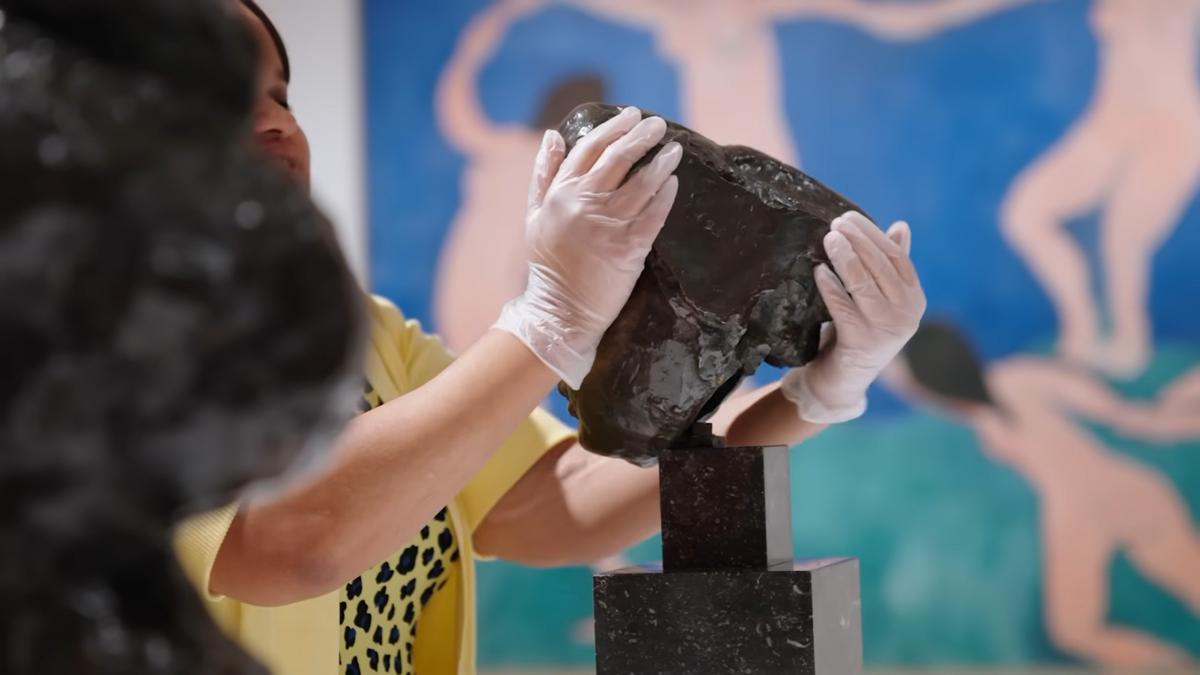
Yoko Ono’s painting invites us to step on it, challenging both galleries and audiences. Why is touch transgressive? - by Aeon Video Watch on Aeon
"GRESSIVE" · 총 485건
필터 보기현재 지수
49.4
0 = 부정 우세
50 = 중립
100 = 긍정 우세
최근 7일 기준 84,907건을 분석한 결과, 뉴스 심리지수는 49.4(균형)입니다. 긍정 10,424건(12.3%)·중립 61,240건(72.1%)·부정 13,243건(15.6%)이며, 중립 비중이 뚜렷하게 높습니다. 성향 지수는 종합 21.4(보수 경향)입니다.
Yoko Ono’s painting invites us to step on it, challenging both galleries and audiences. Why is touch transgressive? - by Aeon Video Watch on Aeon
British progressives were scandalized last week when 5Pillars, a prominent Muslim news organization known for supporting the U.K. Green Party, published a homophobic “guide” on navigating Pride month. The incident laid bare the intellectual and moral incoherence of Islamo-left alliance, providing a useful case study for Canadians who feel anxious about Muslim-led intolerance. The short “practical” […]
The Interior Department is cutting 43 partnerships and over $4 million in funding for groups tied to DEI, environmental justice and immigration.

The Trump administration on Wednesday aggressively framed New York City’s Penn Station overhaul as a signature example of President Donald Trump using federal intervention to revive stalled infrastructure projects, arguing the long-delayed redevelopment effort only gained momentum after Washington stepped in and took control from local transit agencies. The renewed messaging push came days after […]

This bill is the logical result of a progressive drive to re-engineer language and reality — and to foster greater dependency on government by eroding strong families.

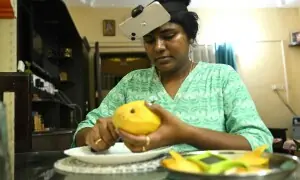
With a smartphone strapped to her head, Indian housewife Nagireddy Sriramyachandra films herself slicing mangoes to train AI-powered robots to take on household jobs in the future. Earning just over two dollars for an hour of video, her mundane recordings are invaluable for global tech companies teaching machines how to move like humans in the real world. The 25-year-old is one of a growing army of thousands of AI system trainers in the world’s most populous country. “Who else will give you 250 rupees an hour just for doing housework?” said Sriramyachandra from her kitchen in Chennai in southern India’s Tamil Nadu state. “I may get a robot myself in the future,” she added. This photograph taken on May 15, 2026 shows an Indian housewife Nagireddy Sriramyachandra wearing a smartphone on her head as she records her actions through motion capture while slicing mangoes at her home in Chennai. — AFP Artificial intelligence chatbots and image generators crunch reams of digital data, but building systems to navigate real-life environments is more challenging. Developers think feeding first-person footage, called “egocentric data”, into specialised AI models will help robots copy humans. Some AI trainers work at home, others in factories or specialised studios — using video glasses, head-mounted cameras and motion sensors. “It blares ‘hands not detected’ when I’m not recording properly,” said Sriramyachandra, who sends recordings via a special app to the AI data company Objectways. This photograph taken on May 13, 2026 shows a worker (R) wearing a RGB camera on her head recording actions through motion capture while arranging colored blocks at AI data company Objectways’ office in Tamil Nadu’s Karur district. — AFP The firm, which has offices in India and the United States, lists Fortune 500 multinationals as clients. It works with Amazon SageMaker, a platform for machine learning models. ‘Better things’ The humanoid robot market is booming, with investment bank Morgan Stanley predicting there could be over a billion in use by 2050, mostly for industrial and commercial purposes. “Folding clothes, coffee making… cooking a very specific thing, sandwich making,” Objectways head Ravi Shankar said, listing videos requested by clients. “Some jobs are supposed to be taken over, so humans can go and do better things.” In India, the emerging field of spatial AI is providing new employment — for now. This photograph taken on May 13, 2026 shows a worker wearing a GoPro camera on his head recording actions through motion capture while folding towels inside a model bathroom at AI data company Objectways’ office in Tamil Nadu’s Karur district. — AFP The 50-year-old CEO is US-based, but hires workers from Tamil Nadu, where he grew up, one of India’s international technology hubs. At a Karur textile factory, busy with workers attaching labels to caps and ironing cloth bags, AFP saw eight people wearing head cameras and smart glasses supplied by Objectways. India has positioned itself as a global middleman for the creation, processing and annotation of AI data. “It’s likely that these data collection services will increase”, said digital labour expert Aditi Surie, from the Indian Institute for Human Settlements in Bengaluru. Informal workers India is aggressively developing its AI industry, but its leaders are aware that, alongside the technology’s much-hyped benefits, automation poses risks. Government think-tank NITI Aayog said that most discussions around artificial intelligence and labour “focus on white-collar professionals and predict an almost certain loss of jobs in the segment” without urgent action. “Little attention, if any, is paid to how AI can serve India’s 490 million informal workers, the very people who form the backbone of our economy,” it said in a report released ahead of a global AI summit in India this year. The think-tank has examined how the technology could help or harm dozens of professions — from cobblers to sewer cleaners, farmers to tea sellers. For the last decade, 55-year-old Ponni has sat on a roadside in Bengaluru, the city known as India’s Silicon Valley, making flower garlands. She, too, has been paid to have a phone strapped to her forehead. “The next generation… who might have to do work similar to mine — they will face a problem,” Ponni said. Always wearing a camera At an Objectways studio, AI system trainers film themselves performing household tasks in fake, fully furnished apartment rooms. After several thousand hours of filming, the wallpaper is changed to provide clients with variety. “Today I sit here, tomorrow I stand there,” said engineering graduate Rani N., 21, on a break from filming herself, once again, folding a towel. Each video lasts about four minutes, and she records around 90 a day — on nearly every conceivable spot on the bed. She says the job is “tolerable”, but feels like she’s always wearing a camera. This photograph taken on May 15, 2026 shows an Indian housewife Nagireddy Sriramyachandra wearing a smartphone on her head as she records her actions through motion capture while washing dishes at her home in Chennai. — AFP In other rooms, colleagues arranged pencil sharpeners, water bottles and crayons in patterns, recording with depth-sensor cameras. Qanat Consulting Services in Andhra Pradesh, an Objectways subcontractor, supplies about a dozen larger data firms with recordings. Some of its 2,000 contributors perform tasks with motion-sensor bands on their “wrists, hands and legs”, CEO Thaslim Pattan said. Manish Agarwal of Bengaluru-based Humyn Labs, not related to Objectways, records conversations as well as videos. Contributors discuss assigned topics — ranging from politics to entertainment — for clients wanting to process speech patterns. Agarwal denies that robots will steal jobs, believing that networks of humans and robots “will work together” one day, he said. “A welder in India could be managing a welder-robot in Prague,” he said.
Looking for the best Canadian rock bands? Explore legendary groups that have shaped modern music through progressive rock, indie, and hard rock hits.

Randy Villegas, a populist insurgent, has won the Democratic primary for a House seat representing California’s Central Valley
Bayan Baru MP Sim Tze Tzin says the contest is generally between two blocs of voters: the conservatives and the progressives.

• Overall development outlay slashed by 25pc to Rs3.218tr • Federal PSDP reduced to Rs1tr, provincial ADPs to Rs2.218tr • No new projects except for interior, defence ministries • PM says strengthening defence is country’s biggest challenge • Ahsan says Pakistan lagged behind region due to weak investment in education, skills ISLAMABAD: Freezing provincial development plans at their actual utilisation this year, the National Economic Council (NEC) on Wednesday cut the federal and provincial development budget by one-fourth to Rs3.218 trillion for the next fiscal year from Rs4.264tr cleared by the Annual Plan Coordination Committee (APCC) last week. Of the Rs1.046tr total cut, the combined annual development plans (ADPs) of the four provinces were slashed by almost one-third (29.3pc) to Rs2.218tr — roughly their actual utilisation so far in the current fiscal year — compared to the Rs3.138tr provincial portfolio finalised by the APCC on June 1. Punjab’s development plan was chopped by almost half, or 49pc, the biggest cut among all stakeholders, while Balochistan remained unaffected and actually secured more. The development freeze was agreed upon by the major coalition partners — the PPP and PML-N — before the NEC and budget dates were finalised. To provide political face-saving to provincial governments, the federal government also agreed to bring down its Public Sector Development Programme (PSDP) by Rs126bn, or 11pc, to Rs1tr from Rs1.126tr recommended by the APCC, Planning Minister Ahsan Iqbal told reporters after the NEC meeting. The meeting was presided over by Prime Minister Shehbaz Sharif and attended by three provincial chief ministers. Punjab Chief Minister Maryam Nawaz could not attend because of her recent surgery. The minister said provincial governments had argued that it would be difficult for them to defend ADP cuts if the Centre’s PSDP remained intact. Mr Iqbal said the Punjab chief minister had authorised the downward revision that restricted Punjab’s ADP for next year to Rs749bn from Rs1.455tr cleared by the APCC only a week ago. Coalition partner PPP was able to minimise the dent to Sindh’s ADP, which was contained at Rs706bn for next year — down 13.5pc, or Rs110bn — from last week’s Rs816bn, which was already lower than the current year’s revised ADP of Rs845bn. Khyber Pakhtunkhwa Chief Minister Sohail Afridi agreed to a revised ADP of Rs455bn — exactly the same as budgeted this year — instead of Rs564bn cleared by the APCC. Balochistan was the only province to retain its Rs308bn development programme for next year, almost Rs29bn higher than the amount budgeted for the current fiscal year. The separate development plans of federal state-owned entities remained unchanged at Rs451bn, putting the consolidated national development outlay at Rs3.669tr, down 22.2pc, or Rs1.046tr, from Rs4.715tr announced after the APCC meeting last week. The APCC is a forum of federal and provincial planning ministers that finalises development recommendations for the NEC’s approval. Informed sources said that with reappropriation of the development portfolio, around Rs800bn to Rs900bn could be repurposed for strategic needs such as water resources and national security. Responding to a question, the planning minister said the development programme would contain “no new project except for the ministries of interior and defence” and noted that the actual size of savings would depend on many variables, including actual tax collections and how these savings became available. For example, he said, the Diamer-Bhasha dam alone required Rs170bn but had been allocated Rs20bn. Total allocations for the water sector amounted to Rs103bn, he said. Strengthening defence Meanwhile, in a televised statement, Prime Minister Shehbaz Sharif said the “biggest challenge” the country faced was “to strengthen our defence”, particularly against terrorism. “The entire nation, especially KP and Balochistan, as well as the law enforcement agencies and armed forces, is making sacrifices in the fight against terrorism,” he said, adding that terrorism could only be eliminated if the country “put up a collective struggle against it”. The prime minister said the Centre and provinces had taken many decisions in the best interest of Pakistan, as consultations with the provinces on all matters were conducted with seriousness to see where more resources could be generated. PM Shehbaz said he had held a telephonic conversation with IMF Managing Director Kristalina Georgieva, who was extremely appreciative of Pakistan’s sincere efforts towards the IMF programme. He said that despite major challenges, Pakistan had achieved macroeconomic stability, but injecting growth was an extremely important process. “Advancing employment, production, exports and economic activity is our collective responsibility,” he said, adding that all governments had tried their best to stay on track with the IMF programme despite “some difficult stages”. Apparently hinting at the budget later this week, the prime minister stressed the need to inject incentives aimed at export growth and manufacturing capabilities into the economy to accelerate GDP growth. He noted that a common man would not concern himself with “macro-level stability” but wanted better employment opportunities, development in agricultural and industrial sectors, and growth in exports. ‘Development deficit’ Mr Iqbal said the NEC agreed that the time had come for the entire nation and all stakeholders to sit together and work for export growth to $100bn in a few years, as well as import substitution, like the country had worked for its nuclear mission. The huddle agreed to his suggestion for quarterly NEC meetings to review and make adjustments by reviving the council’s original mandate of coordinating financial, social and economic policies, as required under Article 156 of the Constitution, to overcome the “development deficit”. He said the NEC had turned over the years into a forum that merely stamped the development budget, although it was required under the Constitution to review the overall economic condition and advise both the Centre and the provinces in formulating plans “in respect of financial, commercial, social and economic policies” to ensure balanced development and regional equity. As a consequence, Pakistan had lagged behind regional competitors, he said. In the early 1990s, Pakistan, India, China and Bangladesh had almost similar per capita incomes — between $324 and $363 — but Pakistan fell behind, with its current per capita income at just $1,824 compared to $2,675 in India, $2,653 in Bangladesh and $14,000 in China, while Vietnam moved from $99 to $5,026 per capita. This was mainly because others invested aggressively in education, skills, population control, female workforce participation and export competitiveness, while Pakistan did not, he said. No country could deliver economic outcomes with 2.5pc population growth and less than 64pc literacy rate, Mr Iqbal said, adding that youth potential was being lost in Pakistan and inequality was rising. “How can we have development while spending 74pc of revenues on debt servicing?” he asked. The meeting decided to focus on public-private partnership in development at the next NEC meeting and on freeing the business environment of regulatory sludge. He said bureaucracy would be reoriented towards economic delivery from its existing role of maintaining law and order and revenue collection. He said the prime minister had approved 11 economic missions and directed the finalisation of key performance indicators in consultation with all stakeholders. Despite downward reductions in the development portfolio by almost a quarter, the minister said next year’s GDP growth target would stay at 4pc, to be aided by 3.6pc growth in agriculture, 4.5pc in industry and 4.2pc in services. Inflation, measured by the Consumer Price Index, was estimated at 8.2pc. The Rs1tr federal PSDP will also contain foreign assistance equivalent to Rs255bn, while the provincial Rs2.218tr portfolio will include Rs583bn in foreign aid, taking total foreign funding to Rs838bn — or 26pc of the total Rs3.218tr development outlay. Giving a break-up, the minister said the PSDP contained Rs602.5bn for infrastructure, including Rs116bn for energy, Rs76bn for water, Rs356bn for transport and communication and Rs55bn for physical planning and housing. Another Rs181bn has been earmarked for the social sector, including Rs74bn for education and higher education, Rs22bn for health, Rs63bn for MNA schemes and Rs21bn for other social sectors. Likewise, Rs63bn has been allocated for coalition partners’ schemes. In addition, Rs89bn has been set aside for special areas, including AJK and GB, Rs56bn for the merged districts of KP, Rs41bn for science and technology and Rs13bn for governance. Another Rs12.6bn would be used for production sectors, including Rs4.6bn for food and agriculture and Rs8bn for industries, while the remaining Rs5bn has been allocated for miscellaneous areas. Published in Dawn, June 11th, 2026

Dans son dernier ouvrage, le philosophe analyse les «Régressions» à l’œuvre dans les sociétés démocratiques.
Some of America’s largest cities are now being governed by progressives. What will we learn?
Senate Democrats want their party to offer the Ken Paxton treatment to Graham Platner after clinching Maine’s Democratic nomination for Senate. Hungry to oust longtime centrist Sen. Susan Collins (R-ME), early supporters of the embattled progressive candidate say it’s time their colleagues drop lingering skepticism over personal baggage to embrace the party’s best chance at […]

By Shina Abubakar, Osogbo The All Progressives Congress (APC) in Osun State has dismissed claims that President Bola Tinubu endorsed Governor Ademola Adeleke for a second term, insisting that the President’s support is solely for the party’s governorship candidate, Asiwaju Munirudeen Bola Oyebamiji. Speaking with journalists at the Ileri-Oluwa Campaign Office in Osogbo on Tuesday, […] The post Osun 2026: Tinubu endorses Oyebamiji, not Adeleke, says APC appeared first on Vanguard News.
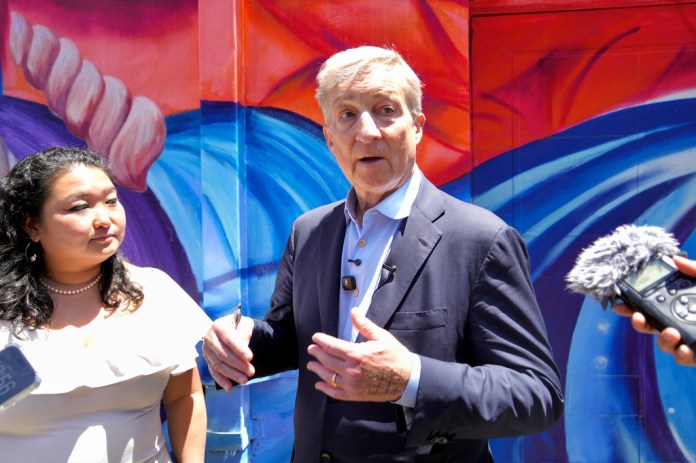
Progressive Democrats will rant and rave about how billionaires are buying elections. The fact that voters keep rejecting Tom Steyer should put an end to that belief, as well as Steyer’s belief that anyone wants to see him run anything. On Tuesday, Steyer conceded that he would not be advancing to the top two runoff […]
In a stunning turn of events, the Los Angeles mayoral race took a new twist as progressive Nithya Raman eclipsed Republican Spencer Pratt during vote tallying. MAGA supporters quickly raised alarm bells, claiming irregularities in the election process, despite experts pointing to California's notoriously sluggish mail-in ballot counting.

Graham Platner, the rugged oyster farmer positioning himself as a progressive populist, won Maine’s Democratic Senate Primary on Tuesday, earning more than 70 percent of the vote so far. He is now slated to face incumbent Republican Senator Susan Collins in the November general election. By some measures, the outcome was long-expected, since Governor Janet […]

The grand jury transcripts from the “Broadview Six” case, in which the federal government tried to charge six Chicagoans with felony conspiracy for their participation in an anti-ICE protest, were released this week, offering a rare look inside an aggressive federal prosecution. The Broadview case collapsed in late May amid prosecutorial-misconduct allegations, a month after […]
President Donald Trump’s latest monument in Washington would need crews working every day in two 10-hour shifts if it is to be erected within three years, National Park Service plans reveal

President Trump ripped into Maine Democratic Senate candidate Graham Platner on Wednesday, calling him a “low-level thug." "He's worse than any human being that's ever run for office probably," the president said. Platner, a progressive oyster farmer, easily won the Democratic primary on Tuesday to become the party's candidate to face incumbent Republican Susan Collins....
