Egypt's delicate balancing act in the Iran war
Cairo faces criticism from its Gulf allies that support against Iran has been lacking. But Egypt's priority is to shield its fragile economy from the fallout of a widening conflict.
"DELICATE" · 총 48건
필터 보기현재 지수
49.4
0 = 부정 우세
50 = 중립
100 = 긍정 우세
최근 7일 기준 91,904건을 분석한 결과, 뉴스 심리지수는 49.4(균형)입니다. 긍정 11,089건(12.1%)·중립 66,473건(72.3%)·부정 14,342건(15.6%)이며, 중립 비중이 뚜렷하게 높습니다. 성향 지수는 종합 20.9(보수 경향)입니다.
Cairo faces criticism from its Gulf allies that support against Iran has been lacking. But Egypt's priority is to shield its fragile economy from the fallout of a widening conflict.
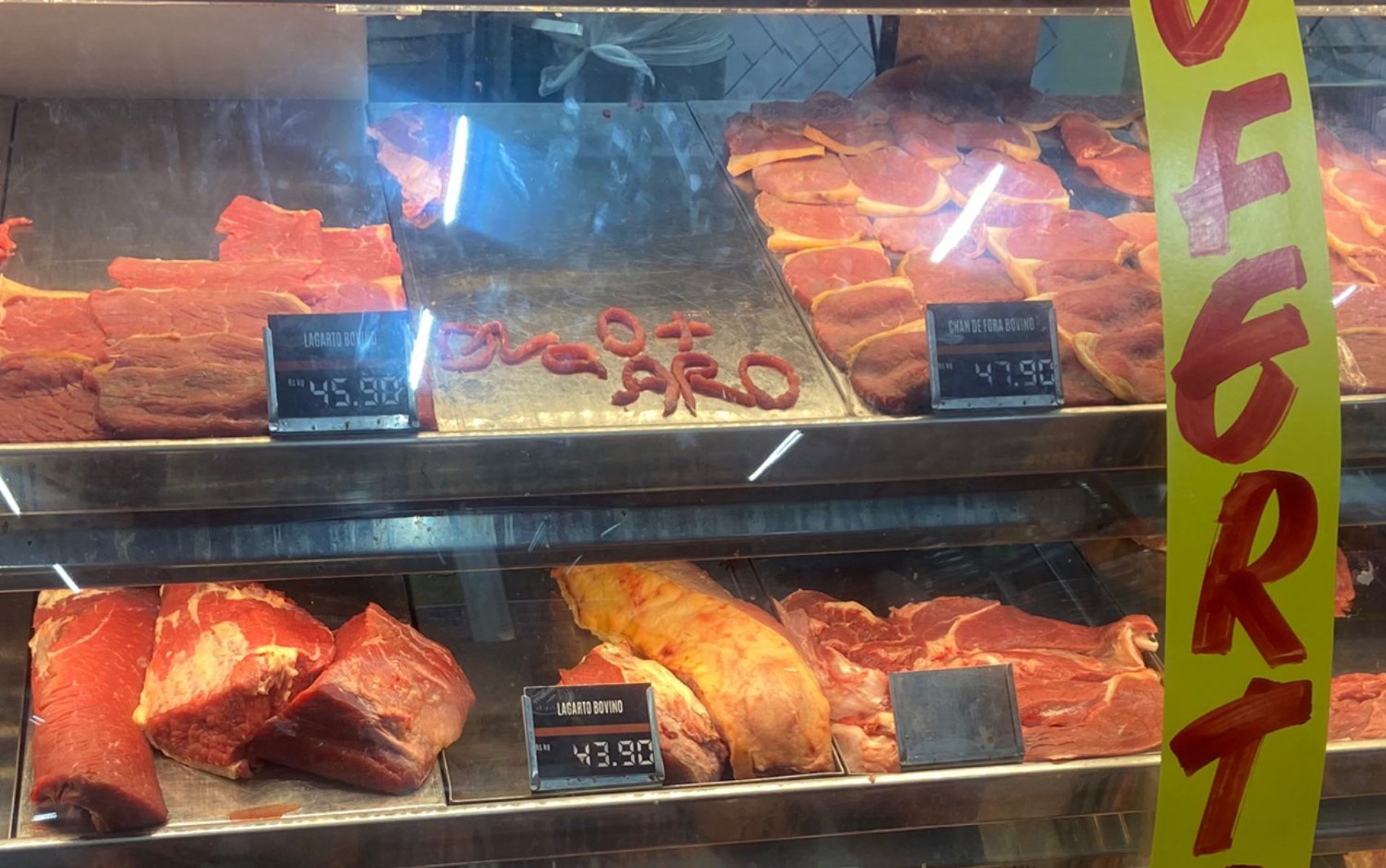
Estabelecimentos comerciais são obrigados a moer o produto na presença do comprador e no ato da compra Divulgação | Procon Um estabelecimento atacadista localizado na Avenida Eduardo Fróes da Mota, em Feira de Santana, segunda maior cidade da Bahia, foi autuado pelo Procon após ser flagrado moendo carne antecipadamente para venda aos consumidores. A ação ocorreu na terça-feira (9), durante uma fiscalização motivada por denúncias. Segundo o órgão, os fiscais encontraram carne sendo moída durante a noite para ser comercializada no dia seguinte, prática que contraria a Lei Municipal nº 366/2021, conhecida como “Lei da Carne Moída”. 📲 Clique aqui e entre no grupo do WhatsApp do g1 Feira de Santana e região A legislação determina que a carne deve ser moída na presença do consumidor e no momento da compra. A norma também proíbe a mistura de diferentes tipos de carne, a raspagem de ossos e a cobrança de qualquer valor adicional pelo serviço. Atacadista foi autuado por moer carne antecipadamente Divulgação | Procon De acordo com o superintendente do Procon, Maurício Carvalho, a exigência busca garantir mais transparência e segurança ao consumidor. “A lei estabelece que o produto deve ser preparado na presença do consumidor para que ele possa identificar o tipo de carne, avaliar as condições de armazenamento e verificar a procedência do alimento”, afirmou. Agora no g1 Ainda segundo o órgão, foi lavrado um auto de constatação e aberto um processo administrativo para apurar a irregularidade. O Procon orienta que consumidores denunciem possíveis infrações por meio do aplicativo Fala Feira, pelo telefone 156 ou diretamente na sede do órgão, localizada no centro da cidade. Atacadista é autuado por moer carne antes da compra em Feira de Santana Divulgação | Procon LEIA MAIS: Distribuidora de cosméticos é interditada após denúncia em Feira de Santana Sujeira nas paredes e panelas sem higiene: veja o que levou Vigilância Sanitária a interditar delicatessen na Bahia Cozinha industrial é interditada pela Vigilância Sanitária em Feira de Santana Veja mais notícias de Feira de Santana e região. Assista aos vídeos do g1 e TV Subaé 💻

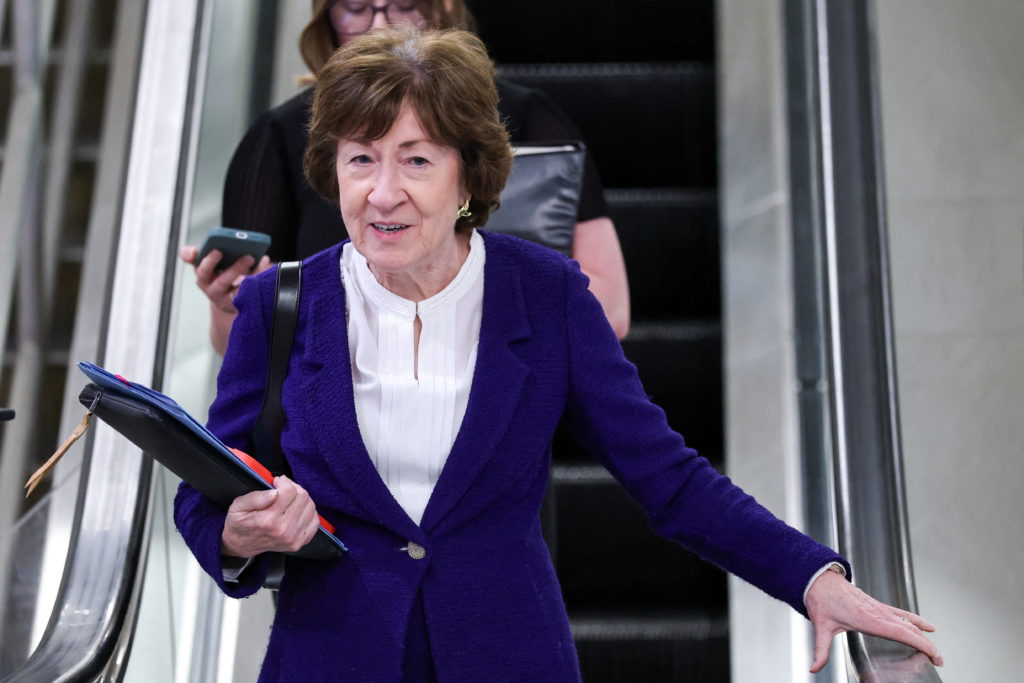
She is the rare Republican who sometimes can boost her own popularity back home by keeping her distance from President Donald Trump, and she has perfected that delicate dance even as his tightening grip on the party has cost two of her Senate Republican colleagues their reelection.

WASHINGTON: The United States on Monday added Chinese e-commerce giant Alibaba, internet search provider Baidu, and automakers BYD and NIO to a list of companies it believes are aiding Beijing’s military, in a move that could inflame tensions between the countries. The long-awaited update supersedes a list from early 2025, and comes less than a month after US President Donald Trump met China’s Xi Jinping on a visit to Beijing, where the two leaders maintained a delicate trade war truce. China’s foreign ministry said on Tuesday that the list was discriminatory and “unreasonably suppressed” Chinese companies, urging the US to “correct its mistaken practices.” The list now includes a broad swathe of China’s top technology firms key to advancing Beijing’s military and industrial prowess, reflecting Washington’s security concerns amid intense geopolitical competition between the countries. Beijing terms move ‘discriminatory’ and ‘unreasonably suppressed’ In February, when Trump’s trip to China had been pending, the Pentagon briefly posted an updated list, known as the 1260H or CMC list, but then quickly withdrew it with little explanation. The new version released on Monday mirrors the withdrawn February list with the exception of the inclusion of China’s top memory chipmakers CXMT and YMTC, two companies that had been removed from the short-lived February index to the ire of Washington’s China hawks. YMTC said that it was deeply disappointed by the inclusion and that “despite years of engagement with US authorities, efforts to address concerns, and a demonstrated commitment to compliance,” the chipmaker continued to face various forms of sanctions “likely driven by anticompetitive motive rather than national security concerns.” Other companies added include biotech firm WuXi AppTec , AI-driven robotics company RoboSense Technology Co Ltd and Unitree, a leading Chinese maker of humanoid and quadruped robots. On June 1, US AI chipmaker Nvidia said it plans to work with Unitree to build robots for researchers. Though the list does not formally impose sanctions on Chinese firms, under recent US law the Defence Department will be prohibited starting later this month from contracting directly with companies on the list, and from buying their products or services via third parties beginning in 2027. Those measures could have material costs for the Chinese firms and their partners. Published in Dawn, June 10th, 2026
Mazri Mohamed has spent more than 40 years preserving the delicate art of traditional woodcarving.

This article is brought to you by AGILINK. Throughout the exhibition hall at the 2026 IEEE International Conference on Robotics (ICRA), in Vienna, one demonstration seemed to attract a disproportionate amount of attention. Two robotic hands were making a balloon dog. Slowly and deliberately, the robot twisted a long balloon into loops, bends, and joints without popping it. Visitors stopped, watched, and often returned with colleagues to watch again. AGILINK’s balloon dog demonstration draws a crowd at ICRA 2026.AGILINK At first glance, the demonstration appeared almost playful. Among roboticists, however, balloon twisting is widely recognized as an unusually difficult manipulation task. A balloon is lightweight, highly deformable, slippery, and extremely sensitive to force. Every twist changes its geometry and internal pressure, turning a seemingly simple activity into a continuously changing physical interaction problem. Humans navigate those changes almost intuitively. While making a balloon animal, people rarely think consciously about force regulation, slip prevention, or contact stability. They simply adjust. For robots, those adjustments remain remarkably difficult. The challenge is not merely moving fingers to the right positions. The harder part is maintaining stable interaction while the object itself is changing. Highlights from AGILINK’s ICRA 2026 demonstrations, including visuotactile sensing, in-hand manipulation, balloon-animal shaping, and other contact-rich tasks enabled by the company’s latest OmniHand platform.AGILINK That distinction helps explain why the balloon dog drew so much attention in Vienna. What appeared to be a dexterity demonstration was, in many ways, a demonstration about contact itself. As robotic manipulation continues to advance, a growing number of researchers are arriving at a similar conclusion: many of the hardest problems in robotics begin only after contact occurs. Motion and Contact Intelligence for Robot Manipulation Balloon twisting combines two challenges that robotics has traditionally struggled to solve simultaneously: long-horizon task execution and contact-rich manipulation. The first concerns motion. A balloon dog is not created through a single grasp or twist. It emerges through a carefully ordered sequence of manipulations, each setting the conditions for what follows. A small rotational error introduced early may appear insignificant at first, yet several steps later it can prevent the final structure from forming altogether. In that sense, balloon twisting is a long-horizon task. Success depends not only on performing individual actions correctly, but also on preserving the future feasibility of the entire manipulation process. To address this challenge, AGILINK began by collecting demonstrations from professional balloon artists. Human actions were mapped onto robotic hands to establish an initial manipulation policy. But successful demonstrations alone were insufficient. In practice, some of the most valuable learning occurred when execution began to drift toward failure. Whenever instability emerged, human operators intervened and corrected the manipulation in real time. Those interventions were recorded and incorporated into reinforcement-learning cycles, allowing the system to learn not only how successful demonstrations unfold, but also how experienced operators recover when things start to go wrong. Through this process, the robot gradually acquired the capabilities required for long-horizon task execution—a collection of abilities that AGILINK groups under the term motion intelligence: the ability to generate actions, coordinate bimanual behaviors, and execute extended manipulation sequences under real-world uncertainty. OmniHand 3 Ultra-M on display at ICRA 2026.AGILINK Yet motion alone does not explain why balloon twisting remains difficult. The second challenge is contact. The robot must continuously regulate force, adjust contact locations, and respond to subtle changes in the object’s state. These decisions are difficult to encode through explicit rules. Even skilled human operators often rely on tactile intuition developed through experience rather than consciously articulated strategies. Analysis of those interventions revealed that many failures did not originate from incorrect action sequences, but from the breakdown of contact itself. To better capture those interaction dynamics, AGILINK collected contact-centric intervention data and incorporated those interactions into reinforcement-learning training. Rather than learning only which motions to perform, the system also learned how humans maintain stability when contact conditions begin to deteriorate. AGILINK describes this capability as contact intelligence: the ability to establish, maintain, and adapt physical interaction as force distribution, friction, deformation, and contact geometry continuously evolve. The distinction between the two capabilities is subtle but important. Motion intelligence determines what the robot intends to do. Contact intelligence determines whether it can continue doing it. For balloon twisting, both are necessary. One provides the sequence of actions. The other keeps those actions physically viable. YouTuber KhanFlicks follows OmniHand’s motions while learning to fold a balloon dog at the AGILINK booth.AGILINK Between a balloon slipping away and a balloon bursting lies a narrow region of stability. Successful manipulation depends on finding that region—and remaining within it throughout the task. Introducing the OmniHand 3 Ultra-M Dexterous Hand The balloon dog demonstration showcased a manipulation capability. It also revealed a broader question. How much contact intelligence can be achieved through learning alone? A robot can only regulate what it can perceive. It can only respond as quickly as its hardware allows. As manipulation tasks become increasingly complex, researchers are finding that progress depends not only on better policies, but also on richer sensing and faster physical response. That realization formed the backdrop for AGILINK’s second major announcement at ICRA 2026. Alongside the balloon dog demonstration, the company introduced the OmniHand 3 Ultra-M. OmniHand 3 Ultra-M closely matches the size of an adult human hand.AGILINK The two exhibits represented different stages of the same technological trajectory. If the balloon dog demonstrated what contact intelligence can already accomplish today, Ultra-M was designed to explore what contact intelligence may require next. Building Hardware for Contact Intelligence Roughly the size of an adult human hand, the OmniHand 3 Ultra-M integrates 20 active degrees of freedom within a human-scale form factor. Its most distinctive feature is a fully direct-drive architecture. By adopting direct-drive actuation throughout the system, the hand is designed to enable faster and more transparent force regulation and higher force-control bandwidth, enabling faster response as contact conditions change. For contact-rich manipulation, responsiveness can be as important as sensing itself. By adopting direct-drive actuation throughout the system, the OmniHand 3 Ultra-M is designed to enable faster and more transparent force regulation and higher force-control bandwidth, enabling faster response as contact conditions change. The platform also incorporates tactile sensing across nearly the entire hand. Each fingertip contains a miniature vision-based tactile sensor, while more than 300 three-dimensional tactile sensing points are distributed throughout the palm. Together, they provide information not only about where contact occurs, but how contact is evolving. The system is designed to estimate pressure distribution, shear forces, local deformation, slip tendencies, and other interaction dynamics that often remain invisible to conventional position-based control systems. According to AGILINK’s tests, individual sensors achieve force resolution of approximately 0.005 N—roughly equivalent to detecting the weight of a sheet of paper resting on a fingertip. Spatial resolution reaches approximately 0.04 mm, while sensing density approaches 50,000 sensing points per square centimeter. OmniHand 3 Ultra-M recognizes feather texture through vision-based tactile sensing.AGILINK For dexterous robots, contact has traditionally been a largely hidden process. Ultra-M is designed to make that process more observable. Rather than simply detecting that contact has occurred, the system attempts to resolve where interaction is happening, how forces are distributed, whether instability is beginning to emerge, and how manipulation strategies should adapt in response. The balloon dog offered a glimpse of what contact intelligence can already accomplish. Ultra-M explores a different question: what capabilities may be required to push contact intelligence further? The Physical World Remains the Hardest Benchmark The significance of contact intelligence extends far beyond balloon animals. Many tasks that continue to resist automation involve unstable or deformable interaction: cable insertion, garment handling, flexible packaging, delicate assembly, connector mating, tool use, and household manipulation. These tasks are difficult not because robots cannot reach the correct location, but because maintaining stable interaction after contact begins remains extraordinarily hard. For decades, robotics achieved many of its successes by reducing uncertainty. Factories were engineered to make robotic motion predictable, repeatable, and highly structured. The physical world behaves differently. A growing share of robotics research is shifting toward interaction itself—understanding how robots can establish, maintain, and adapt physical contact within environments that remain fundamentally unpredictable. Objects shift. Materials deform. Friction changes. Contact evolves. Real environments rarely follow scripts. Seen through that lens, the balloon dog was never really about the balloon dog. What attracted attention at ICRA was not simply a visually impressive demonstration, but what it revealed: intelligence in the physical world is ultimately measured through interaction. As motion generation continues to mature, a growing share of robotics research is shifting toward interaction itself—understanding how robots can establish, maintain, and adapt physical contact within environments that remain fundamentally unpredictable. For robots moving beyond structured environments and into less predictable real-world settings, managing contact may become as important as motion itself.

Updated Pentagon list includes swathe of China’s top technology firms in move that could inflame tensions between the countries The US added Chinese e-commerce company Alibaba, internet search provider Baidu and carmaker BYD to a list of companies it believes are aiding Beijing’s military, in a move that could inflame tensions between the countries. The long-awaited update released on Monday supersedes a list from early 2025, and comes less than a month after Donald Trump met China’s Xi Jinping on a visit to Beijing, where the two leaders maintained a delicate trade war truce. Continue reading...
MATTERS have worsened in the stand-off between the Azad Kashmir government and the Joint Awami Action Committee, which has recently been proscribed by the regional administration. The situation started deteriorating after a trader affiliated with the JAAC was reportedly shot in an altercation with law-enforcers on Saturday. The following day protesters and LEAs clashed outside a Rawalakot hospital where the victim’s body was brought, resulting in the deaths of at least four policemen and seven protesters. This unfortunate series of events echoes similar confrontations between the AJK government and JAAC over the past few years, where dialogue over protesters’ demands has alternated with deadly violence. The region is particularly on edge as the JAAC has called for a major strike today. With the proscription of the group and the deaths in clashes with the administration, emotions are high all round and better sense is required across the board to prevent the situation from deteriorating further. At the core of the dilemma is the JAAC’s call for abolition of refugee seats for those who left India-occupied Kashmir and settled in AJK. Indeed, the AJK government’s banning of the JAAC has not helped matters, and has only raised the temperature. To prevent further confrontation, the AJK government should reconsider the ban, though investigations are required into the killing of the policemen and the deaths of the protesters. This paper has argued that bans targeting popular movements are undemocratic, and have, throughout history, failed to suppress dissenting voices. At the other end, the JAAC, too, should take a less hard-line position. While the group had earlier called for civic and governance reforms, it is now demanding constitutional changes, such as the abolition of refugee seats. These delicate constitutional matters must be decided in the House, after thorough debate by all sides. In fact, as the AJK Supreme Court has said in its opinion on a reference sent to it by the region’s president regarding the refugee seats, constitutional changes can only be achieved “by an assembly possessed of the full democratic mandate of the people, after deliberation” and cannot be “wrested from a government under duress”. Therefore, both sides need to de-escalate. The authorities should reconsider the JAAC ban, while JAAC supporters must keep all protest peaceful, and take their demand for constitutional change to the AJK legislature. Published in Dawn, June 9th, 2026
US President Trump announced in Wisconsin that the Iran war is “largely finished.” He explained that his goal is to prevent Iran from getting a nuclear weapon and “the situation with Iran seems to be going quite well”. President Trump also said that he would be honoured to meet the Iranian Supreme leader if the US and Iran can make a deal. Despite occasional skirmishes and ambivalent Iranian signals, the optimism expressed by the US President indicates Washington hopes to eventually achieve enduring peace. This would not have been possible without the pivotal role played by Pakistan and Field Marshal Asim Munir in navigating the delicate peace process, despite landmines being laid throughout the process and across the region to sabotage it. Pakistan has played the leading role throughout this precarious peace process that faces complex challenges. For 47 years, the US viewed Iran as a threat to its regional interests and employed coercive diplomacy and economic sanctions to dissuade Tehran from pursuing its nuclear programme and supported political activists opposed to the Iranian political system. However, two direct and major US and Israeli attacks within one year on Iran during Trump administration caused major damage to its infrastructure, killing thousands of people, including decapitation strikes on Tehran’s ideological, political, intelligence and military leadership. Although the Iranian political and security system seems to have absorbed these lethal attacks, it has also created a new security dynamic which poses more challenges to the diplomatic progress. Western military strategy traditionally assumes that decapitation of top political and military leadership can damage the political will of the adversary to wage war which can bring about a quick and decisive victory and help avoid a long and costly war of attrition. This approach seemed to work during World War II against Adolf Hitler, and later against the regimes of Saddam Husain, Muammar Qadhafi and Bashar al-Assad. Field Marshal Munir is the only international figure who has made two visits to Iran at the height of the crisis to persuade its political, military and diplomatic leadership, facilitate an enduring ceasefire and encourage progress on complex contentious issues However, these were totalitarian regimes whose political system collapsed as soon as their central figurehead was removed. This was not the case in Iran where the loss of top ideological, political and military leadership was a major shock to the nation but didn’t disturb Tehran’s political system or its military strategy. Iran has deliberately expanded both the theatre of conflict and the diplomatic chessboard. This has led the talks agenda to shift and expand beyond the Iranian nuclear programme to also include the opening of the Strait of Hormuz, enduring ceasefire in Lebanon and sanctions relief on Tehran’s frozen financial assets. Moreover, the decapitation of Iranian ideological, political and military leadership removed the most charismatic and experienced diplomatic figures, most notably Ayatollah Ali Khamenei and Ali Larijani, who have a track record of negotiating with the US. This has shifted power within Iran towards individuals who have not only more military experience of campaigns in Syria than diplomatic know-how, but also have a far deeper distrust of the US than their more seasoned predecessors –the first Trump administration unilaterally quit the Joint Comprehensive Plan of Action (JCPOA), while his second term saw the elimination of Tehran’s national leadership. These attacks have deepened Iranian distrust, which has also hardened Tehran’s stance. This makes diplomatic progress not only more difficult, but has made Pakistan’s role more critical and necessary for the success of this complex and delicate peace process. Field Marshal Asim Munir was the only international figure to make two visits to Iran at the height of the Middle East crisis, to persuade Iranian political, military and diplomatic leadership, facilitate an enduring ceasefire and encourage progress on complex contentious issues. Despite pitfalls, Pakistan remains in a unique position to continue to steer this peace process because it simultaneously enjoys trust by both the US and Iran. This was made possible because Pakistan assured Iran that its territory and airspace will not be used for attacks on Iran, Islamabad condemned the attacks on Iran, as well as attacks on the civilian infrastructure of Saudi Arabia and other Gulf states as a violation of international law. But most importantly, Field Marshal Munir secured President Trump’s security commitment that Iranian leadership will no longer be targeted. Without this vital security guarantee, there was no chance for the peace process to begin. Each social media post and statement by President Trump that expresses hope for a lasting ceasefire and resolution of other issues has helped de-escalate hostilities and eased global oil prices, which currently reflect unprecedented damage to the world energy and economic security. The fruits of Pakistan’s leading role and painstaking efforts as a ‘net regional stabiliser’ are being acknowledged, appreciated and enjoyed around the world. The final outcome of this peace process may take time but history will remember that it was only Pakistan that rose to the occasion to help end a major conflict, save precious lives and end the suffering of humanity, particularly the poor people around the world, when the international community had lost its trust and hope from international law and institutions for protecting regional peace, security and stability. The writer is an Islamabad-based security analyst with three decades of experience in teaching international security and strategic affairs. Published in Dawn, June 9th, 2026
Over the weekend, the Department of Defense stepped into one of the more delicate questions in American religiosity: who gets to be called “Christian.” More specifically, does the Church of Jesus Christ of Latter-day Saints (commonly called the Mormon Church), fit the bill? The brouhaha started with Secretary Pete Hegseth’s plan to simplify and reform […]
Fruit sellers at roadsides and bazaars are bracing for Pakistan’s yearly mango madness. Their baskets are filled with the early Sindhri crop for now as they wait for the Punjab Langra and Dusehri, soon to be followed by the Chaunsa and Anwar Ratol. This year’s season arrives with as much anxiety as anticipation. Fluctuating temperatures, erratic rain and hailstorms early in the year, the period critical for flowering, fruit set and ripening, have damaged orchards across Punjab’s mango belt, covering Multan, Dera Ghazi Khan and Bahawalpur divisions in the south and Sahiwal, Faisalabad, Sargodha and Lahore in the central and northern parts of the province. The prolonged stagnation after last year’s floods weakened root systems and stressed trees already battered by climatic shocks. These setbacks, coupled with uncertainty in export markets amid tensions surrounding the US-Iran-Israel conflict, have kept growers, contractors and traders on the edge over the season’s fragility. “I can safely say that around 40 per cent of the crop in my area has been damaged,” said Rabia Sultan, a grower who cultivates several varieties, including Summer Bahisht, White Chaunsa, Anwar Ratol and Sindhri, across nearly 100 acres of fertile land in Kot Addu, South Punjab. Major Tariq Khan, director Lutfabad Farms and director operations Progressive Mango Growers Group, said the yield has been dropping over the last few years, but this year has been particularly “troublesome”. “If you drive through the mango-growing belt of South Punjab for instance, you’ll witness the extent of damage,” he said. Although the Dusehri and Langra have been spared somewhat as they develop earlier in the season. “They had matured before the early-season stress set in. Chaunsa and Ratol that ripen later in the season have been most affected.” Bad weather Usually, from the cool days of February to the scorching months of May and June, each stage of the mango cycle is delicately timed. The trees emerge from dormancy, begin flowering, pollinate, and eventually bear and ripen fruit in smooth succession. This year, however, abrupt temperature swings tore through this cycle. News reports, AccuWeather forecasts, and Pakistan Meteorological Department (PMD) outlooks say that February clearly departed from normal winter conditions across Punjab. It turned unusually warm, with day-time temperatures rising to 24°-28° Celsius and night-time lows ranging between 11°-14°. The PMD said the monthly mean was 17.1°, which is about 2.5° above average. If it was warmer, it was also parched. It rained 88.8pc less across Punjab in February, leaving orchards thirsty at a critical stage of crop development. Perhaps the only upside to this pattern was that it sped up flowering earlier than usual. “We surveyed the orchards in February and saw trees profusely laden with boor (flowering),” said Hafiz Asif Ur Rehman, Principal Scientist, Mango Research Institute in Multan. This development initially gave them the impression that 2026 would yield a bumper crop. Unexpectedly, the mercury stayed up as March rolled around, with day-time highs inching to between 32° and 37° — roughly 2° to 6° higher than normal. The night-time temperatures stayed at between 14° and 18° which was around 1° to 3° above normal for this time of the year. “The high temperatures during this flowering period suddenly reduced pollen viability,” said Riaz Hussain, a scientific officer at the Mango Research Institute. “[This] disturbed pollinator activity, and conducive flowering. It also caused some premature fruit to drop.” Worse, by mid-March, the pattern shifted again. Instead of temperatures transitioning into warmer degrees, they sank from the 30s to the 20s during the day. The night-time temperature remained more or less consistent. This contrast between an unusually hot start and a cooler, unstable end of the month, complicated the crop cycle. Many orchards showed uneven flowering, multiple fruit-setting waves, delayed fruit maturity, and “increased bator or malformed clusters that favour pest infestation, particularly mango hoppers and fungal problems,” said Hussain. April and May settled back into seasonal norms but sporadic hail, rain, and windstorms continued to disrupt the pattern. Temperatures would fall several degrees below average in affected areas. “Such bursts of temperature may scar the mango skin and make it less suitable for export and reduce its market value,” said Waqas Bucha, who manages 30 acres of orchards along Bosan Road in Multan. Drowning Even before the temperatures played up, prolonged waterlogging after the 2025 floods had damaged feeder roots, reduced soil aeration, and weakened overall tree physiology, particularly in low-lying orchards near riverine areas of Chenab. According to the Pakistan Society for Horticultural Science, last year more than 41,000 acres or over half of the total orchards in Multan, Shujabad, and Jalalpur were left under water. “The brunt fell on small and medium-aged orchards, where trees, still in their most productive years, were uprooted or severely stressed,” it said. In several areas, late vegetative growth remained tender for longer periods, making them more vulnerable to insect attacks and nutrient imbalance because saturated soils don’t absorb fertiliser the same way. These conditions created an environment for the hopper and other stubbornly resistant pests. Waqas Bucha has already sprayed pesticides twice, but the disease refuses to go away. Major Tariq Khan has done it thrice, yet the infestation persists. “In some areas,” he added, “farmers have gone up to eight sprays, but still cannot bring pests under control.” Dawn reported on May 13 that the Ministry of Commerce has extended the start of export season to June 1, 2026, saying it was doing so because of stakeholder requests and climatic shifts that have delayed fruit maturity, particularly for the Sindhri. Long-range shifts In the last five years Punjab has had a clear officially documented shift from seasonal stability to exceptional high heat and rainfall. It has prolonged summers, hitting up to 40°-45° Celsius, and shorter and milder winters, with day temperatures ranging between 18°-24° and night-time lows of 5°-10°, both reflecting an estimated 3° rise in mean temperature. Rainfall has become far more unstable. The 2022 monsoon delivered about 77 per cent above-normal rainfall while 2024 again recorded above-normal monsoon activity. Shrinking acreage Across the five-year trajectory, according to the Final Kharif Estimates by the Punjab Agriculture Department, the mango economy shows a clear move from a stable, productivity-led system to an expansion-driven model in which land increase is beginning to compensate for weakening efficiency per acre. In the early phase (2019-20 to 2020-21) the cultivated area was relatively stable, hovering around 240,000-244,000 acres. But yield fell 6pc from 143.79 to 135.02 maunds per acre. In the next phase (2021–22 to 2022-23) the area stayed at 244,500 acres, but yield dropped 4 per cent from 148 to 142 maunds. In 2023–24, the yield increased sharply to 173.5 maunds per acre despite unchanged acreage, possibly due to better weather. Last year, 2024–25, cultivated area jumped 55 per cent to 378,975 acres. But yield dropped to 148.4 maunds per acre, 14.5 percent lower. Dr Azeem Sardar, an Agricultural Development specialist with The Urban Unit, is clear that the changing weather is “one of the major reasons behind the lower mango yield.” Warning signs Tariq Khan’s area was once known for its thriving cotton fields, which were slowly abandoned by farmers who could not keep fighting climate change, pests and sinking yields. He fears mangoes could meet the same fate unless growers adapt. Hafiz Asif Ur Rehman said they advise farmers to adopt careful irrigation, like avoiding watering already wet soil, maintaining a green grass cover outside the canopy to reduce heat stress, spraying water on the sun-facing side of fruit-bearing trees during extreme temperatures above 45°C, and applying mulch under the canopy to regulate soil temperature. Farmers who combine good agricultural practices, such as timely pruning, nitrogen application during dormancy, and scheduled pesticide sprays, have been better able to protect their crops. Weather forecasting and early warning systems help, but Dr Azeem Sardar added that “climate-smart orchard management remains an evolving field in the country.” Experts say transitioning from traditional mango cultivation practices to climate-resilient approaches remains gradual and faces several challenges. “Many small and medium-scale farmers continue to rely on conventional farming practices due to financial limitations, lack of technical knowledge, and restricted access to efficient irrigation systems and quality inputs,” said James Robert Okoth, Officer in Charge, FAO Pakistan. Farmers are slow to pivot but so is government. “We have approached the climate change ministry, Muhammad Nawaz Sharif University of Agriculture, and other bodies, but it is always the same response, ‘yes, yes, let’s do something,’ and then nothing materialises,” he said. Around 92 per cent of mango growers in South Punjab are small landholders who don’t have the capacity to innovate or independently adapt to climate pressures. And each damaged crop and shrinking yield is spreading the fear that the king of fruit, the Pakistani mango may become another casualty of the global climate crisis.
Asian markets plunged on Monday as investors slammed the brakes on the red-hot AI rally, while Israeli strikes on Beirut sent oil prices and the dollar higher. An 8% drop for South Korea's chip-heavy KOSPI benchmark triggered a 20-minute trading halt and has it down almost 17% from last week's record high. Japan's Nikkei fell 3.5% in early trade, though U.S. S&P 500 and Nasdaq 100 futures made small gains. The Nasdaq had dropped 4.2% on Friday, with selling concentrated in semiconductor stocks after a hot jobs report ramped up expectations for Federal Reserve interest rate hikes, putting the brakes on what has been a sparkling AI-led rally. Two-year Treasury yields rose more than 11 basis points on Friday and benchmark 10-year Treasury futures were about five ticks lower early on Monday morning in Asia. "The AI-drives-everything narrative frayed last week," said Bob Savage, head of markets macro strategy at BNY. "Whether this is a healthy pause in the nine-week equity rally or a top remains the key question. The IPO focus on SpaceX and Anthropic is part of the pause - whether to make room for the new market cap or to rethink value." INFLATION AND ECB AHEAD The week ahead is headlined by the giant SpaceX listing, expected to price on Thursday and trade on Friday, but will also have inflation in focus with U.S. consumer price data due on Wednesday and central bank meetings in Canada and Europe. Last week, bitcoin notched its heaviest weekly drop since the collapse of crypto exchange FTX in late 2022, falling about 16%. It was hovering just shy of $63,000 on Monday. SpaceX's debut is expected to be followed by other mega IPOs in the coming months from Anthropic and OpenAI, raising so much money that brokers are nervous it could draw down other assets. The Middle East situation also remains delicate, and Brent crude futures were up about 2.6% to $95.45 a barrel on Monday morning after an Israeli attack on Beirut prompted Iran to direct a salvo of missiles at Israeli targets. OPEC+ agreed on Sunday to the fourth increase in its oil output targets in as many months. In currency trade the dollar was firm and holding above 160 yen and pushed the Australian dollar to $0.7038. The euro hovered at $1.1518.
At the Art Institute of Chicago, cleaning the Thorne Rooms, shoebox-sized rooms presenting a visual history of interior design in miniature, is a meticulous and delicate process.
TENSION has once again gripped Azad Jammu and Kashmir, with the region’s administration proscribing the Jammu Kashmir Joint Awami Action Committee on Friday, ahead of a protest planned on June 9. The AJK government has also ordered visitors to leave the region at the peak of the tourist season, while communications have experienced disruptions. Such confrontations between the AJK authorities and the JAAC have become all too frequent over the past few years; the last major flare-up occurred in October, resulting in deaths as protesters and authorities clashed. The JAAC has evolved from advocating for civic rights for the local people to demanding constitutional changes. In particular, the organisation wants the abolition of 12 seats reserved for refugees from India-held Kashmir who have settled in the region. General elections are scheduled for AJK on July 27. Though the JAAC’s demands are open to scrutiny, banning any political party or organisation — as long as it remains committed to peaceful activism — is undemocratic. Peaceful protest is a fundamental right and should not be curtailed. In fact, the JAAC’s demands are not without substance. There is some truth in the claim that mainstream parties in Pakistan use refugees’ seats to make and break governments in Muzaffarabad. It is also true that governments in AJK usually ally themselves with the party in power in Islamabad. Moreover, many of those elected on refugees’ seats live in different parts of Pakistan, and often do not pay enough attention to affairs in AJK. But a blanket abolition of refugee seats is also not advisable. Instead of taking maximalist positions, both sides — the Azad Kashmir administration and the JAAC — need to handle this issue and all other allied matters in a democratic manner. The government should reverse the ban on JAAC as it is an organisation with popular support, and suppressing dissenting voices will not make them go away. For their part, the JAAC’s leaders need to realise that delicate constitutional issues cannot be decided on the streets. The right forum to discuss changes to the law is the AJK legislature. Reforms regarding the number of refugee seats and other related questions can be debated in the House. Right now all stakeholders need to step back and pursue a political solution to this deadlock, instead of digging in for a confrontation. It should also be remembered that AJK is a sensitive region, and the state can ill-afford disturbances here. Let both sides meet halfway and discuss their differences in a rational manner. The state must listen to the genuine grievances of the JAAC, while the latter should ensure that all protest activity is peaceful, and adopt the legal and constitutional route for reform and better governance. Published in Dawn, June 7th, 2026
• IRNA says ‘important message’ meant for Iran’s supreme leader • Interior minister receives instructions from PM before departure ISLAMABAD: Pakistan on Saturday stepped up efforts to break the impasse in the US-Iran dialogue, with Interior Minister Mohsin Naqvi arriving in Tehran carrying a message from Chief of Defence Forces Field Marshal Asim Munir for Iranian Supreme Leader Mojtaba Khamenei. Mr Naqvi was received by his Iranian counterpart Eskandar Momeni. Pakistan’s newly appointed ambassador to Iran, Imran Ahmad Siddiqui, was also present. The visit comes at a delicate moment in the diplomatic process that Pakistan has been facilitating for months, as indirect negotiations between Washington and Tehran have drifted into what diplomats describe as a fragile stalemate despite both sides continuing to publicly endorse diplomacy over renewed confrontation. Iran’s official news agency IRNA, quoting an informed source, reported that Mr Naqvi was carrying an “important message” from Field Marshal Munir for Mojtaba Khamenei. The source said the interior minister had held extensive consultations with Prime Minister Shehbaz Sharif and other senior officials before leaving for Tehran. The source further claimed that PM Shehbaz had given special instructions to Mr Naqvi regarding the future course of the Iran-US talks. The Prime Minister’s Office, meanwhile, said in a statement that PM Shehbaz had met the interior minister in Lahore and discussed his visit to Tehran. According to the official statement, Mr Naqvi briefed the prime minister on his recent engagements on the sidelines of the Shanghai Cooperation Organisation conference in Bishkek, Kyrgyzstan. The two also held consultations on the Tehran visit, while the prime minister provided guidance for the discussions. Mr Naqvi had also met Mr Momeni in Bishkek. Diplomatic sources said Mr Naqvi’s mission was part of Pakistan’s efforts to prevent the collapse of a ceasefire arrangement that Islamabad helped broker earlier this year and to create space for the resumption of meaningful negotiations between Washington and Tehran. The ceasefire, reached in April after weeks of intense fighting involving Iran, the United States and Israel, remains formally in place but has been repeatedly tested by military incidents in and around the Gulf region. Recent exchanges involving US strikes on Iranian military assets and Iranian retaliatory actions have further complicated efforts to move negotiations beyond crisis management towards a more comprehensive political understanding. At the centre of the deadlock are disagreements over Iran’s enriched uranium stockpile, its enrichment programme, the future of sanctions, reopening of the Strait of Hormuz and regional security issues. While US President Donald Trump has repeatedly claimed that negotiations remain active and that progress is being made towards a deal, Iranian officials have struck a far more cautious tone. Iranian Foreign Minister Abbas Araghchi recently said there had been no tangible progress in the talks and that Tehran was still reviewing proposals conveyed through intermediaries. Diplomatic sources familiar with the process said both sides remained far apart on key questions, particularly Washington’s demand for substantial restrictions on Iranian enrichment activities and Tehran’s insistence that its right to peaceful enrichment remains non-negotiable. Complicating matters further is the Lebanon question, which Iranian officials increasingly view as linked to the broader diplomatic track. Tehran has repeatedly argued that any durable arrangement must address developments across all theatres of confrontation, including Lebanon, while Washington has sought to treat the Lebanon-Israel track separately from the nuclear and sanctions negotiations. Against this backdrop, Mr Naqvi’s discussions in Tehran are expected to focus not only on the state of the US-Iran talks but also on regional issues that continue to affect prospects for a settlement. Besides talks with Interior Minister Momeni, the Pakistani minister is expected to meet Foreign Minister Araghchi and President Masoud Pezeshkian. Meetings with parliament speaker Mohammad Bagher Ghalibaf and Secretary of Iran’s Supreme National Security Council Bagher Zolghadr are also expected, according to Iranian sources. The significance attached to the visit has fuelled speculation that Islamabad may be attempting to inject fresh momentum into a process that appeared to be losing traction after weeks of military incidents and diplomatic setbacks. Pakistan’s mediation role has drawn increasing international attention in recent months, with both Washington and Tehran publicly acknowledging Islamabad’s efforts and several European governments expressing support for the initiative. Lebanese army chief’s visit Meanwhile, in a related development that attracted attention in diplomatic circles, Lebanese Army Commander General Rodolphe Haykal left for Pakistan on Saturday on an official visit. The Lebanese Armed Forces announced that the visit was being undertaken at the invitation of General Haykal’s Pakistani counterpart, but did not disclose details of its agenda or duration. Officially, the trip is being described as part of ongoing military-to-military cooperation and discussions on training and institutional support. However, the timing of the visit has generated speculation because it coincides with Pakistan’s efforts to overcome obstacles in the US-Iran negotiations and follows renewed tensions in southern Lebanon. Lebanon has increasingly emerged as one of the factors complicating the broader diplomatic process. President Joseph Aoun has recently called for strengthening state authority and reducing the role of non-state armed groups, while Iranian officials have strongly rejected suggestions that Tehran uses Lebanon as leverage in its dealings with Washington. Iran has also linked progress in its discussions with the United States to developments on what it describes as other fronts of the conflict, including Lebanon. Western diplomats say the Lebanese armed forces are expected to play an important role in any future security arrangements in southern Lebanon and have therefore become an important part of regional stabilisation efforts. Published in Dawn, June 7th, 2026
Former figures at regulator voice disquiet after series of provocative interviews by recently departed chair Regulators are not generally known for courting controversy. When the day job involves making delicate, legally fraught decisions, they tend to be a circumspect bunch. However, since stepping down as chair of Ofcom, one of Britain’s most scrutinised watchdogs, the Conservative peer Michael Grade has been doing his best to buck that stereotype. “I’m free of the shackles,” he recently said. Continue reading...
The resurging calls for authorities to pursue former prime minister Thaksin Shinawatra over the 2006 sale of Shin Corporation to Singapore’s Temasek Holdings have once again exposed the delicate fault lines within coalition politics, where legal accountability, political survival and longstanding ideological divisions remain deeply intertwined.
The 49 victims were buried in mass graves at the scene in what officials called a “particularly delicate and emotionally exhausting task” for the survivors.
Pig farmers in the central state of Selangor have spent years trying to keep their business out of Malaysia’s culture wars. A royal decree has dragged them straight into one. The state’s decision to shut down pig farms, prompted by Sultan Sharafuddin Idris Shah, Selangor’s hereditary ruler, has transformed a long-standing local dispute over pollution and odour into a flashpoint touching on royal influence, the livelihoods of a minority community and the delicate balancing act facing Malaysia’s...
Operação apreende mais de 900 quilos de alimentos impróprios para consumo em Lauro de Freitas Polícia Civil da Bahia Cerca de 975 quilos de carnes, queijos e outros produtos de origem animal considerados impróprios para o consumo foram apreendidos na quarta-feira (3), no município de Lauro de Freitas, na Região Metropolitana de Salvador. A apreensão aconteceu durante a Operação Procedência, deflagrada em conjunto pela Polícia Civil da Bahia e pela Agência Estadual de Defesa Agropecuária da Bahia (Adab). A PC e Adab constataram irregularidades sanitárias em estabelecimentos comerciais localizados no bairro de Itinga, investigados por produzir e comercializar alimentos sem a devida autorização dos órgãos competentes. 📲 Clique aqui e entre no grupo do WhatsApp do g1 Bahia Em sequência, as equipes retornaram às inspeções e fiscalizaram outros dois estabelecimentos que funcionavam na mesma localidade. Agora no g1 Nessas novas ações, técnicos da Adab identificaram outra grande quantidade de produtos de origem animal sem comprovação de procedência, com indícios de utilização de registros sanitários falsificados, além de alimentos armazenados em condições inadequadas de conservação e higiene. Segundo a Polícia Civil, as medidas administrativas cabíveis foram adotadas para a inutilização e o descarte do material. A ação contou com a participação de policiais civis da Delegacia de Defesa do Consumidor (Decon), fiscais e médicos-veterinários da Adab, além do apoio da Polícia Militar da Bahia, por meio da 49ª Companhia Independente da Polícia Militar (49ª CIPM). Conforme a Polícia Civil, as investigações seguirão, com o objetivo de apurar a responsabilidade dos envolvidos e a eventual caracterização de infrações penais e administrativas relacionadas à comercialização clandestina de alimentos. LEIA TAMBÉM: Quase 2 toneladas de alimentos com validade vencida são apreendidos em supermercado na Bahia Delicatessens de bairros nobres de Salvador são autuadas por venda de produtos fora do prazo de validade Mais de 600 bebidas alcóolicas impróprias para consumo são apreendidas em Salvador Apreensão aconteceu durante a Operação Procedência, deflagrada em conjunto pela Polícia Civil da Bahia e pela Agência Estadual de Defesa Agropecuária da Bahia (Adab) Polícia Civil da Bahia Veja mais notícias do estado no g1 Bahia. Assista aos vídeos do g1 e TV Bahia 💻