The New York Times
진보 성향
기타
A.I. Chatbot Helps a $100 Thrift Store Painting Sell for Over $250,000
When a son got curious about the origins of a painting his mother bought at a secondhand shop decades ago, Google Gemini had some intriguing thoughts.
"BOUGHT" · 총 148건
필터 보기현재 지수
49.4
0 = 부정 우세
50 = 중립
100 = 긍정 우세
최근 7일 기준 91,205건을 분석한 결과, 뉴스 심리지수는 49.4(균형)입니다. 긍정 11,095건(12.2%)·중립 65,943건(72.3%)·부정 14,167건(15.5%)이며, 중립 비중이 뚜렷하게 높습니다. 성향 지수는 종합 20.6(보수 경향)입니다.
When a son got curious about the origins of a painting his mother bought at a secondhand shop decades ago, Google Gemini had some intriguing thoughts.
[allAfrica] Washington, DC -- In February, U.S. Congress passed a one-year extension of the African Growth and Opportunity Act (AGOA). This came after a year of foot-dragging which resulted in the temporary lapse of the trade preference program. Meanwhile, China extended duty-free access to 53 African countries with which it maintains diplomatic relations.
TL;DR: If you’re over paying monthly for Office apps, Microsoft Office 2024 Home & Business is a one-time $104.97 through June 14. There are two universal truths: the cost of living will go up, and so will subscription fees. Between streaming apps, cloud storage, and delivery memberships, I was tapped out. So when I saw this deal on Microsoft Office 2024 Home...

We're glad we locked in a great 30-year fixed mortgage rate, but we hate the house we bought and feel we can't leave without ruining our finances.
When SpaceX makes its debut on the U.S. stock market, it wants smaller-pocketed, mom-and-pop investors to play a big role in what may be the biggest IPO ever.Elon Musk's rocket company, formally known as Space Exploration Technologies Corp., is steering some of its initial public offering of stock directly to what are called "retail" investors. These are people who buy stocks in a brokerage account on their phone, not pension funds or other big "institutional" investors routing orders to their professional trading desks.Here are some things to keep in mind as the IPO approaches:A chunk of SpaceX stock will go to regular investorsMost IPOs offer only 5% to 10% of the total offering to retail investors, according to Fidelity. In this case, though, it could be up to 30%. SpaceX expects retail investors to participate in its IPO through Charles Schwab, Fidelity, Robinhood, SoFi and E-Trade by Morgan Stanley.At Fidelity, investors with as little as $2,000 in their accounts could potentially snag SpaceX shares in the IPO. That's down from account minimums of $100,000 or even $500,000 that Fidelity has for other equity offerings.Demand from investors may be so high in this IPO that not everyone indicating interest will actually get a share.Trying for a short-term flip has risksGiven all the hype around SpaceX, temptation could be high to grab shares in the IPO and sell them quickly if a frenzy sends its price spiking. But brokerages have policies to block investors from future offerings if they dump shares bought in an IPO quickly, like within a couple weeks.Big swings in price may be possiblePotentially high interest from retail investors following the IPO is one reason SpaceX is warning that its stock price could be volatile. These investors aren't known for moving as meticulously as a pension fund, which is trying to build money for payments it must make years or decades in the future.It's retail investors, after all, who helped drive GameStop and other "meme stocks" to market-bending heights in 2021 that professional investors called irrational.IPOs can see a big first-day bounce, but that may not lastThe typical IPO has seen a 7% jump in its first day of trading, from 1980 through 2025, according to Jay Ritter, an IPO expert and a professor at the University of Florida's Warrington College of Business.But IPOs tend to lag similar-sized peers in the ensuing five years, not including their first day of trading. They do so by an average of 3.6% per year, according to Ritter.SpaceX has debt and has been losing moneyIt's very expensive to launch things out of the earth's atmosphere and to construct huge AI data centers, and SpaceX has built up $29.1 billion in debt, as of the end of March.The company also lost $4.9 billion last year and another $4.3 billion through the first three months of 2026. It acknowledges that it "may not achieve profitability in the future."Over the long term, a stock's price tends to track with how much profit the company is making.You don't have to buy SpaceX to own itYou could end up owning some of SpaceX even if you never intended to. Consider the many people who own shares of the popular QQQ exchange-traded fund, which tracks the Nasdaq 100 index and has roughly $460 billion in total assets.Historically, the Nasdaq 100 index would wait until each December to add new members in an annual reconstitution to make sure it includes the 100 largest non-financial companies on the Nasdaq. But Nasdaq recently made changes to allow some big companies to enter the Nasdaq 100 index after just 15 trading days.That means if SpaceX's IPO is as successful as expected, it could quickly join both the Nasdaq 100 and QQQ fund, all while QQQ holders do nothing on their own.The company behind the more popular S&P 500 index, though, is not making changes that would allow SpaceX faster entry.Any shares bought would take a back seat to Musk's in influenceIn its IPO, SpaceX is offering 555.6 million shares of its "Class A" stock. Each of these shares gives an investor one vote on matters that shareholders decide. That includes such weighty things as who is on the board of directors overseeing the CEO.This IPO is not offering what are called "Class B" shares, each of which give its holder 10 votes. Musk, meanwhile, owns so many of those shares that he by himself could control more than 82% of all the stock's voting power following the IPO.In filings with U.S. securities regulators, SpaceX acknowledges the potential for conflicts of interest between it and Musk, along with other companies he owns, such as Tesla.Some big investors really disagree with the ownership structureOfficials from pension funds for firefighters, teachers and other workers in California and New York sent a letter to SpaceX last month decrying some of the provisions in its IPO, including "super voting shares," mandatory arbitration of shareholder claims instead of the possibility of lawsuits and how much power Musk will hold over the company.They said they could become owners of SpaceX stock because they hold index funds, which automatically buy stocks after they get included in certain indexes.If Musk is able to control so much of the voting power on the board of directors, it would make him tremendously powerful atop SpaceX, "essentially making him unfireable without his own consent," the CEO of California Public Employees' Retirement System, the New York state comptroller and the New York City comptroller wrote in their letter."This level of insulation from accountability is virtually unheard of among any other large U.S. issuer whose governing documents foreclose accountability to public owners on these terms."Don't confuse SpaceX with other companies with similar namesSpaceX plans to trade under the ticker symbol "SPCX." That's very close to "SPCE," which is the symbol for Richard Branson's Virgin Galactic Holdings.
Nairobi mtumba entrepreneur Emmah Alicia Ambetsa has bought a Peugeot 3008 months after building a bungalow for her parents, inspiring many with her journey.

In recent years, mobile home properties have become less affordable as an influx of large companies have bought up the parks and raised rents and fees.

The suspected ring leader of the alleged syndicate claimed at least 12 babies were sent to Singapore for adoption for between S$17,000 and S$21,600 per child.

West Sussex painter Roger Parkes became seriously ill and died in February 2023, days after enjoying a 'Valentine box' of cheeses ordered by wife Carina.

Fertiliser stocks witnessed strong buying interest on Wednesday, with shares of The Fertilisers and Chemicals Travancore (FACT) and Chambal Fertilisers & Chemicals surging up to 5% during the trading session. The rally followed reports that the Fertiliser Ministry has sought a significant increase in the subsidy budget for FY27.According to government sources cited by PTI and The Times of India, the Ministry has approached the Finance Ministry to double the fertiliser subsidy allocation to Rs 1.71 lakh crore, reflecting mounting concerns over escalating global fertiliser prices and rising import costs.The proposed hike comes amid disruptions linked to the ongoing West Asia conflict, which has pushed up international fertiliser prices and strained global supply chains. Officials have warned that if these challenges persist, India's fertiliser subsidy bill could exceed Rs 3 lakh crore during the current fiscal year.A prolonged disruption in shipping through the Strait of Hormuz, a critical trade route, could further inflate India's fertiliser import bill and complicate procurement efforts. At the same time, a shrinking global supply pool continues to exert upward pressure on prices.However, officials noted that the final subsidy requirement may ease somewhat as domestic fertiliser production continues to improve, helping offset part of the import burden.India currently provides substantial subsidies on key fertilisers to shield farmers from price volatility. Neem-coated urea is sold at Rs 242 per 45 kg bag, while di-ammonium phosphate (DAP) is priced at Rs 1,350 per 50 kg bag.The prospect of higher subsidy support and sustained demand optimism has put fertiliser stocks firmly in investors' focus, making the sector one of the standout performers in Wednesday's trade.Share price snapshotFertilisers and Chemicals Travancore (FACT): Shares of FACT surged 5% to Rs 920 during Wednesday's trade. The company currently has a market capitalisation of Rs 56,686 crore, while the stock's 52-week high stands at Rs 1,085.Chambal Fertilisers & Chemicals: The stock advanced 4% to Rs 473, drawing investor attention amid the sector-wide rally. The company commands a market capitalisation of Rs 18,220 crore, and its 52-week high stands at Rs 580.70.Technical indicatorsFACT: The stock's 14-day Relative Strength Index (RSI) is at 50.1. An RSI reading below 30 is generally considered oversold, while a reading above 70 indicates overbought conditions.Chambal Fertilisers & Chemicals: The stock's 14-day RSI stands at 49.2, suggesting neutral momentum. Typically, RSI levels below 30 signal oversold territory, whereas readings above 70 point to overbought conditions.(Disclaimer: Recommendations, suggestions, views and opinions given by the experts are their own. These do not represent the views of The Economic Times.)
JUNE 10 — I'm off work this week and no, it's not because I went and lost my head and bought another plane...

A midday rout in the "Parabolic 7" chipmakers reversed by the close as money fled into the market's dullest corners.

Peter Murrell paid off bill for the motorhome bought with stolen cash weeks after a whistleblower warned him against silencing critics who raised concern about finances.

This article is crossposted from IEEE Spectrum’s careers newsletter. Sign up now to get insider tips, expert advice, and practical strategies, written in partnership with tech career development company Parsity and delivered to your inbox for free! Small Startup, Mid-Size Company, or Fortune 100? The Pros and Cons Early in my career, I walked into a shared office space on my first day as a full stack software developer and sat down between the CTO and the CEO to get onboarded. There were four of us in total. Before the day was over, I received my first assignment. This was one of the most formative—and most stressful—experiences of my professional life. In the decade since, I have worked at half a dozen companies including Fortune 100 firms, mid-size startups, and companies you’ve probably never heard of. I have also spoken with roughly a thousand developers at various stages of their careers. Most engineers entering the field are obsessed with landing at Google, Meta, or Amazon. But those roles represent approximately 0.6 percent of software engineering positions. For most of us, the real choice is between a small startup, a mid-size company, and a large enterprise. Each comes with tradeoffs, and your experience will differ from mine. What follows is an honest account of what you might reasonably expect. The Small Startup Pros Your work actually matters. A feature you build might determine whether the company closes its next funding round. You gain exposure to the full spectrum of the business, from deployment pipelines to sales and operations and everything in between. You wear many hats out of necessity. For engineers who want to grow quickly and understand how a product is built end to end, few environments move faster. Cons Everything is on fire, always. Work-life balance is difficult to maintain when every release feels critical. Priorities shift without warning and culture tends to reflect the personality of whoever has the most influence in a small room. Startups optimize for speed over craft which means engineers learn to move fast but don’t always learn to build well, and that gap can follow you into your next role. The Mid-Size Company Pros “So this is how a real business works.” There is process, documentation, a quality assurance function, and some form of career structure. The team is large enough to offer a diversity of experience and perspective. Stability is a myth, especially nowadays, but it is considerably more predictable than an early-stage startup. Cons “So this is how a real business works?” Processes that enable quality also produce friction. Access controls, approval workflows, and cross-team dependencies slow things down. The career ladder exists but it might stop at senior engineer. Without significant organizational growth, your salary and title can plateau early. The Large Enterprise Pros That badge on your LinkedIn profile just bought you credibility for the next five years. Compensation at this level can be meaningfully higher, particularly when equity is included. The career ladder is long and clearly defined. Engineering practices at mature organizations tend to be more rigorous, and a well-known employer carries market value in future job searches. Cons It’s slow. Technology stacks often lag industry trends by several years. Political dynamics shape advancement as much as technical ability does. Skill atrophy is a risk when you spend years on a narrow slice of a legacy system. You are now a small fish in a big pond and it will be harder to get noticed. The Roadmap I Would Take If I Could Start Over According to a recent Stack Overflow survey, 47 percent of professional developers work at companies with fewer than 100 employees. This may surprise you because social media is dominated by engineers who work at the most well known companies on the planet. The path most engineers imagine for themselves and the path most engineers actually walk are two very different things. If I could do it again, here’s the path I’d take: Start at a small company to build breadth and learn how a business works across functions. This also provides some room to experiment within different roles. Next, move to a mid-size organization with a clear goal of reaching a senior or leadership role. Making a lateral move is easier than trying to get up-leveled at the next company. Finally, target a more mature company where a leadership position opens the door to meaningful equity and long-term growth (aka stocks and bonuses). Each stop builds something the others cannot. The startup gives you range. The mid-size company gives you a taste of how larger orgs operate. The enterprise gives you leverage, credibility and maybe even some stability. Your path will not look like mine. At a five person startup, I had no idea what I was in for. Looking back, I would not trade it. Just know what you are signing up for before you sign. —Brian Reclaiming Social Engineering for Good “Social engineering” is a concept that has become associated with phishing, in which scammers manipulate people into disclosing personal information. But shaping human behavior in this way doesn’t have to have such negative effects. Systems engineer Guru Madhavan argues that we need to reclaim the term and govern the practice to defend ourselves from bad actors and benefit from social engineering’s good side. Read more here. Get Your Medical Mobile App Verified by IEEE Smartphone apps are increasingly used to help manage medical conditions, but many of these have not been verified by any regulatory agencies. To help ensure these apps are credible, the IEEE Standards Association recently launched a directory listing apps that have been vetted by experts for technical soundness, ethical design, data security and privacy, and clinical efficacy. The registry will be publically available at no cost, and developers can now apply for approval. Read more here. Finding Success in Industry as a Chip Designer A veteran chip designer reflects on what he learned when moving from academia to industry, where the goal changes from proof of concept to ensuring a design works reliably at scale. Differences in risk tolerance, he discovered, lead to varying approaches in the rapidly growing semiconductor industry. Read more here.

Two SNP ministers were granted a holiday to attend the World Cup by John Swinney because they bought tickets before they entered Government.

We'll realize a gain of about 90% on shares bought in April.
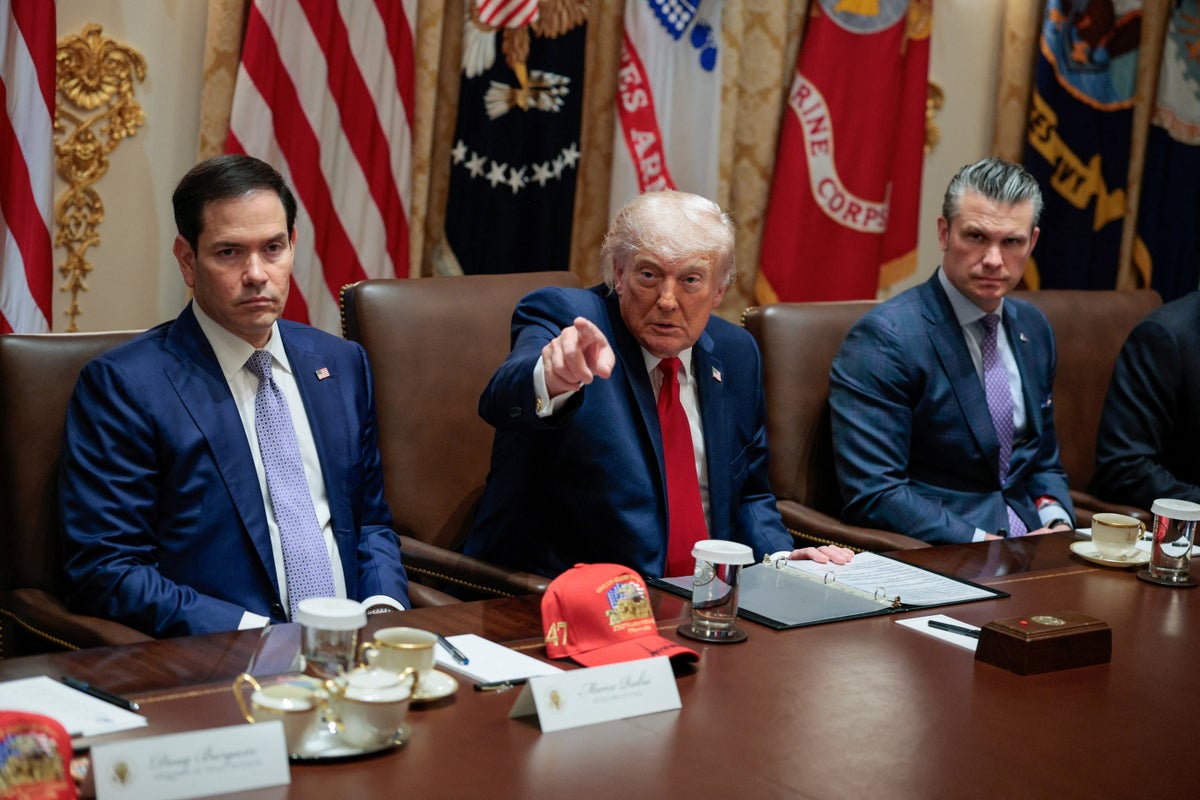
The confirmation to Congress by the secretary of state, Marco Rubio, has sparked anger among politicians and humanitarian organisations given the needs of vulnerable people around the world
A Somali referee has been prevented from officiating at the World Cup after he was refused entry into the US. This comes as many fans having bought tickets for the competitions have also seen their visa demands refused, and Iran's football federation claims its ticket allocation was withdrawn days before kickoff. FRANCE 24's Angela Diffley looks at the impact of the US's travel restrictions and war in Iran on the competition.

Far from disappearing when bought by Overstock, Bed Bath & Beyond is leading a combined brand renaissance. President Amy Sullivan explains why Dallas is just the start.

What does it mean to push the boat out, and can peacocking be more than just a beautiful gesture? A friend’s mother once told me that for a couple of years in the 1980s – as the Conservatives were waging war on the miners and she spent late nights at Marxist-feminist reading groups – she wore an almost daily uniform of jeans and a white T-shirt. On her wedding day she broke with habit and put on a dress she had bought, at great expense to her, that was fun, sexy and, although she didn’t use this word, flamboyant. The next week at the school she taught in she saw a colleague wearing it. “Nice dress,” she said. “It’s OK for work,” her colleague replied, “but I wouldn’t wear it out.” I found myself recalling this anecdote as I read Jack Parlett’s memoir-cum-cultural history of our attempts to push the boat out. To make any effort is to risk embarrassment, to be seen either as ridiculous or hopelessly naive. One way to avoid those charges is to use playful or cynical irony. Parlett finds examples of this in Oscar Wilde and what the cultural critic Susan Sontag once described as camp, a worldview obsessed with artifice and performance. Although Flamboyance is not a polemic, it’s clear that its author sees something lacking in these efforts at self-fashioning. The book is couched as an alternative; Parlett presents flamboyance as a model for how to live a life that not only “burns with a resistant energy” but “puts politics back into the picture”. In practice, this means that he has little patience for the notion of art for art’s sake; he insists, for example, that there is no making sense of flamenco without understanding the history of fascism in Spain. Continue reading...