매일경제
보수 성향
IT/기술
긍정적“AI 초과이익 일부, 국민배분” 이 대통령 언급에 청와대 입장은?
이재명 대통령이 반도체 호황 등으로 늘어난 사회적 이윤 관련 “인공지능(AI)발 초과이익(excess profits)의 일부를 국민들에게 배분하기 위해 기본소득(basic inco..

"BASIC" · 총 288건
필터 보기현재 지수
49.4
0 = 부정 우세
50 = 중립
100 = 긍정 우세
최근 7일 기준 77,371건을 분석한 결과, 뉴스 심리지수는 49.4(균형)입니다. 긍정 9,358건(12.1%)·중립 55,922건(72.3%)·부정 12,091건(15.6%)이며, 중립 비중이 뚜렷하게 높습니다. 성향 지수는 종합 21.0(보수 경향)입니다.
이재명 대통령이 반도체 호황 등으로 늘어난 사회적 이윤 관련 “인공지능(AI)발 초과이익(excess profits)의 일부를 국민들에게 배분하기 위해 기본소득(basic inco..
The Trump administration has warned more than 500 hospitals that they are failing to provide the public with basic pricing information — arguing that the lack of disclosure is keeping healthcare costs higher than they should be.
KUALA LUMPUR, June 11 — Malaysia risks raising a generation proficient in artificial intelligence...

Anthropic CEO Dario Amodei warns AI could cause long-term job loss, urging policies like universal basic income to mitigate its impact.
Andrew Yang’s 2020 presidential campaign was based on a warning that automation and AI would hollow out the labor market and concentrate wealth in the hands of a few. At the time, ideas like Universal Basic Income felt fringe. Now Dario Amodei, Sam Altman, and Bernie Sanders are all saying versions of the same thing. An entrepreneur at heart, […]
The broader question this case raises extends beyond the Lopez family and First Gen. It is testing the most basic assumption on which Philippine minority shareholder protection rests.
![[ANALYSIS] The Lopez ceasefire lasted only 26 days, then came the P50 billion math](https://www.rappler.com/tachyon/2026/05/LOPEZ-CEASEFIRE-MAY-15-2026.jpg?resize=75%2C75&crop=446px%2C0px%2C1080px%2C1080px)
Anthropic just released Claude Fable 5, calling it the most powerful AI model it has ever made widely available and praising its skills in biology, among others. But the model won't answer basic biology questions - the kind you'd expect a high schooler to handle. Instead, it hands off the query to the former flagship […]

It proposes that the State of Israel "recognize those who commit themselves to long-term dedication to Torah study as performing significant service to the state and the Jewish people."

A man raises his phone as police move into a crowd. The video is shaky, loud, immediate. Within minutes, it is online. Within hours, it is everywhere. This is how accountability works now. Something happens, someone records it, and that footage can show what really happened, sometimes contradicting official accounts. It can empower citizens and create consequences for officials. But the footage’s life cycle does not end there. In recent months, civil liberties groups have warned that adding facial recognition to consumer smart glasses could turn everyday recording into something more troubling: real-time facial identification. It reflects a broader shift already underway, where images and videos captured for one purpose can later be searched, matched, and used for another. An ouroboros is an ancient Egyptian symbol, a snake or dragon eating its own tail. As I began to see patterns in my broader research on surveillance corporatism and governance lag, I began using the term “surveillance ouroboros” to describe this recursive pattern of observations intended to hold power accountable becoming new input for the same surveillance infrastructure. Facial recognition changes accountability During the George Floyd protests in 2020, people filmed police in real time. Phones were pointed at officers, not at each other. The goal was simple: to show what the state was doing. That footage spread quickly and became part of a much larger pool of public data. At the same time, reporting from outlets including The New York Times and BuzzFeed News showed that law enforcement agencies were using facial recognition tools, including systems built by Clearview AI. Those systems were built from billions of images scraped from across the internet, including publicly available photos and videos. The basic approach is now routine: People record the state, or anything else—as in the January 6 attack on the U.S. Capitol—and the state compiles that footage and data into a searchable environment, which may later be used to identify some of the same people who made the footage. Facial-recognition systems used by law enforcement are increasingly outpacing the legal safeguards. A 2024 Government Accountability Office review found that federal law enforcement agencies continued to expand their use of facial-recognition systems for criminal investigations despite ongoing concerns around training, privacy protections, civil-liberties safeguards, and oversight. Earlier GAO findings showed that agencies had conducted roughly 60,000 facial-recognition searches before formal training requirements were put in place for personnel using the systems. The American Civil Liberties Union and other groups have warned that these tools could be used to identify people from images shared online, including protest-related footage. Concerns about facial recognition led some U.S. states and cities, including San Francisco and Boston, to restrict or ban government use of the technology, while federal agencies have continued to face scrutiny over how such systems are tested, deployed, and audited. A 2024 analysis published in Internet Policy Review warned that facial-recognition systems used by law enforcement are increasingly outpacing the legal safeguards meant to govern them, creating growing tensions around data protection, oversight, and proportional use. The spy network that built itself Surveillance used to require infrastructure. Cameras had to be installed and data had to be collected deliberately. That is no longer the case. People carry cameras everywhere. They record constantly and upload in real time. Events are documented from multiple angles without planning or coordination. The cumulative result is a continuous stream of usable data: faces, locations, timestamps, and interactions. The Internet of Things also waits all around us, gathering information and releasing it when people least expect it, as Andrew Guthrie Ferguson describes in a recent excerpt of his book Your Data Will Be Used Against You. RELATED: “Sensorveillance” Turns Ordinary Life Into Evidence Similar dynamics are emerging globally. A recent analysis in the International Journal of Law and Information Technology examined how facial-recognition systems in China and Japan are expanding faster than the legal frameworks governing them. Reporting by The Guardian described the limited legal protections around the rapid deployment of AI-assisted surveillance infrastructure across parts of Africa. There used to be a clear distinction between surveillance and accountability. Surveillance meant the powerful watching the people; authorities tended not to share their imagery except under duress or a court order and usually after a long delay. Accountability meant the people watching the powerful, and often publishing imagery immediately to head off or counteract official mischief. That distinction no longer holds. The same footage can serve both roles. A recording meant to expose misconduct can later be used to identify someone else entirely. Surveillance ouroboros is not a future risk. It is already here. This dynamic persists because people still need to record. In many places, it is one of the only tools available when formal accountability breaks down. When oversight institutions weaken or fail, public documentation becomes a substitute. In that environment, people turn to visibility. But that visibility comes with a cost. The more people that document, the more data that exists. The more data that exists, the easier it is to search, match, and store. Every video feeds the ouroboros. People are not feeding the system because they trust it. They are feeding it because the alternative is silence. Most of the people in these videos are not the focus. They are in the background, passing by or standing nearby. But that distinction does not matter once the footage enters a system. Today’s facial recognition can identify even a face that passed through the corner of a frame. Someone who did nothing can still become part of a dataset without ever knowing it. As recognition systems improve, older footage becomes more useful, and invasive. No single decision created this outcome. It emerged gradually through more cameras, better recognition, larger datasets, and easier integration. Each step made sense on its own. Together, they changed what recording means. Public recording is still necessary. Without it, many forms of abuse would remain hidden. But recording is no longer just exposure. It is also contribution. If you published imagery or video last year, you may already have contributed to a system you have never seen, but the ouroboros has. Surveillance ouroboros is not a future risk. It is already here. Every time someone presses publish, they are doing two things at once. They are exposing power, and they are helping build the system that the powerful will later use to track the less powerful.

Attention will now turn to Ololtuaa as he seeks to steady the docket, working alongside Education Cabinet Secretary Julius Ogamba.
Genie Godula is pleased to welcome Ali Vaez, Iran Project Director at the International Crisis Group. As Iran and the US seek an end to the war, an agreement so far remains elusive. Vaez challenges Donald Trump's claims that a deal is imminent, arguing that Trump is trapped between "an unwinnable war and an unpresentable deal". Rather than addressing the fundamental disputes surrounding Iran's nuclear programme, sanctions, or regional rivalries, the deal would merely restore the status quo: "All this deal would do is to basically consolidate the ceasefire. It would not resolve anything."

In contrast, BASIC countries, including India, showed stronger commitment, with India specifically meeting its 50% non-fossil installed capacity target ahead of schedule

As Hollywood searches for its next iteration of the superspy, the actor explains how he earned pop culture’s most sought-after role – and how he’s taking 007 back to basics They expect you to die! The history of Bond in video games, from the good to the bad Is any acting gig more contested than James Bond? Each week seems to bring a din of audition speculation so loud that it must be exhausting for the Elordis, Cavills and Dickinsons who are at the centre of it all. But when one of them does finally bag the role, perhaps they should seek the counsel of the actor who has quietly played the part for the last five years: Patrick Gibson. He’s the star of 007 First Light, the video game that has sold 2.7m copies since it was released two weeks ago. As a computerised Bond, Gibson is the first video game actor to lend both his voice and likeness to the role. With endorsement from both Amazon MGM and previous brand guardians Eon there’s a case to be made that he is the seventh official Bond (and the second Irish one). Not that he knew this when submitting a self-tape to Danish developers IO Interactive. “There was talk of martinis in the audition sides that gave me an inkling,” says Gibson. “Although at that point I didn’t believe there was any way it could be that.” Continue reading...
Indonesian Human Rights Minister Natalius Pigai said the Free Nutritious Meals (MBG) program helps fulfill basic rights ...

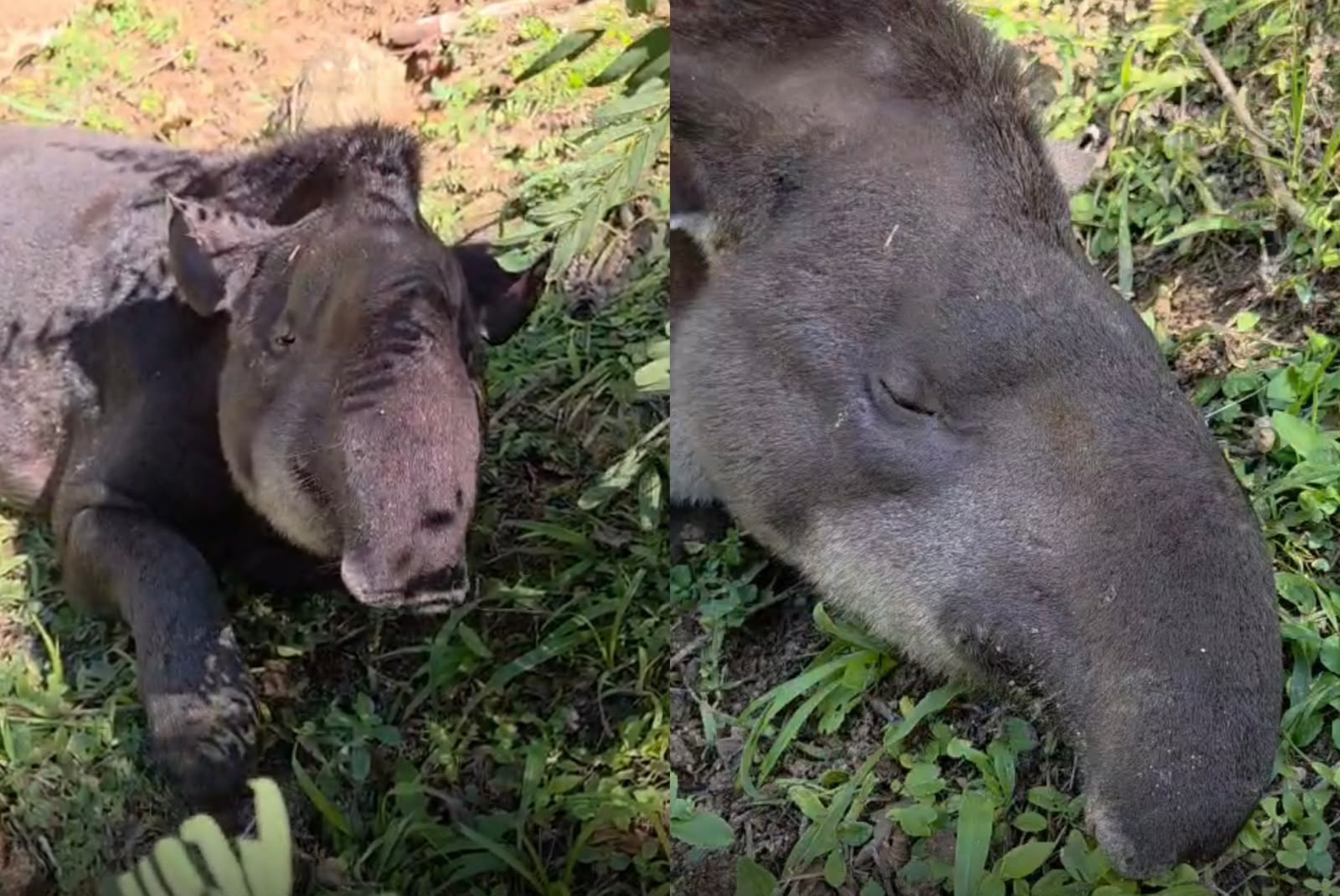
Anta de 180 quilos é resgatada com ferimentos de caça em Tapiraí Uma anta macho, de aproximadamente quatro anos e 180 quilos, foi resgatada na manhã de segunda-feira (8) no bairro Ribeirão das Antas, em Tapiraí (SP). O animal apresentava ferimentos e estava bastante debilitado. Segundo o biólogo Rafael Mana, do Núcleo da Floresta (Cras), em São Roque (SP), a instituição foi acionada pelo Conselho Municipal de Defesa do Meio Ambiente (Comdema) de Tapiraí após moradores relatarem a presença de uma anta ferida na região. 📲 Participe do canal do g1 Itapetininga e Região no WhatsApp "Ficaram monitorando até a nossa chegada. Encontramos um animal muito debilitado, desidratado, completamente prostrado e com inúmeros ferimentos que condizem com arame farpado, mordida de cães, arranhaduras que podem até ser de onça-parda. Mas existem indícios de que o animal tenha sofrido com caça predatória. Acreditamos que foi alvejado por caçadores, pois achamos o buraco do tiro e provavelmente o projétil ainda esteja dentro", relata o biólogo. Anta foi encontrada muito debilitada e com ferimentos de caça em Tapiraí (SP) Núcleo da Floresta/Divulgação Para fazer o resgate, a equipe precisou inicialmente conter o animal com o auxílio de um cambão. Em seguida, foi feita a sedação da anta com o uso de tranquilizantes. Após o procedimento, o animal foi encaminhado ao Núcleo da Floresta, onde permanece sob cuidados veterinários. Segundo o biólogo Rafael Mana, a anta está recebendo tratamento intensivo, que inclui hidratação, antibióticos, anti-inflamatórios, analgésicos e soro antitetânico. "Ela está sendo monitorada em tempo integral, mas a evolução do quadro, por enquanto, é desfavorável. Estamos fazendo tudo o que é possível e torcendo pela recuperação", afirma o especialista. Equipe fez a contenção do animal para levá-lo ao centro de reabilitação em São Roque (SP), onde recebe cuidados intensivos Núcleo da Floresta/Divulgação Alvos de caçadores Patrícia Faria, educadora ambiental e presidente do Comdema, afirmou ao g1 que a região onde a anta foi encontrada é conhecida pela presença de caçadores. Segundo ela, essa situação levou o órgão a iniciar um levantamento para identificar o número de animais silvestres mortos pela caça. "Ainda não temos números oficiais, somente casos pontuais informados pela comunidade. Nos últimos 12 meses, o que chegou até nós foram três antas encontradas mortas em Tapiraí", aponta Patrícia. LEIA TAMBÉM: Maior felino das Américas: monitoramento aponta queda na população de onças-pintadas no Contínuo de Paranapiacaba Enterrado vivo e abandonado no lixo: cães resgatados superam traumas e ganham novos lares no interior de SP 'Guardiãs' do milho crioulo: conheça atividade realizada por mulheres que preserva semente tradicional no interior de SP Segundo a profissional, os moradores fizeram o primeiro contato por volta das 7h. O animal foi encontrado em uma área localizada a cerca de cinco quilômetros do Centro da cidade. "Mas, do local onde foi visto pela primeira vez até o ponto em que o encontramos, ele percorreu cerca de 10 quilômetros, caminhando pela estrada", disse. A anta resgatada foi batizada por Patrícia como Neymar. Segundo ela, a escolha do nome teve o objetivo de dar mais visibilidade ao caso e às instituições que atuam na proteção de animais silvestres. "Como estamos próximos da Copa, pensei no jogador brasileiro mais conhecido", comentou. Anta resgatada foi batizada por Patrícia como Neymar Núcleo da Floresta/Divulgação A educadora ambiental explica que Tapiraí está inserida em uma das áreas de Mata Atlântica mais preservadas do estado de São Paulo, habitat de diversas espécies da fauna silvestre, incluindo as antas. A própria origem do nome do município reforça essa relação com o animal, cujo nome científico é Tapirus terrestris. Segundo a prefeitura, "Tapiraí" é uma expressão indígena que significa "lugar de anta", em referência à grande presença desses animais na região. No entanto, o município enfrenta o desafio de combater a caça ilegal, que, segundo Patrícia, ocorre por diferentes motivos. "Como o consumo da carne de animais silvestres e a busca por um hobby. A riqueza biológica da região acaba atraindo pessoas de outras localidades para caçar, muitas vezes com o apoio de moradores da cidade em troca de benefícios financeiros. Em alguns casos, essas incursões também estão associadas à exploração ilegal do palmito-juçara, aumentando a pressão sobre a fauna e os ecossistemas locais. Basicamente, matam para ter um 'troféu'. As pessoas vêm de fora, com dinheiro, trocam por guiada, ajuda para caçar. Infelizmente, é muito triste", lamenta a especialista. O levantamento que está sendo feito pelo Comdema, por meio do projeto Observatório do Território, deve ser entregue até o fim deste ano. "Estamos com força trabalhando na educação ambiental por meio de projetos, como o Ecos da Floresta", conclui Patrícia. Equipe do Núcleo da Floresta e do Comdema atuou no resgate da anta que recebeu nome de Neymar Núcleo da Floresta/Divulgação Antas albinas de Tapiraí Tapiraí também é conhecida pelos registros frequentes de antas albinas, relatados por moradores e pesquisadores da região. A população desses animais foi tema de um estudo científico conduzido por Mariana Landis, pesquisadora do Instituto Manacá, parceiro do Legado das Águas. Ela explica que o albinismo por si só já é uma condição rara, mas acontecer duas vezes no mesmo local é daquelas probabilidades de uma em um milhão. "Dois indivíduos albinos em uma mesma região, a gente considerou como se fossem dois raios caindo no mesmo lugar, sabe? Principalmente porque trata-se de uma característica genética recessiva, que normalmente é mais rara em um animal silvestre. Então, em 2018, nós começamos uma busca por material biológico, por amostras desses indivíduos para análise. Instalamos armadilhas de pelo na reserva, que eram arames por onde as antas passavam e deixavam os pelinhos da crina com bulbo, que continha a informação genética necessária para a gente mandar para o laboratório e fazer as análises do grau de parentesco." Canjica, macho albino flagrado no Legado das Águas por uma das armadilhas fotográficas instaladas por Luciano Luciano Candisani Initial plugin text Veja mais notícias no g1 Itapetininga e Região VÍDEOS: assista às reportagens da TV TEM
Cheap air purifiers often fail basic filtration tests. Consumer Reports tested 180+ models on dust, smoke, and pollen to find the best under $350

As AI transforms the economy, some tech leaders push universal basic income. This piece argues Americans need opportunity, not government checks.

This summer, 48 men's national teams will compete in the World Cup's biggest tournament ever. Here are a few of the basics to get you started.

Behind every fight on jobs, data centers, or safety lies a more basic question of who gets to set the rules. And we know the answer favored by Big Tech, writes Senator Josh Hawley.