Quartz
중도 성향
기타
부정적15 economic recessions and what caused each one
From the Great Depression to the Covid-19 crash, these 15 recessions reveal how fragile economic systems can be — and how differently crises unfold

🇺🇸 미국 · "FOLD" · 총 88건
필터 보기현재 지수
48.8
0 = 부정 우세
50 = 중립
100 = 긍정 우세
최근 7일 기준 12,704건을 분석한 결과, 뉴스 심리지수는 48.8(균형)입니다. 긍정 1,295건(10.2%)·중립 9,051건(71.2%)·부정 2,358건(18.6%)이며, 중립 비중이 뚜렷하게 높습니다. 성향 지수는 종합 21.9(보수 경향)입니다.
From the Great Depression to the Covid-19 crash, these 15 recessions reveal how fragile economic systems can be — and how differently crises unfold
The Pitt cast and crew are proud of the ICE storyline they brought to the screen in Season 2.

American gas exports to India have grown eightfold from pre-war levels as Strait of Hormuz traffic remains choked

Tadka, the free, ad-supported service from JioHotstar, also says it has seen per-viewer watch time grow fivefold since its April launch.
You gotta know when to fold 'em....

“Space computing, the final frontier, has arrived,” Nvidia CEO Jensen Huang declared at the Nvidia GTC conference in March. Indeed, the idea of data centers in orbit has gone from science fiction to a serious spending category. Elon Musk’s SpaceX has acquired xAI (also Musk’s) and is planning a constellation of space-based data centers. Google, not to be outdone, announced Project Suncatcher in partnership with Planet, planning to launch two satellites equipped with Google Tensor Processing Unit (TPU) AI chips by early 2027. Startup Starcloud has already filed a proposal with the Federal Communications Commission for an 88,000-satellite constellation for orbital data centers. As Starcloud’s filing suggests, these companies are all proposing fleets of satellites numbering in the thousands, each housing a rack or multiple racks of AI-grade GPUs, interconnected with each other through free-space optical links and communicating back to Earth via microwave links, either directly or through other satellites. Proponents tout the many wonders of computing in space: abundant solar energy, free cooling, and freedom from Earth-based disturbances like earthquakes, floods, and protesters. But a sober look at the physics of space-based computing paints a much more nuanced picture. Free cooling is perhaps the biggest misconception. Space is cold, but it also has no atmosphere. That means the best heat-removal mechanisms, conduction and convection, are off the table. The only option is radiation. To prevent a chip from overheating in space, a large, costly surface area is required to dissipate the energy and then radiate it. Solar energy is abundant, but collecting it with functional solar panels that maintain perfect alignment toward the sun is a complex task requiring extensive attitude control systems. On top of that, ionizing radiation in space from cosmic rays and other sources poses a unique challenge, degrading the solar panels, the radiative coolers, and the chips themselves. Because regular maintenance in space is difficult, redundancy has to be built in at launch, and cost estimates have to account for efficiency degradation over time. At ABI Research, where I work as an aerospace analyst, we did a rough total-cost-of-ownership comparison between a data center on Earth and one in space. It showed that the cost to launch and run a GPU in space for a year is at least an order of magnitude higher than the same feat in a terrestrial data center. Our model was simple, assuming an Nvidia H100 server rack launched with the requisite-size solar panel and radiator on a spacecraft akin to Starcloud’s pilot launch. We assumed SpaceX’s Starship was used at a highly optimistic launch cost per kilogram of US $44, and a terrestrial energy cost of $0.20 per kilowatt hour. This is a simple back-of-the-envelope calculation, but it does signal something real. From our perspective, the cost of delivery and space hardening of the payload makes general-purpose space-based data centers difficult to justify economically today, despite the fact that data-center builders in many regions are scrambling for electric power. However, there are niche applications where the much higher costs of computing in space could be justified. Examples include preprocessing data from Earth-observation satellites, real-time detection and tracking of hypersonic missiles, and active collision avoidance in the increasingly crowded low Earth orbit. Even for these, though, contending with fundamental physics will still be a demanding challenge. And a technologically compelling one, too. The Cooling Challenge in Space Cooling is where physics separates the science from the fiction. The governing equation for radiative cooling, the only type of cooling available in space, is known as the Stefan-Boltzmann Law. It states that the amount of power you can radiate is proportional to the area of the radiator times its temperature to the fourth power. For a space systems architect, the implications of this law are brutal. In orbit, the only variable we can control is area. This restriction creates a geometric penalty, or a “physics tax,” for cooling in space: The more power you need to reject, the bigger the area of the radiator you need to bring along from Earth. The only cooling method available in space is radiation, and the radiator area required is derived using the Stephan-Boltzmann law. For a single chip drawing 700 watts, like Nvidia’s popular H100 GPU, the area required to keep it at 20 °C is just under 3 square meters, and it goes down to 1 square meter for an operating temperature of 85 °C. However, as the radiator surface is exposed to ionizing radiation, its emissivity decreases, and after 5 years in space the required area increases by about 40 percent. To understand how big this baseline area is in practice, I used the Stefan-Boltzmann law to model the heat-rejection area needed to keep a single chip that draws 700 watts of power—such as the H100 GPU chip, an AI stalwart—at a constant 60 °C, usually considered the sweet spot for GPU longevity and stability. I further assumed that the radiator is perfectly facing deep space, at a chilly background temperature of 3 kelvins. By this calculation, a single chip would require 1.4 square meters of radiator surface. To put this into perspective, consider that a common AI rack can hold approximately 32 GPUs (four H100 server boards). With CPUs, memory, and networking equipment, this rack would draw around 40 kilowatts of power. This single rack includes 2.5 terabytes of memory—enough capacity to serve over 20,000 concurrent users or run 16 simultaneous instances of Llama 3, an open-source AI model. But to cool this thermal load in a vacuum, that single rack would require an 80-square-meter radiator, roughly the size of a pickleball court. For an aggregate 100-megawatt data center, you’d need at least 2,500 of those radiators. And that’s the best-case scenario. Additional problems are hidden in the low Earth orbit environment itself. Space exposes radiators and their coatings to a chemically hostile brew of ultraviolet light and atomic oxygen, quite the opposite of a clean-room environment. Over a LEO satellite’s typical 5-year lifespan, these elements degrade the radiator’s surface properties and lower its ability to shed heat. Including this degradation in the model reveals that as the radiator degrades from a “fresh” state to an “end-of-life” state, the physics demands a further penalty. To maintain that same 60 °C operating temperature for the GPU chips, the required surface area jumps from about 1.4 square meters per chip to nearly 2.0 square meters. In other words, the physics tax rises by 40 percent. Therefore, you must launch at least 40 percent more radiator mass, endure higher atmospheric drag, and sacrifice valuable launch volume just to survive the degradation of the thermal coating. This increase adds significantly to the launch cost and further erodes the economics of a space-based data center. The Silicon Challenge in Space Solving the heat problem is only part of the battle. The other significant challenge in low Earth orbit is ionizing radiation, which affects the computing hardware itself. Today’s satellites typically use radiation-hardened processors, which are very reliable but also much more expensive, and they perform poorly compared to commercial off-the-shelf processors. A standard rad-hard chip doesn’t have the processing power to run a modern large language model (LLM). As a result, satellite operators aspiring to launch a data center have no choice but to make a risky compromise: to use hardware meant for terrestrial use. In order to achieve the necessary compute density, orbital data centers must use the same Nvidia H100s or Google TPUs found in terrestrial server farms. The problem is that these chips are “soft” targets in space. High-energy particles can flip bits in memory or cause “latch-ups” in logic that fry the circuit. One possible option is to shield the computers from radiation with thick, absorbent panels. However, the shielding would add significantly to the already heavy satellites. The other option is to compensate for the radiation damage with redundancy. Indeed, edge computing architects are moving toward software-defined resilience, where instead of one perfectly hardened computer, operators fly a cluster of imperfect, commercial ones whose total cost could be as low as one-tenth to one-hundredth that of the rad-hard model. This redundant approach is used in many spacecraft, including Artemis II, which recently carried astronauts around the moon, as well as SpaceX’s flight computers and the Hewlett Packard Enterprise edge servers for the International Space Station. By running three (or more) instances of the same calculation on three different nodes and comparing the answers, the system can detect a corrupted processor. If a node fails, the “orchestrator” reboots it while the others continue the mission. While this ensures resiliency, it also means that some fraction of the compute capacity is dedicated to redundancy, further increasing the costs. The Energy Challenge in Space An often-touted advantage of space-based data centers is the seemingly unlimited supply of free, clean energy from the sun. Solar energy in orbit is indeed abundant, at 1,361 watts per square meter. Of course, capturing that free energy is made possible only by the very costly launching of large solar panels into orbit. And those solar panels also degrade over time due to radiation exposure, typically losing 1 to 3 percent efficiency per year. Let’s say a solar array collects 1 MW of power to run an AI cluster. The laws of physics demand that the satellite must eventually radiate 1 MW of waste heat. Because the square area needed to generate the solar power—around 400 W/m2—and to reject the heat—around 450 W/m2—are nearly equivalent, every square meter of power generation now demands approximately another square meter of cooling. The radiator needs to be a structural equal, not merely a passive coating on a surface used for something else. As Elon Musk recently noted in Davos, the most efficient radiator is one that never sees the sun. By orienting the spacecraft so the solar panels face the sun and the radiators face the deep vacuum of space, efficiency skyrockets for both. But there’s a catch: Maintaining this perfect three-way alignment—panels to sun, radiator to the void, antennas to Earth—requires complex, high-torque attitude control systems. So this configuration means more payload and more computing power. Plus, these control systems are complex components with many failure modes, which is not optimal in a situation where maintenance is difficult. The Killer Apps for Computing in Space Given all these challenges of deploying massive radiators for satellites in the hostile environment of space, why build data centers in space at all? While training or inference on LLMs in space doesn’t seem economical today, there are other, very compelling applications for computing in space. Here are two: solving the downlink bottleneck from Earth-observation satellites and enabling collision-preventing maneuvers in the increasingly crowded low Earth orbit. The latest Earth-observation satellites, equipped with hyperspectral and synthetic aperture radar sensors, are used for a range of important reconnaissance missions, such as battlefield intelligence, tracking the global shadow fleet of ships carrying contraband, and assessing earthquakes or infrastructure failures down to the millimeter. These systems can generate hundreds of terabytes of raw data per day that must be transmitted to Earth. However, the radio-frequency “pipes” used to downlink the data are congested, and the ground infrastructure cannot absorb the sheer volume of raw data. Another immediate, mission-critical application for in-space computation is protecting the orbital environment. With over 17,000 satellites in orbit, the overwhelming majority of which are in low Earth orbit, avoiding collisions between these satellites is crucial. As NASA astrophysicist Donald Kessler pointed out back in 1978, a single space collision could cause a cascading effect that renders the entirety of LEO unusable. RELATED: Have We Reached a Space-Junk Tipping Point? According to SpaceX’s recent annual report, the Starlink constellation executes a collision avoidance maneuver every 2 minutes on average. Each maneuver already relies on onboard AI systems but still requires most of the processing to happen on the ground. As low Earth orbit gets increasingly populated, collision avoidance will have to break the traditional ground-loop model. In the megaconstellation era of space, the OODA (observe, orient, decide, act) loop must happen onboard, thereby reducing the analysis turnaround from minutes to milliseconds. The problem is that the flight computers standard on satellites are not built for this level of processing. The complex probability models required for maneuvering cannot currently be implemented by onboard computers in conjunction with their navigation systems. Clearly, more powerful computers are needed. This is the true economic justification for moving compute to space: to move insight generation there. By placing high-performance computing adjacent to the sensors, we can process terabytes of data in orbit and downlink only the relevant data in real time, and we can do the computations necessary to avoid satellite collisions in real time. The Future of Computing in Space So, assuming that some form of computing is inevitable in low Earth orbit in the foreseeable future, how will the heat be handled? The industry is currently experimenting with two main classes of solutions to cope with the Stefan-Boltzmann law. One creative option is to use origami-inspired radiators, the kind used for the James Webb telescope. Companies are developing flexible, high-conductivity composite radiators that fold into a tight cube for launch and unfurl into enormous yet lightweight thermal wings in orbit. Another possibility is to use liquid-droplet radiators. This concept proposes removing the rigid radiator structure completely and instead spraying a stream of coolant oil directly into the vacuum of space. The fluid travels through an open loop, exposed to the near-absolute zero of the void, maximizing radiative surface area before being caught by a collector and pumped back into the ship. It sounds like science fiction, but as the heat loads climb into the megawatts, liquid-droplet cooling may be the only way to cheat the mass limits of this exponential reality. Options for Future Radiator Design Our rough total-cost-of-ownership model uses optimistic versions of current numbers, such as launch cost, chip cost, and power use. A critic might point out that future technology will improve, both in efficiency, purpose-built designs, and costs. Sure, the technology is bound to improve. But the critical factor isn’t just launch cost; it’s the computing power per unit mass and electric-power economics. Radiators and solar arrays can consume 65 to 70 percent of total satellite mass, and space-grade photovoltaics run orders of magnitude more expensive than terrestrial equivalents. Chris Philpot Even as launch costs fall, the mass and cost burden of power generation and thermal management will remain a fundamental problem. Current space-grade solar panels rely on germanium substrates, whose supply is concentrated in China. It will be extremely difficult to scale up availability of these substrates. A transition to radiation-tolerant perovskite solar panels or a similar alternative could change the economics significantly, but that possibility is five years away or more. The technology will get cheaper, but the bottlenecks of power and thermal architecture will remain. Recognizing the thermal reality of cooling in space forces us to shift how we view satellite operations. We are moving away from the “launch and forget” era toward an era of “autonomous logistics.” As our thermal model demonstrated, the harsh environment of space steadily attacks the hardware. UV radiation degrades thermal coatings; cosmic rays degrade silicon. In a traditional satellite model, when the radiator degrades or the memory fails, the satellite becomes space junk. For a multimillion-dollar data center, that disposal model is potentially ruinous. To make the economics of orbital computation work, the infrastructure must be serviceable and the rockets to launch them reusable. The orbital domain will require automated servicing vehicles capable of swapping out degraded radiator panels and upgrading fried servers. In these ways, the future of the orbital data centers is dependent on the innovations of an emergent in-space economy. There’s a good argument to be made that the need for space-based computation is less of a hype cycle and more of an enabler for the new space economy. Look no further than SpaceX’s recent regulatory filings proposing a constellation of up to a million satellites in low Earth orbit. At such a scale, routing all raw data back to Earth is physically impossible; the network itself must become the data center. However, the winners in this sector will be determined by the systems architects who most cleverly accommodate the thermodynamics and the companies with sufficient vertical integration to take on the massive costs of operating data centers in orbit. Ultimately, the physics tax is universal. Whether managing heat rejection in the vacuum of low Earth orbit or managing power density in a hyperscale facility in Northern Virginia, the constraint is never the silicon. It’s the thermodynamics.

A desperate search turned into a recovery effort Wednesday after a 5-year-old girl was swept into the ocean along with her mother and brother during dangerous surf conditions at a Southern California beach. The incident unfolded around 7:30 p.m. Tuesday at Treasure Island Beach in Laguna Beach, where authorities say a mother and her two...

Tadka, the microdrama platform within leading Indian streamer JioHotstar, has crossed 100 million users, establishing premium short-form content as a mainstream entertainment category in India. Since launch, daily watch time per viewer on Tadka has grown fivefold, reflecting sustained engagement with the format. More than 42% of the service’s viewership comes from audiences under 24, […]

The tale of two heroic stewardesses who team up with RuPaul Charles, the President of the United States, to stop a train on a collision course with a once-a-century weather event, “Stop! That! Train!” is billed as a “true story” where every scene unfolds “exactly as it happened in real life.” Given such an extraordinary […]

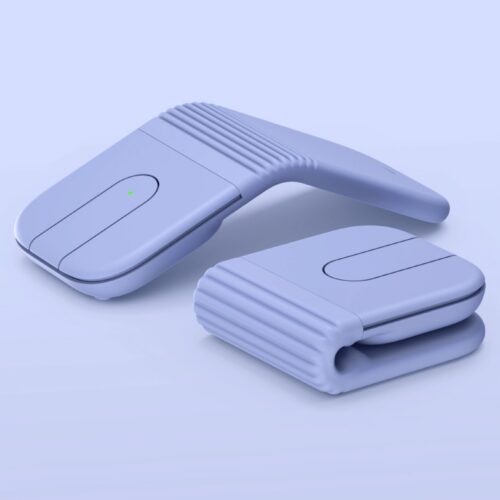
The Mobi Fold is an $80 Bluetooth mouse with a silicone-wrapped hinge.
The frightening incident unfolded around 7:30 p.m. Tuesday near Treasure Island Beach, where the Marine Safety Department was called after reports of multiple swimmers in distress.

Next month, we will celebrate 250 years of triumph and prosperity. In this “land of the free and home of the brave,” the dream of life, liberty, and the pursuit of happiness is an attainable one. My own story could not have unfolded like it did anywhere other than America. Raised in poverty by a […]

Logitech finally announced its new ultraportable travel mouse following leaked marketing images that spoiled the surprise last month. As the name implies, the Mobi Fold is a compact mouse that can fold in half using a hinge that can pivot about 130 degrees. At $79.99 in graphite, off-white, lilac, and sand color options, the Mobi […]

The iOS 27 developer beta includes code that references the fold state and screen angle of a device.
Comments
This article is brought to you by AGILINK. Throughout the exhibition hall at the 2026 IEEE International Conference on Robotics (ICRA), in Vienna, one demonstration seemed to attract a disproportionate amount of attention. Two robotic hands were making a balloon dog. Slowly and deliberately, the robot twisted a long balloon into loops, bends, and joints without popping it. Visitors stopped, watched, and often returned with colleagues to watch again. AGILINK’s balloon dog demonstration draws a crowd at ICRA 2026.AGILINK At first glance, the demonstration appeared almost playful. Among roboticists, however, balloon twisting is widely recognized as an unusually difficult manipulation task. A balloon is lightweight, highly deformable, slippery, and extremely sensitive to force. Every twist changes its geometry and internal pressure, turning a seemingly simple activity into a continuously changing physical interaction problem. Humans navigate those changes almost intuitively. While making a balloon animal, people rarely think consciously about force regulation, slip prevention, or contact stability. They simply adjust. For robots, those adjustments remain remarkably difficult. The challenge is not merely moving fingers to the right positions. The harder part is maintaining stable interaction while the object itself is changing. Highlights from AGILINK’s ICRA 2026 demonstrations, including visuotactile sensing, in-hand manipulation, balloon-animal shaping, and other contact-rich tasks enabled by the company’s latest OmniHand platform.AGILINK That distinction helps explain why the balloon dog drew so much attention in Vienna. What appeared to be a dexterity demonstration was, in many ways, a demonstration about contact itself. As robotic manipulation continues to advance, a growing number of researchers are arriving at a similar conclusion: many of the hardest problems in robotics begin only after contact occurs. Motion and Contact Intelligence for Robot Manipulation Balloon twisting combines two challenges that robotics has traditionally struggled to solve simultaneously: long-horizon task execution and contact-rich manipulation. The first concerns motion. A balloon dog is not created through a single grasp or twist. It emerges through a carefully ordered sequence of manipulations, each setting the conditions for what follows. A small rotational error introduced early may appear insignificant at first, yet several steps later it can prevent the final structure from forming altogether. In that sense, balloon twisting is a long-horizon task. Success depends not only on performing individual actions correctly, but also on preserving the future feasibility of the entire manipulation process. To address this challenge, AGILINK began by collecting demonstrations from professional balloon artists. Human actions were mapped onto robotic hands to establish an initial manipulation policy. But successful demonstrations alone were insufficient. In practice, some of the most valuable learning occurred when execution began to drift toward failure. Whenever instability emerged, human operators intervened and corrected the manipulation in real time. Those interventions were recorded and incorporated into reinforcement-learning cycles, allowing the system to learn not only how successful demonstrations unfold, but also how experienced operators recover when things start to go wrong. Through this process, the robot gradually acquired the capabilities required for long-horizon task execution—a collection of abilities that AGILINK groups under the term motion intelligence: the ability to generate actions, coordinate bimanual behaviors, and execute extended manipulation sequences under real-world uncertainty. OmniHand 3 Ultra-M on display at ICRA 2026.AGILINK Yet motion alone does not explain why balloon twisting remains difficult. The second challenge is contact. The robot must continuously regulate force, adjust contact locations, and respond to subtle changes in the object’s state. These decisions are difficult to encode through explicit rules. Even skilled human operators often rely on tactile intuition developed through experience rather than consciously articulated strategies. Analysis of those interventions revealed that many failures did not originate from incorrect action sequences, but from the breakdown of contact itself. To better capture those interaction dynamics, AGILINK collected contact-centric intervention data and incorporated those interactions into reinforcement-learning training. Rather than learning only which motions to perform, the system also learned how humans maintain stability when contact conditions begin to deteriorate. AGILINK describes this capability as contact intelligence: the ability to establish, maintain, and adapt physical interaction as force distribution, friction, deformation, and contact geometry continuously evolve. The distinction between the two capabilities is subtle but important. Motion intelligence determines what the robot intends to do. Contact intelligence determines whether it can continue doing it. For balloon twisting, both are necessary. One provides the sequence of actions. The other keeps those actions physically viable. YouTuber KhanFlicks follows OmniHand’s motions while learning to fold a balloon dog at the AGILINK booth.AGILINK Between a balloon slipping away and a balloon bursting lies a narrow region of stability. Successful manipulation depends on finding that region—and remaining within it throughout the task. Introducing the OmniHand 3 Ultra-M Dexterous Hand The balloon dog demonstration showcased a manipulation capability. It also revealed a broader question. How much contact intelligence can be achieved through learning alone? A robot can only regulate what it can perceive. It can only respond as quickly as its hardware allows. As manipulation tasks become increasingly complex, researchers are finding that progress depends not only on better policies, but also on richer sensing and faster physical response. That realization formed the backdrop for AGILINK’s second major announcement at ICRA 2026. Alongside the balloon dog demonstration, the company introduced the OmniHand 3 Ultra-M. OmniHand 3 Ultra-M closely matches the size of an adult human hand.AGILINK The two exhibits represented different stages of the same technological trajectory. If the balloon dog demonstrated what contact intelligence can already accomplish today, Ultra-M was designed to explore what contact intelligence may require next. Building Hardware for Contact Intelligence Roughly the size of an adult human hand, the OmniHand 3 Ultra-M integrates 20 active degrees of freedom within a human-scale form factor. Its most distinctive feature is a fully direct-drive architecture. By adopting direct-drive actuation throughout the system, the hand is designed to enable faster and more transparent force regulation and higher force-control bandwidth, enabling faster response as contact conditions change. For contact-rich manipulation, responsiveness can be as important as sensing itself. By adopting direct-drive actuation throughout the system, the OmniHand 3 Ultra-M is designed to enable faster and more transparent force regulation and higher force-control bandwidth, enabling faster response as contact conditions change. The platform also incorporates tactile sensing across nearly the entire hand. Each fingertip contains a miniature vision-based tactile sensor, while more than 300 three-dimensional tactile sensing points are distributed throughout the palm. Together, they provide information not only about where contact occurs, but how contact is evolving. The system is designed to estimate pressure distribution, shear forces, local deformation, slip tendencies, and other interaction dynamics that often remain invisible to conventional position-based control systems. According to AGILINK’s tests, individual sensors achieve force resolution of approximately 0.005 N—roughly equivalent to detecting the weight of a sheet of paper resting on a fingertip. Spatial resolution reaches approximately 0.04 mm, while sensing density approaches 50,000 sensing points per square centimeter. OmniHand 3 Ultra-M recognizes feather texture through vision-based tactile sensing.AGILINK For dexterous robots, contact has traditionally been a largely hidden process. Ultra-M is designed to make that process more observable. Rather than simply detecting that contact has occurred, the system attempts to resolve where interaction is happening, how forces are distributed, whether instability is beginning to emerge, and how manipulation strategies should adapt in response. The balloon dog offered a glimpse of what contact intelligence can already accomplish. Ultra-M explores a different question: what capabilities may be required to push contact intelligence further? The Physical World Remains the Hardest Benchmark The significance of contact intelligence extends far beyond balloon animals. Many tasks that continue to resist automation involve unstable or deformable interaction: cable insertion, garment handling, flexible packaging, delicate assembly, connector mating, tool use, and household manipulation. These tasks are difficult not because robots cannot reach the correct location, but because maintaining stable interaction after contact begins remains extraordinarily hard. For decades, robotics achieved many of its successes by reducing uncertainty. Factories were engineered to make robotic motion predictable, repeatable, and highly structured. The physical world behaves differently. A growing share of robotics research is shifting toward interaction itself—understanding how robots can establish, maintain, and adapt physical contact within environments that remain fundamentally unpredictable. Objects shift. Materials deform. Friction changes. Contact evolves. Real environments rarely follow scripts. Seen through that lens, the balloon dog was never really about the balloon dog. What attracted attention at ICRA was not simply a visually impressive demonstration, but what it revealed: intelligence in the physical world is ultimately measured through interaction. As motion generation continues to mature, a growing share of robotics research is shifting toward interaction itself—understanding how robots can establish, maintain, and adapt physical contact within environments that remain fundamentally unpredictable. For robots moving beyond structured environments and into less predictable real-world settings, managing contact may become as important as motion itself.

Asia will bear the brunt of the energy crisis unfolding as a result of the war in the Middle East, former IEA chief Nobuo Tanaka warned this week. Speaking at a hydrogen industry event in Malaysia, Tanaka said, as quoted by the Borneo Times, that “The first oil shock created the IEA in 1973. The second transformed industries and economies. Now we are facing a third oil shock, and Asia is at the centre of it.” The official went on to note that the closure of the Strait of Hormuz is a nightmare scenario come true, adding that the closure…
New York City was the backdrop of this year’s IEEE Honors Ceremony, held on 24 April. The event celebrates engineering pioneers who have developed technologies that have changed how people connect and learn about the world. This year’s celebrants included the engineers behind innovations such as text-to-donate technology, AI-powered diagnostic tools, and the graphics processing unit, among many others. Prior to the Honors Ceremony, IEEE hosted a forum on 23 April for a select group of early-career achievers to exchange ideas and experiences with laureates and awardees, speakers, and IEEE leaders. Attendees from around the world, working in a variety of technical areas, shared their journeys and explored the intersections of technologies, disciplines, and missions. The event culminated in Friday evening’s black tie Honors Ceremony, where IEEE celebrated medal laureates, including Jensen Huang, who received IEEE’s highest recognition, the IEEE Medal of Honor. Huang is a cofounder of Nvidia and its chief executive. “IEEE has always been a home to those who see the future before others see it,” Mary Ellen Randall, IEEE president and CEO, said in her welcome speech. Video highlights and photos from the event are available on the IEEE Awards website. Exploring mission-driven tech and AI in art Friday morning began with a conversation between Randall and Marian Croak, the recipient of this year’s IEEE Founders Medal. Croak was honored for “leadership in communication networks, including acceleration of digital equity, responsible artificial intelligence, and the promotion of diversity and inclusion.” Croak, who serves as vice president of engineering at Google, headquartered in Mountain View, Calif., pioneered Voice over Internet Protocol (VoIP) technologies. When a person speaks into a telephone, VoIP converts their voice into digital signals that are transmitted over the Internet rather than traditional phone lines. Her work enabled audio and video conferencing. She also developed text-to-donate technology to raise money for those affected by Hurricane Katrina, which devastated New Orleans in 2005. The technology enables customers to donate money to a charity via their mobile service provider, which then bills them. “Empathy has always been a driving force in the engineering that I’ve done,” she said. She shared advice on how to stay creative: “Get out of the office. Go to an art museum, exercise, or play with children.” Croak said her grandchildren inspire her. An inside look at microchips During Friday evening’s Honors Ceremony cocktail hour, attendees explored the history of microchips at the IEEE Global Museum’s Microchips That Shook the World exhibit. The Global Museum, an IEEE History and Heritage program, develops traveling and digital exhibits focused on the history of technology. The museum’s mission is to promote awareness of how technological progress unfolds over generations and how engineers and researchers build on past achievements to benefit humanity. Drawing from IEEE Spectrum’s Chip Hall of Fame, the Microchips That Shook the World exhibit conveys the roles integrated circuits play in fields such as signal processing, audio engineering, and telecommunications. Co-curators Stephen Cass, Spectrum’s special projects editor, and Daniel Mitchell, the IEEE senior historian, served as onsite docents for guests. The Commodore 64, one of the artifacts on display, brought up many treasured childhood memories for guests who used the home computer. The exhibit also featured a preview of IEEE’s immersive video project “Inside the Microchip,” which delves beneath the silicon surface of the Nvidia NV20 microchip thanks to forensic photography and sophisticated computer-generated renders. The video, which will be released later this year, aims to teach preuniversity students about the technology. Microchips that Shook the World is possible thanks to donations from semiconductor company ASML, the Bill and Dianne Mensch Foundation, and the IEEE Electron Devices and IEEE Electronics Packaging societies The daytime program also spotlighted AI’s use in the visual arts. Kathleen Kramer, the 2025 IEEE president, interviewed artist Refik Anadol, who is scheduled to open an AI art museum on 20 June in Los Angeles. Dataland’s exhibits are powered by an open-access model developed by Anadol’s studio. For the museum’s first exhibition, “Machine Dreams: Rainforest,” the model collected visual data about the natural world from the Smithsonian National Museum of Natural History, London’s Natural History Museum, and the Cornell Lab of Ornithology, with their permission. The information, including up to a half billion images, will form the basis for a variety of AI-produced art, Anadol said. Anadol said he was inspired to mix AI with art by the movie Blade Runner. He said he believes “machines can become collaborators,” as “data is a form of pigment.” Data also plays an important role in the work of artist and author Giorgia Lupi. The artist is a partner at design firm Pentagram. Lupi said she uses data to tell stories, including chronicling her struggles with a chronic illness. “Data is an abstraction of our reality,” she said. One of her recent projects, “A Data Love Letter to the Subway,” was shown last year in the Dey Street Passageway in New York City. The video was made using data from the Metropolitan Transportation Authority about each train line, including timetables, ridership, and people’s travel habits. Based on the information Lupi gathered, she documented how commuters traveling on different subway lines encountered one another without realizing it. By exploring data on this year’s IEEE award recipients, she collaborated with IEEE to create an animated video illustrating the shared pathways and collaborations among the honorees. It debuted at the Honors Ceremony. Honoring engineering giants The Honors Ceremony, held at Cipriani 42nd Street, recognized more than 20 laureates and innovators. More than 92 million selfies are taken worldwide every day, PhotoAiD estimates. A selfie wouldn’t be possible without Eric Fossum’s invention of the CMOS image sensor. Developed at NASA’s Jet Propulsion Laboratory, in Pasadena, Calif., the “camera on a chip” was intended for use in space, but it is now found in smartphones, medical devices, and vehicles. Fossum, an IEEE Life Fellow, received the IEEE Jun-ichi Nishizawa Medal, which recognizes outstanding contributions to materials and device science and technology. “Engineering is a pursuit of what must be possible. [IEEE is] the spirit, the conscience, of our profession.” —Jensen Huang, founder and CEO of Nvidia The medal, he said, “is at the top of the IEEE staircase of being recognized by your peers.” The IEEE Holonyak Medal for Semiconductor Optoelectronic Technologies went to Steven P. DenBaars, a professor of materials and electrical and computer engineering at the University of California, Santa Barbara. DenBaars was honored for his work in semiconductors, which laid the foundation for high-resolution LED and laser displays, modern solid-state lighting, and more. “This work has always been a team effort...I’m excited and curious about the role gallium nitride micro LEDs will play in optical communications,” he said in his acceptance speech. The ceremony ended with the Medal of Honor presentation to Huang, who received a standing ovation. He was recognized for his “leadership in the development of graphics processing units and their application to scientific computing and artificial intelligence.” The IEEE honorary member donated his cash prize to IEEE TryEngineering, which provides teachers with a library of lesson plans and offers educational summer camps. The Jen-Hsun and Lori Huang Foundation matched his gift, and the additional donation is destined to fund scholarships for new graduates. “Engineering is a pursuit of what must be possible. [IEEE is] the spirit, the conscience, of our profession,” Huang said.
Parents, not networks, should decide what kinds of programming their children watch, which is why ratings exist. But a rating system that withholds material facts about its content is no longer a reliable filter — it is a blindfold. Congress passed the Telecommunications Act of 1996 based on this very premise. The law pressed the […]
Walmart is folding AI capabilities into nearly every aspect of its business, helping the retailer offer new levels of speed and personalization.