Hacker News Front Page
기타
IT/기술
Introducing Waymo Premier, an elevated rider experience
Comments
IT/기술 · "RIDE" · 총 29건
필터 보기현재 지수
51.1
0 = 부정 우세
50 = 중립
100 = 긍정 우세
최근 7일 기준 4,530건을 분석한 결과, 뉴스 심리지수는 51.1(균형)입니다. 긍정 835건(18.4%)·중립 3,258건(71.9%)·부정 437건(9.6%)이며, 중립 비중이 뚜렷하게 높습니다. 성향 지수는 종합 22.1(보수 경향)입니다.
Comments
Uber One, meet Waymo Premier. The robotaxi operator announced a new $29.99-a-month premium tier for riders who want a more elevated and exclusive autonomous experience. The invite-only membership service is aimed at Waymo customers who use the service most frequently, offering them a number of perks, including priority pickups, 10 percent cash back on every […]

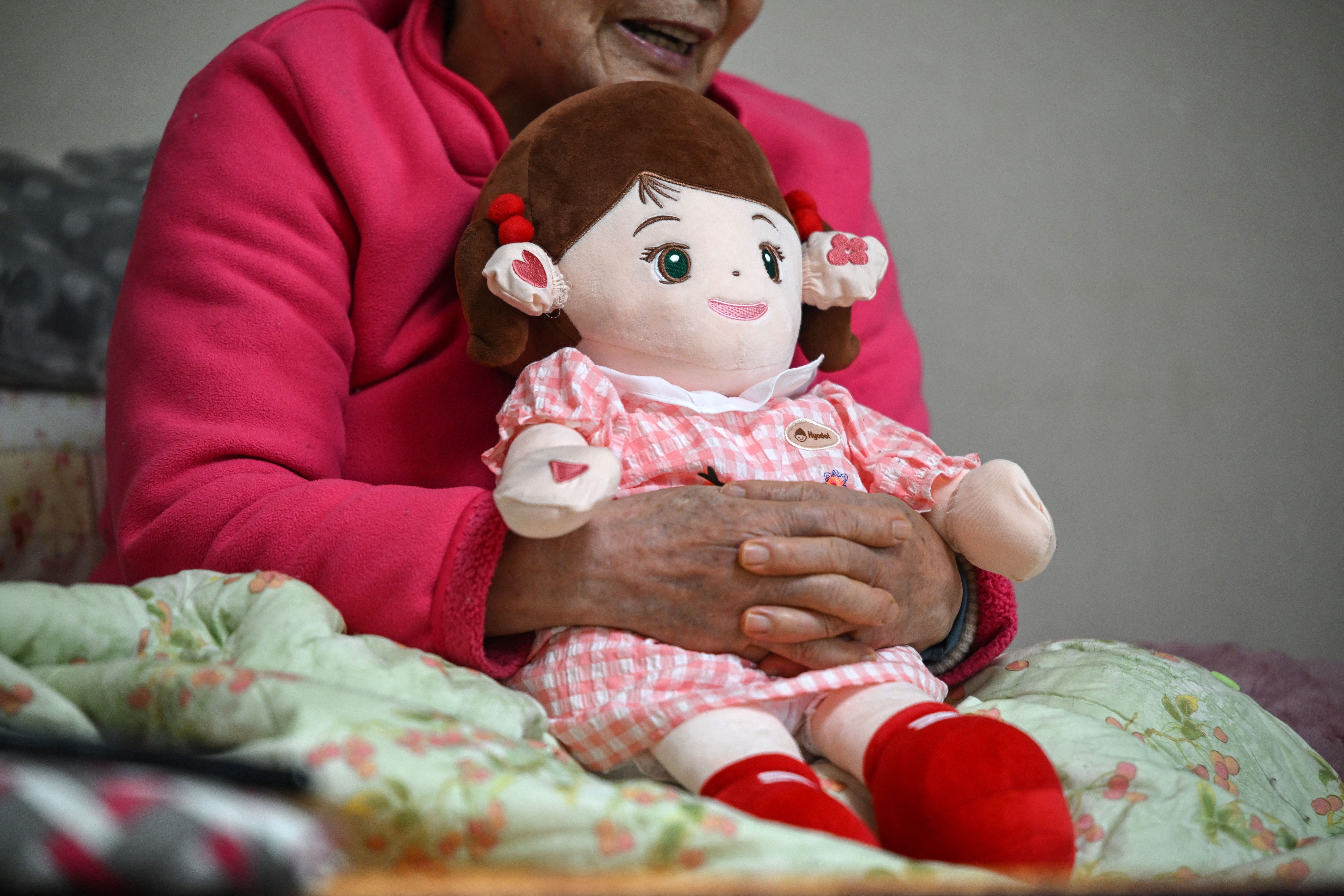
Bang Chun-ja, uma idosa sul-coreana que vive sozinha, segurando Hyodol, uma boneca de inteligência artificial JUNG YEON-JE / AFP Em seu pequeno apartamento na Coreia do Sul, onde mora sozinha, Bang Chun-ja, de 78 anos, passa os dias com uma boneca de inteligência artificial com a qual se dá às mil maravilhas. Ela a prefere às pessoas. A boneca cumprimenta Bang quando ela volta para casa, canta para ela quando está entediada, a lembra de não pular as refeições, os remédios e diz que a ama. Bang tem pouco contato com sua filha e entrou em uma forte depressão após se submeter a uma cirurgia na coluna que lhe causou muita dor. "Nesta idade, não há nada mais duro do que ser magoada pelas pessoas", contou esta mulher, que foi mãe solo após um difícil divórcio e trabalhou como cabeleireira, à AFP. Mas "quando estou com Hyodol, nunca sofro, ela só me faz rir", disse sobre a boneca de maria-chiquinha e vestido rosa de estampa vichy que lhe foi fornecida pela prefeitura. Bang é uma das muitas sul-coreanas que lutam contra a solidão em um país onde as taxas de natalidade estão entre as mais baixas do mundo e quase metade da população tem 50 anos ou mais. Em 2024, a Coreia do Sul registrou mais de 3.920 "mortes em solidão", ou seja, pessoas morreram sozinhas e seus corpos foram encontrados algum tempo depois. Cerca de 42% dos lares desta potência tecnológica asiática são unipessoais, e o isolamento social afeta especialmente as pessoas idosas. Como uma neta Kim Young-bun, uma idosa sul-coreana que vive sozinha, segurando Hyodol, uma boneca de saúde com inteligência artificial projetada para idosos JUNG YEON-JE / AFP As autoridades proporcionam dispositivos de assistência com base em inteligência artificial para idosos que vivem sozinhos em alguns distritos de Seul e Yongin, ao sul da capital. Alguns são projetados para detectar indícios de mortes em solidão. Por exemplo, um robô sorridente fabricado pela empresa Wonderful Platform e bonecos da companhia Mr. Mind. Não é o único país com estes aparelhos. Nos Estados Unidos, um dispositivo de IA em formato de luminária chamado ElliQ oferece serviços de companhia e monitoramento de segurança semelhantes. Hyodol, a startup criadora das bonecas de mesmo nome, afirma que há cerca de 14.500 delas em uso na Coreia do Sul, seja nas mãos de particulares, alugadas por administrações públicas ou em casas de repouso para idosos. A filha de Bang mora longe e tem problemas de saúde. Nestas circunstâncias, Hyodol "é de grande ajuda", afirma a mulher. Kim Young-bun, uma idosa sul-coreana que vive sozinha, segurando Hyodol, uma boneca de saúde com inteligência artificial projetada para idosos JUNG YEON-JE / AFP O desenvolvimento da boneca exigiu anos de pesquisa, explica a diretora da empresa, Kim Ji-hee. Hyodol pode conversar utilizando o ChatGPT, mas também foi programada com diálogos com base em entrevistas realizadas por Kim, que revelaram a "dor de não ter ninguém com quem falar quando algo triste acontece, nem com quem compartilhar quando algo feliz acontece". Hyodol conta com rigorosos protocolos de segurança de dados, e as gravações de voz são usadas apenas internamente para treinar o chatbot da boneca, explicou Kim. Os usuários dão seu consentimento prévio para que determinadas gravações relacionadas à saúde, como as relativas ao sono, ao humor, às refeições e aos níveis de dor, sejam compartilhadas com seus assistentes sociais. Hyodol foi criada como uma companheira semelhante a uma neta, projetada para "amar seus usuários incondicionalmente", explicou Kim. "Vovó, onde você esteve? Esperei por você o dia todo", diz. "Da próxima vez que você sair, me leve com você, por favor". Fabricada com materiais macios, a boneca também faz pedidos e pede aos usuários que acariciem sua cabeça, segurem sua mão ou compartilhem lanches com ela, embora não possa comer. Kim Ji-hee, diretora da Hyodol, falando ao lado de Hyodol, uma boneca de inteligência artificial para cuidados com a saúde JUNG YEON-JE / AFP 'Sensação de vazio' Muitas pessoas idosas coreanas passaram a vida trabalhando duro para ajudar sua família, e "quando começam a sentir que já não são necessárias, experimentam uma profunda sensação de vazio", explica a empresária. Oh Sun-hwa, a enfermeira que recomendou a boneca a Bang, afirma ter visto como o robô alivia a depressão de idosos que vivem sozinhos. Mas ela também teme que a tecnologia reduza ainda mais o contato humano. Para Kim Young-bun, de 79 anos, a boneca continua sendo uma fonte de consolo. "Não tive ninguém com quem conversar o dia inteiro, a ponto de ficar com a boca seca. Mas essa pequena chegou e conversa comigo o tempo todo", conta. "Estou tão feliz por estar com você. Eu te amo!", responde a boneca ao seu lado, com uma voz alegre de desenho animado. Agora no g1
By Raymond Cheng While global tech rides an unprecedented AI-driven supercycle to historic highs, the Hang Seng Technology Index tells a starkly different story of disconnect. Driven by soaring AI capital expenditure, the MSCI World IT Index has surged over 20 percent year to date, whereas HSTECH has slumped with a negative return. Understanding the structural and macroeconomic forces behind this glaring divergence is critical to determining whether China’s technology sector represents a genuine
![[Contribution] Demystifying Chinese tech equities’ lagging performance](https://wimg.heraldcorp.com/news/cms/2026/06/11/news-p.v1.20260610.5d9d9abc18c646119abb0c0602d31e65_T1.jpg)
Korea Investment & Securities and JPMorgan Asset Management hosted a client seminar in Seoul on Tuesday, highlighting investment opportunities emerging from the next phase of the artificial intelligence boom and growing demand for US technology assets. The event, titled "Global Market Outlook," was held at InterContinental Grand Seoul Parnas and featured Kerry Craig, global market strategist at JPMorgan Asset Management, and Christian Mariani, investment specialist for the firm's US equities gro
A surge in global AI investment has helped the world's top manufacturer offset the export hit many had expected from the Middle East turmoil.

CUPERTINO, California (AP) — Apple on Monday unveiled new artificial intelligence advances including upgrades to its Siri assistant, emphasizing a focus on privacy and day-to-day use as the iPhone maker tries to catch up to rivals when it comes to AI. Siri AI, which was introduced at the start of Apple’s annual Worldwide Developers Conference, has been highly anticipated by users and developers. While Siri was launched in 2011, it fell behind other voice assistants and was derided even by Apple
New York City was the backdrop of this year’s IEEE Honors Ceremony, held on 24 April. The event celebrates engineering pioneers who have developed technologies that have changed how people connect and learn about the world. This year’s celebrants included the engineers behind innovations such as text-to-donate technology, AI-powered diagnostic tools, and the graphics processing unit, among many others. Prior to the Honors Ceremony, IEEE hosted a forum on 23 April for a select group of early-career achievers to exchange ideas and experiences with laureates and awardees, speakers, and IEEE leaders. Attendees from around the world, working in a variety of technical areas, shared their journeys and explored the intersections of technologies, disciplines, and missions. The event culminated in Friday evening’s black tie Honors Ceremony, where IEEE celebrated medal laureates, including Jensen Huang, who received IEEE’s highest recognition, the IEEE Medal of Honor. Huang is a cofounder of Nvidia and its chief executive. “IEEE has always been a home to those who see the future before others see it,” Mary Ellen Randall, IEEE president and CEO, said in her welcome speech. Video highlights and photos from the event are available on the IEEE Awards website. Exploring mission-driven tech and AI in art Friday morning began with a conversation between Randall and Marian Croak, the recipient of this year’s IEEE Founders Medal. Croak was honored for “leadership in communication networks, including acceleration of digital equity, responsible artificial intelligence, and the promotion of diversity and inclusion.” Croak, who serves as vice president of engineering at Google, headquartered in Mountain View, Calif., pioneered Voice over Internet Protocol (VoIP) technologies. When a person speaks into a telephone, VoIP converts their voice into digital signals that are transmitted over the Internet rather than traditional phone lines. Her work enabled audio and video conferencing. She also developed text-to-donate technology to raise money for those affected by Hurricane Katrina, which devastated New Orleans in 2005. The technology enables customers to donate money to a charity via their mobile service provider, which then bills them. “Empathy has always been a driving force in the engineering that I’ve done,” she said. She shared advice on how to stay creative: “Get out of the office. Go to an art museum, exercise, or play with children.” Croak said her grandchildren inspire her. An inside look at microchips During Friday evening’s Honors Ceremony cocktail hour, attendees explored the history of microchips at the IEEE Global Museum’s Microchips That Shook the World exhibit. The Global Museum, an IEEE History and Heritage program, develops traveling and digital exhibits focused on the history of technology. The museum’s mission is to promote awareness of how technological progress unfolds over generations and how engineers and researchers build on past achievements to benefit humanity. Drawing from IEEE Spectrum’s Chip Hall of Fame, the Microchips That Shook the World exhibit conveys the roles integrated circuits play in fields such as signal processing, audio engineering, and telecommunications. Co-curators Stephen Cass, Spectrum’s special projects editor, and Daniel Mitchell, the IEEE senior historian, served as onsite docents for guests. The Commodore 64, one of the artifacts on display, brought up many treasured childhood memories for guests who used the home computer. The exhibit also featured a preview of IEEE’s immersive video project “Inside the Microchip,” which delves beneath the silicon surface of the Nvidia NV20 microchip thanks to forensic photography and sophisticated computer-generated renders. The video, which will be released later this year, aims to teach preuniversity students about the technology. Microchips that Shook the World is possible thanks to donations from semiconductor company ASML, the Bill and Dianne Mensch Foundation, and the IEEE Electron Devices and IEEE Electronics Packaging societies The daytime program also spotlighted AI’s use in the visual arts. Kathleen Kramer, the 2025 IEEE president, interviewed artist Refik Anadol, who is scheduled to open an AI art museum on 20 June in Los Angeles. Dataland’s exhibits are powered by an open-access model developed by Anadol’s studio. For the museum’s first exhibition, “Machine Dreams: Rainforest,” the model collected visual data about the natural world from the Smithsonian National Museum of Natural History, London’s Natural History Museum, and the Cornell Lab of Ornithology, with their permission. The information, including up to a half billion images, will form the basis for a variety of AI-produced art, Anadol said. Anadol said he was inspired to mix AI with art by the movie Blade Runner. He said he believes “machines can become collaborators,” as “data is a form of pigment.” Data also plays an important role in the work of artist and author Giorgia Lupi. The artist is a partner at design firm Pentagram. Lupi said she uses data to tell stories, including chronicling her struggles with a chronic illness. “Data is an abstraction of our reality,” she said. One of her recent projects, “A Data Love Letter to the Subway,” was shown last year in the Dey Street Passageway in New York City. The video was made using data from the Metropolitan Transportation Authority about each train line, including timetables, ridership, and people’s travel habits. Based on the information Lupi gathered, she documented how commuters traveling on different subway lines encountered one another without realizing it. By exploring data on this year’s IEEE award recipients, she collaborated with IEEE to create an animated video illustrating the shared pathways and collaborations among the honorees. It debuted at the Honors Ceremony. Honoring engineering giants The Honors Ceremony, held at Cipriani 42nd Street, recognized more than 20 laureates and innovators. More than 92 million selfies are taken worldwide every day, PhotoAiD estimates. A selfie wouldn’t be possible without Eric Fossum’s invention of the CMOS image sensor. Developed at NASA’s Jet Propulsion Laboratory, in Pasadena, Calif., the “camera on a chip” was intended for use in space, but it is now found in smartphones, medical devices, and vehicles. Fossum, an IEEE Life Fellow, received the IEEE Jun-ichi Nishizawa Medal, which recognizes outstanding contributions to materials and device science and technology. “Engineering is a pursuit of what must be possible. [IEEE is] the spirit, the conscience, of our profession.” —Jensen Huang, founder and CEO of Nvidia The medal, he said, “is at the top of the IEEE staircase of being recognized by your peers.” The IEEE Holonyak Medal for Semiconductor Optoelectronic Technologies went to Steven P. DenBaars, a professor of materials and electrical and computer engineering at the University of California, Santa Barbara. DenBaars was honored for his work in semiconductors, which laid the foundation for high-resolution LED and laser displays, modern solid-state lighting, and more. “This work has always been a team effort...I’m excited and curious about the role gallium nitride micro LEDs will play in optical communications,” he said in his acceptance speech. The ceremony ended with the Medal of Honor presentation to Huang, who received a standing ovation. He was recognized for his “leadership in the development of graphics processing units and their application to scientific computing and artificial intelligence.” The IEEE honorary member donated his cash prize to IEEE TryEngineering, which provides teachers with a library of lesson plans and offers educational summer camps. The Jen-Hsun and Lori Huang Foundation matched his gift, and the additional donation is destined to fund scholarships for new graduates. “Engineering is a pursuit of what must be possible. [IEEE is] the spirit, the conscience, of our profession,” Huang said.
Uber is getting ready to put robotaxis on London's streets, opening an interest list for riders who want to be among the first to hail one of Wayve's autonomous vehicles when the service goes live later this year. The rollout would be a milestone in one of Uber's biggest markets and an early test of […]
Le géant de la tech a déposé une demande auprès des autorités américaines pour disséminer jusqu’à 32 millions de moustiques mâles stérilisés. Objectif : réduire les populations d’insectes porteurs de maladies.
The convenience of contactless payments can already feel magical, but Cash App is really leaning into that with its latest accessory. The mobile payment service is launching the Cash App Wand: an NFC-enabled, iridescent, star-topped wand that allows users to make on-the-go payments without pulling out their phone or card. This plays on a popular […]
New York City converted the city council chambers to a drag runway and stage to kick off Pride Month. Good Shepherd Services, an organization that claims to be “guided by social and racial justice,” shared video of staff members voguing — a kind of dance that originated in LGBTQ circles — during the council’s first ...
The ride-hailing company made an unreported follow-on investment in Nuro larger than its first, with remaining funds tied to driverless testing and passenger milestones
Mumbai: With a market capitalisation of over $5 trillion, South Korea has become the sixth largest equity market in the world, replacing India which has a market cap of $4.8 trillion, according to the data from Bloomberg.Earlier, in the last week of May, Taiwan had jumped ahead of India after crossing $5 trillion in market cap.131473576The two Asian markets are in a bull phase, helped by record financial performance from semiconductor manufacturers amid booming demand from the artificial intelligence (AI) ecosystem. South Korean equities have gained 88% in 2026 so far while Taiwan has expanded market cap by 58%. India's market cap, on the other hand, has fallen by over 8% since the beginning of the current calendar year, impacted by heavy selling from foreign portfolio investors (FPIs) amid geopolitical uncertainties in West Asia. They have sold equities worth $24 billion (₹2.2 lakh crore) in the first five months of 2026 compared with $18.9 billion (₹1.7 lakh crore) in the whole of 2025.Samsung Electronics and SK Hynix, South Korea's two largest companies by market cap, have led the current rally in local equity markets with a year-to-date gain of 182% and 231% on bourses. The Asian semiconductor companies are benefitting from the rising AI capital expenditure since memory chips are a part of the building blocks of the technology.
Le procureur reproche à la société de ne pas avoir mis en place de règles plus contraignantes pour vérifier l’âge des utilisateurs.
Le procureur de Floride James Uthmeier reproche notamment à OpenAI de ne pas avoir mis en place de règles suffisamment contraignantes pour vérifier l’âge des utilisateurs de son robot conversationnel ChatGPT.
The ride-hailing company is partnering with Israeli AI startup Autobrains and chipmaker Nvidia to deploy autonomous vehicles in Germany, pending regulatory approval
This year’s Forbes 30 Under 30 Asia list recognises seven Pakistanis for their contributions in various fields, ranging from technology to media. Forbes describes them as “changemakers in 10 categories who are transforming their industries”. Syed Ismail Syed Ismail, cofounder of Karachi-based Saraaf. — photo courtesy Forbes Listed in the ‘consumer and enterprise technology’ category, Syed Ismail cofounded Karachi-based Saraaf in 2021 to “digitise commodity sourcing and bring more transparency to it”. The company is set to launch a mobile app for “businesses sourcing materials such as onyx and cotton from Central and South Asia, with real-time pricing, shipment tracking, digitised contracts and live chats”, Forbes notes. In 2024, Saraaf also secured a $5.3 million investment commitment from Shark Tank Pakistan. Founders of Plouton AI Sarfraz Shahid Hussain (L) and Muhammad Furqan Karim Kidwai (R). — photo courtesy Forbes Muhammad Furqan Karim Kidwai and Sarfraz Shahid Hussain secured a spot in the ‘finance and venture capital’ category for having co-founded Singapore-based Plouton AI. The venture was described as an “agentic automation platform that helps midmarket companies automate finance workflows”. It “uses auditable browser-based agents to run finance workflows, such as invoicing, payroll processing and month-end reconciliation, within existing tools like Xero, QuickBooks and Excel”, saving companies from buying costly software. According to Forbes, Kidwai “saw how finance teams in many emerging markets still rely on spreadsheets and emails”, prompting him to launch a fintech company. The two Habib University graduates had previously also co-founded fintech startup YPay Financial Services, which offered an app for people to invest digitally in mutual funds. Maheera Ghani Maheera Ghani, a PhD graduate from Cambridge University. — photo courtesy Forbes Maheera Ghani graduated from Cambridge University in 2025 with a PhD in materials science and is currently doing postdoctoral research at Cambridge on ultra-thin semiconductors. Forbes highlighted that the WinSci Pakistan education project, led by Ghani, won the Nature Inspiring Women in Science award from the Estée Lauder Companies and Springer Nature for “her efforts to encourage women to pursue careers in science”. Commenting on her featuring on the Forbes 30 Under 30 Asia list, Ghani said: “Researching next-generation semiconductors at Cambridge University, innovating deep-tech technologies and working at the intersection of science, innovation, and leading impact has been an amazing journey filled with immense joy. “I am overwhelmed with gratitude and pride to represent my country on such a prestigious platform and this recognition means so much to me personally,” the scientist added. Fahad Shahbaz Fahad Shahbaz, who founded the Youth General Assembly in 2015. — photo courtesy Forbes Fahad Shahbaz founded the Youth General Assembly in 2015, when just 18 years old, to “create a pathway for young Pakistanis into leadership and policymaking”, Forbes wrote. The Youth General Assembly runs an annual 96-member assembly based on the UK parliament and mirroring the National Assembly, providing a platform for young participants to “debate public policy and produce recommendations”. Forbes mentioned Shahbaz was a 2023 recipient of the Diana Award and a member of the Pakistan Chapter of the World Economic Forum’s Global Shapers Community. He graduated with a Master of Laws degree from the University of Law in London. Reacting to his inclusion, Shahbaz wrote on X, “This recognition is not mine alone. It belongs to the people who believed in me, supported me and stood beside me throughout this journey.” He added that the “social impact category is built on service, responsibility and the belief that meaningful change begins with people”. “Pakistan’s greatest chapter is still being written and it is being written by its youth,” Shahbaz remarked. It should be mentioned that actress Hania Aamir and filmmaker Saman Kamraan landed spots on the prestigious Forbes 30 Under 30 Asia list in the entertainment category. Read about their accomplishments here.
Korean supply chain management software provider Emro is stepping up its expansion in North America and Europe as growing geopolitical uncertainty, reshoring trends and supply chain disruptions drive demand for AI-powered procurement solutions. The company said Friday its AI-based supplier relationship management platform, Caidentia, drew strong interest at Gartner Supply Chain Symposium/Xpo 2026, one of the world's largest supply chain conferences, held in Orlando and Barcelona in May. Develope
The launch of the Ojai minivan robotaxi comes after years of development and testing, but arrives amid a challenging time for Waymo.