Fortune
중도 성향
IT/기술
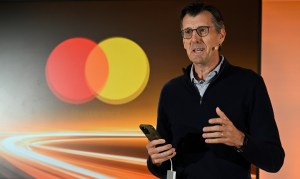
Exclusive: Mastercard launches protocol to let AI agents pay each other, send micropayments
Agent Pay for Machines is one of a slew of recent attempts from big companies to build payment networks optimized for AI.
IT/기술 · "NETWORKS" · 총 28건
필터 보기현재 지수
49.5
0 = 부정 우세
50 = 중립
100 = 긍정 우세
최근 7일 기준 88,332건을 분석한 결과, 뉴스 심리지수는 49.5(균형)입니다. 긍정 10,803건(12.2%)·중립 63,835건(72.3%)·부정 13,694건(15.5%)이며, 중립 비중이 뚜렷하게 높습니다. 성향 지수는 종합 20.7(보수 경향)입니다.
Agent Pay for Machines is one of a slew of recent attempts from big companies to build payment networks optimized for AI.
Comments
Comments
New York City was the backdrop of this year’s IEEE Honors Ceremony, held on 24 April. The event celebrates engineering pioneers who have developed technologies that have changed how people connect and learn about the world. This year’s celebrants included the engineers behind innovations such as text-to-donate technology, AI-powered diagnostic tools, and the graphics processing unit, among many others. Prior to the Honors Ceremony, IEEE hosted a forum on 23 April for a select group of early-career achievers to exchange ideas and experiences with laureates and awardees, speakers, and IEEE leaders. Attendees from around the world, working in a variety of technical areas, shared their journeys and explored the intersections of technologies, disciplines, and missions. The event culminated in Friday evening’s black tie Honors Ceremony, where IEEE celebrated medal laureates, including Jensen Huang, who received IEEE’s highest recognition, the IEEE Medal of Honor. Huang is a cofounder of Nvidia and its chief executive. “IEEE has always been a home to those who see the future before others see it,” Mary Ellen Randall, IEEE president and CEO, said in her welcome speech. Video highlights and photos from the event are available on the IEEE Awards website. Exploring mission-driven tech and AI in art Friday morning began with a conversation between Randall and Marian Croak, the recipient of this year’s IEEE Founders Medal. Croak was honored for “leadership in communication networks, including acceleration of digital equity, responsible artificial intelligence, and the promotion of diversity and inclusion.” Croak, who serves as vice president of engineering at Google, headquartered in Mountain View, Calif., pioneered Voice over Internet Protocol (VoIP) technologies. When a person speaks into a telephone, VoIP converts their voice into digital signals that are transmitted over the Internet rather than traditional phone lines. Her work enabled audio and video conferencing. She also developed text-to-donate technology to raise money for those affected by Hurricane Katrina, which devastated New Orleans in 2005. The technology enables customers to donate money to a charity via their mobile service provider, which then bills them. “Empathy has always been a driving force in the engineering that I’ve done,” she said. She shared advice on how to stay creative: “Get out of the office. Go to an art museum, exercise, or play with children.” Croak said her grandchildren inspire her. An inside look at microchips During Friday evening’s Honors Ceremony cocktail hour, attendees explored the history of microchips at the IEEE Global Museum’s Microchips That Shook the World exhibit. The Global Museum, an IEEE History and Heritage program, develops traveling and digital exhibits focused on the history of technology. The museum’s mission is to promote awareness of how technological progress unfolds over generations and how engineers and researchers build on past achievements to benefit humanity. Drawing from IEEE Spectrum’s Chip Hall of Fame, the Microchips That Shook the World exhibit conveys the roles integrated circuits play in fields such as signal processing, audio engineering, and telecommunications. Co-curators Stephen Cass, Spectrum’s special projects editor, and Daniel Mitchell, the IEEE senior historian, served as onsite docents for guests. The Commodore 64, one of the artifacts on display, brought up many treasured childhood memories for guests who used the home computer. The exhibit also featured a preview of IEEE’s immersive video project “Inside the Microchip,” which delves beneath the silicon surface of the Nvidia NV20 microchip thanks to forensic photography and sophisticated computer-generated renders. The video, which will be released later this year, aims to teach preuniversity students about the technology. Microchips that Shook the World is possible thanks to donations from semiconductor company ASML, the Bill and Dianne Mensch Foundation, and the IEEE Electron Devices and IEEE Electronics Packaging societies The daytime program also spotlighted AI’s use in the visual arts. Kathleen Kramer, the 2025 IEEE president, interviewed artist Refik Anadol, who is scheduled to open an AI art museum on 20 June in Los Angeles. Dataland’s exhibits are powered by an open-access model developed by Anadol’s studio. For the museum’s first exhibition, “Machine Dreams: Rainforest,” the model collected visual data about the natural world from the Smithsonian National Museum of Natural History, London’s Natural History Museum, and the Cornell Lab of Ornithology, with their permission. The information, including up to a half billion images, will form the basis for a variety of AI-produced art, Anadol said. Anadol said he was inspired to mix AI with art by the movie Blade Runner. He said he believes “machines can become collaborators,” as “data is a form of pigment.” Data also plays an important role in the work of artist and author Giorgia Lupi. The artist is a partner at design firm Pentagram. Lupi said she uses data to tell stories, including chronicling her struggles with a chronic illness. “Data is an abstraction of our reality,” she said. One of her recent projects, “A Data Love Letter to the Subway,” was shown last year in the Dey Street Passageway in New York City. The video was made using data from the Metropolitan Transportation Authority about each train line, including timetables, ridership, and people’s travel habits. Based on the information Lupi gathered, she documented how commuters traveling on different subway lines encountered one another without realizing it. By exploring data on this year’s IEEE award recipients, she collaborated with IEEE to create an animated video illustrating the shared pathways and collaborations among the honorees. It debuted at the Honors Ceremony. Honoring engineering giants The Honors Ceremony, held at Cipriani 42nd Street, recognized more than 20 laureates and innovators. More than 92 million selfies are taken worldwide every day, PhotoAiD estimates. A selfie wouldn’t be possible without Eric Fossum’s invention of the CMOS image sensor. Developed at NASA’s Jet Propulsion Laboratory, in Pasadena, Calif., the “camera on a chip” was intended for use in space, but it is now found in smartphones, medical devices, and vehicles. Fossum, an IEEE Life Fellow, received the IEEE Jun-ichi Nishizawa Medal, which recognizes outstanding contributions to materials and device science and technology. “Engineering is a pursuit of what must be possible. [IEEE is] the spirit, the conscience, of our profession.” —Jensen Huang, founder and CEO of Nvidia The medal, he said, “is at the top of the IEEE staircase of being recognized by your peers.” The IEEE Holonyak Medal for Semiconductor Optoelectronic Technologies went to Steven P. DenBaars, a professor of materials and electrical and computer engineering at the University of California, Santa Barbara. DenBaars was honored for his work in semiconductors, which laid the foundation for high-resolution LED and laser displays, modern solid-state lighting, and more. “This work has always been a team effort...I’m excited and curious about the role gallium nitride micro LEDs will play in optical communications,” he said in his acceptance speech. The ceremony ended with the Medal of Honor presentation to Huang, who received a standing ovation. He was recognized for his “leadership in the development of graphics processing units and their application to scientific computing and artificial intelligence.” The IEEE honorary member donated his cash prize to IEEE TryEngineering, which provides teachers with a library of lesson plans and offers educational summer camps. The Jen-Hsun and Lori Huang Foundation matched his gift, and the additional donation is destined to fund scholarships for new graduates. “Engineering is a pursuit of what must be possible. [IEEE is] the spirit, the conscience, of our profession,” Huang said.
Comments
Nvidia CEO Jensen Huang met SK Group Chairman Chey Tae-won over fried chicken and beer in southern Seoul on Sunday, their second meeting in two days, as the two sides continued to signal closer ties in artificial intelligence. The latest meeting, held at Kkanbu Chicken in Samseong-dong, southern Seoul, came as Nvidia and SK Group are expanding cooperation across AI chips, high-bandwidth memory and next-generation telecom networks. Huang and Chey arrived at the restaurant at around 6:50 p.m. Huan
The very tool being counted on to decarbonise our civilisation is fast becoming one of the most power-hungry infrastructure networks on Earth. Yet dismissing AI as a climate villain is to miss one of the most consequential opportunities of the decade
Anthropic has reportedly placed engineers within the NSA to help deploy its advanced 'Mythos' AI for cyber operations, despite an ongoing legal dispute with the Department of War. This 'undercover' collaboration aims to customize AI for national security, with the technology designed for infiltrating foreign networks. The move is controversial given the Pentagon's prior 'supply-chain risk' label on Anthropic.
This sponsored article is brought to you by Black & Veatch. The biggest challenge facing utilities today isn’t what it seems. It’s not demand, even as load growth accelerates. It’s not extreme weather, even as “major events” become routine. It’s not cybersecurity, even as connections expand across the grid. The real challenge is this: Distribution systems were designed for a different reality. Long gone are the days of predictable demand, one-way power flow and isolated disruptions. At Black & Veatch, we see that leading utilities are no longer debating whether to modernize. They’re deciding how quickly they can do it, and how to do it at scale. Across grid modernization programs globally, three truths consistently emerge. They define what it takes to prepare the distribution system for what’s next: 1. Outage response is not a resilience strategy Resilience is being redefined in real time. A strategy centered on mobilizing crews and restoring service as quickly as possible is reactive, and increasingly insufficient. Resilience has to shift upstream into integrated system design. That starts with hardening. Stronger poles, undergrounding and structural upgrades all have a role, particularly in high-risk corridors. We’re also seeing meaningful gains from how the network is configured and how quickly it can respond without waiting on manual intervention. This is where distribution automation programs can change outcomes. Strategically placed reclosers, automated switches and fault indicators help contain disruptions before they spread. When combined with feeder reconfiguration and updated protection strategies, distribution automation investments allow utilities to set more aggressive recovery targets and achieve measurable reductions in outage duration and customer impact. 2. Future-readiness depends on DERs at scale Forecasting is less and less reliable. Only 19 percent of utilities report strong confidence in their ability to predict future load growth, according to the Black & Veatch 2025 Electric Report. Distributed Energy Resources (DERs) like solar, storage, EVs and behind-the-meter generation are exciting solutions; but they fundamentally change how the system operates. Power is no longer just delivered. It’s injected, stored and redirected in ways the system was never designed to manage. At scale, these challenges show up quickly — particularly on feeders where distributed generation is approaching or exceeding hosting capacity. Protection coordination becomes more difficult when fault current comes from multiple directions. Voltage becomes less predictable as generation fluctuates throughout the day. And planning models must now account for highly variable, location-specific behavior. Distribution modernization is fundamentally changing how the system is designed and operated so it can absorb disruption, manage bi-directional flows and respond in real time. Adapting to bi-directional power flow requires more than incremental updates. Leading utilities are responding by building flexibility into the system, moving beyond static assumptions toward dynamic hosting capacity and interconnection studies, planning that incorporates DER, EV adoption and localized load growth, and infrastructure aligned with the communications and control needed to manage it. 3. The edge must be intelligent, visible and secure As system stress and complexity increase, utilities need far greater visibility and control over the network. Historically, utilities relied on customer calls, Supervisory Control and Data Acquisition (SCADA) at the substation level and field crews to understand what was happening on the system. That model doesn’t hold up. You can’t effectively manage a system you can’t see. Plus, the most critical events are increasingly happening beyond the substation — on feeders, laterals, and at the edge where DER and customer behavior are interacting with the grid. Grid-edge technologies have become essential. Sensors, Advanced Metering Infrastructure (AMI) and automated switching provide the raw data and control needed to move from reactive to proactive operations. In more advanced deployments, utilities are creating centralized control environments that allow operators to see and manage the distribution system in near real time. That capability is enabled by: Advanced communications networks to form the backbone of real-time grid visibility Distribution Management System (DMS) and Outage Management System (OMS) to enable faster, more coordinated system response Analytics, AI and machine learning to improve situational awareness, anticipate system conditions, and support operational decision-making The same connectivity enabling this real-time visibility and control also introduces new vulnerabilities, blurring the line between physical and cyber risk, yet many utilities manage them separately. Only 22 percent have unified teams in place, even as threats continue to rise, including a 50 percent increase in substation attacks and growing exposure to malware and ransomware, according to the Black & Veatch 2025 Electric Report. Cybersecurity and resilient network design must be embedded into the architecture from the outset—not layered on after the fact. See what bolder vision looks like Distribution modernization is fundamentally changing how the system is designed and operated so it can absorb disruption, manage bi-directional flows and respond in real time. To learn about a successful program, check out Georgia Power’s recent grid modernization program. Black & Veatch partnered with the utility on large-scale infrastructure upgrades. The results? Outages are down 76 percent, restoration times have improved by more than 80 percent and communities across Georgia are powered by a grid built to meet the future head-on. When the state faced the most destructive storm in the company’s history, Hurricane Helene, Georgia Power deployed a rapid response team that utilized its “smart grid” and restored power to more than 1 million customers within days. A grid built to meet the future head-on—that’s the result of bolder vision.
The “latest advancements at the AI frontier have increased the level of urgency around cybersecurity,” Palo Alto Networks’ CEO said.
The beat comes on lowered expectations, after the company gave disappointing guidance in February that fell short of analyst estimates.
It’s easy to understand why so many graduates are booing commencement speakers who tell them how great AI is. They face a brutal job market, with unemployment for recent college graduates nearing recession levels, and AI is often cited as the reason they can’t find jobs or have to drastically reassess their career plans.I have a message for the class of 2026: AI is not ruining your job prospects, at least not yet. A better explanation for the tough job market may be the prevalence of WFH, not the rise of AI.131463654Two new studies, one from the Federal Reserve Bank of New York and one from the London School of Economics, look at the recent rise in unemployment among young workers. The authors of the LSE study looked at 243 million new hires and 407 million online job postings from 2017 to 2025 in the US, UK, Australia and Canada. They observed a notable decline since 2022 in the hiring of new graduates. AI was presumed to be the reason, since the falloff tends to be in the sort of industries that are adopting AI.But these are also the same kinds of jobs — reliant on computers, knowledge-intensive, white-collar — that are most amenable to working from home. When they controlled for WFH, the authors found that the impact of AI on hiring was negligible.The study postulates that where WFH is more common, managing junior staff is more expensive. At the same time, young staffers who receive less training may be less productive than they would be otherwise, even as they mature and demand more pay. So the cost of WFH to young graduates is not just a harder job market — it also makes it harder for young employees to get good training, supervision and mentorship, a point also made by the New York Fed study.WFH has always had a superficial appeal. At first, it seems easier and often cheaper for both employers and employees; companies can pay less if they offer more flexibility, and many staffers have commitments that keep them at home. In the long term, however, both management and workers pay a price in terms of lost training and career development of younger employees.This could get even worse as AI is more widely adopted. New hires recently out of college who work on their own may figure out how to do specific tasks (perhaps with AI assistance), but they won’t learn much about how to manage office politics, charm clients or build networks. All these skills will be even more valuable in an AI job market, and none can be gained without coming into the office and observing senior colleagues.The new research doesn’t argue that AI will have no impact on hiring in the future, or that it is currently affecting hiring decisions. It’s also worth noting that many firms are still hiring — just not as much as before. There are a lot of factors that go into the health of the labor market, and if the economy worsens, the combination of AI and WFH could make it even harder for young graduates.What does seem clear is that AI is becoming a convenient villain for a lot of complaints people have about the economy. Tech executives aren’t helping by regularly declaring that AI can replace a lot of jobs. More likely, they are using AI as an excuse when they are letting people go for financial reasons. In the case of WFH, it may be easier to blame AI than to ask reluctant staff to come into the office.I’ve seen this reluctance firsthand: A few years ago I met middle-aged media executive who told me how much she loved working from home (or, often in her case, from a resort in Mexico). When I asked her about junior staffers missing out on mentoring and on-the-job training, she admitted she never would have succeeded if senior people weren’t in the office when she was coming up. But she didn’t seem too bothered by it, either.I’ve never been asked to give a commencement speech, but if for some reason I were, this would be my advice: Find a company where everyone likes going to work. Then try to get a job there — and if you do, go into the office every day.
Speaking to TechCrunch, Crunchbase’s head of research Gené Teare, said the factors holding back Black founders include “access to networks, relationships, and early introductions."
South Korean food delivery platform Baemin, operated by Woowa Brothers, is set to accept overseas Apple Pay cards, becoming the first such platform in the country to do so as foreign demand for its services surges. According to the company on Sunday, the move will open Apple Pay, previously limited to Korean-issued cards, to those on global networks including Visa, Mastercard, JCB and American Express, starting June 2. "The addition of overseas Apple Pay card support, combined with our multiling
Electrons are great. We use them to move vehicles, illuminate cities, and, of course, compute. But computation is not confined to the world of electronics. And shifting to alternative nonelectronic realms can unlock unique advantages: Photonic chips, for instance, process information with light while generating little heat. Another compelling alternative is fluidics, which uses pressurized gases or liquids to build logic circuits. Pioneered in the 1960s but sidelined by microchips, the field reemerged in the 1990s as “microfluidics.” This approach aims to shrink laboratories onto a single chip by creating microscopic fluid channels with integrated micropneumatic control systems. Today, there is a second fluidic revival, this time in the domain of soft robotics. Scaling microfluidic designs up to the millimeter-scale range (millifluidics) enables the higher flow rates necessary to drive robotic actuators. These robots exploit the nonlinear behaviors of soft materials to create lifelike motion and safer interactions, often utilizing pressurized air. By building systems that “think” with the same air that powers them, we can drastically reduce the need for bulky electronic-to-pneumatic interfaces. This is the focus of my Soiboi Studio robotics lab. With millifluidic logic, I have steadily scaled the complexity of my designs. What began with a simple oscillator has most recently evolved into a clock featuring a soft, four-digit, seven-segment display. What Is Millifluidics? Building on microfluidics research from the early 2000s and recent developments from the Grover Lab at the University of California, Riverside, I’ve developed millifluidic devices using standard 3D printing and silicone casting. The basic architecture is simple: A flexible membrane is sandwiched between rigid layers embedded with networks of air channels. Just as electronics rely on differing voltage potentials, these fluidic circuits operate on the pressure difference between atmospheric pressure (logical 0) and a near-vacuum at around −60 kilopascals of relative pressure (logical 1). Using negative pressure means the membrane is pulled into openings. This creates robust seals that allow me to replicate electronic building blocks. A cast silicone membrane forms the face of the clock [top], while behind it sits 3D-printed millifluidic blocks [middle rows]. An Arduino Uno controls driver boards that operate solenoids, which are connected to valves that are attached to a vacuum pump [bottom row].James Provost While fluidic resistors are easily realized by adjusting the channel geometry, the heart of the system is a valve that mimics a metal-oxide-semiconductor field-effect transistor, or MOSFET. This vacuum “transistor” features a flow layer with two chambers (the source and drain) divided by a central valve seat and a control layer containing a cavity (the gate). A membrane runs between the control and flow layers and normally prevents airflow between the source and drain chambers. To switch the transistor on, a vacuum is applied to the gate chamber, sucking the membrane into the cavity and lifting it off the seat. This opens a path for airflow, equivalent to closing an electric circuit. By adding a small aperture to the membrane, I created a check valve—the fluidic equivalent of a diode. By combining transistors and resistive “pull-down” channels, I can build a full suite of logic gates. The original microfluidic designs that inspired me were fabricated from etched glass and milled acrylic. Adapting them for a standard 3D printer required reengineering the logic elements and mastering two critical fabrication techniques. First, I need airtight prints, yet printed plastic is notoriously porous. By printing at elevated temperatures, slow speeds, and slight overextrusion, I was able to fill microscopic gaps. When you’re using transparent filament, there’s a handy visual indicator: The more transparent the plastic appears, the lower its porosity. Second, I used glass for my print bed. By printing the upper and lower chambers directly against this bed, I got the interface surface to become mirror smooth. This finish is essential for creating reliable, airtight seals. A 0.3-millimeter silicone membrane is placed between the layers and secured with screws. How Does the Soft Clock Work? The clockface is a cast silicone membrane. Each digit segment is formed by a small underlying cavity. When air is evacuated from this cavity, the membrane is sucked inward to create a concave hollow; when atmospheric pressure is restored, the silicone pops back flush with the surface. The result is a mesmerizing, organic motion. The “brain” of the clock is an Arduino Uno, while the fluidics significantly reduce the hardware footprint. A four-digit, seven-segment display with two separator dots would require 29 solenoid valves to control directly. My clock needs just 11 valves. A pneumatic transistor is off when its upper control chamber is at atmospheric pressure [top]. When air is removed from the control chamber, it lifts a membrane, which allows air to flow between lower flow chambers and turns the transistor on [bottom]. James Provost To understand how it works, consider a standard electronic four-digit, seven-segment LED display. This also uses 11 pins to drive its digits. (In clockface displays, an additional pin is required to drive the separator dots.) Every digit is connected to a shared data bus with seven lines, one per segment. The four control lines select individual digits. Only one digit is illuminated at time, and strobing the digits at least 50 times per second creates the illusion that all four are simultaneously illuminated. Such high-speed switching is not possible with air. Instead, I rely on memory. Each segment acts like a capacitor: By evacuating its cavity (logic 1), you “charge” the segment; by restoring atmospheric pressure (logic 0), you discharge it. Hence, each digit acts as an independent 7-bit memory. If the system is sufficiently airtight, the segments maintain their state for several seconds. Like the electronic display, the system utilizes a seven-line data bus. Each line connects to a solenoid valve that provides either vacuum or atmospheric pressure. To selectively address the individual digits, I placed a fluidic transistor between each segment and its data line. All the transistors’ control inputs for a given digit are combined into one “write enable” line connected to its own solenoid valve. Activating this valve allows me to write data into the corresponding digit’s memory. The clock updates one digit per second, meaning a full cycle across the face takes 4 seconds. This cycle also drives the separator dots: A set of fluidic diodes connects the enable lines to the dots’ cavities. Consequently, as each digit is addressed, the dots pulse automatically. This display is more than a clock; it is a soft robot that happens to tell time. By offloading computation to the same air that powers movement, the clock approaches a new class of machines that are simpler, lighter, and more integrated. I’m now developing a guide for getting started with vacuum-powered logic and may release a refined version of this clock in the future. Watching the silicone skin morph serves as a fascinating reminder that not all logic needs silicon; sometimes, all you need is flexible silicone and a flow of air. This article appears in the June 2026 print issue as “The Soft Clock.”
Comments
Despite geopolitical tensions, Chinese and American AI industries remain intertwined through research networks, collaboration, and a shared cultural identity.
In the late 1940s—when computer engineers were grappling with unreliable hardware and noisy transmission environments—a team of engineers inside a modest lab at the University of Manchester, England, confronted a problem so fundamental that it threatened the viability of digital computing itself. Machines could generate bits, but they could not reliably read them back. The inconsistent reading back of memory data did not initially present itself as a grand theoretical challenge. It showed up as something more mundane: inconsistent computing results. Engineers including Frederic C. Williams, Tom Kilburn, and G. E. (Tommy) Thomas traced the failures not to logic errors but to the physical behavior of the machines themselves. The team devised a technique for keeping a transmitter and a receiver synchronized without relying on a separate clock signal. Their innovation, known as Manchester code or phase encoding, encoded each bit with a transition in the middle of the bit period, effectively embedding timing information directly into the data stream to be a self-clocking signal. So, even if the signal degraded or the timing drifted slightly, the receiver could continually keep time based on those regular transitions. By eliminating the need for separate clocks and reducing synchronization errors, Manchester code made data transfer more robust across cables and circuits. Those qualities later made it a natural fit for technologies such as Ethernet and early data storage systems. Its self-clocking nature helped standardize how machines communicate, and it laid the groundwork for modern networking and digital communication protocols. On 13 April 2026, this breakthrough was honored with an IEEE Milestone plaque during a ceremony at the University of Manchester. Dignitaries from IEEE and the university attended the ceremony. Embedding timing in signals Those 1940s Manchester University engineers were working on systems that fed into the Manchester Mark I, one of the first practical stored-program machines. When troubles arose, they used oscilloscopes to probe signals. They found that electrical pulses did not arrive with consistent timing. Memory signals also blurred over time, making them harder to read, and when long runs of identical bits occurred, the waveform flattened into stretches with no transitions. That led to a crucial insight: The problem was not just detecting whether a signal was high or low; the system also lost track of when to sample the signal. Without reliable timing markers, even correctly formed signals were misread. Bits could effectively be lost or miscounted because the system fell out of sync. At first, the engineers tried to tame the hardware. They experimented with stabilizing circuits and more consistent pulse generation, attempting to impose a regular rhythm on an inherently unstable system. But the fixes proved fragile, and the electronics of the day could not maintain the required precision. So the Manchester group took a different approach. If the hardware could not provide a dependable clock, the signal itself would have to carry one. Instead of representing data as static levels, each bit changed state, with a guaranteed transition in the middle. Embedding timing in the signal reduced erratic behavior. Machines were suddenly able to reliably transmit, store, and read back data—an essential step toward practical stored-program computing. Making signals unmistakable The Manchester code addressed several issues at once. Regular transitions allowed continuous timing recovery. Transitions proved easier to detect than static levels, and long runs of identical bits no longer produced flat, ambiguous waveforms. Rather than fighting the imperfections of early electronics, the design worked with them. From lab curiosity to a global standard What began as a local solution in Manchester shaped digital communication systems for decades, including early Ethernet technology, for which timing and shared-medium communication were central challenges. According to Robert Metcalfe, a member of the team that built the first Ethernet system at Xerox PARC in 1973, he and his colleagues relied on Manchester code. “Manchester code solved a fundamental problem for us: timing,” Metcalfe says, explaining that each bit carried its own clock and removed the need for a global synchronized signal. That self-clocking property wasn’t the only benefit provided by the encoding scheme. On a shared coaxial cable, Manchester encoding did more than provide timing. Each transceiver left the medium undriven—effectively “off”—most of the time, allowing packets from other machines to pass without interference. Even during transmission, a station drove the signal only about half the time, leaving the line undriven during the other half of each bit cycle. This distinction—between a driven signal and an undriven line, rather than simple 1s and 0s—allowed receivers to recover both data and clock timing while also monitoring the cable for other activity. If a transceiver detected a signal when it expected the line to be undriven, the signal indicated that another station was transmitting at the same time. In other words, the system could detect collisions in real time and respond accordingly. The idea has proven durable far beyond local networks. Manchester code is being used aboard the Voyager spacecraft, which are now cruising through interstellar space—underscoring its reliability in extreme environments. The code also has found its way into everyday consumer electronics. Infrared remote controls for televisions and audio equipment commonly rely on Manchester code through protocols such as RC-5, developed by Philips in the early 1980s. The protocol encodes commands as timed infrared signals transmitted by a handset’s integrated circuit and LED, allowing devices to reliably interpret button presses even through noise and signal distortion. Manufacturers across Europe—and many in the United States—adopted the approach, extending Manchester code into the home. Why the Milestone matters An IEEE Milestone designation recognizes technologies with enduring impact. Manchester code qualifies because it solved a foundational timing problem at a critical moment in computing history. Without a way to embed timing in the data itself, early digital systems would have remained fragile and unreliable. Manchester code helped transform them into dependable machines, and it enabled much of today’s digital communication. “Manchester code solved a fundamental problem for us: timing,” —Robert Metcalfe, an Ethernet inventor Key participants at the plaque dedication ceremony included Tom Coughlin, 2024 IEEE president; Duncan Ivison, University of Manchester president and vice chancellor, and Nagham Saeed, chair of the IEEE U.K. and Ireland Section. Talks by Kees Schouhamer Immink (the 2017 IEEE Medal of Honor laureate probably best known for his work that made compact discs and other high-density digital media practical) and Peter Green (Manchester’s deputy dean for the engineering faculty) highlighted the code’s lasting impact on digital data storage and communications. The IEEE Milestone plaque for the Manchester code reads: “At this site in 1948–1949, Manchester code was invented for reliably encoding digital data stored on the Manchester Mark I computer’s magnetic drum. It became a standard for computer magnetic tapes and floppy disks and was used in digital communications, including the Voyager 1 and 2 spacecraft and early Ethernet networks. It found wide use in domestic remote controllers, radio frequency identification (RFID) tags, and many control network standards.” Administered by the IEEE History Center and supported by donors, the Milestone program recognizes outstanding technical developments worldwide. The IEEE U.K. and Ireland Section sponsored the nomination.
This sponsored article is brought to you by Melbourne Convention Bureau (MCB) supported by Business Events Australia. Melbourne’s reputation as a global events city, from the Australian Open tennis and Formula 1 Australian Grand Prix to hosting NFL regular season games, now intersects with a different form of scale: large-scale compute, data-intensive research, and advanced engineering. Long recognized for delivering complex international events, the city is applying the same organisational capability to the infrastructure that underpins modern AI research, positioning Melbourne at the convergence of global convening and high-performance digital systems. Consistently ranked among the world’s most livable cities, Melbourne was named Time Out’s Best City in the World in 2026, the first Australian city to hold the title. Melbourne, Australia’s premier conference destination. Tourism Australia More materially for research and innovation, Melbourne is also the nation’s fastest‑growing capital, attracting increasing concentrations of engineering and technology talent, investment and international engagement. Australia’s artificial intelligence (AI) ecosystem is entering a new phase, defined less by isolated initiatives and more by the convergence of compute infrastructure, research intensity and international collaboration. Melbourne sits at this intersection. Melbourne’s trajectory highlights what enables research at scale: access to frontier-grade compute, proximity to industry-ready infrastructure, and repeated opportunities for global research communities to convene. Sovereign AI compute, expanding hyperscale data center campuses and a growing pipeline of international research-led conferences are reshaping the city’s research landscape. Together, these elements position Melbourne as a focal point for applied AI research, advanced engineering and data-intensive science. The growing global influence of AI engineering, underscored by NVIDIA CEO Jensen Huang receiving the 2026 IEEE Medal of Honor, reflects the scale of this shift. In Melbourne, these factors form a reinforcing research flywheel linking infrastructure, discovery and collaboration. Rather than focusing on startup density or short-term commercial output, Melbourne’s trajectory highlights what enables research at scale: access to frontier-grade compute, proximity to industry-ready infrastructure, and repeated opportunities for global research communities to convene. NVIDIA CEO Jensen Huang received the 2026 IEEE Medal of Honor.IEEE Sovereign AI foundations The most recent cornerstone of Melbourne’s AI capability is MAVERIC (Monash AdVanced Environment for Research and Intelligent Computing), Australia’s largest university-based AI supercomputer. Built and deployed by Monash University in partnership with NVIDIA, Dell Technologies, and CDC Data Centres, MAVERIC has been engineered specifically for large scale AI and data intensive science, with medical research representing a key priority. Indeed, in these regards MAVERIC has been designed to function as a Next Generation Trusted Research Environment thus ensuring that it is state-of-the-art and provides a safe and secure framework for the analysis of large sensitive datasets. Designed to support research projects including cancer and neurodegenerative disease detection, clinical trial analysis and drug discovery through to materials science and engineering, MAVERIC enables Australian researchers to train and evaluate large models domestically while keeping highly sensitive datasets secure and under national jurisdiction. This sovereign design is particularly relevant in fields such as medical research where privacy, regulation or intellectual property constraints limit the use of offshore cloud resources. Monash University Vice-Chancellor and President Professor Sharon Pickering with researchers [left to right] Professor Anton Peleg, Professor Victoria Mar, Professor James Whisstock, Vice-President (Strategy and Major Projects) Teresa Finlayson, and Professor Patrick Kwan.Eamon Gallagher (Australian Financial Review) Technically, the system reflects the latest shifts in high performance AI architecture. Built on NVIDIA GB200 NVL72 platforms and integrated using Dell’s rack scale infrastructure, MAVERIC employs closed loop liquid cooling to reduce water consumption compared with conventional air-cooled systems, aligning large scale compute growth with sustainability objectives while supporting high density, high throughput workloads. Professor James Whisstock, Deputy Dean Research of Monash’s Faculty of Medicine, Nursing, and Health Sciences commented, “MAVERIC provides a huge leap forward in our compute capability that will revolutionize our researchers’ ability to address the most challenging and important research questions across the fields of medical research, information technology, and STEM disciplines. It will seed wonderful new cross-disciplinary collaborations, underpin the work of our best and brightest young researchers and will allow our scientists to continue to make major discoveries that positively impact the Australian and global population more broadly.” “MAVERIC provides a huge leap forward in our compute capability that will revolutionize our researchers’ ability to address the most challenging and important research questions across the fields of medical research, information technology, and STEM disciplines.” —Professor James Whisstock, Deputy Dean Research of Monash’s Faculty of Medicine, Nursing, and Health Sciences Monash University frames MAVERIC not as a standalone asset, but as part of the national research infrastructure, intended to strengthen collaboration across academia, healthcare, government and industry. This approach positions Melbourne at the forefront of sovereign AI enabled research in the region. Data center scale as research infrastructure The infrastructure demands of modern AI research extend well beyond individual systems. Melbourne’s expanding data center footprint now supports hyperscale compute, applied AI deployment and large-scale research workloads simultaneously. Total data center investment, US$ billions.Source: Data Centres Global Report 2025 In February 2026, CDC Data Centres opened its first Melbourne campus in Brooklyn, with two live facilities and a third in planning. Combined with CDC’s Laverton campus, Melbourne is projected to host more than 800 megawatts of sovereign digital capacity, critical for AI workloads requiring sustained access to high-density power, cooling and secure environments. Parallel investment is underway in Fishermans Bend, where NEXTDC is developing a AUD $2 billion AI and digital infrastructure hub adjacent to the Innovation Precinct. Planned facilities include an AI Factory, a Mission Critical Operations Center and a Technology Center of Excellence, enabling sovereign AI, high-performance computing and cross-sector collaboration across health, defence and finance. Melbourne hosts Australia’s largest cluster of AI firms, with 188 companies, and more than 40 data centers currently operate across Victoria. The Victorian Government has complemented this growth with an initial AUD $5.5 million investment in the Sustainable Data Center Action Plan. Together, these developments reinforce Melbourne’s role as a national and increasingly global hub for high-performance AI infrastructure as model complexity and infrastructure dependency continue to accelerate. Applied AI research at scale Monash University is home to MAVERIC, Australia’s largest university-based AI supercomputer, built and deployed by Monash in partnership with NVIDIA, Dell Technologies, and CDC Data Centres.Monash University Melbourne’s research strength is underpinned by a dense university network with deep capability across AI, data science and engineering. Institutions including Monash University, the University of Melbourne, Deakin University, La Trobe University, RMIT University and Swinburne University of Technology collectively support research across machine learning, robotics, human-computer interaction, extended reality and advanced manufacturing. This concentration fosters applied collaboration where AI intersects with medicine, sustainability, cognitive systems and immersive technologies. For visiting researchers, it provides access not only to academic expertise but also to live infrastructure environments where research can be tested and validated, reinforcing Melbourne’s position as one of the Asia-Pacific’s most integrated AI research ecosystems. Conferences as research accelerators Plenary session at Melbourne Convention and Exhibition Center.Melbourne Convention Bureau Melbourne’s selection as host city for a growing number of international technology conferences reflects the convergence of research capability and infrastructure maturity. In September 2026, Data Center World Australia and The AI Summit Australia will be co-located at the Melbourne Convention and Exhibition Center, bringing together global leaders across AI, digital infrastructure and enterprise technology. The pairing highlights a broader reality: advances in AI are inseparable from the infrastructure that enables them. Melbourne’s expanding data center footprint now supports hyperscale compute, applied AI deployment and large-scale research workloads simultaneously. Research-led conferences are also expanding Melbourne’s global footprint. ICONIP 2026, hosted by Deakin University, will bring up to 700 researchers in neural networks and machine learning, followed in 2027 by IEEE VR, the leading conference on virtual reality and 3D user interfaces, attracting up to 1,000 delegates. In this context, conferences function not simply as events, but as infrastructure for knowledge transfer, supporting standards exchange, collaboration and system-level learning at global scale. A global platform for advancing research Sovereign compute, data center scale and a strong conference pipeline create a reinforcing cycle, enabling researchers to engage directly with infrastructure and industry well beyond the event itself. By closing the gap between theory and deployment, Melbourne supports deeper technical exchange and more enduring global research networks. This role was recognized in 2025 when the IEEE awarded Melbourne Convention Bureau the 2025 Organisational Supporting Friend of IEEE Member and Geographic Activities (MGA) — the first convention bureau in the Asia Pacific region to receive the acknowledgement as a result of the longstanding partnership with the IEEE Victorian Section. Melbourne Convention Bureau (MCB) representative Fatima Aboudrar, Senior Business Development Manager, with Vijay S. Paul, Immediate Past Chair, IEEE Victorian Section, receiving Supporting Friend Member recognition in 2025. As AI research becomes increasingly dependent on infrastructure scale, sovereign capability, and global collaboration, Melbourne is moving beyond hosting conversations to actively enabling the systems that advance AI and data‑driven research at global scale. Conference support in Melbourne Your browser does not support the video tag. Why host a conference in Melbourne, Australia.Melbourne Convention Bureau This ecosystem is underpinned by Melbourne’s highly accessible city center, where world-class venues, research institutions and industry hubs are located in close proximity. Free public transport and a compact city footprint enable seamless movement from conference floor to real-world application. Melbourne Convention Bureau (MCB) is a not-for-profit state government agency with over 60 years’ experience, that provides IEEE and its members with free support to bring international conferences to Melbourne, Australia. MCB’s support spans early-stage exploration and international bidding through to securing government funding, connecting organizers with venues, accommodation and event suppliers, and providing destination support for conference planning and delivery. Organizations considering a conference in Australia are encouraged to connect with MCB’s dedicated team, which supports IEEE conferences in Melbourne. Enquiries can be directed to info@melbournecb.com.au.