Joint Task Force Southern Border Conducts Medevac in Arizona Mountains
이 뉴스, 어떠셨어요?
한 번의 탭으로 반응을 남겨요 · 로그인 불필요
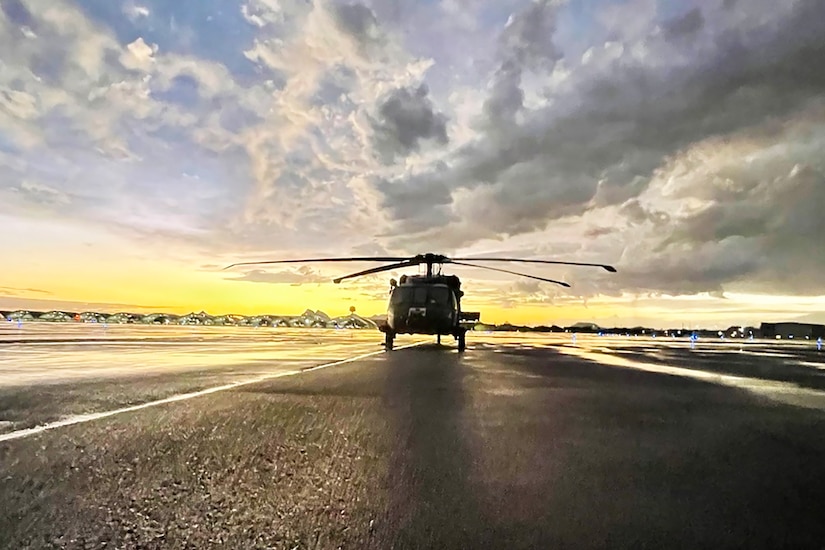
Service members assigned to Joint Task Force Southern Border conducted an aeromedical evacuation after receiving a request to assist a civilian who was experiencing a medical emergency while supporting border barrier construction in a remote mountainous area of southern Arizona, June 17.
This medevac highlights the unique military capabilities that Joint Task Force Southern Border brings in support of U.S. Customs and Border Protection as a part of Operation Ardent Vanguard.
The task force received the request in the early afternoon, when officials reported that a civilian contractor required urgent medical assistance while in a mountainous terrain inaccessible to conventional emergency response vehicles.
The service members coordinated with CBP personnel and approved the launch of a War Department medical evacuation aircraft. Initial reports indicated that first responders were hiking to the patient's location while working to determine an exact position.
"JTF-SB responded to this mission, preserving the life of the civilian upon request of the CBP," said Army Master Sgt. Andrew VanMeter, the chief medical noncommissioned officer for the task force.
VanMeter said that, although the remote location was inaccessible to civilian aeromedical and ground teams, the Joint Task Force Southern Border was uniquely qualified for the mission because of the patient's remote location and the lack of landing zones.
The medical evacuation aircraft arrived on station, established visual contact with personnel on the ground and then conducted hoist operations. Aircrews successfully recovered the patient from the mountainside and began transport toward definitive medical care.
During the flight, adverse weather conditions in Tucson, Arizona, required adjustments to the patient transfer plan. The aircraft landed at an alternate location, where the patient was transferred to civilian emergency medical services for continued transportation to a local hospital.
Army Sgt. 1st Class Christian Castillo, a flight medic assigned to Foxtrot Company, 3rd Battalion, 501st Assault Helicopter Battalion, said hoist rescues require a significantly different approach than traditional medical evacuation operations.
"Unlike a standard medevac call, where we can land the aircraft, and I can access all my gear, a hoist requires inserting with minimal equipment," Castillo said. "Because of that limitation, my mindset immediately shifts to executing the foundational knowledge of tactical combat casualty care."
Castillo said successful hoist operations depend on extensive preparation before an emergency happens.
"Executing a 160-foot hoist mission requires a layered approach to training, well before the actual mission occurs," he said. "It involves consistently practicing hoist operations during routine training flights and conducting integrated training with the ground forces."
The team also conducted a thorough analysis of the operational area beforehand to anticipate the environmental and tactical conditions it could encounter on scene.
The most unique aspect of this mission was the crew dynamic; this was the first operational flight for the crew's junior pilot after completing his training with the unit. As for the personnel in the back of the aircraft, Castillo and Army Spc. Kierstann Knowles, the crew chief, had previously executed a hoist rescue together. They said that shared experience was critical.
The mission highlights Joint Task Force Southern Border's ability to rapidly integrate with federal, state and local partners, its readiness, aviation capabilities, and its commitment to preserving life and enabling mission success along the southern border.
공식 발표 ↔ 진영별 보도
보도 없음
보도 없음
보도 없음