2026-27: Budget: Moving towards competitiveness
— FSA
The federal budget for FY27 is refreshingly forward-looking. It focuses on some of Pakistan’s most pressing structural challenges: broadening the tax base, continuing import tariff reforms, sustaining incentives for the information technology sector, and reviving the long-dormant construction industry.
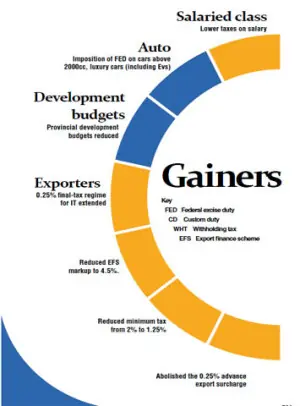
The most politically sensitive measure is the relief provided to salaried taxpayers. Income tax rates have been reduced, while the income threshold for the highest tax bracket of 35 per cent has been raised from Rs4.1 million to Rs7m. The super tax has been abolished for individuals earning up to Rs500m and reduced by 20pc for higher-income taxpayers. The income tax surcharge has been eliminated altogether.
The tax collected on export proceeds has been reduced from 2pc to 1.25pc, while the capital value tax on foreign assets held by resident Pakistanis has also been abolished.
The budget also introduces measures to bring previously under-taxed segments into the formal tax net. Digital content creators and social media influencers will now be subject to withholding tax deductions through the banking system. The withholding tax regime on services has been revised, with separate treatment for independent professionals.
The most consequential reform is the transformation of the tax administration to a technology-driven, data-led model
At the same time, the reduced minimum tax rate applicable to distributors, dealers and wholesalers in certain sectors has been increased from 0.25pc to 0.5pc, although documentation and compliance incentives remain available.
Yet the most consequential reform in this budget is neither a tax increase nor a tax cut. It is the transformation of Pakistan’s tax administration from a discretionary, contact-based system to a technology-driven, data-led model.
The government is seeking to minimise direct interaction between taxpayers and tax officials and replace manual processes with automated compliance mechanisms. A National Faceless Centre will conduct audits, assessments and appeals through digital platforms, reducing opportunities for harassment, rent-seeking and corruption. A new automated settlement mechanism will allow taxpayers to resolve discrepancies without additional penalties or surcharges.
Banks and electronic money institutions will share data on high-value transactions electronically, enabling sophisticated cross-checks against tax declarations. Large retailers, wholesalers, and manufacturers will also be required to integrate their business systems with the Federal Board of Revenue to enable real-time transaction reporting.
If implemented effectively, these reforms could prove more important than any change in tax rates. Pakistan’s tax problem has never been simply one of rates; it has been a problem of enforcement, documentation and weak compliance. Technology offers a more sustainable solution than repeated tax amnesties or arbitrary enforcement drives.
Hundreds of tariff lines with very low duty rates have been eliminated altogether. Equally important, the government has reviewed and pruned the exemption regime, making the tariff structure more transparent while preserving concessions for industrial inputs.
The budget also pays particular attention to two sectors critical to future growth.
For information technology and IT-enabled services, the concessional tax rate of 0.25pc on export proceeds has been extended for another three years. Given the sector’s strong export potential, relatively low capital requirements and capacity to generate employment for educated youth, the decision is both economically sensible and strategically important.
Given construction’s extensive linkages with industries such as cement, steel, transport and services, some advance taxes and property transfer taxes have been reduced. Also, import taxes on construction machinery and logistics have been reduced.
On the trade side, the government has stayed the course on the tariff rationalisation roadmap set out in the National Tariff Policy 2025-30. Customs duties have been reduced across a wide range of products, while additional customs duties and regulatory duties have also been scaled back.
Changes in the sales tax regime are more modest. The emphasis is primarily on procedural reforms, accompanied by a handful of targeted exemptions covering sanitary products, electric vehicle kits and aircraft parts.
On the macroeconomic front, the budget sets ambitious but broadly credible targets. Tax revenues are projected to grow by 17.6pc, while non-tax revenues are expected to contribute Rs5.3 trillion. The government is targeting GDP growth of 4pc, inflation of 8.2pc and a fiscal deficit of 3.6pc of GDP.
These targets will not be easy to achieve. The global economy remains uncertain, geopolitical risks persist, and domestic political stability cannot be taken for granted. Nevertheless, the assumptions are not unrealistic if reform momentum is maintained and macroeconomic discipline continues.
Overall, the 2026-27 budget is a credible and reform-oriented document. Most importantly, it signals a decisive shift towards technology-based tax administration and data-driven compliance. If the government can sustain political commitment, resist pressures for policy reversal and finally bring undertaxed sectors into the formal tax net, this budget could mark an important step towards a more competitive, documented and growth-oriented economy.
The writer is currently working as a trade arbitrator and a member of the Tariff Policy Board. Previously, he has served as Pakistan’s ambassador to the World Trade Organisation
Published in Dawn, The Business and Finance Weekly, June 15th, 2026 ...
이 뉴스, 독자들은 어떻게 느꼈나요?
첫 반응을 남겨보세요로그인하면 감정 반응에 참여할 수 있어요.