Small Steps, Giant Leaps Podcast Episode 177: Transformative Aeronautics
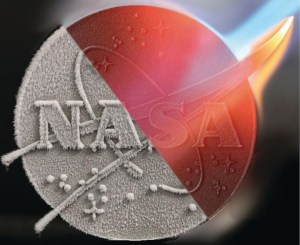
Host Andres Almeida: In the aviation world, there’s a 3D-printed metal superalloy that can withstand extreme conditions, and another material that can actually “remember” its shape as temperatures change.
NASA-led aeronautics research has always been powered by bold ideas. Some ideas have the potential to fundamentally change how aircraft are designed, built, and flown.
NASA’s Transformative Aeronautics Concepts Program, or TACP [pronounced Tac-P], invests in high-risk, high-reward research.
By combining emerging technologies such as artificial intelligence, advanced materials, digital engineering, and university-led innovation, the program helps researchers explore revolutionary ideas that could redefine aviation for decades to come. We learn more about TACP with Angela Surgenor, deputy program manager, in this episode of Small Steps, Giant Leaps.
[Intro music]
Welcome to Small Steps, Giant Leaps, the podcast from NASA’s Academy of Program/Project & Engineering Leadership, or APPEL. I’m your host Andres Almeida.
Hi Angela, welcome to the podcast.
Angela Surgenor: Thanks, Andres. Thanks for having me.
Host: So, what makes an idea transformative?
Surgenor: So, “transformative” to me is it’s a little bit different than the conventional definition.
Basically, “transformative” to me is a multidisciplinary collision that disrupts the status quo rather than just optimizing it. So, for example, in aeronautics we are incredibly good at evolving, making a wing 2% lighter or a gas turbine 5% more efficient.
But within our program, the Transformative Aeronautics Concepts Program, we aren’t looking for evolution, we’re looking for revolution, so basically an idea becomes transformative when it fundamentally disrupts the way we fly or the way we design an aircraft. Often that happens through convergence.
So, it happens when we take disciplines that traditionally have nothing to do with aviation, like artificial intelligence, quantum computing, or advanced materials chemistry, and crash them into aerospace engineering. So, a transformative idea doesn’t just build a slightly better airplane, it rewrites the physics or the engineering methods entirely.
It’s the difference between settling for a good baseline and pushing for the absolute best possible ecosystem for the nation. So, we do these things through our two main engines of innovation, building revolutionary new capabilities through our Transformational Tools and Technologies Project (which I’ll call T-cubed from here on out, slightly shorter), and then also harnessing the bright minds and academia through our university innovation project.
Host: And how does TACP create this environment where researchers can take risks?
Surgenor: Yeah, so, thank you for that question. TACP basically creates an environment where researchers can take risks and explore broadly by using AI-driven digital tools and making failure virtually free, and by empowering the universities to challenge our assumptions.
Again, another example: In traditional aerospace, the culture is failure is not an option, as we all hear all the time. When you are physically building and testing things the old-fashioned way, taking a risk is incredibly expensive, but innovation requires risk, right? So, we solve this paradox in two different ways.
First, through our T-cubed project, the transformational tools and technology, we changed the infrastructure of how we invent. A perfect example is our recent breakthrough with our new superalloy, called NASA’s GRX-810.
Traditionally, inventing a new high temperature alloy for jet engines takes a decade of experience, right? Trial and error of metallurgy. But for – within our program, we gave our researchers a runway to take a radical new approach.
They use AI machine learning, and then thermodynamic modeling to simulate millions of material combinations virtually, so they let AI take all the risks instead of us doing it ourselves, taking a ton of time.
When they found that optimal recipe, they basically 3D-printed it, and then they discovered a revolutionary, incredibly durable alloy in a fraction of the normal time. So, by using the AI native engineering, if an idea fails, it just costs us a few hours of compute time, not millions of dollars, and that creates incredible psychological safety.
Secondly, we actively source risk from outside of our own walls through our university innovation project. Sometimes, NASA engineers are constrained by knowing too much about why something shouldn’t work, right? We get used to the things we’re doing all the time.
So, throughout this university innovation project, we actually give the steering wheel to the academia. So, we ask university-led teams to tackle our hardest problems. They bring in fearless, multidisciplinary perspective without the baggage. And then we provide them with the resources they need to try their unconventional ideas safely.
Host: Nice. I was just looking at the GRX-810 that you mentioned, the alloy, and I can see implications for a spinoff for not just aeronautics.
Surgenor: Yeah, we are, actually, it was designed for aeronautics specifically, but now we’re actually, they’ve used it on space nozzles, even on the SLS [Space Launch System], for high temperature. It’s high temperature materials we’re using for those high temperature things, even like hypersonics. It’s not just for aviation.
And a lot of things we do within our program do have a spinoff. It’s not, it’s created for aeronautics, but it doesn’t necessarily stay in aeronautics. There’s some things that transition outside of that, even to, say, an automobile or biomedical industry.
Host: What are the challenges of working on these revolutionary technologies? Success may be years, maybe decades away. How do you evaluate when a new idea is really worth pursuing?
Surgenor: Yeah, this is a tricky question, because we only have so much funding, right?
Basically, we always set aside money to do those extra things, so we have the ability to work on those technologies that are needed both now, but then are also needed into the future, and it could be 2040-2050 timeframe.
So, a lot of our other programs within NASA Aeronautics are working in that current need, where we have that ability to work on those things that we’re going to need in out years, and this gives us that ability – it’s called capability multipliers, so we’re building, you know, within NASA Aeronautics.
But like we just discussed, you know, it’s also building that community outside of aeronautics, for the space side, automobile, biomedical, you know, the environment, whatnot.
But at the same time, we’re also building up that workforce, like I said, through that University Innovation Project. But it’s a tough balance, you know? Evaluate those long-term ideas by looking at two things. Basically, it’s the tools and the talent.
So, on the TTT side, they mainly look at those capability multipliers. We just don’t ask if technology will build a better airplane in 2040. We basically ask if it will allow the industry to build any airplane in 2040 so we’re not just keeping ourselves siloed into one design.
For example, I’ll bring up that T-cubed is investing heavily in closing this computational fluid dynamics to flight loop, so we’re using lasers to instantly measure the air flow of an aircraft in flight and feeding that data directly into our supercomputer models.
And if we get that right, the aviation industry eventually could certify new aircraft using digital simulations instead of years of physical testing. Very expensive, but this is a massive multiplier in the technology that we’re advancing.
And then on the talent side, through our University Innovation Project, we’ve been investing in, like, 15-year problems, like zero-emission cryogenic propulsion. We know technology is going to take some time, but we need to start early.
But if that University Innovation Project is funding dozens of grad students and postdocs across the country, we’re actually evaluating success beyond the talent of our pipeline that we currently have within our NASA workforce.
So, even if that technology pivot takes a decade, we’re successfully training the future chief engineers of the US aerospace industry, not only for NASA, but also for external of us. So, places like Boeing, GE, Pratt, many other engine manufacturers.
And if an idea gives the ecosystem new capability and builds that workforce to wield it, it’s absolutely worth it in the long term.
Host: Can you share an example of a concept that began as an idea with TACP?
Surgenor: Oh, sure, I’ll actually give you two that come right ones on the T-cubed side, the transformational tools, and then the other ones on the university side.
The first one is shape memory alloys, similar to the GRX 810 that superalloy that was initially brought up. It was shifting on how we build structures, and then we have CHEETA, which is shifting how we actually power an aircraft. That was on the university side.
But for the shape memory alloys, basically we looked at moving parts on an airplane wing, like the flaps. Usually, they require heavy complex hydraulic systems. Extra weight, you know, it adds complexity to the system.
But our researchers basically asked, “What if the metal itself could do the work instead of having extra actuators, moving things, and control systems?” So, they developed a specialized metal that actually remembers and returns to a specific shape when it’s exposed to different temperature changes. So, as you go up in altitude it gets colder. So, what can we do with that material to make it move on its own?
So, they basically worked on high-risk materials chemistry. They’ve actually flight-tested these supercold shape memory alloys that are creating a drag reduce vortex generator. The vortex generator actually pops up and then it folds automatically when the temperatures change. So, we proved that the aircraft can be adaptive, more like a morphing machine.
And then on the university innovation side, another example is our, it’s called CHEETA.
Years ago, we funded a university consortium to look at using liquid hydrogen, not as a fuel, but as a supercooled electrical cables and motors for super conducting temperatures.
At the time, cryogenic aviation was more theoretical, right? It wasn’t ready to be brought to the market yet. But the University Innovation [Program] basically gave the students a runway to prove the math. So, today it’s been growing into a mature concept that NASA is actively evaluating a proposal to take the university-developed superconducting cables and put them in an actual NASA flight test, but it’s taken time. But the university’s kicked it off, and we’re bringing them in as we move forward.
But basically, both of these things, what started off as a, well, pitched from academia or researchers within, is now directly shaping NASA’s roadmap for different types of electrified aircraft.
Host: Now, how does TACP approach failure? How does the program encourage other engineering teams to learn from that mindset?
Surgenor: Yeah, that’s a great question. I think a lot of us are risk adverse, but sometimes we’re still afraid, right? It’s even at home in your personal life, it’s like, “Okay, should I do this, should I not do this?”
But our program, basically, we practice it’s called “intelligent failure.” So, it’s deeply inspired by the academic scientific method and backed by digital engineering, like, what are those things we can do intelligently that’s not going to hurt anyone? It’s safe, but NASA is able to give that, take that risk posture that other people on the outside can’t.
But basically, we differentiate between sloppy failure and intelligent failure. So, we demand absolute rigor, like I said, with safety and how experiments are executed, but we’re completely open to the hypothesis of being wrong. And that’s key to what we do, because if we’re wrong, we start over again.
You know, it’s like, you pivot, you did a technology this way, and it’s not working out, so it’s like, “Okay, let’s pivot.” It was called pivot, punt, or persevere, right?
So, pivot’s, “Okay, it’s not working, you got to change it up.”
Punt, it’s like, “Okay, it’s not working too well. We need to kind of change completely.”
Or persevere, you’re, you keep moving forward on the technology you’re doing.
But we actually draw a lot of inspiration from the universities we work with as well. In academia, proving those hypotheses that are wrong is still a successful PhD thesis. It advances human knowledge on their front, you know, for the PhD, the candidacy, but also helps us in finding those new technologies moving forward.
And on that T-cubed side, like I said, the digital models that we’re running for simulations and the actual flight tests behave completely different, we don’t hide that, we show where there’s, and you know, there’s discrepancies, and that’s a massive win. We actually find something that’s wrong, and then you’re able to fix it and move forward. That means we found a blind spot in the human knowledge, and then we can quickly adapt and fix it, you know, basically on the fly.
Host: It sounds exciting. I would be interested in seeing all the lessons learned documentation, and the knowledge capture that all these teams have.
Surgenor: I know it’s just, you want to be a sponge and something can just feed it all to you, because there’s so much information.
We don’t like to rework things, right? You know, people leave and just like, okay, what did we learn from that? And now, what can we do the next time to make it better?
But our researcher engineers are amazing. The students are amazing. They adapt so quickly, and they just, they move forward. They know what they did wrong or that didn’t work right, and then they just, they pivot and move forward.
Host: What excites you most about the future of aeronautics?
Surgenor: Yeah, that’s a great question, too. I’ll bring up, I’ll call it the third age of aviation. It’s where this AI-native engineering meets the next generation workforce.
So, as we all hear, all this AI that we’re using, yes, it’s okay, great, it’ll help us write documentation, or make us think, do things, process things faster. I think there’s also a side of AI engineering that is going to be brought in by the new workforce, because they’re more easily adaptable to that, right?
So, I’m really excited about, I’m calling it total equalization of the airspace: fleets of quiet, autonomous air taxis, and drone operating seamlessly to deliver goods, fighting wildfires, and connecting communities with the zero emissions, all with the AI knowledge that we’ve had.
And that goes back to your lessons learned. Like, how can we use the lessons learned that we’ve recorded with AI, so you don’t have to go scrubbing through years and years of documentation?
But really, what excites me, it’s how we’re going to build them, right? How does that process look? What is the strategy of how we can bring all this together?
And through T-cubed, you know, we’re laying that groundwork right now with AI engineering, native engineering, advanced digital twins.
Like I said, the AI materials discovery and quantum computing are huge right now. And then, through our University Innovation Project, the students we’re funding today are going to be the ones wielding those tools.
In 20 years, I’ll be retired. You might be retired. There’s a lot of people, you know, [who] have been there a long time, but those students won’t be designing the aircraft the old slow way that we’ve been doing for decades, right? They’re going to be using those digital ecosystems that our T-cubed project is building today to design, test, and safely certify those new aircraft designs in the fraction amount of time.
And the future isn’t just about cooler airplanes. It’s about wildly faster, smarter AI-driven ways of engineering them.
Host: Wonderful. It’s all these small steps, which leads me into the final question for you: What was your giant leap?
Surgenor: Yeah, so I’ve been at NASA for 31 years now, and I actually started as a technician in combustion, so I was very specific to combustion and propulsion technologies with my hands. I got tired of smelling like jet fuel all the time, so I kind of went into program and project management.
But I think I’ve realized over time that NASA doesn’t have a monopoly on good ideas and embracing the conversion across those tools and talent, they basically, you know, like I said early in my career, I was entirely focused on the traditional internal NASA aeronautics, but combustion, you know, how do we optimize those things? And it was all incremental.
So, my giant leap was realizing the biggest breakthroughs don’t happen inside those single disciplines, and they don’t definitely happen when you’re just talking to yourself. You need to make sure you’re talking outside, and when you’re in a small, siloed area, you are just working with those people.
But my leap was basically embracing those that core philosophy that TACP has. That convergence word, right? It’s the realization that [for] true transformation of aviation, I needed to be talking to other engineers, not only at NASA but outside of that.
So, we needed to make sure we open those doors to more of a broader community. We needed to push those boundaries of computational tools through our T-cubed project, and then we also needed to let academia take that lead on massive problems through the university innovation. They have tools and technologies we don’t have within, you know, our walls.
So, we also need to know that whole ecosystem, from the computer scientists to the university undergrads, and we need those to collide, basically completely changing how we lead our programs, pushing those boundaries of research today.
Host: Great, you’re making me want to join.
Surgenor: Anytime. You’re welcome aboard anytime. We’re always looking for new good people.
Host: Thank you. Well, Angela, thank you for your time. TACP is very exciting.
Surgenor: Thanks again. Thanks for having me and letting me share my story, too.
[Outro music]
Host: That’s it for this episode of Small Steps, Giant Leaps. For a transcript and for other epidoes, visit nasa.gov/podcasts. While you’re there, check out our other podcasts like Houston, We Have a Podcast, Curious Universe, and Universo curioso de la NASA. As always, thanks for listening.
Outro: This is an official NASA podcast.
이 뉴스, 어떠셨어요?
한 번의 탭으로 반응을 남겨요 · 로그인 불필요