Unloved and lacking a 'guiding light', UK's Starmer quits after just two years as prime minister
AI Summary
Following Andy Burnham's Makerfield by-election victory, British Prime Minister Keir Starmer is reportedly reconsidering whether to remain in office. Senior Labour figures confirmed over the weekend that the prime minister is evaluating his options in response to mounting political pressures. News reports indicate a resignation announcement may occur within days, with Burnham—the successful by-election candidate now preparing to take a parliamentary seat—emerging as the leading prospect to replace him.
Progressive: Progressive-leaning outlets describe Starmer as beleaguered and unpopular, presenting Burnham's victory as a justified opening for a leadership challenge in response to the incumbent's demonstrated weakness.
Moderate: Centrist outlets use qualified language like 'reportedly,' 'mulls,' and 'could' when reporting the resignation possibility, treating the development as uncertain rather than certain.
Conservative: Conservative-leaning outlets emphasize Burnham's emphatic by-election victory as a decisive political threat, framing the situation through unprecedented governmental instability—Britain's potential seventh prime minister in a decade.
이 뉴스, 어떠셨어요?
한 번의 탭으로 반응을 남겨요 · 로그인 불필요
Keir Starmer was once hailed as the leader who would bring pragmatism and stability to Britain after years of political chaos. When he quit as prime minister on Monday, the very lack of ideology that propelled him to power drove his downfall.
After guiding the Labour Party into power in 2024 with the biggest parliamentary majority in Britain’s modern history, Starmer focused on what he believed was possible to achieve, rather than setting out a clear vision of a future Britain.
He soon came to be seen by many voters and members of his party as lacking conviction and a clear direction, more than 20 party insiders said. He had no big idea.
Without what one senior Labour lawmaker called “a guiding light”, the former lawyer was buffeted by competing Labour factions, lobbied by vested interests and misunderstood by wary voters, many of whom came to hate what they saw as his indecision and his robotic performances.
Turned to his wife for counsel
His policies often unravelled, resignations and sackings from his team followed, and the remaining trusted aides around him struggled to help him offer the country a clear narrative of what his government wanted to do to “change Britain”.
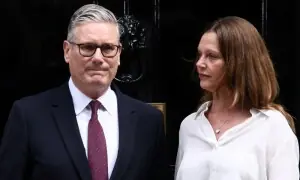
Starmer, 63, increasingly turned to his wife Victoria for reliable advice. On May 12, five days after disastrous local election results for Labour prompted calls for him to quit, he had a long lunch with her and emerged determined to fight on.
But it was a weekend away at the prime minister’s country residence in Chequers with his wife that appeared to have persuaded him to change course, bend to the inevitable and resign.
On the doorstep of his Downing Street office and residence, he said he would do everything to allow an orderly transfer of power to the next Labour leader, expected to be his rival Andy Burnham, the former Greater Manchester mayor.
“The question my party is asking now is whether I am best placed to lead us into the next general election,” he said in an emotional speech when his voice broke as he thanked his family for their support.
“I have heard the answer from my parliamentary party to that question and I accept that answer with good grace.” By the end, deeply unpopular among voters for broken promises and policy U-turns, Starmer saw support drain away from him. Even some of his most loyal allies in his top cabinet team of ministers privately urged him to allow an orderly transition of power rather than a damaging leadership contest.
His pledges to fight to save his premiership quickly evaporated after most in the party decided they could not enter a national election due in 2029 with him at the helm.
After decisively winning an election for a parliamentary seat in northwestern England, Burnham was now seen as the “Reform slayer”, the politician who had a chance of keeping the populist party of veteran Brexit campaigner Nigel Farage at bay.
Fear of farage drove campaign oust starmer
“I would do anything to stop Farage,” said lawmaker Catherine West, who broke cover over the May 9-10 weekend to try to force others to mount a challenge against the prime minister.
It was never meant to be this way.
After becoming a Labour lawmaker in 2015 at the age of 52, Starmer was elected leader just five years later, inheriting the party after its worst election showing since 1935 under his predecessor, veteran left-winger Jeremy Corbyn, beset by accusations of anti-Semitism and a fudged Brexit policy.
He used his experience of running the Crown Prosecution Service, an independent body which advises police and prosecutes criminal cases in court, to try to modernise the Labour Party, and ultimately make it more electable.
When he was Director of Public Prosecutions (DPP) — essentially Britain’s top prosecutor, he attacked the problem strategically — first getting rid of alleged antisemitism and tackling factionalism; putting the organisation back on its feet financially; bringing the best Labour lawmakers into his top team; and finally adopting policies to address Britain’s needs.
“Everything we offer will be built on a bedrock of economic stability and a plan for growth,” his spokesperson said at the time.
Initially, it worked. His newly re-fashioned Labour won a large majority in Britain’s 650-seat parliament, but analysts were quick to point out that the party’s victory was fragile - Labour actually secured one of its lowest vote shares ever and the win was highly dependent on tactical voting.
After 14 years of infighting, Brexit battles and five prime ministers in eight years, the Conservatives had all but blown themselves up as a party.
John Curtice, Britain’s best known pollster, said: “All in all this looks more like an election the Conservatives lost than one Labour won.”
Frustration set in over achievements
Starting from a fragile base was not helped by the Starmer government’s cautious approach to policy during campaigning and an already growing narrative that all of Britain’s many problems, from housing to anaemic economic growth, would take time to fix.
Once in power, Starmer’s government struggled first to define its policy agenda and then to implement it — focusing on growth that never really came, on reducing illegal migrant arrivals that kept on coming and on fixing a health system that kept on throwing up more challenges.
One person in his top team in opposition said Labour was just not prepared for government, describing a time when they had tried to formulate policy but were told to “stop” so as not to “frighten people in advance of the general election”.
“We don’t have a plan for what we’re going to do when we get in, if we do get in, because it might jinx it,” the person remembered.
As the months went by, Starmer tried to talk up his government’s achievements — improving working conditions, reducing health service waiting lists and overseeing an economic environment in which interest rates could be cut.
But despite several resets to his approach, the British leader failed to engage a wary public, with a former aide saying Starmer failed to offer “a destination” from which voters could understand or make sense of his decisions.
Instead, voters could not see beyond gaffes over donations, policy U-turns and the appointment of Labour veteran Peter Mandelson despite his known connections to the late convicted US sex offender Jeffrey Epstein.
Starmer’s defence that he was not told about the extent of Mandelson’s ties to Epstein made many feel he was out of touch at best, and, at worst, not in control of his administration.
“It was a bad appointment,” said one former aide, suggesting it had been driven through by only two other former advisers.
Blame game tainted the end of Starmer administration
The frustration inside his Downing Street office became more palpable.
Some aides blamed what they called a hostile right-wing media, but after one reset followed another, Starmer ultimately failed to display, as described by one adviser, “his passion for these domestic causes”.
He lost some of his closest advisers, including his former chief of staff Morgan McSweeney, over the Mandelson scandal, and after sacking the top official at the foreign office, his relationship with Britain’s civil service soured.
The British leader also had some success in winning round US President Donald Trump, often by massaging his ego — offering him a second state visit to Britain and praising his efforts to bring peace in Ukraine and an end to other conflicts.
That soon was replaced by a torrent of jibes against him from the U.S. leader, who said he was no Winston Churchill after Starmer refused to draw Britain into the war on Iran.
On Sunday, Trump posted on Truth Social: “Keir Starmer will resign as Prime Minister of The United Kingdom. “He failed badly on two very important subjects- IMMIGRATION AND ENERGY (OPEN NORTH SEA OIL!). I wish him well!” Perhaps his lasting legacy will be the fracturing of Britain’s traditional two-party system.
The local elections in England, and parliamentary ones in Scotland and Wales showed Britain’s traditional two-party system had been blown apart with Reform gaining a strong foothold across the nation.
While Labour membership numbers fell, Reform’s rose, with more than 270,000 people signed up. It was that threat, Starmer had hoped would seal support for him, telling his Labour Party in February the battle with Reform was the “fight of our lives”.
It was a fight he ultimately lost. ...