5 questions that continue to linger after the FIFA World Cup
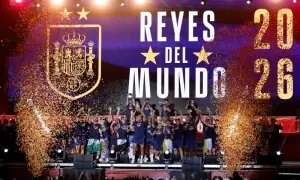
The curtain has fallen on the 2026 FIFA World Cup, the grandest and most expansive edition yet, hosted across the United States, Canada and Mexico. Spain emerged triumphant in a tense final against Argentina, etching their name on the trophy in a display of technical brilliance.
Yet as the echoes of the stadiums fade, the tournament departs with more than memories of footballing excellence. It leaves behind a trail of controversies and unanswered questions that may linger long after the final whistle.
Sport, like politics, often mirrors the contradictions of its time. The 2026 World Cup was no different. Here are five questions that football must now confront.
Did political interference undermine the integrity of the game?
The most glaring shadow over the tournament was the alleged involvement of political figures in sporting matters, most notably US President Donald Trump’s intervention following the red card awarded to American forward Folarin Balogun.
After receiving a red card that should have triggered an automatic suspension, Balogun’s ban was rescinded following a call from Trump to FIFA President Gianni Infantino.
Folarin Balogun of the US fouls Bosnia and Herzegovina’s Tarik Muharemovic before being shown a red card during a FIFA World Cup match in San Francisco Bay Area Stadium, Santa Clara, California on July 1. — Reuters/File
The decision allowed the player to feature in a crucial knockout clash and prompted outrage from European football authorities, including UEFA, which questioned the independence of sporting governance.
The incident raised a question that FIFA has yet to convincingly answer: where does political influence end and sporting autonomy begin?
It was not the only example of football becoming entangled with geopolitics. Iran’s participation amid heightened tensions, visa restrictions affecting fans and players from certain countries and the broader politicisation of the tournament all highlighted the increasingly difficult relationship between football and the world beyond it.
If rules can be bent under pressure from powerful figures or nations, what prevents similar demands in the future? The absence of transparency surrounding FIFA’s disciplinary processes only deepens the suspicion.
Was VAR a tool for fairness or a catalyst for further confusion?
The Video Assistant Referee (VAR) system was introduced to reduce refereeing errors. Instead, it once again became one of the most debated aspects of the tournament.
The controversy was not necessarily that VAR intervened too often, but that its interventions, and its apparent failure to intervene, often left supporters and pundits no closer to certainty.
Decisions involving disallowed goals, penalties and marginal calls continued to generate debate, while the lack of transparency surrounding the conversations between referees and VAR officials only fuelled suspicion.
The final offered perhaps the most significant example. VAR itself did not intervene during Spain’s 1-0 extra-time victory over Argentina. But there was widespread debate over whether it should have done so earlier in the match, when Spain’s apparent opening goal by Nico Williams was ruled out by the on-field referee.
Spain’s Rodri remonstrates with referee Slavko Vincic after Nico Williams scores a goal that is later disallowed during the FIFA World Cup final. — Reuters/File
Those who questioned the decision argued that the incident was precisely the kind of situation in which VAR should have been used to review the call.
That, ultimately, is the problem with the system. Even when VAR does not intervene, it can remain at the centre of controversy.
The question for football is no longer simply whether VAR should exist. It is whether the system can be made more consistent, transparent and understandable to the people watching the game.
Ticket prices and commercialisation: greed over access?
The soaring cost of attending the World Cup once again raised questions about who the tournament is actually for.
With tickets for the final reportedly reaching thousands of dollars, many ordinary supporters were priced out of the event. The problem was compounded by logistical difficulties at venues, the management of extreme heat and the growing presence of commercial interests in the tournament experience.
The introduction of a Super Bowl-style halftime show during the final further symbolised the increasingly Americanised and commercial character of the event. For some, it was an attempt to expand football’s appeal. For others, it disrupted the rhythm and tradition of the sport.
General view as a kids choir from Staten Island perform during the FIFA World Cup halftime show at the New Jersey Stadium, East Rutherford, New Jersey on July 19. — Reuters
Football has always been a commercial enterprise. But there is a growing concern that the World Cup, once defined by its accessibility and its ability to bring the world together, is becoming increasingly inaccessible to the very supporters who give it meaning.
Will FIFA recalibrate its economic model, or will the World Cup continue to move towards becoming an elitist spectacle?
The 48-team expansion: more football or diluted quality?
The expanded format delivered more football than ever before, with 104 matches played across three countries. It also provided nations that would previously have had little chance of qualifying with an opportunity to compete on the world’s biggest stage.
But the expansion came with its own questions.
Critics, including UEFA President Aleksander Ceferin, had questioned whether the larger format would dilute the quality and intensity of the tournament. With more teams and more matches, concerns about a lack of jeopardy in the group stage were inevitable.
The tournament also placed greater demands on infrastructure and required vast amounts of travel across three host nations. More matches meant more commercial opportunities, but also greater physical demands on players and increased logistical and environmental costs.
The expansion has undoubtedly made the World Cup more inclusive. But inclusivity and quality do not always move in the same direction.
As football prepares for future editions of the expanded tournament, the question remains: has the World Cup become more representative of the global game, or simply more bloated?
Will FIFA’s governance reforms materialise or is this the new normal?
Underlying almost every controversy is the same fundamental issue: trust.
From disciplinary decisions and political influence to VAR controversies and the commercialisation of the game, FIFA’s decision-making continues to be viewed with suspicion by many supporters.
Gianni Infantino’s leadership has delivered commercial growth and an increasingly globalised FIFA. But it has also been accompanied by scrutiny over the organisation’s alliances, its decision-making processes and the concentration of power at the top of world football.
US President Donald Trump shakes hands with Spain’s Prime Minister Pedro Sanchez in the stands before the FIFA World Cup final on July 19. — Reuters
The 2026 World Cup will be remembered for Spain’s triumph, Argentina’s unsuccessful title defence and some of the most memorable football of the modern era. But its legacy may also be defined by the questions it left unanswered.
Football’s governing bodies now have a choice. They can treat the controversies of the tournament as isolated incidents, allowing them to fade with time. Or they can recognise them as symptoms of deeper problems — problems involving governance, transparency, access and the relationship between football and power.
The next World Cup will bring new heroes and new controversies. Whether it also brings greater trust will depend on what FIFA chooses to do now. ...
이 뉴스, 어떠셨어요?
탭 한 번으로 반응 · 로그인 불필요