Iran mediators push new ceasefire as Trump eyes all-out war
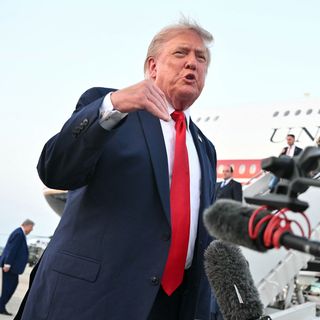
President Trump is nearing a decisive fork in the Iran war, with U.S. and Israeli officials envisioning only two viable endgames:
Option 1: Pursue a new 10-day ceasefire aimed at reopening the Strait of Hormuz.
Option 2: Launch a massive joint military campaign with Israel to force Tehran's capitulation.
Why it matters: Trump hasn't made a decision yet. But officials believe the next few days will determine which path prevails — with little room left for the grinding, open-ended conflict now paralyzing the Gulf.
Driving the news: Qatar, Egypt, Pakistan and other regional mediators have presented the U.S. and Iran with a proposal for a 10-day ceasefire, two regional sources with direct knowledge of the effort told Axios.
The Trump administration is exploring the proposal and has urged Israel to avoid steps that could close the diplomatic window, U.S. officials say.
But Washington is simultaneously preparing for the talks to fail. The U.S. military has sent dozens of fighter jets and refueling aircraft to the region in recent days, assembling the forces needed for a major escalation.
Israeli sources say the IDF is on high alert and preparing for a possible expansion of the war into a full-scale, coordinated campaign within days.
The big picture: Ten straight nights of U.S. bombing have failed to break Iran's grip on the Strait of Hormuz, dragging Trump deeper into a war he has repeatedly declared won.
At least three U.S. service members have been killed in the renewed fighting. Trump said Monday he had ordered the Pentagon to make Iran pay "many times over" for every American death.
Oil briefly broke $90 a barrel this weekend as Iran widened its strikes on commercial ships and Gulf infrastructure. Gas prices are rising again, compounding the domestic backlash to an already unpopular war.
Zoom in: Regional mediators are once again racing to interrupt a cycle of retaliation that grows deadlier, costlier and harder to contain with each new strike.
The new ceasefire proposal would halt the fighting, reopen both shipping lanes through the Strait of Hormuz and give Washington and Tehran room to salvage their collapsing memorandum of understanding (MOU).
"We told the U.S. and Iran that we propose a cooling-off period," one of the regional sources said.
State of play: Neither Trump nor Iran has accepted the proposal, and both sides appear determined to improve their leverage through further strikes before committing to a ceasefire.
In the meantime, the Iran-backed Houthis in Yemen declared a maritime blockade on Saudi ports, opening another front against the Gulf's energy infrastructure and shipping lanes.
Israeli Prime Minister Benjamin Netanyahu has warned that Israel will answer any Iranian attack with massive strikes, raising the risk of a wider war stretching from the Gulf to the Red Sea and Israel.
Behind the scenes: Regional sources say mediators are trying to build on a proposal discussed by Oman, Iran and Qatar in Muscat on July 11, when the U.S. demanded Tehran publicly commit to keeping the Strait of Hormuz open.
Those talks ended without an agreement, and Iran attacked commercial ships in the strait shortly afterward — triggering the U.S. bombing campaign that has continued every night since.
The proposal would fully reopen both Hormuz shipping lanes: the southern route through Omani waters, free of Iranian attacks, and the northern route through Iranian waters, free of the U.S. blockade.
During the 10-day ceasefire, the U.S. and Iran would negotiate a longer-term arrangement governing passage through the strait.
One option would allow Iran to collect "reasonable service fees" for maritime security, environmental protection and other services, according to one regional source.
The source pointed to the Strait of Malacca — where Malaysia, Indonesia and Singapore charge vessels for specific services rather than a blanket transit fee — as a possible model.
Another idea would direct the fees into a joint fund administered with the involvement of the International Maritime Organization.
Officials involved in the mediation include Qatari Prime Minister Mohammed bin Abdulrahman Al Thani, Qatari envoy Ali Al-Thawadi, Pakistani army chief Field Marshal Asim Munir, Egyptian Foreign Minister Badr Abdelatty and Omani Foreign Minister Badr al-Busaidi.
The intrigue: One regional source said the ceasefire effort was gaining momentum on Saturday, before an Iranian missile strike in Jordan killed at least two U.S. service members and prompted Washington to pull back.
A senior U.S. official confirmed that talks are continuing, but said Trump has yet to finish retaliating.
"The president is focused on making Iran pay for its violations of the MOU and its continued acts of terrorism in the Strait of Hormuz," the official told Axios.
"In addition, the president will make Iran pay for the recent deaths of U.S. soldiers. These devastating blows will continue until the president deems otherwise."
What they're saying: Iranian Foreign Ministry spokesperson Esmail Baghaei confirmed Monday that mediators were working to prevent further escalation.
"The proposals conveyed through the mediators have been received by us, but at this stage I prefer not to discuss their details," Baghaei said at an Iranian press briefing.
He added that Iran's armed forces would continue to "respond with strength and crush the source of U.S. aggression."
What to watch: It's unclear whether Trump has been fully briefed on the ceasefire framework — or whether he would accept another temporary ceasefire without a clear path toward a lasting settlement.
The president has voiced deep frustration with Tehran since the ceasefire collapsed, calling Iran's leaders "sick people" and dismissing further negotiations as a "waste of time."
One regional source said the White House may continue bombing Iran for several more days to avenge the killing of the U.S. service members in Jordan before seriously considering the proposal.
The bottom line: "We are trying to work out a sustainable solution," one regional source said. "The Iranians can't dictate the terms, but they also can't be ignored." ...
이 뉴스, 어떠셨어요?
탭 한 번으로 반응 · 로그인 불필요