How new deal may differ from Obama-era nuclear accord
AI Summary
Negotiations between the United States and Iran have produced a tentative accord to cease hostilities, brokered by Pakistan. Under the proposed terms, Washington would restore Iranian access to previously immobilized funds and suspend oil-sector sanctions, provided Iran permits maritime transit through critical waterways and discontinues military operations. Disagreement persists regarding the execution date, with American and Pakistani negotiators proposing specific dates while Tehran signals the need for additional internal deliberation.
Progressive: Progressive outlets highlight Pakistan's successful diplomatic brokerage and emphasize the historic potential for peace, focusing on statements from all parties about how close a resolution has become.
Conservative: Conservative outlets contextualize the deal within Trump's abandonment of the 2015 nuclear agreement and emphasize Iran's strategic leverage through its preconditions, particularly regarding military operations in Lebanon.
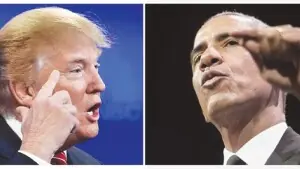
AS Washington and Tehran explore the contours of a possible new nuclear agreement following recent military strikes and a ceasefire, the emerging framework appears markedly different from the deal negotiated by former president Barack Obama in 2015.
Yet experts who helped craft the original agreement argue that diplomacy remains indispensable, regardless of military developments, and caution that any lasting settlement will ultimately depend on verification, inspections and mutual compromise.
According to an analysis by the Council on Foreign Relations (CFR), the expected agreement is likely to begin with a memorandum of understanding extending the ceasefire between the two countries for at least 60 days and reopening the Strait of Hormuz, while leaving the most contentious issue — Iran’s nuclear programme — for follow-on negotiations.
“Even if they do and an MoU is announced, negotiations on the outstanding issues, especially on Iran’s nuclear programme, will be long and difficult,” Steven Cook, senior fellow for Middle East studies at CFR, cautioned.
President Donald Trump said this week that Washington and Tehran were nearing an agreement to end a conflict that has disrupted shipping through the Strait of Hormuz and shaken global energy markets. Iranian Foreign Minister Abbas Araghchi responded by saying the two sides had “never been closer” to an understanding.
But unlike the Obama-era Joint Comprehensive Plan of Action (JCPOA), which specified detailed nuclear restrictions before sanctions relief was granted, the proposed agreement appears to defer the most difficult technical issues.
According to CFR, both sides would continue negotiating “the enrichment programme’s suspension and stockpile removal” during the next phase of talks. Iran would reportedly commit never to pursue a nuclear weapon, while discussions on dismantling nuclear facilities and handling enriched uranium stockpiles would continue.
“The details matter here,” CFR senior fellow Elisa Ewers observed, particularly regarding inspections, verification measures and what dismantlement would actually mean after the extensive US-Israeli strikes on Iranian facilities.
The contrast with the Obama agreement is striking.
Jake Sullivan, who participated in the secret US-Iran negotiations that eventually produced the JCPOA and later served as national security adviser, says the Obama administration accepted limited Iranian enrichment under strict supervision.
“Under the Iran nuclear deal that President Obama negotiated, Iran retained a limited nuclear capacity to be used for civilian purposes with intense long-term verification,” Sullivan said in an interview with Harvard Kennedy School.
The JCPOA drastically reduced Iran’s uranium stockpile, capped enrichment levels, restricted centrifuge operations and established an extensive inspection regime under the International Atomic Energy Agency (IAEA). The objective was not to eliminate Iran’s civilian nuclear programme but to ensure that any attempt to build a weapon would be detected well in advance.
Trump sought something more ambitious.
“President Trump was basically saying, Iran can have no nuclear capacity of any kind,” Sullivan said. “When it comes to the core activity of a nuclear programme — the enrichment of uranium — all enrichment of uranium would have to be done outside of Iran.”
That demand has remained the principal obstacle in negotiations.
According to Sullivan, Iran insists that it possesses a right under the Nuclear Non-Proliferation Treaty to enrich uranium under monitoring and verification arrangements.
“Iran has resisted that position, has said it has rights under the Nuclear Non-Proliferation Treaty to enrich uranium, and that it should be able to do so under constraints and under monitoring and verification,” he noted.
The CFR analysis suggests that the same disagreement continues to shape the current negotiations.
While reports indicate that Iran may agree to a 15- or 20-year halt on enrichment and eventual dismantlement of nuclear facilities, the Iranian state news agency IRNA has said that Tehran will negotiate the issue “solely within the framework of the Islamic Republic’s fundamental principles” and will not abandon its claim to enrichment rights.
This leaves verification at the centre of any future agreement.
Iran’s nuclear programme was one of the stated reasons for the conflict that erupted earlier this year. Its facilities were targeted in major US-Israeli strikes, while Washington argued that Iran’s enrichment activities had brought it dangerously close to weapons capability.
Iran, however, continues to insist that its programme is peaceful.
Sullivan argues that military action alone cannot resolve the issue.
“Military action can set their nuclear program back, but not nearly as long as a deal can,” he said.
He warned that important elements of Iran’s programme may still survive.
“Iran seems to have retained some amount of enriched uranium stockpile, some centrifuges that it could assemble so that it could get back to the business of constructing a nuclear programme and go for a nuke,” he said.
The former national security adviser also highlighted what he sees as the most urgent concern: the absence of international monitoring.
“Critically, right now Iran is not allowing IAEA inspectors to look at its nuclear programme,” Sullivan said.
That concern echoes warnings from CFR analysts. Ray Takeyh, a senior fellow at the council, recently argued that Iran could potentially disperse parts of its programme into multiple small facilities. “By building many small workshops containing advanced centrifuges, Tehran can challenge the prying foreigners to find them all,” he wrote. “If any escape detection, the regime has a safer path to bomb production.”
For both supporters and critics of diplomacy, the emerging negotiations therefore raise a familiar question. Can a verification regime be designed that is robust enough to prevent Iran from secretly rebuilding its nuclear capabilities while still allowing Tehran to preserve what it regards as its sovereign rights?
“There’s unfinished business here regarding how to fully and sustainably verify that Iran’s nuclear programme is being monitored continuously,” Sullivan said. “In my view, the best way to do that is diplomacy.”
More than a decade after secret US-Iran talks in Oman paved the way for the JCPOA, Washington and Tehran appear once again to be confronting the same fundamental dilemma: whether a negotiated compromise can reconcile America’s demand for lasting nuclear restrictions with Iran’s insistence on retaining at least some nuclear sovereignty.
Published in Dawn, June 15th, 2026 ...
이 뉴스, 독자들은 어떻게 느꼈나요?
첫 반응을 남겨보세요로그인하면 감정 반응에 참여할 수 있어요.