The Economic Times (India)
보수 성향
기타
The Economic Times · "FUND" · 총 119건
필터 보기현재 지수
50.5
0 = 부정 우세
50 = 중립
100 = 긍정 우세
최근 7일 기준 796건을 분석한 결과, 뉴스 심리지수는 50.5(균형)입니다. 긍정 117건(14.7%)·중립 573건(72.0%)·부정 106건(13.3%)이며, 중립 비중이 뚜렷하게 높습니다. 성향 지수는 종합 100.0(강한 보수 경향)입니다.
When SpaceX makes its debut on the U.S. stock market, it wants smaller-pocketed, mom-and-pop investors to play a big role in what may be the biggest IPO ever.Elon Musk's rocket company, formally known as Space Exploration Technologies Corp., is steering some of its initial public offering of stock directly to what are called "retail" investors. These are people who buy stocks in a brokerage account on their phone, not pension funds or other big "institutional" investors routing orders to their professional trading desks.Here are some things to keep in mind as the IPO approaches:A chunk of SpaceX stock will go to regular investorsMost IPOs offer only 5% to 10% of the total offering to retail investors, according to Fidelity. In this case, though, it could be up to 30%. SpaceX expects retail investors to participate in its IPO through Charles Schwab, Fidelity, Robinhood, SoFi and E-Trade by Morgan Stanley.At Fidelity, investors with as little as $2,000 in their accounts could potentially snag SpaceX shares in the IPO. That's down from account minimums of $100,000 or even $500,000 that Fidelity has for other equity offerings.Demand from investors may be so high in this IPO that not everyone indicating interest will actually get a share.Trying for a short-term flip has risksGiven all the hype around SpaceX, temptation could be high to grab shares in the IPO and sell them quickly if a frenzy sends its price spiking. But brokerages have policies to block investors from future offerings if they dump shares bought in an IPO quickly, like within a couple weeks.Big swings in price may be possiblePotentially high interest from retail investors following the IPO is one reason SpaceX is warning that its stock price could be volatile. These investors aren't known for moving as meticulously as a pension fund, which is trying to build money for payments it must make years or decades in the future.It's retail investors, after all, who helped drive GameStop and other "meme stocks" to market-bending heights in 2021 that professional investors called irrational.IPOs can see a big first-day bounce, but that may not lastThe typical IPO has seen a 7% jump in its first day of trading, from 1980 through 2025, according to Jay Ritter, an IPO expert and a professor at the University of Florida's Warrington College of Business.But IPOs tend to lag similar-sized peers in the ensuing five years, not including their first day of trading. They do so by an average of 3.6% per year, according to Ritter.SpaceX has debt and has been losing moneyIt's very expensive to launch things out of the earth's atmosphere and to construct huge AI data centers, and SpaceX has built up $29.1 billion in debt, as of the end of March.The company also lost $4.9 billion last year and another $4.3 billion through the first three months of 2026. It acknowledges that it "may not achieve profitability in the future."Over the long term, a stock's price tends to track with how much profit the company is making.You don't have to buy SpaceX to own itYou could end up owning some of SpaceX even if you never intended to. Consider the many people who own shares of the popular QQQ exchange-traded fund, which tracks the Nasdaq 100 index and has roughly $460 billion in total assets.Historically, the Nasdaq 100 index would wait until each December to add new members in an annual reconstitution to make sure it includes the 100 largest non-financial companies on the Nasdaq. But Nasdaq recently made changes to allow some big companies to enter the Nasdaq 100 index after just 15 trading days.That means if SpaceX's IPO is as successful as expected, it could quickly join both the Nasdaq 100 and QQQ fund, all while QQQ holders do nothing on their own.The company behind the more popular S&P 500 index, though, is not making changes that would allow SpaceX faster entry.Any shares bought would take a back seat to Musk's in influenceIn its IPO, SpaceX is offering 555.6 million shares of its "Class A" stock. Each of these shares gives an investor one vote on matters that shareholders decide. That includes such weighty things as who is on the board of directors overseeing the CEO.This IPO is not offering what are called "Class B" shares, each of which give its holder 10 votes. Musk, meanwhile, owns so many of those shares that he by himself could control more than 82% of all the stock's voting power following the IPO.In filings with U.S. securities regulators, SpaceX acknowledges the potential for conflicts of interest between it and Musk, along with other companies he owns, such as Tesla.Some big investors really disagree with the ownership structureOfficials from pension funds for firefighters, teachers and other workers in California and New York sent a letter to SpaceX last month decrying some of the provisions in its IPO, including "super voting shares," mandatory arbitration of shareholder claims instead of the possibility of lawsuits and how much power Musk will hold over the company.They said they could become owners of SpaceX stock because they hold index funds, which automatically buy stocks after they get included in certain indexes.If Musk is able to control so much of the voting power on the board of directors, it would make him tremendously powerful atop SpaceX, "essentially making him unfireable without his own consent," the CEO of California Public Employees' Retirement System, the New York state comptroller and the New York City comptroller wrote in their letter."This level of insulation from accountability is virtually unheard of among any other large U.S. issuer whose governing documents foreclose accountability to public owners on these terms."Don't confuse SpaceX with other companies with similar namesSpaceX plans to trade under the ticker symbol "SPCX." That's very close to "SPCE," which is the symbol for Richard Branson's Virgin Galactic Holdings.
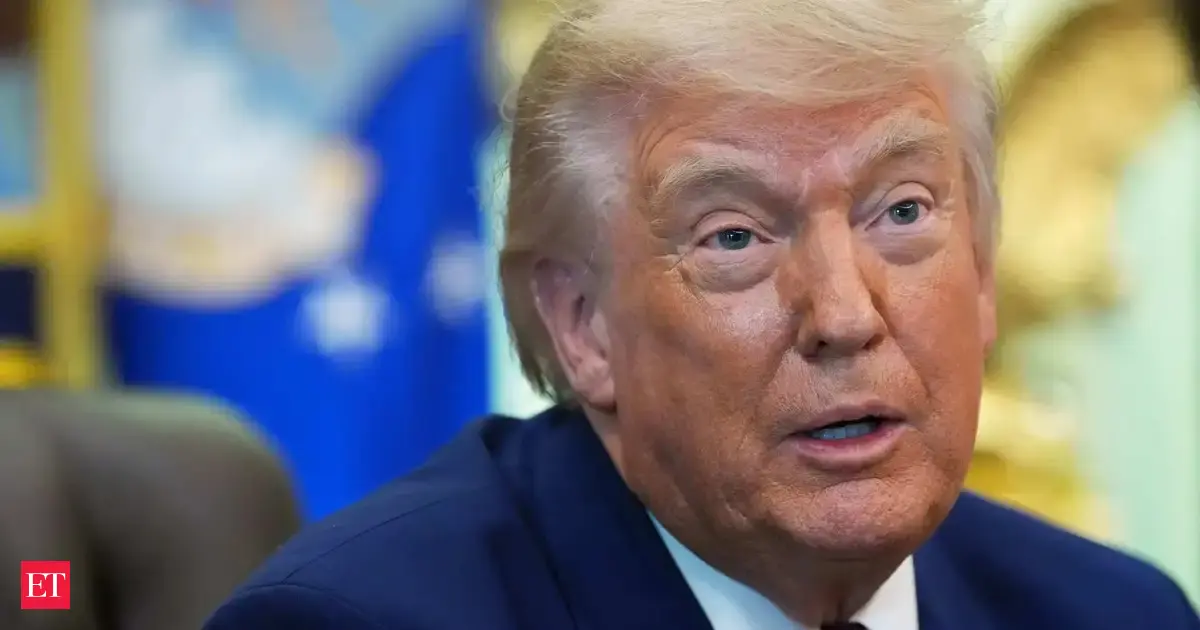
WASHINGTON: U.S. President Donald Trump is trying to project political strength as he turns 80, but setbacks at home and abroad are exposing the limits of his power and pushing him toward the kind of lame-duck status he has told aides he is determined to avoid. Nearly 17 months into his second term, the courts are pushing back, his effort to wind down the Iran war has stalled, and his approval ratings have weakened. Some fellow Republicans in Congress are also defying him - though his hold on core supporters remains firm. Still, Trump has shown he retains significant clout: he has helped oust Republican incumbents in primary races and has pressed ahead with aggressive trade policies. He has also pursued high-profile construction projects in Washington in one of the most ambitious building drives by a U.S. president in years.Also Read| Trump's toughest immigration opponent isn't the Democrats. It's the courts This dynamic is unfolding just months ahead of November's midterm elections as Trump's Republican Party scrambles to maintain control of Congress. The loss of one or both chambers to opposition Democrats could hasten his slide into a lame-duck phase, historically when a president - if barred from running again - sees influence waning and domestic priorities stymied. The White House is trying to prevent that narrative from taking hold prematurely and has been forceful about letting Republican lawmakers know Trump can still make or break them, according to a presidential adviser, who spoke on condition of anonymity to discuss sensitive internal matters. But with some Republicans already showing greater willingness to stand up to Trump, the adviser acknowledged it was inevitable that his authority would begin to diminish. "He'll naturally start to lose leverage, especially after the midterms," the adviser said. Trump has privately told staffers that one of the reasons he has mused about a third term, which is forbidden by the Constitution, is to ward off any public perception that he might become a lame duck and slip into "irrelevance," according to a former senior aide who spoke on condition of anonymity. White House spokeswoman Olivia Wales said, "President Trump is the unequivocal leader of the Republican Party who is committed to maintaining Republicans' majority in Congress." HEALTH UNDER SCRUTINY The questions about Trump's political standing come as scrutiny of his personal stamina is intensifying. A Reuters/Ipsos poll in February found 61 percent of Americans thought Trump had become more erratic with age, and another survey in April showed a majority concerned about his temperament and mental sharpness. Trump, who is the oldest president sworn into office, will celebrate his 80th birthday on Sunday by hosting a UFC cage fight on the White House lawn. After a flurry of near-weekly travel early in the year, Trump has largely stayed at the White House or his Mar-a-Lago resort in Florida since he launched the Iran war on February 28. He has made only a handful of domestic trips since then. His public daily schedule consists largely of "executive time" and policy meetings held behind closed doors. He is often more visible on his Truth Social platform, where he posts throughout the day and late into the night. Trump declared himself in excellent condition following a routine checkup last month after he was seen at public events with swollen ankles, which his doctors have described as only a "slight" issue, and with bruising on his hands. A senior White House official, who also spoke on condition of anonymity, said Trump was keen to avoid comparisons to Joe Biden, his Democratic predecessor who faced questions about his fitness for the job before leaving office at 82. Even so, Trump has occasionally been caught on camera appearing to doze off at events, including at an NBA Finals game at Madison Square Garden on Monday. As clips of him with his eyes shut have gone viral, Trump aides have fired back on social media, claiming he was blinking or listening intently. White House spokesman Davis Ingle described Trump as "the sharpest and most accessible president in American history." A WEAKENING HAND Analysts agree that even if Trump's political influence wanes, he can still rely on executive orders to shape policy and act more freely on the world stage, where presidents have greater leeway to take action unilaterally. Still, there have been signs of Trump's weakening hand. While he is not likely to see a full-scale Republican revolt, some defeated incumbents, who remain in office until January, have already begun opposing parts of his agenda and have also signalled pushback against his cabinet nominations. In the past two weeks, small Republican factions in the Senate and House of Representatives have joined with Democrats to rebuke him over the Iran war, reject $1 billion in funding tied to his ballroom and force a retreat on his $1.8 billion fund to pay political allies claiming they were victims of "weaponized" prosecution. As Trump has struggled to achieve policy objectives, he has become more preoccupied with his construction projects. He is increasingly touting not only the ornate ballroom under construction but also refurbishment of the Reflecting Pool on the National Mall and a proposed triumphal arch. One way Trump is likely to continue exercising power is in the selection of Republicans' 2028 presidential nominee, seen as a contest between Vice President JD Vance and Secretary of State Marco Rubio. And for the rest of Trump's term, the world should expect the unexpected from a president who prides himself on unpredictability, said Douglas Brinkley, a presidential historian at Rice University. "His helter-skelter style of leadership, that's not going anywhere, whether the Democrats take Congress or not," he said.
Shares of NLC India fell over 3% on Wednesday despite strong demand for the government's Offer for Sale (OFS), which was oversubscribed on the first day. The offer opens for retail investors today.Non-retail investors bid for over 13.03 crore shares worth Rs 4,158 crore, as against a base offer size of 2.49 crore shares reserved for them. Shares of the Navratna PSU company tumbled more than 3% to trade at Rs 316.6 apiece on NSE.NLC India announced on Monday that the government aims to sell 2% of the company’s total paid-up equity capital, or 2.78 crore shares, as part of the base offer. The government also retained an oversubscription option to sell an additional 1% stake or 1.39 crore shares, taking the total potential offer size to 4.17 crore shares or 3% equity. At the floor price of Rs 303 per share, this would be worth around Rs 1,263.51 crore.In an exchange filing released on Tuesday, NLC India said that the government will exercise the oversubscription option to sell up to 1.39 crore shares, in addition to the 2.77 crore shares that were part of the base offer. 10% of the equity shares offered in the OFS, which stands at nearly 41.52 lakh, will be available for retail investors today, subject to receipt of valid offers, the company said.“Additionally, up to 25,000 equity shares may be offered to the eligible employees of the company…The eligible employees may apply for equity shares up to Rs 500,000. However, any bids by eligible employees will be considered for allocation, in the first instance, for an amount up to Rs 200,000 only,” it said.Also read: NLC India OFS over-subscribed 5 times, institutional buyers put in Rs 4,158 cr bidsNLC India, formerly known as Neyveli Lignite Corporation, is among India's leading mining and power generation companies. It operates lignite mines and thermal power stations while also expanding its renewable energy portfolio. The company has emerged as a beneficiary of India's rising power demand and the government's focus on energy security. In recent years, the company has diversified beyond lignite mining into solar and other renewable energy projects as part of its long-term growth strategy.NLC India shareholding patternThe Central government owned a 72.20% stake in NLC India, according to data on the company’s shareholding pattern as on March 31, 2026. A total of 22 mutual funds held around 9.5% stake in NLC India, while Life Insurance Corporation of India (LIC) and SBI Life Insurance each held around 2% stake.NLC India’s OFS comes as the government ramps up its disinvestment efforts. Recently, the government offloaded some of its stake in Coal India, NHPC and other PSU companies.NLC India share priceNLC India shares have fallen around 8% in one week and 3% in one month. The stock is overall up around 25% in 2026 so far. In the longer term, the shares of the PSU have delivered 33% returns over one year, 220% over three years and 396% over five years. The company currently has a market capitalisation of nearly Rs 44,303 crore.NLC India has maintained a track record of returning cash to shareholders through regular dividends. The company has declared 43 dividends since August 2000, and currently has a dividend yield of 1.6%, according to data on Trendlyne.(Disclaimer: Recommendations, suggestions, views and opinions given by the experts are their own. These do not represent the views of The Economic Times)
Domestic proprietary stock traders are set to seek regulatory intervention to lobby the central bank to rework the margin funding rules for their trades as the existing proposal puts them at a disadvantage over global traders that are stepping on the gas in India, people familiar with the matter said.The Commodity and Capital Market Participants Association of India (CPAI) is working with the Industry Standards Forum (ISF), a body comprising members of various industry associations, to create a separate framework that would distinguish between liquidity providers and speculators. That they believe would help them to convince the Reserve Bank of India (RBI) to permit lower margin for the bank guarantees and enable them to trade higher volumes. The RBI has mandated that banks lending to capital market intermediaries (CMIs) extend guarantees for proprietary trading subject to the facility being fully secured. The proposal says that banks can extend guarantee only to the amount equal to the value of the collateral provided by the proprietary trading firm.
Bank stocks gained as much as 5% on Tuesday after the raft of measures introduced by RBI to help hedge foreign currency borrowings stoked investor optimism and led to traders covering some of their bearish bets.Bank Nifty rose 2.1% to 55,194.50; and closed above 55,000 levels after two weeks while benchmark Nifty moved 0.5% higher on Tuesday. All 14 constituents of Bank Nifty moved higher on Tuesday. .Bank of Baroda jumped 5.5% while Canara Bank climbed 4.5%. Punjab National Bank and Federal Bank advanced around 3.5%."The measures by RBI are likely to drive a healthy deposit base for banks and lead to cheaper cost of funds since the hedging cost on FCNRB is borne by the Central Bank while the hedging costs on ECB's is subsidised," said Dharmesh Kant, head of research, Cholamandalam Securities.131622603Last week, the RBI announced measures to boost foreign currency inflows and to support the rupee. The Central Bank offered concessional dollar-rupee swap facility to absorb the entire forex hedging costs for three-to-five-year Foreign Currency Non-Resident (FCNR[B]) deposits until October 16, 2026. In addition, it offered a concessional swap facility for eligible External Commercial Borrowings (ECBs) raised by public sector entities, fixing the hedging cost at 1.5% per annum.This policy allows Indian banks to access low-cost global capital and alleviate domestic deposit crunches without bearing currency risk, said analysts. "The sudden fundamental clarity triggered massive technical short covering, catching derivative traders by surprise and sparking a rapid short squeeze since the Put-Call Ratio (PCR) had dropped into an oversold zone below 0.80 ahead of the news," said Nishchal Jain, Quant Researcher, Share. Market by Phone Pe.The high-volume breakout past 55,100 and decisive price action, shifts the market regime from "sell on rallies" to "buy on dips", establishing 55,000 as a strong psychological support base- forming a high-conviction bullish view, he said.
Jio BlackRock Asset Management plans to launch its first exchange-traded funds in India by August, seeking to replicate BlackRock's global success in passive investing in a market where ETFs are still nascent. The joint venture between Mukesh Ambani's Jio Financial Services and the world's largest asset manager has amassed about 180 billion rupees ($1.9 billion) in assets under management in roughly a year since its launch by building a base in cash, debt-index and active equity funds. It plans to start with equity-focused ETF strategies. BlackRock oversees about $5.1 trillion in ETF assets globally, more than a third of its total assets under management, underscoring the importance of the product line to its franchise. Jio BlackRock currently ranks as India's 29th-largest asset manager. "ETFs are a long-term play. While it is a predominantly institutional heavy market (in India), retail are starting to get more involved in ETFs. And we can see from global trends how well ETFs have been adopted as a choice for investing," Sid Swaminathan, managing director and chief executive officer of Jio BlackRock Asset Management, told Reuters. ETF INNOVATION COULD BOOST LIQUIDITY Passive mutual fund assets in India stood at 15.20 trillion rupees in April, or about 18.5% of the industry's 81.94 trillion rupees in average assets under management, according to data from the mutual fund industry association. By comparison, equity index funds and ETFs account for about 45.3% of long-term mutual fund and ETF assets in the U.S. Swaminathan said tighter bid-offer spreads and more innovative strategies could help improve liquidity and boost retail participation in Indian ETFs. The company also plans to launch products in Gujarat International Finance Tec-City (GIFT City), India's low-tax financial hub competing with centres such as Singapore and Dubai, within the next couple of months. COMPLEX PRODUCTS PROMPT PIVOT TO DISTRIBUTOR-LED MODEL For more complex offerings, including special investment funds and GIFT City products, Jio BlackRock has adopted a distributor-led model rather than a digital-first approach, reflecting the continued role of advisers in selling higher-ticket products. Swaminathan said the decision to prioritise those launches was partly shaped by market conditions. India's benchmark Nifty 50 is down 11.1% so far in 2026 amid foreign outflows, higher oil prices and moderating earnings growth, while MSCI's Asia-Pacific ex-Japan index is up 18.2%.
A promoter entity of Ajanta Pharma sold shares worth over Rs 1,024 crore through a block deal on Tuesday, with domestic mutual funds emerging as the buyers. According to NSE block deal data, Ravi Agrawal Trust sold 34.5 lakh shares of Ajanta Pharma at Rs 2,968 per share. The transaction was valued at about Rs 1,024 crore.The shares were picked up by two domestic fund houses. Kotak Mahindra Mutual Fund acquired 21.02 lakh shares, while Aditya Birla Sun Life Mutual Fund purchased 13.48 lakh shares. Both transactions were executed at the same price of Rs 2,968 per share.Ajanta Pharma is a specialty pharmaceutical company with a presence across branded generics, emerging markets and select developed markets. The company has built a strong franchise in therapeutic segments such as ophthalmology, cardiology, dermatology and pain management, while also expanding its footprint in international markets.The company has been one of the stronger performers in the pharmaceutical space, benefiting from steady earnings growth, healthy margins and a robust balance sheet. Investors have also favoured the stock due to its focus on branded formulations and relatively limited exposure to pricing pressures in the US generics market.Ajanta Pharma reported good fourth quarter results, with revenue and EBITDA coming in 1-3%, ahead of analysts estimates. PAT was 23% higher than the views, helped by higher Other income and a lower tax rate. US generics business sustained robust growth momentum, up 47% YoY in USD terms"We raise our FY27E-FY28E core earnings estimates by 2%. AJP trades at 31.2x FY27E core P/E. We retain our target price at Rs 3,115 based on 29.9x FY28E core P/E plus cash per share. We retain our Accumulate rating. Geopolitical disruptions to the business and a spike in raw materials price & freight cost are key risks to our call. We introduce FY29 estimates," Elara Capital said post the earnings.
NSE will earmark 10% of its annual corporate social responsibility (CSR) corpus for projects listed on the NSE Social Stock Exchange (SSE), becoming one of the first major institutions to commit a portion of its CSR spending through the platform.The exchange announced the move on Tuesday following recent regulatory changes that allow companies to undertake CSR expenditure through subscription to Zero Coupon Zero Principal (ZCZP) instruments listed on Social Stock Exchanges.NSE said its CSR Committee had agreed in principle in March 2026 to deploy 10% of the annual CSR corpus through the SSE framework, subject to regulatory approval. The decision has now been operationalised after the Ministry of Corporate Affairs issued notifications on May 27 enabling such investments.The move is aimed at strengthening India's social impact financing ecosystem and encouraging greater use of regulated capital market platforms for funding social sector projects.NSE Chairman Injeti Srinivas welcomed the government's decision to allow CSR funds to be routed through Social Stock Exchanges.He said the framework would improve transparency, visibility and accountability of CSR spending while helping channel funds towards credible social initiatives.The exchange expressed hope that other large corporate CSR contributors would adopt a similar approach, helping scale up impact financing in the country.The Social Stock Exchange framework was introduced by Sebi to create a regulated fundraising platform for non-profit organisations and social enterprises. The NSE Social Stock Exchange was launched in February 2023.Since inception, NSE-SSE has facilitated all Social Stock Exchange fundraising issuances in India. According to the exchange, 16 projects, including two joint listings, have collectively mobilised more than Rs 44.5 crore across sectors such as healthcare, education, women empowerment, climate action, poverty alleviation, skilling and sustainable livelihoods.The latest announcement comes shortly after the government expanded the scope of permissible CSR activities through the SSE route, a move seen as a significant step towards deepening social impact investing in India.The regulatory change could unlock a new source of funding for non-profit organisations by connecting them with corporate CSR budgets through a transparent and market-linked mechanism. The decision is also expected to provide greater visibility to social projects while enabling companies to track the deployment and outcomes of their CSR spending more effectively.With NSE itself committing part of its CSR corpus through the platform, the exchange is positioning itself as an early adopter of the Social Stock Exchange model while seeking to encourage broader participation from corporate India.
As the rupee came under pressure from rising crude oil prices, geopolitical tensions in the Middle East and sustained foreign portfolio investor (FPI) outflows, the government and the Reserve Bank of India rolled out a set of measures over Friday and Monday aimed at attracting foreign capital and strengthening India's external position.The RBI, while keeping the repo rate unchanged at 5.25% in its June monetary policy review, unveiled a package to boost dollar inflows. Simultaneously, the government followed up with a tax ordinance exempting foreign investors from taxes on investments in government securities. Together, the measures are designed to improve India's balance of payments, ease pressure on the rupee and make Indian debt markets more attractive to overseas investors.Also Read: India scrapping tax for foreign investors in govt bonds aimed at inclusion in Bloomberg index, govt official saysSo, why were policymakers worried?The West Asia conflict and its impact globally is no secret. The ripple effects are real. The rupee had come under pressure in recent weeks trading in the range of ₹95.20 to ₹95.80 against the US Dollar as crude oil prices surged following the escalation of the Iran-Israel conflict, raising concerns over India's import bill and current account deficit. However, a surprise sprang on Monday when India reported a current account surplus of $7.1 billion in the fourth quarter of FY26. The RBI's package1. Concessional forex swap facility for overseas borrowingsThe RBI introduced a special dollar-rupee swap facility at a concessional rate for public sector entities and banks raising funds overseas. The facility will remain available until September 30.Companies often borrow abroad but must hedge currency risk. Hedging can be expensive. By lowering that cost, the RBI is encouraging more overseas borrowing and, consequently, more dollar inflows into India.2. RBI to bear hedging costs on FCNR(B) depositsOn Monday, the RBI issued detailed guidelines for the FCNR(B) deposit scheme announced during the monetary policy.Also Read: Deposits under RBI's latest foreign currency non-resident bank scheme will carry one-year lock-inUnder the framework, banks can mobilise fresh FCNR(B) deposits with maturities of three to five years between June 8 and September 30 and swap the dollar inflows with the RBI. The swap window will remain available until October 16. The central bank will bear the entire hedging cost, effectively allowing banks to hedge these deposits at par. Banks can also offer leverage against such deposits.The RBI also exempted these deposits from Cash Reserve Ratio (CRR) and Statutory Liquidity Ratio (SLR) requirements, improving the economics of mobilising foreign currency deposits.To ensure stability of inflows, deposits raised under the scheme will carry a mandatory one-year lock-in period. Banks will not be allowed to cancel swaps undertaken with the RBI before maturity. The RBI further exempted swap positions arising from FCNR(B) deposits from net unhedged foreign exchange exposure calculations.This is the closest India has come since the 2013 FCNR(B) mobilisation scheme launched during the rupee crisis. By eliminating hedging costs, providing CRR and SLR relief, relaxing regulatory treatment and offering a dedicated swap window, the RBI is giving banks a strong incentive to attract dollar deposits from overseas Indians. Why analysts think this scheme could be bigger than 2013Brokerage Jefferies believes the latest package could attract $50-70 billion of foreign currency inflows, substantially higher than the inflows generated under the 2013 FCNR(B) scheme.The brokerage argues that the current framework is more attractive than the one introduced during the rupee crisis more than a decade ago. While banks had to bear hedging costs of around 3.5% under the 2013 scheme, the RBI is now absorbing the entire cost. The deposits are also exempt from CRR and SLR requirements, similar to the earlier programme.A key difference this time is the ability to use leverage. Jefferies noted that the RBI has permitted banks to provide standby letters of credit (SBLCs), potentially allowing depositors to amplify returns through leverage. According to the brokerage, this could significantly improve the attractiveness of FCNR(B) deposits for overseas investors.3. Expansion of the Fully Accessible Route (FAR)The RBI expanded the FAR framework to include all new 15-year, 30-year and 40-year government securities and removed concentration limits for foreign investors.Large global investors, including pension and sovereign funds, prefer long-dated bonds. The move widens the universe of Indian government securities available for unrestricted foreign investment.4. Easier access for non-resident investorsThe RBI broadened investment access for individuals residing outside India and eased certain norms governing non-resident participation in Indian markets.The measure aims to tap a larger pool of overseas capital, particularly from the Indian diaspora.The Government's follow-up Tax reliefAfter the RBI's measures, the government issued the Income-tax (Amendment) Ordinance, 2026.5. Capital gains tax exemption on government bondsThe ordinance exempted foreign institutional investors and the Bank for International Settlements from capital gains tax on investments in specified government securities. Earlier, long-term gains attracted a 12.5% tax.1316102436. Interest income tax exemptionThe government also removed taxes on interest income earned by eligible foreign investors from these government securities. Previously, interest income faced a 20% withholding tax.131610254

Index provider MSCI confirmed on Monday it will apply existing rules for early inclusion of large IPOs in its Global Standard Indexes, likely clearing the way for SpaceX to join, which will fuel demand from passively managed investment funds. Investment funds with trillions of dollars in assets track MSCI's indexes, and they would have to buy shares of SpaceX if it is added to those benchmarks, adding to demand from funds tracking the Nasdaq 100 and FTSE Russell indexes. SpaceX is raising $75 billion and targeting a $1.75 trillion valuation that would place it among the top 10 most valuable U.S.-listed firms, even as only around 7% of its listed shares will be freely tradeable at launch on June 12. The rocket maker led by Elon Musk is expected to easily clear MSCI's size and free-float thresholds for early inclusion in its indexes. MSCI's decision contrasts with S&P Global, which last week shut out SpaceX from quick inclusion in the S&P 500 index after deciding it would not change its criteria, including a rule that a company must be profitable. SpaceX posted a net loss of $4.94 billion in 2025, even as revenue rose 33% to $18.67 billion. The final IPO price is due to be set on June 11, with trading on Nasdaq starting the next day, which would put SpaceX on track to join MSCI's indexes 10 trading days later, according to MSCI. Passively managed funds tracking MSCI indexes had around $5.79 trillion in assets, according to an MSCI blogpost published in February. Nasdaq has already made changes that will make it easier for SpaceX, Anthropic and other newly listed megacaps to join its Nasdaq 100 index. SpaceX is set to be eligible for inclusion in both the Russell U.S. Equity Indexes and the FTSE Global Equity Index Series under the newly announced fast-entry rules from the index provider FTSE Russell.
Asian stocks rebounded from their biggest drop since March as tensions in the Middle East eased and a selloff in artificial intelligence shares abated.The Kospi Index, the world’s best-performing gauge this year on the back of AI trade, gained 4.4% and the Nikkei rose 0.9%. That sent the broader MSCI Asia Pacific Index higher by 0.9%, following three days of losses spurred by factors including bets for an interest-rate hike by the Federal Reserve.Advances in Asia came after Wall Street gauges recovered, with chipmakers such as Nvidia Corp. and Micron Technology Inc. climbing. Intel Corp. shares rose the most in a month after the Information reported that Alphabet Inc.’s Google will use it to make chips.Brent crude traded steady at around $94.40 per barrel. The commodity pared much of its advance in the previous session as Iran and Israel pledged to ease strikes that threatened the peace talks in the Middle East.131599215After a brief interruption to the rally that propelled stocks to record highs, investors returned to risk assets during the New York session, signaling confidence that the bull market remains intact. The recovery was aided by easing geopolitical concerns and renewed demand for AI shares after last week’s steep decline.“Markets rarely move in a straight line at the pace seen since the March lows,” according to Morgan Stanley’s Mike Wilson, who maintained his constructive outlook, supported by earnings and strong economic data. “A correction was inevitable and ultimately healthy if this bull market is going to extend into year-end.” Meanwhile, Iran and Israel agreed to ease strikes against each other after a flare-up in violence threatened to derail peace negotiations and led President Donald Trump to appeal for de-escalation.Attention remains focused on whether energy flows will resume meaningfully via the Strait of Hormuz. A trickle of commercial shipping returned to the waterway over the weekend, even as the risks prompted some vessels to travel with their digital transponders switched off.Oil prices and their impact on inflation are key factors traders are watching after Friday’s blowout payrolls report reinforced bets on a rate hike. The May consumer price index due Wednesday is expected to jump by 4.2% from a year earlier — the highest rate in more than three years. But the core CPI is seen cooling slightly on a monthly basis — potentially providing a welcome signal to Fed officials. Meantime, Citigroup Inc. strategists led by Scott Chronert raised their year-end target for the S&P 500 after a “big step up” in earnings expectations.“We do not expect investors to lose confidence in the AI outlook,” said Mark Haefele at UBS Global Wealth Management. “Although tech stocks have come under pressure in recent days amid concerns about whether expectations can be met, business fundamentals remain strong.”Not everyone was as bullish. Investors should exercise caution regarding US stocks as an increasing number of “bear market signposts” point to an approaching top, according to Bank of America Securities.There are “too many red flags,” strategists led by Savita Subramanian wrote in a note dated June 5. “Take profits,” they said.
Quick commerce company Zepto on Monday filed its updated draft red herring prospectus (DRHP) with the Securities and Exchange Board of India for a $1 billion (Rs 9,500 crore) initial public offering, moving closer to one of the most anticipated new-age listings of the year.The IPO will comprise a fresh issue of shares worth Rs 8,010 crore and an offer-for-sale (OFS) of 113 million shares by existing shareholders, according to the updated prospectus. The five-year-old company had filed its IPO papers confidentially with Sebi in December 2025 and received the regulator's approval in May.According to people aware of the matter, Zepto is targeting a July listing. That would make it the third quick commerce player in the public market, alongside Blinkit parent Eternal and Instamart parent Swiggy. The IPO will also make Zepto the first standalone quick commerce company to list on Indian stock exchanges.Through the OFS component, early investor Nexus Venture Partners, US-based Contrary Capital and Kaiser Permanente, as well as Dubai-based Razor Capital, plan to sell shares in the company.Zepto was last valued at $7 billion in October 2025, when it raised $450 million from investors including CalPERS, General Catalyst, Goodwater Capital and Lightspeed.The company plans to use proceeds from the fresh issue to expand its dark store network across existing and new geographies, as well as fund lease rentals for existing facilities. As of March 31, Zepto operated 1,139 dark stores. It also intends to invest in technology and cloud infrastructure, besides funding marketing and business promotion expenses.For the January-March quarter, Zepto reported operating revenue of Rs 7,498 crore, up 75% year-on-year. Net loss narrowed to Rs 1,539 crore from Rs 1,832 crore a year earlier.During the fourth quarter, Zepto processed 210 million orders on its platform, compared with 274 million for Blinkit and 113 million for Swiggy's Instamart.Besides Blinkit and Instamart, Zepto competes with Tata-owned BigBasket, Flipkart Minutes and Amazon Now in India's 10-minute delivery market.The company's founders, Aadit Palicha and Kaivalya Vohra, along with their families and family offices, comprise Zepto's promoter group, which collectively holds a 19.6% stake in the company.Palicha and Vohra, along with US-based investor and Glade Brook Capital founder Paul Hudson, Zepto CFO Ramesh Bafna, Avra founder and former Y Combinator managing director Anu Hariharan, and former Bharti Enterprises chairman Akhil Gupta, comprise Zepto's board of directors. Hudson serves as chairman of the board.Zepto's IPO comes at a time when the quick commerce industry is locked in an intense battle for market share, even as growth at leading platforms has moderated amid a broader push towards profitability. The entry of ecommerce giants Amazon and Flipkart into the 10-minute delivery segment has further intensified competition and sparked a fresh round of price wars.