The Economic Times (India)
보수 성향
기타
The Economic Times · "BILL" · 총 93건
필터 보기현재 지수
50.5
0 = 부정 우세
50 = 중립
100 = 긍정 우세
최근 7일 기준 694건을 분석한 결과, 뉴스 심리지수는 50.5(균형)입니다. 긍정 104건(15.0%)·중립 494건(71.2%)·부정 96건(13.8%)이며, 중립 비중이 뚜렷하게 높습니다. 성향 지수는 종합 100.0(강한 보수 경향)입니다.
The S&P 500 and Nasdaq indexes fell on Tuesday as a rebound in technology shares faded and as President Donald Trump said the U.S. must react to Iran's shooting down of a U.S. helicopter. Trump wrote in a social media post that Iran had shot down the U.S. Apache helicopter that was patrolling the Strait of Hormuz overnight, and vowed to respond, which added to doubts about prospects for a truce in the Middle East war. The Cboe Volatility Index hit its highest level since April 7 during the session as stocks sold off. Technology stocks resumed Friday's selloff following a bounce on Monday. The S&P 500 tech index fell more than 4% before paring losses. The Philadelphia SE Semiconductor Index dropped as much as 8.6% after rising 3% in early trading. "When the bounce ran its course this morning, the tape came for sale more broadly. There's also a rotation going on ... so part of it is more of a momentum unwind," said Michael O'Rourke, chief market strategist at JonesTrading in Stamford, Connecticut. The Russell 1000 value index outperformed the growth index.Also Read | US stocks: SpaceX IPO demand is approaching four times oversubscribed, source says Trump's post also briefly "created another leg down," O'Rourke said. In addition, investors may be worried ahead of inflation data and a highly anticipated SpaceX IPO later this week. According to preliminary data, the S&P 500 lost 20.25 points, or 0.27%, to end at 7,385.48 points, while the Nasdaq Composite lost 254.47 points, or 0.98%, to 25,675.19. The Dow Jones Industrial Average rose 84.28 points, or 0.14%, to 50,857.58. Consumer price data for May could offer fresh clues on how the rise in energy prices, driven by the Iran war, is impacting inflation. The data is due on Wednesday. SpaceX's market debut on Friday could also be a hurdle for U.S. stocks as investors worry about possible overexuberance among high-growth technology stocks. Elon Musk's SpaceX is aiming to raise $75 billion and targeting a valuation of $1.75 trillion, the most ever for an IPO. Some strategists have said investors are potentially booking profits in the high-flying semiconductor stocks to make room for SpaceX in their portfolios. Technology and AI-linked stocks sold off sharply on Friday after Broadcom's disappointing forecast fueled concerns about high valuations in the sector, particularly in chipmakers, which have rallied sharply this year. The semiconductor index remains up more than 70% for the year so far.
The United States trade deficit narrowed in April as exports of petroleum products and capital goods jumped to record highs, a trend that if sustained, will put trade on course to contribute to economic growth in the second quarter.The trade gap contracted 1.2% to $55.9 billion, the Commerce Department's Bureau of Economic Analysis and Census Bureau said. Data for March were revised lower to show the deficit at $56.6 billion instead of the previously reported $60.3 billion.Exports increased 2.6% to $327.1 billion, a record high. Goods exports surged 4.1% to a record $221.3 billion.Petroleum exports increased to a record high of $36.7 billion from $27.6 billion in March, driven by higher volumes and oil prices tied to West Asia conflict. The United States is a net oil exporter.Crude prices have shot above $100 per barrel since the war started in late February.The increase in petroleum products, including crude oil, pushed exports of industrial supplies and materials to a record high of $89.0 billion. The nation's petroleum trade surplus swelled to a record high of $17.7 billion from $9.4 billion in March.
It was January 2025, crypto fever was raging, and Donald Trump was preparing to return to the White House. So when Fatime Elrgdawy's friend told her about an online message from the United States president-elect hyping the launch of his own crypto coin-"GET YOUR $TRUMP NOW"-she thought: "Oh my God, this is brilliant."The 29-year-old software project engineer in California put $2,000 of her savings into the $TRUMP meme coin. All that remained, she thought, was to sit back and wait for the price to climb.Instead, the price plummeted. At the end of May, her $TRUMP holding was worth less than $120. Meanwhile, the Trump family pocketed hundreds of millions of dollars from the token sales after putting little to none of their own money into the project.Also read | Trump just got caught in a perfect storm. Can he survive it?Four bad bets for invetorsThe $TRUMP meme coin is one of four Trump family crypto projects that have turned into a financial jackpot for the Trumps and a very bad bet for buyers like Elrgdawy. Each of these ventures has followed the same playbook. The Trumps risked little up front. Trump family members-notably, the president's oldest sons, Eric Trump and Donald Trump Jr-hyped the venture. They raked in money as investors piled in. And those buyers lost big when, for various reasons, the prices of their Trump-related crypto assets later tanked.A Reuters examination shows that Trump's family has used this template to generate at least $2.3 billion in profit from investors since he retook the presidency. On the other side of that cash bonanza for America's first family: over a million investors whose net losses totaled $2.3 billion at the end of April, as per a Reuters analysis.The Reuters analysis was based on a review of blockchain records, corporate filings, online disclosures by Trump companies, and public remarks by the Trumps and their projects' executives, as well as interviews with executives. The findings were reviewed by over a dozen accounting and crypto experts, all of whom found Reuters' estimates and analysis to be reasonable.The four crypto projects include World Liberty Financial, the Trumps' flagship crypto venture. It has brought the family over $1.4 billion from sales of its governance tokens. The tokens, which give holders a vote on some governance matters, have crashed in value.Also read | India's first class action case goes to arbitrationMeme coinThe Trump brothers have also heralded two publicly listed firms, American Bitcoin and AI Financial Corp, known as ALT5 Sigma until April, as convenient ways to gain exposure to crypto tokens through their shares. The companies' stock prices have collapsed. And there's the $TRUMP token, its poor performance typical of meme coins, whose value reflects the popularity of internet trends or celebrities linked to them.White House spokesperson Anna Kelly, in a statement, replied to Reuters' findings: "All actions by President Trump and his administration are taken in the best interest of the American people." Eric Trump and Donald Trump Jr did not respond to requests for comment.All but three of the 27 individual investors interviewed for this article said they knew of Donald Trump's history of bankruptcies, unpaid contractors and failed ventures. Still, most said they believed that his position at the apex of American political power ensured lucrative returns on their investments.
Jio BlackRock Asset Management plans to launch its first exchange-traded funds in India by August, seeking to replicate BlackRock's global success in passive investing in a market where ETFs are still nascent. The joint venture between Mukesh Ambani's Jio Financial Services and the world's largest asset manager has amassed about 180 billion rupees ($1.9 billion) in assets under management in roughly a year since its launch by building a base in cash, debt-index and active equity funds. It plans to start with equity-focused ETF strategies. BlackRock oversees about $5.1 trillion in ETF assets globally, more than a third of its total assets under management, underscoring the importance of the product line to its franchise. Jio BlackRock currently ranks as India's 29th-largest asset manager. "ETFs are a long-term play. While it is a predominantly institutional heavy market (in India), retail are starting to get more involved in ETFs. And we can see from global trends how well ETFs have been adopted as a choice for investing," Sid Swaminathan, managing director and chief executive officer of Jio BlackRock Asset Management, told Reuters. ETF INNOVATION COULD BOOST LIQUIDITY Passive mutual fund assets in India stood at 15.20 trillion rupees in April, or about 18.5% of the industry's 81.94 trillion rupees in average assets under management, according to data from the mutual fund industry association. By comparison, equity index funds and ETFs account for about 45.3% of long-term mutual fund and ETF assets in the U.S. Swaminathan said tighter bid-offer spreads and more innovative strategies could help improve liquidity and boost retail participation in Indian ETFs. The company also plans to launch products in Gujarat International Finance Tec-City (GIFT City), India's low-tax financial hub competing with centres such as Singapore and Dubai, within the next couple of months. COMPLEX PRODUCTS PROMPT PIVOT TO DISTRIBUTOR-LED MODEL For more complex offerings, including special investment funds and GIFT City products, Jio BlackRock has adopted a distributor-led model rather than a digital-first approach, reflecting the continued role of advisers in selling higher-ticket products. Swaminathan said the decision to prioritise those launches was partly shaped by market conditions. India's benchmark Nifty 50 is down 11.1% so far in 2026 amid foreign outflows, higher oil prices and moderating earnings growth, while MSCI's Asia-Pacific ex-Japan index is up 18.2%.
As the rupee came under pressure from rising crude oil prices, geopolitical tensions in the Middle East and sustained foreign portfolio investor (FPI) outflows, the government and the Reserve Bank of India rolled out a set of measures over Friday and Monday aimed at attracting foreign capital and strengthening India's external position.The RBI, while keeping the repo rate unchanged at 5.25% in its June monetary policy review, unveiled a package to boost dollar inflows. Simultaneously, the government followed up with a tax ordinance exempting foreign investors from taxes on investments in government securities. Together, the measures are designed to improve India's balance of payments, ease pressure on the rupee and make Indian debt markets more attractive to overseas investors.Also Read: India scrapping tax for foreign investors in govt bonds aimed at inclusion in Bloomberg index, govt official saysSo, why were policymakers worried?The West Asia conflict and its impact globally is no secret. The ripple effects are real. The rupee had come under pressure in recent weeks trading in the range of ₹95.20 to ₹95.80 against the US Dollar as crude oil prices surged following the escalation of the Iran-Israel conflict, raising concerns over India's import bill and current account deficit. However, a surprise sprang on Monday when India reported a current account surplus of $7.1 billion in the fourth quarter of FY26. The RBI's package1. Concessional forex swap facility for overseas borrowingsThe RBI introduced a special dollar-rupee swap facility at a concessional rate for public sector entities and banks raising funds overseas. The facility will remain available until September 30.Companies often borrow abroad but must hedge currency risk. Hedging can be expensive. By lowering that cost, the RBI is encouraging more overseas borrowing and, consequently, more dollar inflows into India.2. RBI to bear hedging costs on FCNR(B) depositsOn Monday, the RBI issued detailed guidelines for the FCNR(B) deposit scheme announced during the monetary policy.Also Read: Deposits under RBI's latest foreign currency non-resident bank scheme will carry one-year lock-inUnder the framework, banks can mobilise fresh FCNR(B) deposits with maturities of three to five years between June 8 and September 30 and swap the dollar inflows with the RBI. The swap window will remain available until October 16. The central bank will bear the entire hedging cost, effectively allowing banks to hedge these deposits at par. Banks can also offer leverage against such deposits.The RBI also exempted these deposits from Cash Reserve Ratio (CRR) and Statutory Liquidity Ratio (SLR) requirements, improving the economics of mobilising foreign currency deposits.To ensure stability of inflows, deposits raised under the scheme will carry a mandatory one-year lock-in period. Banks will not be allowed to cancel swaps undertaken with the RBI before maturity. The RBI further exempted swap positions arising from FCNR(B) deposits from net unhedged foreign exchange exposure calculations.This is the closest India has come since the 2013 FCNR(B) mobilisation scheme launched during the rupee crisis. By eliminating hedging costs, providing CRR and SLR relief, relaxing regulatory treatment and offering a dedicated swap window, the RBI is giving banks a strong incentive to attract dollar deposits from overseas Indians. Why analysts think this scheme could be bigger than 2013Brokerage Jefferies believes the latest package could attract $50-70 billion of foreign currency inflows, substantially higher than the inflows generated under the 2013 FCNR(B) scheme.The brokerage argues that the current framework is more attractive than the one introduced during the rupee crisis more than a decade ago. While banks had to bear hedging costs of around 3.5% under the 2013 scheme, the RBI is now absorbing the entire cost. The deposits are also exempt from CRR and SLR requirements, similar to the earlier programme.A key difference this time is the ability to use leverage. Jefferies noted that the RBI has permitted banks to provide standby letters of credit (SBLCs), potentially allowing depositors to amplify returns through leverage. According to the brokerage, this could significantly improve the attractiveness of FCNR(B) deposits for overseas investors.3. Expansion of the Fully Accessible Route (FAR)The RBI expanded the FAR framework to include all new 15-year, 30-year and 40-year government securities and removed concentration limits for foreign investors.Large global investors, including pension and sovereign funds, prefer long-dated bonds. The move widens the universe of Indian government securities available for unrestricted foreign investment.4. Easier access for non-resident investorsThe RBI broadened investment access for individuals residing outside India and eased certain norms governing non-resident participation in Indian markets.The measure aims to tap a larger pool of overseas capital, particularly from the Indian diaspora.The Government's follow-up Tax reliefAfter the RBI's measures, the government issued the Income-tax (Amendment) Ordinance, 2026.5. Capital gains tax exemption on government bondsThe ordinance exempted foreign institutional investors and the Bank for International Settlements from capital gains tax on investments in specified government securities. Earlier, long-term gains attracted a 12.5% tax.1316102436. Interest income tax exemptionThe government also removed taxes on interest income earned by eligible foreign investors from these government securities. Previously, interest income faced a 20% withholding tax.131610254
New Delhi, India's defence sector is expected to witness accelerated adoption of indigenous technology and a fivefold jump in job creation over the next three years amid geopolitical shifts and rising security challenges, according to a survey.The new survey by Nexgen Exhibitions Pvt Ltd (NEPL) highlighted that international developments are poised to propel indigenous technology adoption in the sector to USD 36.45 billion over the next three years, a surge that could unlock a five-fold expansion in the nation's defence-tech workforce.In its latest survey, NEPL gathered insights from over 1,500 defence experts, defence tech startups, technology innovators, and industry stakeholders across Delhi, Mumbai, Chennai, Bengaluru, and Pune.Amid global geopolitical shifts and rising security challenges, India is accelerating its transformation into a hub of indigenous technology and innovation in defence, a statement said.This momentum builds on recent trends as the formal hiring in India's defence technology sector has nearly doubled in the past three years, rising from about 10,000 job roles in 2025 to approximately 50,000 jobs in the next five years.NEPL is a leader in curating world-class B2B exhibitions across more than 15 critical sectors, including homeland security, safety, engineering, healthcare, and advanced technology.About 68 per cent of respondents expect that jobs linked to indigenous technology in India's defence and homeland security sectors will grow five-fold, also propelling indigenous technology adoption to 35 per cent - from USD 27 billion in 2025 to USD 36.45 billion in the next three years, driven by technologies like AI, autonomous systems, and quantum computing, it stated.To further strengthen the country's Aatmanirbhar ambitions in defence and homeland security, Delhi will host the 11th International Police Expo & 10th India Homeland Security Expo, scheduled for June 24-25, 2026, at Bharat Mandapam.The events will bring together government officials, armed forces personnel, police leaders, defence manufacturers, technology providers, and experts from more than 25 countries, with participation from over 200 companies, showcasing advancements in policing, homeland security, forensics, arms & ammunition, drone technology, anti-drone systems, surveillance, cybersecurity, and defence technologies.NEPL Managing Director Sangeeta Bansal said, "The government's Vision 2047 and our survey findings highlight how Aatmanirbhar Bharat is now central to India's defence and homeland security strategy".
Shares of Redington surged nearly 5% on Tuesday after Apple unveiled a completely rebuilt Siri at its Worldwide Developers Conference (WWDC) 2026, along with a host of features and OS updates.The company rolled out the next-generation Apple Intelligence features, AI-powered photo editing tools, enhanced child-safety capabilities and software updates across iPhone, iPad, Mac, Apple Watch and Vision Pro.Redington has been a key Apple distribution partner since 2007, handling the logistics, warehousing and distribution of Apple products to retailers and resellers across India, the Middle East, Turkey, Africa and South Asia.Redington shares sharply surged to an intraday high of Rs 241 apiece on NSE on Tuesday morning, snapping a two-session losing streak. Notably, Apple shares meanwhile closed around 2% lower after its annual conference.New Apple features unveiled at WWDC 2026In what was Tim Cook’s last WWDC as the Apple CEO, the company on Monday unveiled a much-awaited overhaul of Siri, introducing a more conversational, context-aware version of its digital assistant as the company seeks to catch up with AI rivals including ChatGPT, Gemini and Claude.The new model called 'Siri AI' will now come with a dedicated app, a redesigned interface and improved conversational abilities. According to Apple, it can understand a user's personal context, access broad world knowledge and even understand what is currently on a user's screen.Also read: Siri gets an AI makeover, its biggest upgrade since 2011 debutApple also unveiled the next generation of Apple Intelligence, built on updated Apple Foundation Models that power Siri, image generation, writing assistance and reasoning capabilities. It also significantly expanded its Visual Intelligence, bringing image understanding capabilities to more devices. On the iPhone, Siri can now analyse what users see through the Camera app and answer questions about objects, locations and food. The assistant can also perform actions such as splitting restaurant bills using Apple Cash.Why are Redington shares rising?Redington has a long-standing partnership with Apple, dating back to a 2007 distribution agreement for Apple products in India. Redington manages logistics, warehousing, and distribution to resellers and retailers across India, the Middle East, Turkey, Africa, and South Asia. It is one of Apple’s key official national distributors and supply-chain partners in India.Redington in May reported a consolidated net profit of Rs 391 crore for the January-March quarter of FY26. This is over 41% lower than the Rs 666 crore net profit reported in the corresponding quarter of the previous financial year. The firm’s revenue from operations, meanwhile, increased nearly 26% YoY to Rs 33,213 crore during the quarter under review.Also read: Siri AI, Apple Intelligence, child safety tools and more — Biggest announcements from AppleRedington share priceRedington shares have gained over 6% in one month but declined around 14% in 2026 so far. The stock is down 17% in one year. In the longer term, the shares of the tech company jumped 28% in three years and more than 74% in five years.The company currently has a market capitalisation of more than Rs 18,537 crore.(Disclaimer: Recommendations, suggestions, views and opinions given by the experts are their own. These do not represent the views of The Economic Times)
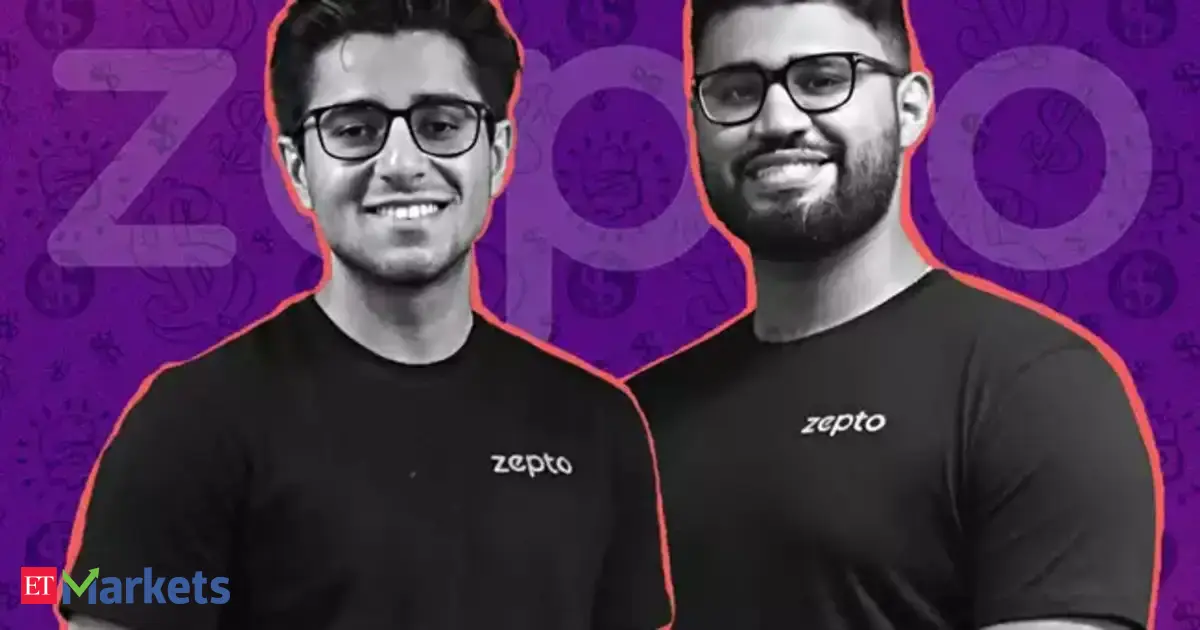
Quick commerce platform Zepto revealed in its updated draft red herring prospectus (DRHP) on Monday that the Enforcement Directorate (ED) had summoned its founders Aadit Palicha and Kaivalya Vohra in relation to the Foreign Exchange Management Act (FEMA) in April 2026.In its updated DRHP filed with SEBI for a $1 billion (Rs 9,500 crore) initial public offering, Zepto said that Palicha and Vohra were required to produce some documents with regard to foreign investments, audited balance sheets for the financial year 2020-21, shareholding patterns, details on loans and guarantees, income tax returns and bank accounts, along with other information.Complying with the summons, Vohra appeared before the ED on April 17 and April 22. Palicha appeared before the authority on April 20 and May 15 this year. "As on the date of this Updated Draft Red Herring Prospectus – I, they have provided relevant information and documents as requested by ED pursuant to the Summons, as well as follow-on information requested by the ED further to their interactions, including certain details in relation to our holding structure, the Scheme, and additional information in relation to our business such as business agreements and invoices," Zepto said.The quick commerce company said it has not yet received any further communication from ED. It assured that there will not be future inquiries or that these could escalate to investigations, legal proceedings or any possible penalties.Zepto IPOThe much-awaited IPO of Zepto will comprise a fresh issue of shares worth Rs 8,010 crore and an offer-for-sale (OFS) of nearly 11.35 crore shares by existing shareholders, according to the updated prospectus. The five-year-old company had filed its IPO papers confidentially with market regulator SEBI back in December 2025 and received the regulator's approval in May this year.Zepto is aiming to debut on stock markets in July, people familiar with the matter told The Economic Times. This would make the firm the third quick commerce player on Dalal Street, along with Blinkit parent Eternal and Instamart parent Swiggy.Also Read | Zepto files updated papers for Rs 9,500 crore IPO; aims July listingZepto earnings snapshotZepto reported a 75% year-on-year (YoY) jump in consolidated revenue for the fourth quarter of FY26 to Rs 7,498 crore, according to its updated DRHP. The Bengaluru-based company also narrowed its net loss to Rs 1,539 crore during the January-March quarter from Rs 1,832 crore a year earlier, the filing showed.Zepto processed 210 million orders during the quarter, i.e. over 2 million orders a day. It ended March 2026 with 1,139 dark stores, up from 1,029 a year earlier. Orders per store per day rose to 2,140 from 1,425 in the year-ago period, indicating higher throughput across its network.Also Read | Zepto Q4 revenue up 75% at Rs 7,498 crore, narrows loss to Rs 1,538 crore(Disclaimer: Recommendations, suggestions, views and opinions given by the experts are their own. These do not represent the views of The Economic Times)
Index provider MSCI confirmed on Monday it will apply existing rules for early inclusion of large IPOs in its Global Standard Indexes, likely clearing the way for SpaceX to join, which will fuel demand from passively managed investment funds. Investment funds with trillions of dollars in assets track MSCI's indexes, and they would have to buy shares of SpaceX if it is added to those benchmarks, adding to demand from funds tracking the Nasdaq 100 and FTSE Russell indexes. SpaceX is raising $75 billion and targeting a $1.75 trillion valuation that would place it among the top 10 most valuable U.S.-listed firms, even as only around 7% of its listed shares will be freely tradeable at launch on June 12. The rocket maker led by Elon Musk is expected to easily clear MSCI's size and free-float thresholds for early inclusion in its indexes. MSCI's decision contrasts with S&P Global, which last week shut out SpaceX from quick inclusion in the S&P 500 index after deciding it would not change its criteria, including a rule that a company must be profitable. SpaceX posted a net loss of $4.94 billion in 2025, even as revenue rose 33% to $18.67 billion. The final IPO price is due to be set on June 11, with trading on Nasdaq starting the next day, which would put SpaceX on track to join MSCI's indexes 10 trading days later, according to MSCI. Passively managed funds tracking MSCI indexes had around $5.79 trillion in assets, according to an MSCI blogpost published in February. Nasdaq has already made changes that will make it easier for SpaceX, Anthropic and other newly listed megacaps to join its Nasdaq 100 index. SpaceX is set to be eligible for inclusion in both the Russell U.S. Equity Indexes and the FTSE Global Equity Index Series under the newly announced fast-entry rules from the index provider FTSE Russell.
Apple has officially unveiled Siri AI, its biggest overhaul of Siri since the voice assistant first launched in 2011.Announced at WWDC 2026, Siri AI is powered by Apple Intelligence and brings a more conversational interface, personal context awareness, visual intelligence and the ability to take actions across apps. Apple says the new assistant can answer questions from the web, understand what's on your screen, surface information from messages, emails and photos, and help users write, edit and complete tasks.Also Read: Apple WWDC 2026: Siri gets an AI makeover, its biggest upgrade since 2011 debutHere's everything you need to know about Siri AI, including supported devices, how to access it and when it will be available.What is Siri AI?Siri AI is a completely rebuilt version of Siri powered by the next generation of Apple Intelligence.Unlike the old Siri, which primarily handled voice commands and basic queries, Siri AI can understand personal context, maintain conversations, answer follow-up questions and take actions across apps.For example, users can ask Siri to:Find a restaurant recommendation sent by a friend in MessagesPull up a hotel booking confirmation from an old emailFind photos from a recent tripDraft emails and messagesEdit and share photosAnswer questions about content currently displayed on screenSearch the web for up-to-date information on virtually any topicApple says Siri AI combines personal information, onscreen awareness and web knowledge to provide more useful and contextual responses.How to access Siri AIApple has introduced several new ways to access Siri AI across devices.On iPhoneUsers can access Siri AI by:Saying "Hey Siri"Pressing the side buttonSwiping down from the Dynamic Island to start a conversationUsing the new dedicated Siri appThe dedicated Siri app allows users to revisit previous conversations and continue chats across devices.On MacSiri AI is integrated directly into Spotlight.Users can search for answers, ask questions and access Siri AI from anywhere in macOS. Siri is also integrated into system context menus, allowing users to control-click files, images or text and ask questions about them.On iPadSiri AI is integrated into Spotlight and Visual Intelligence features, including screenshot-based interactions.On Apple WatchUsers can start conversations directly from their wrist, while Smart Stack can suggest continuing previous Siri conversations.What is the new Siri app?One of the biggest additions is a dedicated Siri app.The app stores conversation history using iCloud syncing, allowing users to start a conversation on one device and continue it on another.For example, users can begin chatting with Siri on a Mac and pick up the same conversation later on an iPhone, iPad, Apple Watch or Apple Vision Pro.Siri AI gets Visual IntelligenceApple has significantly expanded Visual Intelligence.On iPhone, Siri AI is integrated directly into the Camera app through a new Siri mode. Users can point the camera at objects and ask questions about what they see.The feature can:Identify objects and placesProvide information about foodOffer nutritional insightsHelp split restaurant bills using Apple CashAnswer questions about visual contentVisual Intelligence is also coming to iPad, Mac and Apple Vision Pro for the first time.Which devices support Siri AI?Apple Intelligence and Siri AI will only be available on supported hardware.Supported iPhonesiPhone 16 series and neweriPhone 15 ProiPhone 15 Pro MaxSupported iPadsiPad mini with A17 ProiPads powered by M1 chips or newerSupported MacsMac models with M1 chips or newerSupported Apple Watch modelsApple Watch Series 10 and newerApple Watch Ultra 2 and newerApple Watch SE 3 (when paired with a compatible iPhone)Notably, while iOS 27 supports iPhone 11 and newer devices, Siri AI itself requires Apple Intelligence-compatible hardware.Also Read: As Apple's WWDC conference kicks off, investors want to know if AI will save SiriWhen will Siri AI be available?Apple says Siri AI is available for developer testing starting now through the Apple Developer Program.A public beta will launch later this year as part of iOS 27, iPadOS 27, macOS 27, watchOS 27 and visionOS 27.Initially, Siri AI will be available in English, with support for additional languages rolling out later.
Quick commerce company Zepto on Monday filed its updated draft red herring prospectus (DRHP) with the Securities and Exchange Board of India for a $1 billion (Rs 9,500 crore) initial public offering, moving closer to one of the most anticipated new-age listings of the year.The IPO will comprise a fresh issue of shares worth Rs 8,010 crore and an offer-for-sale (OFS) of 113 million shares by existing shareholders, according to the updated prospectus. The five-year-old company had filed its IPO papers confidentially with Sebi in December 2025 and received the regulator's approval in May.According to people aware of the matter, Zepto is targeting a July listing. That would make it the third quick commerce player in the public market, alongside Blinkit parent Eternal and Instamart parent Swiggy. The IPO will also make Zepto the first standalone quick commerce company to list on Indian stock exchanges.Through the OFS component, early investor Nexus Venture Partners, US-based Contrary Capital and Kaiser Permanente, as well as Dubai-based Razor Capital, plan to sell shares in the company.Zepto was last valued at $7 billion in October 2025, when it raised $450 million from investors including CalPERS, General Catalyst, Goodwater Capital and Lightspeed.The company plans to use proceeds from the fresh issue to expand its dark store network across existing and new geographies, as well as fund lease rentals for existing facilities. As of March 31, Zepto operated 1,139 dark stores. It also intends to invest in technology and cloud infrastructure, besides funding marketing and business promotion expenses.For the January-March quarter, Zepto reported operating revenue of Rs 7,498 crore, up 75% year-on-year. Net loss narrowed to Rs 1,539 crore from Rs 1,832 crore a year earlier.During the fourth quarter, Zepto processed 210 million orders on its platform, compared with 274 million for Blinkit and 113 million for Swiggy's Instamart.Besides Blinkit and Instamart, Zepto competes with Tata-owned BigBasket, Flipkart Minutes and Amazon Now in India's 10-minute delivery market.The company's founders, Aadit Palicha and Kaivalya Vohra, along with their families and family offices, comprise Zepto's promoter group, which collectively holds a 19.6% stake in the company.Palicha and Vohra, along with US-based investor and Glade Brook Capital founder Paul Hudson, Zepto CFO Ramesh Bafna, Avra founder and former Y Combinator managing director Anu Hariharan, and former Bharti Enterprises chairman Akhil Gupta, comprise Zepto's board of directors. Hudson serves as chairman of the board.Zepto's IPO comes at a time when the quick commerce industry is locked in an intense battle for market share, even as growth at leading platforms has moderated amid a broader push towards profitability. The entry of ecommerce giants Amazon and Flipkart into the 10-minute delivery segment has further intensified competition and sparked a fresh round of price wars.
SpaceX’s initial public offering is well oversubscribed, according to people familiar with the matter, as demand builds for a potentially record-setting debut.Banks leading the offering by Elon Musk’s rocket, satellite and artificial intelligence company are expected to stop taking orders from institutional investors on Wednesday after the market closes in New York at 4 p.m., some of the people said, asking not to be identified as the information isn’t public. Closing the order books gives banks time to gauge demand ahead and advise the company on pricing. SpaceX’s IPO is expected to price June 11 and trade the following day. The company is offering 555.6 million shares at $135 each, which would raise about $75 billion, and value it at about $1.8 trillion.Retail investors can still submit orders for SpaceX shares on some platforms beyond the Wednesday deadline. The company is allocating as much as 30% of the offering to retail, Bloomberg News has reported.Also Read | US stocks: Alphabet taps Intel to make three million in-house chips: ReportA spokesperson for SpaceX didn’t immediately respond to a request for comment. Representatives for Goldman Sachs Group Inc. and Morgan Stanley declined to comment.Anticipation is growing for the IPO which is expected to be the biggest ever, topping Saudi Aramco’s $29.4 billion debut in 2019. The company has disclosed new sources of revenue in recent weeks, emphasizing its AI clout. On Friday, SpaceX announced a deal with Alphabet Inc.’s Google that would see the Gemini AI model maker pay $920 million a month as part of a cloud services agreement set to run through 2029. It previously disclosed a similar pact with Anthropic PBC.The company formally known as Space Exploration Technologies Corp. expects to make its debut on Nasdaq and Nasdaq Texas under the symbol SPCX.
New Delhi, The country's merchandise exports have recorded about 15 per cent growth during April-May 2026-27 despite global economic uncertainties, a senior government official said on Monday.The Commerce Ministry will release the trade data for May on June 15."During the two months, exports are up by 15 per cent," the official said.Exports rose by 13.78 per cent to USD 43.56 billion in April, the highest monthly outbound shipments in more than four years, driven by petroleum products amid a surge in crude oil prices, but the trade deficit widened to a three-month high of USD 28.38 billion due to an uptick in imports.
India recorded a current account surplus of $7.1 billion, or 0.7% of GDP, in the January-March quarter of FY26, supported by strong growth in services exports and remittance inflows, according to data released by the Reserve Bank of India on Monday.The surplus was lower than the $13.7 billion, or 1.4% of GDP, recorded in the corresponding quarter of the previous year.The country's merchandise trade deficit widened to $83.4 billion during the quarter, compared with $59.3 billion a year earlier, reflecting higher import outgo. However, this was partly offset by a rise in net services receipts to $60.4 billion from $53.3 billion in the year-ago period, driven by growth in computer services and other business services exports.Also read: FPI exodus from financials cools, but foreign investors remain net sellersAs per the central bank data, remittance inflows remained a key pillar of external stability, with personal transfer receipts, largely including money sent home by Indians working overseas, rising to $43.5 billion in the March quarter from $33.9 billion a year ago. Meanwhile, net outgo under the primary income account declined to $11.1 billion from $11.9 billion, providing additional support to the current account balance.Capital flows in Q4 FY26According to RBI data, net foreign direct investment (FDI) inflows stood at $4.2 billion during the quarter, higher than $0.4 billion in the year-ago period.Foreign portfolio investors (FPIs) recorded a net outflow of $12 billion in the March quarter, compared with a net outflow of $5.9 billion a year earlier.Non-resident Indian (NRI) deposits registered net inflows of $3.3 billion, up from $2.8 billion in the corresponding quarter of FY25. Net inflows through external commercial borrowings (ECBs) amounted to $3.6 billion, compared with $7.5 billion a year ago.Foreign exchange reserves increased by $7.2 billion on a balance of payments basis during the quarter, compared with an accretion of $8.8 billion in the year-ago period.FY26 balance of paymentsFor the financial year 2025-26, India’s current account deficit stood at $25.2 billion, equivalent to 0.6% of GDP, compared with a deficit of $22.9 billion, or 0.6% of GDP, in FY25.The merchandise trade deficit widened to $337.3 billion in FY26 from $286.9 billion a year earlier. Net services receipts rose to $216.6 billion from $188.8 billion, while secondary income receipts increased to $143.6 billion from $123.5 billion.Net invisibles receipts stood at $312 billion in FY26, higher than $264 billion in the previous year, primarily on account of net services receipts and net personal transfers.Capital flows in FY26Net FDI inflows increased to $6.9 billion in FY26 from $1 billion in FY25. FPIs recorded net outflows of $16.4 billion during FY26, compared with net inflows of $3.6 billion in the previous year.Foreign exchange reserves declined by $23.6 billion on a balance of payments basis in FY26, compared with a depletion of $5 billion in FY25.
The Reserve Bank of India’s use of a key tool for defending the rupee has passed the $110 billion mark in recent weeks to a new record, according to people familiar with the developments.The RBI’s net-short dollar book, a measure of the degree it has sold forward its stockpile of the US currency, has risen to about $110 billion-$115 billion across onshore and offshore markets, said the people who asked not to be identified as the information is private. The book was at $95.3 billion in April, down from a record high of $103.1 billion the previous month.The central bank ramped up its interventions after the rupee weakened to a record low on May 20, almost hitting the 97 per dollar mark, the people said, adding that a large part of the central bank’s activity was in the offshore non-deliverable forwards market.Also Read: RBI's reform package could pull $40-75b inflows, push rupee to 92-93 and keep August rate on hold The RBI’s use of NDFs, which have grown over the past couple of years, allows the central bank to influence the exchange rate without immediately depleting foreign-exchange reserves. Such interventions can signal policy intent and help steady the currency during periods of volatility.A spokesperson for the RBI didn’t respond to an email seeking comment.131583707The rupee has borne the brunt of the oil-price shock caused by the Iran war, as India depends heavily on imports to meet its energy needs. The currency has repeatedly fallen to record lows this year as refiners sold rupees for dollars to pay for costlier crude. Still, the currency may now find support from coordinated measures rolled out by the government and the RBI on Friday to attract capital flows.Also Read: Reeling rupee drags students abroad deeper into debt at homeIn recent weeks, the central bank has sold offshore dollars largely via short-dated contracts, typically maturing in one-to-three months, the people said. At the same time, it has conducted onshore swaps of maturities of more than a year, they said. These swaps replenish some of the liquidity drain caused by the RBI’s onshore dollar sales aimed at stabilizing the rupee.RBI Governor Sanjay Malhotra said on Friday that while the authority does not resist market-driven adjustments in the rupee, it curbs excessive volatility in the exchange rate. The currency is often influenced by speculative pressures that are not in sync with fundamentals, he added.The growing derivatives book may still pose challenges. As contracts mature, they generate recurring demand for dollars, capping any sustained recovery in the rupee. The central bank is likely to use any renewed capital flows to unwind its short forward book and rebuild foreign-exchange reserves, according to Goldman Sachs Group Inc. analysts led by Kamakshya Trivedi.India’s foreign-exchange reserves were at $682.3 billion in the week of May 29, having dropped more than $40 billion since the Iran war began in late February.
You do the research, read lists of reviews, compare the filtration stages, and shell out a significant sum for the most promising, tech-savvy water purifier in the market. Then, just two months into installation, the machine starts throwing a series of confusing, flashing signals. The premium buying experience instantly evaporates, replaced by the sheer frustration of tracking down customer care and waiting at home for a technician to show up.In India’s competitive consumer durables sector, this exact friction point has transformed the landscape of water purifiers. The ultimate battle is no longer just about who can build and sell the best machine; it is increasingly about who can maintain trust after the hole has been drilled in the customer's kitchen wall.While the water purifier market is traditionally viewed through the lens of one-time appliance sales, companies like Eureka Forbes, the legacy player behind AquaGuard, are increasingly betting on a far larger opportunity hidden beneath the surface: the recurring service economy built around filters, annual maintenance contracts (AMCs) and nationwide technician networks.According to internal projections by Anurag Kumar, Chief Growth Officer at Eureka Forbes, the water purifier service market alone is on track to cross Rs 9,000 crore by FY30, nearly matching the projected Rs 10,000 crore size of the product market itself.131582773Also read: Beyond the room: Why India Inc's luxury hospitality bet is becoming an experience businessBreaking down the mathFor decades, the consumer durable playbook was simple: manufacture, distribute, sell, repeat. But water purification is far different from selling a television or a refrigerator; it is an active, evolving health product bound to the fluctuating quality of local municipal and groundwater supplies."The market for product categories for water purifiers is about Rs 3,800 crore today," Kumar says in an exclusive interview with ET Online. "I think you would add another, roughly about Rs 3,500 crore of service category as well to it."Citing independent industry reports, Kumar highlighted that by FY30, this parallel economy is set to explode. The product market will expand to over Rs 10,000 crore, while the service and aftermarket ecosystem will chase it tightly at more than Rs 9,000 crore, growing at a combined double-digit compound annual growth rate (CAGR) of 11% to 12%.This shifting weight from hardware to service fundamentally changes corporate strategies. For an industry dealing with an urban penetration rate of just 14% (and a mere 7% nationally), the recurring revenue from existing households forms a highly resilient cash-flow cushion that protects margins even during macro-economic slowdowns.131582808Service scale becomes the biggest moatThe Rs 9,000 crore service opportunity explains why tech-first aggregators and rental startups are rushing into the service category. However, scaling an on-demand service infrastructure across India’s complex geography is entirely different from coding an app.For legacy companies like Eureka Forbes, this operational network has become a major competitive advantage."After sales service can make or break a brand," says Kumar. "I think a lot of the trust that AquaGuard has today is really thanks to the fact that people have trust in our service... It's a very, very important integral part of our business and a very, very crucial moat that we continue to nurture."To defend this moat against new-age tech startups, Eureka Forbes operates at a scale that resembles a logistics company more than an appliance manufacturer. The company has deployed more than 8,000 technicians mapping out an operational footprint across 19,500 PIN codes.Also read: Apple expected to unveil new AI features at last developers conference with CEO Tim CookThe push to reduce maintenance costs"Once you sell a product, then you have it for life and there's some revenue which comes with it," Kumar says, referring to filter replacements, AMCs and servicing requirements.Interestingly, the biggest threat to this recurring service revenue is not new-age competitors, it has been consumer fatigue over high maintenance costs. Historically, the dread of paying steep annual fees to replace purifier filters has acted as a primary barrier keeping the remaining 86% of urban Indian households from adopting organised water purifiers.To beat this, Eureka Forbes pulled off a counter-intuitive strategic gear: they disrupted their own short-term revenue model to secure long-term market share.Last year, the company introduced a range of purifiers featuring "long-life" filters extending the replacement cycle from the traditional 12 months to a full two years."We did that because we fundamentally heard from consumers that there was also a barrier to the category around maintenance cost being high," Kumar reveals. "What two-year filters actually did was they actually lowered the maintenance cost because now you don't have to change filters every year. You have to change once every two years."Digitising a 1980s direct-sales DNAEureka Forbes, a company historically known for its door-to-door service, and making Aquaguard synonymous with water purifiers in India, faced a new piece of necessary upgrade with building digitisation. The multi-billion dollar service landscape required a complete digital overhaul of consumer interactions. The brand that built its empire in the 1980s on the soles of direct-sales agents knocking on suburban doors has had to pivot entirely to an on-demand, algorithmic infrastructure.An army of thousands of field technicians is only as efficient as the software directing them. For modern consumers who manage their entire lives via smartphone screens, a bland "technician will visit tomorrow" promise no longer cuts it."We've digitised that service," notes Kumar.The long-term playAs water contamination concerns spike across rapidly expanding urban clusters, the structural demand for pure drinking water will continue to climb, and so for water purifiers.However, as the hardware itself faces gradual commoditisation and intense price competition from newer market entrants, the center of gravity has largely shifted. Where the growth moves nextCapturing a dominant share of the service market is only half the blueprint. As Kumar maps out the strategic trajectory for Eureka Forbes over the next three to five years, the company's growth engine eyes two distinct tracks: aggressive geographic widening and targeted product diversification. Geographically, Kumar notes, the company is bypassing deep rural pockets for the time being to focus heavily on India’s rapidly urbanising Tier-2 and Tier-3 towns. Instead, the company is doubling down on smaller towns where they can immediately deploy their signature localised service infrastructure without stretching their logistics network too thin.Simultaneously, the brand is attempting to de-risk its reliance on the kitchen wall by expanding into adjacent consumer durables. Kumar outlined a product pipeline anchored in high-growth, premium categories, including robotic vacuum cleaners, air purifiers, and household water softeners. The underlying playbook here is pure cross-selling. By utilising the same 8,000-strong technician network to service these newer household appliances, Eureka Forbes is betting that its aftermarket footprint can drastically lower its customer acquisition costs; positioning the legacy firm to evolve from a single-product manufacturer into a broader home-health ecosystem player.