Antara News (Indonesia)
기타
정치
Indonesia to build 100 modern rice warehouses: Minister
Agriculture Minister Andi Amran Sulaiman announced that the government will build 100 new warehouses for the State ...

"WAREHOUSES" · 총 29건
필터 보기현재 지수
49.4
0 = 부정 우세
50 = 중립
100 = 긍정 우세
최근 7일 기준 84,482건을 분석한 결과, 뉴스 심리지수는 49.4(균형)입니다. 긍정 10,397건(12.3%)·중립 60,896건(72.1%)·부정 13,189건(15.6%)이며, 중립 비중이 뚜렷하게 높습니다. 성향 지수는 종합 21.3(보수 경향)입니다.
Agriculture Minister Andi Amran Sulaiman announced that the government will build 100 new warehouses for the State ...
U.S. Central Command said the U.S. launched a new round of what it called self-defense strikes against Iran on Wednesday. Two U.S. officials familiar with the strikes told CBS News the targets include amminuition depots, command and control centers and warehouses. CBS News' Charlie D'Agata and Courtney Kealy have more.
The urban regeneration project, which comprises the Beicang Cultural & Creative Block and Beicang Li, has transformed the former warehouses of a textile factory into a vibrant cultural and creative destination.
Walmart's US division CEO said new AI and robots are speeding up truck unloading times from hours to minutes.
China is launching a nationwide training programme to help humanoid robots move from dance performances and marathon races into factories, warehouses and hospitals, as Beijing steps up efforts to commercialise the technology. The goal is to accelerate the deployment of humanoid robots and embodied AI in real-world production and service environments, giving local governments and state-owned enterprises less than six months to prove the technology’s viability in such settings, according to an...

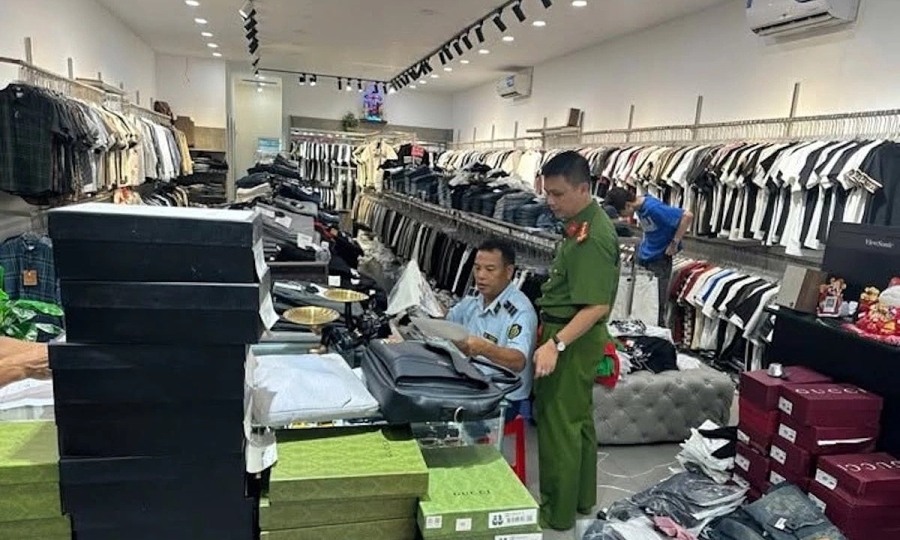
Police in Vietnam's southern Dong Nai City have begun probes into two warehouse owners for allegedly infringing industrial property rights after seizing more than 1,400 counterfeit products bearing luxury brands including Gucci, Louis Vuitton, Burberry and Dior.
The rapid growth of e-commerce in Malaysia is placing unprecedented pressure on the country’s transport infrastructure, turning major highways into “moving warehouses” operating around the clock, according to transport experts.
Fighters of the 1st Separate Center of the Unmanned Systems Forces carried out an operation to destroy and strike Russian UAV crews, air defense units, and warehouses on the territory of Donetsk Airport, which the invaders had turned into a military logistics hub.
A direct hit by a Russian drone on 3 June has critically damaged one of ATB's largest warehouses, which supplied goods to approximately 300 stores in the retail network.
Shift Robotics is part of a growing scramble for real-world data as AI companies try to train machines to work in homes, warehouses, and factories.
Kolkata: West Bengal government has signed an MoU on Thursday with Adani Ports in the presence of Adani Ports & SEZ MD Karan Adani, people in the know told ET.West Bengal Chief Minister Suvendu Adhikari on Wednesday held meeting with Managing Director of Adani Ports & SEZ Karan Adani on Power, Logistics and infrastructure at Nabanna state secretariat, sources said.Also Read: West Bengal government holds pre-budget talks with industry bodies'The Chief Minister has reportedly assured that all support will be provided to the Adanis if they invest in West Bengal and they can choose the project site, people in the know told ET.Adani Group chairman Gautam Adani, at the BGBS summit 2022, had promised an investment of Rs 10,000 crore in the state in sectors of port infrastructure, data centres and undersea cables, warehouses and logistics parks. Adani Ports and SEZ was in the fray for Tajpur port for more than a year.Group ran into rough weather following the January 24 report of the US short-seller Hindenberg Research flagged high debt levels at the port-to-energy conglomerate. The state government was silent on the Tajpur port project all through.
On 3 June, Russian forces struck the Dnipro district, injuring eight people and causing a fire at warehouses belonging to a retail chain.
The bus lurched to a halt on the long, dry highway that takes you from Gwadar to Turbat. A clutch of men jumped out and sprinted towards the makeshift bathroom by the road. Some of them scattered into the bushes. Back in the bus, anchored to their seats, women stared out of the windows stiffly. They must have done the math before boarding: drink enough water to bear the heat, but not so much that you need to empty your bladder. Gwadar to Turbat is a short two hours. But it is eight long ones if you are heading to Karachi. A washroom on the Makran Coastal Highway between Turbat and Gwadar Balochistan’s new and smooth highways are praised as corridors of connectivity and trade and promise progress for a place that has long been politically and geographically distant from the rest of Pakistan. Motorway 8 goes from Ratodero to Gwadar, the N-10 runs along the Makran coast, the N-25 RCD Highway connects Quetta to Karachi and the N-40 that meanders towards the Iran border from Quetta to Taftan. But the praise for this network does not make up for the lack of safe and accessible public bathrooms for hundreds of kilometers. Where you do find one, it is rudimentary at best, a hole in the ground, a door that won’t close or lock and almost never any running water. To make matters worse, the women’s toilets are usually located in male-dominated spaces, such as roadside motels, dhabas, and bus stops. In Surab, washrooms are attached to the mosques and are strictly off limits for women. This neglect is now being challenged in court by Kulsoom Baloch, Fauzia Shaheen and Dr Quratulain Bakhtiari. They filed a complaint in the Balochistan High Court, arguing that the highways are deliberately designed to prioritise the cold mechanics of commerce at the expense of human safety, accessibility and equity. They said that the long stretch between Mastung and Kalat is the worst affected. There isn’t a single restroom for women when you travel from Quetta to Makran through Kalat and Mastung. The Karachi to Quetta-Chaman N-25 Highway is being widened into a double carriageway but toilets for women are missing from the plan. The government has to provide sanitation which is a constitutional right as Article 9 guarantees the right to life and dignity, 14 protects the dignity of the people and privacy at home, and 15 ensures the right to movement. “Men are socially free,” says Kulsoom. “They can go anywhere for nature’s call. Women are restricted socially and culturally, and their biological needs are different.” Unusable washrooms in Ormara and Gwadar Fatima, 46, describes one of her experiences. She was travelling from Turbat to Karachi for eye surgery with her husband and daughter. The bus had been on the road for a couple of hours until it stopped near a roadside hotel in Ormara. Ormara, located in Gwadar along the Makran Coastal Highway, is often the first and only major stop for buses travelling from Turbat and Gwadar to Karachi. During this journey, the first stop is usually this deserted hotel in Ormara, where bus drivers and conductors often receive free meals in exchange for bringing passengers. There were four bathrooms, supposedly for men and women both, and all of them were broken, dirty, and without door locks. She entered the dingy bathroom but her eyes kept darting towards the ajar door. Her daughter came to the rescue. “She held the door while I was inside … we had no other choice,” she says. “There’s a lingering fear that men nearby can see you. It feels humiliating.” At Gwadar’s Zero Point, which is about 90km from Hub town, there are two bathrooms, but both are unusable. “When the vehicle stops for security checks,” says Kulsoom, “women looking to use a bathroom are told to, ‘go as far as you can’.” The story is the same from Yousuf Goth Terminal in Karachi, used by passengers from Balochistan daily, to Khuzdar’s Chamrock Hotel and Restaurant (another bus stop). Dozens of women line up inside warehouses, waiting their turn to use the few available toilets. Women who regularly need to travel fall sick with urinary tract infections, diarrhoea and dehydration. Urologists warn that holding urine for hours on end causes bladder infections and serious kidney problems. In many parts blanket bans on night-time public transport are imposed when there is a threat of violence. Protests, road blockades, security checks and insurgent raids often leave women stranded for hours, if not days. A student, Saadia, was stuck on the M-8 Motorway for two days last year. “We did not have proper food, water or basic facilities. At one point, we walked several kilometres to a nearby bazaar just to use a bathroom,” she says. The only washroom at the Talaar Checkpost with proper signage and running water Saif owns a hotel on the Makran Coastal Highway at Ormara. He handles 15 to 20 buses daily with each bus carrying roughly 400 passengers. This means up to 800 travellers use his 19 bathrooms every single day. “Business is very weak these days, and on top of that, there is a major water issue,” he says. A broken sewerage system and chronic power failures cripple his efforts to maintain hygiene. He tried introducing a Rs10 upkeep fee to pay a dedicated cleaner but most passengers cannot afford to pay even this amount. He appealed to the transport companies to subsidise the maintenance cost as their passengers benefit from the stopovers without contributing towards sanitation. “The buses only stop for meals and then leave. We have spoken to bus operators time and again but they don’t cooperate,“ he says. It would cost around Rs300,000 to Rs400,000 to build good quality bathrooms. The local authorities hardly help small business owners like Saif who they fine instead of assisting with infrastructure grants or water tankers. “The Assistant Commissioner came once and fined me without any prior warning,” says Saif. He ordered him to build a chabutra (a raised platform) in the bathrooms but didn’t offer any financial support. The Balochistan Development Statistics report of 2018-2019 says the province has 42,911 kilometres of roads, with national and provincial highways connecting districts and towns. International highway design guidelines say that key rest areas should be constructed every 80km to 100km, with smaller stop points at every 50km. Washrooms along the route from Quetta to Makran If such designs were applied, the 653km Makran Coastal Highway for instance, would need at least seven rest stops. The 892km M-8 would need eight and the 487km N-85 Surab-Panjgur-Hoshab highway would need five. To pull this off, safe gender-segregated resting areas should be built in towns along these routes such as Awaran, Turbat, Gwadar, Chaghi, Pasni, and Ormara. In more isolated stretches, eco-friendly and water-efficient technologies could be viable alternatives to provide these spaces lighting, clear signage and proper maintenance systems. And infrastructure is only as good as the insight behind it. If women are not included in the designing, the facilities will fall short of their needs. As Kulsoom Baloch says, “True development begins with the basics. In Balochistan, it is always the opposite. Roads are constructed first, celebrated as progress.” No one even thinks of toilets.
Heavy overnight bombardment targeting multiple districts damaged houses, warehouses and cars, triggering several fires across Kyiv Oblast.
A fire caused by a Russian drone strike on the city of Dnipro on 31 May has destroyed warehouses and lorries at a distribution centre belonging to Ukrainian distributor and importer Euromix.
Operators of the 413th Raid Regiment of the Ukrainian Unmanned Systems Forces carried out strikes on Russian military warehouses and a troop deployment site in the temporarily occupied part of the Donetsk region.
WASHINGTON — The Trump administration is looking into selling some of the large warehouses that Immigration and Customs Enforcement had purchased earlier this year to serve as mega-detention centers for immigrants, according to two Department of Homeland Security officials
In a filing with Bursa Malaysia, the company says a 121.41-hectare plot of freehold land will be acquired for an industrial park project comprising warehouses, factories and related infrastructure.
UK’s third biggest supermarket will use tech of online grocer, which already provides support for M&S and Morrisons Asda has agreed a deal to use Ocado’s technology to run its online grocery store and home deliveries from next year. Ocado software will be used to support Asda’s grocery website and deliveries from its stores and “dark stores” – smaller warehouses that are not open to the public – from early 2027, the companies announced on Friday. Continue reading...
Country: South Sudan Source: World Food Programme AKOBO, South Sudan - The United Nations World Food Programme (WFP) has scaled-up its emergency response in Akobo East, South Sudan, delivering vital food and nutrition assistance to hundreds of thousands of people facing catastrophic hunger and malnutrition, even as insecurity, infrastructure damage and the onset of the rainy season continue to hamper operations. “The situation is critical and demands immediate attention to save lives of people who desperately need assistance,” said Mutinta Chimuka, WFP Country Director in South Sudan. “Our hope is to continue to reach people in need. Sustained safety and security of humanitarians and humanitarian cargo is therefore crucial to allow us to ramp up assistance and effectively reach all those in need.” Here are the latest updates on food security and WFP operations in Akobo, South Sudan: Food Security Situation in Akobo: According to the latest Integrated Food Security Phase Classification (IPC) update, parts of Akobo County are experiencing IPC Phase 5 (Catastrophe) – one of four counties at risk of famine if conditions deteriorate. An estimated 97,000 people are projected to face IPC Phase 3 (Crisis), 85,000 Phase 4 (Emergency), and 12,000 Phase 5 (Catastrophe) through July The malnutrition crisis has worsened to IPC Acute Malnutrition Phase 5 (Extremely Critical), driven by displacement, loss of livelihoods, disruption to health and nutrition services, and increased disease risks due to overcrowding. Severe malnutrition among children under five and breastfeeding mothers is rising sharply, fuelling fears of famine-like conditions developing in the region. Ongoing conflict has already displaced approximately 142,000 individuals from Akobo County and surrounding areas, with 100,000 having crossed into neighbouring Ethiopia. The collapse of local markets due to conflict and looting has severely restricted access to food supplies. WFP Operations in Akobo: Since launching its emergency response three weeks ago, WFP has reached more than 60,000 vulnerable people in Akobo including: More than 15,000 people with emergency food assistance Close to 6,000 pregnant and breastfeeding women with nutrition commodities and Over 30,000 people with High Energy Biscuits (HEB), a vital source of nutrition for people on the move. More than 6,000 children and pregnant and breastfeeding women with specialized nutritious foods – part of a blanket supplementary feeding programme. WFP and partners have also conducted nutrition screenings for 15,000 children and admitted 3,000 children with moderate acute malnutrition (MAM). WFP’s supply chain coordination and delivery continues to enable the scale up, including: Delivery of 25 metric tons of fortified biscuits and specialised nutritious foods, including airlifting 14.5 metric tons to frontline warehouses. Transport of 300 metric tons of mixed commodities for General food assistance and Nutrition to Akobo by air. A 33-truck convoy from WFP and the Logistics Cluster to deliver over 200 metric tons of food assistance, nutrition supplies, and 100 metric tons of relief items by this week. This may be the final road convoy before heavy rains render key roads impassable. More than 60 flights by WFP Aviation including airdrops, airlifts, and UN Humanitarian Air Service (UNHAS) passenger flights transporting 430 MT of critical assistance. UNHAS has also transported more than 200 aid workers into and out of the area. Increasing WFP-managed UNHAS flights to three times per week. During the rainy season, when overland transport becomes unfeasible, WFP will continue supporting Akobo through air deliveries to ensure uninterrupted food assistance. Challenges and Funding requirements While access in Akobo has recently improved, delivering life-saving assistance has relied heavily on costly air operations due to persistent insecurity. The risk of renewed fighting is real. We need hostilities to end and humanitarians must have continued secure access to ensure civilians can safely receive vital assistance. The sustained and consistent delivery of critical services and support to communities is paramount for recovery and rebuilding livelihoods. WFP is deeply concerned about the many vulnerable people trapped in inaccessible regions, where hunger and malnutrition is likely to worsen during the fast-approaching lean season. WFP urgently requires USD 266 million to continue life-saving food, nutrition assistance, as well as support to the humanitarian community in South Sudan in 2026. # # # Note to editors: Broadcast quality footage available, please contact wfp.media@wfp.org. The United Nations World Food Programme is the world’s largest humanitarian organization saving lives in emergencies and using food assistance to build a pathway to peace, stability and prosperity for people recovering from conflict, disasters and the impact of climate change. Follow us on X, formerly Twitter, via @wfp @wfp_Africa @wfp_SouthSudan For more information please contact (email address: firstname.lastname@wfp.org): Tomson Phiri, WFP/Juba, +211 928 008 037 Azfar Deen, WFP/Nairobi +39 345 846 6425 Julian Miglierini, WFP/ Rome, Mob. +39 348 2316793 Martin Rentsch, WFP/Berlin, Mob +49 160 99 26 17 30 Shaza Moghraby, WFP/New York, Mob. + 1 929 289 9867 Rene McGuffin, WFP/ Washington Mob. +1 771 245 4268 Nicola Kelly, WFP/London, Mob +44 (0)796 8008 474