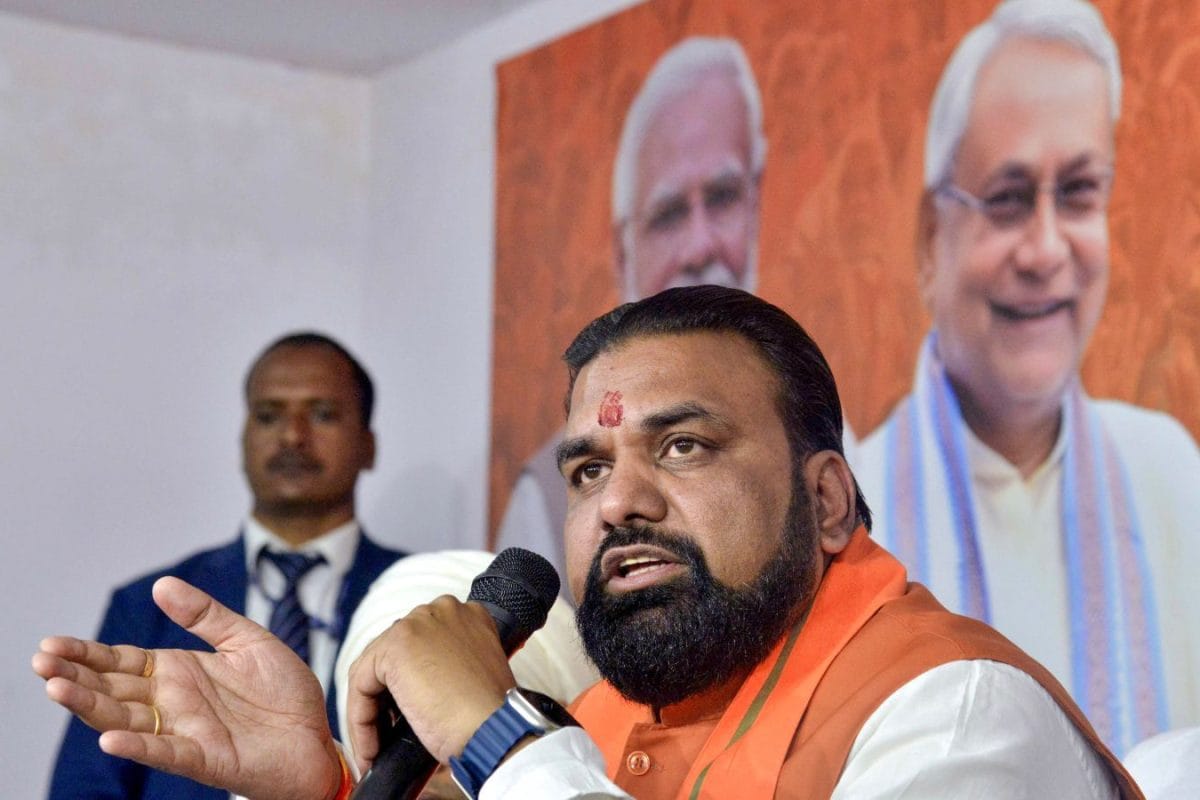
One in every 3 faculty posts vacant in top technical institutes | RTI data
While the Education Ministry said recruitments were happening across Centrally Funded Technical Institutes, RTI data show 35.2% of posts remain vacant

"INSTITUTES" · 총 27건
필터 보기현재 지수
49.5
0 = 부정 우세
50 = 중립
100 = 긍정 우세
최근 7일 기준 84,879건을 분석한 결과, 뉴스 심리지수는 49.5(균형)입니다. 긍정 10,475건(12.3%)·중립 61,247건(72.2%)·부정 13,157건(15.5%)이며, 중립 비중이 뚜렷하게 높습니다. 성향 지수는 종합 20.7(보수 경향)입니다.
While the Education Ministry said recruitments were happening across Centrally Funded Technical Institutes, RTI data show 35.2% of posts remain vacant

Under the new guidelines, all coaching institutes will be required to submit details of enrolled students to the respective district administration.

The institute will analyse AI models' performance and the risks they might pose and ramp up information sharing with institutes in other countries.

The Joint Seat Allocation Authority (JoSAA) has released the first mock seat allocation for the 2026 counselling process, giving engineering aspirants an early indication of the institutes and courses they may secure based on their current choices and rank positions.Candidates who have registered for JoSAA Counselling 2026 and filled in their programme and institute preferences can now check their provisional allotment through the official JoSAA portal.The mock allocation is designed to help students understand their likely admission prospects and make informed changes to their choices before the actual seat allocation rounds begin.What Is the JoSAA Mock Seat Allocation?The first mock seat allocation is a provisional exercise conducted by JoSAA before the commencement of the official counselling rounds.The allocation has been prepared using the choices submitted by candidates up to 8 PM on 7 June 2026. It reflects the seat a candidate could potentially receive if the counselling process were to conclude based on the current preference order and rank position.Importantly, the mock allocation is not the final seat allotment. Candidates can still modify, reorder, add or remove choices before the counselling deadline.How to Check JoSAA First Mock Seat Allocation 2026Candidates can follow these steps to view their provisional allotment:Step 1Visit the official JoSAA website.Step 2Click on the link for the First Mock Seat Allocation 2026.Step 3Log in using your application credentials.Step 4Submit the required details.Step 5View your provisional seat allocation status.Step 6Download and save the allotment details for future reference.Step 7Take a printout if required.Why the Mock Allocation Is ImportantThe mock seat allocation serves as a valuable planning tool for candidates.By reviewing the provisional allotment, students can assess whether their preferred colleges and branches are within reach. If they are dissatisfied with the outcome, they can revise their choices strategically before the final seat allocation rounds.This process often helps candidates improve their chances of securing a more desirable institute or academic programme.JoSAA 2026 First Round Seat Allotment DateJoSAA is scheduled to announce the first round of seat allocation on 13 June 2026.Candidates who are allotted seats in the first round will be required to complete several admission-related formalities, including:Online reportingDocument uploadVerification processSeat acceptance proceduresAdmission fee paymentThe deadline for fee payment in the first round is 26 June 2026.JoSAA Counselling 2026: Participating InstitutesThe JoSAA counselling process will facilitate admissions to 138 premier technical institutions across India for the 2026-27 academic session.These include:23 Indian Institutes of Technology (IITs)Indian Institute of Science (IISc), Bengaluru31 National Institutes of Technology (NITs)Indian Institute of Engineering Science and Technology (IIEST), Shibpur26 Indian Institutes of Information Technology (IIITs)56 Other Government-Funded Technical Institutes (GFTIs)The counselling process remains one of the largest and most important admission exercises for engineering aspirants in the country.Reservation Categories in JoSAA CounsellingSeats across participating institutions are allocated under various reservation categories, including:Open CategoryGEN-EWS (Economically Weaker Sections)OBC-NCL (Other Backward Classes – Non-Creamy Layer)Scheduled Castes (SC)Scheduled Tribes (ST)Persons with Disabilities (PwD) categoriesCandidates are advised to carefully review category-specific eligibility and seat availability during the counselling process.JEE Main and JEE Advanced Ranks Used for AdmissionsJoSAA uses different entrance examination ranks depending on the participating institution.Admissions to IITs and IISc BengaluruAdmissions are based on ranks secured in JEE Advanced 2026.Admissions to NITs, IIITs and GFTIsAdmissions are based on ranks obtained in JEE Main 2026.Candidates must ensure that their rank details and category information are correctly reflected in the counselling portal.What Should Candidates Do Next?Students should carefully review their first mock allocation and compare it with their desired institute and branch preferences.If necessary, they can modify their choices before the final counselling rounds begin. With the first round of seat allocation scheduled for 13 June, aspirants now have a valuable opportunity to fine-tune their choices and maximise their chances of securing admission to their preferred engineering institute.
Energy drink consumption for minors can have ill effects, according to the National Institutes of Health.
Khan’s bodyguards had fired in the air after his centre was attacked on June 2; Education Minister says State government will formulate a policy soon to curb rivalry among coaching institutes
The performers’ union greenlit a contract that merges previously separate pension plans and institutes new safeguards for generative AI.
South Korea has expanded eligibility for its Top-Tier Visa to include professors and researchers in science and technology, as the country seeks to attract world-class talent and strengthen its research capabilities. The Ministry of Justice and the Ministry of Science and ICT announced on May 31 that the visa programme, previously limited to employees of companies in advanced industries, will now be open to academics and researchers from June. The announcement is part of South Korea's broader strategy to recruit highly skilled professionals from overseas and boost innovation in science and technology. Universities, research institutes to benefit Under the revised framework, universities, government-funded research institutes and corporate laboratories hiring outstanding foreign researchers will be able to sponsor candidates for the Top-Tier Visa. Applicants will undergo a recommendation process led by the Ministry of Science and ICT, followed by screening by the Ministry of Justice. To qualify, candidates must meet specific criteria related to professional achievements, including awards, research publications, technology commercialisation accomplishments and research experience. Authorities said individuals considered to have exceptional potential may also be included in the candidate pool through a separate review process.131152865 Goal to attract 2,000 experts by 2030 The South Korean government has set a target of attracting 2,000 high-calibre science and technology professionals from abroad by 2030. Visa holders will receive priority support services designed to help them settle in the country, from arrival through long-term integration. The government believes the expanded programme will help address growing competition for global talent and strengthen South Korea's position as a research and innovation hub. Boost for research sector Minister of Justice Jung Sung-ho said the policy changes are expected to help attract leading international talent and enhance the capabilities of research institutions."These policy improvements are expected to help attract top talent in science and technology from abroad and boost the research capabilities of think tanks," Jung said.
Beijing’s top official on Hong Kong and Macau affairs has visited the Hengqin cooperation zone in Zhuhai as part of a drive to help the two special administrative regions align with the nation’s 15th five-year plan. The four-day visit by Xia Baolong, director of the Hong Kong and Macau Affairs Office (HKMAO), was his third trip to the Greater Bay Area this year. During his trip from Monday to Thursday, Xia visited a university town, research institutes, and innovation and technology companies...
Students from around the country arrive in numbers after completing class X and register in Kota’s residential institutes
People-to-people exchanges are already laying the groundwork for a different kind of Belt and Road collaboration. That's on full display in Astana as Chief Executive John Lee’s delegation wrapped up the Kazakhstan leg of his Central Asian tour with a visit to Nazarbayev University (NU) on Wednesday. Two individuals on the NU campus – a Hong Kong-born engineering professor and a local Kazakh startup founder – believe the story lies not just on a government level, but also in student exchanges, educational technology innovation and a new business corridor between Astana and Hong Kong. For the past eight years, Annie Ng, an associate professor at NU’s School of Engineering and Digital Sciences, is one of the few Hongkongers working in Kazakh academia. Ng said the chief executive’s visit is a long-overdue catalyst. “I think this is a very good start. I believe there will be more MoUs and more collaborations with different university institutes in Hong Kong with NU and Kazakhstan – not just for research, but also other education programmes or short courses,” she said. Ng sees Kazakhstan as a pivotal player under the Belt and Road framework, but notes a gap in Hong Kong’s engagement compared with the mainland. While there has been a growing number of mainland tourists and entrepreneurs in Almaty and Astana, she said Hongkongers remain conspicuously absent and should explore opportunities in Kazakhstan. “Young people will be more interested here and explore something new – not a typical country to visit. Kazakhstan, Central Asia, we are also close to other Central Asian countries,” she said. For Hong Kong businesses, she said, the potential is tangible. “A lot of things are developed in Hong Kong but not here. They can find a lot of room to expand their business.” Nurken Bolatov is chief operational officer of Artisan Education, a startup based on the NU campus that produces engineering kits and a web-platform for learning robotics, programming and STEM. Bolatov’s company has already been accepted into the ideation programme at the Hong Kong Science and Technology Parks (HKSTP). “For us, I hope it’s a great opportunity and experience to try our products in another region, with other students, and get some more feedback,” he said. But his ambitions for Hong Kong go beyond market testing. He sees the city as a manufacturing gateway. “There are a lot of manufacturers in Hong Kong and in China, so probably it would be great for us to cooperate with them so we can produce a lot more of our products.” He also hopes to tap into Hong Kong’s talent pool. “As I know, there are a lot of strong universities in China and in Hong Kong. Probably it would be helpful to find some potential team members to get into our project.” His startup is already piloting its products in several countries, including South Korea, Türkiye and the UK. Edited by Edmond Fong
Two foreign nationals employed by the National Institutes of Health (NIH) were charged Tuesday with smuggling monkeypox into the United States and lying to federal law enforcement. According to the U.S. Attorney’s Office for the Eastern District of Michigan, Vincent Munster, 53, a Dutch citizen and chief of the Virus Ecology Section at the NIH’s ...
According to the ambassador, more than 2,000 Kenyan students have studied in China under Chinese government scholarships, while four Confucius Institutes in Kenya have trained tens of thousands of people to learn the Chinese language.
Met Éireann’s meteorological definition is in line with most European institutes’ definition of summer and with what the World Meteorological Organisation says.
TOKYO (Kyodo) -- Japanese institutes have developed a Wi-Fi receiver chip able to operate for hours in extreme radiation conditions that could help in
New Delhi [India]: The Central Consumer Protection Authority (CCPA) has imposed a penalty of Rs 7 lakh on Vajiram and Ravi IAS Study Centre LLP for allegedly publishing misleading advertisements and concealing material information related to the success of candidates in the UPSC Civil Services Examination (CSE).According to a press release issued by the Ministry of Consumer Affairs, Food & Public Distribution, the final order was passed by the CCPA, headed by Chief Commissioner Nidhi Khare and Commissioner Anupam Mishra, after the authority found that the coaching institute had prominently advertised the achievements of successful UPSC CSE 2023 candidates without disclosing the specific courses undertaken by those candidates.According to the press release, the institute had claimed on its official website that "8 Rank Holders in the Top 10 are from Vajiram & Ravi", "37 Rank Holders in the Top 50 are from Vajiram & Ravi", and that "more than 30 per cent of the officers selected through UPSC Civil Services Examination are students of Vajiram & Ravi" every year.The CCPA's investigation reportedly found that seven of the eight top-10 rank holders and 29 of the 37 candidates in the top 50 had enrolled only in the institute's free Interview Guidance Programme (IGP).Also Read: Nearly 5.49 lakh candidates appeared in civil services preliminary exam: UPSCThe authority further noted that a large majority of successful candidates associated with the institute in recent years had participated only in the IGP. According to the findings cited in the press release, 86.36 per cent of successful candidates in 2021, 78.31 per cent in 2022, 97.56 per cent in 2023, and 71.69 per cent in 2024 had enrolled solely in the interview guidance programme.The CCPA observed that the Interview Guidance Programme begins only after candidates independently clear the Preliminary and Mains stages of the UPSC examination. By featuring such candidates in advertisements for comprehensive coaching programmes without clarifying the nature of their enrolment, the institute allegedly created the impression that their success was attributable to its full-length coaching courses.The authority held that the non-disclosure of important information regarding the courses opted for by successful candidates amounted to a misleading advertisement under Section 2(28)(iv) of the Consumer Protection Act, 2019, and violated consumers' right to be informed under Section 2(9) of the Act, the release said.The press release stated that the CCPA has so far issued more than 60 notices to coaching institutes for misleading advertisements and unfair trade practices and has imposed penalties exceeding Rs 1.46 crore on coaching centres preparing students for examinations such as UPSC, IIT-JEE, NEET, RBI and other competitive tests.
The CCPA has imposed penalties amounting to over Rs 1.46 crore on coaching institutes
Countries: Democratic Republic of the Congo, Ethiopia, Somalia Source: ELRHA In the first blog introducing this series, Adrienne Testa, from the UK Humanitarian Innovation Hub and Elrha discussed how fundamental it is to measure excess mortality if response actors want to understand the severity of a humanitarian crisis and guide aid prioritisation. In our second blog we focus on the work of a consortium led by IMPACT Initiatives. This consortium is drawing attention to the roles that national and local actors play in mortality data collection and use by decision-makers and what is needed to design more localised mortality estimation systems in humanitarian contexts. The structural barriers we need to talk about Many of the challenges for local and national actors to collect mortality data and inform responses are well known, but poorly documented. They have fewer opportunities for technical training; face inequitable access to financial resources for activities; and structural barriers limit their representation in coordination forums where decision-making occurs about whether mortality data should be collected, who collects it, and what findings can mean. Meanwhile, international actors frequently have a seat at the table, and therefore control the narrative, deciding what data matters and how it will shape response priorities. Yet, local and national actors – including non-governmental organisations (NGOs), universities, and public health institutes – are often ideally placed to collect mortality estimates and inform response decisions. They have established connections and access to affected communities and contextual understanding of how to appropriately and effectively operate. They understand political sensitivities and how to navigate these so that mortality estimation findings will carry legitimacy with key stakeholders and decision-makers. Crucially, locally-led mortality estimation initiatives challenge long-standing power imbalances associated with colonial, top-down approaches to humanitarian assistance. Recognising this, three partners in our consortium, Evidence for Change, London School of Tropical Hygiene and Tropical Medicine and SIMAD University, were funded by the Humanitarian Innovation Hub in 2024-25 to imagine what an ideal mechanism might look like to systematically trigger mortality data collection for accountable decision-making in crises. Consultation with global humanitarian stakeholders confirmed: If we want better mortality data, we must widen the pool of people able to generate it. This starts with investing in and strengthening the capacities of local actors. Funding local actors’ priorities and strengthening capacities With follow-on funding from UKHIH-Elrha in 2025-26, our consortium expanded. We teamed up with IMPACT Initiatives along with their partners at Addis Ababa and Mekelle Universities in Ethiopia and World Needs and Help, an NGO in the Democratic Republic of Congo (DRC). Together, we’re working to better understand real-world opportunities and obstacles faced by national actors when implementing mortality estimation activities. Our goal is to use this evidence to strengthen advocacy for approaches that support and prioritise local actors in this vital work. Rather than imposing a predefined research plan, each national partner has selected, tailored and implemented a mortality estimation activity to their context. Our consortium operates a ‘help desk’ to foster peer-learning and strengthen capacities across contexts. Activities include: Somalia: New approaches in a fragmented landscape Our previous work in Somalia demonstrated the effectiveness of well-designed data collection exercises to influence humanitarian decision-making - when findings were communicated - in a timely fashion and to the right people. However, we also saw how fragmented the current data landscape is, with mortality data not always collaboratively shared between institutions, and major gaps in mortality data coverage, particularly in areas outside government control. SIMAD University is therefore running a qualitative study with community burial attendants in hard-to-reach areas of Somalia, exploring what would be needed for this to become a feasible and acceptable mechanism of mortality reporting to bridge data gaps. Drawing on a nutrition and mortality surveillance system originally developed in the NGO sector, Evidence for Change is training female health workers to collect mortality data within a large-scale community-based government programme. Ethiopia: Regional partnerships for regional aid prioritisation Previously, universities across Ethiopia ran demographic surveillance sites in their local areas, with mortality and other data flowing to government authorities. Conflict dismantled many of these surveillance programmes. Addis Ababa and Mekelle Universities, which previously ran surveillance sites, are now partnering with regional health authorities in drought-affected Somali region and conflict-hit Tigray to conduct mortality surveys to help guide regional aid prioritisation. Mekelle University is also including a verbal autopsy component to describe the causes of death, something regional authorities found particularly valuable about the pre-war surveillance system because it helped them monitor the health of populations. Democratic Republic of Congo: Navigating insecurity and mistrust Engagements with both formal and informal authorities in eastern Congo can create tension or mistrust, complicating operational permissions and community access. Nevertheless, World Needs and Help is initiating a mortality survey in a conflict‑affected North Kivu region, to document the human toll of ongoing violence and displacement. While the organisation has no prior experience in mortality estimation, our consortium helped them expand their technical skillset. Their experience supporting needs assessments among various partners across the east means they are well positioned to navigate the complex challenges to ensure mortality estimation is possible. Alongside these activities, we are documenting how teams have approached the process, keeping a close eye on context. We are building on social science methodological approaches we developed in phase 1 to help us understand how politics, institutional identities and other evolving challenges shape the ways mortality actors work. Equitable and sustainable systems change None of these challenges have quick fixes. Building an equitable and sustainable approach to mortality estimation will require the concerted efforts of many stakeholders, working together to drive change. Our own consortium is part of that broader momentum. By documenting barriers and testing solutions today, our hope is to inform the strategy that will address these challenges tomorrow, supporting UKHIH’s drive for true systems innovation in humanitarian action.
The Department of Health and Human Services announced a sweeping set of new initiatives to improve prevention and treatment of tick-borne diseases, including the chronic effects of Lyme disease. HHS Secretary Robert F. Kennedy Jr., visiting New Hampshire on Friday, announced a variety of new programs, including new research funding from the National Institutes of […]
NBA teams who intentionally lose games to get a better draft pick will soon have to thinking twice following new anti-tanking measures. The post NBA Board of Governors Institutes New Anti-Tanking Draft Measures appeared first on Breitbart.