Malay Mail
보수 성향
경제
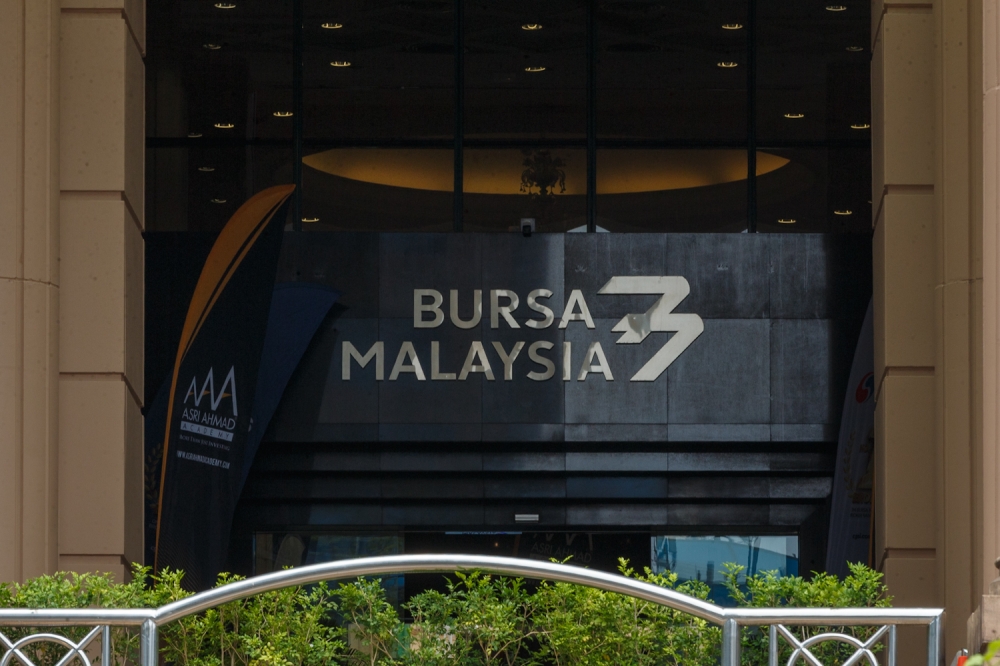
부정적Tanco shares crash 60pc in record one-day plunge, wiping nearly RM10b off market value
KUALA LUMPUR, June 12 — Tanco Holdings Bhd shares plunged 60 per cent on Thursday in their steepest one-day...
"HOLDINGS" · 총 90건
필터 보기현재 지수
49.4
0 = 부정 우세
50 = 중립
100 = 긍정 우세
최근 7일 기준 84,138건을 분석한 결과, 뉴스 심리지수는 49.4(균형)입니다. 긍정 10,371건(12.3%)·중립 60,613건(72.0%)·부정 13,154건(15.6%)이며, 중립 비중이 뚜렷하게 높습니다. 성향 지수는 종합 21.3(보수 경향)입니다.
KUALA LUMPUR, June 12 — Tanco Holdings Bhd shares plunged 60 per cent on Thursday in their steepest one-day...
Gold now accounts for 27% of global reserve holdings, overtaking US Treasuries as the world's largest reserve asset.
The new company, Compound Creative Holdings, will seek to acquire, operate and grow companies that operate in the creator economy.
CAA is back in business with its former majority owner, private-equity giant TPG — with the two companies teaming up on plans to buy creator-led companies. CAA and TPG’s Integrated Media Company (IMC) have formed Compound Creative Holdings, a $250 million holding company “designed to acquire, operate and grow a portfolio of leading Creator Economy […]

The announcement followed the circulation of social media posts featuring the image of Busola Jejelowo, the CEO of Stanbic IBTC Asset Management Limited, together with Stanbic IBTC Stockbrokers logo. The post Stanbic IBTC Holdings disclaims WhatsApp scheme offering investment opportunities appeared first on Premium Times Nigeria.

When SpaceX makes its debut on the U.S. stock market, it wants smaller-pocketed, mom-and-pop investors to play a big role in what may be the biggest IPO ever.Elon Musk's rocket company, formally known as Space Exploration Technologies Corp., is steering some of its initial public offering of stock directly to what are called "retail" investors. These are people who buy stocks in a brokerage account on their phone, not pension funds or other big "institutional" investors routing orders to their professional trading desks.Here are some things to keep in mind as the IPO approaches:A chunk of SpaceX stock will go to regular investorsMost IPOs offer only 5% to 10% of the total offering to retail investors, according to Fidelity. In this case, though, it could be up to 30%. SpaceX expects retail investors to participate in its IPO through Charles Schwab, Fidelity, Robinhood, SoFi and E-Trade by Morgan Stanley.At Fidelity, investors with as little as $2,000 in their accounts could potentially snag SpaceX shares in the IPO. That's down from account minimums of $100,000 or even $500,000 that Fidelity has for other equity offerings.Demand from investors may be so high in this IPO that not everyone indicating interest will actually get a share.Trying for a short-term flip has risksGiven all the hype around SpaceX, temptation could be high to grab shares in the IPO and sell them quickly if a frenzy sends its price spiking. But brokerages have policies to block investors from future offerings if they dump shares bought in an IPO quickly, like within a couple weeks.Big swings in price may be possiblePotentially high interest from retail investors following the IPO is one reason SpaceX is warning that its stock price could be volatile. These investors aren't known for moving as meticulously as a pension fund, which is trying to build money for payments it must make years or decades in the future.It's retail investors, after all, who helped drive GameStop and other "meme stocks" to market-bending heights in 2021 that professional investors called irrational.IPOs can see a big first-day bounce, but that may not lastThe typical IPO has seen a 7% jump in its first day of trading, from 1980 through 2025, according to Jay Ritter, an IPO expert and a professor at the University of Florida's Warrington College of Business.But IPOs tend to lag similar-sized peers in the ensuing five years, not including their first day of trading. They do so by an average of 3.6% per year, according to Ritter.SpaceX has debt and has been losing moneyIt's very expensive to launch things out of the earth's atmosphere and to construct huge AI data centers, and SpaceX has built up $29.1 billion in debt, as of the end of March.The company also lost $4.9 billion last year and another $4.3 billion through the first three months of 2026. It acknowledges that it "may not achieve profitability in the future."Over the long term, a stock's price tends to track with how much profit the company is making.You don't have to buy SpaceX to own itYou could end up owning some of SpaceX even if you never intended to. Consider the many people who own shares of the popular QQQ exchange-traded fund, which tracks the Nasdaq 100 index and has roughly $460 billion in total assets.Historically, the Nasdaq 100 index would wait until each December to add new members in an annual reconstitution to make sure it includes the 100 largest non-financial companies on the Nasdaq. But Nasdaq recently made changes to allow some big companies to enter the Nasdaq 100 index after just 15 trading days.That means if SpaceX's IPO is as successful as expected, it could quickly join both the Nasdaq 100 and QQQ fund, all while QQQ holders do nothing on their own.The company behind the more popular S&P 500 index, though, is not making changes that would allow SpaceX faster entry.Any shares bought would take a back seat to Musk's in influenceIn its IPO, SpaceX is offering 555.6 million shares of its "Class A" stock. Each of these shares gives an investor one vote on matters that shareholders decide. That includes such weighty things as who is on the board of directors overseeing the CEO.This IPO is not offering what are called "Class B" shares, each of which give its holder 10 votes. Musk, meanwhile, owns so many of those shares that he by himself could control more than 82% of all the stock's voting power following the IPO.In filings with U.S. securities regulators, SpaceX acknowledges the potential for conflicts of interest between it and Musk, along with other companies he owns, such as Tesla.Some big investors really disagree with the ownership structureOfficials from pension funds for firefighters, teachers and other workers in California and New York sent a letter to SpaceX last month decrying some of the provisions in its IPO, including "super voting shares," mandatory arbitration of shareholder claims instead of the possibility of lawsuits and how much power Musk will hold over the company.They said they could become owners of SpaceX stock because they hold index funds, which automatically buy stocks after they get included in certain indexes.If Musk is able to control so much of the voting power on the board of directors, it would make him tremendously powerful atop SpaceX, "essentially making him unfireable without his own consent," the CEO of California Public Employees' Retirement System, the New York state comptroller and the New York City comptroller wrote in their letter."This level of insulation from accountability is virtually unheard of among any other large U.S. issuer whose governing documents foreclose accountability to public owners on these terms."Don't confuse SpaceX with other companies with similar namesSpaceX plans to trade under the ticker symbol "SPCX." That's very close to "SPCE," which is the symbol for Richard Branson's Virgin Galactic Holdings.
TOKYO (Kyodo) -- Japanese beef-bowl restaurant chain operator Matsuya Foods Holdings Co. on Wednesday opened a high-end takeout shop in a department s
The selloff was partly attributed to Bitcoin-buying firm Strategy Inc divesting holdings, going against claims it would never sell.

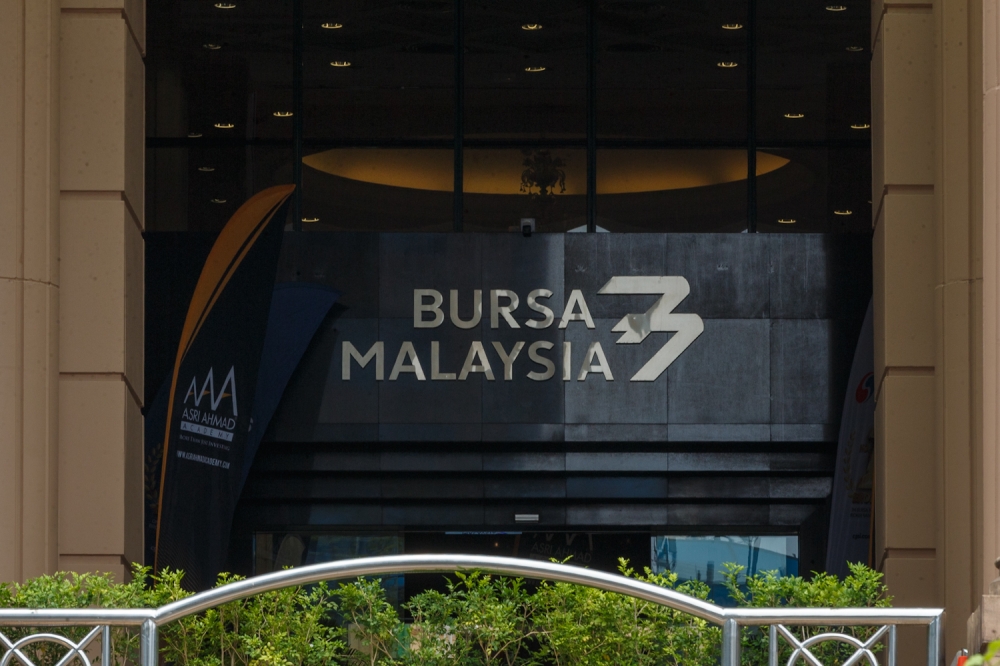
KUALA LUMPUR, June 9 — Tanco Holdings Bhd slid sharply again today, extending a four‑day sell‑off that has erased...
A veteran filmmaker on Tuesday was sentenced to five months imprisonment for insider trading. Raymond Wong was found guilty in May for obtaining price-sensitive information — at a company he chaired in 2017 — that was supposed to have been kept confidential due to the signing of a memorandum of understanding and receiving a good faith deposit of HK$10 million from a third party. Wong subsequently transferred HK$2 million to his younger sister, who began purchasing shares of Pegasus Entertainment Holdings Limited the same day. He also sent his sister multiple messages on when, and at what price, to purchase shares of the company. His sister ultimately purchased over nine million shares at prices significantly below market value, with most of the purchases funded by money from Wong. In sentencing, magistrate Ko Wai-hung said Wong's conduct had undermined public confidence in the Hong Kong securities market. The magistrate added that even though Wong's reputation had been severely damaged by this case, it did not mean he was entitled to special circumstances despite his extraordinary contributions to the local film scene. But Ko noted the likelihood of Wong committing the same offence again was low due to his age and relatively simple nature of the offence. Compared to similar cases, Ko said, the actual financial gain Wong's sister derived from the transactions was not particularly substantial. In addition to the five-month prison term, Wong was ordered to pay a fine of about HK$100,000, and another HK$370,000 to the Securities and Futures Commission to cover their investigation and legal costs. Wong has been released on bail pending appeal. Edited by Tony Sabine
KUALA LUMPUR, June 9 — Tanco Holdings Bhd’s shares reportedly fell for a fourth straight trading day today,...
Shares of Vodafone Idea and Bharti Airtel gained up to 4% on Tuesday after the Bombay High Court quashed the government's one-time spectrum charge (OTSC) demands, holding that all actions taken pursuant to the disputed demands would also stand annulled.Vodafone Idea shares jumped 4% to Rs 14.90, while Airtel share price gained over a percent to Rs 1,836 on the BSE. The ruling provides a combined relief of around Rs 20,000 crore to the two telecom operators. According to ET Now, Vodafone Idea has secured relief of Rs 11,000 crore, while Bharti Airtel has received relief of Rs 9,000 crore.A division bench comprising Justices Manish Pitale and Shreeram Shirsat set aside the demand notices issued by the Centre for recovery of OTSC. The court observed that the government had failed to demonstrate any legal authority empowering it to take such a decision or issue the resulting demand notices.The bench also directed that bank guarantees furnished by the telecom companies be returned. In addition, all demand notices and related orders concerning the one-time spectrum charge have been struck down. At the same time, the court clarified that the matter continues to remain pending before the Supreme Court.The bench noted that the government, while citing public interest, had acted beyond the scope of the contractual and licensing arrangements entered into with the telecom operators. It further observed that the Centre had not identified any source of power authorising the impugned decisions.The dispute traces its origins to a November 2012 Union Cabinet decision under which a one-time spectrum charge was to be levied on spectrum holdings exceeding 6.2 MHz from July 2008 onwards. Following that decision, demand notices were issued to Bharti Airtel and Vodafone Idea specifying the amounts payable towards OTSC.According to a PIB release, telecom operators holding spectrum up to 4.4 MHz (GSM) were exempted from any one-time charge. For spectrum holdings beyond 4.4 MHz (GSM), the government decided that a one-time charge would be imposed prospectively based on prices discovered in the 2012 spectrum auction.Airtel and Vodafone Idea challenged the decision before the Bombay High Court in January 2013, arguing that the government lacked the authority under the Telegraph Act to impose a one-time spectrum charge, particularly with retrospective effect. At the time, the court granted interim protection to the companies and directed that no coercive action be taken while the matter was being heard.In its judgment delivered on Monday, the High Court said the government could not claim that the spectrum's status as a scarce and finite natural resource entitled it to unilaterally depart from the terms of its contracts with telecom operators."The government obviously cannot claim statutory power to act as per its own whim, notwithstanding the terms of the contract/licence executed as per the power available under the Act," the High Court stated.Sensex, Nifty today: Catch all the LIVE stock market action here(Disclaimer: Recommendations, suggestions, views and opinions given by the experts are their own. These do not represent the views of The Economic Times)
KARACHI: The government is considering relaxing the remittance cap in the upcoming budget as overseas Pakistanis in several countries face difficulties in protecting their investments and liquid assets abroad, sources in the financial industry said. At present, remittances exceeding Rs5 million are subject to restrictions if the sender and recipient are not blood relatives. The limit was previously set at Rs10m before being reduced to Rs5m. According to sources, worsening conditions in parts of the Gulf region have prompted many Pakistanis to consider repatriating their funds. While the sale of overseas properties remains difficult, liquid assets can be remitted to Pakistan. However, the existing cap on transfers above Rs5m is viewed as a significant obstacle. Pakistanis have consistently ranked among the largest foreign purchasers of property in Dubai, second only to Indians on several occasions. At the same time, thousands of Pakistani technology firms have relocated to Dubai in recent years, attracted by business opportunities and a more favourable tax regime. Overseas Pakistanis struggle as remittance cap hinders repatriation of funds “The war-like situation has entered its fourth month and there is still no clarity about Dubai’s future, even though it remained a prime target during the conflict that began on Feb 28,” said a financial expert with close links to the emirate. He said most working-class Pakistanis continued to reside in Dubai, but wealthier individuals with substantial investments and property holdings were increasingly seeking to move their funds elsewhere amid concerns over the security of their assets. Although no official data is available on Pakistanis expelled from Dubai, sources said they had witnessed several such cases. They added that many affluent Pakistanis were attempting to sell their properties and transfer their liquid assets out of the emirate. Property prices in Dubai have fallen sharply, according to market observers, while finding buyers has become increasingly difficult. Sources also pointed to challenges faced by Pakistanis in other countries. Thousands, they said, were encountering difficulties in settling in destinations such as South Africa, certain US states and other countries where immigrants were increasingly under pressure, prompting some to consider returning to their countries of origin. “The removal of the remittance cap would benefit Pakistanis in several countries and could also support Pakistan’s economy by boosting remittance inflows,” a source said. Meanwhile, State Bank data showed that trade with Abu Dhabi and Dubai increased despite regional tensions. During July-April FY26, imports from Abu Dhabi rose to $1.193 billion from $862 million in the corresponding period of the previous fiscal year. Imports from Dubai increased to $5.592bn from $5.254bn over the same period. In March, when the conflict in the Gulf region was at its peak, imports from Abu Dhabi fell to $50.5m but recovered to $121m in April. Imports from Dubai similarly declined to $437m in March before rebounding to $862m in April. Exports to Dubai edged down to $1.554bn during the first 10 months of FY26 from $1.578bn a year earlier. Exports to Abu Dhabi, however, increased to $179m from $78m during the same period. Published in Dawn, June 9th, 2026
Shares of Trial Holdings surged 32% in the past 12 months, boosting the net worth of chairman Hisao Nagata to $1.4 billion.
The US has now declared that three of China’s AI champions – Alibaba, Baidu and Tencent Holdings – aid the Asian country’s military.
Lucas Falasqui Cordeiro é juiz do TRT e faz palestra no dia 9 Crédito: Divulgação. Os riscos trabalhistas da pejotização e os impactos da Reforma Tributária nas holdings estão na pauta da Jornada Jurídica 2026 que o Simespi (sindicato patronal das indústrias metalmecânicas de Piracicaba, Saltinho e Rio das Pedras) realiza, nos dias 9 e 10 de junho, sempre a partir das 18h30, no auditório da entidade, localizado na rua Samuel Neves, 1601, Bairro dos Alemães. As inscrições são gratuitas e os participantes são convidados a contribuir com um quilo de alimento não perecível a ser doado para entidades assistenciais. Considerado um dos principais eventos do calendário do Simespi, a Jornada Jurídica é organizada em parceria com o escritório Crivelari & Padoveze Advocacia Empresarial. “O objetivo da Jornada é trazer grandes especialistas para abordar pautas fundamentais, especialmente para o meio empresarial”, explica Carlos Henrique Benatti, diretor jurídico do Simespi. A edição 2026 será aberta no dia 9, às 18h30, com a palestra A Pejotização e o Risco Trabalhista, que será ministrada pelo juiz Lucas Falasqui Cordeiro, do TRT (Tribunal Regional do Trabalho) da 15ª. Região. “A pejotização voltou ao centro das discussões judiciais e as recentes movimentações nos Tribunais Superiores, especialmente no Superior Tribunal de Justiçam (STJ), acendem um alerta importante para empresas que utilizam esse modelo”, afirma o magistrado. Segundo ele, contratos que antes pareciam seguros hoje são reavaliados, aumentando significativamente o risco de reconhecimento de vínculo empregatício e de passivos trabalhistas expressivos. Nesta palestra, Falasqui Cordeiro traz uma leitura atual e prática sobre como o Judiciário vem enfrentando a pejotização, quais são os pontos que mais geram condenações e o que empresários e gestores precisam observar para evitar prejuízos e insegurança jurídica. No dia 10 de junho, o tema Os Principais Impactos da Reforma Tributária nas Holdings Operacionais e Patrimoniais será abordado pelo professor Ricardo Rios, a partir das 18h30. Ele explica que a Reforma Tributária deixou de ser uma expectativa futura e já impacta diretamente a forma como empresas estruturam seus negócios, especialmente aquelas no lucro presumido e no lucro real. “Holdings operacionais e patrimoniais passam a exigir um novo olhar estratégico, sob pena de aumento de carga tributária, perda de eficiência e exposição fiscal desnecessária”, destaca. Em sua exposição, Rios apresenta uma análise clara e aplicada sobre como as mudanças do sistema tributário influenciam o planejamento empresarial, quais estruturas tendem a se tornar mais onerosas e onde estão as oportunidades para reorganização tributária e proteção patrimonial. Ricardo Rios falará sobre Reforma Tributária no segundo e último dia do evento Crédito: Divulgação. As inscrições gratuitas estão abertas e podem ser feitas por meio da plataforma Sympla. As vagas são limitadas. Mais informações pelo Whatsapp (19) 3417-8600.
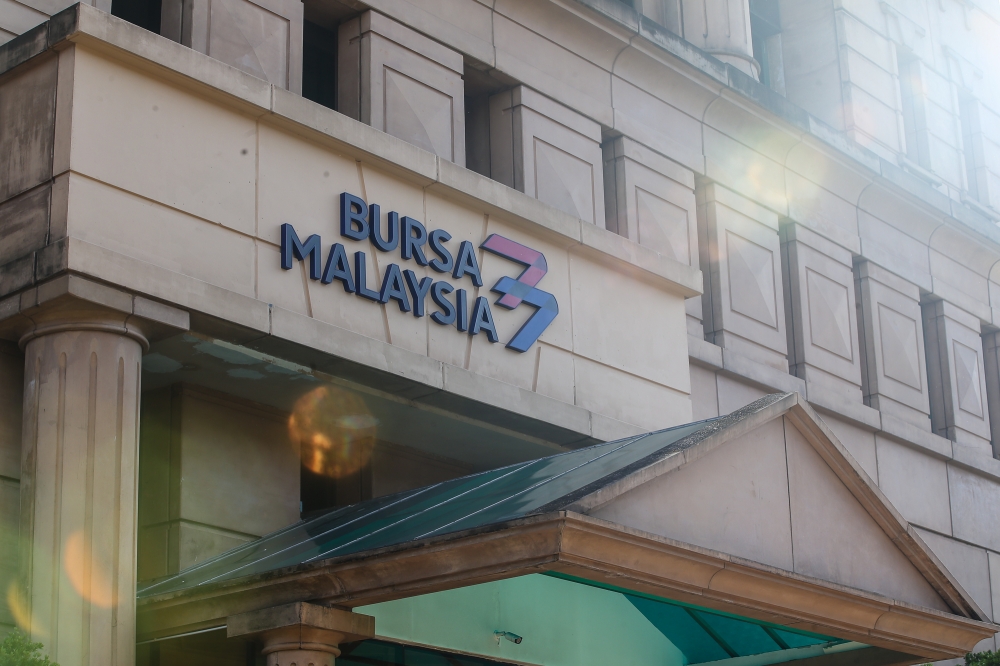
KUALA LUMPUR, June 8 — AMMB Holdings Bhd’s wholly-owned subsidiary AmBank (M) Bhd has signed a conditional a...
An unprecedented concentration crisis in global technology equities has evolved into a structural trap for investors, triggering a violent "Black Monday" unwind that is reverberating across Asian emerging markets, such as Korea and Taiwan. Active portfolio managers are increasingly being forced to dump their best-performing chip heavyweights because these explosive stocks have grown too large for risk compliance limits.This structural anomaly has distorted regional benchmarks, accelerated a massive migration from active to passive funds, and triggered a historic correction.The structural breakdown manifested in extreme volatility across the region's tech hubs. South Korea’s Kospi index plunged more than 8% shortly after the market opened, triggering a mandatory 20-minute trading halt before narrowing its drop as memory giants Samsung Electronics and SK Hynix rebounded from their session lows.Also Read | Kospi crashes 9%, trading halted for 20 minutes, as chip rout deepens; Samsung, SK Hynix worst hitThe Cycle of Forced SellingThe core of the market distortion lies in a mechanical paradox: As tech giants outperform, active funds are legally or structurally required to trim their holdings to manage concentration risks. Just three mega-cap tech firms—Taiwan Semiconductor Manufacturing Co. (TSMC), Samsung, and SK Hynix—now command nearly a third of the MSCI Asia Pacific ex-Japan Index.The concentration is even more extreme on a national level. TSMC occupies a staggering 41.5% of Taiwan's TAIEX, while Samsung and SK Hynix together comprise 55% of South Korea's KOSPI."We have been forced sellers of TSMC, Samsung and MediaTek," Sam Konrad, investment manager for Asia Equity Income at Jupiter Asset Management, was quoted as saying by Bloomberg. His fund must shed these chipmaking stocks despite explosive year-to-date gains of 52% for TSMC, 159% for Samsung, and 184% for MediaTek.This mechanism creates an institutional dilemma where strong performance mandates divestment, artificially capping the upside for active portfolios trying to beat their benchmarks."As equities continue to outperform, funds will find it increasingly difficult to add exposure, reinforcing a cycle of forced selling and enlarging underweight positions even amid strong fundamentals," Herald Van der Linde, head of equity strategy for Asia Pacific at HSBC in Hong Kong, noted in a research report. HSBC data confirms that TSMC has become the largest portfolio underweight among Asian and global emerging-market funds.Emerging Market Exhaustion and Fund OutflowsData from Elara Securities India confirms that the Global Emerging Market (GEM) trade is experiencing its first major phase of sustained exhaustion since its rally began. GEM fund redemptions expanded to $3 billion, the largest outflow since December 2021, marking a clear breakdown in momentum.The capital flight has extended significantly beyond Korea and Taiwan to hit other major emerging markets. China saw foreign investors pull $3.7 billion, the largest single-week redemption in over a year, while South Korea logged six consecutive weeks of foreign outflows, compounded by a record $27.9 billion foreign portfolio rebalancing outflow.The systemic nature of the unwind is visible in the broader indices. Goldman Sachs data reveals that while the MSCI Asia Pacific ex-Japan index is up 27% year-to-date, it is actually down 4% when South Korea and Taiwan are excluded.This regional distortion has accelerated a massive, unprecedented migration from active stock-picking to passive indexing. Over the last five years, Asia's active funds have suffered $269 billion of cumulative outflows. Meanwhile, passive funds have accumulated $510 billion, with a quarter of that volume arriving in just the last six months."The size of recent inflows into the region’s passive funds... has no precedent across the last 10 years," said William Bratton, head of cash equity research for Asia-Pacific at BNP Paribas Securities.This phenomenon mirrors the “Magnificent Seven” dynamic on Wall Street, where tech giants account for about a third of the S&P 500. However, concentration in Asia has unfolded at a faster and more extreme pace, turning regional indices into concentrated bets on just one or two stocks and undermining the diversification benefits of benchmark investing.Broader Trade ImplicationsThe shockwaves from the AI tech unwinding are bleeding directly into structural commodities and the wider electrification ecosystem. Precious metal funds witnessed $2.8 billion of outflows, driven heavily by gold (-$2.1 billion) and silver (-$910 million, a 12-week high redemption), while energy funds recorded their second consecutive week of outflows. These asset classes had operated as indirect beneficiaries of the global AI infrastructure and electrification trade.Furthermore, Wall Street's nine-week winning streak concluded abruptly following a hot jobs report that ignited fears of a hawkish policy pivot by the US Federal Reserve, sending technology stocks into their largest one-day decline.Despite the steep selloffs, which saw South Korean equities slide 12% and Taiwan fall 6% from their record highs, market opinions remain starkly divided on whether this correction marks a peak or a buying opportunity.Some money managers are exploiting the correction to pivot to alternatives further down the supply chain, like mid-sized semiconductor equipment makers, or shifting money toward cheaper domestic themes like robotics. China's CSI Robot Index actually bucked the broader market declines, rising 1.4%.
HFCL shares extended their decline on Monday, falling nearly 5% in intraday trade to Rs 177.87, marking a second consecutive day of losses. The stock has now corrected about 10% in just two sessions, largely driven by profit booking after a stellar multi-month rally.Despite the recent pullback, HFCL remains one of the standout performers of 2026, having surged nearly 165% during the year on the back of strong defence orders, rising optical fibre demand, and robust order inflows.A key driver behind HFCL’s sharp upmove has been the growing global demand for high-speed digital infrastructure, fuelled by the rapid expansion of AI technologies. Optical fibre networks are increasingly seen as the backbone of this transformation, placing companies like HFCL in a strong structural growth position.Operationally, the company delivered a strong turnaround in the March quarter. Revenue nearly doubled year-on-year to Rs 1,824 crore, while EBITDA improved significantly to Rs 315 crore, compared to a loss in the previous year. Net profit also swung to Rs 184 crore from a loss of Rs 83 crore, reflecting a clear improvement in business fundamentals.According to Balaji Rao, Research Analyst at Bonanza, “The structural shift is real, product revenue has grown from 27% of the mix in FY21 to 59% in FY26, and exports now account for 41% of revenue. That’s a business fundamentally changing its character.”Order inflow remains supportiveRecently, HFCL received a purchase order worth approximately Rs 135.09 crore from RailTel Corporation of India, a Government of India PSU under the Ministry of Railways. The order is for the annual maintenance contract of the “Secure Operations Network” project for data centres supporting Indian defence forces.Valuation and technical concerns emergeAfter the sharp rally, valuation comfort has reduced, with HFCL trading at a price-to-earnings multiple of around 91.93, significantly higher than many peers in the telecom equipment space.From a technical standpoint, the stock also appears stretched. According to Trendlyne data, the 14-day Relative Strength Index (RSI) stands at 73.1, a level typically considered overbought, indicating the possibility of short-term consolidation or a pullback.In the March 2026 quarter, Foreign Institutional Investors slightly reduced their stake from 7.48% to 7.08%, while Mutual Funds increased their holdings from 6.68% to 6.92%, suggesting selective institutional interest despite recent volatility.(Disclaimer: Recommendations, suggestions, views and opinions given by the experts are their own. These do not represent the views of Economic Times.)
미래에셋증권은 싱가포르 기반 대형 증권사인 UOB 케이 하이안(Kay Hian)과 외국인 통합계좌(Foreign Investor Omnibus Account) 서비스 제공을 위한 계약을 체결하고 서비스를 시작한다고 8일 밝혔다. 이번 서비스는 미래에셋증권 싱가포르법인이 현지 증권사와의 협의를 주도해 추진한 것이다. 이번 협업을 통해 싱가포르를 비롯해 동남아시아 지역 투자자들의 국내 주식시장 접근성이 확대될 것으로 보인다. UOB 케이 하이안은 싱가포르 증권거래소(SGX) 상장된 UOB- Kay Hian Holdings Limited(U10)의 증권계열사다. 약 4조원 (약 40억싱가포르달러) 규모의 시가총액과 다국적 고객에 서비스 역량을 보유한 싱가포르 대표 증권사다....