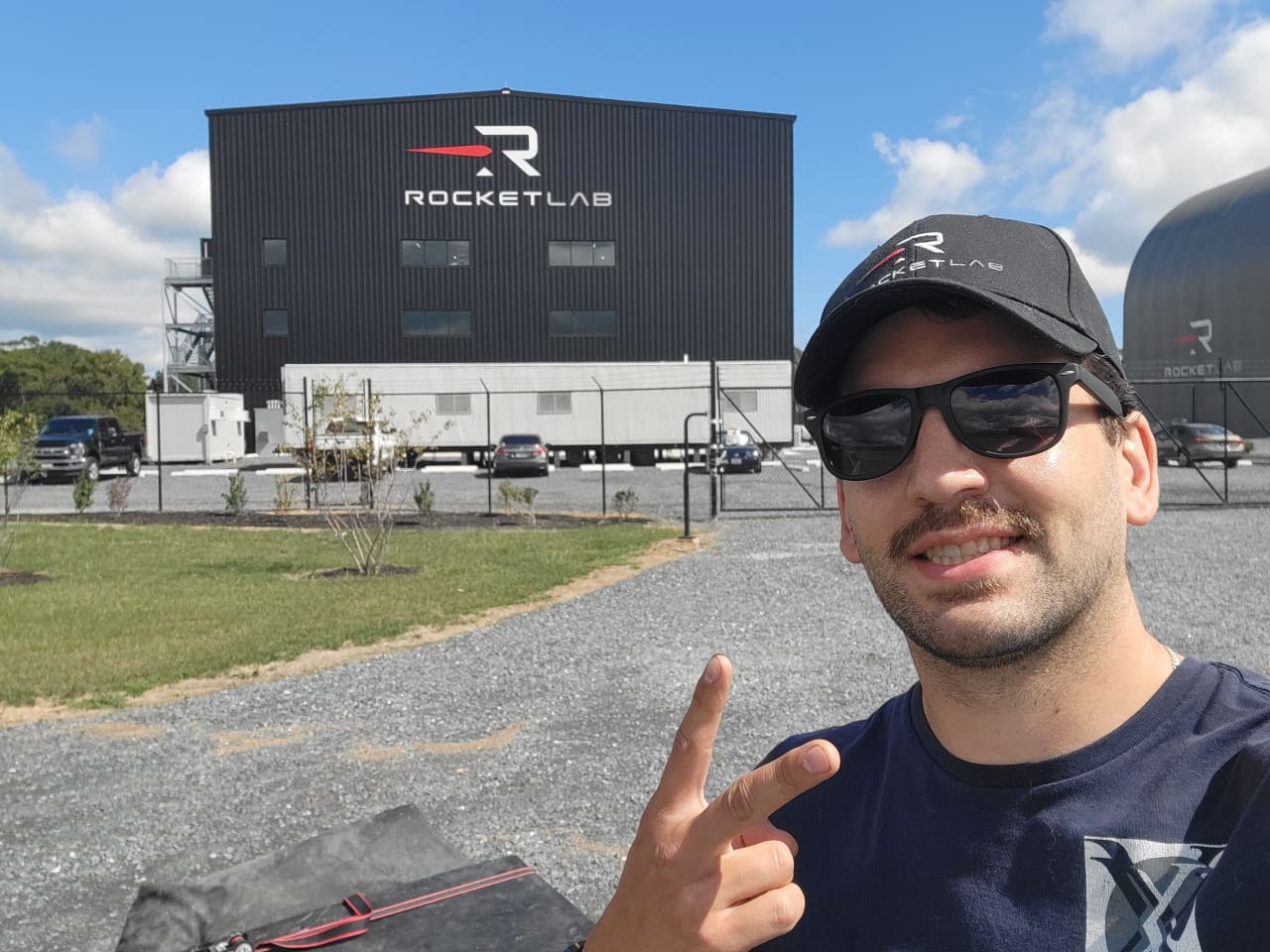
xAI fired an engineer who raised alarms about Grok safety, new lawsuit claims
A former xAI engineer is suing the company and SpaceX, alleging he was fired for raising AI safety concerns about Grok days before SpaceX's historic IPO.
๐บ๐ธ ๋ฏธ๊ตญ ยท "ENGINE" ยท ์ด 187๊ฑด
ํํฐ ๋ณด๊ธฐํ์ฌ ์ง์
48.8
0 = ๋ถ์ ์ฐ์ธ
50 = ์ค๋ฆฝ
100 = ๊ธ์ ์ฐ์ธ
์ต๊ทผ 7์ผ ๊ธฐ์ค 10,775๊ฑด์ ๋ถ์ํ ๊ฒฐ๊ณผ, ๋ด์ค ์ฌ๋ฆฌ์ง์๋ 48.8(๊ท ํ)์ ๋๋ค. ๊ธ์ 1,082๊ฑด(10.0%)ยท์ค๋ฆฝ 7,691๊ฑด(71.4%)ยท๋ถ์ 2,002๊ฑด(18.6%)์ด๋ฉฐ, ์ค๋ฆฝ ๋น์ค์ด ๋๋ ทํ๊ฒ ๋์ต๋๋ค. ์ฑํฅ ์ง์๋ ์ข ํฉ 22.5(๋ณด์ ๊ฒฝํฅ)์ ๋๋ค.
A former xAI engineer is suing the company and SpaceX, alleging he was fired for raising AI safety concerns about Grok days before SpaceX's historic IPO.
The EPICS (Engineering Projects in Community Service) in IEEE program, administered by IEEE Educational Activities, has launched the Excellent EPICS in IEEE Contributor Awards. The recognitions honor the programโs outstanding students and faculty volunteers in Excellent Team Leader and Excellent Faculty Advisor categories. The awards recognize individuals whose leadership, mentorship, and commitment have meaningfully advanced the impact of EPICS projects. Candidates must demonstrate clear, measurable contributions that elevate both the student experience and the outcomes delivered to community partners. Reviewers also consider other awards, publications, presentations, and professional achievements that reinforce the nomineeโs credibility and leadership. Recipients must demonstrate outstanding project management and documentation, strong mentoring and collaboration, and high-quality outcomes. Here are this yearโs recipients. Team Leader Award Surattana Kakay is a computer engineering student at Rajamangala University of Technology Thanyaburi (RMUTT), located in IEEE Region 10 (Asia Pacific). Kakay, an IEEE student member, was honored for guiding her team in the design, development, and implementation of the Automatic Water Level Control System project, which aids rice farmers in Thailand. As the team leader, Kakay played a pivotal role in transforming the student initiative into an operational, communityโcentered solution. Her inspiration was purpose-driven, she says. โMy motivation was to apply engineering to real agricultural challenges, like water scarcity and climate change,โ she says. โI wanted to bridge advanced technology with the tangible needs of local farmers.โ She managed the project end to endโcoordinating workflow, assigning tasks based on team membersโ strengths, and ensuring each phase of development aligned with the technical road map she created. She served as the primary liaison between the student team, the Pathum Thani Rice Research Center, and farmers to make sure the system was practical and userโfriendly, and that it addressed community needs. โWatching students grow as they design solutions that improve lives has been both inspiring and deeply humbling.โ โElizabeth Vidal-Duarte Under her leadership, the team developed a lowโcost IoTโbased alternate wetting and drying (AWD) system that lets farmers remotely monitor and control water levels in rice paddies using smartphones. Kakay oversaw the integration of noncontact laser timeโofโflight sensors to withstand harsh field conditions, and she championed the use of long-range technology connected to a free community WiโFi network to eliminate Internet service fees. The results were transformative, Kakay says. โOur AWD system reduces water consumption by 63 percent and methane emissions by 7 percent annually,โ she says. โTurning an academic assignment into a realโworld solution that delivers measurable, sustainable results has been incredibly meaningful.โ Her achievements advanced sustainability for Thailandโs most waterโintensive crop while demonstrating the potential of accessible engineering solutions. Beyond technical innovation, Kakay cultivated a culture of learning, continuity, and empowerment within her team. She introduced a mentorship framework to support future student cohorts. She and her team produced academic papers, visual media, and presentations to communicate the projectโs value to scientific audiences as well as the general public. โSurattana Kakay is a pivotal figure in turning innovation into reality and delivering tangible benefits to the community,โ says IEEE Member Thanasin Bunnam, her faculty advisor and an assistant professor at RMUTT. Kakayโs leadership journey became a personal milestone, she says: โLeading this project transformed me from a student into a team leader. As a female engineer, it empowered me to advocate for women in engineering and show that gender is no barrier to technical excellence.โ Through her guidance, the AWD project evolved from a classroom assignment into a solution that illustrates IEEEโs mission of advancing technology for humanity. Faculty Advisor Awards Navid Shaghaghi, a lecturer and researcher at Santa Clara University, in California, was recognized for his dedication to integrating service learning into engineering education and fostering student innovation that benefits underserved communities in IEEE Region 6 (Western USA). During his more than six years of engagement with EPICS in IEEE, Shaghaghi, an IEEE senior member, has demonstrated exceptional leadership in advancing sustainable, humanโcentered engineering through the longโrunning Hydration Automation (HA) project and the HiveSpy initiative. They are part of Santa Clara Universityโs Frugal Innovation Hub and EPIC Research Laboratory. Since 2019, Shaghaghi has served as principal investigator for the HA project, guiding its evolution from prototype to a robust, fieldโtested irrigation automation system that supports small ranches and community farms in California. The HA project is a lowโcost system that helps reduce water waste by monitoring soil moisture and automating watering. By combining ultrasonic tank sensing, soil sensors, and ongoing technical support, the project improves efficiency, lowers operational costs, and promotes more sustainable urban agriculture. Under Shaghaghiโs guidance, more than 30 undergraduate and graduate students have gained hands-on experience in IoT development, field deployment, testing, and client collaboration. His commitment to frugal innovation and humanโcentric design has resulted in solutions that are minimalist, affordable, sustainable, portable, and ruggedโoften challenging conventional approaches to agricultural technology. โTurning an academic assignment into a realโworld solution that delivers measurable, sustainable results has been incredibly meaningful.โ โSurattana Kakay The HA project has produced new research publications and earned recognition, including a third-place finish by Shaghaghiโs graduate students at this yearโs IEEE Rising Stars Project Showcase. During the annual event, students and young professionals present their technical innovations to industry leaders and peers. The HiveSpy project is a lowโcost, frameโlevel IoT monitoring system that helps beekeepers automate laborโintensive tasks and prevent hive swarming by tracking production yield in real time. By collecting frameโweight data and generating optimized harvest schedules, the system reduces manual workload while improving the hiveโs health and boosting honey output. Shaghaghi says his mentorship has been shaped by the realities of student turnover, a challenge he embraces with optimism and adaptability. โThe transient nature of student teams is a challenge but one you must embrace, bearโhug style,โ he says. โBy energizing your student community and welcoming new contributors, youโll be amazed by the brilliant solutions they bring.โ His philosophy has allowed him to cultivate a thriving pipeline of student innovators, he says, and he has strengthened his own professional practice as well. โIโve been mentoring EPICS in IEEE students since 2019,โ he says. โIt has taught me resilience and how to operate on a tight budget while still delivering realโworld results.โ Beyond the technical achievements, Shaghaghiโs work reflects a commitment to humanitarian technology and service learning. As the founder and director of the EPIC (Ethical, Pragmatic, and Intelligent Computer) lab, he has built a diverse, interdisciplinary community dedicated to innovation for the benefit of humanity. For him, he says, the EPICS in IEEE award carries profound meaning: โReceiving this award validates my deepest conviction in humanitarian technology research and strengthens my commitment to serviceโlearning education.โ His students echo those sentiments. One team member said โProfessor Shaghaghi is an engine of progress who keeps forging ahead.โ Through his leadership, Shaghaghi has created an enduring model of mentorship, innovation, and community partnership that is helping to shape the next generation of socially responsible engineers. Elizabeth Vidal-Duarte is celebrated for her impactful mentorship and leadership in expanding EPICS in IEEE engagement across Peru and IEEE Region 9 (Latin America and Caribbean). Vidal-Duarte, a research professor at San Agustin National University Arequipa, in Peru, is a faculty advisor and technical mentor for two EPICS in IEEE projects. She encouraged students to apply to the EPICS program, helped them identify community needs, and supported them in crafting proposals grounded in serviceโlearning principles. Under her leadership, the students developed a functional soft robotic glove used at Clรญnica San Juan de Dios to help patients improve their fine-motor skills. The clinicโs therapists use the device to measure the range of motion of joints at the beginning and end of each patientโs therapy session to improve their assessments. Compared with traditional manual measurements using a goniometer, the glove significantly reduces evaluation time and enables digitally recorded data, improving clinical efficiency and decision-making. The second project is an emotionโrecognition system for people with visual impairment. The AIโpowered wearable helps recognize a personโs emotions through realโtime facialโexpression detection and haptic feedback. The project has resulted in the โEmotion-Aware Assistive System With Wearable Haptic Feedback for Visual Impairmentโ research paper, which is to be presented at the IEEE International Symposium on Computer-Based Medical Systems, to be held from 3 to 5 June in Limassol, Cyprus. Vidal-Duarteโs mentorship extends beyond the classroom. She visits rehabilitation centers and clinics to find people with visual impairments to ensure that the technologies she is helping to develop meet their needs. โEPICS in IEEE has moved me beyond teaching concepts to truly living engineering as a tool for human impact,โ Vidal-Duarte says. โWatching students grow as they design solutions that improve lives has been both inspiring and deeply humbling.โ Throughout the development of both projects, Vidal-Duarte provided sustained technical and organizational guidance, helping students define requirements, structure work plans, and overcome challenges in prototyping, testing, and validation. Reflecting on the broader impact of EPICS, she says the program has given her โmore than methodologies and toolsโit has given me perspective, purpose, and a global community that constantly challenges me to grow as a mentor and as a human being.โ Her mentorship fostered not only technical excellence but also empathy, ethical awareness, and professional maturity among her students, she says. She guided them in preparing articles for submission to IEEE conferences, interdisciplinary collaboration, and hands-on fieldwork that bridged theory and realโworld constraints. โHer constant support, her belief in each studentโs potential, and her commitment to developing leaders who make a difference define [her] as a faculty advisor,โ says Valentina Chabilla, an EPICS in IEEE student team member. The EPICS recognition reflects her passion for teaching, her dedication to the community, and her impact on projects and students. Her commitment to accessible, sustainable innovation strengthened partnerships between the university and community groups, benefiting underserved populations. โReceiving this award is both an honor and a responsibility,โ she says. โIt reminds me of the real impact engineering can have on peopleโs lives and strengthens my commitment to guiding students in creating meaningful change.โ Her leadership continues to inspire students to view engineering not just as a discipline but also as a powerful force for inclusion, dignity, and social impact. Advancing the mission The Excellent Contributor Award recipients exemplify the best of EPICS in IEEE. Through their leadership, they have strengthened the bridge between engineering education and community service, inspiring students to use their skills to create sustainable, realโworld impacts. As EPICS continues to expand its global reach, the contributions of Kakay, Shaghaghi, and Vidal-Duarte serve as powerful reminders of what is possible when educators, volunteers, and students work together to improve the lives of others through engineering.


The U.S. Navy disabled an oil tanker in the Gulf of Oman late Tuesday night, shortly after carrying out retaliatory strikes in Iran for shooting down an Army Apache helicopter. The crew aboard the Palau-flagged M/T Settebello repeatedly failed to comply with American forcesโ orders. U.S. troops ultimately fired precision munitions into the shipโs engine [โฆ]

The most AI-obsessed firms are spending roughly $7,500 monthly per employee on AI, per Ramp AI Index. That's not more than an engineer's salary โ yet.
Over 15 years after David Fincher and Aaron Sorkin's The Social Network premiered in theaters, Sony has released the first trailer for The Social Reckoning ahead of its theatrical release on October 9th. The follow-up takes place 17 years after the events portrayed in the original film and follows a young Facebook engineer who enlists [โฆ]

Everyday investors โ like a Star Trek fan, an accountant and an engineer โ buy satellite imagery, track planes and visit rocket-launch sites
Speaking in court, Assistant US Attorney Gavin Tisdale characterized David Rush as a โmaster manipulator.โ

The two groups made up more than half of Meta's layoffs in California and Washington state. Meta is embracing small teams and AI tools internally.
The exec, Emad Dlala, has left just a few months after being promoted to SVP of engineering and digital, TechCrunch has learned.
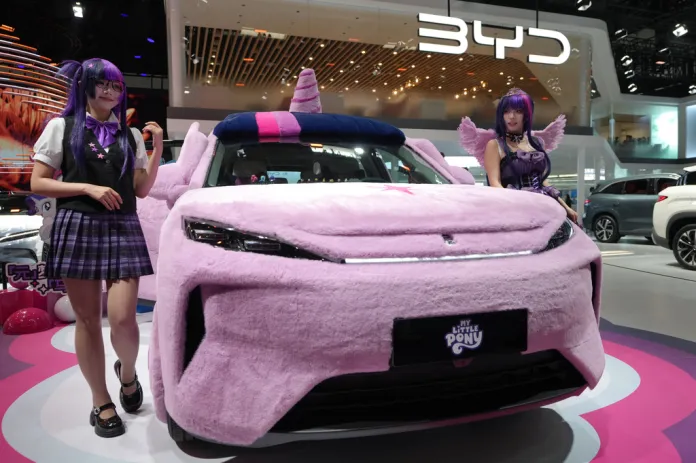
The Pentagon added tech giant Alibaba, EV titan BYD, and search engine Baidu to its list of companies linked to China's military. The post Pentagon Bans EV Giant BYD from Defense Contracts, Citing Chinese Military Ties appeared first on Breitbart.
This article is crossposted from IEEE Spectrumโs careers newsletter. Sign up now to get insider tips, expert advice, and practical strategies, written in partnership with tech career development company Parsity and delivered to your inbox for free! Small Startup, Mid-Size Company, or Fortune 100? The Pros and Cons Early in my career, I walked into a shared office space on my first day as a full stack software developer and sat down between the CTO and the CEO to get onboarded. There were four of us in total. Before the day was over, I received my first assignment. This was one of the most formativeโand most stressfulโexperiences of my professional life. In the decade since, I have worked at half a dozen companies including Fortune 100 firms, mid-size startups, and companies youโve probably never heard of. I have also spoken with roughly a thousand developers at various stages of their careers. Most engineers entering the field are obsessed with landing at Google, Meta, or Amazon. But those roles represent approximately 0.6 percent of software engineering positions. For most of us, the real choice is between a small startup, a mid-size company, and a large enterprise. Each comes with tradeoffs, and your experience will differ from mine. What follows is an honest account of what you might reasonably expect. The Small Startup Pros Your work actually matters. A feature you build might determine whether the company closes its next funding round. You gain exposure to the full spectrum of the business, from deployment pipelines to sales and operations and everything in between. You wear many hats out of necessity. For engineers who want to grow quickly and understand how a product is built end to end, few environments move faster. Cons Everything is on fire, always. Work-life balance is difficult to maintain when every release feels critical. Priorities shift without warning and culture tends to reflect the personality of whoever has the most influence in a small room. Startups optimize for speed over craft which means engineers learn to move fast but donโt always learn to build well, and that gap can follow you into your next role. The Mid-Size Company Pros โSo this is how a real business works.โ There is process, documentation, a quality assurance function, and some form of career structure. The team is large enough to offer a diversity of experience and perspective. Stability is a myth, especially nowadays, but it is considerably more predictable than an early-stage startup. Cons โSo this is how a real business works?โ Processes that enable quality also produce friction. Access controls, approval workflows, and cross-team dependencies slow things down. The career ladder exists but it might stop at senior engineer. Without significant organizational growth, your salary and title can plateau early. The Large Enterprise Pros That badge on your LinkedIn profile just bought you credibility for the next five years. Compensation at this level can be meaningfully higher, particularly when equity is included. The career ladder is long and clearly defined. Engineering practices at mature organizations tend to be more rigorous, and a well-known employer carries market value in future job searches. Cons Itโs slow. Technology stacks often lag industry trends by several years. Political dynamics shape advancement as much as technical ability does. Skill atrophy is a risk when you spend years on a narrow slice of a legacy system. You are now a small fish in a big pond and it will be harder to get noticed. The Roadmap I Would Take If I Could Start Over According to a recent Stack Overflow survey, 47 percent of professional developers work at companies with fewer than 100 employees. This may surprise you because social media is dominated by engineers who work at the most well known companies on the planet. The path most engineers imagine for themselves and the path most engineers actually walk are two very different things. If I could do it again, hereโs the path Iโd take: Start at a small company to build breadth and learn how a business works across functions. This also provides some room to experiment within different roles. Next, move to a mid-size organization with a clear goal of reaching a senior or leadership role. Making a lateral move is easier than trying to get up-leveled at the next company. Finally, target a more mature company where a leadership position opens the door to meaningful equity and long-term growth (aka stocks and bonuses). Each stop builds something the others cannot. The startup gives you range. The mid-size company gives you a taste of how larger orgs operate. The enterprise gives you leverage, credibility and maybe even some stability. Your path will not look like mine. At a five person startup, I had no idea what I was in for. Looking back, I would not trade it. Just know what you are signing up for before you sign. โBrian Reclaiming Social Engineering for Good โSocial engineeringโ is a concept that has become associated with phishing, in which scammers manipulate people into disclosing personal information. But shaping human behavior in this way doesnโt have to have such negative effects. Systems engineer Guru Madhavan argues that we need to reclaim the term and govern the practice to defend ourselves from bad actors and benefit from social engineeringโs good side. Read more here. Get Your Medical Mobile App Verified by IEEE Smartphone apps are increasingly used to help manage medical conditions, but many of these have not been verified by any regulatory agencies. To help ensure these apps are credible, the IEEE Standards Association recently launched a directory listing apps that have been vetted by experts for technical soundness, ethical design, data security and privacy, and clinical efficacy. The registry will be publically available at no cost, and developers can now apply for approval. Read more here. Finding Success in Industry as a Chip Designer A veteran chip designer reflects on what he learned when moving from academia to industry, where the goal changes from proof of concept to ensuring a design works reliably at scale. Differences in risk tolerance, he discovered, lead to varying approaches in the rapidly growing semiconductor industry. Read more here.

This article is crossposted from IEEE Spectrumโs careers newsletter. Sign up now to get insider tips, expert advice, and practical strategies, written in partnership with tech career development company Parsity and delivered to your inbox for free! Job Hopping as an Engineer: The Pros and Cons Iโve changed jobs more times than I ever imagined I would. In the past 12 years, Iโve worked at seven different organizations. Some of those moves were forced by layoffs. Others were deliberate bets on my own trajectory. Job hopping, done strategically, is one of the fastest ways to accelerate your compensation and reinvent your professional identity. Engineers who understand when to move and when to stay tend to out-earn and out-rank their peers who simply wait for internal recognition. Unfortunately, most engineers either job hop too much or not enough, and both mistakes are expensive. Here are the pros and cons of job hopping as an engineer, and when to make a leap. Pro: Itโs the fastest way to grow your salary Internal raises and external offers operate on completely different logic, and most engineers donโt fully appreciate this until they make their first move. Within a company, compensation is anchored to your existing salary and capped by organizational pay bands. A strong performance review might get you 5 to 8 percent. An external offer is a clean slate. The company is bidding for your market value, not adjusting from your current baseline. My first deliberate job hop doubled my salary in a single year. A later move, at the same job title, pushed my compensation floor to a level that I never would have reached by staying put. Neither outcome was available internally. The math simply does not work in your favor when you stay. Pro: It lets you reinvent yourself Every new company is a chance to walk in as a slightly updated version of yourself: the version that learned something from the last place. The version that does not carry the baggage of whatever decision you made two years ago that all your coworkers still remember. Especially when youโre early in your career, this matters. You get to reframe your experience, take on a different scope, and establish a new reputation from scratch. That kind of reset is difficult to manufacture inside the same organization. Con: You donโt see the long-term outcome of your work This is the part nobody talks about, and it took me years to fully appreciate it. When I joined one company, I built a component library for a website from scratch. Starting projects from scratch is exciting, and the initial implementation held up well for the early use cases. But as the organization scaled, the limitations of my original design became apparent. I stayed long enough to address them rather than handing that problem to someone else. That experience taught me more about software architecture than any new project ever had. Engineers who move every 18 months only ever experience the exciting part of building something. They never experience the part where their original decisions stop working. They just repeat the exciting part on a loop, never realizing the debt they are leaving behind. Con: You cannot job hop your way to a promotion Above a certain level, things can change significantly. A new employer can evaluate your past performance through interviews, portfolios, and references. What they cannot do is evaluate your future potential the way a manager who has watched you grow over two or three years can. If you arrive as a senior engineer, you will almost certainly be hired as one. The promotions that actually changed my career trajectoryโfrom senior to staff engineer, then engineering managerโall happened at one organization over four years. Those transitions required someone to observe my growth over time and make a bet on where I was headed next. That kind of credibility cannot be transferred on a resume. So when should you actually leave? The threshold I use is straightforward. If I have produced at least one measurable, clearly definable outcome at an organization, I have a reasonable basis for leaving. Impact, not tenure, is my unit of measure. I personally think that moving deliberately while early in your career will build a strong compensation baseline. Then become selective. Find an environment where real growth is available and stay long enough to build the credibility that job hopping cannot manufacture. Neither constant movement nor blind loyalty is the answer. The question worth asking at every stage is simple: Have I produced something meaningful here yet? If the answer is no, stay. If yes, it might be time to decide whatโs next. โBrian The USC Professor Who Pioneered Socially Assistive Robotics What if robots didnโt just help us with physical tasks? USC Professor Maja Matariฤ helped define the era of socially assistive robotics, designed to provide personalized therapy and care through social interactions. Despite her influence in the field now, the award-winning roboticist didnโt see herself as an engineer at first. Read more here. Steve Jobsโ Wilderness Years Shaped His Success as Apple CEO Steve Jobs is best known as the co-founder and CEO of Apple. But the 12 years he spent away from the company taught him the lessons necessary for his success. A new book tells the forgotten story of Jobsโ โwildernessโ years and what he learned while at NeXT Computer. IEEE Spectrum spoke to the bookโs author about Appleโs most iconic CEO and the companyโs future as it prepares for new leadership under John Ternus. Read more here. Learn What It Takes to Become a Cybersecurity Consultant Cybersecurity consultants have never been more in demand, with data breaches and attacks costing organizations more than US $10 trillion annually to repair. To help you find the skills you need to stand out in the cybersecurity job market, the IEEE Computer Society offers a โWhat Makes a Great Cybersecurity Consultantโ guide. It includes advice from experts, a list of certifications to pursue, and information on key cybersecurity conferences. Read more here.

The Department of War added electric car company BYD to its list of โChinese military companies,โ meaning the Shenzhen-based manufacturer will lose out on future Pentagon contracts. The list, updated on Monday, now includes e-commerce giant Alibaba and search engine Baidu, Chinaโs Google equivalent. The inclusion of BYD comes as the automaker looks to capitalize [โฆ]

This article is crossposted from IEEE Spectrumโs careers newsletter. Sign up now to get insider tips, expert advice, and practical strategies, written in partnership with tech career development company Parsity and delivered to your inbox for free! The CS Degree Isnโt Dead. The Entry-Level Pipeline Is There is no shortage of people telling recent engineering graduates that their degree was a mistake and that AI is coming for their jobs before they even land one. I respectfully disagree. I have been a software engineer for 12 years, done well over 100 interviews on both sides of the table, and run Parsity, an AI engineering program. A few patterns emerge consistently in who actually breaks through in todayโs job market. Hereโs why I think the job market isnโt as dire as it looks, and what I would do if I were looking for my first tech job. The Numbers Need Context The Federal Reserve Bank of New York recently placed unemployment for recent CS graduates in the United States at 6.1 percent, with computer engineering graduates at 7.5 percent. Compared to philosophy majors at 3.2 percent and art history graduates at 3.0 percent, those figures look alarming. They require more context than most headlines provide. When researchers factor in underemployment (graduates working jobs that donโt require a college degree), then engineers are doing relatively well, coming in below 20 percent, against a 42 percent average across all recent graduates. Many majors reporting lower unemployment are achieving that figure by accepting work entirely unrelated to their field. Scored across unemployment, underemployment, and early-career earnings together, CS and computer engineering still rank among the top fields for overall labor market outcomes. The degree is not the problem. The hiring pipeline is. Job postings labeled โentry-level software engineerโ grew roughly 47 percent between late 2023 and late 2024, while actual hiring into those roles dropped approximately 73 percent in the same window. So-called โghost jobs,โ used to create an illusion of company growth, are everywhere. This makes the front door harder to find, but it exists. Here Is What To Do About It Do a broad search of your (real-life) network. Roughly 26 percent of job offers come through referrals. Look at your actual networkโclassmates, professors, past internship contacts, relativesโand identify people at companies that might be hiring. The goal is a warm introduction to someone who is or knows a decision maker. One introduction carries more weight than a hundred cold applications through a portal. Find symmetric risk. A junior engineer is a risky hire by definition. A startup carries a matching risk profile, meaning potentially lower compensation, no certainty of longevity, and higher performance expectations. But that shared risk creates mutual interest. The learning curve is steep, the exposure is broad, and the track record transfers directly. For engineers whose longer-term goal is a large organization, a startup is not a detour. It can be how you build the experience those organizations eventually want to see. The first job is for validation and learning. It is not a life sentence. Manufacture experience rather than waiting for it. Employers want experience but will not hire you to get it. The way through is to create it: a deployed project, an open-source contribution, building something real for a small business or family member. Recruiters are skeptical of toy projects. A deployed application solving a real problem, combined with the ability to talk clearly about the decisions you made and why, still moves the needle. Gain practical AI engineering skills, not just AI tool fluency. Using Cursor or Copilot is now a baseline expectation. What differentiates candidates is going one level deeper. Most working engineers, including senior ones, have not built a RAG pipeline or designed a multi-agent system. Understanding how to chunk documents, generate embeddings, store and query them from a vector database, and wire it into a production application puts a candidate ahead of a significant portion of the market on a skill in rapidly growing demand. AI and data science roles grew 163 percent in job postings in 2025. The engineers who understand how these systems actually work, not just how to prompt them, are in the shortest supply. Stop optimizing around conditions you cannot predict. Nobody anticipated the 2021 hiring boom. Nobody predicted this correction. Build durable skills. The demand for engineers who can reason clearly about systems is not going away. Where you start is not where you end. โBrian Meta and Microsoft have joined the layoff tsunami. Is AI really to blame? More major workforce reductions are on the horizon at Big Tech companies: Meta announced it will cut 10 percent of its workforce, or about 8,000 employees, and Microsoft plans to offer buyouts for 7 percent of its U.S. employees in a voluntary retirement program. The cuts are understood by many to be linked to AI. But is AI really to blame? For The Conversation, two academics at the University of Sydney give their two cents. Read more here. This Roboticist-Turned-Teacher Built a Life-Size Replica of ENIAC Tom Burick got his start as a roboticist. But when a financial downturn forced him to close his robotics business, he thought of the effect teachers had on his life and decided to pay it forward. Burick now works as a technology instructor at a school for students with autism, where he recently led a project building a full-scale replica of ENIAC, an historic computer celebrating its 80th anniversary this year. Read more here. Proposed Chinese Robot Ban is Latest U.S. Tech Sovereignty Move Across several industries, the United States has been moving toward limiting the use of sensitive technology made in China. Now, legislation has been introduced to extend the trend to ground robots, including humanoids, dogs, and crawlers. This could benefit some U.S.-based robotics firmsโbut many of these companies still rely on Chinese-made components. โThe U.S. robotics industry is in a pickle,โ writes Spectrum tech policy editor Lucas Laursen. Read more here.

Anthropic just announced Claude Fable 5, a new AI model it said is the most powerful model it has ever made widely available. According to the company, Fable 5 "shows exceptional performance in software engineering, knowledge work, and vision," with its lead over other models growing as tasks become longer and more complex. Fable 5 [โฆ]

The U.S.-Iran memorandum of understanding pairs the nuclear and Lebanon tracks, creating a situation where Hezbollah's rejection of the U.S.-brokered Lebanon ceasefire could halt nuclear diplomacy, as Iran has engineered the situation to use regional pressure as leverage in negotiations.

The Pentagon has barred Chinese tech giant Alibaba, electric car maker BYD and search engine Baidu from getting U.S. defense contracts by adding them to its list of Chinese military companies operating in America. The Defense Department on Monday published an updated list of non-state-owned Chinese companies that, while not in traditional defense or security sectors, are...

This article is brought to you by AGILINK. Throughout the exhibition hall at the 2026 IEEE International Conference on Robotics (ICRA), in Vienna, one demonstration seemed to attract a disproportionate amount of attention. Two robotic hands were making a balloon dog. Slowly and deliberately, the robot twisted a long balloon into loops, bends, and joints without popping it. Visitors stopped, watched, and often returned with colleagues to watch again. AGILINKโs balloon dog demonstration draws a crowd at ICRA 2026.AGILINK At first glance, the demonstration appeared almost playful. Among roboticists, however, balloon twisting is widely recognized as an unusually difficult manipulation task. A balloon is lightweight, highly deformable, slippery, and extremely sensitive to force. Every twist changes its geometry and internal pressure, turning a seemingly simple activity into a continuously changing physical interaction problem. Humans navigate those changes almost intuitively. While making a balloon animal, people rarely think consciously about force regulation, slip prevention, or contact stability. They simply adjust. For robots, those adjustments remain remarkably difficult. The challenge is not merely moving fingers to the right positions. The harder part is maintaining stable interaction while the object itself is changing. Highlights from AGILINKโs ICRA 2026 demonstrations, including visuotactile sensing, in-hand manipulation, balloon-animal shaping, and other contact-rich tasks enabled by the companyโs latest OmniHand platform.AGILINK That distinction helps explain why the balloon dog drew so much attention in Vienna. What appeared to be a dexterity demonstration was, in many ways, a demonstration about contact itself. As robotic manipulation continues to advance, a growing number of researchers are arriving at a similar conclusion: many of the hardest problems in robotics begin only after contact occurs. Motion and Contact Intelligence for Robot Manipulation Balloon twisting combines two challenges that robotics has traditionally struggled to solve simultaneously: long-horizon task execution and contact-rich manipulation. The first concerns motion. A balloon dog is not created through a single grasp or twist. It emerges through a carefully ordered sequence of manipulations, each setting the conditions for what follows. A small rotational error introduced early may appear insignificant at first, yet several steps later it can prevent the final structure from forming altogether. In that sense, balloon twisting is a long-horizon task. Success depends not only on performing individual actions correctly, but also on preserving the future feasibility of the entire manipulation process. To address this challenge, AGILINK began by collecting demonstrations from professional balloon artists. Human actions were mapped onto robotic hands to establish an initial manipulation policy. But successful demonstrations alone were insufficient. In practice, some of the most valuable learning occurred when execution began to drift toward failure. Whenever instability emerged, human operators intervened and corrected the manipulation in real time. Those interventions were recorded and incorporated into reinforcement-learning cycles, allowing the system to learn not only how successful demonstrations unfold, but also how experienced operators recover when things start to go wrong. Through this process, the robot gradually acquired the capabilities required for long-horizon task executionโa collection of abilities that AGILINK groups under the term motion intelligence: the ability to generate actions, coordinate bimanual behaviors, and execute extended manipulation sequences under real-world uncertainty. OmniHand 3 Ultra-M on display at ICRA 2026.AGILINK Yet motion alone does not explain why balloon twisting remains difficult. The second challenge is contact. The robot must continuously regulate force, adjust contact locations, and respond to subtle changes in the objectโs state. These decisions are difficult to encode through explicit rules. Even skilled human operators often rely on tactile intuition developed through experience rather than consciously articulated strategies. Analysis of those interventions revealed that many failures did not originate from incorrect action sequences, but from the breakdown of contact itself. To better capture those interaction dynamics, AGILINK collected contact-centric intervention data and incorporated those interactions into reinforcement-learning training. Rather than learning only which motions to perform, the system also learned how humans maintain stability when contact conditions begin to deteriorate. AGILINK describes this capability as contact intelligence: the ability to establish, maintain, and adapt physical interaction as force distribution, friction, deformation, and contact geometry continuously evolve. The distinction between the two capabilities is subtle but important. Motion intelligence determines what the robot intends to do. Contact intelligence determines whether it can continue doing it. For balloon twisting, both are necessary. One provides the sequence of actions. The other keeps those actions physically viable. YouTuber KhanFlicks follows OmniHandโs motions while learning to fold a balloon dog at the AGILINK booth.AGILINK Between a balloon slipping away and a balloon bursting lies a narrow region of stability. Successful manipulation depends on finding that regionโand remaining within it throughout the task. Introducing the OmniHand 3 Ultra-M Dexterous Hand The balloon dog demonstration showcased a manipulation capability. It also revealed a broader question. How much contact intelligence can be achieved through learning alone? A robot can only regulate what it can perceive. It can only respond as quickly as its hardware allows. As manipulation tasks become increasingly complex, researchers are finding that progress depends not only on better policies, but also on richer sensing and faster physical response. That realization formed the backdrop for AGILINKโs second major announcement at ICRA 2026. Alongside the balloon dog demonstration, the company introduced the OmniHand 3 Ultra-M. OmniHand 3 Ultra-M closely matches the size of an adult human hand.AGILINK The two exhibits represented different stages of the same technological trajectory. If the balloon dog demonstrated what contact intelligence can already accomplish today, Ultra-M was designed to explore what contact intelligence may require next. Building Hardware for Contact Intelligence Roughly the size of an adult human hand, the OmniHand 3 Ultra-M integrates 20 active degrees of freedom within a human-scale form factor. Its most distinctive feature is a fully direct-drive architecture. By adopting direct-drive actuation throughout the system, the hand is designed to enable faster and more transparent force regulation and higher force-control bandwidth, enabling faster response as contact conditions change. For contact-rich manipulation, responsiveness can be as important as sensing itself. By adopting direct-drive actuation throughout the system, the OmniHand 3 Ultra-M is designed to enable faster and more transparent force regulation and higher force-control bandwidth, enabling faster response as contact conditions change. The platform also incorporates tactile sensing across nearly the entire hand. Each fingertip contains a miniature vision-based tactile sensor, while more than 300 three-dimensional tactile sensing points are distributed throughout the palm. Together, they provide information not only about where contact occurs, but how contact is evolving. The system is designed to estimate pressure distribution, shear forces, local deformation, slip tendencies, and other interaction dynamics that often remain invisible to conventional position-based control systems. According to AGILINKโs tests, individual sensors achieve force resolution of approximately 0.005 Nโroughly equivalent to detecting the weight of a sheet of paper resting on a fingertip. Spatial resolution reaches approximately 0.04 mm, while sensing density approaches 50,000 sensing points per square centimeter. OmniHand 3 Ultra-M recognizes feather texture through vision-based tactile sensing.AGILINK For dexterous robots, contact has traditionally been a largely hidden process. Ultra-M is designed to make that process more observable. Rather than simply detecting that contact has occurred, the system attempts to resolve where interaction is happening, how forces are distributed, whether instability is beginning to emerge, and how manipulation strategies should adapt in response. The balloon dog offered a glimpse of what contact intelligence can already accomplish. Ultra-M explores a different question: what capabilities may be required to push contact intelligence further? The Physical World Remains the Hardest Benchmark The significance of contact intelligence extends far beyond balloon animals. Many tasks that continue to resist automation involve unstable or deformable interaction: cable insertion, garment handling, flexible packaging, delicate assembly, connector mating, tool use, and household manipulation. These tasks are difficult not because robots cannot reach the correct location, but because maintaining stable interaction after contact begins remains extraordinarily hard. For decades, robotics achieved many of its successes by reducing uncertainty. Factories were engineered to make robotic motion predictable, repeatable, and highly structured. The physical world behaves differently. A growing share of robotics research is shifting toward interaction itselfโunderstanding how robots can establish, maintain, and adapt physical contact within environments that remain fundamentally unpredictable. Objects shift. Materials deform. Friction changes. Contact evolves. Real environments rarely follow scripts. Seen through that lens, the balloon dog was never really about the balloon dog. What attracted attention at ICRA was not simply a visually impressive demonstration, but what it revealed: intelligence in the physical world is ultimately measured through interaction. As motion generation continues to mature, a growing share of robotics research is shifting toward interaction itselfโunderstanding how robots can establish, maintain, and adapt physical contact within environments that remain fundamentally unpredictable. For robots moving beyond structured environments and into less predictable real-world settings, managing contact may become as important as motion itself.

French energy and engineering firms have teamed up with Airbus to create a joint venture to develop a large-scale Sustainable Aviation Fuel (SAF) production project at the Port of Dunkirk in France, the companies said on Tuesday. Technip Energies, Airbus, Safran, and Tereos are setting up Rebound, the joint venture aimed at developing a production capacity of 160,000 tons of Alcohol-to-Jet SAF per year at Dunkirk. The new venture would strengthen European energy sovereignty and support Franceโs industrial leadership in the energy transition,โฆ
Monday, June 8th on RealClearPolitics - Joined by Prineha Narang, Professor of Physical Sciences & Electrical and Computer Engineering at UCLA: 00:00 Raman O...