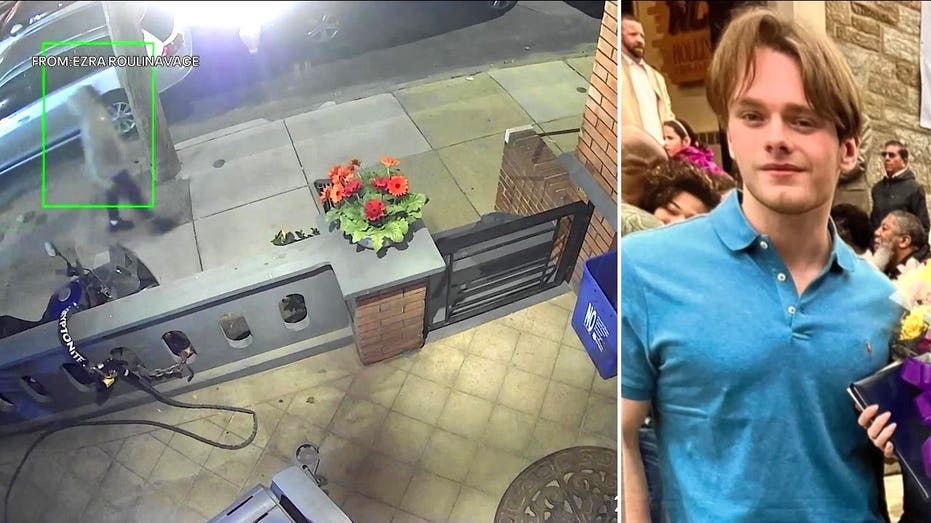
LISTEN: Dispatch audio captures frantic hunt for suspect in Penn State senior's fatal shooting
Penn State senior Billy Schmidt was fatally shot in Philadelphia after allegedly chasing suspects who stole his cellphone, months before graduation.

๐บ๐ธ ๋ฏธ๊ตญ ยท "CAPTURE" ยท ์ด 109๊ฑด
ํํฐ ๋ณด๊ธฐํ์ฌ ์ง์
48.8
0 = ๋ถ์ ์ฐ์ธ
50 = ์ค๋ฆฝ
100 = ๊ธ์ ์ฐ์ธ
์ต๊ทผ 7์ผ ๊ธฐ์ค 10,648๊ฑด์ ๋ถ์ํ ๊ฒฐ๊ณผ, ๋ด์ค ์ฌ๋ฆฌ์ง์๋ 48.8(๊ท ํ)์ ๋๋ค. ๊ธ์ 1,060๊ฑด(10.0%)ยท์ค๋ฆฝ 7,613๊ฑด(71.5%)ยท๋ถ์ 1,975๊ฑด(18.5%)์ด๋ฉฐ, ์ค๋ฆฝ ๋น์ค์ด ๋๋ ทํ๊ฒ ๋์ต๋๋ค. ์ฑํฅ ์ง์๋ ์ข ํฉ 22.4(๋ณด์ ๊ฒฝํฅ)์ ๋๋ค.
Penn State senior Billy Schmidt was fatally shot in Philadelphia after allegedly chasing suspects who stole his cellphone, months before graduation.

A man raises his phone as police move into a crowd. The video is shaky, loud, immediate. Within minutes, it is online. Within hours, it is everywhere. This is how accountability works now. Something happens, someone records it, and that footage can show what really happened, sometimes contradicting official accounts. It can empower citizens and create consequences for officials. But the footageโs life cycle does not end there. In recent months, civil liberties groups have warned that adding facial recognition to consumer smart glasses could turn everyday recording into something more troubling: real-time facial identification. It reflects a broader shift already underway, where images and videos captured for one purpose can later be searched, matched, and used for another. An ouroboros is an ancient Egyptian symbol, a snake or dragon eating its own tail. As I began to see patterns in my broader research on surveillance corporatism and governance lag, I began using the term โsurveillance ouroborosโ to describe this recursive pattern of observations intended to hold power accountable becoming new input for the same surveillance infrastructure. Facial recognition changes accountability During the George Floyd protests in 2020, people filmed police in real time. Phones were pointed at officers, not at each other. The goal was simple: to show what the state was doing. That footage spread quickly and became part of a much larger pool of public data. At the same time, reporting from outlets including The New York Times and BuzzFeed News showed that law enforcement agencies were using facial recognition tools, including systems built by Clearview AI. Those systems were built from billions of images scraped from across the internet, including publicly available photos and videos. The basic approach is now routine: People record the state, or anything elseโas in the January 6 attack on the U.S. Capitolโand the state compiles that footage and data into a searchable environment, which may later be used to identify some of the same people who made the footage. Facial-recognition systems used by law enforcement are increasingly outpacing the legal safeguards. A 2024 Government Accountability Office review found that federal law enforcement agencies continued to expand their use of facial-recognition systems for criminal investigations despite ongoing concerns around training, privacy protections, civil-liberties safeguards, and oversight. Earlier GAO findings showed that agencies had conducted roughly 60,000 facial-recognition searches before formal training requirements were put in place for personnel using the systems. The American Civil Liberties Union and other groups have warned that these tools could be used to identify people from images shared online, including protest-related footage. Concerns about facial recognition led some U.S. states and cities, including San Francisco and Boston, to restrict or ban government use of the technology, while federal agencies have continued to face scrutiny over how such systems are tested, deployed, and audited. A 2024 analysis published in Internet Policy Review warned that facial-recognition systems used by law enforcement are increasingly outpacing the legal safeguards meant to govern them, creating growing tensions around data protection, oversight, and proportional use. The spy network that built itself Surveillance used to require infrastructure. Cameras had to be installed and data had to be collected deliberately. That is no longer the case. People carry cameras everywhere. They record constantly and upload in real time. Events are documented from multiple angles without planning or coordination. The cumulative result is a continuous stream of usable data: faces, locations, timestamps, and interactions. The Internet of Things also waits all around us, gathering information and releasing it when people least expect it, as Andrew Guthrie Ferguson describes in a recent excerpt of his book Your Data Will Be Used Against You. RELATED: โSensorveillanceโ Turns Ordinary Life Into Evidence Similar dynamics are emerging globally. A recent analysis in the International Journal of Law and Information Technology examined how facial-recognition systems in China and Japan are expanding faster than the legal frameworks governing them. Reporting by The Guardian described the limited legal protections around the rapid deployment of AI-assisted surveillance infrastructure across parts of Africa. There used to be a clear distinction between surveillance and accountability. Surveillance meant the powerful watching the people; authorities tended not to share their imagery except under duress or a court order and usually after a long delay. Accountability meant the people watching the powerful, and often publishing imagery immediately to head off or counteract official mischief. That distinction no longer holds. The same footage can serve both roles. A recording meant to expose misconduct can later be used to identify someone else entirely. Surveillance ouroboros is not a future risk. It is already here. This dynamic persists because people still need to record. In many places, it is one of the only tools available when formal accountability breaks down. When oversight institutions weaken or fail, public documentation becomes a substitute. In that environment, people turn to visibility. But that visibility comes with a cost. The more people that document, the more data that exists. The more data that exists, the easier it is to search, match, and store. Every video feeds the ouroboros. People are not feeding the system because they trust it. They are feeding it because the alternative is silence. Most of the people in these videos are not the focus. They are in the background, passing by or standing nearby. But that distinction does not matter once the footage enters a system. Todayโs facial recognition can identify even a face that passed through the corner of a frame. Someone who did nothing can still become part of a dataset without ever knowing it. As recognition systems improve, older footage becomes more useful, and invasive. No single decision created this outcome. It emerged gradually through more cameras, better recognition, larger datasets, and easier integration. Each step made sense on its own. Together, they changed what recording means. Public recording is still necessary. Without it, many forms of abuse would remain hidden. But recording is no longer just exposure. It is also contribution. If you published imagery or video last year, you may already have contributed to a system you have never seen, but the ouroboros has. Surveillance ouroboros is not a future risk. It is already here. Every time someone presses publish, they are doing two things at once. They are exposing power, and they are helping build the system that the powerful will later use to track the less powerful.

The Google Nest Cam with Floodlight is marked down to $179.99 ($100 off) at multiple retailers, including Amazon, Best Buy, Home Depot, and directly from Google. This weather-resistant outdoor camera captures 1080p video across a 130-degree diagonal field of view, with snappy notifications and great customization options. Even without a subscription, the camera can store [โฆ]

A surveillance camera captured the sound of dogs barking, helping authorities determine when Angela Prichard's estranged husband arrived at the location to wait for her.
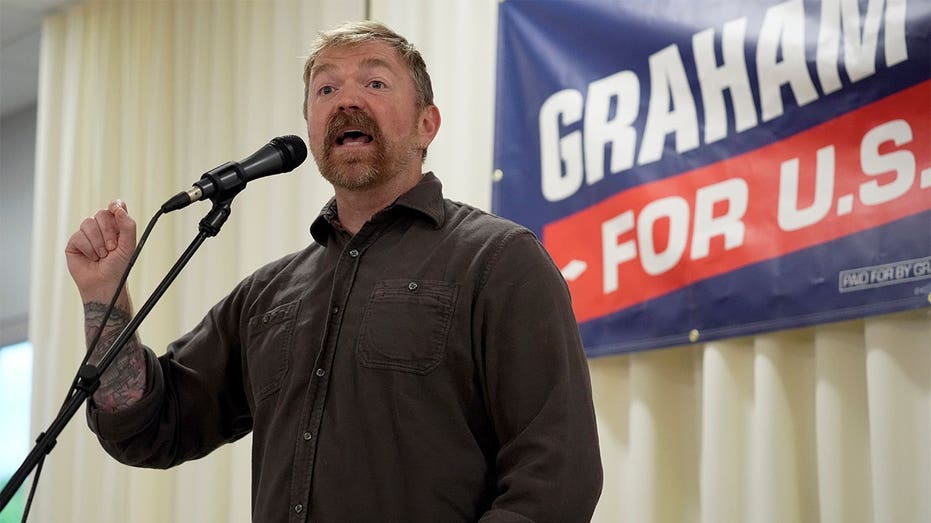
Graham Platner wins Maine's Democratic Senate primary despite multiple controversies, setting up a challenge against Republican Sen. Susan Collins.

Adapted from Carley Fortune's bestselling novel, the drama chronicles the tumultuous connection between two childhood best friends over 15 years.
Apple used to question whether generative AI-powered editing features were worth the risk of distorting our perceptions of the world. Now it seems Apple no longer believes that photos should accurately capture reality. At WWDC 2026, the company announced a host of new AI-powered photo editing tools. They give users effortless powers of manipulating images [โฆ]

There can be magic to summertime, especially during the teen years. Based on Carley Fortuneโs bestselling novel โEvery Summer Afterโ and adapted by Amy B. Harris, Prime Videoโs romantic drama โEvery Year Afterโ captures the whimsy, nostalgia and heartbreak of first loves and tragic endings. Told over the course of six summers, then picking up [โฆ]

Arkansas police released footage of a harrowing high speed chase with a car going more than 100 mph with four small children aboard, which flipped off the road and flung a 4-month old out of the vehicle near electrical wires. Harrowing video of the May 24 chase captured the moment police attempted to stop, Tyrice...

As prediction markets capture the time and money of millions of people in the name of empowerment and democratization, a disturbing yet familiar pattern is emerging.

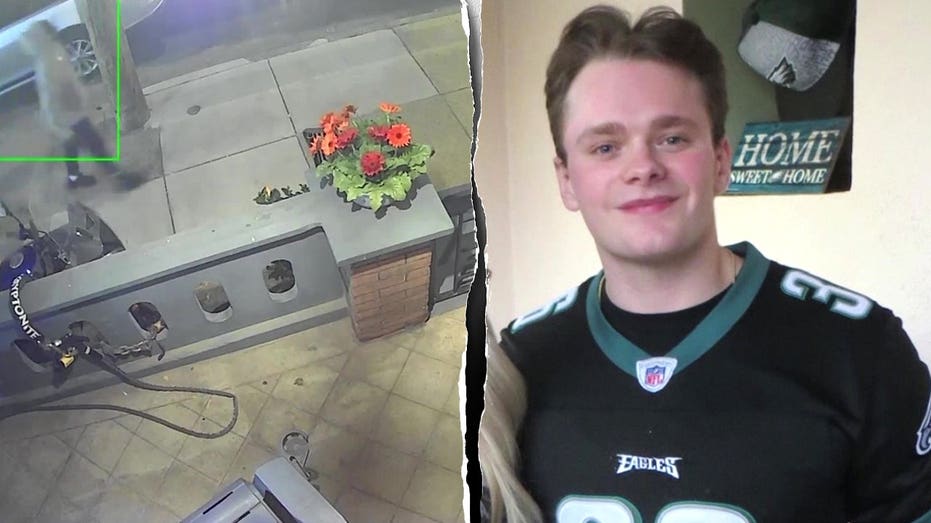
Surveillance video captures Penn State student Billy Schmidt's final moments before he was fatally shot during an armed robbery attempt in Philadelphia.

Once the use of a surveillance technology is permitted for emergency purposes only, it is only a matter of time before it is used for purposes that fall well outside any rational definition of an emergency. Take automatic license plate readers, or ALPRs, for instance. All across the country, these surveillance cameras capture time-stamped data [โฆ]

This article is brought to you by AGILINK. Throughout the exhibition hall at the 2026 IEEE International Conference on Robotics (ICRA), in Vienna, one demonstration seemed to attract a disproportionate amount of attention. Two robotic hands were making a balloon dog. Slowly and deliberately, the robot twisted a long balloon into loops, bends, and joints without popping it. Visitors stopped, watched, and often returned with colleagues to watch again. AGILINKโs balloon dog demonstration draws a crowd at ICRA 2026.AGILINK At first glance, the demonstration appeared almost playful. Among roboticists, however, balloon twisting is widely recognized as an unusually difficult manipulation task. A balloon is lightweight, highly deformable, slippery, and extremely sensitive to force. Every twist changes its geometry and internal pressure, turning a seemingly simple activity into a continuously changing physical interaction problem. Humans navigate those changes almost intuitively. While making a balloon animal, people rarely think consciously about force regulation, slip prevention, or contact stability. They simply adjust. For robots, those adjustments remain remarkably difficult. The challenge is not merely moving fingers to the right positions. The harder part is maintaining stable interaction while the object itself is changing. Highlights from AGILINKโs ICRA 2026 demonstrations, including visuotactile sensing, in-hand manipulation, balloon-animal shaping, and other contact-rich tasks enabled by the companyโs latest OmniHand platform.AGILINK That distinction helps explain why the balloon dog drew so much attention in Vienna. What appeared to be a dexterity demonstration was, in many ways, a demonstration about contact itself. As robotic manipulation continues to advance, a growing number of researchers are arriving at a similar conclusion: many of the hardest problems in robotics begin only after contact occurs. Motion and Contact Intelligence for Robot Manipulation Balloon twisting combines two challenges that robotics has traditionally struggled to solve simultaneously: long-horizon task execution and contact-rich manipulation. The first concerns motion. A balloon dog is not created through a single grasp or twist. It emerges through a carefully ordered sequence of manipulations, each setting the conditions for what follows. A small rotational error introduced early may appear insignificant at first, yet several steps later it can prevent the final structure from forming altogether. In that sense, balloon twisting is a long-horizon task. Success depends not only on performing individual actions correctly, but also on preserving the future feasibility of the entire manipulation process. To address this challenge, AGILINK began by collecting demonstrations from professional balloon artists. Human actions were mapped onto robotic hands to establish an initial manipulation policy. But successful demonstrations alone were insufficient. In practice, some of the most valuable learning occurred when execution began to drift toward failure. Whenever instability emerged, human operators intervened and corrected the manipulation in real time. Those interventions were recorded and incorporated into reinforcement-learning cycles, allowing the system to learn not only how successful demonstrations unfold, but also how experienced operators recover when things start to go wrong. Through this process, the robot gradually acquired the capabilities required for long-horizon task executionโa collection of abilities that AGILINK groups under the term motion intelligence: the ability to generate actions, coordinate bimanual behaviors, and execute extended manipulation sequences under real-world uncertainty. OmniHand 3 Ultra-M on display at ICRA 2026.AGILINK Yet motion alone does not explain why balloon twisting remains difficult. The second challenge is contact. The robot must continuously regulate force, adjust contact locations, and respond to subtle changes in the objectโs state. These decisions are difficult to encode through explicit rules. Even skilled human operators often rely on tactile intuition developed through experience rather than consciously articulated strategies. Analysis of those interventions revealed that many failures did not originate from incorrect action sequences, but from the breakdown of contact itself. To better capture those interaction dynamics, AGILINK collected contact-centric intervention data and incorporated those interactions into reinforcement-learning training. Rather than learning only which motions to perform, the system also learned how humans maintain stability when contact conditions begin to deteriorate. AGILINK describes this capability as contact intelligence: the ability to establish, maintain, and adapt physical interaction as force distribution, friction, deformation, and contact geometry continuously evolve. The distinction between the two capabilities is subtle but important. Motion intelligence determines what the robot intends to do. Contact intelligence determines whether it can continue doing it. For balloon twisting, both are necessary. One provides the sequence of actions. The other keeps those actions physically viable. YouTuber KhanFlicks follows OmniHandโs motions while learning to fold a balloon dog at the AGILINK booth.AGILINK Between a balloon slipping away and a balloon bursting lies a narrow region of stability. Successful manipulation depends on finding that regionโand remaining within it throughout the task. Introducing the OmniHand 3 Ultra-M Dexterous Hand The balloon dog demonstration showcased a manipulation capability. It also revealed a broader question. How much contact intelligence can be achieved through learning alone? A robot can only regulate what it can perceive. It can only respond as quickly as its hardware allows. As manipulation tasks become increasingly complex, researchers are finding that progress depends not only on better policies, but also on richer sensing and faster physical response. That realization formed the backdrop for AGILINKโs second major announcement at ICRA 2026. Alongside the balloon dog demonstration, the company introduced the OmniHand 3 Ultra-M. OmniHand 3 Ultra-M closely matches the size of an adult human hand.AGILINK The two exhibits represented different stages of the same technological trajectory. If the balloon dog demonstrated what contact intelligence can already accomplish today, Ultra-M was designed to explore what contact intelligence may require next. Building Hardware for Contact Intelligence Roughly the size of an adult human hand, the OmniHand 3 Ultra-M integrates 20 active degrees of freedom within a human-scale form factor. Its most distinctive feature is a fully direct-drive architecture. By adopting direct-drive actuation throughout the system, the hand is designed to enable faster and more transparent force regulation and higher force-control bandwidth, enabling faster response as contact conditions change. For contact-rich manipulation, responsiveness can be as important as sensing itself. By adopting direct-drive actuation throughout the system, the OmniHand 3 Ultra-M is designed to enable faster and more transparent force regulation and higher force-control bandwidth, enabling faster response as contact conditions change. The platform also incorporates tactile sensing across nearly the entire hand. Each fingertip contains a miniature vision-based tactile sensor, while more than 300 three-dimensional tactile sensing points are distributed throughout the palm. Together, they provide information not only about where contact occurs, but how contact is evolving. The system is designed to estimate pressure distribution, shear forces, local deformation, slip tendencies, and other interaction dynamics that often remain invisible to conventional position-based control systems. According to AGILINKโs tests, individual sensors achieve force resolution of approximately 0.005 Nโroughly equivalent to detecting the weight of a sheet of paper resting on a fingertip. Spatial resolution reaches approximately 0.04 mm, while sensing density approaches 50,000 sensing points per square centimeter. OmniHand 3 Ultra-M recognizes feather texture through vision-based tactile sensing.AGILINK For dexterous robots, contact has traditionally been a largely hidden process. Ultra-M is designed to make that process more observable. Rather than simply detecting that contact has occurred, the system attempts to resolve where interaction is happening, how forces are distributed, whether instability is beginning to emerge, and how manipulation strategies should adapt in response. The balloon dog offered a glimpse of what contact intelligence can already accomplish. Ultra-M explores a different question: what capabilities may be required to push contact intelligence further? The Physical World Remains the Hardest Benchmark The significance of contact intelligence extends far beyond balloon animals. Many tasks that continue to resist automation involve unstable or deformable interaction: cable insertion, garment handling, flexible packaging, delicate assembly, connector mating, tool use, and household manipulation. These tasks are difficult not because robots cannot reach the correct location, but because maintaining stable interaction after contact begins remains extraordinarily hard. For decades, robotics achieved many of its successes by reducing uncertainty. Factories were engineered to make robotic motion predictable, repeatable, and highly structured. The physical world behaves differently. A growing share of robotics research is shifting toward interaction itselfโunderstanding how robots can establish, maintain, and adapt physical contact within environments that remain fundamentally unpredictable. Objects shift. Materials deform. Friction changes. Contact evolves. Real environments rarely follow scripts. Seen through that lens, the balloon dog was never really about the balloon dog. What attracted attention at ICRA was not simply a visually impressive demonstration, but what it revealed: intelligence in the physical world is ultimately measured through interaction. As motion generation continues to mature, a growing share of robotics research is shifting toward interaction itselfโunderstanding how robots can establish, maintain, and adapt physical contact within environments that remain fundamentally unpredictable. For robots moving beyond structured environments and into less predictable real-world settings, managing contact may become as important as motion itself.
The U.K. and Ireland box office experienced a highly competitive frame as Paramountโs franchise revival โScary Movieโ secured the top spot, debuting to a robust ยฃ4.1 million ($5.6 million). Debuting in second place, Piece Of Magic Entertainmentโs โThe Amazing Digital Circus: The Last Actโ captured $3.6 million. At No. 3, fantasy epic โMasters Of The [โฆ]

The bear sightings had forced the closure of all 94 public primary and middle schools in a city just north of Tokyo.
A federal judge on Monday set a tentative trial date for the soldier who was charged with using classified information to profit from bets on Polymarket related to the military operation that resulted in the capture of former Venezuelan dictator Nicolas Maduro. The trial of Master Sgt. Gannon Ken Van Dyke has been scheduled for [โฆ]
Polystyrene can be upcycled into carbon sponge material.
Nelly Kordaโs biggest win of 2026 came a with congratulatory message from one of sports most recognizable figures. Lakers superstar LeBron James celebrated Kordaโs dramatic U.S. Womenโs Open victory Sunday after the worldโs No. 1 player captured her first title at the event and her fourth career major championship. LeBron James celebrated Nelly Korda after...
Ukraine's army has recaptured more than 230 square miles of territory so far this year, Kyiv's military chief Oleksandr Syrskyi confirmed Monday โ the latest shift in momentum against Russia's invasion.
Great white sharks are classified as "critically endangered" in the Mediterranean Sea, and underwater sightings are incredibly rare.