New York Post
보수 성향
스포츠
OG Anunoby’s block on De’Aaron Fox’s ‘bonehead’ decision helps Knicks’ miracle comeback
De'Aaron Fox made a choice that ultimately burned the Spurs.

🇺🇸 미국 · "BONE" · 총 47건
필터 보기현재 지수
48.8
0 = 부정 우세
50 = 중립
100 = 긍정 우세
최근 7일 기준 11,147건을 분석한 결과, 뉴스 심리지수는 48.8(균형)입니다. 긍정 1,124건(10.1%)·중립 7,969건(71.5%)·부정 2,054건(18.4%)이며, 중립 비중이 뚜렷하게 높습니다. 성향 지수는 종합 21.9(보수 경향)입니다.
De'Aaron Fox made a choice that ultimately burned the Spurs.
From web servers to encryption protocols, these 15 open-source tools form the invisible backbone of the modern internet — and most people have never heard of them
The tech giant's latest hiring push highlights the growing demand for workers who can build AI's backbone.
Mario Carbone is the chef behind the iconic Italian restaurant Carbone. He shared a 20-minute pasta recipe that's perfect for the warmer months.
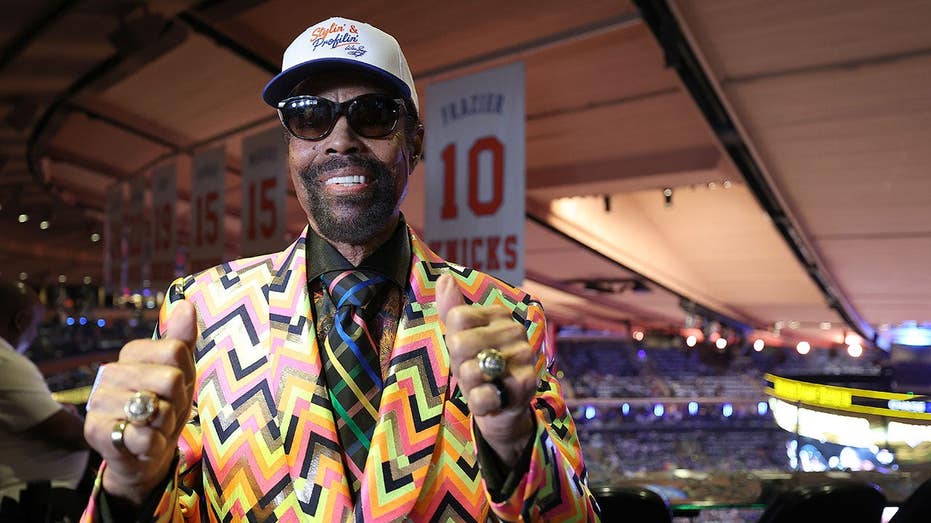
Knicks legend Clyde Frazier goes viral again for eating French fries like bone-in wings during Game 3 of the NBA Finals between the Knicks and Spurs.
PGA Tour winner Adam Svensson picked up his ball mark during a U.S. Open qualifier playoff, unknowingly gifting Matt Wallace the first alternate spot.

More than 40 million adults in the U.S. aged 50 and older have osteopenia, or low bone density. An FDA-approved wearable vibration device is giving some women a tool that could slow that loss.
The exes reunited for their eldest daughter's special day.
The exes reunited for their eldest daughter's special day.
Star Trek: Starfleet Academy” showrunner Alex Kurtzman has been vocal about his love for luxury fashion designer Alexander McQueen. It was one name that came up in conversations with the show’s costume designer, Avery Plewes, when they were brainstorming ideas for the series’ wedding episode. The series takes place in the 32nd century after the […]
Rolling Stone contributing writer Paul Solotaroff said that the case has “stalked my dreams for years”
Director of National Intelligence Tulsi Gabbard on Thursday shared a major health update on her husband’s aggressive cancer battle. The top Trump cabinet official revealed her husband, Abraham, was diagnosed with a “very rare” form of cancer called sacral chordoma. The slow-growing bone cancer typically starts in the bones of the spine or skull, according ...
Test your wits on the Slate Quiz for June 4, 2026.
Aaron Judge is going back for “more high-power, more specific” tests around the rib and chest area to get a “really strong diagnosis of things.”
For the shallowest man ever to occupy the presidency, surface appeal is a guiding principle.
This sponsored article is brought to you by Black & Veatch. The biggest challenge facing utilities today isn’t what it seems. It’s not demand, even as load growth accelerates. It’s not extreme weather, even as “major events” become routine. It’s not cybersecurity, even as connections expand across the grid. The real challenge is this: Distribution systems were designed for a different reality. Long gone are the days of predictable demand, one-way power flow and isolated disruptions. At Black & Veatch, we see that leading utilities are no longer debating whether to modernize. They’re deciding how quickly they can do it, and how to do it at scale. Across grid modernization programs globally, three truths consistently emerge. They define what it takes to prepare the distribution system for what’s next: 1. Outage response is not a resilience strategy Resilience is being redefined in real time. A strategy centered on mobilizing crews and restoring service as quickly as possible is reactive, and increasingly insufficient. Resilience has to shift upstream into integrated system design. That starts with hardening. Stronger poles, undergrounding and structural upgrades all have a role, particularly in high-risk corridors. We’re also seeing meaningful gains from how the network is configured and how quickly it can respond without waiting on manual intervention. This is where distribution automation programs can change outcomes. Strategically placed reclosers, automated switches and fault indicators help contain disruptions before they spread. When combined with feeder reconfiguration and updated protection strategies, distribution automation investments allow utilities to set more aggressive recovery targets and achieve measurable reductions in outage duration and customer impact. 2. Future-readiness depends on DERs at scale Forecasting is less and less reliable. Only 19 percent of utilities report strong confidence in their ability to predict future load growth, according to the Black & Veatch 2025 Electric Report. Distributed Energy Resources (DERs) like solar, storage, EVs and behind-the-meter generation are exciting solutions; but they fundamentally change how the system operates. Power is no longer just delivered. It’s injected, stored and redirected in ways the system was never designed to manage. At scale, these challenges show up quickly — particularly on feeders where distributed generation is approaching or exceeding hosting capacity. Protection coordination becomes more difficult when fault current comes from multiple directions. Voltage becomes less predictable as generation fluctuates throughout the day. And planning models must now account for highly variable, location-specific behavior. Distribution modernization is fundamentally changing how the system is designed and operated so it can absorb disruption, manage bi-directional flows and respond in real time. Adapting to bi-directional power flow requires more than incremental updates. Leading utilities are responding by building flexibility into the system, moving beyond static assumptions toward dynamic hosting capacity and interconnection studies, planning that incorporates DER, EV adoption and localized load growth, and infrastructure aligned with the communications and control needed to manage it. 3. The edge must be intelligent, visible and secure As system stress and complexity increase, utilities need far greater visibility and control over the network. Historically, utilities relied on customer calls, Supervisory Control and Data Acquisition (SCADA) at the substation level and field crews to understand what was happening on the system. That model doesn’t hold up. You can’t effectively manage a system you can’t see. Plus, the most critical events are increasingly happening beyond the substation — on feeders, laterals, and at the edge where DER and customer behavior are interacting with the grid. Grid-edge technologies have become essential. Sensors, Advanced Metering Infrastructure (AMI) and automated switching provide the raw data and control needed to move from reactive to proactive operations. In more advanced deployments, utilities are creating centralized control environments that allow operators to see and manage the distribution system in near real time. That capability is enabled by: Advanced communications networks to form the backbone of real-time grid visibility Distribution Management System (DMS) and Outage Management System (OMS) to enable faster, more coordinated system response Analytics, AI and machine learning to improve situational awareness, anticipate system conditions, and support operational decision-making The same connectivity enabling this real-time visibility and control also introduces new vulnerabilities, blurring the line between physical and cyber risk, yet many utilities manage them separately. Only 22 percent have unified teams in place, even as threats continue to rise, including a 50 percent increase in substation attacks and growing exposure to malware and ransomware, according to the Black & Veatch 2025 Electric Report. Cybersecurity and resilient network design must be embedded into the architecture from the outset—not layered on after the fact. See what bolder vision looks like Distribution modernization is fundamentally changing how the system is designed and operated so it can absorb disruption, manage bi-directional flows and respond in real time. To learn about a successful program, check out Georgia Power’s recent grid modernization program. Black & Veatch partnered with the utility on large-scale infrastructure upgrades. The results? Outages are down 76 percent, restoration times have improved by more than 80 percent and communities across Georgia are powered by a grid built to meet the future head-on. When the state faced the most destructive storm in the company’s history, Hurricane Helene, Georgia Power deployed a rapid response team that utilized its “smart grid” and restored power to more than 1 million customers within days. A grid built to meet the future head-on—that’s the result of bolder vision.
Comments
With no embedded modem, the Slate Truck is the antithesis of today's connected cars.
There’s doubt massive tankers, once the backbone of global crude flows, will be returning in quite the same numbers to the Middle East.
Sam Worthington and Britt Lower star in Netflix's dark thriller "I Will Find You," about a father breaking out of prison to find his missing son.