The Times of India
보수 성향
기타
Collective thinking, resolve and dream: 12 years of PM Modi government
🇮🇳 인도 · "SOLVE" · 총 98건
필터 보기현재 지수
48.3
0 = 부정 우세
50 = 중립
100 = 긍정 우세
최근 7일 기준 5,261건을 분석한 결과, 뉴스 심리지수는 48.3(균형)입니다. 긍정 518건(9.8%)·중립 3,577건(68.0%)·부정 1,166건(22.2%)이며, 중립 비중이 뚜렷하게 높습니다. 성향 지수는 종합 12.5(중도 균형)입니다.
Eechathalakenda incognita, the newly discovered species, had been confused with Eechathalakenda ophicephala for the last 70 years

DMK senior leader and former minister Thangam Thennarasu said there was no "intent to dissolve or topple the government" behind Stalin's comments.

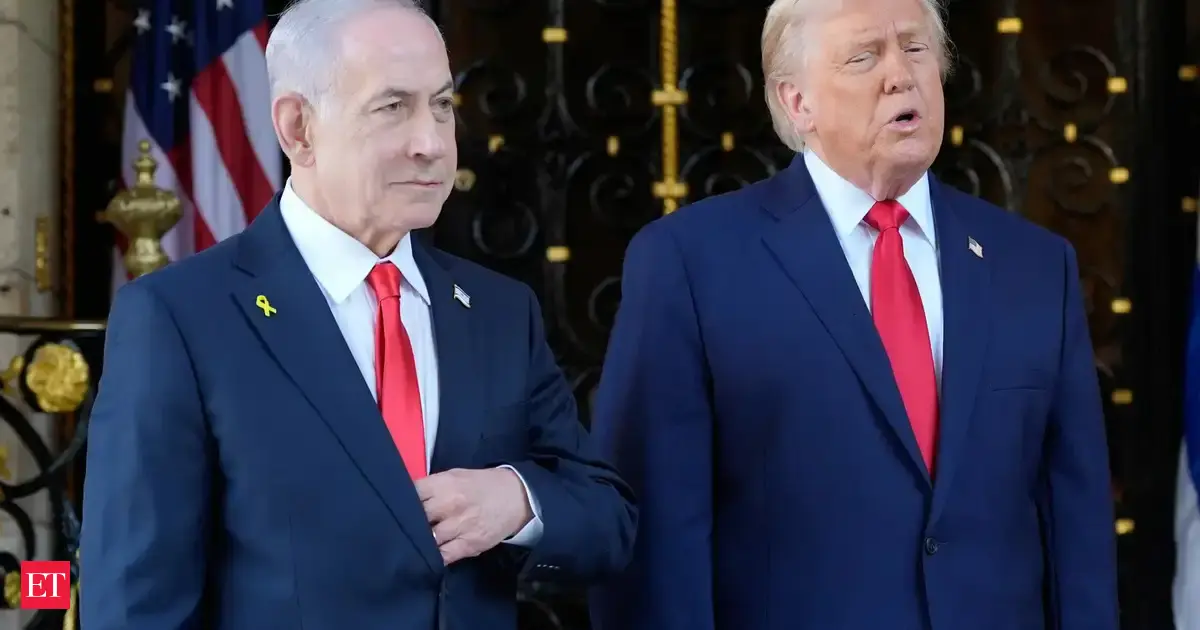
No wonder Donald Trump swore at his supposed friend and ally Benjamin Netanyahu last week. Within days of that June 1 phone call, Israel and Iran were back on track for the kind of military escalation that can no longer be explained away as a ceasefire breach, presenting a potentially fatal threat to the US president’s attempts to end the war.The cause of their dispute is, on the surface, simple. Israel says the April ceasefire between Tehran and Washington did not cover Lebanon, and that its troops would therefore go on fighting Hezbollah so long as the Shiite group posed a security threat to Israeli’s northern border communities. Iran says the deal did cover Lebanon, which is just another front in the same war — and of course it is.It’s precisely because it sees Hezbollah as a tool of Iran’s Islamic Revolutionary Guard Corps that Israel wanted the war in the first place. Israelis correctly blamed the IRGC for having orchestrated an entire proxy network of militias — from the Houthis in Yemen, to Hamas in Gaza, to Hezbollah in Lebanon — against the world’s only Jewish state. That Iranian strategy contributed directly to the atrocities of Oct. 7, 2023.Also Read: US Army Apache helicopter crashes near Strait of Hormuz, says reportOnly such an Iran-controlled or -inspired network can explain why Hezbollah opened a second front against the Israelis on Oct. 8 of that year, long before it could be described as a response to Israeli military excesses against Palestinian civilians in Gaza. Likewise that Hezbollah would join in the fight again when the US and Israel attacked Iran, in February. And it’s why the Houthis chose this weekend to lob a missile at Israel and announce they were closing the Bab al-Mandeb Strait to Israeli shipping.These last Houthi gestures were largely symbolic. Yet the collective message Tehran seeks to deliver is clear; it is that reports of the death of its so-called Axis of Resistance have been greatly exaggerated. The latest bout of escalation has notably been directed at Israel alone, serving to drive a wedge between it and the US, as it exposed the point at which their interests divide.Tehran on Monday appeared to want to draw a line under spiraling tit-for-tat air and missile strikes, saying it would refrain from further attacks — so long as Israel doesn’t bomb Hezbollah’s strongholds in Beirut. Netanyahu now faces a painful dilemma: Should he obey Trump by limiting his campaign against Hezbollah in the face of Iranian threats, thus granting them a level of impunity and deterrent power? Or should he ignore Trump and unleash the Israel Defense Forces on the Lebanese capital?Also Read: US carriers spent $6. 5B on fuel in April; global profit forecast is cut nearly in halfTehran’s new leaders understand this. No doubt they see it as a win-win for themselves. They know, too, that Hezbollah has recovered some of the military utility it had lost before the war after acquiring remote-controlled first-person view drones that the IDF seem ill-prepared to counter.This would present a genuine predicament to any Israeli government, because popular support for “finishing the job” in Lebanon is high. Netanyahu faces anger from across the political spectrum over his apparent submission of Israeli security interests to American ones.But this isn’t any Israeli government. Not every Israeli leader would have overseen a decades-long security policy that prioritized the suppression of the Palestinian Authority over Hamas, allowing the terrorist group to succeed beyond its wildest dreams on Oct. 7. Nor would every Israeli leader have refused to draw up a political strategy to accompany the use of force that followed in Gaza, the West Bank, and Lebanon — despite being coerced by Trump into recent talks with its central government.As the former Israeli Prime Minister Ehud Barak put it in an article for the liberal Haaretz newspaper on Monday, the story being sold to Israelis — that the IDF could eradicate Hezbollah once and for all if only its hands weren’t tied — is “a dangerous illusion.” The history of previous, painful failed incursions into Lebanon says as much.Nor would every Israeli leader have misled Trump into believing (against the advice of the US military and intelligence community) that assassinating Iran’s supreme leader would swiftly precipitate a collapse of the Islamic Republic as a whole. Nor might they have allowed their country to become quite as diplomatically isolated as it has.It is these strategic failures, amid undoubted military success, that have left Israel with few good options. Netanyahu can hope for a rapid collapse of the regime in Tehran to resolve his dilemma, but that’s unlikely. Alternatively, he can try to persuade the US to join in a long-term mow-the-lawn policy to keep Iran weak, amounting to a forever war. This, too, seems unlikely — or at least not in the interests of the US, its Gulf allies or the global economy.Failing one of these minor miracles, the risk of Israel being forced to accept a peace deal that leaves an enraged and emboldened Islamic Republic in place is real. No doubt Netanyahu, like Trump, believed in February that a short, victorious Iranian war might salvage his dimming political prospects, ahead of the Israeli elections due by October. That was a bad bet.
Closure of Kashmir-Ladakh highway for six months during winters due to heavy snowfall restricts the movement of military vehicles, strategic Zojila Tunnel will resolve inaccessibility, enhancing military mobility
The investigation, launched by the United States Trade Representative against India and other countries, probes unfair trade practices.
The Delhi High Court on Monday sought the stand of the Centre and the CBSE on a petition by Congress party's student wing seeking an independent inquiry into the alleged large-scale irregularities in the on-screen marking (OSM) system for Class 12 exams.Issuing notice on a PIL petition by the National Students' Union of India (NSUI), a vacation bench of Justices Neena Bansal Krishna and Madhu Jain asked the central government and CBSE to file their responses and listed the matter for hearing on June 12.Also read: IIT panel approves new CBSE portal for re-evaluation after security reviewThe petitioner submitted that the CBSE closed the portal for verifying and revaluing answer sheets last night and requested a direction to keep it open for affected students for one month.Counsel for CBSE, advocate M A Niyaz, submitted that the authorities extended the deadline for closing the portal from time to time, and the education board was duly addressing the grievances of aggrieved students. He also objected to the maintainability of NSUI to file the PIL, emphasising that it was a student wing of a political party. "We don't want education to be politicised like this," the counsel submitted.The NSUI counsel said that it filed the PIL on behalf of minors and that association with a political party was not a disqualification.What is OSM and what went wrongCBSE introduced on-screen marking for the evaluation of Class 12 answer books beginning with the 2026 examination cycle, describing it as part of its continuous effort to enhance efficiency and transparency. Under the system, physical exam papers are scanned, digitally masked to hide students' identities, and evaluated by teachers on a computer screen.However, the rollout has run into significant controversy. Thousands of students across the country reported issues including blurred scans, missing pages, mismatched answer sheets, incomplete uploads and unexpectedly low marks following the declaration of Class 12 results.CBSE declared the Class 12 results on May 13, with the overall pass percentage dropping to 85.20%, down from 88.39% last year. Reports also indicated a decline in the number of students scoring 90% and above.What NSUI is seekingThe PIL, filed through NSUI president Vinod Jhakhar and advocate Rishav Ranjan, seeks a direction to reopen the verification portal for one month, permit manual rechecking and physical verification of answer sheets in disputed cases, and order an independent inquiry into the alleged irregularities. It also seeks direct oversight by the Union Government and calls for proper safeguards and guidelines to be framed for future digital evaluation systems.Also read: Who is Dharmendra Pradhan? All about Education minister facing heat in CJP protest amid NEET, CBSE controversyNSUI has argued that the lack of a robust corrective mechanism heightens the prejudice to students because the academic calendar continues to move forward while the disputes remain unresolved.The Delhi Government School Teachers' Association (GSTA) had urged CBSE to hold implementation of the OSM system for the 2026 evaluation cycle, citing concerns that the majority of teachers had not been provided with structured and certified training for the digital system. The association had suggested the system be run only as a pilot on a limited scale during the 2026 session.With inputs from PTI
Delhi Police arrested West Bengal couple and their minor son for Delhi University professor's murder over a property dispute.
Party central office to monitor the affairs of the district until a new committee is constituted
INDIA bloc leaders convene in Delhi today amidst recent election defeats and internal friction. Twenty-three parties confirmed participation, aiming to present a united front against the BJP. However, key allies like DMK and AAP are reportedly skipping the meeting due to ongoing disputes, testing the coalition's resolve.
Nepalese foreign minister Shishir Khanal said Kathmandu refuses to see New Delhi through the "distorted, hyper-sensitive lens" of 21st-century geopolitics.
President Trump stated Iran has not yet agreed to a deal to end the ongoing conflict, citing leadership pride and resolve. He believes Tehran will eventually concede, as they've faced insufficient consequences for decades.
Nepal's Foreign Minister Shisir Khanal on Sunday called for a stronger development-oriented partnership with India, stressing on the revival of dormant bilateral mechanisms and high-level political exchanges to resolve issues such around boundary. During his visit, discussions covered trade, connectivity, energy, water resources, and people-to-people ties, with a focus on economic growth and innovation.
Maharashtra farmers welcomed relaxed onion procurement rules but demand a minimum support price of Rs 3,000 per quintal, stating current rates of Rs 1,580 are below production costs. They seek transparent procurement and compensation for past losses, arguing that rule changes alone won't resolve their financial distress.
Shishir Khanal kicked off a three-day trip to New Delhi on Friday
A Palestinian father burying his infant son, killed by Israeli troops in the occupied West Bank, refused to believe on Saturday that it...
India and Nepal are poised to significantly enhance their "very special relationship," with discussions focusing on expanding cooperation in energy, digital technology, and new sectors. Both nations emphasized their civilizational ties and a shared resolve for a transformative partnership, aiming to unlock its full potential amidst ongoing collaboration and mutual support.
It is learnt that a three-member committee, excluding the president and general secretary, may be constituted in an attempt to resolve the matter ahead of the organisation’s annual general body meeting scheduled for June 21
JMM resolves Rajya Sabha seat-sharing dispute with Congress in Jharkhand