The Economic Times (India)
보수 성향
정치
🇮🇳 인도 · "LORI" · 총 43건
필터 보기현재 지수
48.3
0 = 부정 우세
50 = 중립
100 = 긍정 우세
최근 7일 기준 5,166건을 분석한 결과, 뉴스 심리지수는 48.3(균형)입니다. 긍정 534건(10.3%)·중립 3,472건(67.2%)·부정 1,160건(22.5%)이며, 중립 비중이 뚜렷하게 높습니다. 성향 지수는 종합 14.2(중도 균형)입니다.
When SpaceX makes its debut on the U.S. stock market, it wants smaller-pocketed, mom-and-pop investors to play a big role in what may be the biggest IPO ever.Elon Musk's rocket company, formally known as Space Exploration Technologies Corp., is steering some of its initial public offering of stock directly to what are called "retail" investors. These are people who buy stocks in a brokerage account on their phone, not pension funds or other big "institutional" investors routing orders to their professional trading desks.Here are some things to keep in mind as the IPO approaches:A chunk of SpaceX stock will go to regular investorsMost IPOs offer only 5% to 10% of the total offering to retail investors, according to Fidelity. In this case, though, it could be up to 30%. SpaceX expects retail investors to participate in its IPO through Charles Schwab, Fidelity, Robinhood, SoFi and E-Trade by Morgan Stanley.At Fidelity, investors with as little as $2,000 in their accounts could potentially snag SpaceX shares in the IPO. That's down from account minimums of $100,000 or even $500,000 that Fidelity has for other equity offerings.Demand from investors may be so high in this IPO that not everyone indicating interest will actually get a share.Trying for a short-term flip has risksGiven all the hype around SpaceX, temptation could be high to grab shares in the IPO and sell them quickly if a frenzy sends its price spiking. But brokerages have policies to block investors from future offerings if they dump shares bought in an IPO quickly, like within a couple weeks.Big swings in price may be possiblePotentially high interest from retail investors following the IPO is one reason SpaceX is warning that its stock price could be volatile. These investors aren't known for moving as meticulously as a pension fund, which is trying to build money for payments it must make years or decades in the future.It's retail investors, after all, who helped drive GameStop and other "meme stocks" to market-bending heights in 2021 that professional investors called irrational.IPOs can see a big first-day bounce, but that may not lastThe typical IPO has seen a 7% jump in its first day of trading, from 1980 through 2025, according to Jay Ritter, an IPO expert and a professor at the University of Florida's Warrington College of Business.But IPOs tend to lag similar-sized peers in the ensuing five years, not including their first day of trading. They do so by an average of 3.6% per year, according to Ritter.SpaceX has debt and has been losing moneyIt's very expensive to launch things out of the earth's atmosphere and to construct huge AI data centers, and SpaceX has built up $29.1 billion in debt, as of the end of March.The company also lost $4.9 billion last year and another $4.3 billion through the first three months of 2026. It acknowledges that it "may not achieve profitability in the future."Over the long term, a stock's price tends to track with how much profit the company is making.You don't have to buy SpaceX to own itYou could end up owning some of SpaceX even if you never intended to. Consider the many people who own shares of the popular QQQ exchange-traded fund, which tracks the Nasdaq 100 index and has roughly $460 billion in total assets.Historically, the Nasdaq 100 index would wait until each December to add new members in an annual reconstitution to make sure it includes the 100 largest non-financial companies on the Nasdaq. But Nasdaq recently made changes to allow some big companies to enter the Nasdaq 100 index after just 15 trading days.That means if SpaceX's IPO is as successful as expected, it could quickly join both the Nasdaq 100 and QQQ fund, all while QQQ holders do nothing on their own.The company behind the more popular S&P 500 index, though, is not making changes that would allow SpaceX faster entry.Any shares bought would take a back seat to Musk's in influenceIn its IPO, SpaceX is offering 555.6 million shares of its "Class A" stock. Each of these shares gives an investor one vote on matters that shareholders decide. That includes such weighty things as who is on the board of directors overseeing the CEO.This IPO is not offering what are called "Class B" shares, each of which give its holder 10 votes. Musk, meanwhile, owns so many of those shares that he by himself could control more than 82% of all the stock's voting power following the IPO.In filings with U.S. securities regulators, SpaceX acknowledges the potential for conflicts of interest between it and Musk, along with other companies he owns, such as Tesla.Some big investors really disagree with the ownership structureOfficials from pension funds for firefighters, teachers and other workers in California and New York sent a letter to SpaceX last month decrying some of the provisions in its IPO, including "super voting shares," mandatory arbitration of shareholder claims instead of the possibility of lawsuits and how much power Musk will hold over the company.They said they could become owners of SpaceX stock because they hold index funds, which automatically buy stocks after they get included in certain indexes.If Musk is able to control so much of the voting power on the board of directors, it would make him tremendously powerful atop SpaceX, "essentially making him unfireable without his own consent," the CEO of California Public Employees' Retirement System, the New York state comptroller and the New York City comptroller wrote in their letter."This level of insulation from accountability is virtually unheard of among any other large U.S. issuer whose governing documents foreclose accountability to public owners on these terms."Don't confuse SpaceX with other companies with similar namesSpaceX plans to trade under the ticker symbol "SPCX." That's very close to "SPCE," which is the symbol for Richard Branson's Virgin Galactic Holdings.
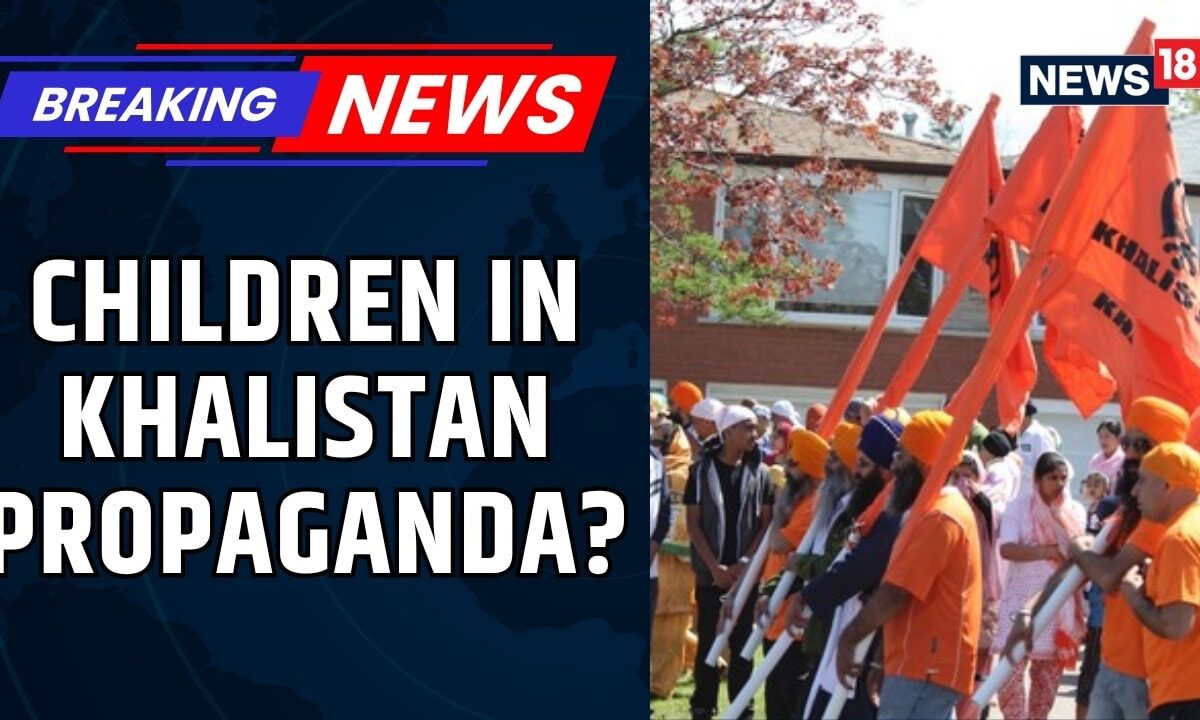
A controversy has erupted in Canada after visuals circulating online allegedly showed children being used as props in Khalistani propaganda during a Nagar Kirtan procession.The visuals reportedly showed young children being projected as “fidayeen bombers,” triggering serious concerns over the use of minors in extremist messaging and the glorification of violence in public processions.The incident has raised fresh questions over radicalisation, community events being used for political messaging, and the responsibility of authorities in preventing minors from being exposed to extremist symbolism.The controversy comes amid continuing tensions over Khalistani activities in Canada and India’s repeated concerns over the glorification of violence by separatist elements. n18oc_indian18oc_politicsn18oc_breaking-newsNews18 Mobile App - https://onelink.to/desc-youtube
WASHINGTON: U.S. President Donald Trump is trying to project political strength as he turns 80, but setbacks at home and abroad are exposing the limits of his power and pushing him toward the kind of lame-duck status he has told aides he is determined to avoid. Nearly 17 months into his second term, the courts are pushing back, his effort to wind down the Iran war has stalled, and his approval ratings have weakened. Some fellow Republicans in Congress are also defying him - though his hold on core supporters remains firm. Still, Trump has shown he retains significant clout: he has helped oust Republican incumbents in primary races and has pressed ahead with aggressive trade policies. He has also pursued high-profile construction projects in Washington in one of the most ambitious building drives by a U.S. president in years.Also Read| Trump's toughest immigration opponent isn't the Democrats. It's the courts This dynamic is unfolding just months ahead of November's midterm elections as Trump's Republican Party scrambles to maintain control of Congress. The loss of one or both chambers to opposition Democrats could hasten his slide into a lame-duck phase, historically when a president - if barred from running again - sees influence waning and domestic priorities stymied. The White House is trying to prevent that narrative from taking hold prematurely and has been forceful about letting Republican lawmakers know Trump can still make or break them, according to a presidential adviser, who spoke on condition of anonymity to discuss sensitive internal matters. But with some Republicans already showing greater willingness to stand up to Trump, the adviser acknowledged it was inevitable that his authority would begin to diminish. "He'll naturally start to lose leverage, especially after the midterms," the adviser said. Trump has privately told staffers that one of the reasons he has mused about a third term, which is forbidden by the Constitution, is to ward off any public perception that he might become a lame duck and slip into "irrelevance," according to a former senior aide who spoke on condition of anonymity. White House spokeswoman Olivia Wales said, "President Trump is the unequivocal leader of the Republican Party who is committed to maintaining Republicans' majority in Congress." HEALTH UNDER SCRUTINY The questions about Trump's political standing come as scrutiny of his personal stamina is intensifying. A Reuters/Ipsos poll in February found 61 percent of Americans thought Trump had become more erratic with age, and another survey in April showed a majority concerned about his temperament and mental sharpness. Trump, who is the oldest president sworn into office, will celebrate his 80th birthday on Sunday by hosting a UFC cage fight on the White House lawn. After a flurry of near-weekly travel early in the year, Trump has largely stayed at the White House or his Mar-a-Lago resort in Florida since he launched the Iran war on February 28. He has made only a handful of domestic trips since then. His public daily schedule consists largely of "executive time" and policy meetings held behind closed doors. He is often more visible on his Truth Social platform, where he posts throughout the day and late into the night. Trump declared himself in excellent condition following a routine checkup last month after he was seen at public events with swollen ankles, which his doctors have described as only a "slight" issue, and with bruising on his hands. A senior White House official, who also spoke on condition of anonymity, said Trump was keen to avoid comparisons to Joe Biden, his Democratic predecessor who faced questions about his fitness for the job before leaving office at 82. Even so, Trump has occasionally been caught on camera appearing to doze off at events, including at an NBA Finals game at Madison Square Garden on Monday. As clips of him with his eyes shut have gone viral, Trump aides have fired back on social media, claiming he was blinking or listening intently. White House spokesman Davis Ingle described Trump as "the sharpest and most accessible president in American history." A WEAKENING HAND Analysts agree that even if Trump's political influence wanes, he can still rely on executive orders to shape policy and act more freely on the world stage, where presidents have greater leeway to take action unilaterally. Still, there have been signs of Trump's weakening hand. While he is not likely to see a full-scale Republican revolt, some defeated incumbents, who remain in office until January, have already begun opposing parts of his agenda and have also signalled pushback against his cabinet nominations. In the past two weeks, small Republican factions in the Senate and House of Representatives have joined with Democrats to rebuke him over the Iran war, reject $1 billion in funding tied to his ballroom and force a retreat on his $1.8 billion fund to pay political allies claiming they were victims of "weaponized" prosecution. As Trump has struggled to achieve policy objectives, he has become more preoccupied with his construction projects. He is increasingly touting not only the ornate ballroom under construction but also refurbishment of the Reflecting Pool on the National Mall and a proposed triumphal arch. One way Trump is likely to continue exercising power is in the selection of Republicans' 2028 presidential nominee, seen as a contest between Vice President JD Vance and Secretary of State Marco Rubio. And for the rest of Trump's term, the world should expect the unexpected from a president who prides himself on unpredictability, said Douglas Brinkley, a presidential historian at Rice University. "His helter-skelter style of leadership, that's not going anywhere, whether the Democrats take Congress or not," he said.
Chinese investors are seeking indirect exposure to SpaceX's IPO due to direct participation being blocked. They are exploring offshore accounts, proxy stocks, and domestic A-share investments linked to the commercial space sector. This surge in interest is driving speculative buying in Chinese space-related companies.
Both SAIL and NMDC are exploring sourcing of raw materials and are in talks with Russia, and SAIL has also set up an internal panel to study the issue

The tremors was also felt as far away as Florida. (Representational)
No casualties have been reported in eitherIsraelorIranafterthe exchange of fire.
Dylan Larkin’s reported three-team trade wishlist includes the Florida Panthers, Minnesota Wild, and Vegas Golden Knights. The Detroit Red Wings captain controls the market with his no-trade clause, but Steve Yzerman still needs a serious return. Here is why Larkin’s list creates a messy offseason problem for Detroit and every contender involved.
The US is reportedly exploring a direct purchase of the Chagos Islands, including the crucial Diego Garcia base, from Mauritius. This potential move aims to bypass the UK's sovereignty handover plan, driven by American concerns over security and geopolitical ties. Washington seeks to secure the long-term future of this vital Indian Ocean military hub amidst growing regional competition.
The US is exploring redirecting frozen Iranian assets to Gulf states for rebuilding after missile and drone strikes. This move comes as indirect negotiations between the US and Iran remain deadlocked, with Tehran demanding the release of $24 billion in frozen funds. Military tensions continue to escalate across the region despite ongoing diplomatic efforts.
US President Donald Trump has spent years attacking his predecessor Barack Obama for what he called a giveaway to Iran. The image of "pallets of cash" became one of his favorite political talking points, a symbol of what he portrayed as weakness in dealing with Tehran.Yet the irony of the current moment is becoming harder to ignore. As negotiations to end the latest US-Iran confrontation stall, Iran is demanding access to billions of dollars in frozen assets, and the success of any deal may depend on whether Trump agrees to some form of financial relief. The president who built his Iran policy around rejecting Obama's approach may now find himself confronting the same reality that faced previous administrations -- diplomacy with Iran often comes with a price tag.Pay $12 billion now, and $12 billion laterAn indication of how central money has become to the negotiations came from Mohsen Rezaei, military adviser to Supreme Leader Ayatollah Mojtaba Khamenei, in an exclusive interview with CNN. According to Rezaei, the negotiations have reached a deadlock and the responsibility for breaking it lies squarely with Trump. He said Iran wants the release of $24 billion in frozen Iranian assets, with $12 billion to be made available immediately after an interim agreement is signed and another $12 billion at a later stage.Also Read | Iran says frozen funds key to progress in US talksRezaei termed the demand not a concession from Washington but as a test of American intentions. "If he wants to reach an agreement with Iran, this $24 billion is a test of trust that Iran wants to have with Trump," he told CNN. "This is our own money, not America's money."The significance of the demand extends beyond the amount involved. By publicly linking the prospects of peace to the release of frozen assets, Iran has effectively made financial compensation the central political hurdle in the negotiations.Trump's Obama problemFor Trump, the issue is not as much financial as deeply political. CNN reported that Trump has repeatedly instructed his team that any agreement with Iran must be viewed as stronger than the 2015 nuclear accord negotiated by Obama. Equally important, he wants to avoid anything that resembles the controversial payments that became a focal point of Republican criticism a decade ago.Throughout his political career, Trump has portrayed the Obama administration's handling of Iran as evidence of weak leadership. Recently, he revived his criticism of the Joint Comprehensive Plan of Action, or JCPOA, describing it as a horrible deal and insisting that any agreement he reaches will be far better. That political history now threatens to constrain his negotiating options. A deal that includes billions of dollars flowing to Iran could invite immediate comparisons with the very agreement he spent years denouncing.Also Read | Iran retains about 22% of missile stockpile, says TrumpWhat Obama actually didThe comparison is unavoidable because financial relief was also a major feature of the Obama-era approach. The JCPOA, finalized in 2015 after negotiations between Iran and the P5+1 powers, imposed strict limits on Iran's nuclear activities in exchange for sanctions relief. The agreement capped uranium enrichment, reduced centrifuge capacity and established what experts described as one of the most intrusive inspection regimes ever negotiated.The deal also coincided with the release of $1.7 billion to Iran, a figure that Trump and other critics frequently cited as evidence of appeasement. Critics argued that sanctions relief and financial compensation rewarded Iranian behaviour across the region.Supporters of the agreement took a different view. They argued that much of the money involved consisted of Iranian assets that had already belonged to Iran and that the deal successfully halted Tehran's progress toward a nuclear weapon while providing unprecedented transparency into its nuclear program.Former US Energy Secretary Ernest Moniz, who helped negotiate the agreement, told CNBC that the JCPOA's most important achievement was its extraordinary verification system. Arms control experts similarly maintain that the deal effectively constrained Iran's nuclear ambitions before it unraveled.Why the current situation is more difficultThe irony for Trump is that negotiations now are taking place under conditions far less favorable than those that existed in 2015. After the US withdrew from the JCPOA in 2018, Iran gradually breached many of the agreement's restrictions. It expanded uranium enrichment, accumulated a much larger stockpile of nuclear material and scaled back some transparency measures.Many think that any new agreement must address a more advanced Iranian nuclear programme and a more complicated political environment. There is also the added challenge of rebuilding trust after years of mutual escalation. That reality means economic incentives have become even more important. Tehran is demanding tangible benefits upfront rather than promises of future relief. From Iran's perspective, accepting new restrictions without immediate financial gains would be politically difficult.Trump's search for a political workaroundTrump's advisers are acutely aware of the political risks. According to CNN, administration officials are exploring mechanisms that would allow Iran to receive financial relief without creating the appearance of a direct US payment. One possibility involves third countries such as Qatar releasing funds. Another would permit access to frozen assets while restricting their use to humanitarian purchases such as food, medicine and agricultural goods. There have also been discussions about creating reconstruction funds financed largely by Gulf states rather than the United States.These proposals reflect an important reality. The debate is no longer about whether Iran should receive economic relief at some stage. It is increasingly about how that relief can be structured so that Trump can claim he has not repeated Obama's mistakes. In that sense, the dispute is becoming as much about political messaging as about financial policy.Leverage versus peaceThe White House remains reluctant to surrender what it views as one of its strongest bargaining tools. Trump has publicly insisted that the United States will retain control over frozen Iranian funds until Iran meets Washington's demands. Secretary of State Marco Rubio has similarly emphasised that sanctions relief should follow compliance rather than precede it.The administration's concern is straightforward. Once funds are released, Washington loses a major source of leverage. That leverage could prove critical during the highly technical second phase of negotiations focused on Iran's nuclear program. Iran, however, sees the issue differently. For Tehran, immediate access to frozen assets is evidence that the United States is negotiating in good faith. Without such a gesture, Iranian leaders appear unwilling to commit themselves to a broader settlement. That difference in perspective has created the current impasse.The choice facing TrumpThe strategic dilemma confronting Trump is becoming increasingly clear. He can maintain a hard line and refuse any significant financial concession, preserving political consistency but risking the collapse of negotiations. Or he can accept some form of economic relief for Iran, potentially unlocking a broader peace agreement but exposing himself to accusations that he has embraced a version of the same approach he once condemned.Rezaei's comments to CNN show how central that decision has become. By presenting the release of $24 billion as a test of trust, Iran has effectively challenged Trump to choose between ideological purity and diplomatic pragmatism. For a president who built his Iran policy in opposition to Obama's legacy, that may be the most uncomfortable choice of all. If peace ultimately requires releasing billions of dollars in frozen Iranian assets, Trump would be seen as eating his words when he had asked Iran for complete surrender.
Fitness trackers, calorie-counting apps, and sleep monitors are now a part of daily life in urban India.
Billionaire Peter Thiel's family office has secured a prime office space in Miami's 830 Brickell tower. The lease is reportedly the most expensive in Miami-Dade County's history. This move signifies Thiel's growing business presence in South Florida, a region attracting wealth and companies from higher-tax states. Thiel Capital and Founders Fund have also expanded their Miami operations.
A 42-year-old Delhi University assistant professor, Debosmita Paul, was discovered murdered in her Vasundhara Enclave apartment. Her sister found her with severe head injuries, suggesting an attack with a blunt object and possibly a sharp weapon. While robbery isn't the primary suspect, investigators are exploring her personal and professional life, including ongoing separation proceedings.
Highways Minister Nitin Gadkari is exploring cement concrete roads over bituminous ones due to a surge in bitumen prices and supply disruptions from the West Asia conflict. He also highlighted the potential of domestically produced bio-bitumen from rice straw and other biowaste to reduce imports and save foreign exchange.
Health Department teams visited all housing societies where diarrhoea and vomiting cases were reported and conducted house-to-house surveys, while chlorine tablets were also distributed for water purification
Jinki-Ittai robots are used in Japan for maintenance of railway lines and other areas where human lives are at risk; startup is specifically exploring opportunities in India in foundries and railways
A Reddit user's weight loss journey reveals that sustainable results come from realistic habits, not extreme diets. Banning favorite foods creates cravings. Understanding emotional hunger is key. Aggressive calorie cutting backfires. Enjoying exercise prevents quitting. Recovering from setbacks is crucial for long-term success. This approach offers a balanced path to health.
Lok Bhavan, the Kerala Governor’s official residence that stands on 12 hectares, is home to over 180 species of trees and plants