Ars Technica
중도 성향
IT/기술
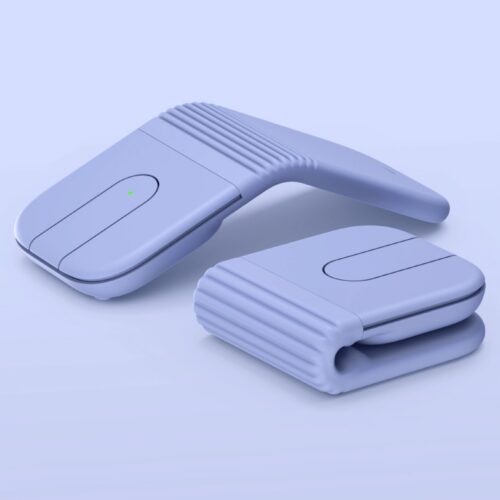
Logitech’s foldable mouse is for people who refuse to carry a mouse with them
The Mobi Fold is an $80 Bluetooth mouse with a silicone-wrapped hinge.
🇺🇸 미국 · IT/기술 · "REF" · 총 94건
필터 보기현재 지수
48.8
0 = 부정 우세
50 = 중립
100 = 긍정 우세
최근 7일 기준 10,648건을 분석한 결과, 뉴스 심리지수는 48.8(균형)입니다. 긍정 1,060건(10.0%)·중립 7,613건(71.5%)·부정 1,975건(18.5%)이며, 중립 비중이 뚜렷하게 높습니다. 성향 지수는 종합 22.4(보수 경향)입니다.
The Mobi Fold is an $80 Bluetooth mouse with a silicone-wrapped hinge.
The EPICS (Engineering Projects in Community Service) in IEEE program, administered by IEEE Educational Activities, has launched the Excellent EPICS in IEEE Contributor Awards. The recognitions honor the program’s outstanding students and faculty volunteers in Excellent Team Leader and Excellent Faculty Advisor categories. The awards recognize individuals whose leadership, mentorship, and commitment have meaningfully advanced the impact of EPICS projects. Candidates must demonstrate clear, measurable contributions that elevate both the student experience and the outcomes delivered to community partners. Reviewers also consider other awards, publications, presentations, and professional achievements that reinforce the nominee’s credibility and leadership. Recipients must demonstrate outstanding project management and documentation, strong mentoring and collaboration, and high-quality outcomes. Here are this year’s recipients. Team Leader Award Surattana Kakay is a computer engineering student at Rajamangala University of Technology Thanyaburi (RMUTT), located in IEEE Region 10 (Asia Pacific). Kakay, an IEEE student member, was honored for guiding her team in the design, development, and implementation of the Automatic Water Level Control System project, which aids rice farmers in Thailand. As the team leader, Kakay played a pivotal role in transforming the student initiative into an operational, community‑centered solution. Her inspiration was purpose-driven, she says. “My motivation was to apply engineering to real agricultural challenges, like water scarcity and climate change,” she says. “I wanted to bridge advanced technology with the tangible needs of local farmers.” She managed the project end to end—coordinating workflow, assigning tasks based on team members’ strengths, and ensuring each phase of development aligned with the technical road map she created. She served as the primary liaison between the student team, the Pathum Thani Rice Research Center, and farmers to make sure the system was practical and user‑friendly, and that it addressed community needs. “Watching students grow as they design solutions that improve lives has been both inspiring and deeply humbling.” —Elizabeth Vidal-Duarte Under her leadership, the team developed a low‑cost IoT‑based alternate wetting and drying (AWD) system that lets farmers remotely monitor and control water levels in rice paddies using smartphones. Kakay oversaw the integration of noncontact laser time‑of‑flight sensors to withstand harsh field conditions, and she championed the use of long-range technology connected to a free community Wi‑Fi network to eliminate Internet service fees. The results were transformative, Kakay says. “Our AWD system reduces water consumption by 63 percent and methane emissions by 7 percent annually,” she says. “Turning an academic assignment into a real‑world solution that delivers measurable, sustainable results has been incredibly meaningful.” Her achievements advanced sustainability for Thailand’s most water‑intensive crop while demonstrating the potential of accessible engineering solutions. Beyond technical innovation, Kakay cultivated a culture of learning, continuity, and empowerment within her team. She introduced a mentorship framework to support future student cohorts. She and her team produced academic papers, visual media, and presentations to communicate the project’s value to scientific audiences as well as the general public. “Surattana Kakay is a pivotal figure in turning innovation into reality and delivering tangible benefits to the community,” says IEEE Member Thanasin Bunnam, her faculty advisor and an assistant professor at RMUTT. Kakay’s leadership journey became a personal milestone, she says: “Leading this project transformed me from a student into a team leader. As a female engineer, it empowered me to advocate for women in engineering and show that gender is no barrier to technical excellence.” Through her guidance, the AWD project evolved from a classroom assignment into a solution that illustrates IEEE’s mission of advancing technology for humanity. Faculty Advisor Awards Navid Shaghaghi, a lecturer and researcher at Santa Clara University, in California, was recognized for his dedication to integrating service learning into engineering education and fostering student innovation that benefits underserved communities in IEEE Region 6 (Western USA). During his more than six years of engagement with EPICS in IEEE, Shaghaghi, an IEEE senior member, has demonstrated exceptional leadership in advancing sustainable, human‑centered engineering through the long‑running Hydration Automation (HA) project and the HiveSpy initiative. They are part of Santa Clara University’s Frugal Innovation Hub and EPIC Research Laboratory. Since 2019, Shaghaghi has served as principal investigator for the HA project, guiding its evolution from prototype to a robust, field‑tested irrigation automation system that supports small ranches and community farms in California. The HA project is a low‑cost system that helps reduce water waste by monitoring soil moisture and automating watering. By combining ultrasonic tank sensing, soil sensors, and ongoing technical support, the project improves efficiency, lowers operational costs, and promotes more sustainable urban agriculture. Under Shaghaghi’s guidance, more than 30 undergraduate and graduate students have gained hands-on experience in IoT development, field deployment, testing, and client collaboration. His commitment to frugal innovation and human‑centric design has resulted in solutions that are minimalist, affordable, sustainable, portable, and rugged—often challenging conventional approaches to agricultural technology. “Turning an academic assignment into a real‑world solution that delivers measurable, sustainable results has been incredibly meaningful.” —Surattana Kakay The HA project has produced new research publications and earned recognition, including a third-place finish by Shaghaghi’s graduate students at this year’s IEEE Rising Stars Project Showcase. During the annual event, students and young professionals present their technical innovations to industry leaders and peers. The HiveSpy project is a low‑cost, frame‑level IoT monitoring system that helps beekeepers automate labor‑intensive tasks and prevent hive swarming by tracking production yield in real time. By collecting frame‑weight data and generating optimized harvest schedules, the system reduces manual workload while improving the hive’s health and boosting honey output. Shaghaghi says his mentorship has been shaped by the realities of student turnover, a challenge he embraces with optimism and adaptability. “The transient nature of student teams is a challenge but one you must embrace, bear‑hug style,” he says. “By energizing your student community and welcoming new contributors, you’ll be amazed by the brilliant solutions they bring.” His philosophy has allowed him to cultivate a thriving pipeline of student innovators, he says, and he has strengthened his own professional practice as well. “I’ve been mentoring EPICS in IEEE students since 2019,” he says. “It has taught me resilience and how to operate on a tight budget while still delivering real‑world results.” Beyond the technical achievements, Shaghaghi’s work reflects a commitment to humanitarian technology and service learning. As the founder and director of the EPIC (Ethical, Pragmatic, and Intelligent Computer) lab, he has built a diverse, interdisciplinary community dedicated to innovation for the benefit of humanity. For him, he says, the EPICS in IEEE award carries profound meaning: “Receiving this award validates my deepest conviction in humanitarian technology research and strengthens my commitment to service‑learning education.” His students echo those sentiments. One team member said “Professor Shaghaghi is an engine of progress who keeps forging ahead.” Through his leadership, Shaghaghi has created an enduring model of mentorship, innovation, and community partnership that is helping to shape the next generation of socially responsible engineers. Elizabeth Vidal-Duarte is celebrated for her impactful mentorship and leadership in expanding EPICS in IEEE engagement across Peru and IEEE Region 9 (Latin America and Caribbean). Vidal-Duarte, a research professor at San Agustin National University Arequipa, in Peru, is a faculty advisor and technical mentor for two EPICS in IEEE projects. She encouraged students to apply to the EPICS program, helped them identify community needs, and supported them in crafting proposals grounded in service‑learning principles. Under her leadership, the students developed a functional soft robotic glove used at Clínica San Juan de Dios to help patients improve their fine-motor skills. The clinic’s therapists use the device to measure the range of motion of joints at the beginning and end of each patient’s therapy session to improve their assessments. Compared with traditional manual measurements using a goniometer, the glove significantly reduces evaluation time and enables digitally recorded data, improving clinical efficiency and decision-making. The second project is an emotion‑recognition system for people with visual impairment. The AI‑powered wearable helps recognize a person’s emotions through real‑time facial‑expression detection and haptic feedback. The project has resulted in the “Emotion-Aware Assistive System With Wearable Haptic Feedback for Visual Impairment” research paper, which is to be presented at the IEEE International Symposium on Computer-Based Medical Systems, to be held from 3 to 5 June in Limassol, Cyprus. Vidal-Duarte’s mentorship extends beyond the classroom. She visits rehabilitation centers and clinics to find people with visual impairments to ensure that the technologies she is helping to develop meet their needs. “EPICS in IEEE has moved me beyond teaching concepts to truly living engineering as a tool for human impact,” Vidal-Duarte says. “Watching students grow as they design solutions that improve lives has been both inspiring and deeply humbling.” Throughout the development of both projects, Vidal-Duarte provided sustained technical and organizational guidance, helping students define requirements, structure work plans, and overcome challenges in prototyping, testing, and validation. Reflecting on the broader impact of EPICS, she says the program has given her “more than methodologies and tools—it has given me perspective, purpose, and a global community that constantly challenges me to grow as a mentor and as a human being.” Her mentorship fostered not only technical excellence but also empathy, ethical awareness, and professional maturity among her students, she says. She guided them in preparing articles for submission to IEEE conferences, interdisciplinary collaboration, and hands-on fieldwork that bridged theory and real‑world constraints. “Her constant support, her belief in each student’s potential, and her commitment to developing leaders who make a difference define [her] as a faculty advisor,” says Valentina Chabilla, an EPICS in IEEE student team member. The EPICS recognition reflects her passion for teaching, her dedication to the community, and her impact on projects and students. Her commitment to accessible, sustainable innovation strengthened partnerships between the university and community groups, benefiting underserved populations. “Receiving this award is both an honor and a responsibility,” she says. “It reminds me of the real impact engineering can have on people’s lives and strengthens my commitment to guiding students in creating meaningful change.” Her leadership continues to inspire students to view engineering not just as a discipline but also as a powerful force for inclusion, dignity, and social impact. Advancing the mission The Excellent Contributor Award recipients exemplify the best of EPICS in IEEE. Through their leadership, they have strengthened the bridge between engineering education and community service, inspiring students to use their skills to create sustainable, real‑world impacts. As EPICS continues to expand its global reach, the contributions of Kakay, Shaghaghi, and Vidal-Duarte serve as powerful reminders of what is possible when educators, volunteers, and students work together to improve the lives of others through engineering.

Pinterest is adding support for Amazon Storefronts, allowing creators to earn affiliate commissions more easily while showcasing their product recommendations in one place.
A man raises his phone as police move into a crowd. The video is shaky, loud, immediate. Within minutes, it is online. Within hours, it is everywhere. This is how accountability works now. Something happens, someone records it, and that footage can show what really happened, sometimes contradicting official accounts. It can empower citizens and create consequences for officials. But the footage’s life cycle does not end there. In recent months, civil liberties groups have warned that adding facial recognition to consumer smart glasses could turn everyday recording into something more troubling: real-time facial identification. It reflects a broader shift already underway, where images and videos captured for one purpose can later be searched, matched, and used for another. An ouroboros is an ancient Egyptian symbol, a snake or dragon eating its own tail. As I began to see patterns in my broader research on surveillance corporatism and governance lag, I began using the term “surveillance ouroboros” to describe this recursive pattern of observations intended to hold power accountable becoming new input for the same surveillance infrastructure. Facial recognition changes accountability During the George Floyd protests in 2020, people filmed police in real time. Phones were pointed at officers, not at each other. The goal was simple: to show what the state was doing. That footage spread quickly and became part of a much larger pool of public data. At the same time, reporting from outlets including The New York Times and BuzzFeed News showed that law enforcement agencies were using facial recognition tools, including systems built by Clearview AI. Those systems were built from billions of images scraped from across the internet, including publicly available photos and videos. The basic approach is now routine: People record the state, or anything else—as in the January 6 attack on the U.S. Capitol—and the state compiles that footage and data into a searchable environment, which may later be used to identify some of the same people who made the footage. Facial-recognition systems used by law enforcement are increasingly outpacing the legal safeguards. A 2024 Government Accountability Office review found that federal law enforcement agencies continued to expand their use of facial-recognition systems for criminal investigations despite ongoing concerns around training, privacy protections, civil-liberties safeguards, and oversight. Earlier GAO findings showed that agencies had conducted roughly 60,000 facial-recognition searches before formal training requirements were put in place for personnel using the systems. The American Civil Liberties Union and other groups have warned that these tools could be used to identify people from images shared online, including protest-related footage. Concerns about facial recognition led some U.S. states and cities, including San Francisco and Boston, to restrict or ban government use of the technology, while federal agencies have continued to face scrutiny over how such systems are tested, deployed, and audited. A 2024 analysis published in Internet Policy Review warned that facial-recognition systems used by law enforcement are increasingly outpacing the legal safeguards meant to govern them, creating growing tensions around data protection, oversight, and proportional use. The spy network that built itself Surveillance used to require infrastructure. Cameras had to be installed and data had to be collected deliberately. That is no longer the case. People carry cameras everywhere. They record constantly and upload in real time. Events are documented from multiple angles without planning or coordination. The cumulative result is a continuous stream of usable data: faces, locations, timestamps, and interactions. The Internet of Things also waits all around us, gathering information and releasing it when people least expect it, as Andrew Guthrie Ferguson describes in a recent excerpt of his book Your Data Will Be Used Against You. RELATED: “Sensorveillance” Turns Ordinary Life Into Evidence Similar dynamics are emerging globally. A recent analysis in the International Journal of Law and Information Technology examined how facial-recognition systems in China and Japan are expanding faster than the legal frameworks governing them. Reporting by The Guardian described the limited legal protections around the rapid deployment of AI-assisted surveillance infrastructure across parts of Africa. There used to be a clear distinction between surveillance and accountability. Surveillance meant the powerful watching the people; authorities tended not to share their imagery except under duress or a court order and usually after a long delay. Accountability meant the people watching the powerful, and often publishing imagery immediately to head off or counteract official mischief. That distinction no longer holds. The same footage can serve both roles. A recording meant to expose misconduct can later be used to identify someone else entirely. Surveillance ouroboros is not a future risk. It is already here. This dynamic persists because people still need to record. In many places, it is one of the only tools available when formal accountability breaks down. When oversight institutions weaken or fail, public documentation becomes a substitute. In that environment, people turn to visibility. But that visibility comes with a cost. The more people that document, the more data that exists. The more data that exists, the easier it is to search, match, and store. Every video feeds the ouroboros. People are not feeding the system because they trust it. They are feeding it because the alternative is silence. Most of the people in these videos are not the focus. They are in the background, passing by or standing nearby. But that distinction does not matter once the footage enters a system. Today’s facial recognition can identify even a face that passed through the corner of a frame. Someone who did nothing can still become part of a dataset without ever knowing it. As recognition systems improve, older footage becomes more useful, and invasive. No single decision created this outcome. It emerged gradually through more cameras, better recognition, larger datasets, and easier integration. Each step made sense on its own. Together, they changed what recording means. Public recording is still necessary. Without it, many forms of abuse would remain hidden. But recording is no longer just exposure. It is also contribution. If you published imagery or video last year, you may already have contributed to a system you have never seen, but the ouroboros has. Surveillance ouroboros is not a future risk. It is already here. Every time someone presses publish, they are doing two things at once. They are exposing power, and they are helping build the system that the powerful will later use to track the less powerful.

Computing power has become the lifeblood — and a key limiting factor — of the race to develop AI, as the push to integrate the technology into daily life clashes with the finite supply of one of its most crucial inputs. Often referred to simply as “compute,” the processing power that forms the foundation of...

Upgrade your gaming setup or PC build for less with these verified Corsair coupon codes, student discounts, and refurbished deals.

New frontier model refuses cybersecurity, biology, and chemistry queries.

This article is crossposted from IEEE Spectrum’s careers newsletter. Sign up now to get insider tips, expert advice, and practical strategies, written in partnership with tech career development company Parsity and delivered to your inbox for free! Small Startup, Mid-Size Company, or Fortune 100? The Pros and Cons Early in my career, I walked into a shared office space on my first day as a full stack software developer and sat down between the CTO and the CEO to get onboarded. There were four of us in total. Before the day was over, I received my first assignment. This was one of the most formative—and most stressful—experiences of my professional life. In the decade since, I have worked at half a dozen companies including Fortune 100 firms, mid-size startups, and companies you’ve probably never heard of. I have also spoken with roughly a thousand developers at various stages of their careers. Most engineers entering the field are obsessed with landing at Google, Meta, or Amazon. But those roles represent approximately 0.6 percent of software engineering positions. For most of us, the real choice is between a small startup, a mid-size company, and a large enterprise. Each comes with tradeoffs, and your experience will differ from mine. What follows is an honest account of what you might reasonably expect. The Small Startup Pros Your work actually matters. A feature you build might determine whether the company closes its next funding round. You gain exposure to the full spectrum of the business, from deployment pipelines to sales and operations and everything in between. You wear many hats out of necessity. For engineers who want to grow quickly and understand how a product is built end to end, few environments move faster. Cons Everything is on fire, always. Work-life balance is difficult to maintain when every release feels critical. Priorities shift without warning and culture tends to reflect the personality of whoever has the most influence in a small room. Startups optimize for speed over craft which means engineers learn to move fast but don’t always learn to build well, and that gap can follow you into your next role. The Mid-Size Company Pros “So this is how a real business works.” There is process, documentation, a quality assurance function, and some form of career structure. The team is large enough to offer a diversity of experience and perspective. Stability is a myth, especially nowadays, but it is considerably more predictable than an early-stage startup. Cons “So this is how a real business works?” Processes that enable quality also produce friction. Access controls, approval workflows, and cross-team dependencies slow things down. The career ladder exists but it might stop at senior engineer. Without significant organizational growth, your salary and title can plateau early. The Large Enterprise Pros That badge on your LinkedIn profile just bought you credibility for the next five years. Compensation at this level can be meaningfully higher, particularly when equity is included. The career ladder is long and clearly defined. Engineering practices at mature organizations tend to be more rigorous, and a well-known employer carries market value in future job searches. Cons It’s slow. Technology stacks often lag industry trends by several years. Political dynamics shape advancement as much as technical ability does. Skill atrophy is a risk when you spend years on a narrow slice of a legacy system. You are now a small fish in a big pond and it will be harder to get noticed. The Roadmap I Would Take If I Could Start Over According to a recent Stack Overflow survey, 47 percent of professional developers work at companies with fewer than 100 employees. This may surprise you because social media is dominated by engineers who work at the most well known companies on the planet. The path most engineers imagine for themselves and the path most engineers actually walk are two very different things. If I could do it again, here’s the path I’d take: Start at a small company to build breadth and learn how a business works across functions. This also provides some room to experiment within different roles. Next, move to a mid-size organization with a clear goal of reaching a senior or leadership role. Making a lateral move is easier than trying to get up-leveled at the next company. Finally, target a more mature company where a leadership position opens the door to meaningful equity and long-term growth (aka stocks and bonuses). Each stop builds something the others cannot. The startup gives you range. The mid-size company gives you a taste of how larger orgs operate. The enterprise gives you leverage, credibility and maybe even some stability. Your path will not look like mine. At a five person startup, I had no idea what I was in for. Looking back, I would not trade it. Just know what you are signing up for before you sign. —Brian Reclaiming Social Engineering for Good “Social engineering” is a concept that has become associated with phishing, in which scammers manipulate people into disclosing personal information. But shaping human behavior in this way doesn’t have to have such negative effects. Systems engineer Guru Madhavan argues that we need to reclaim the term and govern the practice to defend ourselves from bad actors and benefit from social engineering’s good side. Read more here. Get Your Medical Mobile App Verified by IEEE Smartphone apps are increasingly used to help manage medical conditions, but many of these have not been verified by any regulatory agencies. To help ensure these apps are credible, the IEEE Standards Association recently launched a directory listing apps that have been vetted by experts for technical soundness, ethical design, data security and privacy, and clinical efficacy. The registry will be publically available at no cost, and developers can now apply for approval. Read more here. Finding Success in Industry as a Chip Designer A veteran chip designer reflects on what he learned when moving from academia to industry, where the goal changes from proof of concept to ensuring a design works reliably at scale. Differences in risk tolerance, he discovered, lead to varying approaches in the rapidly growing semiconductor industry. Read more here.

This article is crossposted from IEEE Spectrum’s careers newsletter. Sign up now to get insider tips, expert advice, and practical strategies, written in partnership with tech career development company Parsity and delivered to your inbox for free! The CS Degree Isn’t Dead. The Entry-Level Pipeline Is There is no shortage of people telling recent engineering graduates that their degree was a mistake and that AI is coming for their jobs before they even land one. I respectfully disagree. I have been a software engineer for 12 years, done well over 100 interviews on both sides of the table, and run Parsity, an AI engineering program. A few patterns emerge consistently in who actually breaks through in today’s job market. Here’s why I think the job market isn’t as dire as it looks, and what I would do if I were looking for my first tech job. The Numbers Need Context The Federal Reserve Bank of New York recently placed unemployment for recent CS graduates in the United States at 6.1 percent, with computer engineering graduates at 7.5 percent. Compared to philosophy majors at 3.2 percent and art history graduates at 3.0 percent, those figures look alarming. They require more context than most headlines provide. When researchers factor in underemployment (graduates working jobs that don’t require a college degree), then engineers are doing relatively well, coming in below 20 percent, against a 42 percent average across all recent graduates. Many majors reporting lower unemployment are achieving that figure by accepting work entirely unrelated to their field. Scored across unemployment, underemployment, and early-career earnings together, CS and computer engineering still rank among the top fields for overall labor market outcomes. The degree is not the problem. The hiring pipeline is. Job postings labeled “entry-level software engineer” grew roughly 47 percent between late 2023 and late 2024, while actual hiring into those roles dropped approximately 73 percent in the same window. So-called “ghost jobs,” used to create an illusion of company growth, are everywhere. This makes the front door harder to find, but it exists. Here Is What To Do About It Do a broad search of your (real-life) network. Roughly 26 percent of job offers come through referrals. Look at your actual network—classmates, professors, past internship contacts, relatives—and identify people at companies that might be hiring. The goal is a warm introduction to someone who is or knows a decision maker. One introduction carries more weight than a hundred cold applications through a portal. Find symmetric risk. A junior engineer is a risky hire by definition. A startup carries a matching risk profile, meaning potentially lower compensation, no certainty of longevity, and higher performance expectations. But that shared risk creates mutual interest. The learning curve is steep, the exposure is broad, and the track record transfers directly. For engineers whose longer-term goal is a large organization, a startup is not a detour. It can be how you build the experience those organizations eventually want to see. The first job is for validation and learning. It is not a life sentence. Manufacture experience rather than waiting for it. Employers want experience but will not hire you to get it. The way through is to create it: a deployed project, an open-source contribution, building something real for a small business or family member. Recruiters are skeptical of toy projects. A deployed application solving a real problem, combined with the ability to talk clearly about the decisions you made and why, still moves the needle. Gain practical AI engineering skills, not just AI tool fluency. Using Cursor or Copilot is now a baseline expectation. What differentiates candidates is going one level deeper. Most working engineers, including senior ones, have not built a RAG pipeline or designed a multi-agent system. Understanding how to chunk documents, generate embeddings, store and query them from a vector database, and wire it into a production application puts a candidate ahead of a significant portion of the market on a skill in rapidly growing demand. AI and data science roles grew 163 percent in job postings in 2025. The engineers who understand how these systems actually work, not just how to prompt them, are in the shortest supply. Stop optimizing around conditions you cannot predict. Nobody anticipated the 2021 hiring boom. Nobody predicted this correction. Build durable skills. The demand for engineers who can reason clearly about systems is not going away. Where you start is not where you end. —Brian Meta and Microsoft have joined the layoff tsunami. Is AI really to blame? More major workforce reductions are on the horizon at Big Tech companies: Meta announced it will cut 10 percent of its workforce, or about 8,000 employees, and Microsoft plans to offer buyouts for 7 percent of its U.S. employees in a voluntary retirement program. The cuts are understood by many to be linked to AI. But is AI really to blame? For The Conversation, two academics at the University of Sydney give their two cents. Read more here. This Roboticist-Turned-Teacher Built a Life-Size Replica of ENIAC Tom Burick got his start as a roboticist. But when a financial downturn forced him to close his robotics business, he thought of the effect teachers had on his life and decided to pay it forward. Burick now works as a technology instructor at a school for students with autism, where he recently led a project building a full-scale replica of ENIAC, an historic computer celebrating its 80th anniversary this year. Read more here. Proposed Chinese Robot Ban is Latest U.S. Tech Sovereignty Move Across several industries, the United States has been moving toward limiting the use of sensitive technology made in China. Now, legislation has been introduced to extend the trend to ground robots, including humanoids, dogs, and crawlers. This could benefit some U.S.-based robotics firms—but many of these companies still rely on Chinese-made components. “The U.S. robotics industry is in a pickle,” writes Spectrum tech policy editor Lucas Laursen. Read more here.
The iOS 27 developer beta includes code that references the fold state and screen angle of a device.
This article is brought to you by AGILINK. Throughout the exhibition hall at the 2026 IEEE International Conference on Robotics (ICRA), in Vienna, one demonstration seemed to attract a disproportionate amount of attention. Two robotic hands were making a balloon dog. Slowly and deliberately, the robot twisted a long balloon into loops, bends, and joints without popping it. Visitors stopped, watched, and often returned with colleagues to watch again. AGILINK’s balloon dog demonstration draws a crowd at ICRA 2026.AGILINK At first glance, the demonstration appeared almost playful. Among roboticists, however, balloon twisting is widely recognized as an unusually difficult manipulation task. A balloon is lightweight, highly deformable, slippery, and extremely sensitive to force. Every twist changes its geometry and internal pressure, turning a seemingly simple activity into a continuously changing physical interaction problem. Humans navigate those changes almost intuitively. While making a balloon animal, people rarely think consciously about force regulation, slip prevention, or contact stability. They simply adjust. For robots, those adjustments remain remarkably difficult. The challenge is not merely moving fingers to the right positions. The harder part is maintaining stable interaction while the object itself is changing. Highlights from AGILINK’s ICRA 2026 demonstrations, including visuotactile sensing, in-hand manipulation, balloon-animal shaping, and other contact-rich tasks enabled by the company’s latest OmniHand platform.AGILINK That distinction helps explain why the balloon dog drew so much attention in Vienna. What appeared to be a dexterity demonstration was, in many ways, a demonstration about contact itself. As robotic manipulation continues to advance, a growing number of researchers are arriving at a similar conclusion: many of the hardest problems in robotics begin only after contact occurs. Motion and Contact Intelligence for Robot Manipulation Balloon twisting combines two challenges that robotics has traditionally struggled to solve simultaneously: long-horizon task execution and contact-rich manipulation. The first concerns motion. A balloon dog is not created through a single grasp or twist. It emerges through a carefully ordered sequence of manipulations, each setting the conditions for what follows. A small rotational error introduced early may appear insignificant at first, yet several steps later it can prevent the final structure from forming altogether. In that sense, balloon twisting is a long-horizon task. Success depends not only on performing individual actions correctly, but also on preserving the future feasibility of the entire manipulation process. To address this challenge, AGILINK began by collecting demonstrations from professional balloon artists. Human actions were mapped onto robotic hands to establish an initial manipulation policy. But successful demonstrations alone were insufficient. In practice, some of the most valuable learning occurred when execution began to drift toward failure. Whenever instability emerged, human operators intervened and corrected the manipulation in real time. Those interventions were recorded and incorporated into reinforcement-learning cycles, allowing the system to learn not only how successful demonstrations unfold, but also how experienced operators recover when things start to go wrong. Through this process, the robot gradually acquired the capabilities required for long-horizon task execution—a collection of abilities that AGILINK groups under the term motion intelligence: the ability to generate actions, coordinate bimanual behaviors, and execute extended manipulation sequences under real-world uncertainty. OmniHand 3 Ultra-M on display at ICRA 2026.AGILINK Yet motion alone does not explain why balloon twisting remains difficult. The second challenge is contact. The robot must continuously regulate force, adjust contact locations, and respond to subtle changes in the object’s state. These decisions are difficult to encode through explicit rules. Even skilled human operators often rely on tactile intuition developed through experience rather than consciously articulated strategies. Analysis of those interventions revealed that many failures did not originate from incorrect action sequences, but from the breakdown of contact itself. To better capture those interaction dynamics, AGILINK collected contact-centric intervention data and incorporated those interactions into reinforcement-learning training. Rather than learning only which motions to perform, the system also learned how humans maintain stability when contact conditions begin to deteriorate. AGILINK describes this capability as contact intelligence: the ability to establish, maintain, and adapt physical interaction as force distribution, friction, deformation, and contact geometry continuously evolve. The distinction between the two capabilities is subtle but important. Motion intelligence determines what the robot intends to do. Contact intelligence determines whether it can continue doing it. For balloon twisting, both are necessary. One provides the sequence of actions. The other keeps those actions physically viable. YouTuber KhanFlicks follows OmniHand’s motions while learning to fold a balloon dog at the AGILINK booth.AGILINK Between a balloon slipping away and a balloon bursting lies a narrow region of stability. Successful manipulation depends on finding that region—and remaining within it throughout the task. Introducing the OmniHand 3 Ultra-M Dexterous Hand The balloon dog demonstration showcased a manipulation capability. It also revealed a broader question. How much contact intelligence can be achieved through learning alone? A robot can only regulate what it can perceive. It can only respond as quickly as its hardware allows. As manipulation tasks become increasingly complex, researchers are finding that progress depends not only on better policies, but also on richer sensing and faster physical response. That realization formed the backdrop for AGILINK’s second major announcement at ICRA 2026. Alongside the balloon dog demonstration, the company introduced the OmniHand 3 Ultra-M. OmniHand 3 Ultra-M closely matches the size of an adult human hand.AGILINK The two exhibits represented different stages of the same technological trajectory. If the balloon dog demonstrated what contact intelligence can already accomplish today, Ultra-M was designed to explore what contact intelligence may require next. Building Hardware for Contact Intelligence Roughly the size of an adult human hand, the OmniHand 3 Ultra-M integrates 20 active degrees of freedom within a human-scale form factor. Its most distinctive feature is a fully direct-drive architecture. By adopting direct-drive actuation throughout the system, the hand is designed to enable faster and more transparent force regulation and higher force-control bandwidth, enabling faster response as contact conditions change. For contact-rich manipulation, responsiveness can be as important as sensing itself. By adopting direct-drive actuation throughout the system, the OmniHand 3 Ultra-M is designed to enable faster and more transparent force regulation and higher force-control bandwidth, enabling faster response as contact conditions change. The platform also incorporates tactile sensing across nearly the entire hand. Each fingertip contains a miniature vision-based tactile sensor, while more than 300 three-dimensional tactile sensing points are distributed throughout the palm. Together, they provide information not only about where contact occurs, but how contact is evolving. The system is designed to estimate pressure distribution, shear forces, local deformation, slip tendencies, and other interaction dynamics that often remain invisible to conventional position-based control systems. According to AGILINK’s tests, individual sensors achieve force resolution of approximately 0.005 N—roughly equivalent to detecting the weight of a sheet of paper resting on a fingertip. Spatial resolution reaches approximately 0.04 mm, while sensing density approaches 50,000 sensing points per square centimeter. OmniHand 3 Ultra-M recognizes feather texture through vision-based tactile sensing.AGILINK For dexterous robots, contact has traditionally been a largely hidden process. Ultra-M is designed to make that process more observable. Rather than simply detecting that contact has occurred, the system attempts to resolve where interaction is happening, how forces are distributed, whether instability is beginning to emerge, and how manipulation strategies should adapt in response. The balloon dog offered a glimpse of what contact intelligence can already accomplish. Ultra-M explores a different question: what capabilities may be required to push contact intelligence further? The Physical World Remains the Hardest Benchmark The significance of contact intelligence extends far beyond balloon animals. Many tasks that continue to resist automation involve unstable or deformable interaction: cable insertion, garment handling, flexible packaging, delicate assembly, connector mating, tool use, and household manipulation. These tasks are difficult not because robots cannot reach the correct location, but because maintaining stable interaction after contact begins remains extraordinarily hard. For decades, robotics achieved many of its successes by reducing uncertainty. Factories were engineered to make robotic motion predictable, repeatable, and highly structured. The physical world behaves differently. A growing share of robotics research is shifting toward interaction itself—understanding how robots can establish, maintain, and adapt physical contact within environments that remain fundamentally unpredictable. Objects shift. Materials deform. Friction changes. Contact evolves. Real environments rarely follow scripts. Seen through that lens, the balloon dog was never really about the balloon dog. What attracted attention at ICRA was not simply a visually impressive demonstration, but what it revealed: intelligence in the physical world is ultimately measured through interaction. As motion generation continues to mature, a growing share of robotics research is shifting toward interaction itself—understanding how robots can establish, maintain, and adapt physical contact within environments that remain fundamentally unpredictable. For robots moving beyond structured environments and into less predictable real-world settings, managing contact may become as important as motion itself.

Comments
As adoption of AI agents looks set to surge by as much as 300% in the next two years, leadership teams are carefully considering the implications of a hybrid human-AI workforce. Unlike existing enterprise-level automation that relies on manual input, AI agents are capable of autonomously coordinating complex tasks, interacting with multiple tools and environments across…

Score up to $100 off refurbished premium products, free shipping on orders of $29+, and more at Logitech.

OpenAI announced Monday afternoon that it has filed for an initial public offering of stock, just a week after its chief rival, Anthropic did the same.“We recently submitted a confidential S-1,” the ChatGPT maker said in a post on X, referring to the formal name of the filing.
A new spatial "Reframe" feature will let users use AI to adjust perspectives.
Apple's OSes come with Liquid Glass tweaks and performance optimizations.
New York City was the backdrop of this year’s IEEE Honors Ceremony, held on 24 April. The event celebrates engineering pioneers who have developed technologies that have changed how people connect and learn about the world. This year’s celebrants included the engineers behind innovations such as text-to-donate technology, AI-powered diagnostic tools, and the graphics processing unit, among many others. Prior to the Honors Ceremony, IEEE hosted a forum on 23 April for a select group of early-career achievers to exchange ideas and experiences with laureates and awardees, speakers, and IEEE leaders. Attendees from around the world, working in a variety of technical areas, shared their journeys and explored the intersections of technologies, disciplines, and missions. The event culminated in Friday evening’s black tie Honors Ceremony, where IEEE celebrated medal laureates, including Jensen Huang, who received IEEE’s highest recognition, the IEEE Medal of Honor. Huang is a cofounder of Nvidia and its chief executive. “IEEE has always been a home to those who see the future before others see it,” Mary Ellen Randall, IEEE president and CEO, said in her welcome speech. Video highlights and photos from the event are available on the IEEE Awards website. Exploring mission-driven tech and AI in art Friday morning began with a conversation between Randall and Marian Croak, the recipient of this year’s IEEE Founders Medal. Croak was honored for “leadership in communication networks, including acceleration of digital equity, responsible artificial intelligence, and the promotion of diversity and inclusion.” Croak, who serves as vice president of engineering at Google, headquartered in Mountain View, Calif., pioneered Voice over Internet Protocol (VoIP) technologies. When a person speaks into a telephone, VoIP converts their voice into digital signals that are transmitted over the Internet rather than traditional phone lines. Her work enabled audio and video conferencing. She also developed text-to-donate technology to raise money for those affected by Hurricane Katrina, which devastated New Orleans in 2005. The technology enables customers to donate money to a charity via their mobile service provider, which then bills them. “Empathy has always been a driving force in the engineering that I’ve done,” she said. She shared advice on how to stay creative: “Get out of the office. Go to an art museum, exercise, or play with children.” Croak said her grandchildren inspire her. An inside look at microchips During Friday evening’s Honors Ceremony cocktail hour, attendees explored the history of microchips at the IEEE Global Museum’s Microchips That Shook the World exhibit. The Global Museum, an IEEE History and Heritage program, develops traveling and digital exhibits focused on the history of technology. The museum’s mission is to promote awareness of how technological progress unfolds over generations and how engineers and researchers build on past achievements to benefit humanity. Drawing from IEEE Spectrum’s Chip Hall of Fame, the Microchips That Shook the World exhibit conveys the roles integrated circuits play in fields such as signal processing, audio engineering, and telecommunications. Co-curators Stephen Cass, Spectrum’s special projects editor, and Daniel Mitchell, the IEEE senior historian, served as onsite docents for guests. The Commodore 64, one of the artifacts on display, brought up many treasured childhood memories for guests who used the home computer. The exhibit also featured a preview of IEEE’s immersive video project “Inside the Microchip,” which delves beneath the silicon surface of the Nvidia NV20 microchip thanks to forensic photography and sophisticated computer-generated renders. The video, which will be released later this year, aims to teach preuniversity students about the technology. Microchips that Shook the World is possible thanks to donations from semiconductor company ASML, the Bill and Dianne Mensch Foundation, and the IEEE Electron Devices and IEEE Electronics Packaging societies The daytime program also spotlighted AI’s use in the visual arts. Kathleen Kramer, the 2025 IEEE president, interviewed artist Refik Anadol, who is scheduled to open an AI art museum on 20 June in Los Angeles. Dataland’s exhibits are powered by an open-access model developed by Anadol’s studio. For the museum’s first exhibition, “Machine Dreams: Rainforest,” the model collected visual data about the natural world from the Smithsonian National Museum of Natural History, London’s Natural History Museum, and the Cornell Lab of Ornithology, with their permission. The information, including up to a half billion images, will form the basis for a variety of AI-produced art, Anadol said. Anadol said he was inspired to mix AI with art by the movie Blade Runner. He said he believes “machines can become collaborators,” as “data is a form of pigment.” Data also plays an important role in the work of artist and author Giorgia Lupi. The artist is a partner at design firm Pentagram. Lupi said she uses data to tell stories, including chronicling her struggles with a chronic illness. “Data is an abstraction of our reality,” she said. One of her recent projects, “A Data Love Letter to the Subway,” was shown last year in the Dey Street Passageway in New York City. The video was made using data from the Metropolitan Transportation Authority about each train line, including timetables, ridership, and people’s travel habits. Based on the information Lupi gathered, she documented how commuters traveling on different subway lines encountered one another without realizing it. By exploring data on this year’s IEEE award recipients, she collaborated with IEEE to create an animated video illustrating the shared pathways and collaborations among the honorees. It debuted at the Honors Ceremony. Honoring engineering giants The Honors Ceremony, held at Cipriani 42nd Street, recognized more than 20 laureates and innovators. More than 92 million selfies are taken worldwide every day, PhotoAiD estimates. A selfie wouldn’t be possible without Eric Fossum’s invention of the CMOS image sensor. Developed at NASA’s Jet Propulsion Laboratory, in Pasadena, Calif., the “camera on a chip” was intended for use in space, but it is now found in smartphones, medical devices, and vehicles. Fossum, an IEEE Life Fellow, received the IEEE Jun-ichi Nishizawa Medal, which recognizes outstanding contributions to materials and device science and technology. “Engineering is a pursuit of what must be possible. [IEEE is] the spirit, the conscience, of our profession.” —Jensen Huang, founder and CEO of Nvidia The medal, he said, “is at the top of the IEEE staircase of being recognized by your peers.” The IEEE Holonyak Medal for Semiconductor Optoelectronic Technologies went to Steven P. DenBaars, a professor of materials and electrical and computer engineering at the University of California, Santa Barbara. DenBaars was honored for his work in semiconductors, which laid the foundation for high-resolution LED and laser displays, modern solid-state lighting, and more. “This work has always been a team effort...I’m excited and curious about the role gallium nitride micro LEDs will play in optical communications,” he said in his acceptance speech. The ceremony ended with the Medal of Honor presentation to Huang, who received a standing ovation. He was recognized for his “leadership in the development of graphics processing units and their application to scientific computing and artificial intelligence.” The IEEE honorary member donated his cash prize to IEEE TryEngineering, which provides teachers with a library of lesson plans and offers educational summer camps. The Jen-Hsun and Lori Huang Foundation matched his gift, and the additional donation is destined to fund scholarships for new graduates. “Engineering is a pursuit of what must be possible. [IEEE is] the spirit, the conscience, of our profession,” Huang said.
OpenAI is giving ChatGPT its biggest makeover yet – aiming to turn the hit chatbot into a “superapp” that features coding tools and AI agents that can perform tasks for users. The overhaul reflects the company’s belief that agents, which can perform simultaneous tasks for users like organizing calendars and booking travel, will become more...
Comments