A US-Iran deal to stop the war is imminent. Here's what we know about its contents so far
AI Summary
President Trump announced that a U.S.-Iran peace agreement will be signed on June 14, reopening the Strait of Hormuz that Iran had blocked for shipping. Pakistan's Prime Minister confirmed both sides had agreed on a foundational framework for the accord. The U.S. administration plans to coordinate with G7 allies on demining operations to restore navigation through the critical waterway, though Iran publicly expressed doubt about the announced timeline.
Progressive: Progressive-leaning outlets emphasize the momentum and imminent likelihood of the deal, focusing on accelerating timelines and building confidence that the agreement will be finalized, while minimizing reported skepticism about whether the signing will occur as scheduled.
Moderate: Centrist outlets balance coverage of U.S. optimism about the deal timeline with reporting of Iran's publicly expressed doubts, while concentrating on the practical implementation details such as G7 coordination on demining the waterway.
Conservative: Conservative-leaning outlets emphasize Iran's public skepticism about the timing and report Trump's announcement more straightforwardly, with less emphasis on momentum or assertions about the deal's likelihood of materializing according to the announced schedule.
For a few hours on Saturday, it appeared that the long diplomatic effort led by Pakistan to end the US-Iran war was approaching its culmination.
President Donald Trump spoke of signing an agreement on Sunday, while Pakistani and Qatari mediators echoed the same with high confidence.
Interestingly enough, Iranian Foreign Minister Abbas Araghchi also remarked that a deal had never been closer. Still, within hours, Tehran publicly pushed back against reports that a signing ceremony was imminent, with Foreign Ministry spokesman Esmaeil Baghaei making it clear that no agreement would be signed that day.
Still, as these lines were being written, it was not clear whether the delay was temporary or whether the negotiators were struggling to bridge differences that remain unresolved. Such uncertainty, in any case, isn’t unusual in diplomacy especially when it is taking place between arch rivals like the US and Iran.
Even so, the broad contours of the proposed arrangement are now sufficiently visible to assess what kind of agreement is taking shape and why it is generating sharply different reactions among the stakeholders.
More of a stopgap measure
The first point to understand is that the proposed memorandum does not appear to be a peace agreement in the conventional sense. It has not been, as per the details leaked so far, formulated to resolve the dispute over Iran’s nuclear program, settle issues pertaining to sanctions, address the regional balance of power, or settle the future of Iran’s regional partners and allies.
Instead, it is emerging as an armistice plus framework essentially prepared to stop escalation, reopen the Strait of Hormuz for restarting regional trade halted due to hostilities and create a structured negotiating process for unresolved disputes.
That distinction matters because the agreement is being driven less by reconciliation than by exhaustion of the warring sides.
After months of confrontation, missile exchanges, attacks on military facilities, disruption of maritime traffic and mounting economic losses, both sides appear to have concluded that continued escalation carried greater risks than an imperfect compromise.
The emerging arrangement, therefore, looks less like a grand bargain and more like a temporary stabilisation mechanism reached after a costly confrontation in which neither side achieved enough to justify prolonging the conflict.
The most defensible reading of the draft texts and public statements available so far is that the agreement would establish a renewable 60-day truce built around a limited number of practical measures.
Those measures include the immediate reopening of the Strait of Hormuz, removal of obstacles affecting maritime traffic, gradual easing of the American blockade affecting Iranian shipping and ports, temporary sanctions waivers, partial release of frozen Iranian funds and the launch of a diplomatic process to address more difficult questions at a later stage.
Therefore, a conservative reading of the imminent deal is that its immediate objective is to restore stability in the Gulf rather than resolve the disputes that produced the war.
That also explains why the nuclear file remains the least settled aspect of the proposed arrangement. The emerging framework has, therefore, been designed not to resolve the issue but to postpone it until after a broader agreement is secured.
The nuclear issue
American officials continue to present the process as a pathway towards eventual dismantlement of Iran’s nuclear program and disposition of its highly enriched uranium stockpile. Iranian officials, meanwhile, insist that the memorandum presently under discussion is focused on ending hostilities and restoring stability, while nuclear issues would be addressed separately at a later stage.
The available drafts appear to reflect this contradiction rather than resolve it. References reportedly exist to future discussions on stockpile management, downblending and longer-term enrichment restrictions, yet the same texts suggest that the nuclear file is effectively deferred until after the expected MoU takes effect.
Diplomatically speaking, it is a process agreement intended to create conditions under which such negotiations might later become possible.
The same caution applies to reports that the imminent MoU includes mutual non-attack guarantees and non-interference commitments in Iran’s domestic affairs by the US.
Economic terms
The economic component of the proposed MoU is equally important. According to details circulating in diplomatic and regional circles, Iran will reopen the Strait of Hormuz for commercial navigation without imposing transit tariffs on passing vessels, although it would be able to charge for ancillary services such as fuel, insurance, port support and environmental protection measures.
The arrangement would also create a pathway for the release of approximately $12 billion in Iranian assets frozen abroad, though not entirely in the form Tehran had originally sought. Iranian negotiators reportedly pressed for direct access to the funds, while the US wants a mechanism under which a substantial portion of the money would used only for humanitarian purposes.
Draft texts circulating in diplomatic circles contain language relating to reciprocal restraint and respect for sovereignty. However, these provisions remain unconfirmed and should be best seen as draft level formulations rather than established commitments. Their inclusion, if it finally happens, would carry considerable political significance, particularly for Tehran, but one can only hope that they will survive into the final text.
These issues, besides others, may explain the reluctance by the relevant stakeholders despite visible diplomatic momentum.
The symbolism of it all
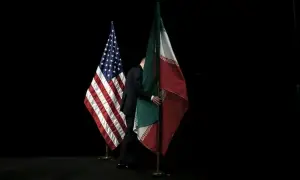
Some commentary in Iran has attributed the objection to signing on Sunday to symbolism. Those pushing this notion suggest that Tehran may be reluctant to hand President Trump a diplomatic success on his birthday. Similar explanation has also been given for having the MoU digitally signed. Tehran doesn’t want to give a picture of peace deal signing to Trump, which he can flaunt around.
Symbolism undoubtedly matters in Iranian politics, where perceptions of dignity and resistance often influence political decision making. But as external observers, merely focusing on symbolism risks overlooking the more substantive debate already underway inside Iran.
The strongest resistance to the MoU is coming from conservative political circles and constituencies associated with the Revolutionary Guards, who are deeply concerned about the sequencing of concessions that Iran is believed to be giving to the US, especially with regard to the reopening of the Strait of Hormuz.
Their argument is relatively straightforward, which is that after reopening Hormuz, Iran will be left with reduced leverage, which it accumulated during the conflict as it would enter the main negotiations. The critics, who include some powerful voices, insist that Iran, in return, is merely getting promises of sanctions relief, access to frozen assets and economic normalisation that would unfold gradually and remain subject to future political decisions in Washington.
For many in Tehran, the memory of the 2015 nuclear agreement and the subsequent US withdrawal from it remains difficult to ignore. The central question raised by critics is therefore not whether diplomacy is desirable, but whether Iranian concessions are being front loaded while American obligations remain conditional and reversible.
This internal debate appears to be exerting greater influence on the timing of the agreement than procedural issues surrounding the signing of the MoU itself.
The intensive diplomatic activity that followed Tehran’s hesitation to signing on the day announced by Trump reflected the fear among mediators that a delay may lead to unexpected complications.
Flurry of diplomatic activity
Reports from multiple diplomatic channels suggest that both Pakistan and Qatar intensified contacts with Iranian officials after the statement that signing will not be done on Sunday.
Qatari engagement has been publicly acknowledged, while regional diplomats suggested that a late-night conversation between the Chief of Defence Forces and the Chief of Army Staff Field Marshal Asim Munir and Araghchi on the issue also took place. Although not all such accounts have been independently verified, they illustrate the degree to which regional actors have become invested in securing an agreement.
That investment is understandable because almost every regional actor sees potential benefits in stabilisation, even if their reasons differ.
For Gulf states, the priority is straightforward. They are eagerly waiting for reopened shipping lanes, reduced risks to energy infrastructure and lower prospects of a wider regional war.
For Washington, the agreement would provide an opportunity to prevent renewed escalation while preserving diplomatic leverage over the nuclear issue and also something for President Trump to celebrate after a war, which he launched, but didn’t go as per his design.
For Tehran, the arrangement offers economic breathing space and partial relief from the pressures created by war and sanctions. But Iran appears to also be placing a premium on dignity and showing that it is keeping an upper hand in the process.
Israel’s calculations remain more complicated. Israeli policymakers would welcome any arrangement that constrains Iran, but remain sceptical of agreements that leave Tehran with residual nuclear capabilities or place limits on Israel’s future military options.
The Lebanon file, meanwhile, may provide an early indication of the durability of the broader framework.
Although the emerging agreement appears to promise wider regional de-escalation, the future of Hezbollah remains unresolved. Events over the past 10 days leave little doubt that any serious deterioration in the Israel-Lebanon theatre could quickly test the understandings currently being negotiated.
Ultimately, the significance of the agreement will depend less on the ceremony surrounding its signature than on the details contained in the final text.
Once the details become fully public, subsequent to the signing of MoU, it will be crucial to find out how sanctions relief is sequenced, whether frozen assets are released immediately or conditionally, what obligations become effective at the outset, what commitments are postponed to later phases, and what mechanisms exist for dealing with violations and importantly can Iran revert to closure of Strait of Hormuz if it feels that promises have not been kept.
Those details will determine whether the memorandum becomes the starting point of a broader diplomatic process or merely a pause before another cycle of confrontation. ...
이 뉴스, 독자들은 어떻게 느꼈나요?
첫 반응을 남겨보세요로그인하면 감정 반응에 참여할 수 있어요.