Khouri Warns Churches That Israeli Settlement Expansion Threatens the Survival of Indigenous Palestinian Christians
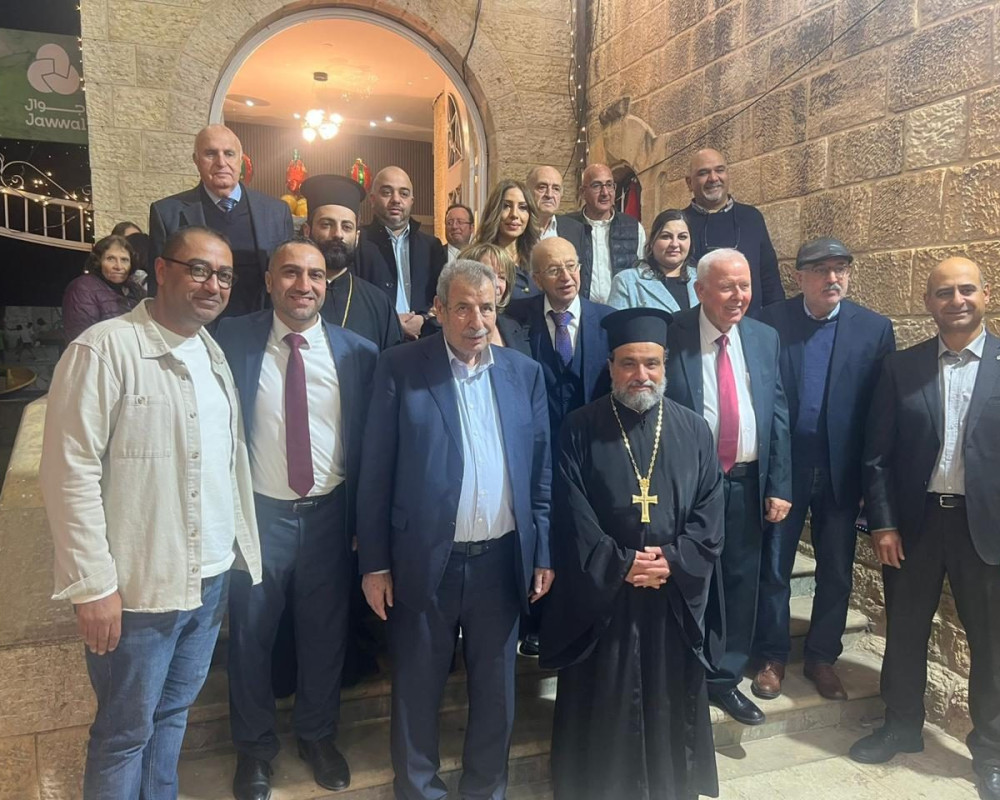
RAMALLAH, Occupied Palestine / PNN /
Dr. Ramzi Khouri, member of the Executive Committee of the Palestine Liberation Organization and head of the Higher Presidential Committee for Church Affairs in Palestine, warned Monday that Israel's accelerating settlement expansion across the occupied Palestinian territory poses a direct threat to the survival of the indigenous Palestinian Christian presence, calling on churches worldwide to take urgent action to defend international law and protect Christian communities in the Holy Land.
In a message addressed to heads of churches around the world, Khouri said settlement expansion and land confiscation have moved beyond seizing Palestinian territory to undermining Palestinians' ability to remain in their homeland, warning that the policies are forcing increasing numbers of Palestinian families, including Christians, to emigrate as land is confiscated and opportunities for future generations diminish.
"The continuation of these policies is a direct threat to an indigenous Palestinian Christian presence that has sustained its witness in this land for two thousand years," Khouri said. "It is also a loss to the global Christian heritage, in the very land where our Lord Jesus Christ was born."
Khouri highlighted a recently declassified decision by Israel's Security Cabinet approving the establishment of 34 new settlements in the occupied West Bank, including six in Bethlehem governorate, the birthplace of Jesus Christ. He said the plan allocates more than 2.3 billion shekels (approximately $790 million) to accelerate settlement construction, relocate settlers and expand infrastructure.
According to Khouri, the decision represents more than the construction of additional settlements. He described it as part of a comprehensive strategy to alter the geography and demographics of the occupied Palestinian territory by expanding settlement blocs, constructing segregated roads, extending water and electricity networks and integrating settlements into Israel's infrastructure, thereby reinforcing what he described as the de facto annexation of occupied Palestinian land.
He said Bethlehem governorate is among the areas most heavily targeted by the expansion plans, warning that the proposed enlargement of the Gush Etzion settlement bloc would further isolate Bethlehem, Beit Jala and Beit Sahour from surrounding Palestinian communities while restricting their natural urban growth and leading to the confiscation of additional agricultural land, including property owned by Palestinian Christian families.
Khouri argued that settlement expansion has evolved into a broader project aimed at reshaping the occupied territory through interconnected transportation, utility and public service networks linking settlements with one another and with Israel, in violation of international law.
Referring to the International Court of Justice's 2024 advisory opinion, Khouri noted that the court concluded Israel's continued occupation and settlement activities in the occupied Palestinian territory, including East Jerusalem, are unlawful. He said the opinion reaffirmed that an occupying power may not alter the demographic or geographic character of occupied territory or transfer its civilian population into occupied land, as prohibited under Article 49 of the Fourth Geneva Convention.
Khouri urged churches worldwide to maintain what he described as their historic role in defending justice and peace by taking a clear stand against settlement expansion, annexation and attempts to impose irreversible realities on the ground. He also called on church leaders to encourage governments and the international community to fulfill their legal and moral obligations by taking effective measures to halt settlement activity and support the resilience of Palestinian communities.
He said protecting the Christian presence in the Holy Land cannot be separated from protecting the rights of the Palestinian people as a whole, describing Palestinian Christians as an indigenous community that forms an inseparable part of Palestine's history, identity and social fabric.
Khouri concluded by expressing confidence that churches around the world would continue to uphold their spiritual and moral responsibilities by defending international law, promoting justice and contributing to efforts aimed at achieving a just and lasting peace while preserving the Holy Land's unique religious and human heritage. ...
이 뉴스, 어떠셨어요?
탭 한 번으로 반응 · 로그인 불필요