Trump leaves door open to Iran keeping ballistic weapons
AI Summary
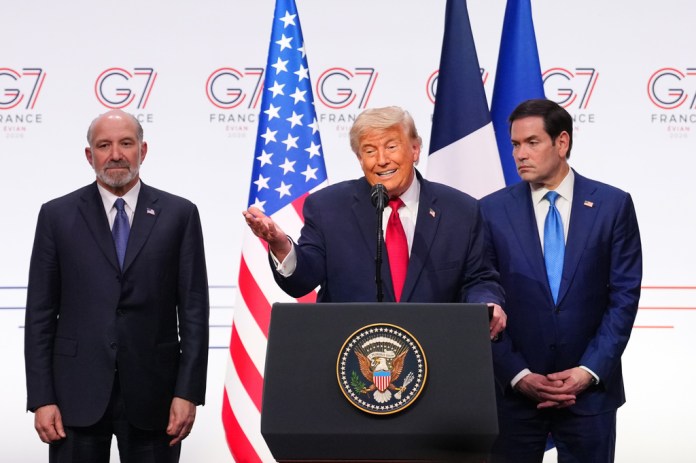
At the G7 summit in France, President Trump unveiled an initial accord with Iran to resolve the U.S.-Israel-led conflict, though the full terms have not yet been disclosed. The announcement came amid significant global economic strain, including elevated oil prices and inflationary pressures across major economies, prompting G7 leaders to express support for the agreement while calling for additional negotiations on Iran's missile capabilities. Substantial questions remain about whether the arrangement represents sufficient progress compared to earlier diplomatic efforts and addresses the full scope of the war's economic and human consequences.
Progressive: Progressive-leaning outlets emphasize the lack of transparent details regarding the agreement's specific terms and express skepticism about potential concessions to Iran in exchange for resolving the conflict. These sources highlight the substantial human and economic toll of the war on global stability, including inflation and energy price increases, while questioning whether the deal adequately justifies the costs incurred.
Conservative: Conservative-leaning outlets acknowledge the war's economic impact on global markets including elevated oil prices and inflation, though they note that G7 leaders are unlikely to directly attribute blame to Trump for the resulting slowdown. Some conservative coverage frames the agreement through historical comparison with the previous Obama-era nuclear accord.
President Donald Trump on Wednesday appeared open to Iran maintaining its ballistic missile systems as the United States moves to wind down its war in the region.
Earlier in the spring, the Trump administration had specifically listed destroying Iran’s ballistic missile capacity as one of the core objectives of the war, but Trump seemed to […] ...
이 뉴스, 독자들은 어떻게 느꼈나요?
첫 반응을 남겨보세요로그인하면 감정 반응에 참여할 수 있어요.