From Baltimore to Tajikistan: How a young innovator is taking on the global water crisis
From Baltimore to Tajikistan: How a young innovator is taking on the global water crisis
In 2020, while volunteering at food and water distribution drives in the historic US city of Baltimore, Noemi Florea witnessed a crisis largely overlooked in one of the world’s wealthiest countries: entire communities lacked access to clean water.
In Maryland’s most populous city, a short drive from Washington DC, families queued for cases of bottled water, which they depended on for everything in their daily lives – from drinking and cooking to bathing and washing clothes.
Many came to the drives because they were unemployed or furloughed and could not afford their water bills. Many others came because their tap water was contaminated and unsafe to drink.
Millions exposed
Across the country – and particularly in disadvantaged, post-industrial cities like Baltimore – outdated water infrastructure continues to let heavy metals such as lead and copper, as well as bacteria, leach into supplies, making tap water unsafe to drink.
This contributes to waterborne illnesses that affect more than seven million people in the US each year.
The consequences can be particularly severe for children, who can develop neurological and developmental problems if they consume high levels of lead.
Alarmed by what she saw, Ms. Florea set out to develop Cycleau, a groundbreaking water treatment system that filters greywater – wastewater from everyday domestic activities – so that it can be reused.
With health, environmental and financial benefits, Cycleau has now been piloted in three countries on three continents. It has earned Ms. Florea a string of awards, including a 2025 Young Champions of the Earth award from the UN Environment Programme (UNEP).
Ahead of the UN Water Conference in early December, she spoke to UN News about her invention and its impact.
Legacies of post-industrialism
When cities like Baltimore, Detroit, Cleveland and Newark moved away from heavy manufacturing in the mid-to-late 20th century, factory workers were forced to look for work elsewhere.
With economic activity slowing and the tax base shrinking, these cities lost vital revenue and could no longer afford to maintain and upgrade public infrastructure, including water systems, Ms. Florea explained.
“There’s definitely the social injustice and inequality aspect to it,” she said, noting that water contamination crises have mostly hit low-income communities, which are often predominantly communities of colour.
The solution: Cycleau
Ms. Florea said two key considerations shaped the design of Cycleau.
First, because municipal infrastructure in these areas is unreliable, households needed to be able to improve the quality of their water themselves.
Cycleau is therefore a compact, point-of-use filter: it fits under the sink and treats water where it is going to be used.
Second, many households face high water bills or limited supplies.
“Let’s say that they’re bringing a case of bottled water home from the food and water distribution drive, and that case is all that they have until the next week when the distribution drive gets set up again. How can we sustain and reuse that single case of bottled water to last the week?” she explained.
The answer was for Cycleau to filter greywater back to drinking water standards so it can be reused, cutting water consumption.
Overcoming stigma
One significant challenge in bringing Cycleau to communities was overcoming people’s scepticism about recycled water.
“There can be a bit of an ick factor when people think about the contaminants that they put down their drain,” Ms. Florea said.
To address this, each Cycleau unit is fitted with water quality sensors that report to an online dashboard in real time, so users can check that their recycled water meets regulatory drinking water standards.
Overseas demand
Although Cycleau was designed in response to water insecurity in the US, the problem is global.
More than two billion people worldwide lack access to clean water, Ms. Florea stressed.
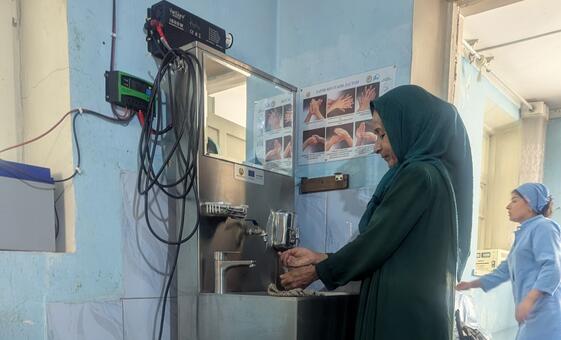
Cycleau has been piloted in New York and Baltimore and, more recently, in rural Kenya and rural Tajikistan, in communities without access to running water.
“Installing these systems in rural medical facilities and schools in Tajikistan…has reduced the number of times that someone has to manually go out with a bucket to refill with water from the canal outdoors and bring it back into the facility,” she explained.
The systems have also improved water quality, which is especially critical in medical settings, where water is used for drinking as well as for cleaning and treating wounds, she said.
Asked what she was most proud of, Ms. Florea said: “To know that there are facilities and people on the other side of the planet that have clean water as an effect of something that we did…That’s a pretty special feeling that I don’t think could really be replaced by anything else.”
공식 발표 ↔ 매체 보도
보도 없음
보도 없음
보도 없음