SMOKERS’ CORNER: HOW THE WEST LOST THE NARRATIVE
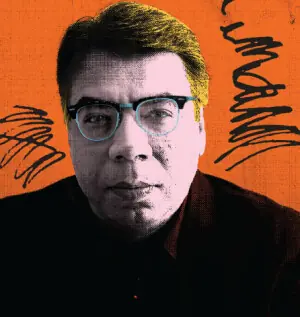
European leadership is facing growing anxiety. The global solidarity with their framing of the Russia–Ukraine conflict continues to erode. Outside the West, international attention has shifted decisively towards the Middle East, driven by widespread condemnation of Israel’s military campaign in Gaza, which has resulted in the deaths of over 85,000 Palestinians. The vast majority of the killed were non-combatants.
The escalation into a broader conflict involving the United States, Israel and Iran has further complicated European diplomatic strategies, forcing Western governments to navigate competing foreign policy crises. Compounding these external pressures is a noticeable domestic change: European regimes now confront a public that has grown increasingly lukewarm in its support for the ongoing war in Ukraine.
This is visible even within the cultural sphere. In 2022, the remaining members of the legendary rock band Pink Floyd reunited to release a song urging the Ukrainian people to remain resilient. The band’s guitarist and vocalist, David Gilmour, alongside his wife, openly expressed deep anger toward former bandmate Roger Waters, accusing him of supporting Russian authoritarianism.
Waters, who was a driving creative force behind Pink Floyd before his departure in 1985, has since established himself as a prominent anti-war and pro-Palestinian voice, gaining significant support across the Global South. While his fierce criticism of Israeli policies made him a highly divisive figure in the West, with critics frequently accusing him of antisemitism, the backlash has started to greatly recede. On the other hand, Pink Floyd’s pro-Ukraine anthem is all but forgotten.
Yet, Western cultural institutions continue to rely on a playbook that looks increasingly outdated. European filmmakers, for instance, have increasingly produced cinema that is heavily sympathetic towards Ukraine whilst presenting a heavily skewed perspective of Russia, paralleling how Western news outlets initially maintained an exclusive, unwavering focus on the Russia-Ukraine war.
For decades, the West exported its own ‘moral’ framework. But Gaza, Ukraine and the rise of the Global South have exposed widening contradictions, showing that the narratives that once shaped international consensus no longer command automatic acceptance
Ever since the end of World War II, European leadership has relied on this specific playbook to establish international consensus, often elevating historical traumas into sacred, unquestionable moral frameworks that dictate global alignment. Within this paradigm, Western identity and international norms have long been anchored by the universal recognition of specific historical tragedies, most notably Jewish victimhood and the ‘brutal’ legacies of communist regimes in the former Soviet Union and China.
The paradigm also includes the elevation of democracy to a sacred status. These historical traumas and sacralised political ideals were neatly packaged, internalised and then exported as core Western political values through international diplomacy and cultural exports.
Illustration by Abro
A prominent example of this framework is what sociologists Daniel Levy and Natan Sznaider refer to as the globalisation of Jewish victimhood, which was established as the definitive moral benchmark for modern human rights. This was reinforced by cultural products that imprinted it into the global consciousness.
Simultaneously, international diplomatic and civic institutions were used to champion the sacralisation of democracy. According to the Norwegian social anthropologist Gunnar Haaland, by leveraging platforms such as the Nobel Peace Prize or global human rights watchdogs, Western governments methodically amplify and reward high-profile dissidents from China and Russia, presenting the Western governing model as the sole legitimate path for the rest of the world.
In recent years, a concerted effort was made to apply this exact mechanism to the conflict in Ukraine, framing it as a binary struggle between absolute good and absolute evil. However, as the global order undergoes a realignment, the Western playbook is facing unprecedented scrutiny.
When the war in Ukraine intensified, Western powers attempted to treat solidarity with Kyiv as a non-negotiable moral duty for the entire international community. They sought to establish a global moral consensus, only to discover there were few takers.
The audience has changed. As British-American academic Fiona Hill notes, the Global South is no longer a passive recipient of Western moral dictates. Instead, nations across Asia, Africa and Latin America are actively scrutinising Western narratives and pointing out deep-seated double standards and selective empathy.
A widely read report published by the European Council on Foreign Relations highlights how Western mobilisation for Ukraine contrasts sharply with its long-standing indifference towards equally devastating crises in Yemen, Sudan or the Congo. The report adds that this selective enforcement of international law, combined with memories of past unilateral Western interventions, has created a severe credibility gap.
Accordingly, the global community increasingly views the West’s universalist moral claims not as a pursuit of global justice but as a selective defence of regional security. The Western monopoly on global information and diplomatic pressure is splintering. In a unipolar world, Western media and political institutions held the influence to define international legitimacy and victimhood. In today’s multipolar reality, however, emerging global and regional players, such as China, Russia, India, Brazil and an increasingly influential Pakistan, now possess the strategic weight to reject Western pressure entirely.
Significantly, the narratives generated by Pakistan regarding state rights, especially concerning self-determination, war and terrorism in South and West Asia, have outpaced narratives generated in the West. While most Western countries are gradually coming to terms with this reality, India is not. Its own counter-narrative on Pakistan is crumbling.
Ideologically, too, Pakistan has also begun to press harder. It is rather fascinating to witness the online panic from Indian commentators as Pakistan subtly repositions itself as a ‘civilisational state.’ This has clearly confused various Hindu nationalists in India who for years have been framing Pakistan as an ‘Islamist state.’
Equally striking is the fact that there are some Pakistanis who have also been left confused. Ironically, these do not include Islamist parties as such — at least not yet, as they go about addressing their own existentialist crisis in a mutating global order. Instead, the confusion is largely among the so-called progressives. Consumed by digital discourses that remain hopelessly romantic and trapped in performative debates about a flawless democracy, they remain oblivious to a fluctuating global order that looks nothing like it did prior to 2015.
The absolute virtue of democracy is under trial globally, as are previously untouchable Western narratives. Yet, perhaps the hardest pill for these well-meaning Pakistani commentators to swallow is the death of their old worldview regarding India.
They remain unequipped or unwilling to handle the reality of India as an unapologetically Hindu nationalist state that openly defies the secular myths they were once fed, or the fact that the old romanticised idea of democracy is dying, replaced by a stark transactional realism, in which values are traded for strategic interests.
Published in Dawn, EOS, July 12th, 2026 ...
이 뉴스, 어떠셨어요?
탭 한 번으로 반응 · 로그인 불필요