Analysis: Deal is ‘first step, not final breakthrough’
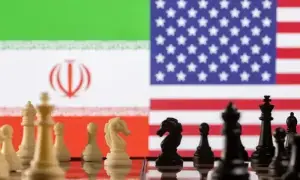
SIGNALS from the US and Iran that a framework agreement could be signed as early as this weekend are being viewed in Washington policy circles not as a final breakthrough but as the start of a tightly managed and uncertain negotiation process.
Analysts at leading American think tanks, including the Atlantic Council and the Brookings Institution, caution that even if a preliminary understanding emerges, it is likely to resemble an outline agreement rather than a comprehensive settlement and would sit within a broader strategic realignment already reshaping the Middle East and the global order.
US President Donald Trump has repeatedly suggested that a “major understanding” with Iran is close, while Iranian officials have also signalled progress towards an interim arrangement.
Diplomats tracking the talks describe the emerging outcome as a memorandum of understanding (MoU) that would establish principles for further negotiations rather than resolve core disputes.
American think tanks believe the expected MoU to outline principles for further negotiations
According to Jonathan Panikoff, director of the Scowcroft Middle East Security Initiative at the Atlantic Council, what is taking shape remains preliminary.
“It’s not a deal. It’s an MoU. It’s a rough outline and high-level explanation of the concepts a deal is supposed to be about,” he said, noting that a 60-day negotiating window would likely follow.
Panikoff argues that Washington must preserve leverage throughout this period, including a continued US military presence in the region as a deterrent signal.
He also stresses the need for closer coordination with European partners, saying the US should work with France, Germany and the UK to ensure “a unified policy toward Iran”.
He further suggests that any durable agreement would likely have to extend beyond nuclear constraints to include Iran’s missile programme and regional network of allied groups, alongside wider regional stabilisation efforts.
Diplomacy amid uncertainty
While the possible agreement is drawing attention as a diplomatic opening, analysts at the Brookings Institution argue that it is unfolding against a backdrop of deeper geopolitical strain.
In commentary associated with American researcher Robert Kagan and Brookings-related strategic analysis, the broader pattern of recent conflicts, including wars involving major powers, is seen as producing indecisive and prolonged engagements that erode perceptions of both US and Russian strategic effectiveness.
The result, they argue, is a gradual shift towards a more fragmented international system in which traditional power guarantees are weakening and states increasingly hedge their security alignments.
A separate Brookings analysis by Kari Heerman and David Wessel highlights how developments in the Strait of Hormuz are reshaping thinking about global trade security.
They argue that access to key maritime routes is becoming more politically conditioned, allowing states to reward partners, penalise rivals and exert pressure without fully disrupting global trade. The concern, they note, is the gradual erosion of predictable, rules-based maritime transit.
In another Brookings assessment, Bruce Jones argues that sustaining the US role as guarantor of free navigation is becoming increasingly difficult due to expanding maritime trade, the growing ability of weaker actors to disrupt shipping, China’s naval expansion and the relative weakening of Western naval dominance.
He concludes that maintaining maritime security will require new operational concepts, improved capabilities and greater burden-sharing among allies.
If confirmed, a US-Iran framework agreement would mark a significant diplomatic opening after months of confrontation.
However, analysts from the Atlantic Council and the Brookings Institution suggest it should be viewed less as a resolution and more as an inflection point within a shifting international system.
While it may ease immediate tensions, it would do so within a strategic environment that is becoming less stable, more fragmented and increasingly difficult to manage through existing power structures.
Published in Dawn, June 14th, 2026 ...
이 뉴스, 독자들은 어떻게 느꼈나요?
첫 반응을 남겨보세요로그인하면 감정 반응에 참여할 수 있어요.