At the pharmacy, poverty reveals itself in returned boxes, unfinished treatments
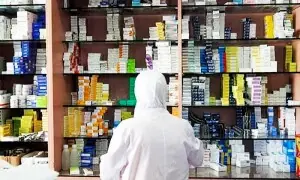
Abdul Rauf, a 52-year-old daily wager, clutches a crumpled prescription in his hand at a pharmacy. His doctor has prescribed him medicine for his back pain and high blood pressure. But the total cost is almost double what he paid last year. With a sigh, he picks only two of the four prescribed items. “What is the point of medicines being available if I cannot afford them?” he mutters.
They say the shortage is over, but for people like him, the suffering continues. He’s among many others who are forced to compromise their health due to financial constraints. In Rawalpindi’s busy markets, pharmacy shelves that once stood bare now brim with medicines. From insulin to psychiatric drugs and even cancer treatments, supplies are no longer scarce, thanks to the government that deregulated prices of non-essential medicines.
But for patients, availability means little when the price tags remain out of reach. This paradox stems from a major policy decision taken in February 2024, when the government deregulated prices of non-essential medicines. For decades, pharmaceutical companies were bound by state-imposed price caps, which tied increases to inflation but often kept retail prices below production costs. Industry leaders repeatedly warned that it was impossible to continue manufacturing under those restrictions.
The result was devastating, with widespread shortages, patients turned away from pharmacies and a booming black market filled with counterfeit or smuggled drugs. Even basic painkillers like Panadol became scarce, while patients with chronic illnesses were left vulnerable. To address this, the government gave pharmaceutical companies the power to independently set prices of non-essential drugs.
More than 460 essential medicines such as insulin, tuberculosis treatments, and vaccines remain under government control, but the rest of the market has been opened up. Manufacturers argue the change has stabilised the pharmaceutical sector and restored availability. Industry data also supports this claim. Provincial drug regulators also confirm that shortages have almost vanished, counterfeit drugs have declined, and patients have greater access to quality medicines.
But for the average household, the relief is bittersweet due to this price surge. The Pakistan Bureau of Statistics also reports that medicine prices have increased. The increases may be lower than inflation in food, fuel, or utilities, but because healthcare expenses are out-of-pocket in Pakistan, even modest hikes hit hard.
Every month, Fatima Javed, a homemaker, tightens her household budget and sets aside Rs8,000 for her father’s insulin and her daughter’s asthma inhalers. She calls it an impossible balancing act in this time of inflation. “We are middle-class, yet we struggle to pay for the medicines needed on a monthly basis due to fluctuating prices”.
“These medicines are not luxuries but essential for us”, she added. However, for daily wage earners, medicines are slipping further out of reach. With incomes consumed almost entirely by food and transport, even a modest increase in drug prices places an unbearable burden.
Behind pharmacy counters, the struggle is clear. “Many customers return medicines once they see the price tags,” shares Muhamad Ramzan, a pharmacist in Rawalpindi.
“Some take only part of their prescription, others stretch out their doses. What they don’t realise is that these sacrifices, made out of necessity, actually make recovery slower, harder, and ultimately costlier”, he added.
Experts point out that the policy’s distinction between “essential” and “non-essential” drugs is deeply flawed. While insulin and TB drugs are controlled, medications for epilepsy, depression, or hypertension fall into the deregulated category.
Civil society groups argue that subsidies or targeted support are urgently needed. Without them, deregulation risks will continue deepening health inequality. “We are witnessing a two-tier system,” says Maham, a pharmacist “The wealthy can now buy any medicine they want due to easy availability, but the poor are forced to choose between food and treatment. This is not healthcare, it is survival of the fittest.”
The debate over deregulation reflects Pakistan’s broader healthcare crisis. With no universal health coverage and only a patchwork of provincial insurance schemes, most families rely on their own income to pay for treatment. Out-of-pocket expenditure accounts for major health spending in the country. Inflation, job insecurity, and stagnant wages compound the issue. A rickshaw driver who earns Rs1,500 a day cannot afford Rs200 worth of daily medicine without sacrificing food for his family.
Meanwhile, pharmaceutical companies insist they too are struggling with rising global raw material costs, energy shortages, and currency devaluation. For them, deregulation is not greed but survive.
For patients like Abdul Rauf, this debate feels detached from reality. He no longer faces the frustration of empty shelves, but the full prescription still remains out of reach. His story echoes across Pakistan: the crisis of scarcity may be over, but a new crisis that of affordability has taken its place.
As the government and industry congratulate themselves for restoring availability, countless households silently cut back on treatment. Some halve doses to stretch out prescriptions. Others return to home remedies or prayers. For the poorest, illness is endured untreated. The shelves are full, but the wallets are empty. And in this cruel equation, patients are paying the highest price. — The writer is a freelance journalist
Published in Dawn, July 19th, 2026 ...
이 뉴스, 어떠셨어요?
탭 한 번으로 반응 · 로그인 불필요