NASA Releases Landsat 10 Spacecraft Request for Proposal
NASA Releases Landsat 10 Spacecraft Request for Proposal
July 16, 2026
The Landsat 10 Spacecraft Request for Proposal (RFP) is available for review via SAM.gov as of July 14, 2026. Proposals are due August 13, 2026 at 1:00 PM EDT.
The final RFP incorporates several updates from the draft version, including further definition in instrument accommodations, mission assurance implementation, mission readiness execution, spacecraft design, observatory level testing, and better alignment with commercial procurement. The RFP also introduces a $1 million incentive for early delivery of the spacecraft. The anticipated contract award and effective date is December 30, 2026, with a period of performance extending through a Launch Readiness Date of no later than December 2031, plus 100 days of nominal commissioning activities. The scope of the contract includes development, integration, testing, delivery of the spacecraft and support through launch and activation activities for the Landsat 10 Observatory.
The spacecraft will fly in a sun-synchronous orbit at a 653 km altitude—slightly lower than previous missions—with a global revisit time of 18 days to meet stringent signal-to-noise ratio requirements of the Landsat record. To accommodate this new orbit, Landsat 10 will use a new Worldwide Reference System called WRS-3 as a method to acquire, index, and catalog Landsat 10 scenes. Landsat 10 is a Category 2, Class C mission with a design life of 5 years and will include a single integrated suite of sensors called LandIS (the Landsat Instrument Suite).
The release of the Spacecraft RFP marks a significant accomplishment for the joint-agency Sustained Land Imaging (SLI) program and the Landsat 10 project. NASA and USGS have worked closely together to establish this commercial solicitation and look forward to the responses.
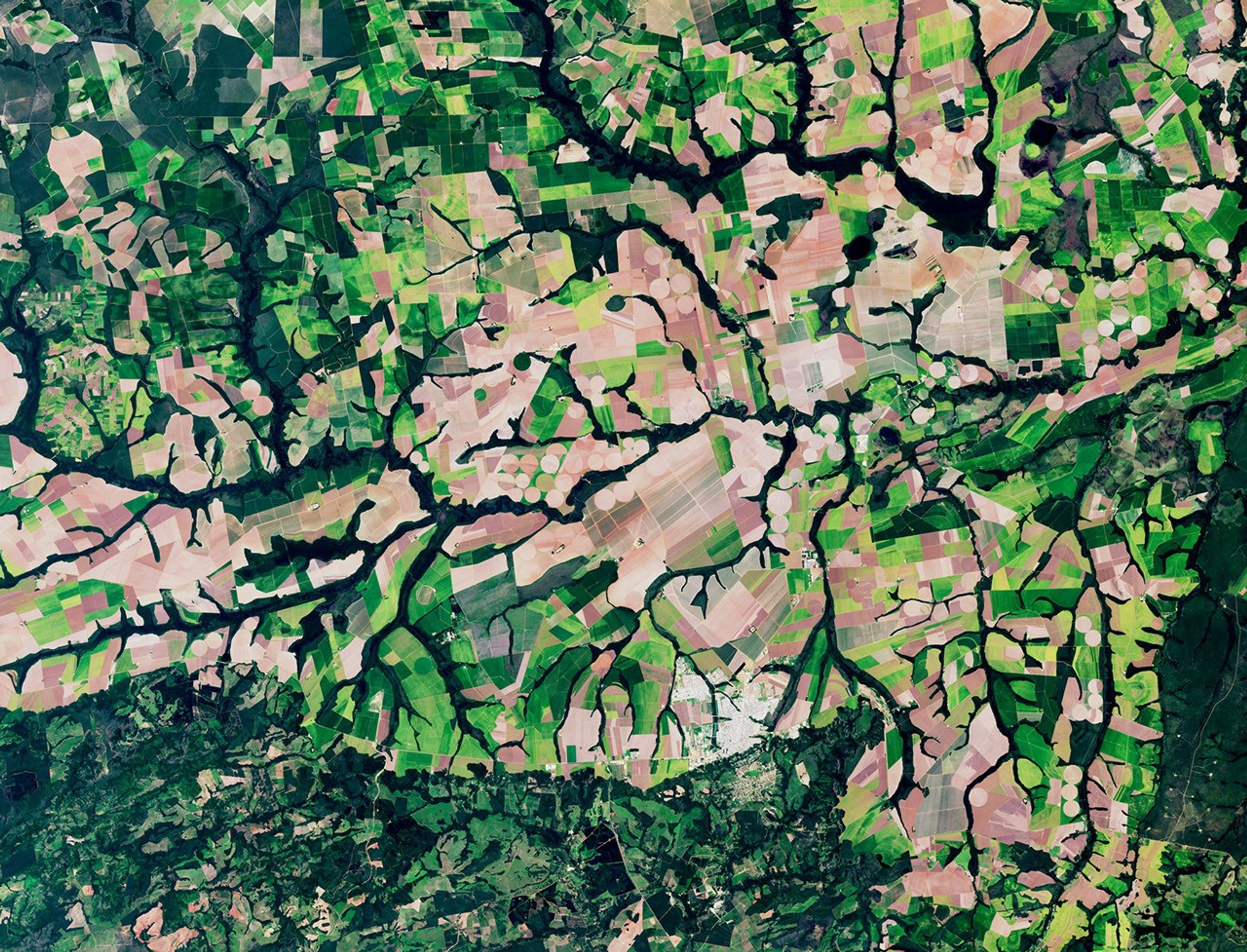
Landsat 10 will launch no later than 2031 and continue the Landsat legacy as the longest space-based record of Earth’s land surface.
Explore More
Sediment eroded from ice-capped mountains splays out across a broad river valley on Russia’s Severny Island.
Orange streams are now being spotted in hundreds of watersheds in permafrost areas throughout Alaska’s Brooks Range.
Using satellite data, researchers connected harmful algal blooms with warm water and low water levels at one of Colorado's largest…
이 뉴스, 어떠셨어요?
탭 한 번으로 반응 · 로그인 불필요