Fed's Warsh stays mum on rate plans, pledges price stability
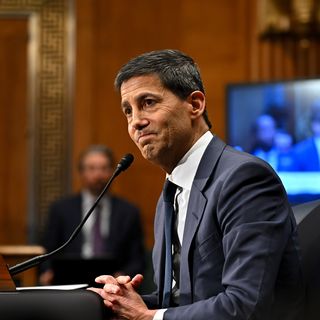
Federal Reserve chairman Kevin Warsh will tell Congress Tuesday that the central bank is determined to restore price stability, but again offered little guidance as to whether it may need to raise interest rates to achieve it.
The big picture: Warsh has sought to end the Fed's modern practice of giving clear signals about its expected policy path, and continued that practice in his first congressional testimony as chairman.
It comes as some of his Fed colleagues are debating whether there is a need for rate hikes as early as two weeks from now — or at least what might prompt them.
The testimony also comes as the Labor Department released new data showing the Consumer Price Index was up 3.5% over the last 12 months, or 2.6% excluding food and energy.
Driving the news: "The Fed's No. 1 objective is to get monetary policy right — or as near to it as we possibly can." Warsh will tell the House Financial Services Committee, according to a prepared text released by the Fed.
"And if we get policy right — and we will — the inflation surge of the last five years will be a thing of the past," he will say.
"The members of our committee have no tolerance for persistently elevated inflation. And we share a resolute commitment to restoring price stability."
Yes, but: It comes amid persistently high inflation, even excluding Iran war-driven impacts on energy and food prices, which has prompted some Fed officials to be more specific about the possibility that rate hikes will be needed to bring inflation down to 2%.
Fed governor Christopher Waller said Monday that while "there is still a credible case for inflation to begin to fall back to our 2 percent goal with policy at its current setting," he is "concerned about the equally plausible case that data in the coming weeks will show that inflation will remain at its elevated level or even trend higher."
That scenario, he said, would require tighter monetary policy in the near term, which implies a rate hike could be on the table as early as a policy meeting that concludes July 29.
New York Fed president John Williams said last week that if core inflation by the central bank's preferred measure were to come in above 0.2% a month, "monetary policy would need to respond to that."
Between the lines: As Warsh sticks to his desire to avoid explicit "forward guidance" about policy plans, his reluctance to even say much about the Fed's reaction function — how it would respond to different economic scenarios — leaves markets guessing about the likelihood of rate hikes this year.
In the absence of that guidance from the chairman, other members of the Fed policy committee have been filling in some of the gaps.
Of note: In his testimony, the first of two days of the semi-annual monetary policy testimony required by law, Warsh noted an investment boom fueled by AI-related spending, which has fueled some inflationary pressures.
"We at the Fed are monitoring the implications for inflation and the labor market."
He says that "we are at a hinge point in history" and that "it's up to all of us to meet this moment."
"The task of this generation of policymakers—and of individuals throughout the private sector—is to ensure the American economy excels far into the future."
Editor's note: This story has been corrected to reflect that the Fed's next policy meeting concludes on July 29. ...
이 뉴스, 어떠셨어요?
탭 한 번으로 반응 · 로그인 불필요